Dental Veneers in Turkey
November 2, 2026
How Much Do Porcelain Veneers in Turkey Cost? Prices, Travel & Treatment Guide
 Dr. Rifat Alsaman

Choosing porcelain veneers abroad involves more than comparing prices. Patients should understand what their quotation includes, how appointments are organised and what to prepare before travelling.
Porcelain Veneers in Turkey attract international patients because treatment costs may differ from those in their home countries. However, the final estimate depends on individual clinical findings, materials and laboratory requirements.
This guide focuses on treatment costs in Turkey, quotation details, travel planning and the patient journey at Vitrin Clinic.
Key Takeaways
Compare prices: Indicative ceramic veneer prices in Turkey range from 200–400 per tooth.
Check the quotation: Confirm which clinical and laboratory services are included.
Plan your stay: Some treatment schedules require approximately five to seven days.
Request an assessment: Final recommendations depend on an in-person examination.
Prepare for follow-up: Arrange access to your dental records and aftercare instructions before travelling.
Ready to transform your smile?
Talk to our team and get a personal FREE treatment plan.
Why Do International Patients Consider Turkey for Veneers?
Turkey attracts international dental patients through competitive private-treatment prices, international travel connections and clinics experienced in coordinating overseas appointments. Istanbul offers access to accommodation, transportation and other travel services. Some clinics help patients organise these arrangements alongside their appointments. However, lower prices and convenient packages do not establish treatment quality. Patients should check professional qualifications, clinic authorisation, laboratory arrangements and follow-up support.
.jpg)
.jpg)
.jpg)
How Much Do Porcelain Veneers in Turkey Cost?
The cost of Porcelain Veneers in Turkey depends on the number of restorations, ceramic specifications, laboratory work and any additional procedures.
Estimated Cost Per Tooth: Turkey, the UK and the US
United Kingdom
Estimated Cost: $650 – $969 / tooth
Veneer Type: Porcelain veneers
Veneer type: Porcelain veneers
Cost per tooth: $650 – $969
UK private clinic standard rate
Turkey
Estimated Cost: $200 – $400 / tooth
Veneer Type: Ceramic veneers, including E.max
Veneer type: Ceramic & E.max
Cost per tooth: $200 – $400
High-strength aesthetic ceramic
United States
Estimated Cost: $1,020 – $2,506 / tooth
Veneer Type: Porcelain veneers
Veneer type: Porcelain veneers
Cost per tooth: $1,020 – $2,506
US cosmetic clinic standard rate
What Could a Set of Veneers Cost in Turkey?
The total depends on how many teeth require treatment. There is no universal definition of a full set.
Using the indicative range of 200–400 per ceramic veneer:
Partial Smile Line
From $1,200
Estimated total
6 veneers: $1,200 – $2,400
8 veneers: $1,600 – $3,200
Targeted upper smile enhancement
Full Smile Makeover
From $3,200
Estimated total
16 veneers: $3,200 – $6,400
20 veneers: $4,000 – $8,000
Dual arch complete transformation
All Package Tiers
Price Range: $1,200 – $8,000
Estimated total
6 veneers: $1,200 – $2,400
8 veneers: $1,600 – $3,200
16 veneers: $3,200 – $6,400
20 veneers: $4,000 – $8,000
What Should a Veneer Quotation Include?
Before accepting an offer for Porcelain Veneers in Turkey, request a written, itemised quotation.
Check whether it specifies:
Number of teeth included in the treatment.
Proposed ceramic material and specifications.
Dental examination and necessary diagnostic records.
Laboratory fabrication costs.
Temporary restorations, if required.
Final fitting, bonding and adjustments.
Additional procedures identified during assessment.
Follow-up arrangements and aftercare support.
Accommodation and transportation, if advertised.
Ask the clinic to identify excluded services and possible additional charges. A low advertised price may not represent the complete treatment cost.
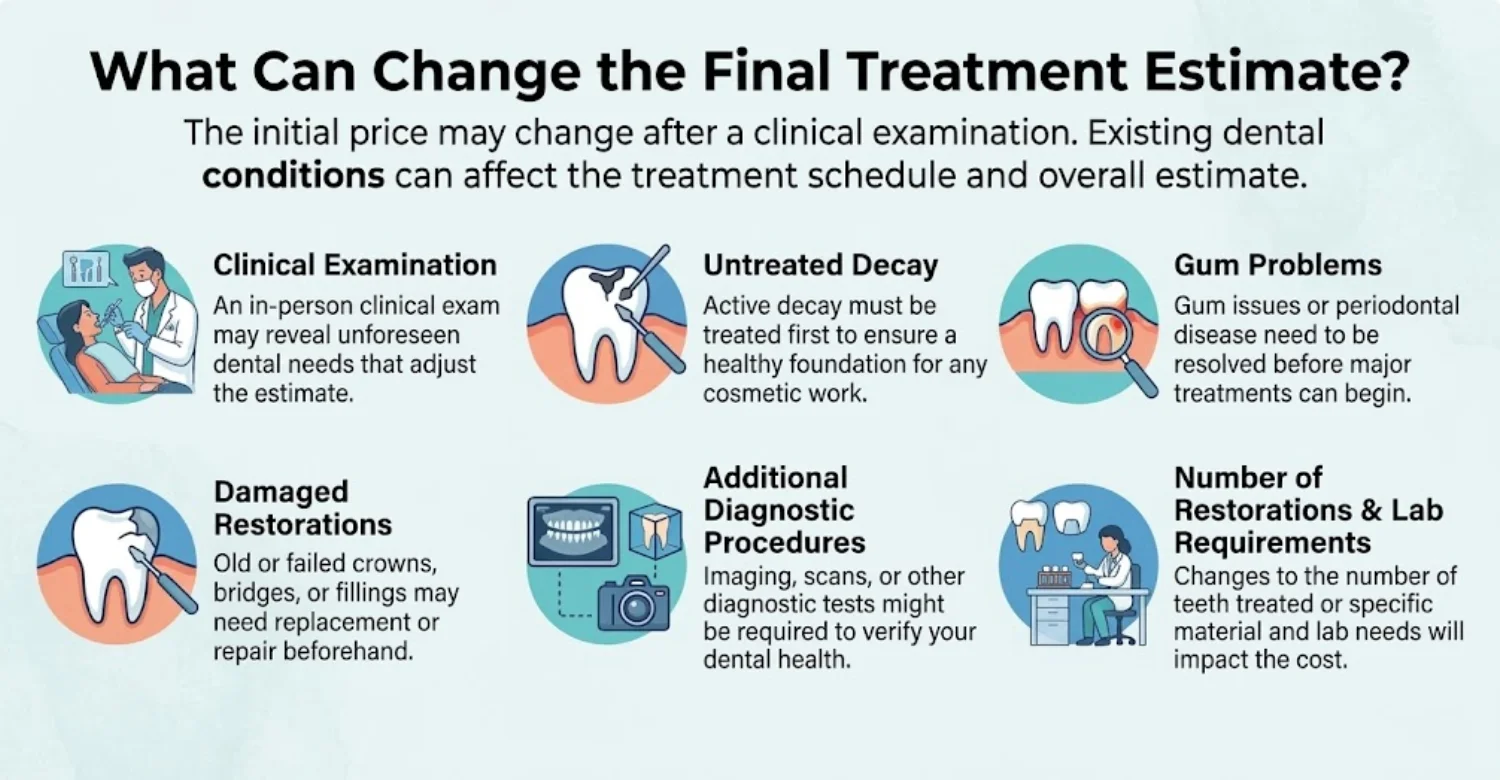
What Can Change the Final Treatment Estimate?
The initial price may change after clinical examination. Existing dental conditions can affect the treatment schedule and overall estimate. For example, untreated decay, gum problems or damaged restorations may require attention before cosmetic treatment. Additional diagnostic procedures may also be necessary. The proposed number of restorations and laboratory requirements can influence the final quotation. Patients should receive an updated plan if clinical findings change the original proposal.
What Should Patients Confirm Before Travelling?
Planning Porcelain Veneers in Turkey requires confirming clinical and practical details before booking flights.
Check the Clinic and Dental Team
Verify the dentist's professional registration and relevant experience.
Confirm the clinic's health tourism authorisation.
Ask who will examine, prepare and fit the restorations.
Request information about the proposed laboratory process.
Review authentic patient photographs where available.
Prepare Your Dental Information
Send recent dental records, relevant X-rays and clear photographs when requested. Include information about previous dental treatment and relevant medical history. A remote review can support preliminary discussions. It cannot replace the examination required to confirm suitability and treatment details.
Confirm the Travel Schedule
Ask for proposed appointment dates and the expected treatment duration. Confirm accommodation, airport transfers and transportation arrangements separately. Allow flexibility for clinical reviews or adjustments. Avoid booking a return flight that leaves no time for the planned final checks.
How Can Patients Relieve Discomfort After Porcelain Veneer Treatment?
Mild sensitivity may occur after tooth preparation or bonding. The appropriate relief depends on the cause and severity.
Choose soft, comfortable foods if chewing feels uncomfortable.
Avoid very hot or cold foods if they trigger sensitivity.
Brush gently with a soft-bristled toothbrush.
Use fluoride toothpaste as recommended.
Follow the dentist's instructions for temporary restorations.
Take pain relief only as directed by a healthcare professional.
Contact the clinic if symptoms persist or become worse.
How Is the Treatment Schedule Organised in Turkey?
The schedule for Porcelain Veneers in Turkey varies according to clinical findings and laboratory production. Patients generally attend an initial examination, followed by the appointments required for planning, preparation and restoration fitting. The exact sequence depends on the approved treatment plan.
How Many Days Should Patients Stay in Turkey?
Some treatment plans require approximately five to seven days. However, this is an estimate rather than a fixed schedule. Laboratory production, clinical complexity and additional adjustments can affect the stay. Confirm the itinerary with the clinic before arranging travel.
Ready to transform your smile?
Talk to our team and get a personal FREE treatment plan.
What We Notice Clinically When Planning Porcelain Veneers
Planning Porcelain Veneers in Turkey involves assessing tooth structure, gum health and bite function, not just tooth colour.
Why Healthy Enamel and Conservative Preparation Matter
Enamel provides an important bonding surface for ceramic restorations. We assess existing enamel, restorations and tooth condition before preparation. Treatment should preserve healthy tooth structure wherever possible.
When Veneers May Not Be the Best Option
Not every cosmetic concern requires veneers. Whitening may address suitable discolouration, while orthodontic treatment may better correct alignment problems. Minor chips or small gaps may need a more conservative approach.
What Are the Advantages and Disadvantages of Porcelain Veneers?
Porcelain veneers offer aesthetic benefits, but patients should understand their limitations before treatment.
Advantages of Porcelain Veneers
Improve the appearance of selected stained or discoloured teeth.
Create more consistent tooth shapes and proportions.
Help improve the appearance of minor gaps and chips.
Offer good resistance to surface staining.
Provide customised aesthetic results.
Require less tooth coverage than full crowns in suitable cases.
Disadvantages of Porcelain Veneers
Enamel removal may be irreversible.
Ceramic restorations can chip or fracture.
Replacement may eventually become necessary.
Treatment can involve significant initial costs.
Grinding and clenching may increase the risk of damage.
Natural teeth can still develop decay around veneer margins.
What Should Patients Expect After Returning Home?
Before leaving Turkey, patients should receive relevant treatment records and personalised aftercare instructions.
These may include restoration details, diagnostic records and guidance on oral hygiene. Patients should also understand whom to contact if discomfort or restoration problems develop. Porcelain restorations can resist staining, but natural teeth and restoration margins may still discolour. For specific advice about coffee and staining, Regular dental examinations remain important after treatment. Patients should arrange appropriate follow-up and keep their treatment records accessible.
What Are the Possible Side Effects of Porcelain Veneers?
Some patients experience temporary symptoms after preparation or bonding. Other complications may develop over time.
Common Temporary Side Effects
Tooth sensitivity: Temporary sensitivity to hot and cold may occur.
Gum irritation: Mild tenderness around treated teeth may develop.
Bite discomfort: The teeth may initially feel different when biting.
Temporary discomfort: Prepared teeth may feel sensitive before final restorations are fitted.
These symptoms should improve as the mouth adjusts. Persistent or worsening discomfort requires dental assessment.
Possible Long-Term Complications
Chipping or fractures: Ceramic may break following trauma or excessive biting forces.
Debonding: A veneer may become loose or detach.
Gum inflammation: Poorly fitting margins or plaque accumulation may contribute to irritation.
Tooth decay: Cavities can develop around or beneath restoration margins.
Persistent sensitivity: This may indicate an underlying dental or bite-related problem.
When Should Patients Contact a Dentist?
Contact a dentist if you experience persistent pain, swelling, bleeding, a loose veneer or changes in your bite.
Severe facial swelling, fever with swelling or spreading infection requires urgent assessment. Breathing or swallowing difficulties require emergency medical attention.
Ready to transform your smile?
Talk to our team and get a personal FREE treatment plan.
What Tips Should Patients Follow After Getting Porcelain Veneers?
Good daily habits help protect both ceramic restorations and the natural teeth underneath.
Daily Oral Hygiene
Brush twice daily with fluoride toothpaste.
Use a soft-bristled toothbrush.
Clean between teeth every day.
Pay attention to the gumline around restorations.
Attend regular dental examinations and professional cleanings.
Eating and Drinking Habits
Avoid biting directly into very hard foods.
Cut hard fruits and vegetables into smaller pieces.
Avoid chewing ice or hard objects.
Limit habits that expose teeth to excessive biting forces.
Follow any dietary instructions provided after treatment.
Protecting Your Veneers
Do not bite fingernails or chew pens.
Avoid using teeth to open packages.
Ask about a custom night guard if you grind or clench your teeth.
Consider a suitable mouthguard during contact sports.
Do not use abrasive whitening products on ceramic restorations.
Travelling Patients: Aftercare and Follow-Up
Collect your dental records and restoration details before departure.
Keep the clinic's contact information available.
Confirm how to report discomfort or restoration problems.
Arrange follow-up examinations after returning home.
Inform your local dentist about your veneer treatment.
Porcelain veneers still require the same commitment to oral hygiene and regular dental care as natural teeth.
At Vitrin Clinic: Planning Porcelain Veneers in Istanbul
At Vitrin Clinic, Porcelain Veneers in Turkey begin with an individual assessment rather than a standardised package.
Our clinical team reviews dental photographs and available records for an initial discussion. An in-person examination helps confirm tooth condition, gum health and bite relationships.
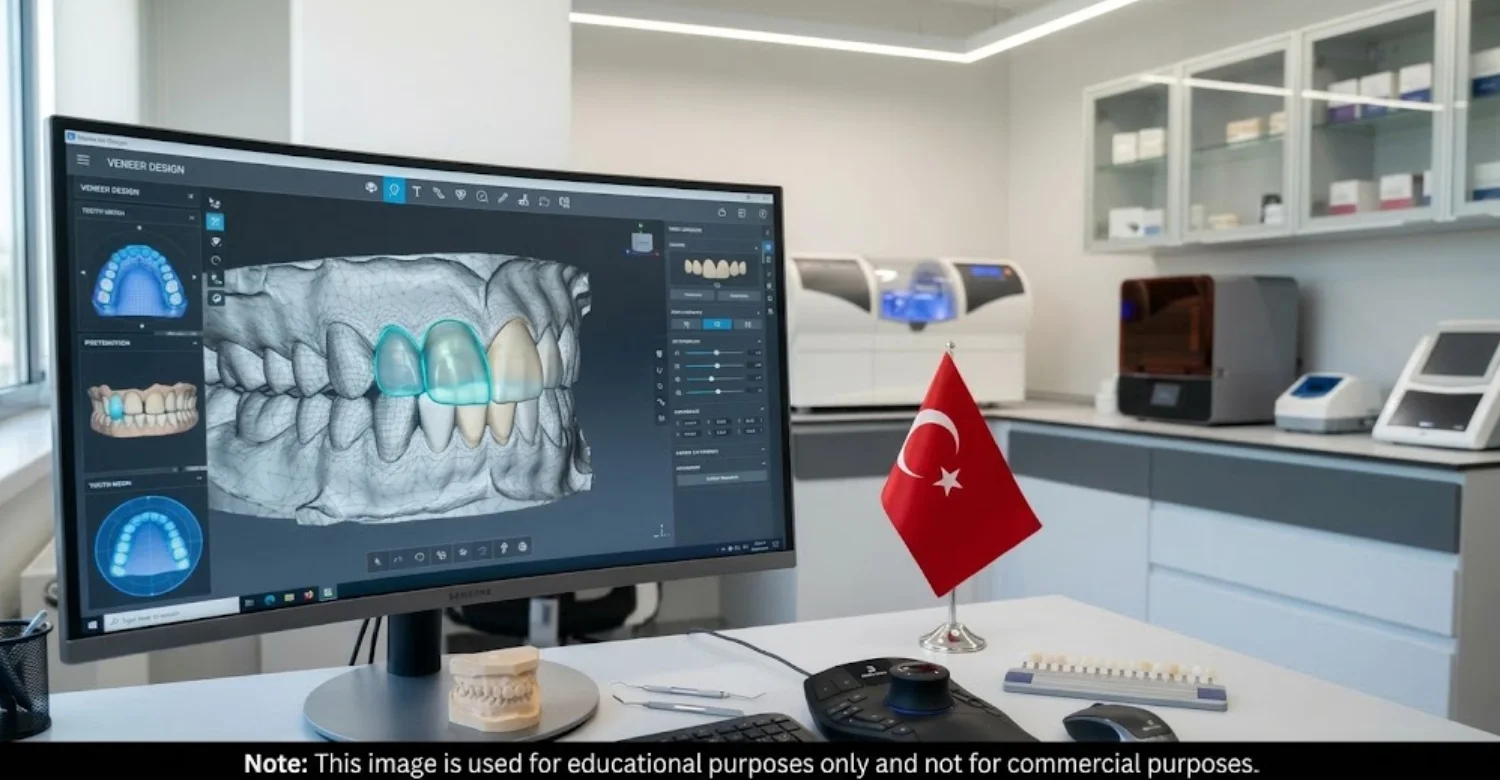
Digital records and scanning can support treatment planning when appropriate. Our team discusses proposed materials, preparation requirements and estimated costs before treatment proceeds.
Your Journey at Vitrin Clinic
Initial enquiry: Share your photographs and available dental records.
Preliminary review: Our team discusses possible options and initial planning.
Travel coordination: Our coordinators help organise appointments and practical arrangements.
Clinical examination: The dentist assesses your oral health and confirms the treatment plan.
Treatment appointments: The agreed treatment is carried out according to clinical requirements.
Final checks and aftercare: The dentist reviews the restorations and provides care instructions.
Send your dental photographs and available records for an initial review. Our team can discuss possible treatment options and preliminary planning.
Request your FREE Treatment Plan from Vitrin Clinic in Istanbul.






Conclusion: Planning Your Veneer Treatment in Turkey
Choosing Porcelain Veneers in Turkey requires comparing complete quotations, checking professional credentials and understanding the proposed schedule. Do not base your decision on advertised prices alone. Confirm material specifications, included services, additional costs and follow-up arrangements in writing. A suitable treatment plan should reflect your clinical needs and preserve healthy tooth structure wherever possible.
Ready to transform your smile?
Talk to our team and get a personal FREE treatment plan.
Reference
FAQs
Ten ceramic veneers may cost approximately 2,000–4,000 using the indicative price range of 200–400 per tooth. Additional procedures and services may increase the total.
Dr. Rifat Alsaman has more than 5 years of clinical experience in dentistry and currently serves as the Head of the Medical Team at Vitrin Clinic. He is dedicated to providing exceptional patient care, overseeing treatment planning, and ensuring the highest clinical standards across the team. His expertise, attention to detail, and commitment to continuous professional development have helped countless patients achieve healthier, more confident smiles.


