Dental Veneers in Turkey
October 22, 2026
Veneers for Worn Teeth: Length, Cost & Results Explained
 Dr. Rifat Alsaman

Have your front teeth started to look shorter, flatter or see-through at the edges? You're not imagining it. Tooth wear can make a smile look years older than you feel, and it gets worse every year it's left untreated. That's why more patients are now asking about veneers for worn teeth. The good news: veneers for worn teeth can rebuild short, flat or thin front teeth by adding back lost length, shape and colour with thin porcelain shells. They work best for mild to moderate wear. Severe wear across many teeth, or a collapsed bite, usually needs crowns or full mouth rehabilitation instead.
Ready to transform your smile?
Talk to our team and get a Free treatment plan.
Key Takeaways
Veneers can restore 1–2 mm of lost length on worn front teeth, often with almost no drilling.
They suit mild to moderate wear; severe wear or a collapsed bite needs crowns or full mouth treatment.
Grinding is the number one reason veneers chip on worn teeth, so a custom night guard is essential.
Veneers bond best to enamel; if too little remains, onlays or crowns are safer.
Most cases take 5–7 days in Istanbul, with veneers at Vitrin starting from $200 per tooth.
Porcelain and E-max veneers often last 10–15 years or more with good care.
What Are Veneers for Worn Teeth?
Veneers for worn teeth are thin, custom-made ceramic shells bonded to the front and biting edges of teeth that have lost length or enamel. Unlike cosmetic veneers on healthy teeth, they mainly replace structure that wear has already been removed. That's why they often need very little drilling.
They can restore three things at once: lost length, a flat or chipped edge, and the yellow colour that appears when enamel thins. But to choose the right treatment, you first need to know what wore your teeth down.
What Causes Worn Teeth?
Tooth wear is the slow loss of enamel and tooth structure that isn't caused by decay. There are four main causes, and each one needs a different plan for veneers to last.
Type | Cause | How it looks |
|---|---|---|
Attrition | Grinding or clenching (bruxism), often at night | Flat, short, chipped front edges |
Erosion | Acid from reflux, soft drinks, citrus, wine or frequent vomiting | Thin, glassy, cupped or yellowish teeth |
Abrasion | Hard brushing or abrasive toothpaste | Notches or grooves near the gum line |
Natural ageing | Decades of normal chewing | Gradual, even shortening of the teeth |
How Do I Know If My Teeth Are Worn?
Your teeth are likely worn if they look shorter, flatter or more see-through at the edges than they used to. Use this quick self-check:
Your front teeth look shorter than they did a few years ago.
The biting edges are flat, chipped or uneven.
The edges look see-through or bluish.
Your teeth look more yellow, because the darker dentin shows through.
You feel sensitivity to cold, hot or sweet foods.
Can You Put Veneers on Worn-Down Teeth?
Yes, as long as enough healthy tooth structure, especially enamel, remains for the veneer to bond to. Veneers can add back lost length and reshape flat edges, and they often need very little preparation because the tooth has already lost structure. In many worn cases, the veneer simply replaces what wear took away.
Do Veneers Work on Worn Enamel?
Veneers bond most reliably to enamel, so the amount of enamel left decides whether they're the right choice. When a lot of enamel has gone, the veneer must bond to the softer inner layer (dentin). This bond is less predictable, and the veneer is more likely to come loose over time.
Can Worn Enamels Grow Back?
No. Enamel contains no living cells, so the body can't regrow it once it's lost. Fluoride toothpaste can strengthen the enamel you still have, but it won't restore lost length or thickness. This is why early treatment keeps your options simpler and more conservative.
Why Must the Cause Be Treated Before Veneers?
Because veneers cover the damage but don't stop what caused it. If grinding or acid continues, new veneers can chip, crack or come loose within a few years. At Vitrin, the cause is treated first:
Grinding: a custom night guard protects teeth and veneers while you sleep.
Acid reflux: your doctor helps manage reflux before and after treatment.
Diet: fewer acidic drinks, taken with meals rather than sipped all day.
Brushing: a soft brush and gentle technique stop further abrasion.
Do I Need Veneers or Crowns for Worn Teeth?
It depends on how much tooth structure has been lost and how many teeth are affected. Mild wear on a few front teeth suits minimal-prep veneers, moderate wear suits porcelain or E-max veneers, and severe wear usually needs crowns or full mouth rehabilitation. Your dentist confirms the level after an examination and bite analysis.
Wear level | Signs | Best option | Typical number of teeth |
|---|---|---|---|
Mild | Slight flattening or small chips at the edges | Minimal-prep veneers | 2–6 |
Moderate | Front teeth visibly shorter, thin or see-through | Porcelain or E-max veneers | 6–10 |
Severe | Short teeth throughout the mouth, sensitivity, bite changes | Crowns, onlays or full mouth rehabilitation | 10–28 |
What If My Bite Has Collapsed?
A collapsed bite needs full mouth treatment, not just veneers on the front teeth. Severe wear can lower the height of your bite, so your face looks shorter, your lips thinner, and your jaw may ache. The back teeth are usually rebuilt with crowns to restore that height and keep the new bite stable.
Are Veneers or Crowns Better for Worn Teeth?
Veneers are better for worn front teeth that are otherwise healthy; crowns are better for teeth that are heavily worn, weakened, or carry heavy chewing forces. That usually means back teeth and the teeth of strong grinders.
Feature | Veneers | Crowns |
|---|---|---|
Tooth reduction | Minimal, often almost none on worn teeth | More; the whole tooth is shaped |
Strength | Good (E-max about 400 MPa) | Very high (zirconia about 900–1,200 MPa) |
Best location | Front teeth | Back teeth, or badly worn front teeth |
Suitable for grinders | Yes, with the right material and a night guard | Yes, often the safer choice for heavy grinding |
Lifespan | Often 10–15 years or more | Often 10–15 years or more |
Price | From $200 per tooth | approx |
Will Veneers Break If I Grind My Teeth?
They can, if grinding isn't managed. The same forces that wore your teeth down will now act on the ceramic, which makes grinding the main risk for veneers on worn teeth. The good news is that this risk can be planned for. At Vitrin, we reduce it in three ways:
The right material: E-max for strength and looks, or zirconia veneers or crowns in heavy cases.
A correctly planned bite: the dentist checks how your teeth meet and glide, so no single veneer takes too much force.
A custom night guard: essential for every grinder, because it takes the force at night instead of your veneers.
With these steps, many grinders enjoy long-lasting veneers. Without a night guard, chips and cracks are much more likely.
Which Veneer Material Is Best for Worn Teeth?
E-max is the best all-round choice for most worn front teeth, because it combines strength with natural translucency. Porcelain suits mild wear in patients who don't grind, and zirconia suits heavy grinders and strong bites.
Material | Best for | Strength | Look |
|---|---|---|---|
E-max | Most moderate wear on front teeth | High (about 400 MPa) | Very natural, translucent |
Porcelain | Mild wear, no grinding | Moderate | Very natural |
Zirconia | Heavy grinders, strong bites | Very high | Slightly more opaque |
What Happens to Teeth Under Veneers?
Your natural tooth stays alive and healthy under the veneer. On worn teeth, preparation is often minimal, so the tooth keeps its nerve and blood supply. It still needs good brushing, flossing and check-ups, because decay can start at the edges of the veneer.
What Do Teeth Look Like Under Veneers?
Worn teeth under veneers look much as they did before treatment: shorter, with flat edges. Because so little is removed, they often look almost unchanged. The veneer actually protects these worn surfaces from further acid and wear.
Do Veneers on Worn Teeth Hurt?
Most patients feel little or no pain, because worn teeth need very little preparation and the area is numbed if any shaping is done. Some people feel mild sensitivity for a few days after bonding, which usually settles on its own.
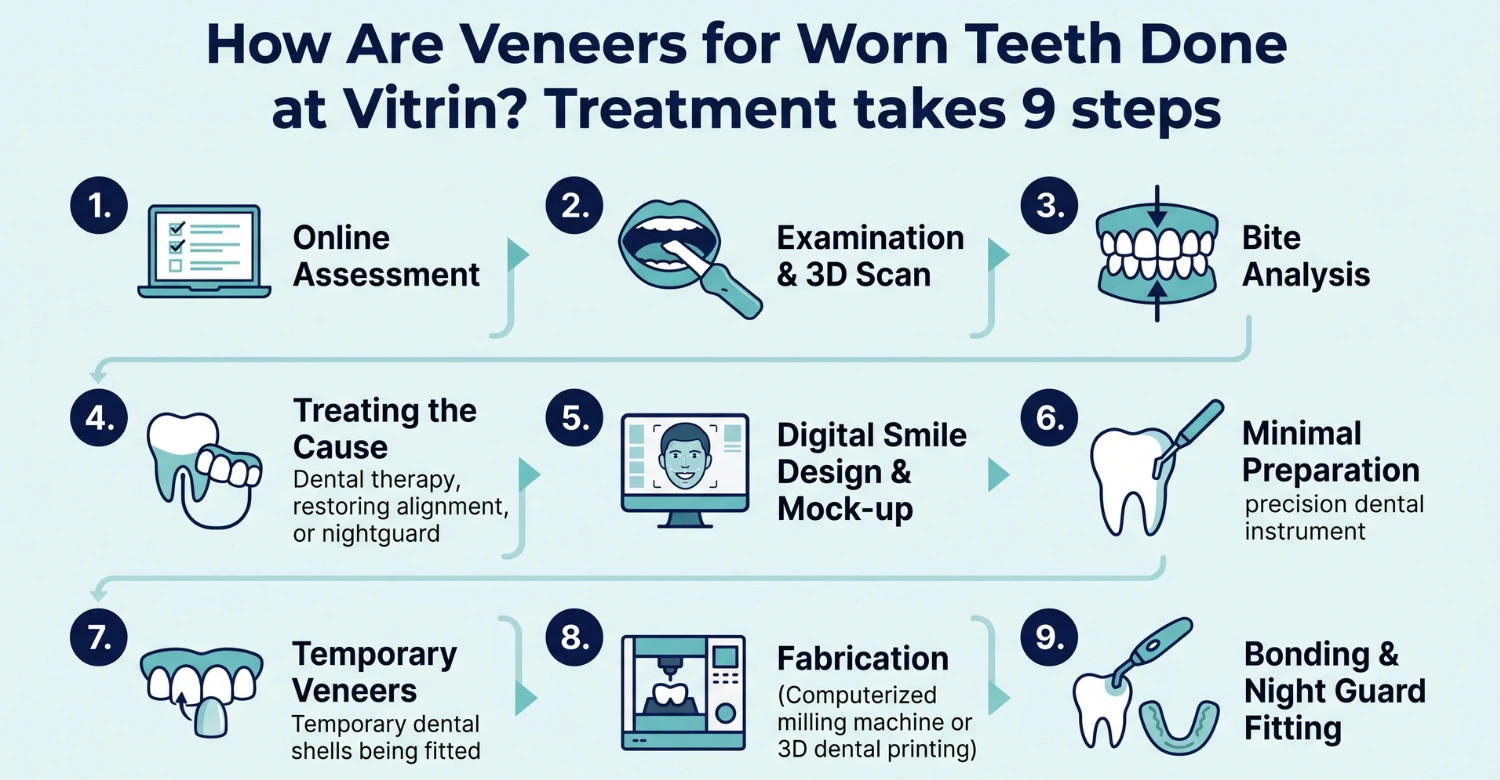 How Many Days Do You Need in Istanbul for Veneers on Worn Teeth?
Most veneer cases for worn front teeth take 5–7 days in Istanbul, with 2 clinic visits. Early appointments cover examination, bite analysis, preparation and scanning. Later appointments cover try-in, bonding, bite adjustment and night guard fitting.
What Do Veneers for Worn Teeth Look Like Before and After?
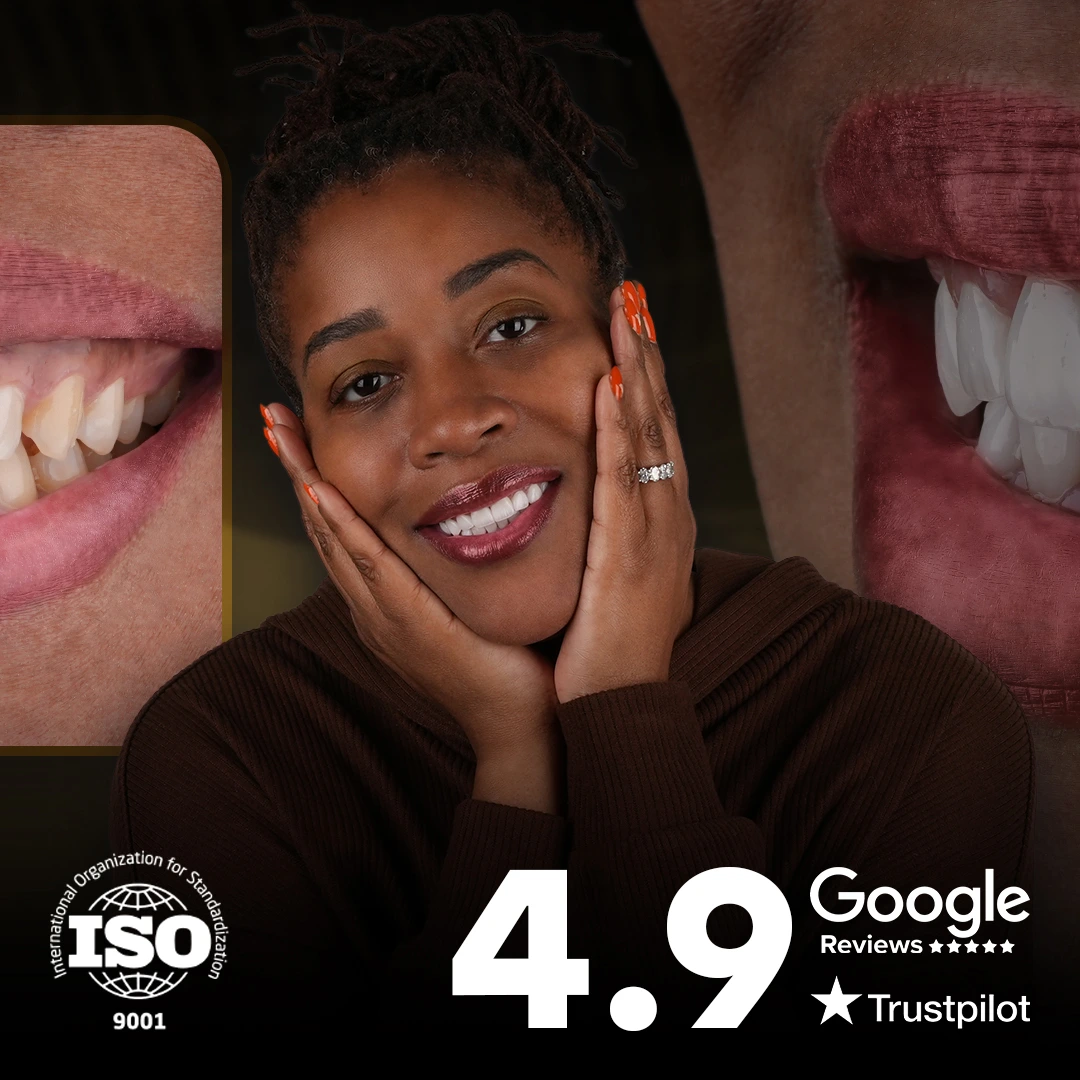
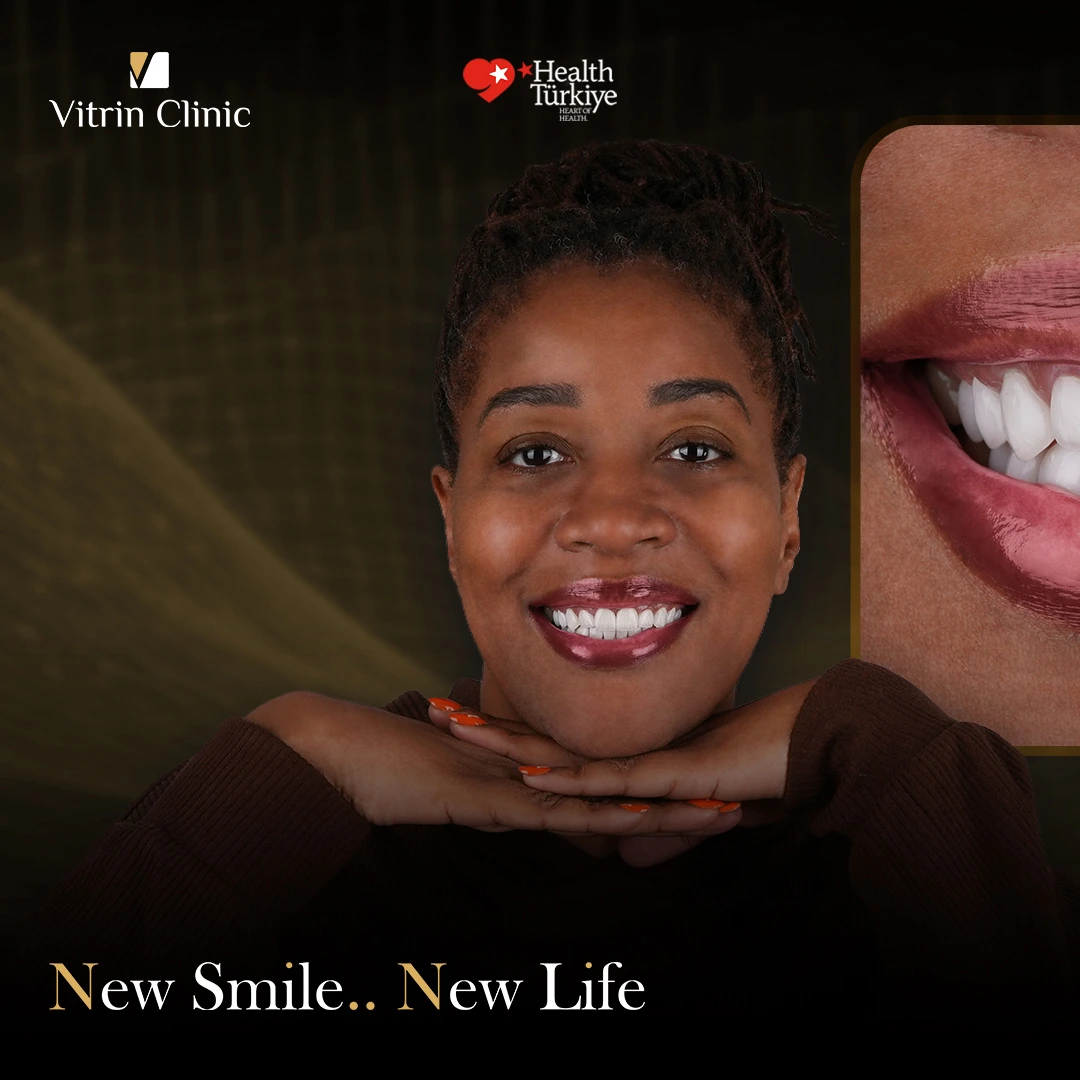
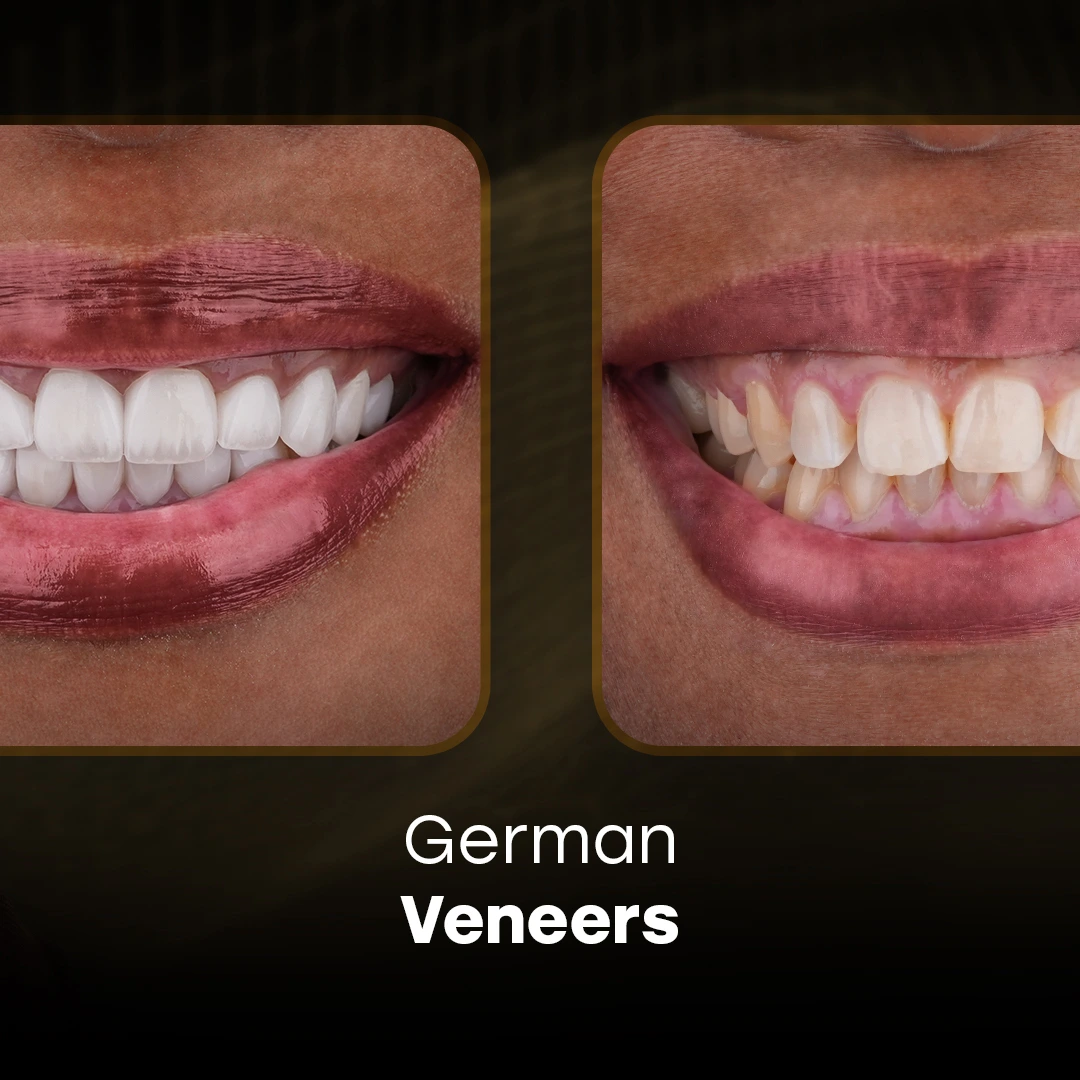
Adding back just 1–2 mm of length can change the whole smile, making it look fuller, brighter and younger. Veneers even out flat edges and refresh colour while keeping a natural look. At Vitrin, each case is planned around the cause of wear, the wear level and the patient's bite.
Case : Worn Front Edges from Grinding
Starting concern: =Short, flat upper front teeth from night-time grinding
Treatment: 8 E-max veneers + custom night guard
Time in Istanbul: From 2 : 5 days
Treatment goal: Restore natural length and protect the veneers from grinding.
Liked the result? Here's what it costs.
How Much Do Veneers for Worn Teeth Cost in Turkey?
At Vitrin, veneers for worn teeth start from $200 per tooth, based on the clinic's 2026 price guide. Most moderate wear cases need 6–10 veneers, so a typical case starts from about $1,500 for 6 E-max veneers. These are starting prices, not quotes; your final price depends on a clinical examination and X-rays.
What Is the Price per Veneer at Vitrin?
How Much Do 6, 8 or 10 Veneers Cost?
The estimates below multiply Vitrin's starting price per tooth by the number of veneers. They don't include treatment needed before veneers.
6 veneers
Upper front teeth worn
Starting from
$1,200
E-maxFrom $1,500
PorcelainFrom $1,320
ZirconiaFrom $1,200
8 veneers
Wear visible in a wider smile
Starting from
$1,600
E-maxFrom $2,000
PorcelainFrom $1,760
ZirconiaFrom $1,600
10 veneers
Moderate wear across the smile line
Starting from
$2,000
E-maxFrom $2,500
PorcelainFrom $2,200
ZirconiaFrom $2,000
Number of veneers | Typical wear | E-max (USD) | Porcelain (USD) | Zirconia (USD) |
|---|---|---|---|---|
6 | Upper front teeth worn | From $1,500 | From $1,320 | From $1,200 |
8 | Wear visible in a wider smile | From $2,000 | From $1,760 | From $1,600 |
10 | Moderate wear across the smile line | From $2,500 | From $2,200 | From $2,000 |
6 veneers
From
$1,200
full set
Upper front teeth worn..
E-max: from $1,500
Porcelain: from $1,320
Zirconia: from $1,200
8 veneers
From
$1,600
full set
Wear visible in a wider smile
E-max: from $2,000
Porcelain: from $1,760
Zirconia: from $1,600
10 veneers
From
$2,000
full set
Moderate wear across the smile line.
E-max: from $2,500
Porcelain: from $2,200
Zirconia: from $2,000
How Much Can You Save Compared With the US and UK?
The same 8 veneers that start from $2,000 at Vitrin can cost about $7,400–$19,500 in the US. That's a saving of roughly 70–90% on treatment, before travel costs.
E-max veneer
From
$250
per tooth at Vitrin, Turkey
US price: $1,200–$2,500
UK price: $950–$2,300
Save up to 90% in Turkey
Porcelain veneer
From
$220
per tooth at Vitrin, Turkey
US price: $900–$2,500
UK price: $1,270–$2,540
Save up to 91% in Turkey
Zirconia veneer
From
$200
per tooth at Vitrin, Turkey
US price: $1,500–$3,500
UK price: $890–$2,030
Save up to 94% in Turkey
US and UK ranges come from Vitrin's 2026 price comparison. Independent US data puts the average veneer at about $930–$2,440 per tooth. Exchange rates change, so UK prices in dollars are approximate.
How Long Do Veneers Last on Worn Teeth?
Porcelain and E-max veneers often last 10–15 years or more with good care. A 2021 systematic review of over 6,500 porcelain veneers found 95.5% survival after 10 years. On worn teeth, two things matter most: how well grinding is controlled and how much enamel remains.
How Can I Make Veneers on Worn Teeth Last Longer?
Keep the cause of wear under control. These habits protect both your veneers and the natural teeth around them:
Wear your night guard every night if you grind or clench.
Manage reflux with your doctor, and limit acidic drinks.
Drink acidic drinks with meals, through a straw, then rinse with water.
Use a soft toothbrush and non-abrasive fluoride toothpaste.
Clean between teeth daily with floss or interdental brushes.
Avoid biting ice, pens, nutshells or packaging.
Attend check-ups and hygiene visits every 6 months.
Report pain, looseness, chipping or bite changes promptly.
Who Is Not a Good Candidate for Veneers on Worn Teeth?
Veneers aren't the right first step if the underlying problem isn't stable yet. You may need other treatment first if you have:
Very little enamel left: onlays or crowns bond more reliably.
Uncontrolled grinding: veneers are at high risk of chipping until a night guard is in place.
Untreated reflux or frequent vomiting: acid keeps damaging the tooth around the veneer edges.
Active decay or gum disease: these must be treated before any veneer is bonded.
A collapsed bite: front veneers alone can't restore lost bite height.
What Should I Ask Before Getting Veneers for Worn Teeth?
The right questions help you avoid surprises and get a result that lasts. Ask your dentist these before treatment starts:
What caused my teeth to wear? Grinding, acid and brushing each need a different plan.
Is my wear mild, moderate or severe? This decides between veneers, crowns or full mouth treatment.
How much enamel do I have left? Veneers bond best to enamel.
Has my bite height changed? A collapsed bite needs more than front veneers.
Which material do you recommend if I grind? E-max, porcelain and zirconia suit different bites.
Is a night guard included? Ask for the price in writing.
Can I preview the new tooth length? A mock-up shows how much length is added.
How many days do I need in Istanbul? Most cases take 5–7 days; severe wear can take longer.
What does my warranty cover, including grinding damage? Ask for the terms in writing.
What Does Our Head Dentist Dr. Rifat Al Saman Say About Worn Teeth?
Dr. Rifat Alsaman, Head of the Medical Team at Vitrin Clinic, notes that many patients with worn teeth ask only for whiter, longer teeth. In his experience, the wear itself is usually a sign of grinding or acid, and veneers placed without treating that cause are at real risk of chipping.
For this reason, Dr. Alsaman checks every worn-teeth patient's bite and asks about reflux, diet and night-time grinding before planning treatment. He also stresses that worn teeth often need very little preparation, because the veneer replaces length that is already lost. When enamel is too thin for veneers to bond reliably, he recommends crowns or onlays instead, and a custom night guard for every grinder.
Why Choose Vitrin Clinic for Veneers for Worn Teeth in Istanbul?
Because restoring worn teeth is about more than adding length. At Vitrin, every treatment starts with understanding why your teeth wore down.
We diagnose the cause, not just the look: grinding, erosion and abrasion are identified first.
Bite analysis and digital planning: every tooth length is measured so your bite stays stable.
The right material for grinders: E-max, zirconia or crowns, chosen for your bite forces.
A custom night guard: to protect your veneers for years.
Minimal preparation: worn teeth often need very little enamel removed.
Honest assessment: if your teeth need crowns or full mouth treatment, we'll tell you.
Warranty and transparent costs: a personalised plan and itemised estimate before you travel, whenever possible.
Experience with international patients: treating patients from abroad in Istanbul since 2007, ISO-certified and licensed by the Turkish Ministry of Health.
Book your free tooth wear assessment at Vitrin, Istanbul.
Ready to transform your smile?
Talk to our team and get a Free Treatment plan.






Medical Disclaimer
This article is for general information and does not replace a personal assessment by a qualified dentist. Prices are approximate 2026 averages, with UK and Turkey figures converted to US dollars, and may vary by clinic and case.
Book your free consultation with Vitrin Clinic and get a personalized assessment and treatment plan from our dental team..
References
FAQs
Dr. Rifat Alsaman has more than 5 years of clinical experience in dentistry and currently serves as the Head of the Medical Team at Vitrin Clinic. He is dedicated to providing exceptional patient care, overseeing treatment planning, and ensuring the highest clinical standards across the team. His expertise, attention to detail, and commitment to continuous professional development have helped countless patients achieve healthier, more confident smiles.


