Dental Veneers in Turkey
November 2, 2026
Full Mouth Veneers Turkey: Cost, Results and Treatment Guide
 Dr. Rifat Alsaman

Full Mouth Veneers Turkey packages attract international patients who want a complete smile redesign at a more accessible price. This guide explains the treatment scope, materials, costs, results and clinic selection. It also clarifies that a full set does not necessarily mean covering every tooth. Most plans restore only the teeth visible when you smile. With realistic expectations and a clear treatment plan, you can decide with confidence before you travel.
Key takeaways:
Veneers are thin shells bonded to the front of teeth. They change colour, shape, size and the look of mild misalignment, so Full Mouth Veneers Turkey plans focus on the visible smile zone.
The main options are porcelain, E-max (lithium disilicate) and minimal-prep or no-prep veneers. Each differs in thickness, enamel preparation and suitability.
Most people return to normal activity quickly. Mild sensitivity and gum tenderness usually settle within days to a couple of weeks.
Published per-tooth porcelain prices in Turkey commonly fall between about $150 and $400. UK and US prices are several times higher. Always request a written quotation.
How Many Teeth Do You Need for a Full Set of Veneers?
Full Mouth Veneers Turkey plans are built around your smile, not a fixed number. Most patients receive 8 to 10 veneers on the upper arch, because these teeth show most when smiling. Some add the same number on the lower arch, reaching up to 20. Others need only six. Your dentist decides after assessing tooth position, lip movement, bite and enamel condition. Every number should be justified clinically rather than chosen to fit a package.
6, 8, 10 or 12 Veneers: What's the Difference?
Six veneers cover the front teeth, canine to canine, and suit minor changes. Eight veneers add the first premolars and create a fuller, more balanced smile. Ten veneers extend to the second premolars, which suits wider smiles. Twelve veneers add the first molars on one arch and are less common. More veneers mean more enamel preparation. The right number is the smallest that achieves your goal while keeping as much natural tooth as possible.
Do You Need Veneers on Both Upper and Lower Teeth?
Not always. Most people show more upper teeth when speaking and smiling, so many patients treat only the upper arch. Lower veneers make sense when lower teeth are worn, discoloured, crowded or clearly visible. Treating one arch alone can leave a colour or shape mismatch, so the shade should be planned for both arches. Your dentist will check how much of the lower teeth show and whether your bite can support treatment on both arches.
Factors That Determine the Number of Veneers
Several clinical factors decide the number. These include your smile line, the width of your smile and the size and shape of your teeth. Existing fillings, crowns and discolouration also matter, as does the amount of healthy enamel. Gum health and bite pattern influence the plan too. Your goals complete the picture. A Full Mouth Veneers Turkey consultation should weigh all of these, so the plan reflects your mouth rather than a standard package.
Ready to transform your smile?
Talk to our team and get a FREE treatment plan.
Types of Full Mouth Dental Veneers Available in Turkey
Full Mouth Dental Veneers in Turkey are usually made from porcelain, E-max (lithium disilicate) or ultra-thin minimal-prep and no-prep porcelain. Choosing between materials depends on tooth colour, enamel thickness, bite forces and budget. The Best Veneers for Full Mouth Restoration are the ones that match your clinical situation, not simply the most expensive option.
Type | Material | Appearance | Durability | Preparation | Suitability |
Porcelain | Layered or pressed ceramic | Natural translucency, stain-resistant | Often 10–15 years with care | Light enamel reduction | Most full-smile cases |
E-max | Lithium disilicate | Lifelike, very good light behaviour | Often 10–15 years with care | Light to moderate reduction | Patients wanting strength and aesthetics |
Minimal-prep / no-prep | Ultra-thin porcelain | Natural, but limited masking | Depends on enamel bonding and case | None to very little | Small changes, healthy enamel, light teeth |
Full Mouth Veneers Turkey Cost
Full Mouth Veneers Cost in Turkey depends on the number of veneers, the material and the case. Published per-tooth prices are far lower than in the UK or USA, but they vary widely between sources and clinics. A per-tooth figure and a full package price are not the same thing. Always compare written quotations that list materials, laboratory work and what is included, rather than comparing headline numbers alone.
How Much Does a Full Set of Veneers Cost in Turkey?
Published sources commonly quote veneer packages in Turkey starting from approximately $800 for 4 teeth ($800–$2,000), which averages roughly $200 to $500 per tooth. Packages for 8 teeth range from $1,600 to $4,000, and 10 teeth from $2,000 to $5,000. For a full smile of 20 veneers, published estimates range roughly from $4,000 to $10,000. Materials such as E-max and zirconia are often priced higher. The Full Mouth Veneers Price you receive depends on the clinic, laboratory, and complexity. Treat these figures as guidance only and confirm the exact amount through a written, tooth-by-tooth quotation.
Full Mouth Veneers Price Comparison: Turkey vs UK and USA
United Kingdom
From $3,600
Veneer sets by number of teeth
4 teeth $3,600–$6,000
8 teeth $7,200–$12,000
10 teeth $9,000–$15,000
20 teeth $18,000–$30,000
Turkey
≈ From $800
Veneer sets by number of teeth
4 teeth ≈ $800–$2,000
8 teeth ≈ $1,600–$4,000
10 teeth ≈ $2,000–$5,000
20 teeth ≈ $4,000–$10,000
United States
From $3,720
Veneer sets by number of teeth
4 teeth $3,720–$9,760
8 teeth $7,440–$19,520
10 teeth $9,300–$24,400
20 teeth $18,600–$48,800
What Affects the Cost of Full Mouth Veneers?
Number of veneers: The total number of teeth being treated directly affects the overall price.
Material selection: E-max and zirconia options generally cost more than basic porcelain materials.
Laboratory work and customization: Custom shade matching, shaping, and laboratory fabrication influence the cost.
Dentist's experience: Clinical expertise and treatment-planning requirements may affect pricing.
Additional dental treatments: Gum treatment, fillings, or root canal procedures can increase the total cost.
Case complexity: Bite problems, tooth positioning, and other clinical challenges may require additional time and treatment, increasing the overall price.
What Is Included in a Full Mouth Veneers Package in Turkey?
Initial dental consultation and clinical assessment.
Dental X-rays or digital scans.
Digital smile design and treatment planning.
Tooth preparation, where required.
Temporary veneers during laboratory fabrication.
Laboratory fabrication of the final veneers.
Final veneer fitting and bonding.
Airport transfers, depending on the clinic's package.
Hotel accommodation, depending on the package.
Before booking, confirm whether the quotation also covers:
Local anaesthesia.
Follow-up appointments and adjustments.
Repairs or replacement costs.
Warranty terms and conditions.
Any additional treatments required
Ready to transform your smile?
Talk to our team and get a FREE treatment plan.
Clinical Note
Dr. Rifat Alsaman, Head of the Medical Team at Vitrin Clinic said that a safe veneer plan starts with evaluating enamel thickness and existing restorations, because enamel gives veneers their strongest bond. Gum health and underlying dental conditions must be assessed and treated first. The team then decides between veneers and crowns, keeping natural tooth structure as the priority. Preservation matters because enamel does not grow back. Finally, bite alignment is evaluated before any comprehensive cosmetic treatment, since an unbalanced bite can overload new restorations and shorten their lifespan.
What Is the Full Mouth Veneers Procedure Like?
The Full Mouth Veneers Procedure follows a planned sequence rather than a single appointment. It begins with an examination and smile assessment, then moves to digital design and treatment planning. Teeth are prepared and fitted with temporary veneers while the laboratory fabricates the final restorations. The last stage is placement and bite adjustment. Treatment is usually completed over several days, and the exact timeline depends on your case and any preparatory work.
Initial Dental Examination and Smile Assessment
The first visit checks the health of your teeth, gums and bite. The dentist reviews X-rays or scans, looks for decay or gum disease, and assesses enamel and existing restorations. They also evaluate your smile line, facial proportions and what you want to change. This stage decides whether veneers are suitable at all. If problems are found, they should be treated first, because veneers placed over untreated disease are likely to fail.
Digital Smile Design and Treatment Planning
Digital Smile Design uses photographs, scans and software to plan the shape, size and position of your new teeth. Many clinics then show a preview or trial smile so you can react before treatment begins. This planning step helps align expectations and guides the laboratory. It also allows the dentist to choose the minimum number of veneers needed. A tooth-by-tooth plan should come out of this stage and be shared with you.
Tooth Preparation and Temporary Veneers
Under local anaesthesia, the dentist removes a thin layer of enamel from the teeth being treated. The amount depends on the material and the planned shape. Impressions or digital scans are then taken for the laboratory. Temporary veneers are placed to protect the prepared teeth and let you see an approximate shape. They are more fragile and less polished than final veneers, so careful eating is needed until the permanent set is ready.
Veneer Fabrication and Laboratory Work
The laboratory crafts each veneer from the scans or impressions, matching the agreed shade, shape and surface texture. Skilled technicians layer or press the ceramic and refine it for natural translucency. Fabrication usually takes a few days, which is why international patients stay in the city during this period. The quality of laboratory work strongly affects the final appearance, so ask which materials and laboratory processes your clinic uses.
Final Veneer Placement and Bite Adjustment
At the final appointment, the temporary veneers are removed and each permanent veneer is tried in. Once you and the dentist approve the fit and colour, they are bonded with dental adhesive and hardened with a curing light. The dentist then checks your bite and polishes the edges. Small adjustments are normal and important, because even slight bite imbalance can cause discomfort or increase the risk of chipping.
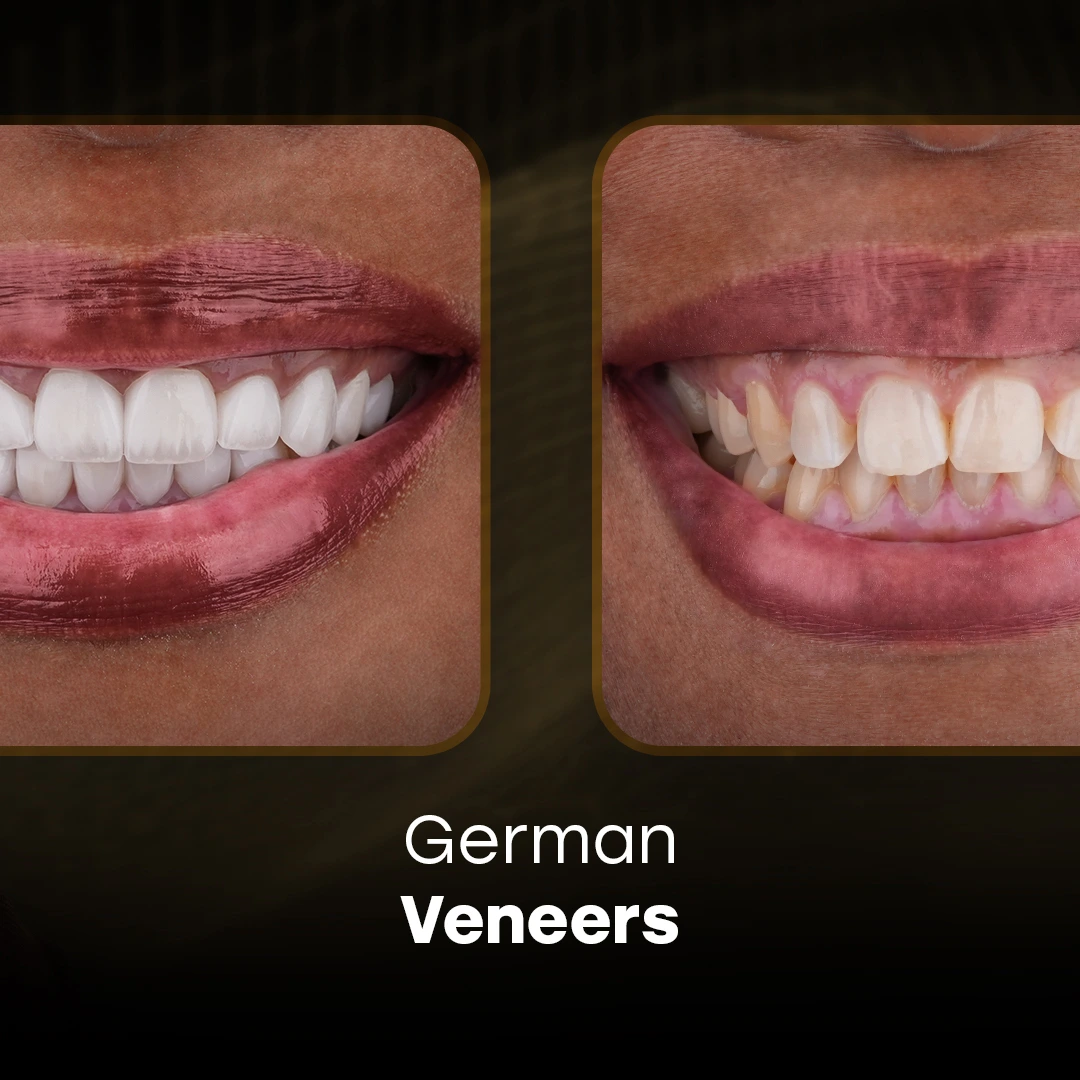
Some of Our Veneers Results:
.jpg)
.jpg)
.jpg)
.jpg)
Ready to transform your smile?
Talk to our team and get a FREE treatment plan.
Full Mouth Veneers vs Dental Crowns: Which Is Better?
Full Mouth Veneers vs Dental Crowns is not a contest with one winner. Veneers cover the front surface and preserve more tooth structure, while crowns cover the whole tooth and add strength. Veneers are usually better for healthy teeth needing cosmetic improvement. Crowns are better for badly damaged or weakened teeth. Many smile makeovers combine both, using the option that fits each individual tooth.
Factor | Full Mouth Veneers | Full Mouth Dental crowns |
Tooth coverage | Front surface, sometimes the edge | Entire tooth, all sides |
Natural tooth preparation | Lower, thin enamel layer | Higher, more reduction on all surfaces |
Main purpose | Cosmetic improvement | Strength, protection and restoration |
Suitable dental conditions | Healthy teeth with good enamel | Large fillings, cracks, root-treated or weakened teeth |
Aesthetic considerations | Very natural, highly refined front teeth | Natural, though may be bulkier |
Long-term maintenance | Good hygiene, protect from grinding | Good hygiene, protect margins and gums |
When Are Veneers More Suitable?
Veneers are more suitable when teeth are structurally healthy and the goal is cosmetic. Typical examples include stained teeth that do not respond to whitening, small chips, minor gaps, uneven shapes and mild misalignment. They preserve more natural tooth than crowns, which matters long term. They also need enough healthy enamel to bond well. Your dentist will confirm that your teeth, gums and bite can support them.
When Might Full Dental Crowns Be Recommended?
Crowns may be recommended when a tooth is heavily decayed, cracked, worn down or has a large filling. They are also commonly used after root canal treatment, where the tooth can be weaker. In these situations, a veneer may not provide enough support. Crowns cover the whole tooth and add protection, although they need more preparation. Many patients receive a mix of veneers and crowns in one treatment plan.
Who Is a Suitable Candidate for Full Mouth Veneers?
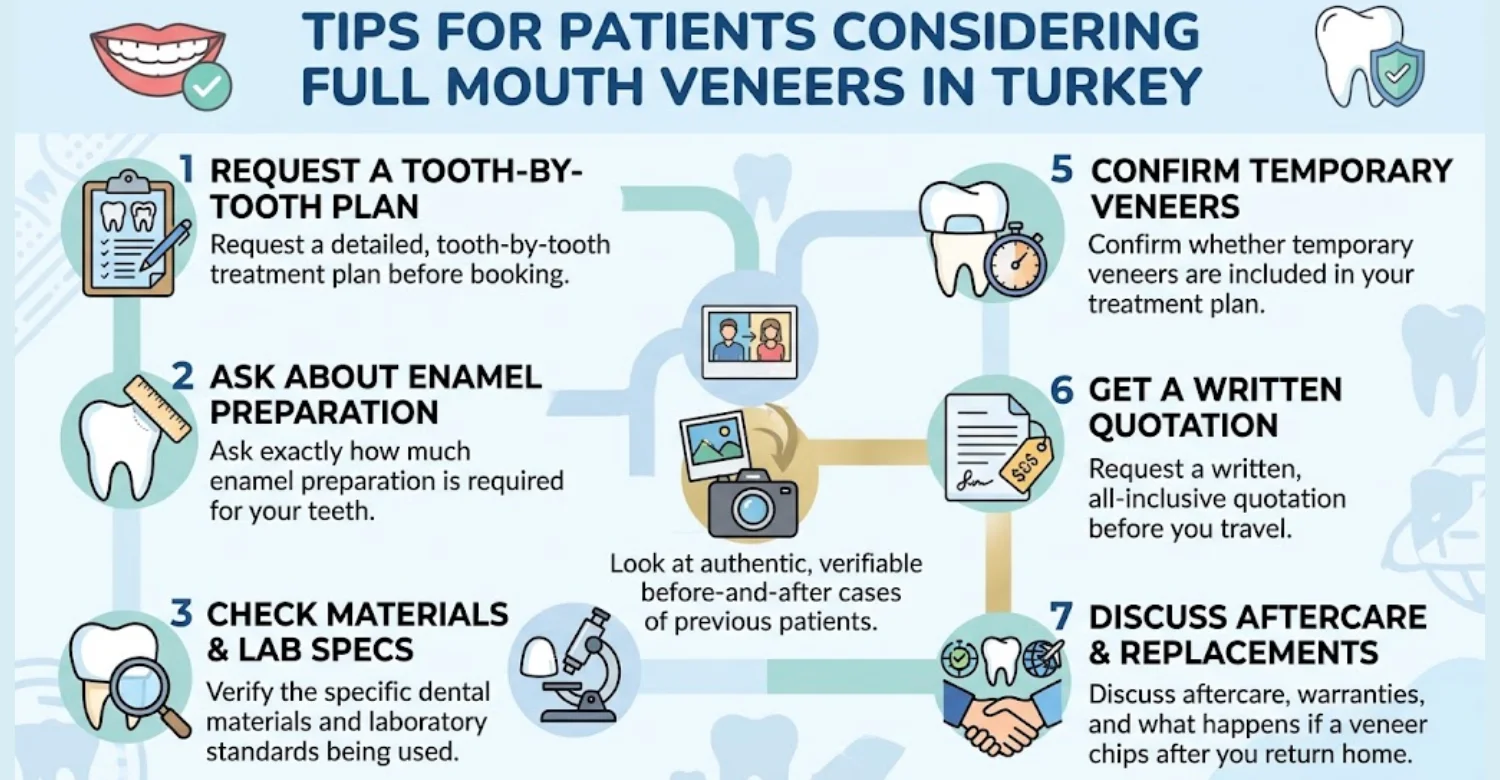
A suitable candidate for Full Mouth Veneers Turkey treatment has healthy gums, sound teeth and enough enamel for bonding. They also have realistic expectations and a stable bite. Good oral hygiene is essential, because veneers do not protect against decay at their edges. Anyone with active disease, severe grinding or very little enamel needs a different plan first. A thorough examination is the only reliable way to decide.
Dental Conditions That Should Be Treated First
Several conditions need treatment before veneers are placed. These include untreated tooth decay, gum disease, infections and failing fillings or root canals. Gum inflammation can change gum shape and make bonding unreliable. Decay under a veneer can progress unnoticed. Severe crowding may also need orthodontic treatment first. Treating these problems first creates a healthy foundation, and it greatly improves the long-term success of the final restorations.
When Veneers May Not Be the Right Choice
Veneers may not be right when enamel is very thin or largely missing, since bonding to dentine is weaker. They are also unsuitable for severe tooth damage, unmanaged grinding, active gum disease and moderate to severe misalignment that needs orthodontics. Poor oral hygiene is another concern. In these cases, crowns, orthodontic treatment, whitening or bonding may be safer. A responsible dentist will tell you honestly when veneers are not the best option.
The Role of Bite Problems and Teeth Grinding
Bite problems and teeth grinding place extra force on veneers. Porcelain is strong but brittle under repeated uneven loads, so chips and fractures become more likely. Your dentist should assess your bite and look for wear patterns before treatment. If you grind your teeth, a custom night guard is usually advised after veneer placement. Managing these forces early protects your investment and reduces the risk of repairs or replacement.
What We Notice Clinically
Dr. Rifat Alsaman advocates for a conservative, minimally invasive approach to veneers, warning that over-preparing teeth, ignoring underlying issues like bruxism or gum disease, and treating only isolated teeth can lead to fractures, color mismatches, and structural damage. He emphasizes honest patient guidance and treating only what is truly necessary to ensure natural, long-lasting results.
Full Mouth Veneers Recovery Time and Aftercare
Full Mouth Veneers Recovery Time is generally short, because veneer treatment is not surgery. Most patients resume normal daily activities soon after appointments. Mild sensitivity, gum tenderness and a feeling of tightness are common for a few days. Good aftercare supports healing and protects your new smile. Individual recovery varies, so follow your dentist's instructions and report severe or lasting pain, bite discomfort or a loose veneer promptly.
What to Expect During the First Few Days
During the first days, your teeth and gums may feel slightly tender, and your bite may feel unfamiliar. Temporary veneers can feel bulkier and may rub the lips or tongue. Speech usually adjusts within days. Gentle brushing and flossing remain important. Local anaesthesia wears off after a few hours, so avoid eating until feeling returns. Contact your clinic if pain is strong, swelling develops or a temporary veneer comes off.
Tooth Sensitivity After Veneer Placement
Some sensitivity to hot, cold or sweet foods is normal after enamel preparation. It usually fades within days to a couple of weeks as the teeth settle. A desensitising toothpaste may help if your dentist recommends it. Persistent or worsening sensitivity, or pain when biting, should be checked. It can point to a bite imbalance or a deeper tooth problem, and early assessment prevents small issues from becoming larger.
Eating and Drinking After Treatment
After the final veneers are bonded, you can usually eat normally once numbness has gone. Avoid very hard or sticky foods such as ice, hard sweets and bones, which can chip or loosen veneers. Do not bite nails or open packages with your teeth. While wearing temporary veneers, be more careful and avoid staining drinks. Porcelain resists stains well, but surrounding natural teeth can still discolour over time.
How to Maintain Your Veneers Long-Term
Brush twice daily with a soft brush and non-abrasive toothpaste, and floss or use interdental brushes every day. Attend check-ups and professional cleanings about every six months. Wear a custom night guard if you grind your teeth. Avoid using your teeth as tools. With good care, porcelain veneers often last 10 to 15 years or more, although they are not permanent and may eventually need replacing.
How Long Should You Stay in Turkey for Full Mouth Veneers?
Most patients planning Full Mouth Veneers Turkey treatment stay around five to seven days. The exact length depends on how many veneers you need, whether extra dental work is required and how quickly the laboratory completes them. Complex cases, such as those needing gum treatment or bite adjustment, may need longer. A clear schedule agreed in advance helps you plan flights and accommodation without pressure.
Treatment Timeline and Appointment Schedule
A typical schedule starts with the examination, scans and design on the first day. Tooth preparation and temporary veneers follow, often within the same visit or the next. While the laboratory works, you attend a short check, and the final fitting happens once veneers arrive. A last review confirms your bite and comfort. Treatment may take longer if decay, gum problems or other procedures must be handled first.
How Many Days Should International Patients Allow?
International patients should generally allow five to seven days, with extra buffer if possible. A few spare days help if the laboratory needs a refinement or you need a small adjustment. Complex cases may need more time. Avoid booking flights that leave no margin. Ask your clinic for an estimated schedule beforehand, and confirm what happens if additional treatment becomes necessary during your stay.
Online Consultation Before Travelling
An online consultation lets you share photos, X-rays and your goals before travelling. The dentist can give a preliminary opinion, discuss options and estimate the likely number of veneers. It cannot replace an in-person examination, because gum health, bite and enamel condition need direct assessment. Use the consultation to ask questions about materials, schedule and aftercare. It also helps you judge how transparent and responsive the clinic is.
Your Journey at Vitrin Clinic
Free Online Consultation
Your journey begins with a complimentary online consultation. Share your dental history, photos, and any existing X-rays with our team. Our specialists will carefully assess your case, discuss your concerns, and answer your questions with no fees or obligation to proceed.
Your Personalised Treatment Plan
Receive a treatment plan tailored to your dental needs, including the recommended procedures, treatment timeline, and a transparent, fixed quotation outlining the agreed costs. Everything is discussed and clarified before you make your travel arrangements, so you can plan your visit with confidence.
Seamless Travel & Accommodation
We take care of the practical details to make your visit as comfortable as possible. Our team assists with hotel accommodation and coordinates your airport, hotel, and clinic transfers, allowing you to focus on your treatment while we help make your stay in Istanbul hassle-free.
Your New Smile & Ongoing Aftercare
Once you arrive, our dental team guides you through each stage of your treatment, with care tailored to your clinical needs. But our commitment does not end when you leave Istanbul. We stay in contact after your return home, providing follow-up guidance and aftercare support to help you maintain your results.
Why Choose Vitrin Clinic for Full Mouth Veneers in Turkey?
Vitrin Clinic provides comprehensive dental veneer treatments, offering Full Mouth Veneers Turkey patients a planned, conservative approach built around individual needs. Treatment focuses on assessing the health of teeth and gums first, then designing a smile that suits your face. International patients receive guidance from consultation to aftercare. The following sections explain how planning, medical leadership, technology, patient support, and pricing work together, so you can judge whether the clinic fits your expectations.
Individualised Smile Assessment and Treatment Planning
Every patient at Vitrin Clinic receives an individual assessment rather than a standard package. The team examines teeth, gums, enamel and bite, then discusses your goals and what is realistic. The plan is explained tooth by tooth, including the number of veneers and the material proposed. This approach aims to avoid unnecessary treatment and preserve healthy tooth structure. You are encouraged to ask questions before any decision is made.
Medical Team Led by Dr. Rifat Alsaman
The medical team at Vitrin Clinic is led by Dr. Rifat Alsaman, Head of the Medical Team. His role includes guiding clinical decisions, treatment planning and quality standards. In veneer cases, this means careful evaluation of enamel, gums and bite before cosmetic work begins. Clear clinical leadership helps keep treatment consistent and conservative. You can ask about the team's experience and request details of how your case will be managed.
Digital Dental Technology and Laboratory Capabilities
Digital tools support accuracy in veneer treatment. Digital smile design allows you to preview proposed changes, while scans improve the precision of fit. Laboratory capabilities affect shade matching, shape and surface finish, which determine how natural veneers look. At Vitrin Clinic, technology supports planning rather than replacing clinical judgement. Ask to see how your design is created and which laboratory processes will be used for your restorations.
International Patient Support in Istanbul
International patients travelling to Istanbul need clear coordination. Vitrin Clinic helps with scheduling, communication before arrival and guidance on how many days to plan. Online consultation allows you to discuss your case early. Good support also means explaining aftercare and what to do if concerns arise after you return home. Ask what assistance is included, such as transfers or accommodation, and confirm it in writing.
Transparent Treatment Plans and Pricing
Transparency means you know what you are paying for before treatment starts. A good plan lists the number of veneers, the material, included services and any extra treatments. At Vitrin Clinic, you can request a written quotation that matches your tooth-by-tooth plan. Clear pricing reduces misunderstandings and lets you compare offers fairly. Always confirm what is covered in case of repairs, adjustments or replacement in the future.






Book your FREE treatment plan with Vitrin Clinic and get a personalized treatment plan from our dental team.
Ready to transform your smile?
Talk to our team and get a FREE treatment plan.
Medical Disclaimer:
This article is for general information and does not replace a personal assessment by a qualified dentist. Prices are approximate 2026 averages, with UK and Turkey figures converted to US dollars, and may vary by clinic and case.
References
FAQs
Veneer packages in Turkey typically average $200 to $500 per tooth, with overall pricing determined by clinic choice, procedural complexity, and premium materials like E-max or zirconia. Estimated total costs generally range from $800 to $2,000 for 4 teeth, $1,600 to $4,000 for 8 teeth, $2,000 to $5,000 for 10 teeth, and $4,000 to $10,000 for a full set of 20 veneers. Because these figures serve only as general guidance, secure an itemized, tooth-by-tooth written quotation directly from the clinic to determine the final price.
Dr. Rifat Alsaman has more than 5 years of clinical experience in dentistry and currently serves as the Head of the Medical Team at Vitrin Clinic. He is dedicated to providing exceptional patient care, overseeing treatment planning, and ensuring the highest clinical standards across the team. His expertise, attention to detail, and commitment to continuous professional development have helped countless patients achieve healthier, more confident smiles.


