General Dentistry
October 4, 2026
Acidic Sugar Free Candy and Tooth Erosion: Can Sugar Free Candy Damage Teeth?
 Dr. Rifat Alsaman
Many people choose sugar-free sweets to protect their teeth. However, sugar is not the only threat. Understanding acidic sugar free candy and tooth erosion matters because many sugar-free sour candies contain strong acids. These acids can soften and wear away enamel. This guide explains how it happens, the warning signs, and prevention.
What Is Tooth Erosion?
Before looking at candy, it helps to know what erosion is. It is the gradual loss of enamel caused by acids, not bacteria.
What Happens to Tooth Enamel During Erosion?
During erosion, acids dissolve minerals from the enamel surface and soften it. Repeated softening, combined with chewing and brushing, wears enamel away layer by layer. Unlike cavities, erosion is not caused by bacteria. It usually affects broad tooth surfaces. Enamel cannot regrow, so lost tooth structure does not come back naturally.
Why Acid Exposure Can Weaken Tooth Enamel
Enamel is made mostly of mineral crystals. These crystals start to dissolve when the mouth becomes acidic, typically below a pH of about 5.5. Many sour products are far more acidic than this. Each acid exposure strips minerals from the surface. Frequent exposure leaves too little time for saliva to repair the damage.
How Acidic Foods and Candy Affect Teeth
Acidic foods and tooth erosion are closely linked. Citrus fruits, soft drinks, sports drinks, vinegar-based foods, and sour candy all lower the mouth's pH. Candy is especially concerning because people often eat it slowly or frequently. This keeps acids in contact with enamel for longer and raises the risk of gradual wear.
Explore the link between Dehydration During Exercise and Tooth Erosion
Can Acidic Sugar Free Candy Cause Tooth Erosion?
Yes, it can. The connection between acidic sugar free candy and tooth erosion is real. Removing sugar does not remove the acids that give sour candy its flavor.
Tooth Erosion From Sour Candy
Tooth erosion from sour candy happens because these sweets are coated or flavored with acids. These acids create their tangy taste. Some sour candies have a pH low enough to rival lemon juice. Eating them often, or letting them dissolve slowly, gives acids repeated chances to soften enamel.
Acidic Candy and Tooth Erosion
Acidic candy and tooth erosion are connected through chemistry rather than bacteria. Hard candies, gummies, sour sprays, and powders can all contain added acids. When these acids touch enamel, they begin dissolving minerals immediately. The more acidic the candy and the longer it stays in the mouth, the greater the damage.
Sugar Free Candy Tooth Erosion
Sugar free candy tooth erosion surprises many people who switch to sugar-free products for dental health. These candies do lower cavity risk. Bacteria cannot easily feed on sugar substitutes. However, many sugar-free sour candies still contain citric or malic acid. They can erode enamel just like regular sour candy.
Why Sugar Free Does Not Always Mean Acid Free
A key lesson in acidic sugar free candy and tooth erosion is that labels can mislead. "Sugar free" only means sugar was replaced with sweeteners such as xylitol, sorbitol, or sucralose. Acids are added separately for flavor. As a result, a sugar-free candy may be just as acidic as a sugary one.
Acids Commonly Found in Sour Candy
Sour candies commonly contain citric, malic, tartaric, fumaric, and ascorbic acids. Citric and malic acids are among the most common. They are particularly effective at dissolving enamel minerals. Extra-sour candies may use higher concentrations or acid-coated surfaces. These deliver a concentrated acid dose directly onto teeth.
How Frequent Acid Exposure Affects Enamel
Saliva needs time to neutralize acids and help enamel recover minerals after each exposure. When sour candy is eaten repeatedly, the mouth stays acidic for long periods. Recovery cannot keep up. Over weeks and months, these repeated attacks lead to visible enamel loss.
Sour Candy and Tooth Enamel
Sour candy and tooth enamel do not mix well. The acid coating on many sour sweets softens enamel within moments of contact. Softened enamel is then more vulnerable to wear from chewing, grinding, and brushing. Over time, this can lead to thinning enamel, sensitivity, and changes in tooth appearance.

Note : All images used are for editorial and illustrative purposes only. They may not originate from the original news provider or associated company.
Read about the risks of Chewing Tobacco Teeth Damage
Is Sugar Free Candy Better for Your Teeth?
Sugar-free candy has real benefits. However, acidic varieties show that it is not automatically safe for teeth.
Sugar Free Candy and Teeth
When it comes to sugar free candy and teeth, the picture is mixed. Non-acidic sugar-free sweets are generally kinder to teeth, especially those with xylitol. They do not feed cavity-causing bacteria and may stimulate saliva. The problem arises when sugar-free candy is also sour or acidic.
Does Sugar Free Candy Damage Teeth?
Does sugar free candy damage teeth? Non-acidic sugar-free candy is low risk. Sour sugar-free varieties, however, can cause enamel erosion. The answer depends on acid content, how often you eat it, and how long it stays in your mouth. Checking ingredient lists for added acids helps you choose wisely.
The Difference Between Sugar and Acidity
Sugar and acidity damage teeth in different ways. Sugar feeds plaque bacteria, which produce acids that cause cavities in specific spots. Acidity from food works directly. It dissolves enamel across broad surfaces without needing bacteria. Removing sugar reduces cavity risk, but only reducing acidity protects against erosion. That is why both matter.
Why Sugar Free Candy Can Still Affect Enamel
With acidic sugar free candy and tooth erosion, the acid matters more than the sweetener. Sugar-free sour candies still contain acids that lower mouth pH immediately. Many people assume sugar-free products are harmless, so they may eat them more often. This unknowingly increases the number of daily acid attacks on their enamel.
Find out if Subperiosteal Implants for Severe Jawbone Atrophy are right for you
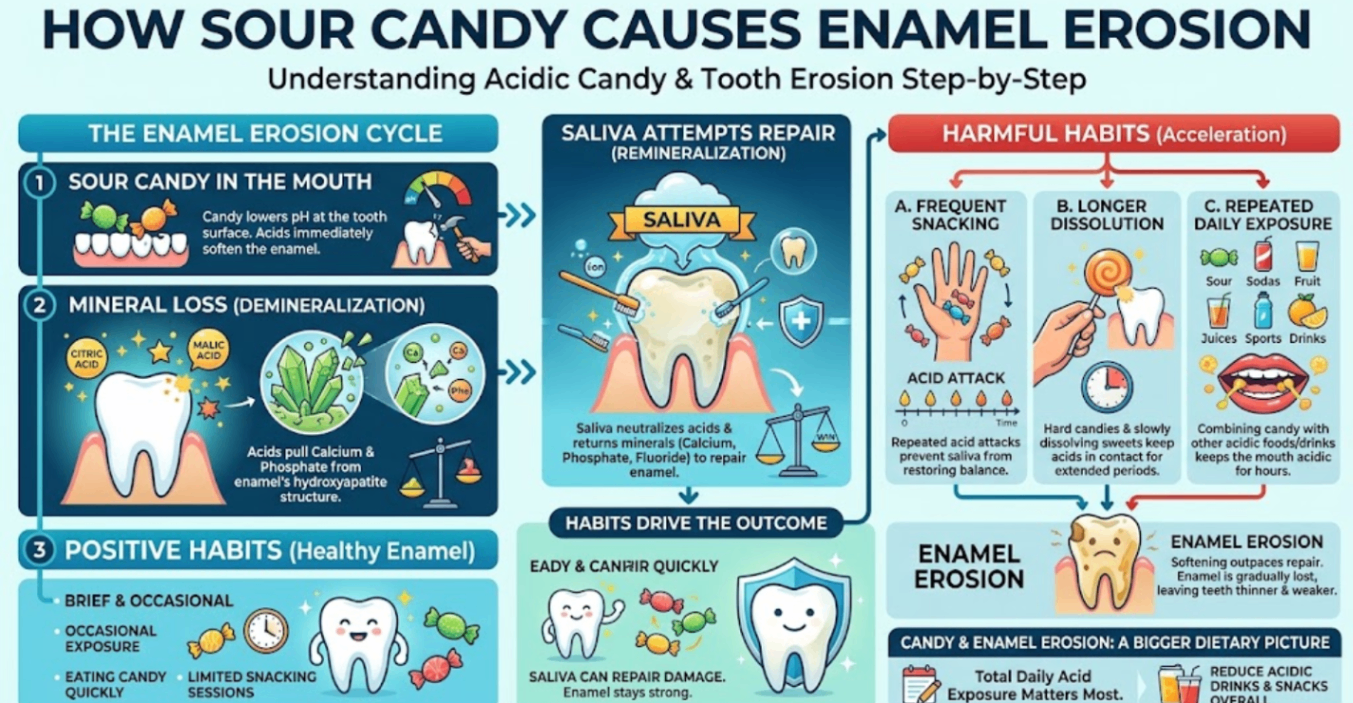
How Does Sour Candy Cause Enamel Erosion?
Sour sweets and enamel erosion follow a clear process. Understanding it step by step explains why habits matter as much as ingredients.
Sour Candy and Enamel Erosion
Sour candy and enamel erosion begin the moment the candy touches your teeth. The acids lower the pH at the tooth surface and soften the outer enamel layer. If exposure is brief and occasional, saliva can repair much of this. With frequent exposure, softening outpaces repair, and enamel is gradually lost.
How Acids Dissolve Minerals From Enamel
Enamel is made of hydroxyapatite, a mineral containing calcium and phosphate. Acids pull these minerals out of the crystal structure, a process called demineralization. Saliva and fluoride can help return some minerals, known as remineralization. Erosion occurs when demineralization repeatedly exceeds remineralization. Over time, this leaves enamel thinner and weaker.
Candy and Enamel Erosion
Candy and enamel erosion are strongly influenced by eating habits, not just candy type. How often you eat candy and how long it stays in your mouth both matter. The number of daily acid exposures also determines risk. The habits below explain why the same candy can harm one person more than another.
Frequent Snacking on Sour Candy
Snacking on sour candy throughout the day creates multiple acid attacks. Each one lowers mouth pH and softens enamel. Saliva needs time to restore balance after each exposure. Eating a few candies at once is generally less harmful than spreading them across many snacking sessions.
Keeping Candy in the Mouth for Longer
Hard candies, lollipops, and slowly dissolving sour sweets keep acids on teeth for extended periods. The longer the contact, the more minerals are lost. Holding candy against the teeth is particularly damaging. Saliva cannot neutralize the acid while the candy remains.
Repeated Acid Exposure Throughout the Day
Candy is rarely the only acid source. Sodas, juices, sports drinks, fruit, and dressings add further acid exposure. When these combine with sour candy, the mouth may remain acidic for hours. This leaves enamel little opportunity to recover and speeds up erosion.
Acidic Foods and Tooth Erosion
Acidic foods and tooth erosion go hand in hand, and candy is part of a bigger dietary picture. In acidic sugar free candy and tooth erosion, total daily acid exposure matters most. Reducing acidic drinks and snacks overall, not only candy, gives enamel the best chance to stay strong.
Discover the connection between Swimming and Tooth Erosion
What Are the Signs of Tooth Erosion From Candy?
Early signs of candy-related erosion are often subtle. Recognizing them helps you seek care before significant enamel is lost.
Increased Tooth Sensitivity
Sensitivity is often the first sign of erosion. As enamel thins, the underlying dentin becomes more exposed. Dentin contains tiny channels leading to the nerve. You may feel brief, sharp discomfort with cold drinks, hot foods, sweets, or cold air. Sensitivity that keeps returning deserves a dental assessment.
Smooth or Shiny Enamel
Eroded enamel often loses its natural texture and looks unusually smooth, glossy, or shiny. This change is gradual. It may be noticed first on the front or biting surfaces of teeth. While it may look harmless, a polished look can mean the outer enamel is wearing away.
Yellowing or Darkening of Teeth
Enamel is naturally translucent, and the dentin beneath it is yellowish. As erosion thins enamel, more dentin shows through. This makes teeth look yellower or darker. This discoloration differs from surface stains and usually does not improve with whitening. The cause is structural tooth loss rather than staining.
Changes in Tooth Shape
As erosion progresses, teeth may change shape. Biting surfaces can develop small dents or cup-like hollows. Edges may look rounded or worn. Fillings may appear to stand higher than the surrounding tooth. These changes reflect lost tooth structure and need professional evaluation.
Transparent or Thinner Tooth Edges
The biting edges of front teeth may become translucent, thin, or slightly see-through. Thinner edges are more prone to chipping and cracking. This sign is often visible when looking at teeth against light. It is a common indicator of acid erosion on front teeth.
Pain When Eating Cold or Hot Foods
Pain with cold or hot foods suggests that enamel loss has exposed dentin. Unlike mild sensitivity, this pain may be sharper or last longer. It can also signal other problems, such as cavities or cracks. A dental examination is important to identify the exact cause and treatment.
Clinical Note
Erosion signs often appear gradually and can be mistaken for normal aging or staining. In cases of acidic sugar free candy and tooth erosion, sensitivity with visible changes needs a dentist's attention. These changes may affect color, shape, or edges. Early evaluation helps protect remaining enamel.
What Makes Sour Candy More Harmful to Tooth Enamel?
Several factors decide how damaging sour candy is. Acidity, frequency, contact time, and saliva all play a role.
High Acidity
The lower a candy's pH, the more aggressively it dissolves enamel. Extra-sour candies, sour powders, and acid-coated gummies are often the most acidic. Some can soften enamel within minutes. Choosing milder sourness reduces the acid load on your teeth.
Frequent Consumption
How often you eat sour candy matters more than how much you eat at once. Each separate snack creates a new acid attack. Frequent attacks prevent enamel recovery. One sour candy every hour carries far more erosion risk than several candies in one sitting.
Long Contact Time With Teeth
Slow-dissolving candies, such as hard sour candies and lollipops, keep acid on teeth for extended periods. Chewy candies that stick to teeth also prolong contact. The longer acids remain on enamel, the more minerals dissolve. This makes slow-dissolving and sticky sour candies particularly harmful.
Eating Candy Between Meals
Eating candy between meals is more harmful than eating it with meals. During meals, saliva flow increases and other foods help buffer acids. Between meals, saliva flow is lower, leaving enamel more vulnerable. If you eat sour candy, having it with a meal is better.
Combining Candy With Other Acidic Foods and Drinks
Pairing sour candy with acidic drinks multiplies the acid load on enamel. Examples include soda, energy drinks, sports drinks, and citrus juice. This combination keeps the mouth acidic for longer and intensifies softening. Choosing water instead significantly reduces the overall erosion risk.
Candy Acidity and Saliva Protection
Saliva is the mouth's natural defense against acid. It neutralizes acid and supplies minerals for repair. People with dry mouth have less protection. Dry mouth can result from certain medications, dehydration, or medical conditions. In acidic sugar free candy and tooth erosion, reduced saliva lets acids do more damage in less time.
How Can You Prevent Tooth Erosion From Candy?
Knowing how to prevent tooth erosion from candy lets you enjoy occasional treats while protecting enamel. The steps below reduce the impact of acidic sweets.
Limit How Often You Eat Sour Candy
Reducing how often you eat sour candy is the most effective way to protect enamel. Treat sour candy as an occasional treat, not a daily habit. If you eat it, enjoy it in one sitting, ideally with a meal. Avoid snacking on it throughout the day.
Choose Less Acidic Alternatives
Choose less acidic alternatives, such as non-sour sugar-free gum or xylitol mints. These can stimulate saliva without adding acid. Cheese, nuts, and plain yogurt also make tooth-friendly snacks. Checking labels for citric, malic, or tartaric acid helps you avoid the most acidic products.
Drink Water After Eating Acidic Candy
Drinking water or rinsing after acidic candy helps wash away acids and restore a more neutral pH. This simple habit reduces the time acids stay on enamel. Chewing sugar-free, non-acidic gum afterwards can also stimulate saliva. This further supports natural enamel protection.
Avoid Brushing Immediately After Acid Exposure
Brushing right after acidic candy can wear away softened enamel. Instead, rinse with water and wait at least 30 to 60 minutes before brushing. This gives saliva time to neutralize acids and begin hardening the enamel. It is an important but often overlooked step in preventing erosion.
Use Fluoride Toothpaste
Fluoride toothpaste strengthens enamel and helps it resist acid attacks. Brush twice daily, and spit out excess toothpaste without rinsing. This keeps fluoride on teeth longer. For higher-risk patients, a dentist may recommend higher-fluoride toothpaste or professional fluoride treatments.
Maintain Good Oral Hygiene
Good oral hygiene supports overall tooth health and helps you spot problems early. Brush gently with a soft-bristled toothbrush and clean between teeth daily. Attend regular dental checkups. In acidic sugar free candy and tooth erosion prevention, gentle technique matters. Hard scrubbing can worsen wear on acid-softened enamel.
Tips for the Patients
Limit frequent consumption of sour and acidic candy. Avoid keeping it in your mouth for extended periods. Drink or rinse with water afterwards, and wait before brushing after significant acid exposure. Choose less acidic snacks when possible. Keep regular dental examinations if you notice sensitivity or visible enamel changes.
Check the connection between Idiopathic Multicentric Castleman Disease and Dental Health
When Should You See a Dentist About Candy-Related Tooth Erosion?
Erosion is easier to manage when caught early. See a dentist if you notice any of the following signs.
Persistent Tooth Sensitivity
Occasional mild sensitivity can be common. However, sensitivity that persists for weeks or worsens needs professional attention. It may indicate exposed dentin from enamel erosion. It can also point to cavities, gum recession, or cracks. A dentist can identify the cause and recommend suitable protective treatment.
Visible Changes in Enamel
Visible enamel changes suggest erosion may already be underway. These include shiny smooth patches, thin translucent edges, or small dents on biting surfaces. Because enamel does not regrow, early assessment helps protect the remaining tooth structure. It also helps prevent further damage and more extensive treatment.
Increasing Tooth Wear
If your teeth look shorter, flatter, or more worn, erosion may be combining with grinding or brushing wear. Increasing tooth wear can affect your bite, appearance, and comfort. A dentist can assess how quickly wear is progressing and identify contributing habits. They can also recommend ways to slow it.
Tooth Pain After Eating Sour Candy
Pain after eating sour candy suggests that enamel may be thinned or dentin exposed. Acids can also irritate existing cavities or cracks. If sour foods regularly cause pain, reduce them. Then book a dental appointment so the cause can be properly diagnosed and treated.
Changes in Tooth Color or Shape
Teeth that look more yellow, darker, or translucent may be affected by erosion. The same applies to rounded edges or cupped surfaces. These changes indicate tooth structure loss rather than surface staining. A dental evaluation determines the extent of damage and suitable treatments.
Ready to transform your smile?
Talk to our team and get a personal FREE treatment plan.
Acidic Sugar Free Candy and Tooth Erosion: Key Takeaways
Here is a summary of the most important points about acidic candy and how to keep your enamel healthy.
Why Sugar Free Candy Can Still Be Acidic
Sugar-free candy replaces sugar with sweeteners, but acids are often added for sour flavor. This is the central point of acidic sugar free candy and tooth erosion. A product can be free of sugar yet highly acidic. Always check ingredient lists for citric, malic, tartaric, or fumaric acids.
How Sour Candy Affects Tooth Enamel
Sour candy lowers mouth pH and softens enamel by dissolving its minerals. With repeated exposure, softened enamel wears away through chewing and brushing. This leads to sensitivity, discoloration, and changes in tooth shape. The damage is gradual. Many people do not notice it until erosion is advanced.
Why Frequency of Acid Exposure Matters
Frequency is one of the biggest risk factors in acidic sugar free candy and tooth erosion. Each exposure triggers a new acid attack. Saliva needs time to repair enamel between attacks. Frequent snacking keeps teeth under constant acid challenge. Limiting exposures gives enamel the chance to recover.
How to Protect Teeth From Acidic Candy
Protect teeth by limiting sour candy, eating it with meals, and rinsing with water afterwards. Wait before brushing, use fluoride toothpaste, and choose less acidic snacks. These simple habits reduce acid damage while still allowing occasional treats in moderation.
Vitrin Clinic's Approach to Tooth Erosion
Vitrin Clinic focuses on early detection and prevention of tooth erosion. Our team assesses enamel condition and sensitivity and identifies dietary sources of acid. We then create personalized plans to protect teeth. Rather than only treating symptoms, we help patients understand and change the habits behind erosion.
Learn how your body clock affects your mouth in Circadian Rhythm and Oral Health
How Does Vitrin Clinic Help Patients With Tooth Erosion?
At Vitrin Clinic, we help patients understand candy-related erosion. We protect their teeth with careful evaluation and personalized care.
.jpg)
.jpg)
.jpg)
.jpg)
.jpg)
Evaluating Enamel Damage
Our dental team examines enamel thickness, surface texture, tooth shape, and color changes. This helps determine the extent of erosion. We look for early signs such as smooth patches and thin edges, as well as advanced wear. This evaluation shows how much tooth structure has been affected.
Identifying Dietary and Lifestyle Risk Factors
Erosion often stems from daily habits. We review diet, including sour candy, acidic drinks, and snacking frequency. We also consider dry mouth, medications, and brushing technique. In acidic sugar free candy and tooth erosion cases, identifying the acid source is essential. It is the key to stopping further damage.
Managing Tooth Sensitivity
Managing sensitivity is a key part of care. Depending on the evaluation, options may include desensitizing toothpaste or professional fluoride applications. Protective coatings and bonding can also cover exposed dentin. The goal is to relieve discomfort and strengthen remaining enamel. It also protects teeth from further acid exposure.
Personalized Treatment Planning at Vitrin Clinic
Every patient's erosion pattern is different, so Vitrin Clinic creates personalized treatment plans. Plans may combine dietary guidance, preventive products, and restorative options when needed. Treatment depends on enamel loss, sensitivity levels, and patient goals. Regular follow-up helps monitor progress and keep teeth protected.
What We Notice Clinically
At Vitrin Clinic, patients with suspected enamel erosion can receive a full assessment. This covers tooth sensitivity, enamel condition, and possible dietary causes. Dr. Rifat Alsaman is Head of the Medical Team at Vitrin Clinic and a Cosmetic Dentist. Dr. Alsaman emphasizes identifying the source of repeated acid exposure first. This guides the most appropriate approach to protecting the teeth.
Resource:
https://pmc.ncbi.nlm.nih.gov/articles/PMC5774060/
https://pubmed.ncbi.nlm.nih.gov/?term=Are+sugar-free+confections+really+beneficial+for+dental+health
FAQs
Dr. Rifat Alsaman has more than 5 years of clinical experience in dentistry and currently serves as the Head of the Medical Team at Vitrin Clinic. He is dedicated to providing exceptional patient care, overseeing treatment planning, and ensuring the highest clinical standards across the team. His expertise, attention to detail, and commitment to continuous professional development have helped countless patients achieve healthier, more confident smiles.


