General Dentistry
October 4, 2026
Long Distance Endurance Exercise and Tooth Erosion: How Are They Connected?
 Dr. Rifat Alsaman
Long distance endurance exercise and tooth erosion are more closely linked than many runners, cyclists, and triathletes realize. Hours of training can dry the mouth and reduce protective saliva. They also increase contact with acidic drinks. Understanding how exercise affects teeth helps athletes protect their enamel. It also lets them keep training hard and performing well.
What Is Tooth Erosion?
Tooth erosion is the gradual loss of enamel caused by acids, not bacteria. Unlike cavities, erosion wears away the tooth's outer surface chemically. Dentists look closely at training habits, hydration, and drink choices. Each of these can increase acid contact with teeth over time.
What Happens to Tooth Enamel During Erosion?
Acids soften enamel minerals, making the surface weaker and easier to wear down. Saliva can partially repair early softening. However, repeated acid attacks outpace this natural recovery. Over time, enamel becomes thinner, smoother, and more sensitive. Lost enamel cannot regrow on its own.
How Does Long Distance Endurance Exercise Affect Teeth?
Understanding how exercise affects teeth starts with the mouth during long sessions. Heavy breathing dries oral tissues, and saliva flow drops. Athletes also sip acidic or sugary drinks again and again. As these conditions repeat across weeks and months, the risk of enamel wear grows.
How Exercise Affects Teeth Through Saliva and Acidity
Saliva neutralizes acids and washes away drink residue. It also supplies minerals that help enamel recover. During prolonged effort, saliva may become thinner and less plentiful. As a result, acids linger longer on the teeth. This shift explains much of the erosion seen in endurance athletes, especially with frequent acidic drinks.
Note : All images used are for editorial and illustrative purposes only. They may not originate from the original news provider or associated company.
Compare cavity prevention in Dental Sealants vs Fluoride Treatment
Can Long Distance Exercise Cause Tooth Erosion?
Exercise itself does not dissolve enamel, but the conditions around it can. Long distance endurance exercise and tooth erosion are connected through dry mouth, reduced saliva, and acidic drinks. When these factors combine over months of training, enamel faces repeated acid challenges. Gradually, this can lead to noticeable wear.
Tooth Erosion From Exercise
Tooth erosion from exercise usually develops slowly, not after a single workout. Each long session may add a small acid challenge while saliva is limited. Over time, these small effects add up. This is why dentists often discuss endurance training and enamel health together.
Exercise and Tooth Erosion
The relationship between exercise and tooth erosion depends on habits, not effort alone. Athletes who hydrate well with water and limit acidic sips usually face lower risk. Those who train for hours with sports drinks and a dry mouth face greater exposure.
Why Endurance Athletes May Have a Higher Risk
Endurance athletes train longer and more often than most people. This increases the total time spent with a dry mouth and acidic drinks. Some schedules even include several sessions a day. This cumulative exposure is why prevention habits matter so much for runners, cyclists, and triathletes.
Reduced Saliva During Prolonged Exercise
During prolonged effort, the body redirects fluids, and saliva production may decrease. Less saliva means weaker natural buffering against acids. It also means slower clearance of drink residue. This is one of the main physiological reasons for enamel wear in athletes. The effect is stronger during hot or very intense sessions.
Mouth Breathing and Dry Mouth
Hard training often shifts athletes to mouth breathing to take in more air. Constant airflow dries the teeth and gums. This leaves enamel without its protective saliva layer. A dry mouth allows acids to act longer, which adds to erosion over repeated sessions.
Frequent Exposure to Acidic Drinks
Sports drinks, energy gels, and some recovery beverages are often acidic. Sipping them every few minutes keeps the mouth acidic for long periods. This repeated exposure is a major driver of enamel wear. The risk is higher when water is not used between acidic sips.
Tooth Erosion in Athletes
Tooth erosion in athletes is reported across many sports. Endurance disciplines raise particular concern because sessions are long and hydration drinks are used heavily. Athletes may not notice early changes. Recognizing long distance endurance exercise and tooth erosion as a real risk encourages earlier prevention. Regular dental assessments also help.
Dental Erosion in Athletes
Dental erosion in athletes is the same acid-driven enamel loss seen in the general population. The difference is that training habits shape it. Hydration choices, breathing patterns, and drink timing all play a role. Managing these habits is the most practical way for active people to reduce their risk.
Find out the causes and solutions for a Scalloped Tongue
How Do Sports Drinks Contribute to Tooth Erosion?
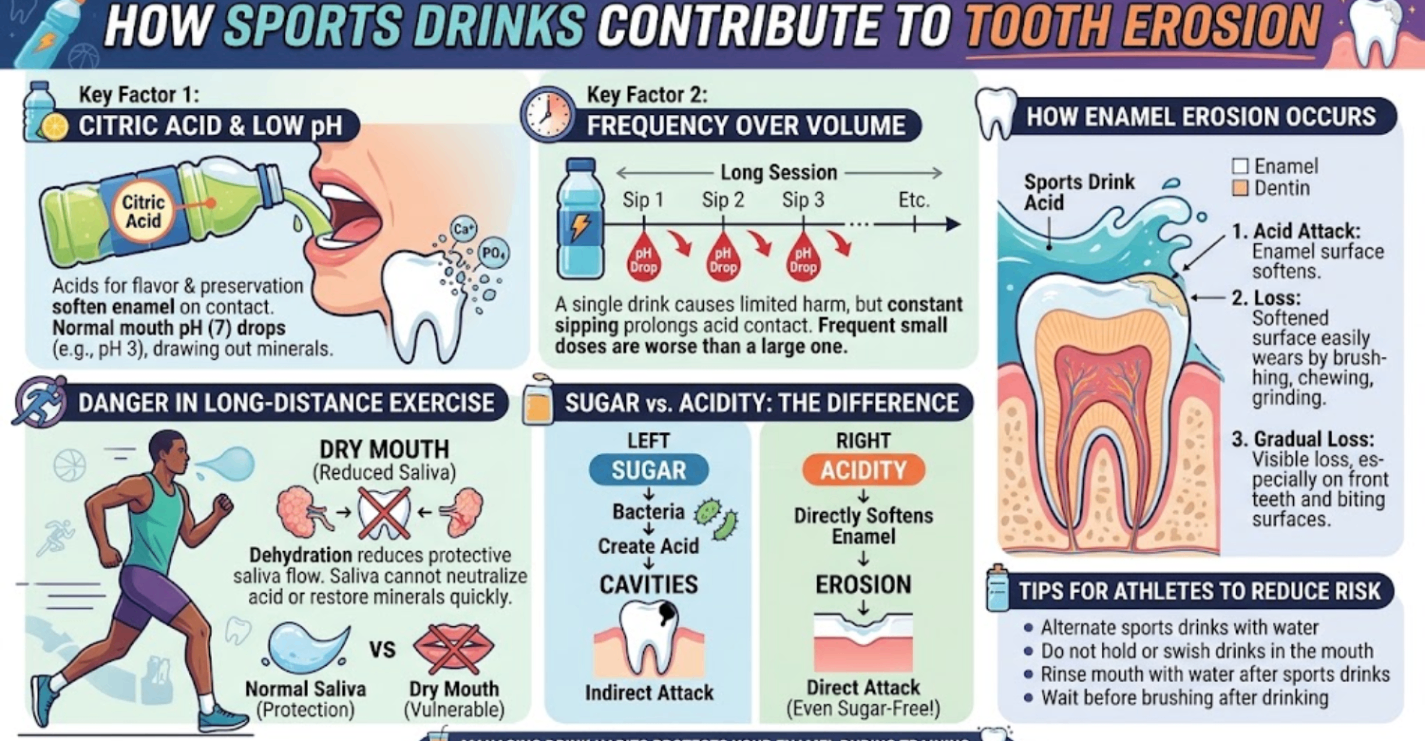
Many sports drinks contain acids, such as citric acid, for flavor and preservation. These acids can soften enamel on contact. Endurance athletes sip these drinks repeatedly during training. Combined with a dry mouth, this makes sports drinks a significant factor in long distance endurance exercise and tooth erosion.
Sports Drinks and Tooth Erosion
The connection between sports drinks and tooth erosion is mainly about acidity and frequency. A single drink causes limited harm. However, constant sipping during long sessions prolongs acid contact. For athletes, managing drink timing helps protect enamel without sacrificing hydration.
Sports Drinks and Enamel Erosion
Sports drinks and enamel erosion are linked because enamel softens when the mouth becomes acidic. Repeated softening without recovery time leads to gradual surface loss. Athletes can reduce this risk by alternating sports drinks with water. They should also avoid holding drinks in the mouth.
How Acids in Sports Drinks Affect Enamel
Acids in sports drinks draw minerals out of enamel and soften its surface. Softened enamel is easily worn by brushing, chewing, or grinding. During long training sessions, this softening is amplified. Reduced saliva cannot quickly neutralize the acid or restore lost minerals.
Enamel Erosion From Sports Drinks
Enamel erosion from sports drinks often appears first on front teeth and biting surfaces. These are the areas where drinks make the most contact. Swishing or holding liquid increases exposure. Such patterns help dentists recognize exercise-related erosion. They also show which drinking habits need adjusting.
Why Frequent Sipping May Increase Acid Exposure
Each sip lowers the mouth's pH, and saliva needs time to bring it back to normal. Frequent sipping prevents full recovery between exposures. As a result, enamel stays softened for longer. This makes frequency, not just volume, an important factor for training athletes.
Sugar and Acidity: What Is the Difference?
Sugar feeds mouth bacteria that produce acids and cause cavities. Acidity, however, attacks enamel directly, without bacteria. Sports drinks may contain both. This difference matters because even sugar-free drinks can erode enamel if they are acidic.
Compare options in Implant-Supported Dentures vs Traditional Dentures
What Are the Signs of Tooth Erosion in Athletes?
Signs of athlete tooth erosion often develop gradually and may be overlooked at first. Common indicators include sensitivity, color changes, thinning enamel, and altered tooth edges. Recognizing these early signs allows athletes to seek dental advice sooner. Early action can prevent more advanced enamel loss.
Increased Tooth Sensitivity
Sensitivity is often the first sign of enamel loss. As enamel thins, the dentin underneath becomes more exposed. Temperature and sweetness can then trigger discomfort. Athletes who notice sharp twinges after training or drinking should take note. This sensitivity may be related to acid exposure and enamel wear.
Yellowing or Changes in Tooth Color
Enamel is naturally whitish and partly translucent, while the dentin beneath it is more yellow. As erosion thins enamel, more dentin color shows through. Teeth may then appear yellower or duller. This is a common visible sign of repeated acid exposure.
Smooth, Thin, or Transparent Enamel
Eroded teeth may look unusually smooth, glossy, or shiny as their natural texture fades. The biting edges of front teeth can become thin and slightly transparent. These changes suggest enamel is wearing away. They are a common pattern when acid exposure is frequent.
Rounded or Flattened Tooth Edges
Erosion can soften the sharp outlines of teeth, making edges look rounded or flattened. Fillings may appear raised above the surrounding tooth surface. This happens as the enamel around them wears down. These shape changes usually develop slowly over a longer period.
Small Cracks or Changes in Tooth Shape
Weakened enamel is more prone to small chips, cracks, or uneven surfaces. Teeth may also gradually look shorter or change shape. Athletes should not ignore these changes. They can signal ongoing enamel loss that benefits from professional evaluation. Adjusting daily habits and hydration choices can also help.
Discomfort When Drinking Cold or Hot Beverages
Pain with cold water, hot drinks, or ice is a frequent complaint when enamel thins. During or after training, cold drinks may trigger sharp sensations. This discomfort is a practical warning sign. It deserves attention from a dentist.
Clinical Note
Signs of erosion can be subtle. They are easily mistaken for normal sensitivity or staining. Because changes occur gradually, regular dental examinations help detect enamel wear early. Early detection allows preventive steps before more extensive treatment becomes necessary.
Evaluate your choices in Tooth Extraction vs Dental Implant
What Causes Tooth Erosion During Long Distance Endurance Exercise?
Several factors work together: long sessions, dehydration, mouth breathing, and frequent acidic drinks. No single factor usually causes damage alone. Long distance endurance exercise and tooth erosion become linked when these conditions overlap repeatedly. The result is long periods of acid exposure with little saliva protection.
Prolonged Exercise Sessions
Sessions lasting an hour or more create long windows of oral dryness. They also involve repeated drink exposure. The longer the session, the more acid contacts the teeth may experience. Each extended workout adds to the total acid challenge enamel must withstand.
Dehydration and Reduced Saliva
Dehydration reduces the fluid available for saliva production. With less saliva, the mouth loses its main defense against acids. Athletes who start sessions underhydrated may develop a dry mouth sooner. This leaves enamel more vulnerable during training and recovery.
Increased Mouth Breathing
As intensity rises, athletes breathe more through the mouth to meet oxygen demands. Air passing over the teeth evaporates moisture and dries the enamel surface. Without this moist layer, acids from drinks or gels act more directly on the teeth. This raises the risk of erosion during and after training.
Frequent Sports Drink Consumption
Sports drinks provide useful carbohydrates and electrolytes. However, frequent consumption increases acid contact. Sipping throughout a long run or ride keeps the mouth acidic. Balancing sports drinks with water keeps the hydration benefits while reducing acid exposure.
Acidic Energy and Recovery Drinks
Energy drinks, flavored recovery beverages, and some gels may also be acidic. Athletes often use them before, during, and after training. This extends total acid exposure across the day. Checking labels and pairing these products with water can limit their impact on enamel.
Exercise Intensity and Duration
Higher intensity increases mouth breathing and fluid loss. Longer duration extends exposure time. Together, they can amplify dryness and acid contact. Athletes with demanding programs should pay closer attention to their oral habits.
Exercise and Dental Erosion
The link between exercise and dental erosion reflects both physical demand and drinking habits. Exercise remains highly beneficial for overall health. The goal is not to train less. Instead, it is to manage the hydration and drink choices that affect enamel.
Understand symptoms and treatment for Oral Herpes
How Can Athletes Prevent Tooth Erosion During Exercise?
Prevention focuses on hydration, smarter drink habits, and good oral care. Simple adjustments can greatly reduce acid exposure without affecting performance. Athletes who understand long distance endurance exercise and tooth erosion can protect their enamel more effectively. Key tools include water, careful sports-drink use, fluoride toothpaste, and regular dental checkups.
Drink Water Regularly
Water hydrates without adding acid and helps maintain saliva flow. Sipping water before, during, and after training keeps the mouth moist. It also rinses away residue from other drinks. Using water as the main hydration source, when appropriate, is a simple way to protect enamel.
Reduce Frequent Exposure to Acidic Sports Drinks
Instead of sipping sports drinks constantly, athletes can drink them at planned intervals. Water can be used in between. Swallowing promptly, rather than holding liquid in the mouth, also reduces contact time. These changes lower acid exposure while still meeting energy and electrolyte needs.
Rinse the Mouth With Water After Sports Drinks
Rinsing with water after a sports drink helps wash acids away. It also supports a return to a neutral mouth environment. This quick habit is easy to add during training breaks and after sessions. It is a simple, practical way to protect enamel.
Avoid Brushing Immediately After Acid Exposure
Enamel is temporarily softened after acid exposure. Brushing immediately may wear it down further. Waiting before brushing gives saliva time to neutralize acids and support recovery. Rinsing with water first, then brushing later, is a gentler routine after acidic drinks.
Use Fluoride Toothpaste
Fluoride strengthens enamel and helps it resist acid attacks. Brushing twice daily with fluoride toothpaste supports the repair of weakened areas. For athletes, fluoride is an important daily defense. A dentist may also recommend extra fluoride products based on individual risk.
Maintain Regular Dental Checkups
Routine dental visits allow early detection of enamel wear before symptoms become significant. A dentist can monitor changes, identify risk factors, and suggest preventive measures. Regular checkups are especially valuable during heavy training periods or race seasons.
Tips for the Patients
Stay hydrated before, during, and after endurance exercise.
Use water when possible between sports-drink exposures.
Avoid holding or swishing acidic drinks in the mouth.
Rinse with water after consuming acidic beverages.
Wait before brushing after significant acid exposure.
Discuss persistent sensitivity or enamel changes with a dentist.
Ready to transform your smile?
Talk to our team and get a personal FREE treatment plan.
What Should Athletes Know About Sports Drinks and Dental Health?
Sports drinks can support performance, but they should be used thoughtfully. Their acidity and how often they are consumed matter more than any single drink. Informed athletes can still enjoy the benefits of sports drinks. They simply need habits that reduce harm to enamel.
Are Sports Drinks Always Harmful to Teeth?
Sports drinks are not automatically harmful. Risk depends on how often they are consumed and how long they stay in the mouth. It also depends on whether saliva and water help neutralize acids. Occasional, well-timed use carries far less risk than constant sipping throughout long sessions.
How Can Athletes Reduce Acid Exposure?
Athletes can drink water between acidic drinks, swallow promptly, avoid swishing, and rinse afterward. Limiting acidic snacks around training also helps. These habits lower the overall acid load without compromising hydration or performance.
Does Drinking Through a Straw Help Protect Teeth?
Drinking through a straw may reduce contact between acidic drinks and the front teeth. This works best when the straw is positioned toward the back of the mouth. It is not a complete solution. However, it can support other habits such as rinsing and drinking water.
Can Sugar-Free Sports Drinks Still Cause Enamel Erosion?
Yes. Sugar-free drinks may reduce cavity risk, but many remain acidic. Acid, not sugar, is what causes erosion. So sugar-free options can still soften enamel. Athletes should check a drink's acidity as well as its sugar content.
When Should Athletes Consider a Dental Evaluation?
Athletes should consider an evaluation if they notice sensitivity, color changes, thinning edges, or discomfort during training. Those who regularly consume sports drinks should also discuss their habits with a dentist. Early evaluation helps manage long distance endurance exercise and tooth erosion before major enamel loss occurs.
Recognize the early signs of Salivary Gland Cancer
When Should an Athlete See a Dentist About Tooth Erosion?
An athlete should see a dentist when symptoms persist or visible changes appear. Since enamel does not regrow, early attention helps preserve what remains. A dental visit can confirm whether training habits are behind the erosion. It can also guide appropriate prevention.
Persistent Tooth Sensitivity
Sensitivity that lasts more than a few days or keeps returning should be checked. It may indicate thinning enamel or exposed dentin. A dentist can identify the cause and recommend protective options. These can reduce discomfort, strengthen the teeth, and help prevent further wear.
Visible Enamel Changes
Yellowing, transparent edges, or an unusually smooth and glossy surface are visible signs of erosion. You may notice these changes in a mirror or in photos. A dental assessment can determine their extent and cause. It also helps decide which preventive steps or treatments are most suitable.
Increasing Tooth Wear
Teeth that look shorter, flatter, or more rounded over time may be experiencing progressive wear. A dentist can track these changes and check whether erosion is still active. They can also identify which daily habits may be contributing. The right adjustments can then be made before damage increases.
Pain During or After Exercise
Tooth pain during or after training should not be ignored, especially with cold or acidic drinks. It may reflect exposed dentin or weakened enamel. A professional evaluation can rule out erosion or other dental problems. Left untreated, these issues could get worse.
Frequent Sports Drink Consumption With Dental Symptoms
Athletes who drink sports beverages often and notice dental symptoms should schedule a visit. This combination strongly suggests acid exposure may be affecting enamel. A dentist can review habits and recommend changes to reduce the impact on the teeth.
Explore the difference in Dental Implants vs Snap-In Dentures
Long Distance Endurance Exercise and Tooth Erosion: Key Takeaways
Long distance endurance exercise and tooth erosion are linked through dry mouth, reduced saliva, and frequent acidic drinks. Exercise itself remains valuable for health. With informed habits, athletes can keep training while protecting their enamel. This reduces the long-term effects of acid exposure on their teeth.
The Connection Between Exercise, Hydration, and Enamel
Hydration supports saliva, and saliva protects enamel. Long sessions can cause dehydration and mouth breathing, which weaken this protection. Acids then act more easily on the teeth. Staying well hydrated, mainly with water, helps maintain the mouth's natural defenses.
Why Sports Drinks Can Increase Acid Exposure
Sports drinks often contain acids, and frequent sipping prolongs acid contact with teeth. Combined with reduced saliva during training, this creates ideal conditions for enamel softening. Timing, frequency, and rinsing habits are key. They reduce the effects on enamel without giving up performance benefits.
How Athletes Can Protect Their Teeth
Athletes can protect their teeth with a few simple steps. These include drinking water regularly, limiting constant sipping of acidic drinks, and rinsing after sports drinks. Waiting before brushing, using fluoride toothpaste, and attending regular checkups also help. Together, these steps reduce enamel wear and keep teeth comfortable.
Vitrin Clinic's Approach to Enamel Protection
Vitrin Clinic focuses on understanding each patient's habits before recommending care. The team considers exercise routines, hydration, and drink choices. This helps athletes address long distance endurance exercise and tooth erosion effectively. Guidance and treatment options are matched to the pattern and severity of enamel wear.
.jpg)
.jpg)
.jpg)
.jpg)
.jpg)
How Does Vitrin Clinic Help Patients With Tooth Erosion?
Vitrin Clinic assesses enamel wear, identifies contributing habits, and creates personalized care plans. For athletes, this includes reviewing training routines and drink choices. The clinic focuses on finding the underlying causes before selecting any treatment.
Assessment of Enamel Wear and Tooth Sensitivity
The dental team at Vitrin Clinic examines the location, pattern, and severity of enamel wear. They also evaluate tooth sensitivity. This helps distinguish erosion from other types of tooth wear. It also sets a clear baseline for monitoring changes and measuring the success of preventive care.
Identifying Lifestyle and Dietary Risk Factors
Vitrin Clinic reviews lifestyle and dietary factors such as exercise, hydration, sports drinks, and acidic foods. Identifying these contributors allows the team to recommend practical changes. These changes reduce acid exposure and fit into each patient's training routine. They also support long-term enamel protection.
Personalized Dental Care at Vitrin Clinic
Care at Vitrin Clinic is tailored to each patient's findings, habits, and goals. Recommendations may include preventive guidance, fluoride support, and treatment options when needed. Each choice depends on the severity of enamel wear and the causes found during the assessment.
What We Notice Clinically
At Vitrin Clinic, the dental team evaluates the pattern and severity of enamel wear. They also consider exercise habits, hydration, sports-drink use, and tooth sensitivity. Dr. Rifat Alsaman is Head of the Medical team at Vitrin Clinic and a cosmetic dentist. Dr. Alsaman highlights the importance of finding the underlying causes of erosion before choosing a treatment.
Find out what causes and treats White Spots on Teeth
Resource:
https://pubmed.ncbi.nlm.nih.gov/24917276/
https://pmc.ncbi.nlm.nih.gov/articles/PMC11242021/
https://pubmed.ncbi.nlm.nih.gov/30408425/
FAQs
Dr. Rifat Alsaman has more than 5 years of clinical experience in dentistry and currently serves as the Head of the Medical Team at Vitrin Clinic. He is dedicated to providing exceptional patient care, overseeing treatment planning, and ensuring the highest clinical standards across the team. His expertise, attention to detail, and commitment to continuous professional development have helped countless patients achieve healthier, more confident smiles.


