
Many people living with psoriasis wonder whether a hidden dental problem could be feeding their flare-ups. Can tooth infection cause psoriasis? Current research shows an association between oral infection and psoriasis severity. A direct cause-effect link has not been proven. Understanding this relationship helps patients protect both their oral and skin health. It is one of the reasons Vitrin Clinic encourages psoriasis patients to keep up with regular dental care.
What Is Psoriasis?
Psoriasis is a chronic skin condition caused by an overactive immune system. It speeds up skin cell turnover, leading to red, scaly, inflamed patches. It is not contagious and often follows a pattern of flare-ups and remission. Because it is driven by systemic inflammation, many patients ask whether other sources of inflammation, including dental infection, might worsen their symptoms. This is exactly the reasoning behind the question of whether a tooth infection can trigger a flare.
What Causes Psoriasis?
Psoriasis develops from a combination of genetic predisposition and immune system dysfunction. T-cells mistakenly attack healthy skin tissue. Environmental factors such as stress, infections, skin injury, and certain medications can activate the disease in genetically susceptible people. Because infection is a recognized trigger category, some researchers have studied whether tooth infection and psoriasis share this same inflammatory pathway.
Is Psoriasis an Autoimmune Condition?
Yes. Psoriasis is widely classified as an immune-mediated inflammatory condition, sometimes described as autoimmune in nature. The immune system produces excess inflammatory signals that accelerate skin cell growth. This immune overactivity is central to why researchers keep asking, can tooth infection cause psoriasis, since any chronic infection could theoretically add fuel to an already sensitized immune system.
What Triggers Psoriasis Flare-Ups?
Flare-ups can be triggered by stress, skin trauma, cold weather, certain medications, alcohol, smoking, and infections. Streptococcal throat infections are a well-documented trigger for guttate psoriasis specifically. Infections elsewhere in the body are known triggers. Because of this, it is reasonable that patients and clinicians continue to examine whether oral infection and psoriasis flare-ups are connected in a similar way.
Common Psoriasis Triggers
Common triggers include emotional stress, skin injuries (the Koebner phenomenon), cold and dry weather, and certain drugs like beta-blockers and lithium. Heavy alcohol use, smoking, and infections such as strep throat are also common triggers. Some patients also report flares linked to obesity or hormonal changes. Dental issues are not officially listed as a proven major trigger, but they remain under active research.
The Role of Inflammation in Psoriasis
Inflammation is the core driver of psoriasis. Elevated inflammatory markers circulate throughout the body, not just in the skin. This systemic inflammatory burden is why psoriasis is linked to conditions like heart disease and arthritis. It is also the biological reasoning behind theories exploring whether dental infection and psoriasis inflammation might interact or amplify one another.
Can Tooth Infection Cause Psoriasis?
There is no confirmed direct causal link proving that a tooth infection causes psoriasis. However, a 2022 systematic review found a positive statistical association between periodontitis and psoriasis, while cautioning that the evidence remains weak. So while can tooth infection cause psoriasis is not answered with a firm yes, an association worth monitoring does exist.
Can a Tooth Infection Trigger Psoriasis?
A tooth infection may act as one of several inflammatory contributors that could influence flare intensity in someone already predisposed to psoriasis. It is unlikely to be a standalone trigger. The focal infection theory, based on a retrospective review of 129 patients, found dental caries among the common infections noted before flares of psoriasis and chronic urticaria appeared.
Can Dental Infection Cause Psoriasis?
Dental infection has not been proven to directly cause psoriasis, since psoriasis originates from genetic and immune factors. Can dental infection cause psoriasis remains an open research question, with population studies showing mixed results. A large US representative study, for example, found no statistically significant association between psoriasis and periodontal or dentition status.
What Is the Connection Between Tooth Infection and Psoriasis?
The proposed connection centers on systemic inflammation. Bacteria and inflammatory byproducts from a tooth infection can enter the bloodstream and add to the body's total inflammatory load. In people who already have psoriasis, this added burden could theoretically worsen symptoms. This is why tooth infection and psoriasis continue to be studied together in dermatology and dental literature.
Can Oral Inflammation Affect Psoriasis?
Oral inflammation releases cytokines and bacterial toxins into circulation. In theory, this could interact with the same inflammatory pathways active in psoriasis. A Scandinavian propensity-matched study found psoriasis patients had significantly more missing teeth and periodontal disease than controls. This supports a plausible, though not definitively causal, relationship between oral inflammation and psoriasis activity.
How Oral Inflammation May Affect Overall Inflammation
Chronic oral inflammation, such as untreated gum disease, can elevate systemic markers like C-reactive protein. These markers circulate throughout the body and are also elevated in psoriasis. While this does not prove that can tooth infection cause psoriasis, it illustrates a biologically plausible mechanism connecting mouth health to broader inflammatory disease activity.
Why a Tooth Infection Should Not Be Ignored
Regardless of its exact relationship to psoriasis, an untreated tooth infection can spread. It can cause severe pain and lead to serious complications, including abscess formation. Prompt treatment protects both dental and general health. Patients with psoriasis are encouraged not to delay care, since ignoring infection adds unnecessary inflammatory stress to a body already managing a chronic condition.
Clinical Note
Treating a dental infection is important for oral health on its own merits, whether or not it influences psoriasis activity. The clinical team at Vitrin Clinic recommends addressing infections early rather than allowing chronic oral inflammation to persist untreated. Early treatment consistently produces better outcomes for both dental and general health.
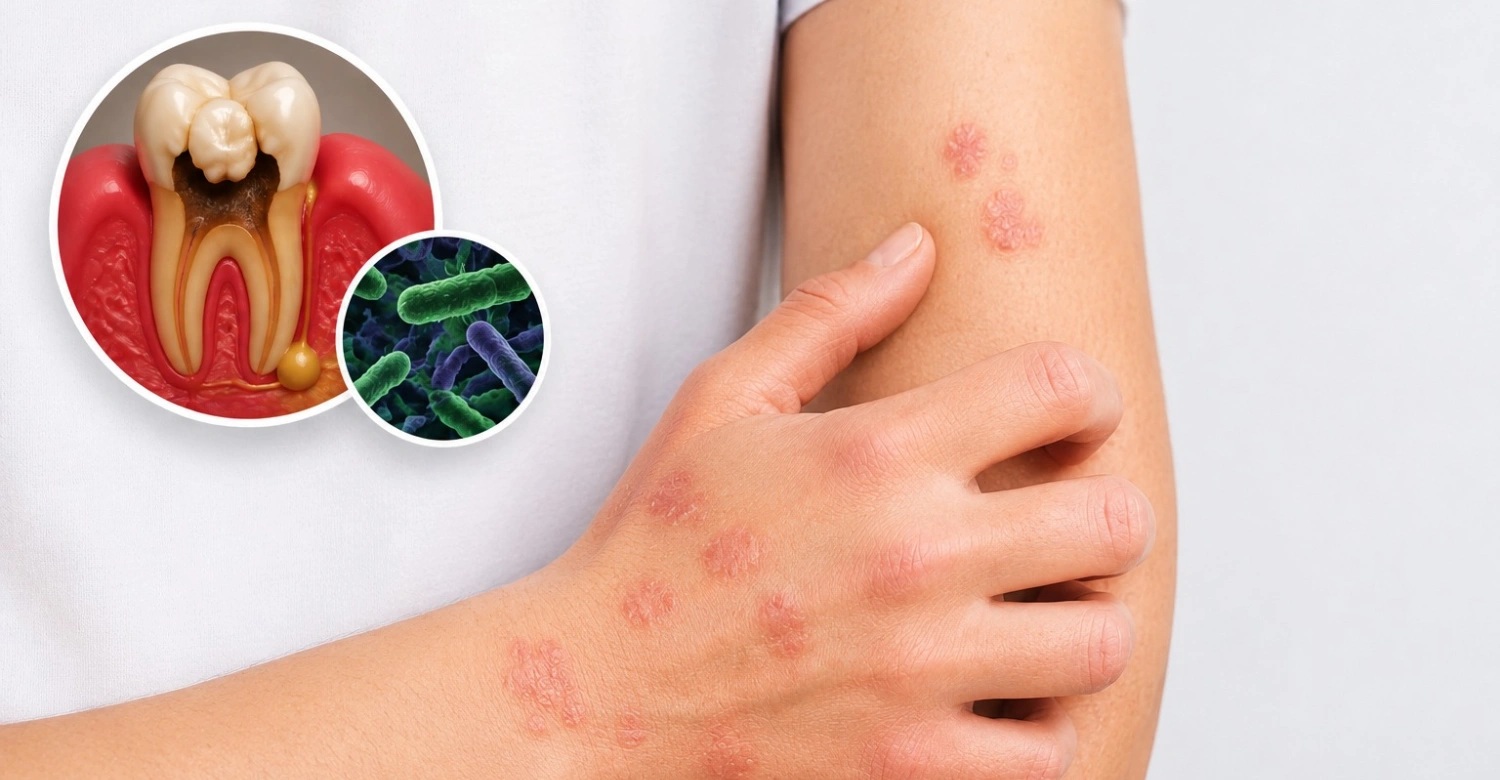
Tooth Infection and Psoriasis: What Is the Possible Link?
Tooth infection and psoriasis may be linked through shared inflammatory signaling, where bacteria from the mouth trigger immune responses that circulate systemically. Research on whether can tooth infection cause psoriasis remains inconclusive, with some studies showing correlation and others showing none. The overall scientific conclusion favors an association rather than proven causation. More prospective studies are still needed.
How Can a Tooth Infection Affect the Immune System?
A tooth infection activates the immune system locally, prompting white blood cells and inflammatory chemicals to fight the bacteria. If the infection is chronic or untreated, this immune activation can persist and spill into the bloodstream. It can contribute to a low-grade systemic inflammatory state that may influence other inflammatory conditions in the body.
Can Bacteria From a Tooth Infection Affect the Body?
Yes. Bacteria from a dental infection can enter the bloodstream, a process called bacteremia, especially during chewing, brushing, or dental procedures. Once circulating, bacteria and their toxins can reach distant tissues and organs. This is one proposed pathway researchers examine when asking whether can tooth infection cause psoriasis or influence other systemic inflammatory diseases.
Can Chronic Dental Inflammation Contribute to Systemic Inflammation?
Chronic dental inflammation, such as long-standing periodontitis, is associated with elevated systemic inflammatory markers similar to those seen in cardiovascular disease and diabetes. This supports the biological plausibility that dental infection and psoriasis inflammation could interact. Current evidence has not established a direct, proven cause-and-effect relationship between the two conditions.
Is There a Direct Link Between Dental Infection and Psoriasis?
No study to date has established a direct, proven link. A German prospective study found that psoriasis patients initially scored worse on gingivitis screening. However, the psoriasis variable was not an independent factor once age, obesity, smoking, and toothbrushing habits were accounted for. Other lifestyle factors may explain much of the association.
Tooth Abscess and Psoriasis
A tooth abscess is a more advanced, pus-filled infection that causes intense inflammation locally and can raise inflammatory markers throughout the body. Tooth abscess and psoriasis have not been directly linked in controlled trials. Still, the significant inflammatory load an abscess produces makes prompt treatment sensible for anyone managing a chronic inflammatory skin condition.
Can a Tooth Abscess Trigger Inflammation?
Yes. A tooth abscess is by definition an acute, intense inflammatory and infectious event. It causes swelling, pain, and a surge of local and sometimes systemic inflammatory activity as the body fights the infection. This significant inflammatory response is why dentists recommend prompt treatment, and why the question can tooth infection cause psoriasis often comes up around abscess cases specifically.
Is Tooth Abscess and Psoriasis a Possible Concern?
Tooth abscess and psoriasis is a reasonable concern to raise with both a dentist and dermatologist, given that abscesses generate substantial inflammation. No confirmed causal chain has been established. Patients noticing flare changes around the time of a dental abscess may still find it worthwhile to mention this timing to their healthcare providers.
Can an Untreated Tooth Abscess Affect Overall Health?
An untreated tooth abscess can spread infection to surrounding tissue or the jaw. In rare severe cases, it can spread into the bloodstream and become a medical emergency. Beyond the specific question of can tooth infection cause psoriasis, untreated abscesses pose real risks to general health and should always be evaluated and treated by a dentist promptly.
When Does a Tooth Abscess Require Dental Treatment?
A tooth abscess requires dental treatment whenever there is visible swelling, pus, persistent pain, fever, or spreading facial swelling. These are signs the infection is active and progressing. Waiting can allow the infection to worsen, so dental evaluation should be sought as soon as these symptoms appear.
Tips for the Patients
Patients with psoriasis who develop tooth pain, swelling, pus, fever, or persistent gum inflammation should seek a dental evaluation. Vitrin Clinic can assess the condition of the teeth and gums and determine whether treatment is needed. This helps patients manage dental infection promptly while continuing to follow their dermatologist's psoriasis treatment plan.
Dental Infection and Psoriasis
Dental infection and psoriasis are studied together because both involve immune activation and inflammatory signaling. Some population studies report higher rates of periodontal disease among psoriasis patients, while others find no significant difference. Can tooth infection cause psoriasis directly is still unproven. Dental infection should be treated for its own sake, with any effect on psoriasis considered a secondary benefit.
Can Dental Infection Make Psoriasis Worse?
It is possible that dental infection contributes additional inflammatory load that could coincide with flare periods in some patients, though this has not been proven in controlled studies. Infections are a recognized psoriasis trigger category generally. It is reasonable that untreated dental infection could play a similar role for some individuals.
Can Dental Infection Trigger an Immune Response?
Yes. Any active dental infection triggers an immune response as the body attempts to contain and eliminate the bacteria. This response includes inflammation, swelling, and the release of cytokines. In a person with an already sensitized immune system, such as someone with psoriasis, this added immune activity matters. It remains a reasonable area of ongoing research tied to whether can tooth infection cause psoriasis to intensify.
Does Treating a Dental Infection Help Psoriasis?
There is no confirmed evidence that treating a dental infection directly improves psoriasis symptoms. However, removing a source of chronic inflammation generally supports better overall immune balance. Patients should continue their prescribed psoriasis treatment regardless, while also addressing dental infection risk factors as part of comprehensive health management.
Should People With Psoriasis Have Regular Dental Checkups?
Yes. Regular dental checkups are recommended for everyone, and are particularly sensible for psoriasis patients given the studied association between oral and skin inflammation. Routine visits allow early detection of gum disease, cavities, and infection before they progress. This supports both psoriasis and dental health as part of an overall preventive care approach.
Clinical Note
Treating an identified dental infection is important for oral health regardless of whether it affects psoriasis. The clinical team at Vitrin Clinic recommends addressing dental infections promptly rather than leaving chronic oral inflammation untreated. Delayed treatment increases the risk of complications affecting both dental structures and general wellbeing over time.
Psoriasis and Tooth Infection: Can Oral Health Affect Skin Health?
Psoriasis and tooth infection sit within a broader conversation about whether oral health affects skin health. Since the mouth is a major entry point for bacteria into systemic circulation, chronic oral disease is increasingly studied alongside skin, cardiovascular, and metabolic conditions. Psoriasis itself originates from genetic and immune mechanisms rather than infection alone.
What Is the Relationship Between Psoriasis and Oral Health?
The relationship between psoriasis and oral health appears bidirectional in some studies. Psoriasis patients may have higher rates of gum disease, and gum disease generates inflammation that could theoretically influence psoriasis severity. Neither direction has been proven causal, but the association is consistent enough that dental care is a sensible part of psoriasis management.
Can Psoriasis Affect the Mouth and Gums?
Psoriasis itself can occasionally affect the mouth, presenting as geographic tongue or other oral lesions in some patients. Oral involvement is less common than skin involvement, though. Separately, population studies suggest psoriasis patients may have more missing teeth and periodontal disease, which may relate to lifestyle factors as much as to psoriasis itself.
Can Psoriasis Increase the Risk of Gum Problems?
Some studies suggest psoriasis patients have a higher prevalence of moderate to severe periodontitis compared to healthy individuals. This may be due to shared inflammatory pathways or overlapping risk factors like smoking. Other large studies find no significant difference, so the increased risk of gum problems in psoriasis remains a debated rather than settled finding.
Why Is Psoriasis and Dental Health an Important Topic?
Psoriasis and dental health is an important topic because both conditions involve chronic inflammation. Patients managing one chronic condition benefit from minimizing additional inflammatory burden wherever possible. Maintaining good oral hygiene and treating dental problems promptly supports overall wellbeing and may reduce unnecessary inflammatory stress on an already active immune system.
Psoriasis and Gum Disease
Psoriasis and gum disease have been studied in several population-based comparisons. A Scandinavian study found moderate to severe periodontitis in 24% of psoriasis patients compared to 10% of healthy controls, a notable difference. Researchers caution that shared risk factors like smoking may explain part of this gap rather than psoriasis directly causing gum disease.
Can Psoriasis Be Linked to Gum Disease?
Psoriasis can be statistically linked to gum disease in some studies, though not in all. The association appears stronger in studies that control for confounding factors. Some large representative population studies find no significant link at all. This inconsistency reflects how complex it is to isolate psoriasis as an independent cause of periodontal disease.
What Is the Connection Between Psoriasis and Gum Inflammation?
The proposed connection is shared inflammatory biology. Both psoriasis and gum disease involve elevated cytokines and immune cell activity. Whether one causes the other, or both simply arise more often in people with shared risk factors such as smoking or obesity, remains an open question. Current research has not fully resolved it.
Can Gum Disease Cause Systemic Inflammation?
Yes. Gum disease is a well-established source of systemic inflammation. Bacteria and inflammatory mediators from infected gum tissue enter the bloodstream, raising markers like C-reactive protein throughout the body. This systemic effect is why gum disease is studied in relation to heart disease, diabetes, and inflammatory skin conditions such as psoriasis.
Gingivitis vs. Periodontitis
Gingivitis is the early, reversible stage of gum disease, causing redness, swelling, and bleeding gums. Periodontitis is the more advanced stage, where inflammation has damaged the bone and tissue supporting the teeth. This can potentially lead to tooth loss. Periodontitis carries a stronger systemic inflammatory burden and is the stage most often studied in this context.
Symptoms of Gum Disease to Watch For
Warning signs include red, swollen, or bleeding gums, persistent bad breath, gum recession, loose teeth, and pain while chewing. Patients with psoriasis should watch for these symptoms closely. Early gum disease is far easier to treat and reverse than advanced periodontitis, which carries greater risk of tooth loss and systemic inflammation.
Tips for the Patients
Good oral hygiene, regular dental examinations, professional cleaning when indicated, and prompt treatment of gum problems can help maintain better oral health in people living with psoriasis. Vitrin Clinic supports patients in building these habits through routine checkups and individualized guidance based on each patient's specific oral condition and needs.
Periodontitis and Psoriasis
Periodontitis and psoriasis have been the focus of several dedicated studies. A 2025 cross-sectional study on apical periodontitis found significantly higher rates of tooth-root infection among people with moderate to severe psoriasis compared to those with mild psoriasis. This adds another data point to the ongoing investigation of whether can tooth infection cause psoriasis to become more severe.
What Is Periodontitis?
Periodontitis is a serious gum infection that damages the soft tissue and bone supporting the teeth, and if untreated, can lead to tooth loss. It begins as gingivitis and progresses when plaque bacteria are not adequately removed. Periodontitis is associated with elevated systemic inflammation, which is why it draws attention in psoriasis research.
Can Periodontitis Affect the Immune System?
Yes. Periodontitis keeps the immune system in a state of chronic low-grade activation as it continuously responds to bacterial presence in the gums. Over time, this sustained immune engagement can influence systemic inflammatory markers. This is part of why researchers explore whether periodontitis could play a role in conditions like psoriasis.
Is There a Relationship Between Periodontitis and Psoriasis?
A 2022 systematic review found a positive statistical association between periodontitis and psoriasis, though the authors cautioned that the evidence quality was weak. A causal relationship could not be confirmed. So while a relationship appears likely, it has not been proven that periodontitis directly causes or worsens psoriasis in a cause-effect manner.
Can Treating Periodontitis Improve Overall Oral Health?
Yes. Treating periodontitis reliably improves oral health by reducing gum inflammation, halting further bone loss, and lowering the bacterial burden in the mouth. Even without a confirmed answer to can tooth infection cause psoriasis, periodontal treatment reduces systemic inflammatory markers and supports better long-term dental outcomes.
Oral Infection and Psoriasis
Oral infection and psoriasis are linked through the broader concept of systemic inflammatory load. Any active oral infection, whether dental, gum-related, or involving deeper root structures, adds inflammatory signaling to the bloodstream. Whether can tooth infection cause psoriasis directly or not, minimizing this added burden through prompt dental care is a reasonable, low-risk precaution for patients already managing psoriasis.
Can an Oral Infection Trigger Inflammation?
Yes. Any oral infection triggers a local and sometimes systemic inflammatory response as the immune system works to contain the bacteria. The severity of this response depends on the size and duration of the infection. Prompt treatment limits how much inflammatory signaling spreads beyond the mouth into the wider circulatory system.
What Are the Symptoms of an Oral Infection?
Common symptoms include tooth pain, gum swelling, pus discharge, bad breath, fever, and facial or jaw swelling in more advanced cases. Some infections cause minimal pain initially. This is why regular dental checkups matter even without obvious symptoms, allowing infections to be caught and treated before they progress further.
Can Oral Infection and Psoriasis Occur at the Same Time?
Yes, it is entirely possible for oral infection and psoriasis to occur simultaneously, since both are relatively common conditions. Their co-occurrence does not by itself prove one causes the other. Patients experiencing both should inform their dentist and dermatologist so each provider has a full picture of their overall health status.
When Should You See a Dentist for an Oral Infection?
You should see a dentist as soon as you notice tooth pain, gum swelling, pus, persistent bad breath, or fever. Waiting allows infections to progress and increases the risk of complications. Early evaluation typically leads to simpler, less invasive treatment options compared to addressing an infection after it has advanced significantly.
How Is a Tooth Infection Diagnosed?
A tooth infection is diagnosed through a clinical exam, patient symptom history, and imaging such as dental X-rays. Dentists check for swelling, tenderness, pus, and changes in tooth color or sensitivity. Accurate diagnosis is essential before deciding on treatment, whether that involves antibiotics, root canal therapy, drainage, or extraction of the affected tooth.
What Are the Symptoms of a Tooth Infection?
Symptoms include persistent throbbing pain, sensitivity to hot or cold, swelling in the face or gums, and fever. A bad taste in the mouth and a visible pimple-like bump on the gum can also occur. Some infections progress silently with minimal pain. This is why regular dental visits remain important even without obvious warning signs, especially for patients curious whether can tooth infection cause psoriasis flares to appear.
Does a Tooth Infection Always Cause Pain?
No. A tooth infection does not always cause noticeable pain, especially in its early stages or if the nerve has already died. Some infections are only discovered during a routine dental X-ray. This silent progression is one reason dentists recommend regular checkups rather than waiting for symptoms to prompt a visit. Patients cannot rely on pain alone to answer can tooth infection cause psoriasis for themselves.
How Do Dentists Identify a Dental Abscess?
Dentists identify a dental abscess through visual examination, checking for swelling and pus. This is combined with percussion testing and dental X-rays that reveal bone changes around the tooth root. Patients often report throbbing pain and sensitivity to pressure. Confirming the abscess location is essential for planning the correct treatment approach.
Are Dental X-Rays Needed to Diagnose an Infection?
Yes. Dental X-rays are typically needed to confirm an infection, since they reveal bone loss, abscess formation, and root canal involvement that cannot be seen through visual examination alone. X-rays also help dentists determine the infection's severity and plan the most appropriate next step.
Dental X-Rays and 3D Imaging
In more complex cases, 3D imaging such as cone-beam CT scans provides a detailed view of the tooth root, surrounding bone, and infection spread. This advanced imaging helps dentists plan precise treatment, particularly for cases involving apical periodontitis or infections near critical structures. It improves accuracy compared to standard two-dimensional X-rays alone.
How Is a Tooth Infection Treated?
Treatment depends on severity. Options include antibiotics to control bacterial spread, drainage of an abscess, root canal therapy to remove infected tissue, or extraction if the tooth cannot be saved. The goal is always to eliminate the infection source completely. Incomplete treatment allows bacteria and inflammation to persist and potentially recur, a concern often raised alongside the question can tooth infection cause psoriasis.
Can Antibiotics Treat a Tooth Infection?
Antibiotics can help control the spread of bacteria and reduce swelling, but they typically cannot eliminate a tooth infection on their own. The infected tissue usually still requires drainage, root canal therapy, or extraction. Antibiotics are often used alongside these procedures rather than as a standalone, definitive cure.
When Is Root Canal Treatment Needed?
Root canal treatment is needed when infection or decay reaches the tooth's inner pulp and nerve tissue. The procedure removes infected material, cleans the canal, and seals it to prevent further infection while preserving the natural tooth. It is generally preferred over extraction whenever the tooth structure can still be saved.
When Is Tooth Extraction Recommended?
Extraction is recommended when a tooth is too damaged or infected to be saved through root canal treatment, or when infection has caused extensive bone loss around the root. Dentists weigh the tooth's long-term prognosis before recommending extraction. Preserving natural teeth is generally the preferred approach whenever it remains viable.
Can a Dental Abscess Be Drained?
Yes. Draining a dental abscess is a common and often necessary step to relieve pressure and remove accumulated pus. This is typically combined with root canal treatment, extraction, or antibiotics to address the underlying infection source. Drainage alone provides symptom relief but does not resolve the infection on its own. Definitive treatment is the safer choice, regardless of whether can tooth infection cause psoriasis is ever fully confirmed.
Why Is Treating the Source of Infection Important?
Treating the actual source of infection, rather than just managing symptoms, prevents recurrence and reduces the ongoing inflammatory burden on the body. Leaving the underlying cause untreated allows bacteria to persist. This can continue contributing to systemic inflammation even if pain temporarily subsides after antibiotics or partial treatment.
Clinical Note
The appropriate treatment depends on the source and severity of the infection. At Vitrin Clinic, dental evaluation can help determine the right path forward. This might mean restorative or endodontic care, or another treatment approach entirely, based on each patient's individual dental condition and imaging findings.
When Should You See a Dentist If You Have Psoriasis?
Patients with psoriasis should see a dentist promptly whenever new dental symptoms appear, given the studied association between oral inflammation and systemic inflammatory conditions. While can tooth infection cause psoriasis has no confirmed answer, addressing dental symptoms early is still a reasonable, low-risk step that supports overall health.
Tooth Pain or Sensitivity
Persistent tooth pain or sensitivity to hot, cold, or pressure often signals an underlying infection or decay reaching the tooth's inner layers. This symptom should not be ignored. It typically indicates the problem is progressing and will likely worsen without professional dental evaluation and treatment.
Swollen or Bleeding Gums
Swollen or bleeding gums, especially during brushing or flossing, are early signs of gingivitis or periodontitis. These symptoms indicate active gum inflammation. Left untreated, it can progress to more advanced periodontal disease, adding inflammatory burden to a body already managing a chronic skin condition and keeping alive the question of whether can tooth infection cause psoriasis.
Facial or Jaw Swelling
Facial or jaw swelling often indicates a spreading dental infection or abscess and should be treated as an urgent dental concern. This type of swelling suggests the infection has moved beyond the tooth itself into surrounding tissue. This increases the risk of more serious complications if not addressed promptly.
Pus Around a Tooth
Visible pus around a tooth or gum line is a clear sign of active bacterial infection requiring prompt dental attention. Pus formation indicates the body is actively fighting infection. Drainage combined with treating the underlying source is typically necessary to fully resolve the problem and prevent it from spreading further.
Persistent Bad Breath
Persistent bad breath that does not resolve with normal oral hygiene can signal an underlying gum infection, tooth decay, or abscess. Bad breath alone is not usually an emergency. Combined with other symptoms, it warrants a dental evaluation to rule out infection that could be contributing to broader inflammatory load.
Fever or Signs of Infection
Fever accompanying dental pain or swelling suggests the infection may be spreading beyond the local area and should be treated as an urgent situation. Systemic signs of infection, including fever and fatigue, indicate the body is mounting a significant immune response. These require prompt professional evaluation and treatment.
Tips for the Patients
Do not delay dental assessment when symptoms suggest an infection. Psoriasis should also continue to be managed according to the recommendations of the patient's healthcare professional. Coordinating dental and dermatological care ensures that both concerns are addressed together as part of comprehensive patient care.
Can Treating a Tooth Infection Prevent Psoriasis Flare-Ups?
There is no proven evidence that treating a tooth infection prevents psoriasis flare-ups specifically. However, since infections are recognized as a general trigger category for psoriasis, removing an active infection source is a reasonable step. Whether it can help psoriasis directly remains an area needing further prospective research.
Does Removing a Dental Infection Reduce Inflammation?
Yes. Removing an active dental infection typically reduces local and systemic inflammatory markers, since the bacterial source driving the immune response is eliminated. This reduction in overall inflammatory load is beneficial for general health, even though its specific effect on psoriasis severity has not been confirmed through controlled clinical trials.
Can Dental Treatment Improve Overall Oral Health?
Yes. Dental treatment reliably improves overall oral health by resolving infection, restoring damaged teeth, and preventing further complications like bone loss or tooth loss. Improved oral health supports better nutrition, comfort, and reduced systemic inflammation. All of this contributes positively to a patient's general wellbeing alongside their psoriasis management plan.
Is Treating a Tooth Infection a Treatment for Psoriasis?
No. Treating a tooth infection is not considered a treatment for psoriasis itself, since psoriasis requires dedicated dermatological management. Dental treatment addresses oral health and may reduce overall inflammatory burden, but it should never replace prescribed psoriasis therapy. The two conditions should be managed together, not as substitutes for one another.
Vitrin Clinic: Dental Care for Patients With Tooth Infection and Psoriasis
Vitrin Clinic provides dental assessment and treatment planning for patients experiencing tooth infections, dental abscesses, gum problems, and other oral health concerns. The focus is on identifying the dental cause of symptoms and creating an appropriate treatment plan based on the patient's individual oral condition. This supports patients navigating both dental infection and dental health together.
How Can Vitrin Clinic Help With Dental Infections?
Vitrin Clinic evaluates dental infections through clinical examination and imaging, then develops a treatment plan tailored to the specific tooth and infection severity. This may involve restorative care, root canal therapy, drainage, or extraction. The goal is always to fully resolve the infection source rather than manage symptoms alone.
What Can a Dental Examination at Vitrin Clinic Include?
A dental examination at Vitrin Clinic can include a clinical assessment of teeth and gums, plus dental X-rays or advanced imaging when needed. It also covers an evaluation of infection severity and a personalized treatment recommendation. The examination aims to identify the exact source of symptoms so the appropriate treatment path can be planned accurately.
Why Is Early Treatment of Dental Infection Important?
Early treatment of dental infection prevents complications such as spreading infection, tooth loss, and increased systemic inflammatory burden. Addressing problems while they are still localized is generally simpler, less invasive, and more predictable than treating advanced infection. This is why Vitrin Clinic encourages patients not to delay dental evaluation.
Can Vitrin Clinic Help With Gum Disease and Periodontal Problems?
Yes. Vitrin Clinic can assess gum disease and periodontal problems, from early gingivitis through more advanced periodontitis, and recommend appropriate cleaning, treatment, or referral as needed. Supporting healthy gums is part of comprehensive oral care, particularly relevant for patients exploring how periodontitis and psoriasis fit into their broader health picture.
What We Notice Clinically
Dr. Rifat Alsaman, Head of the Medical team at Vitrin Clinic and a cosmetics dentist, highlights the importance of treating dental infections based on their underlying cause. He also stresses maintaining healthy gums and teeth as part of comprehensive oral care. This is particularly relevant for patients managing chronic inflammatory conditions, who benefit from minimizing avoidable sources of inflammation.
Clinical Note
Dental infections should always be evaluated on their own clinical merits. A direct link to psoriasis may never be definitively proven. Even so, prompt, individualized dental care remains the most reliable way to protect oral health and overall wellbeing for patients living with chronic inflammatory skin conditions like psoriasis.
Resource:
Overall, a tooth infection does not appear to directly cause psoriasis, but emerging evidence suggests a meaningful connection between oral inflammation and psoriasis. A 2025 cross-sectional study found that moderate-to-severe psoriasis was associated with a 1.3-fold higher likelihood of apical periodontitis. This highlights the importance of maintaining good dental health and treating infections promptly while further research explores the underlying inflammatory mechanisms.
https://pmc.ncbi.nlm.nih.gov/articles/PMC12065119/
http://pmc.ncbi.nlm.nih.gov/articles/PMC4280688/
FAQs

Dr. Rifat Alsaman has more than 5 years of clinical experience in dentistry and currently serves as the Head of the Medical Team at Vitrin Clinic. He is dedicated to providing exceptional patient care, overseeing treatment planning, and ensuring the highest clinical standards across the team. His expertise, attention to detail, and commitment to continuous professional development have helped countless patients achieve healthier, more confident smiles.


.webp&w=3840&q=75)

