Endodontics
September 21, 2026
Abscessed Tooth: Symptoms, Causes, Treatment, and When to See a Dentist ?
 Dr. Rifat Alsaman
An Abscessed Tooth develops when bacteria cause an infection around a tooth or its supporting tissues. The infection can produce pus, pain, swelling, and tenderness. Common causes include untreated decay, cracks, trauma, and advanced gum disease. Treatment usually requires professional dental care rather than home treatment alone. Depending on the tooth's condition, treatment may involve drainage, root canal therapy, or extraction. Antibiotics may be appropriate when systemic symptoms or spreading infection are present. The American Dental Association recommends prioritizing definitive dental treatment for most localized dental infections. At Vitrin Clinic, diagnosis begins with a detailed dental examination and appropriate digital imaging. The treatment plan depends on infection severity, tooth structure, bone health, and overall oral condition.
What Is an Abscessed Tooth?
An abscess is a localized collection of pus caused by bacterial infection. It can develop around a tooth root or within gum tissues. Symptoms may include severe pain, swelling, sensitivity, and a bad taste. Some infections cause surprisingly little pain despite significant disease. Dental evaluation is important because symptoms alone cannot determine infection depth. An Abscessed Tooth should always be examined by a dentist promptly.
What Is a Tooth Abscess?
A tooth abscess is an infected area containing pus around or near a tooth. It commonly develops after bacteria reach deeper dental tissues. Infection can spread through the surrounding bone and soft tissues. A dentist must identify the infection source before selecting treatment. Root canal treatment can sometimes preserve the affected tooth. Extraction may be necessary when the tooth cannot be predictably restored. This condition is also known as an Abscessed Tooth in general dental terms.
What Causes an Abscess in a Tooth?
Dental decay can allow bacteria to penetrate toward the pulp. Cracks can also create pathways for bacteria to reach deeper tissues. Untreated dental infections may then progress toward the root. Gum disease can create periodontal pockets that harbor harmful bacteria. Trauma can damage tooth structures and increase infection risk. Any of these factors can eventually produce an Abscessed Tooth.
Tooth Abscess vs. Gum Abscess
A tooth-related abscess usually originates from infection inside the tooth or around its root. A gum abscess generally develops within gum tissues or periodontal pockets. Both conditions can produce swelling and localized pain. Their causes and treatments can differ significantly. Dental examination and imaging help distinguish the underlying source.
Tooth Abscess Stages
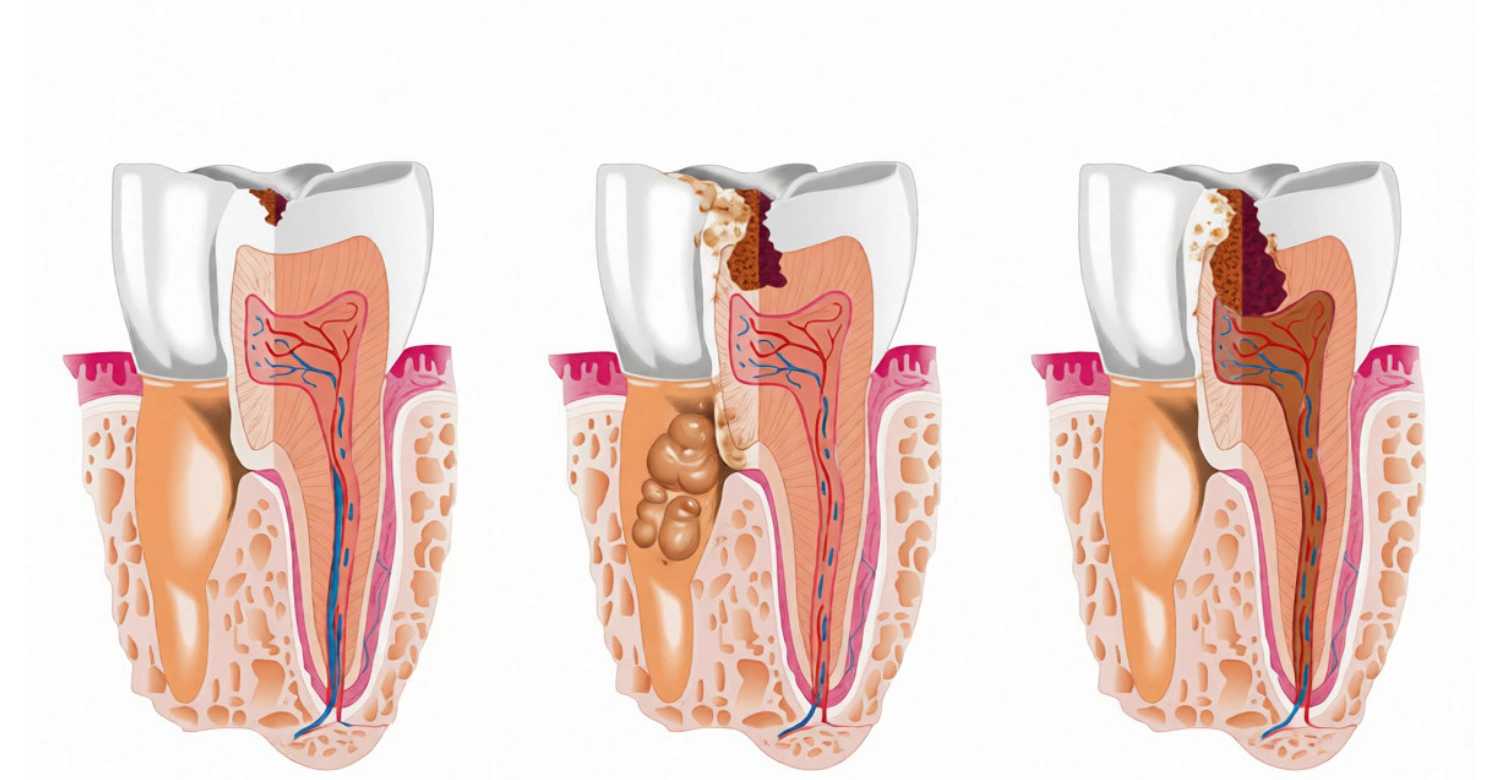
Dental infections can progress from an initial bacterial invasion to localized pus formation. The clinical course differs between patients and individual teeth. Some infections progress quickly, while others develop gradually. Treatment becomes more important as infection spreads into surrounding tissues. An Abscessed Tooth can move through several stages before treatment begins.
Early Tooth Infection
Early infection may begin after deep decay, trauma, or bacterial invasion. Symptoms can include sensitivity, toothache, or discomfort while chewing. The infection may initially remain localized. Early professional treatment can sometimes prevent progression and preserve tooth structure.
Developing Abscess
As infection progresses, inflammatory fluid and pus can accumulate. Pain may become stronger and chewing can become uncomfortable. Gum swelling may develop near the affected tooth. Some patients notice a bad taste when pus drains into the mouth. Dental treatment is needed to control the infection source. This stage often marks an Abscessed Tooth becoming noticeably more painful.
Advanced Dental Abscess
Advanced infection can extend beyond the original tooth area. Facial swelling, fever, difficulty opening the mouth, or swallowing problems can occur. These symptoms can indicate a more serious spreading infection. Emergency assessment is necessary when breathing or swallowing becomes difficult.
Learn about tooth agenesis and missing teeth
What Are the Symptoms of an Abscessed Tooth?
Symptoms vary according to infection location and severity. Common findings include toothache, gum swelling, sensitivity, and discomfort while chewing. A bad taste or drainage can also occur. Fever and facial swelling suggest greater concern for spreading infection. Some patients experience minimal pain despite significant infection.
Tooth Abscess Signs and Symptoms
Typical signs include persistent toothache, swollen gums, tenderness, and pain during chewing. Some patients develop sensitivity to hot or cold foods. A bad taste may occur when infected material drains. Neck glands can become swollen in more advanced infections. Fever can indicate systemic involvement and requires prompt evaluation. These signs usually confirm an Abscessed Tooth that needs dental care.
Tooth Abscess Pain and Sensitivity
Pain may feel throbbing, sharp, constant, or pressure-related. Chewing can increase discomfort because pressure affects inflamed tissues. Temperature sensitivity may occur when the pulp remains inflamed. Pain can sometimes decrease after the pulp dies. Reduced pain does not necessarily mean the infection has resolved.
Tooth Abscess Swelling
Swelling can appear around the gum near an infected tooth. It may feel tender, firm, or fluctuant depending on the infection. Some swelling remains localized around the tooth. Increasing swelling requires prompt dental assessment because infection can spread into surrounding tissues.
Facial Swelling From an Abscessed Tooth
Facial swelling can occur when dental infection spreads beyond the immediate tooth area. Swelling around the jaw or cheek requires urgent professional assessment. Significant swelling can sometimes affect swallowing or breathing. Emergency care is necessary when these functions become difficult.
What Does an Abscess Tooth Look Like?
The tooth itself may appear normal from the outside. Other cases show extensive decay, discoloration, fractures, or damaged restorations. The gum may appear red and swollen near the tooth. A small raised bump can sometimes indicate draining infection. Visual inspection alone cannot establish the infection's full extent.
Find out more about perioral dermatitis
What Causes an Abscessed Tooth?
Dental infections usually begin when bacteria gain access to vulnerable dental tissues. Untreated decay remains an important cause. Cracks, trauma, gum disease, and impacted teeth can also contribute. Identifying the original cause helps determine appropriate treatment. An Abscessed Tooth typically results from one of these underlying causes.
Untreated Tooth Decay
Deep decay can progressively destroy enamel and dentin. Eventually, bacteria may reach the dental pulp. Pulp infection can spread through the root canal system. Without treatment, infection may extend toward tissues surrounding the root. Early restorative treatment can reduce the risk of progression. This process often leads directly to an Abscessed Tooth over time.
Cracked or Damaged Teeth
Cracks can expose deeper tooth structures to bacterial contamination. Some cracks are difficult to see without magnification or imaging. Symptoms may include biting pain and temperature sensitivity. Severe fractures can make a tooth unsuitable for predictable restoration.
Untreated Dental Infection
An untreated dental infection can continue developing even when pain changes. Infection may drain through the gum and temporarily reduce pressure. This improvement does not mean the underlying infection has disappeared. Definitive treatment must address the source of infection.
Gum Disease and Tooth Abscess
Advanced periodontal disease can create deep pockets around teeth. These pockets may harbor bacteria and inflammatory material. In some cases, infection can become localized within periodontal tissues. Periodontal assessment helps determine whether the infection originates from the gum or tooth.
Wisdom Tooth Abscess
Impacted or partially erupted wisdom teeth can be difficult to clean. Food and bacteria can accumulate around surrounding gum tissues. This can contribute to inflammation and localized infection. Severe swelling, fever, or difficulty opening the mouth requires urgent evaluation.
Explore carbamide peroxide dental solutions
How Is a Tooth Abscess Diagnosed?
Diagnosis combines symptoms, clinical examination, and dental imaging. Dentists assess the tooth, gums, surrounding tissues, and bite. They may test sensitivity and tenderness around the tooth. Imaging can reveal bone changes or infection that cannot be seen clinically. Diagnosing an Abscessed Tooth accurately helps guide the treatment plan.
Dental Examination
A dental examination begins with the patient's symptoms and medical history. The dentist evaluates swelling, gum tissues, restorations, decay, and tooth structure. Percussion and other clinical tests may identify inflammation around the root. The dentist then determines whether additional imaging is appropriate.
Tooth Abscess X-Ray
Dental X-rays can reveal changes around the tooth root. They may also identify decay, bone loss, fractures, or other abnormalities. Early infection may not always produce obvious radiographic changes. Imaging therefore complements rather than replaces clinical examination.
When Additional Imaging May Be Needed
Three-dimensional imaging may be considered when conventional X-rays provide insufficient information. CBCT can help evaluate complex root anatomy and surrounding bone. It may also assist treatment planning for difficult infections. Imaging should be selected according to the clinical question and patient needs.
Clinical Note
An infection can sometimes exist without dramatic symptoms. Therefore, pain intensity does not reliably indicate disease severity. A comprehensive examination can identify problems requiring treatment before complications develop. Patients should report previous dental procedures and current medications.
How to Treat an Abscessed Tooth
Treatment focuses on controlling infection and addressing its source. Options include drainage, root canal treatment, or extraction. Antibiotics may be used when systemic involvement exists. Localized infections generally require definitive dental treatment rather than antibiotics alone.
Tooth Abscess Treatment Options
Treatment depends on whether the tooth can be saved. Root canal treatment may remove infected pulp and preserve the tooth. Drainage can reduce pressure when pus has accumulated. Extraction may be necessary when the tooth cannot be predictably restored. Choosing the right treatment for an Abscessed Tooth depends on severity.
Root Canal Treatment for an Abscessed Tooth
Root canal treatment removes infected or necrotic pulp from inside the tooth. The canals are cleaned, shaped, and sealed. The tooth is then restored to protect its remaining structure. This approach can preserve a natural tooth when adequate tooth structure remains.
Abscess Tooth Removal
Extraction may be recommended when a tooth cannot be restored predictably. Severe structural damage can make preservation unsuitable. After extraction, replacement options may include an implant-supported restoration or bridge. The appropriate option depends on bone, gum health, and treatment goals.
Draining a Dental Abscess
Professional drainage can release accumulated pus and reduce pressure. Drainage may occur through the tooth or surrounding tissues. The dentist still needs to address the infection source. Drainage alone may not prevent recurrence if the underlying cause remains.
When Antibiotics May Be Prescribed
Antibiotics are not routinely required for every localized dental infection. ADA guidance prioritizes definitive dental treatment for most localized conditions. Antibiotics become more relevant when fever, malaise, or systemic involvement occurs. Clinical judgment remains essential for individual patients.
Discover what foaming at the mouth may indicate
Antibiotics for Tooth Abscess
Antibiotics can be useful in selected dental infections. They do not replace procedures that eliminate the infection source. The ADA recommends antibiotic stewardship and appropriate clinical assessment. Unnecessary antibiotic use can expose patients to adverse effects and other harms. Antibiotics support but never replace treating an Abscessed Tooth directly.
When Are Antibiotics Needed for an Abscessed Tooth?
Antibiotics may be considered when infection causes systemic symptoms. Fever and malaise are examples of systemic involvement. They may also be considered when immediate definitive treatment is unavailable. The decision should be made by a qualified clinician.
Amoxicillin for Tooth Abscess
Amoxicillin is one antibiotic included in ADA guidance for certain dental infections. However, it should not be self-prescribed for every toothache. Antibiotic selection depends on diagnosis, allergies, medical history, and clinical severity. A dentist or physician should determine whether treatment is appropriate.
Azithromycin for Tooth Abscess
Azithromycin may be considered in specific circumstances, including selected patients with antibiotic allergies. It is not automatically appropriate for every dental infection. The choice depends on clinical findings and individual risk factors. Patients should follow the prescribing clinician's instructions exactly.
How Long Does a Tooth Abscess Last With Antibiotics?
Antibiotics can reduce bacterial spread and systemic symptoms when appropriately prescribed. They do not necessarily eliminate the infected tooth or source. Symptoms can return if definitive dental treatment is delayed. Dental treatment remains important for controlling the underlying problem.
Why Antibiotics Alone May Not Eliminate the Source of Infection
An infected root canal can contain bacteria inside a complex canal system. Antibiotics may not eliminate this local source effectively. Dental procedures directly address infected or necrotic tissues. This explains why definitive treatment remains central to infection management.
Learn about restorative dentistry and treatment options
Can You Drain an Abscessed Tooth at Home?
Home drainage is unsafe because it can injure tissues and spread infection. A dental abscess requires professional evaluation and appropriate treatment. Home measures can provide temporary comfort while waiting for care. They should never replace definitive dental treatment.
Can You Drain a Tooth Abscess at Home?
You should not puncture or drain an abscess yourself. Sharp objects can cause bleeding, tissue injury, and additional bacterial contamination. Home drainage can also delay appropriate treatment. Professional drainage is performed using controlled clinical techniques.
Why You Should Not Pop or Drain a Tooth Abscess Yourself
Popping the swelling does not remove the infection source. It can introduce additional bacteria into damaged tissues. Infection may also spread into deeper spaces. Professional treatment identifies and treats the underlying dental cause.
Home Remedies for Abscess Tooth Pain
Temporary measures can reduce discomfort while awaiting professional care. Soft foods can reduce chewing pressure on the affected area. Avoid extremely hot or cold foods when sensitivity is present. Appropriate over-the-counter pain relievers may help suitable patients.
What to Do for an Abscessed Tooth Before Seeing a Dentist
Arrange an urgent dental appointment rather than waiting for symptoms to disappear. Maintain gentle oral hygiene without aggressively disturbing the swollen area. Eat soft foods and avoid extreme temperatures. Use medication only according to professional or package instructions.
Clinical Note
Pain relief does not necessarily indicate that infection has resolved. Some infections temporarily drain and reduce pressure. The underlying source can remain active beneath the tooth or gum. Professional diagnosis therefore remains important even after symptoms improve.
Note : All images used are for editorial and illustrative purposes only and may not originate from the original news provider or associated company.
Find out more about impacted canine teeth
How to Relieve Abscessed Tooth Pain
Pain management should focus on temporary symptom control until definitive treatment occurs. Appropriate analgesics may help suitable patients. Soft foods and gentle oral hygiene can also improve comfort. Avoid placing aspirin or irritating substances directly against the gum.
Temporary Tooth Abscess Pain Relief
Over-the-counter pain relievers can help some adults manage dental pain. Ibuprofen and acetaminophen are commonly recommended options when medically appropriate. Patients should follow label instructions and avoid exceeding recommended doses. A pharmacist or dentist can advise patients with medication concerns.
Managing Swelling Before Dental Treatment
A cold compress may provide temporary comfort around swollen facial tissues. Keep the compress outside the face rather than applying extreme cold directly. Avoid squeezing or puncturing the swelling. Increasing facial swelling requires prompt professional assessment.
What Not to Put on an Abscessed Tooth
Do not place chemicals, crushed medication, or caustic substances directly against the gum. These products can burn or damage oral tissues. Do not attempt to sterilize the area with concentrated household products. Use safe temporary measures while arranging professional dental care.
Explore dental resorption and its potential effects
What We Notice Clinically
Dental infections can present differently between patients. Some patients report severe pain, while others notice swelling or an unusual taste. A quiet symptom pattern does not guarantee a minor infection. Diagnosis must consider clinical findings, imaging, and tooth restorability. Our team treats every Abscessed Tooth case individually rather than by symptoms alone.
Dr. Rifat Alsaman’s Clinical Opinion
Dr. Rifat Alsaman, Head of the Medical Team at Vitrin Clinic and cosmetic dentist, emphasizes early professional assessment. Dental infections should be evaluated before swelling becomes extensive. The priority is identifying the infection source and assessing whether the tooth remains restorable. When preservation is predictable, root canal treatment may be considered. When preservation is impossible, extraction and replacement planning may become necessary. Treatment decisions should follow clinical findings rather than pain intensity alone.
Learn more about a recessed maxilla
When Is a Tooth Abscess an Emergency?
Certain symptoms indicate that infection may be spreading beyond localized tissues. Facial swelling, fever, malaise, and difficulty swallowing require urgent assessment. Breathing difficulty represents a medical emergency. Patients should seek emergency services when airway symptoms develop. Recognizing an emergency early can prevent a simple Abscessed Tooth from becoming dangerous.
Facial Swelling and Spreading Infection
Increasing facial or jaw swelling can indicate extension beyond the original infection site. Rapidly increasing swelling deserves urgent dental evaluation. Swelling near the eye requires particular attention. Severe facial swelling can become medically serious when deeper tissues are involved.
Fever and Feeling Unwell
Fever can indicate systemic involvement from a dental infection. Malaise may also accompany a spreading infection. These symptoms change the urgency of clinical assessment. The ADA identifies systemic involvement as an important consideration for antibiotic treatment.
Difficulty Swallowing or Breathing
Difficulty swallowing or breathing requires immediate emergency assessment. Dental infections can sometimes spread into spaces affecting the airway. Significant mouth, throat, or neck swelling increases concern. Emergency services should be contacted when breathing becomes difficult.
When to Seek Urgent Medical or Dental Care
Seek urgent dental care for significant tooth pain, swelling, or suspected infection. Emergency medical care is required for breathing difficulties or severe spreading swelling. Prompt assessment can prevent complications from progressing. Do not wait for symptoms to disappear spontaneously.
Tips for Patients With an Abscessed Tooth
The safest approach is prompt professional evaluation and appropriate treatment. Patients should avoid manipulating swollen tissues. Good oral hygiene should continue carefully around the affected area. Medication should be used according to professional guidance. Monitoring symptoms can help identify worsening infection.
Do Not Pop or Drain the Abscess
Attempting to pop an abscess can damage oral tissues and spread bacteria. It also does not remove the original source of infection. Professional drainage is safer and more controlled. Arrange dental care even if the swelling drains spontaneously.
Maintain Gentle Oral Hygiene
Continue brushing carefully with a soft toothbrush. Clean around the affected area without aggressively irritating swollen tissues. Interdental cleaning can remain part of routine oral hygiene when comfortable. Good hygiene supports overall oral health but cannot cure an established abscess.
Follow Prescribed Medication Instructions
Take prescribed medicines exactly according to professional instructions. Never share antibiotics with another person. Do not save leftover antibiotics for future dental problems. Report concerning medication reactions promptly to the prescribing clinician.
Arrange Prompt Dental Treatment
Dental infections should not be managed indefinitely with home remedies. Definitive treatment addresses the source rather than only reducing symptoms. Root canal treatment, drainage, or extraction may be appropriate. The choice depends on tooth condition and clinical diagnosis. Delaying care rarely helps an Abscessed Tooth heal on its own.
Monitor Changes in Pain and Swelling
Track whether pain and swelling improve, remain stable, or worsen. Increasing symptoms can indicate progression or inadequate infection control. Fever or facial swelling should increase the urgency of assessment. Seek emergency care for breathing or swallowing difficulties.
Abscessed Tooth Treatment at Vitrin Clinic
At Vitrin Clinic, dental infection treatment begins with clinical assessment and diagnostic planning. The team evaluates the affected tooth, surrounding tissues, and overall oral condition. Digital diagnostics can support assessment when clinically indicated. Treatment may involve Endodontics, drainage, extraction, or subsequent tooth replacement. The goal is to control infection while preserving healthy dental structures whenever possible.
Digital Dental Examination and Diagnosis
A detailed examination evaluates symptoms, tooth structure, gums, bite, and surrounding tissues. Digital X-rays can provide additional information about roots and supporting bone. Clinical testing helps identify the likely infection source. This information supports a more individualized treatment plan.
CBCT and Digital Imaging When Indicated
CBCT provides three-dimensional information about dental structures and surrounding bone. It can be useful for complex anatomy and selected treatment-planning situations. Not every patient requires CBCT imaging. At Vitrin Clinic, imaging is selected according to clinical requirements.
Personalized Treatment Planning
Treatment planning considers infection severity, tooth restorability, bone condition, and patient needs. A restorable tooth may receive endodontic treatment. A non-restorable tooth may require extraction and replacement planning. Each decision follows clinical examination and diagnostic findings.
Treating an Abscessed Tooth at Vitrin Clinic
Vitrin Clinic coordinates infection management around the condition of each individual tooth. When preservation is realistic, Endodontics can focus on eliminating infection inside the tooth. When extraction is necessary, Dental Implants can provide a replacement pathway when suitable. Digital diagnostics can support treatment sequencing and planning.
Root Canal Treatment to Preserve the Tooth
Root canal treatment removes infected pulp and cleans the internal canal system. The canals are then shaped and sealed to reduce bacterial re-entry. A final restoration protects the remaining tooth structure. This approach can preserve natural tooth function when the tooth is restorable.
Tooth Extraction and Replacement Options
Extraction may be required when structural damage prevents predictable restoration. After healing, suitable patients may consider dental implant treatment. Bone and gum conditions must be assessed before implant placement. Replacement planning should consider function, aesthetics, and long-term maintenance.
Follow-Up and Aftercare
Follow-up helps confirm that symptoms are resolving and treatment is progressing appropriately. Patients should follow oral hygiene and restoration instructions carefully. Additional imaging may be considered when clinically necessary. At Vitrin Clinic, aftercare supports continuity following dental treatment.
Conclusion: What to Do for an Abscessed Tooth
An abscess is a bacterial infection requiring professional dental assessment. Symptoms can include pain, swelling, sensitivity, drainage, fever, and facial swelling. Treatment depends on the infection source and tooth restorability. Root canal treatment can preserve suitable natural teeth. Extraction may be necessary when restoration is not predictable. Antibiotics are reserved for selected situations and do not replace definitive dental treatment. At Vitrin Clinic, digital diagnostics and individualized planning support appropriate treatment decisions. Patients should seek urgent care for significant swelling, fever, or worsening symptoms. Breathing or swallowing difficulty requires emergency medical attention.
Reference
FAQs
Dr. Rifat Alsaman has more than 5 years of clinical experience in dentistry and currently serves as the Head of the Medical Team at Vitrin Clinic. He is dedicated to providing exceptional patient care, overseeing treatment planning, and ensuring the highest clinical standards across the team. His expertise, attention to detail, and commitment to continuous professional development have helped countless patients achieve healthier, more confident smiles.


