Dental Implant
October 12, 2026
Dental Implant Nerve Damage: What are The Symptoms, Causes, and Treatment?
 Dr. Rifat Alsaman
Dental implant nerve damage is injury or irritation of a nerve near the implant site that changes sensation. Symptoms range from short-lived numbness to lasting tingling, burning, or pain. Numbness after dental implant surgery does not automatically mean permanent damage, but it should be assessed promptly. This guide covers symptoms, causes, imaging, recovery timelines, treatment, and prevention. It pays particular attention to the inferior alveolar nerve in the lower jaw, which runs close to where many implants are placed. Every case needs individual clinical evaluation.
What Is Dental Implant Nerve Damage?
Dental implant nerve damage is a change in sensation that happens when implant surgery irritates, compresses, stretches, or cuts a nearby nerve. Sensory nerves carry touch, temperature, and pain signals from the lips, chin, gums, tongue, and surrounding tissues to the brain. When one of these nerves is disrupted, its signals may weaken, become distorted, or stop. The result can be numbness, tingling, or abnormal pain. Most implant procedures heal without this problem. Even so, nerve damage after dental implant placement is a recognized surgical risk, particularly in the lower jaw.
Which Nerves Can Be Affected by a Dental Implant?
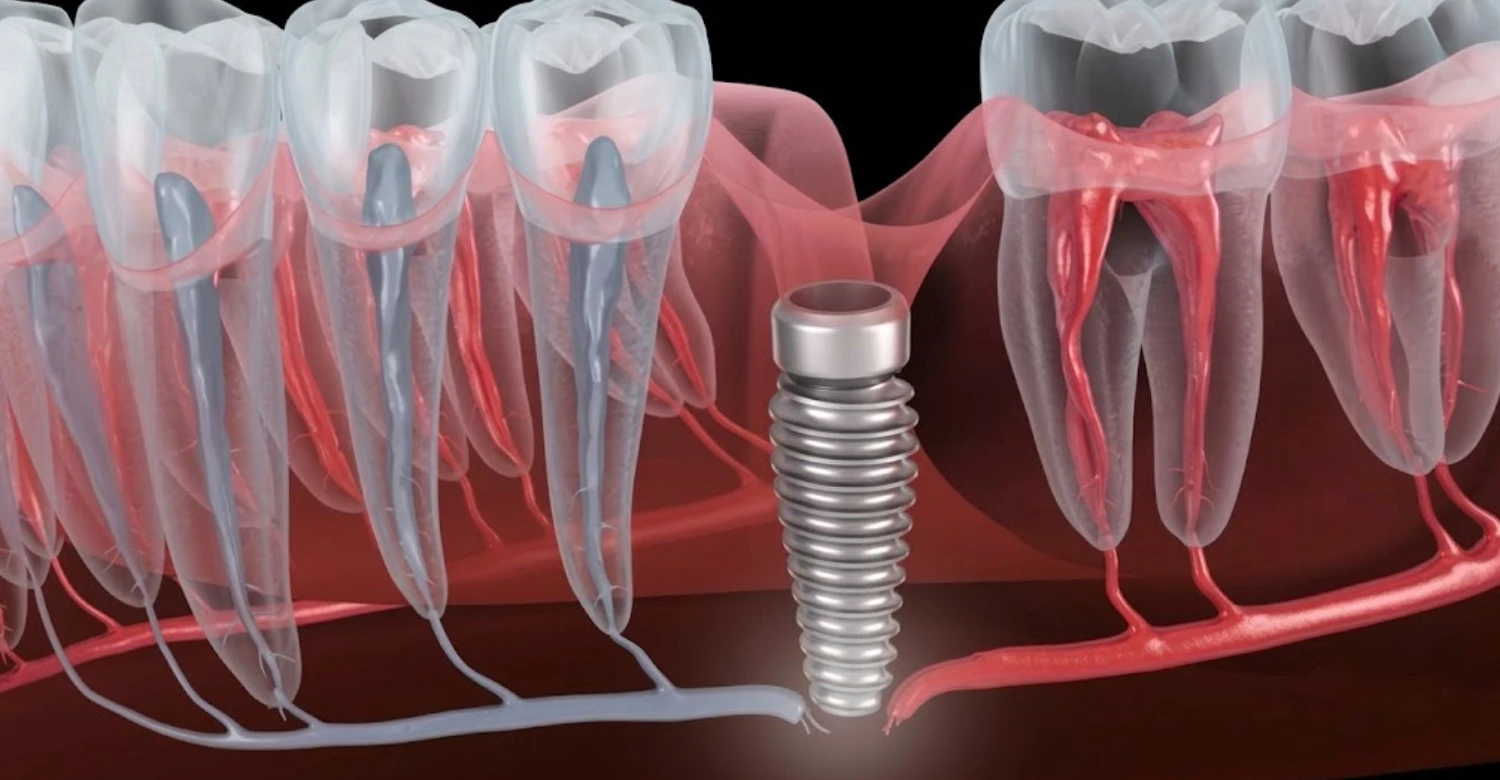
The inferior alveolar nerve is the nerve most often involved. It runs through the mandibular canal inside the lower jaw. Its branch, the mental nerve, exits the bone near the premolar roots and supplies the lower lip and chin. Injury here usually affects one side only. The lingual nerve lies on the tongue side of the lower jaw. Damage to it may change tongue sensation and sometimes taste, because it carries taste fibers to the front two-thirds of the tongue. Upper-jaw nerves can also contribute to dental implant nerve damage, although this is less common.
Is Numbness After Dental Implant Surgery Always Nerve Damage?
No. Local anesthesia normally numbs the lip, chin, and tongue for several hours after surgery. This is expected and wears off gradually. Swelling in the first few days can also cause mild, short-lived changes in sensation. Concern arises when numbness lasts well beyond the anesthetic period, spreads, or comes with tingling, burning, or electric-shock sensations. These signs may point to dental implant nerve damage, but they do not confirm it. Only a clinical examination, supported by imaging when appropriate, can clarify the cause.
What Does Dental Implant Nerve Damage Feel Like?
Dental implant nerve damage symptoms vary from person to person. Many people say one side of the lower lip feels "asleep," as if the anesthetic never fully wore off. Others notice that the chin feels strange or rubbery when touched. Some feel constant pins and needles. Others feel sharp, burning, or shock-like pain. Symptoms usually affect one side and match the area supplied by the injured nerve. Their pattern and timing give clinicians useful clues. Symptoms alone, however, cannot confirm a diagnosis.
Numbness in the Lower Lip or Chin
Reduced sensation, called hypoesthesia, is the most common complaint. The lower lip or chin may feel thick, swollen, or distant, even though it looks normal. Light touch may be hard to notice. Eating and drinking can feel awkward because the lip no longer signals where food or liquid is. Some people dribble slightly or miss crumbs on their lip. Speech usually stays clear, but it may feel different. Complete loss of feeling, called anesthesia, suggests a more significant injury and needs prompt review.
Tingling, Burning, or Electric-Shock Sensations
Dental implant paresthesia describes unusual sensations that are not painful, such as pins and needles, crawling, or buzzing. It often appears as an injured nerve begins to recover, but it can also persist. Dysesthesia is different: it is an unpleasant or painful abnormal sensation, such as burning, stinging, or electric shocks. These sensations may appear on their own or be triggered by touch, chewing, or temperature. Painful symptoms tend to affect daily life more. Always report them to the treating clinician.
Changes in Tongue Sensation or Taste
Numbness, tingling, or burning on one side of the tongue may suggest the lingual nerve is involved. This nerve also carries taste fibers, so some people notice reduced or altered taste on the affected side. Lingual nerve injury after implant surgery is less common than inferior alveolar nerve injury. It may follow lifting the gum flap, perforation of the inner jaw wall during drilling, or other lower-jaw procedures. Report tongue biting, difficulty moving food, or a persistent metallic taste promptly so it can be examined.
Pain When Touching the Affected Area
Some people develop hyperesthesia, meaning increased sensitivity. Light touch from a towel, a kiss, or shaving may feel uncomfortable or painful. Allodynia means pain triggered by things that are normally painless. Responses to hot and cold may also change. Cold drinks might sting, and warmth may feel exaggerated or absent. These reactions suggest the nerve is sending distorted signals. They can occur alongside numbness in nearby areas. Note any pain with touch and discuss it with the treating dentist.
What Causes Nerve Damage After a Dental Implant?
Nerve damage after dental implant surgery can come from several mechanisms. The likely cause depends on when symptoms began, where they occur, how severe they are, and whether they are changing. Numbness that is still present once the anesthetic wears off may suggest direct injury during surgery. Symptoms that develop over the following days may point to swelling or bleeding pressing on the nerve. Some causes are temporary, while others need urgent correction. Identifying the mechanism guides treatment and helps estimate likely recovery.
Temporary Nerve Irritation After Surgery
Surgery naturally triggers inflammation, which is the body's protective response to tissue injury. Inflammation brings swelling, increased blood flow, and fluid buildup around the surgical site. When swelling develops close to a nerve, it may press on it and temporarily alter sensation. This type of change often improves over days to weeks as the swelling settles. However, temporary irritation should not be assumed. Direct injury can cause the same symptoms. Persistent or worsening changes therefore still need clinical review rather than waiting.
Implant Hitting Nerve or Placing Too Close to It
An implant hitting nerve tissue, or sitting too close to it, may compress or injure the nerve. In the lower jaw, an implant that enters or presses on the mandibular canal can disturb sensation in the lip and chin. Heat and pressure from drilling may also harm the nerve. However, "implant hitting nerve" describes a possible complication, not a diagnosis. It cannot be confirmed from symptoms alone. Assessing the implant's position requires a clinical examination and appropriate imaging.
Inferior Alveolar Nerve Injury During Implant Placement
Inferior alveolar nerve injury implant cases usually involve the back of the lower jaw. The nerve may be damaged if the drill goes too deep, during osteotomy preparation, or during implant insertion. An osteotomy is the hole prepared in the bone to receive the implant. An implant near the mandibular canal can compress the nerve, as can bone debris pushed into the canal. This is the most frequently reported form of dental implant nerve damage. It typically changes sensation in the lower lip, chin, and gum on the same side.
Local Anesthesia, Surgical Trauma, or Hematoma
Not every change in sensation comes from the implant itself. The needle used for local anesthesia can occasionally irritate or injure a nerve, particularly during a nerve block injection. Surgical trauma, such as pulling back tissue or lifting the gum flap, may stretch nearby nerves. A hematoma is a collection of blood. It can form in bone or soft tissue and press on surrounding structures. These causes can produce similar symptoms, which is why careful clinical assessment matters.
Pre-Existing Anatomical or Surgical Risk Factors
Some situations raise the risk of nerve injury even when technique is careful. Limited bone height above the mandibular canal leaves less room for the implant. The canal's position varies widely between people. Some patients also have an "anterior loop," where the nerve curves forward near the mental foramen, and this can be hard to identify. Complex anatomy, bone loss after extraction, and inaccurate measurement of available bone all add risk. These factors explain why thorough planning matters, and why not every case results from surgical error.
Tips for Patients
These practical steps can help you stay safe and support an accurate assessment if you notice altered sensation after implant surgery:
Record when the numbness started and whether the affected area is changing.
Avoid chewing on numb tissues and check for accidental lip or tongue biting.
Avoid very hot foods and drinks until normal sensation returns.
Bring your implant surgery date, medication list, and available imaging reports to your appointment.
Ask whether your symptoms warrant a sensory examination, CBCT review, or specialist referral.
Which Symptoms Can Occur Together After Implant-Related Nerve Injury?
Symptoms after implant-related nerve injury often overlap. A person may notice numbness in one area and tingling or burning in another. Others have reduced sensation along with practical problems when eating or speaking. These combinations help clinicians map the affected nerve and estimate how severe the injury is. Still, overlapping symptoms do not automatically confirm dental implant nerve damage. Swelling, bruising, and healing tissue can produce some similar sensations. A professional examination is the only reliable way to interpret the overall pattern.
Numbness With Tingling or Burning Pain
Numbness and tingling or burning pain can occur together when a nerve is only partly injured. Some fibers may stop sending signals, which causes numbness. Other damaged fibers send abnormal signals, which causes pain or pins and needles. This mixed pattern is common. Tingling sometimes increases as sensation begins to return, but it does not always mean recovery. When burning pain comes with numbness, the clinician may consider medication for nerve pain alongside monitoring. Recording how each symptom changes helps guide that decision.
Lip Numbness With Difficulty Eating or Speaking
A numb lower lip is easy to bite accidentally while chewing. Food or drink can collect on the lip or chin without being noticed. Drinking from a cup may feel awkward, and some people dribble slightly. Speech usually remains easy to understand, but the lip may feel clumsy, especially with sounds such as "p" and "b." These changes can affect confidence in social situations. Repeated lip biting can also cause sores, so check the area in a mirror regularly.
Persistent Sensory Changes Without Severe Pain
Nerve dysfunction does not always hurt. Many people with significant loss of sensation feel little or no pain. They simply notice numbness or reduced feeling that does not come back. This can lead them to delay seeking help, assuming nothing serious is wrong. However, the absence of pain does not rule out dental implant nerve damage. Painless numbness that persists still deserves prompt assessment. Early evaluation can show whether the implant or surrounding tissue is pressing on the nerve.
What Can You Do at Home if You Have Numbness After a Dental Implant?
Numbness after dental implant surgery cannot be fixed at home. Home care cannot repair a nerve that an implant is compressing or that is severely injured. The most important step is to contact your treating dental professional promptly if sensation is still altered after the anesthetic should have worn off. In the meantime, simple precautions can protect numb tissue from accidental injury. They also help you collect useful information for your appointment. These steps support safety and assessment, but they do not replace professional care.
Protect Your Lip, Tongue, and Cheek From Accidental Injury
Numb tissue cannot warn you about injury, so take extra care. Chew slowly, preferably on the opposite side. Avoid chewing on the numb lip, tongue, or cheek. Cutting food into smaller pieces makes chewing easier. After meals, check the area in a mirror for bite marks, sores, or swelling. Keep the area clean as your postoperative instructions describe. Report any wound that does not heal, because it can become infected. Careful habits prevent extra problems while your clinician investigates the cause.
Avoid Heat and Unsupervised Treatments
Reduced sensation makes temperature harder to judge. Let hot drinks and soups cool before you consume them, and test the temperature with an area that has normal feeling. This helps prevent burns you may not feel. Avoid massaging the numb area aggressively. Do not start supplements, vitamins, medications, or facial exercises as nerve treatments without professional guidance. Some products are marketed for nerve repair but may not suit your situation. Your clinician can advise whether any specific treatment is appropriate.
Record When Your Symptoms Started
A simple symptom diary can help your clinician assess the problem. Note when the numbness or tingling started, ideally in relation to the end of surgery. Describe exactly where it is, such as the left lower lip or the chin. Rate how severe it is each day on a simple scale. Record whether the affected area is shrinking, growing, or staying the same. Mention any burning, shock-like pain, or taste changes. Dated photos can also help you track changes over time.
Which Tools Help Identify Dental Implant Nerve Damage?
Identifying dental implant nerve damage relies on several tools used together. Clinicians start with a detailed history, including when symptoms began and how they have changed. A clinical examination tests sensation and maps the affected area. Imaging then shows where the implant sits relative to nearby nerves and bone. No single test tells the whole story. Combining these findings helps separate temporary sensory changes from possible nerve injury. It also guides decisions about monitoring, correction, or specialist referral.
Sensory Testing During a Clinical Examination
Sensory testing measures how well the nerve still works, and it helps confirm and grade dental implant nerve damage. Common tests include light touch with a cotton wisp, two-point discrimination, pinprick, and responses to temperature. The clinician compares the affected side with the unaffected side. They often map the numb area by marking its borders on the skin, then photograph it. Repeating these tests over time shows whether sensation is improving, stable, or worsening. This matters because recovery is often gradual and easier to measure than to feel.
CBCT Scan to Prevent Implant Nerve Damage
Using a CBCT scan to prevent implant nerve damage is a common planning step. Cone-beam computed tomography (CBCT) creates three-dimensional images of the jaw. It shows bone height and width and the path of the mandibular canal. This helps clinicians choose implant length and position while keeping a safety margin from the nerve. After surgery, CBCT may show where an implant sits in relation to the canal. However, it cannot guarantee that injury will be prevented, and it shows bone anatomy rather than nerve function.
When Additional Imaging or Specialist Assessment May Be Needed
Sometimes the initial findings do not clearly explain the symptoms. In such cases, the clinician may request more imaging or refer the patient for specialist assessment. Referral may be considered when symptoms are severe, worsening, or not improving as expected. It may also be needed when imaging suggests the implant has entered the nerve canal. Specialists in oral and maxillofacial surgery or nerve injury may carry out more detailed testing. The choice depends on symptoms, examination findings, and the suspected cause.
.jpg)
When Should You Seek Professional Care for Possible Nerve Damage?
New changes in sensation after implant surgery should never be ignored. Local anesthesia usually wears off within several hours. If numbness, tingling, or burning continues beyond that, contact your dentist rather than waiting. Symptoms that are still present the day after surgery deserve a call. Timing matters because some causes, such as an implant pressing on a nerve, may respond better to early correction. Prompt contact also lets the clinician record baseline findings, which make later monitoring more accurate.
Contact Your Implant Dentist Promptly if Numbness Persists
If you notice new or ongoing numbness, tingling, burning, or altered sensation after implant placement, contact your implant dentist promptly. Do not wait several weeks to see whether it settles. Explain when the symptoms began and which areas are affected. Your dentist may examine you, review imaging, or check the implant's position. Even when the cause turns out to be temporary swelling, early assessment offers reassurance and a clear plan. Waiting may reduce the options available if the nerve is compressed.
Seek Urgent Assessment for Severe or Worsening Symptoms
Some symptoms need urgent assessment. These include rapidly worsening pain, swelling that keeps spreading, fever, pus, or a bad taste suggesting infection. Spreading numbness or severe shock-like pain should also be reviewed quickly. Try to contact your dentist the same day. Difficulty breathing or swallowing, or swelling spreading toward the neck or eye, requires emergency medical care. In those situations, go to the nearest emergency department or call emergency services immediately. Do not wait for a dental appointment.
Why Early Assessment Matters
Early assessment can change the outcome. When an implant or surrounding tissue is compressing a nerve, relieving that pressure quickly may improve the chance of recovery. Many specialists advise that suspected implant-related compression should be reassessed within the first day or two after surgery. Early documentation also creates a baseline for measuring progress. However, early assessment does not mean every implant must be removed. Many cases need only monitoring, while others benefit from repositioning or another targeted correction.
Clinical Note
Numbness after implant surgery has several possible causes and does not, by itself, confirm dental implant nerve damage. Local anesthetic effects, postoperative swelling, nerve irritation, hematoma, and direct nerve trauma each need a different assessment. Online information cannot establish where a nerve injury is or how severe it is. A qualified dental professional should promptly assess any new or persistent change in sensation. Diagnostic imaging, including CBCT when appropriate, must always be interpreted alongside the clinical findings and sensory testing.
How Is Dental Implant Nerve Damage Treated?
Dental implant nerve damage treatment depends on several factors. These include which nerve is affected, how severe the injury is, when symptoms began, and whether imaging suggests ongoing compression. Mild symptoms that are improving may only need monitoring. Painful symptoms may need medication. Suspected mechanical pressure may need prompt correction of the implant. Some persistent injuries require specialist referral or, less often, surgical nerve repair. Treatment aims to relieve pressure, manage pain, support recovery, and help people adapt to any lasting changes.
Monitoring and Conservative Management
Careful monitoring may be appropriate when symptoms are mild and improving and no implant compression is found. Many cases of mild dental implant nerve damage are managed this way. The clinician repeats sensory tests at planned intervals, often over weeks and months, and compares the results with the first findings. Some clinicians also prescribe a short early course of anti-inflammatory medication or corticosteroids, although evidence for this is limited. Monitoring is active care, not simply waiting. If symptoms worsen or stop improving, the plan should be reviewed.
Medication for Neuropathic Pain
Burning, shooting, or electric-shock pain may respond to prescription medication for neuropathic (nerve) pain. Options can include certain anticonvulsant medicines, such as gabapentin or pregabalin, and some antidepressants used at low doses for nerve pain. Topical treatments are sometimes considered. These medicines calm abnormal nerve signals, but they can cause side effects and require medical supervision. Importantly, pain relief does not necessarily mean the nerve has healed. Sensation should still be monitored separately to track real recovery.
Correcting Implant-Related Nerve Compression
If imaging and symptoms suggest the implant is pressing on or entering the nerve canal, urgent reassessment is needed. Options may include partly unscrewing the implant to back it away from the canal, or removing it and placing a new one later in a safer position. Relieving pressure early may improve the chance of recovery. These decisions depend on clinical findings, imaging, and timing. An implant near a nerve does not always need removal. Each option carries its own risks, which should be discussed openly with the patient.
Referral for Specialist Nerve Assessment
Referral to an oral and maxillofacial surgeon, or another appropriately qualified specialist, may be advised when loss of sensation is persistent or significant. It is also considered for severe pain, lingual nerve injury, or symptoms that are not improving. Specialists can carry out detailed sensory mapping and decide whether surgical exploration is appropriate. Timely referral matters, because nerve repair generally works better when performed within months of the injury rather than years later. Specialist care can also support long-term pain management when needed.
Surgical Nerve Repair in Selected Cases
Microsurgical nerve repair may be considered for selected injuries, such as severe or complete loss of sensation that does not improve. The surgeon exposes the injured nerve, removes damaged or scarred tissue, and rejoins the ends or uses a nerve graft. These procedures need specialized expertise and are not suitable for everyone. Outcomes vary. Some patients regain useful sensation, while others notice limited improvement. Surgery does not guarantee full sensory recovery, so expectations should be discussed carefully beforehand.
How Long Does Nerve Damage Last After a Dental Implant?
How long does nerve damage last after dental implant surgery? It depends on the type and severity of the injury. Mild irritation from swelling may improve within days or weeks. More significant injuries can take several months to recover, and some leave lasting changes. Nerves regenerate slowly, so progress is usually gradual. Symptoms that continue beyond several months are generally less likely to resolve fully. Regular follow-up helps track recovery and shows whether further treatment is needed.
Signs That Sensation May Be Improving
Several changes may suggest that sensation is returning. Numbness may become less intense, and the affected area may shrink. Light touch may become easier to feel. Tingling or pins and needles sometimes appear as nerve fibers recover. Everyday activities, such as drinking or eating, may start to feel more natural. However, symptom changes alone cannot show how far the nerve has recovered. Repeated sensory testing and mapping by a clinician give a more objective measure of progress over time.
Can Nerve Damage From Dental Implants Be Permanent?
Can nerve damage from dental implants be permanent? Yes, permanent sensory changes are possible, especially after a severe injury such as a crushed or severed nerve. Some people are left with partial numbness, altered sensation, or chronic nerve pain. However, early numbness alone cannot predict the final outcome. Many mild injuries recover partly or fully. Prompt assessment and timely correction of any compression may improve the chance of recovery. If changes remain, long-term support can help people adapt.
What Affects the Recovery Timeline?
Recovery from dental implant nerve damage depends on several factors. Injury severity matters most: irritation usually recovers better than crushing or cutting. The nerve involved also matters. The inferior alveolar nerve runs inside a bony canal, which may help guide regeneration, while lingual nerve injuries can behave differently. The cause, how soon assessment happens, and whether pressure on the nerve continues all play a role. Ongoing compression may limit recovery. Age and general health may also affect healing, though individual responses vary.
How Can You Reduce the Risk of Nerve Damage Before Dental Implant Surgery?
Careful planning and appropriate surgical technique can reduce the risk of dental implant nerve damage, but no approach removes every possible complication. Prevention begins with understanding your jaw anatomy and medical history. It continues with choosing a suitable implant length and position, keeping a safe distance from nerves, and using controlled technique. Open communication matters too. Patients who understand the risks and report symptoms early help their care team respond quickly if a problem develops.
Review Your Jaw Anatomy With Appropriate Imaging
Before implant placement, clinicians assess bone height and width and the position of nearby nerves. Standard X-rays give a two-dimensional view, which may be enough for some sites. CBCT provides three-dimensional detail and is used when clinically indicated, especially near the mandibular canal or mental foramen. Clinicians commonly plan for a safety margin, often around 2 mm, between the implant tip and the canal. Surgical guides made from the scan may also help carry out the plan accurately.
Discuss Risks and Alternatives Before Surgery
Ask questions before agreeing to surgery. Find out how close the planned implant will be to nearby nerves and whether there is enough bone. Ask whether a shorter implant, bone grafting, or a different position might reduce the risk. Discuss alternatives, such as bridges or removable dentures, if implants seem high-risk for you. Make sure you understand the possible complications, including nerve damage after dental implant placement. Informed consent should cover realistic risks and benefits, and what happens if a problem occurs.
Follow Postoperative Instructions and Attend Follow-Up Visits
Postoperative instructions support healing and reduce complications. Take medications as prescribed, keep the area clean, and follow the dietary advice. Attend every follow-up visit, even if you feel well. These appointments let the care team check healing and ask about sensation. If you notice numbness, tingling, or burning between visits, report it straight away rather than waiting for the next appointment. Early recognition gives the clinician the best chance to act when dental implant nerve damage is suspected.
What We Notice Clinically
Dr. Rifat Alsaman, Head of the Medical Team and cosmetic dentist at Vitrin Clinic, approaches altered sensation after implant surgery with careful, structured assessment. Patient concerns about dental implant nerve damage often begin with one simple question: is this numbness normal? The answer depends on the details. The themes below reflect principles commonly applied in implant care. They stress precise symptom reporting, clinical and imaging assessment used together, and early communication between the patient and the care team.
Why the Timing and Location of Numbness Matter
Dr. Rifat Alsaman, Head of the Medical Team and cosmetic dentist at Vitrin Clinic, emphasizes documenting exactly where altered sensation occurs and when it began. Numbness still present once the anesthetic should have worn off may suggest a different cause from symptoms that appear days later. The precise area, such as the lip, chin, gum, or tongue, helps identify which nerve may be involved. These details guide the clinical examination. They also help decide whether more imaging or a specialist assessment is needed.
Why Imaging Must Be Interpreted Alongside Symptoms
Dr. Rifat Alsaman, Head of the Medical Team and cosmetic dentist at Vitrin Clinic, approaches implant-related concerns by looking at symptoms, clinical examination, and appropriate imaging together. A scan may show an implant close to the canal in a patient whose sensation is normal. Equally, a patient may have clear symptoms with no obvious finding on imaging. Relying on a scan alone could therefore mislead. Reading imaging alongside sensory testing gives a more accurate picture and supports safer decisions about next steps.
Why Early Communication Can Change the Next Steps
Dr. Rifat Alsaman, Head of the Medical Team and cosmetic dentist at Vitrin Clinic, highlights the value of reporting symptoms promptly. When patients mention new or persistent numbness early, the cause can be investigated while time-sensitive options are still available. This may include reassessing the implant's position if compression is suspected. Early contact also reduces uncertainty for the patient. Even when symptoms turn out to be temporary, clear communication helps the care team plan suitable follow-up and avoid unnecessary delay.
What Should You Do if You Suspect Dental Implant Nerve Damage?
Numbness, tingling, burning, or altered sensation after implant surgery can have different causes. Not every case is permanent nerve injury. Still, persistent or new symptoms deserve prompt professional assessment. Early evaluation, appropriate imaging, and treatment matched to the cause help guide management. Do not wait for severe pain before seeking advice, and do not assume an implant must automatically be removed. If sensation has not returned as expected, contact your treating dental professional and arrange an assessment.
How Vitrin Clinic Approaches Dental Implant Assessment
Vitrin Clinic in Istanbul, Türkiye, provides Dental Implant treatment and takes an individualized approach to every implant assessment. Evaluation includes a review of symptoms, relevant medical and dental history, a clinical examination, and imaging when indicated. Dr. Rifat Alsaman, Head of the Medical Team and cosmetic dentist at Vitrin Clinic, supports coordinated treatment planning based on the clinical findings, from initial implant planning through follow-up care. Suspected nerve injury may require further assessment or referral to an appropriately qualified specialist. If you have persistent numbness or altered sensation after implant surgery, request an assessment to discuss suitable next steps.
Ready to transform your smile?
Talk to our team and get a FREE treatment plan.
References:
FAQs
Dr. Rifat Alsaman has more than 5 years of clinical experience in dentistry and currently serves as the Head of the Medical Team at Vitrin Clinic. He is dedicated to providing exceptional patient care, overseeing treatment planning, and ensuring the highest clinical standards across the team. His expertise, attention to detail, and commitment to continuous professional development have helped countless patients achieve healthier, more confident smiles.


.webp&w=3840&q=75)

