Periodontics
October 13, 2026
Microplastics and Oral Health: What To Know About Oral Exposure and Prevention?
 Dr. Rifat Alsaman
Microplastics and Oral Health is a growing area of research, and the honest answer is that much remains unknown. Microplastics are tiny plastic fragments. They can reach the mouth through food, drinking water, airborne dust, and some consumer products. Scientists have detected these particles in oral samples. However, they have not proven that microplastics cause specific dental diseases in humans. What you should know is simple: exposure is common, evidence is still developing, and proven oral care remains your best protection.
This guide explains what current studies actually show about microplastics and oral health, where the evidence is still weak, and which questions remain open. It separates laboratory findings from confirmed clinical outcomes. It also offers realistic steps to reduce unnecessary exposure without abandoning effective habits. Brushing with fluoride toothpaste, cleaning between your teeth, and attending regular dental visits still matter most. The aim is clear information, not fear.
.jpg)
.jpg)
.webp)
.jpg)
.jpg)
.jpg)
.jpg)
.webp)
.jpg)
Treatments We Provide at Vitrin Clinic, Turkey
Treatment | Average Cost |
≈ $1,500 – $3,000 per tooth | |
≈ $3,000 – $10,000+ (full set) | |
≈ $500 – $1,500 per tooth | |
≈ $800 – $2,500 per tooth | |
≈ $3,000 – $7,000 | |
≈ $3,000 – $7,000 | |
≈ $300 – $1,000 | |
≈ $150 – $300 per quadrant (deep cleaning) to $1,000–$3,000 (surgery) | |
≈ $100 – $350 per tooth | |
≈ $600 – $1,500 per tooth | |
≈ $600 – $1,800 per tooth | |
≈ $450 – $1,000 (€400 – €900) total bridge cost |
Comparative Pricing for Major Dental Treatments (US, UK, Turkey)
Dental Treatment | Turkey (USD) | United States (USD) | United Kingdom (USD / GBP) |
Dental Implants (per tooth) | ≈$400 – $900 | $3,000 – $5,500 | $2,200 – $4,500 (£1,800 – £3,500) |
Hollywood Smile (full set) | ≈$2,000 – $5,000 | $15,000 – $35,000+ | $6,000 – $20,000 (£5,000 – £15,000) |
Dental Crowns (per tooth) | ≈$180 – $400 | $800 – $2,500 | $500 – $1,200 (£400 – £900) |
Veneers (per tooth) | ≈$150 – $350 | $900 – $2,500 | $600 – $1,300 (£500 – £1,000) |
Invisalign | ≈$1,500 – $3,000 | $3,500 – $8,000 | $2,500 – $5,500 (£2,000 – £4,500) |
Subperiosteal Implants (per tooth) | ≈$1,500 – $2,500 | $4,000 – $6,000 | $3,000 – $5,000 (£2,400 – £4,000) |
Teeth Whitening | ≈$150 – $300 | $400 – $1,000 | $350 – $800 (£250 – £600) |
Periodontics (deep cleaning / per quadrant) | ≈$100 – $250 | $200 – $500 | $150 – $400 (£120 – £300) |
Gingival Esthetics (per tooth) | ≈$100 – $250 | $300 – $800 | $200 – $600 (£150 – £450) |
Endodontics (root canal / per tooth) | ≈$120 – $300 | $700 – $1,500 | $400 – $1,000 (£300 – £800) |
Same Visit Dentistry | ≈$200 – $450 | $1,000 – $2,200 | $700 – $1,500 (£550 – £1,200) |
Dental Bridges in Turkey (full bridge) | ≈$300 – $800 | $1,500 – $4,500 | $1,000 – $3,000 (£800 – £2,400) |
Microplastics and Oral Health: What Does Current Research Tell Us?
Microplastics and oral health research tells us that plastic particles can be found in the mouth, but their clinical impact is not yet established. Microplastics are plastic particles generally smaller than 5 millimetres. Nanoplastics are even smaller. Researchers now study saliva, dental plaque, and oral tissues to understand exposure. Three questions must be kept apart. Can particles be detected? Do they cause biological effects in laboratory studies? Do they cause disease in people? So far, evidence mostly addresses the first two questions.
How Can Microplastics Enter Your Mouth?
Microplastics can enter your mouth through several everyday routes. Because the mouth is the entry point for food and drink, oral exposure is almost unavoidable. Main sources include:
Food and drinking water: particles have been reported in bottled water, tap water, seafood, and salt.
Airborne dust: indoor fibres and fragments can settle in the mouth while you breathe.
Food containers: worn, scratched, or heated plastics may shed particles.
Dental products: some contain polymers, but established ingredients differ from suspected accidental contamination.
What Is the Difference Between Microplastics and Nanoplastics?
The main difference is size. Microplastics are generally under 5 millimetres. Nanoplastics are far smaller, usually below 1 micrometre, although definitions vary between researchers. Size is not the only factor that matters. Shape, chemical composition, and surface properties may all influence how a particle interacts with cells and bacteria. Smaller particles may interact with tissues differently. Even so, smaller is not automatically more harmful in every situation. Each particle type needs separate study before anyone draws conclusions about risk.
Microplastics in the Mouth: Where Can These Particles Be Found?
Microplastics in the mouth have been studied in three main areas: saliva, dental plaque, and the surface tissues lining the mouth. Researchers also investigate whether these particles affect oral bacteria. The field is young, and methods are still being refined. Laboratory contamination is a real challenge, because plastic is present almost everywhere, including in testing equipment. For that reason, results should be read carefully. Finding a particle in a sample is an important first step, but it is not proof of harm.
Microplastics in Saliva
Some studies have reported microplastics in saliva samples. Saliva is easy to collect, so it is a useful starting point for research. However, findings depend heavily on how samples are collected, stored, and analyzed. Techniques such as infrared or Raman spectroscopy help identify plastic types. Results can vary between laboratories. Importantly, detecting microplastics in saliva does not show tissue damage or a specific health risk. Saliva constantly washes and clears the mouth, so detection mainly reflects recent exposure.
Microplastics in Dental Plaque
Dental plaque is a biofilm, which means a sticky community of microorganisms attached to tooth surfaces. Because plaque is sticky, researchers ask whether it can trap passing particles. Some early studies have explored microplastics in dental plaque. This question is scientifically reasonable. Yet the presence of particles does not prove that they change plaque behaviour. It also does not show that they increase cavity risk. Sugar intake, fluoride exposure, and plaque control remain the proven drivers of tooth decay.
Microplastics and the Oral Microbiome
The oral microbiome is the community of bacteria, fungi, and other microorganisms living in your mouth. A balanced microbiome supports oral health. Research on microplastics and oral microbiome balance asks whether particles might act as surfaces for bacteria, alter biofilm formation, or shift bacterial activity. Some laboratory and animal studies suggest such interactions are possible. However, these findings have not been confirmed as human clinical outcomes. A laboratory change in bacteria does not automatically translate into disease in a real mouth.
Can Microplastics Reach the Gums and Other Oral Tissues?
This remains an open question. The mouth is lined by epithelial cells, a protective layer that acts as a barrier. Experimental studies have examined how particles interact with these cells in controlled settings. Scientists want to know whether particles can penetrate tissue, remain in place, or be cleared naturally. Current evidence does not show that microplastics routinely penetrate gum tissue. It also does not confirm that they accumulate in particular oral structures. More reliable human research is needed.
Ready to transform your smile?
Talk to our team and get a FREE treatment plan.
How Much Are Dental Implants in Turkey?
The cost of dental implants in Turkey depends on the type of implant, the number of implants required, the material used for the bridge/crowns (e.g., Zirconia or Porcelain), and any preparatory treatment needed before placement (such as bone grafting or sinus lifts). You will receive a personalized treatment plan after the dentist examines your mouth and X-rays.
Treatment | Price |
Single Dental Implant | ≈£350 |
All-on-4 Dental Implants (Single Jaw) | ≈£2,500 |
All-on-4 Dental Implants (Both Jaws) | ≈£4,800 |
All-on-6 Dental Implants (Single Jaw) | ≈£3,200 |
All-on-6 Dental Implants (Both Jaws) | ≈£6,000 |
All-on-8 Dental Implants (Single Jaw) | ≈£4,000 |
All-on-8 Dental Implants (Both Jaws) | ≈£7,500 |
What do Dental Implant packages include?
Our Turkish clinic offers packages that cover the main parts of implant treatment, so you can plan your visit with fewer extra arrangements. Package options include:
Dental consultation
Full dental check-up before implant placement
3D Tomography (CT Scan) & Panoramic X-rays
Local Anaesthesia
Temporary prosthesis during the healing stage
Hotel accommodation for your stay
Airport and clinic transfers
ALL-ON-4 IMPLANTS
FROM: ≈£2,500
Short description of this plan.
4 DENTAL IMPLANTS + FULL ARCH BRIDGE
HOTEL STAY
VIP TRANSFERS (AIRPORT/HOTEL/CLINIC)
3D CT SCAN & PANORAMIC X-RAY
ALL-ON-6 IMPLANTS
FROM: ≈£3,200
Short description of this plan.
6 DENTAL IMPLANTS + FULL ARCH BRIDGE
HOTEL STAY
VIP TRANSFERS (AIRPORT/HOTEL/CLINIC)
3D CT SCAN & PANORAMIC X-RAY
ALL-ON-8 IMPLANTS
FROM: ≈£4,000
Short description of this plan.
8 DENTAL IMPLANTS + FULL ARCH BRIDGE
HOTEL STAY
VIP TRANSFERS (AIRPORT/HOTEL/CLINIC)
3D CT SCAN & PANORAMIC X-RAY
Ready to transform your smile?
Talk to our team and get a FREE treatment plan.
Microplastics and Oral Health Effects: What Symptoms Should You Know About?
There are no recognized symptoms specific to microplastic exposure in the mouth. Research into microplastics and oral health effects is mostly experimental. Common complaints such as sore gums, bad breath, or sensitive teeth have many well-established causes. These include plaque, decay, gum disease, grinding, and some medications. If you notice a symptom, a dentist will look for these known causes first. Attributing symptoms to microplastics without evidence can delay correct diagnosis and appropriate treatment.
Can Microplastics Cause Mouth Irritation or Oral Inflammation?
Oral inflammation is the body's response to irritation or infection. It may appear as redness, tenderness, or swelling. Studies on microplastics and oral inflammation have explored mechanisms such as oxidative stress, a type of cell stress, and the release of inflammatory signals. These effects have mainly been seen in cell cultures and animal models, often at high doses. They have not established microplastics as a proven cause of everyday mouth irritation in humans. In microplastics and oral health research, a laboratory signal is not the same as a real symptom.
Could Microplastics Affect Your Gums or Increase Gum Disease Risk?
Gum disease has two main stages. Gingivitis is early inflammation of the gums, often with bleeding, and it is reversible. Periodontitis is more advanced and damages the bone and tissues supporting the teeth. Researchers are exploring a possible link between microplastics and gum disease. Still, the established risk factors are plaque, smoking, diabetes, and inadequate oral hygiene. A direct causal relationship between microplastic exposure and periodontal disease remains unproven in humans. Microplastics and oral health studies in this area are still at an early stage.
Are Microplastics Linked to Cavities, Bad Breath, or Tooth Sensitivity?
No direct connection has been established. Cavities, halitosis (bad breath), and tooth sensitivity are separate conditions with separate causes. Cavities develop when plaque bacteria produce acid from sugars. Bad breath often comes from bacteria on the tongue, gum disease, or dry mouth. Sensitivity usually reflects exposed dentine from enamel wear or gum recession. Each needs its own clinical assessment. Microplastics and oral health research has not identified particles as a cause of any of them. Linking these familiar complaints to microplastics without evidence may lead you away from effective treatment.
Are Dental Implants in Turkey cost-effective?
The Dental Implants Turkey price is lower than in the US and UK, usually by 60% to 70%. The lower cost is linked to cheaper operating and service expenses, not to lower treatment standards. Our clinic follows AACI standards and uses trusted, top-tier international dental implant materials.
.webp)
Microplastics and Gum Disease: Understanding the Possible Connection
The connection between microplastics and gum disease is a research hypothesis, not a confirmed finding. Scientists find the question worth studying because gum disease involves bacterial biofilms and inflammation, two areas where particles might theoretically play a role. Some studies have reported associations, but associations cannot prove the cause. People with more plaque may simply retain more particles. For now, microplastics and oral health research does not change how gum disease is prevented, diagnosed, or treated.
How Could Microplastics Interact With Gum Inflammation?
Periodontal inflammation results from a complex interaction between bacterial biofilms and the body's immune response. In theory, particles could become embedded in biofilm or trigger immune signaling. Some laboratory work has explored these pathways. However, proposed mechanisms are not proof. Research on microplastics and periodontal disease has not shown that particles start or worsen gum disease in people. Plaque bacteria and individual immune responses remain the established drivers of gum inflammation and tissue breakdown.
What Other Factors Are More Clearly Linked to Periodontal Disease?
Several factors have strong, consistent evidence behind them. These deserve your attention first:
Dental plaque and tartar: the primary cause of gum inflammation.
Smoking and tobacco use: a major risk factor that also masks bleeding.
Poorly controlled diabetes: linked to more severe and faster disease.
Inadequate plaque removal and irregular dental care: allow disease to progress unnoticed.
Individual susceptibility: genetics, stress, some medications, and other health conditions can contribute.
.jpg)
Advantages and Disadvantages of Gingivitis & Periodontitis Treatment in Turkey
Before you decide on treatment, it is worth looking at both the benefits and the limits of gum disease care. We explain each point during consultation, so you can judge whether this option is suitable for your goals.
Advantages
The benefits of Gingivitis & Periodontitis treatments include:
Stops Gum Disease Progression. Timely intervention prevents reversible gingivitis from turning into severe periodontitis and bone loss.
Restores Gum Health & Fresh Breath. Deep cleaning (scaling and root planing) removes hardened tartar, reducing inflammation, bleeding, and bad breath.
Saves Natural Teeth. Periodontal procedures help firm up loose teeth and preserve your natural smile structure.
Advanced Laser & Surgical Options. Modern periodontal techniques offer precise treatment with minimal discomfort and faster recovery times.
Highly Cost-Effective. Receiving specialized gum care in Turkey offers significant savings compared to the US and UK without compromising quality.
Disadvantages
There are also a few limits and points to consider before treatment:
Requires Ongoing Maintenance. Periodontal health needs strict lifelong oral hygiene and regular dental check-ups to prevent relapse.
Possible Gum Recession. Deep cleaning or surgery may cause gums to shrink slightly, exposing more of the tooth root.
Temporary Root Sensitivity. Teeth may feel more sensitive to hot and cold temperatures for a few weeks following deep cleaning.
Multiple Visits May Be Needed. Severe periodontitis may require structured multi-stage visits or surgical procedures.
Ready to transform your smile?
Talk to our team and get a FREE treatment plan.
Microplastics Exposure Through Dental Products: What Should You Check?
Microplastics exposure through dental products is a fair question, but the answer depends on the specific product. Many countries, including the United States and the United Kingdom, have intentionally added plastic microbeads in rinse-off products such as toothpaste. Other products may still contain polymers for texture or function. Check ingredient lists and manufacturer information. Avoid assumptions in either direction. Not every plastic-based product sheds microplastics, and not every "natural" product is automatically better for your teeth.
Can Toothpaste, Mouthwash, or Dental Floss Contain Microplastics?
Some products may, but formulations differ and should be assessed individually. Three categories need to be separated. First, intentionally added plastic particles, such as microbeads, which are now restricted in many places. Second, accidental contamination from packaging or manufacturing. Third, dissolved or film-forming polymers, which do not necessarily qualify as microplastics. Floss is often made from nylon or similar materials. It is wrong to assume that all toothpastes, mouthwashes, or floss products contain microplastics.
Are Dental Restorations or Orthodontic Materials a Source of Microplastic Particles?
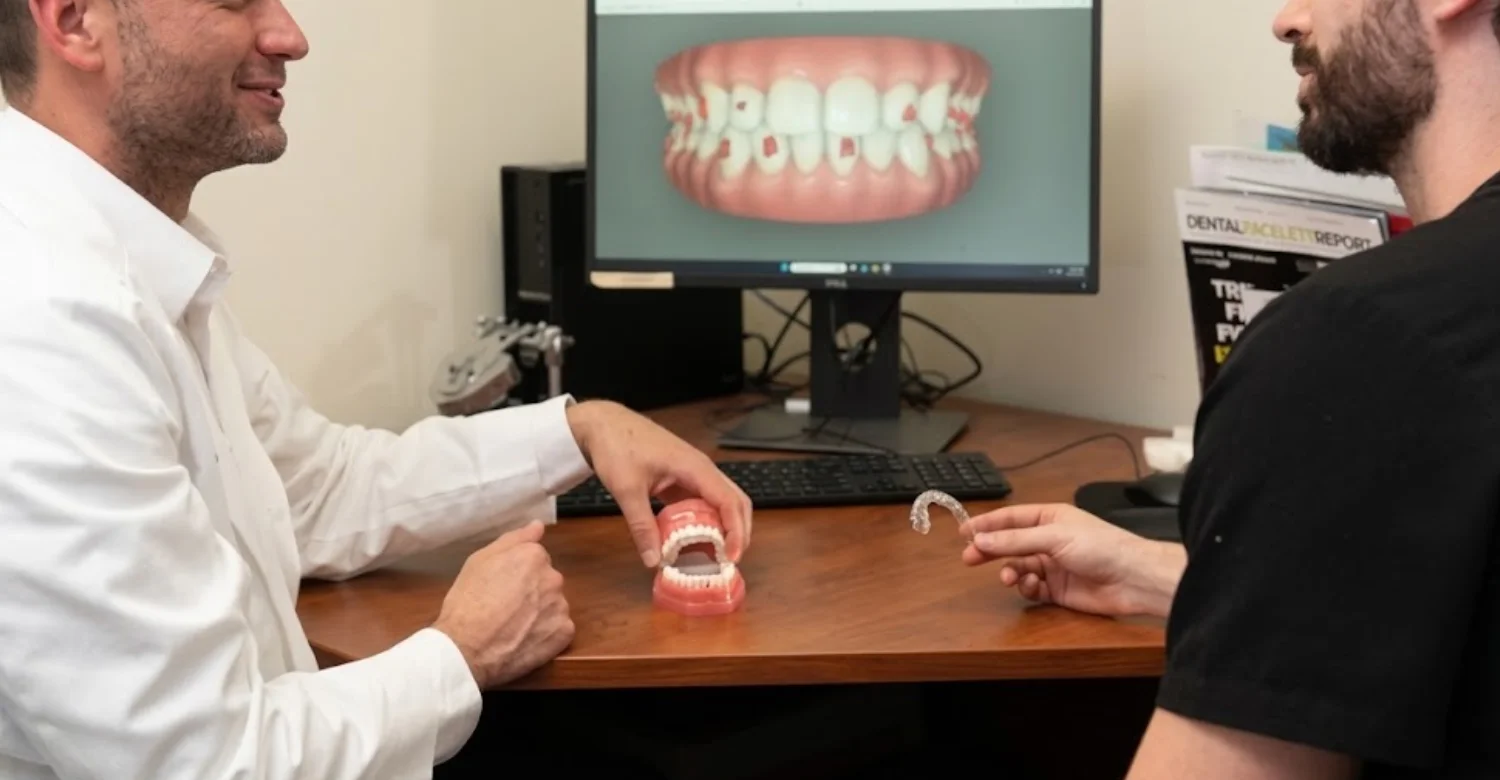
Some dental materials contain polymers. Examples include composite fillings, acrylic dentures, and clear aligners. Wear and slow degradation of these materials are areas of active scientific investigation. However, containing a polymer is not the same as confirmed microplastic exposure. Any particles released during placement or daily use are being studied. Their clinical significance is not established. These materials are tested for safety and serve important functions, so the current evidence does not justify avoiding them.
Should You Stop Using Plastic Dental Products?
No, not on the basis of current evidence. Stopping brushing, flossing, or using a plastic toothbrush would create established risks, such as decay and gum disease. Those risks are far greater than the uncertain risks still being studied. Choose products based on evidence, and ask your dentist if you have concerns. Never abandon clinically necessary dental materials, such as fillings or aligners, because of fear. Microplastics and oral health questions are best handled with balance.
Microplastics and Oral Health Risks: Who Should Be Concerned?
Everyone is exposed to some microplastics, so concern should be proportionate rather than personal alarm. Current knowledge about microplastics and oral health risks does not identify a specific group that needs special dental testing. People with gum disease, dry mouth, or many restorations should focus on managing those known conditions. Reasonable steps to reduce exposure make sense for everyone. What matters most is that worry does not replace proven preventive care or delay treatment for real problems.
What Do Scientists Know About Long-Term Oral Exposure?
Scientists know relatively little about long-term oral exposure. Measuring exposure is difficult, identifying very small particles is technically demanding, and long-term human studies are lacking. Risk depends on dose, particle type, exposure duration, and individual biology. A plausible risk is something that could happen based on mechanisms. A demonstrated clinical outcome is something proven to happen in people. For microplastics and oral health, current evidence sits mostly in the plausible-risk category, not the demonstrated one.
When Should You Seek Dental Advice for Oral Symptoms?
Book a dental examination if you notice persistent gum bleeding, swelling, mouth sores lasting more than two weeks, unexplained pain, or changes in oral tissues. These symptoms have many possible causes. They cannot identify microplastic exposure, and that should not be assumed. Seek urgent care for rapidly increasing facial or oral swelling. Get emergency help immediately if you have difficulty swallowing or breathing. These signs may indicate a serious infection or another condition requiring prompt treatment.
How to Reduce Microplastics Exposure and Protect Your Oral Health
You can reduce unnecessary exposure with simple, practical changes while keeping your oral care routine intact. Complete avoidance is not realistic, because microplastics are widespread in the environment. Focus on the steps most likely to help, such as avoiding heated plastics and following water safety guidance. At the same time, protect your teeth and gums with proven habits. Good microplastics and oral health practice means reducing exposure where reasonable, never sacrificing fluoride, interdental cleaning, or professional dental care.
Simple Changes You Can Make at Home
Small household habits can limit avoidable exposure:
Follow local drinking-water safety guidance, and use a suitable certified filter if appropriate.
Avoid heating food in containers not designed for high temperatures.
Transfer hot food to glass, ceramic, or stainless steel where practical.
Replace scratched or worn plastic food containers.
Keep food preparation areas clean and reduce indoor dust by vacuuming and ventilating.
Avoid unsupported "detox" products or methods claiming to remove microplastics.
Maintain an Evidence-Based Oral Hygiene Routine
Your daily routine remains the strongest protection for your teeth and gums:
Brush twice daily with fluoride toothpaste for about two minutes.
Clean between teeth daily with floss or interdental brushes.
Clean your tongue gently if needed.
Attend dental examinations at intervals suited to your individual needs.
Limit frequent sugary snacks and drinks.
Do not replace these proven practices with unproven microplastic-removal products. No product has been shown to remove microplastics from oral tissues.
Clinical Note: What the Evidence Means for Your Dental Care
Microplastics and oral health research is still developing. It does not currently justify a separate dental screening protocol for patients without symptoms. A standard dental examination assesses visible oral tissues, teeth, gums, plaque levels, and other clinically relevant findings. Routine examinations and dental X-rays cannot detect or measure microplastic particles. If you have persistent symptoms or specific concerns about environmental exposure, discuss them with a qualified healthcare professional who can assess your situation properly.
What We Notice Clinically
According to Dr. Rifat Alsaman, Head of the Medical Team and cosmetic dentist at Vitrin Clinic, patients sometimes ask whether gum bleeding or soreness could come from microplastics. Each symptom is assessed using established clinical criteria. Periodontal health, plaque control, medical history, and the condition of existing restorations remain central to every examination. Before cosmetic treatment, healthy gums are essential for lasting results. Microplastics and oral health remains an emerging research question, not a diagnosis made in the dental chair.
Prevention: How to Support Long-Term Oral Health
Long-term oral health depends on proven measures that prevent tooth decay and gum disease. Brush twice daily with fluoride toothpaste and clean between your teeth every day. Avoid smoking, and seek support to stop tobacco use. Manage medical conditions such as diabetes with appropriate guidance. Choose dental products based on safety, effectiveness, and your individual needs. Follow emerging microplastics and oral health research, but do not let uncertain risks displace the preventive care that works.
What You Should Remember About Microplastics and Oral Health
Remember that microplastics and oral health is an emerging research area, not a settled clinical issue. Particles have been investigated in saliva, plaque, and oral tissues. Their contribution to gum disease, oral inflammation, and other dental conditions remains uncertain. Reduce exposure where reasonable, but avoid fear-driven changes that disrupt effective hygiene. If you have persistent symptoms, seek a professional assessment. Discuss any specific concerns about microplastics and oral health during your dental consultation.
Patient Reviews
How Vitrin Clinic Approaches Your Oral Health
Vitrin Clinic in Istanbul, Türkiye, considers oral and periodontal health before planning any restorative or cosmetic treatment. Teeth, gums, and existing restorations are assessed first, because a healthy foundation supports lasting results. The clinic also provides treatment for gingivitis and periodontitis, helping address gum inflammation and periodontal disease according to each patient's needs. Clinical examination and appropriate imaging are used when indicated, although these methods do not detect microplastics. Dr. Rifat Alsaman, Head of the Medical Team and cosmetic dentist at Vitrin Clinic, oversees individualized assessment and treatment planning. If you have dental symptoms or oral health concerns, you can request a consultation and a personalized treatment plan.







Ready to transform your smile?
Talk to our team and get a FREE treatment plan.
References:
FAQs
Dr. Rifat Alsaman has more than 5 years of clinical experience in dentistry and currently serves as the Head of the Medical Team at Vitrin Clinic. He is dedicated to providing exceptional patient care, overseeing treatment planning, and ensuring the highest clinical standards across the team. His expertise, attention to detail, and commitment to continuous professional development have helped countless patients achieve healthier, more confident smiles.


