
Antibiotic Before Root Canal treatment are not routinely necessary for every infected tooth. Dentists decide based on clinical findings, infection severity, and individual medical risks. Many root canal infections require treatment of the affected tooth rather than antibiotic alone. Paracetamol may temporarily relieve pain, but it cannot remove infected tissue or drain an abscess. Facial swelling, fever, and spreading infection need prompt assessment. Breathing or swallowing difficulties require emergency medical care.
What Do Patients Want to Know About Antibiotic Before Root Canal?
Patients searching this topic usually want to know whether antibiotic are necessary, when treatment can begin, and how pain can be managed safely. They also want to understand infection risks, side effects, and warning signs.
The answer depends on the diagnosis. Some patients need prompt dental treatment without taking medication beforehand. Others may need antibiotic alongside treatment because infection is spreading or systemic symptoms are present. A dentist must assess the tooth and the patient's medical history before deciding.
Prescribing antibiotic before root canal procedures is therefore a question of clinical need, not a routine preparation rule.
What Are Antibiotic Before Root Canal Treatment?
Antibiotic use prior to endodontic treatment refers to using prescribed medicines to manage certain bacterial infections around a tooth. They are not routinely required before therapy starts. The decision depends on symptoms, examination findings, medical history, and infection severity.
What Is the Role of Antibiotic in Managing Dental Infections?
Pre-treatment antibiotic may be considered when a dental infection causes systemic illness or spreads beyond the immediate area. They may help control bacterial spread in selected cases. They do not replace drainage or treatment of the infected tooth. The American Dental Association advises prioritizing definitive dental treatment for most pulpal and periapical conditions.
How Do Dentists Decide Whether Antibiotic Are Necessary Before a Root Canal?
Decisions on antibiotic therapy depend on the patient's symptoms, clinical examination, and medical risks. Dentists assess swelling, fever, spreading infection, and the patient's immune status. They also consider whether dental treatment can begin promptly. Never start prescription treatment using someone else's medicine or leftover supplies.
What Is the Difference Between Root Canal Antibiotic and Definitive Dental Treatment?
Medication may help control selected infections, while definitive treatment addresses the source. Root canal treatment removes diseased or infected tissue inside the tooth. Drainage may be needed when pus has collected. Paracetamol may temporarily ease pain, but it cannot remove infected tissue or drain an abscess.
When Are Antibiotic Before Root Canal Treatment Necessary?
Antibiotic before root canal care may be appropriate when infection spreads or causes systemic symptoms. They are not a routine requirement for every painful tooth. Prompt clinical assessment helps determine whether medication, dental treatment, or both are needed.
Can a Dental Abscess Require Antibiotic Before Root Canal Treatment?
Prescription antibiotics may be indicated for an abscess accompanied by spreading infection or systemic illness. A localized abscess usually also requires dental treatment, such as drainage or treatment of the tooth. Do not attempt to pierce or drain swelling yourself. Seek urgent dental advice if pus, swelling, or worsening pain develops.
When Can Facial Swelling or Spreading Infection Change the Treatment Plan?
Antibiotic before root canal therapy may be part of treatment when swelling spreads or fever develops. Rapidly increasing facial or neck swelling requires urgent evaluation. The dentist may arrange emergency care or specialist assessment depending on the suspected extent. Medication alone may not control an infection requiring drainage or immediate dental intervention.
Do Patients With Certain Medical Conditions Need Antibiotics Before Dental Procedures?
Decisions regarding pre-procedural antibiotics may differ for people with significant immune suppression or specific medical risks. Some patients also need preventive antibiotics for particular conditions and procedures. This is separate from treating an existing tooth infection. Patients should disclose their diagnoses, allergies, and current medicines before treatment.
Are Antibiotics Routinely Needed Before Every Root Canal?
Systemic antibiotics are not routinely needed for every patient. Dental guidelines recommend avoiding unnecessary antibiotics for most common pulpal and periapical conditions. Dentists instead prioritize appropriate treatment of the tooth. Individual circumstances may change this decision, so patients should follow a clinician's assessment rather than general online advice.
How Effective Are Antibiotics for an Infected Tooth?
Antibiotic before root canal procedures may help control selected spreading infections, but they cannot reliably eliminate the source inside an infected tooth. Effectiveness depends on the diagnosis and whether necessary dental treatment is provided. Persistent symptoms require reassessment.
Can Antibiotics Treat the Source of a Root Canal Infection?
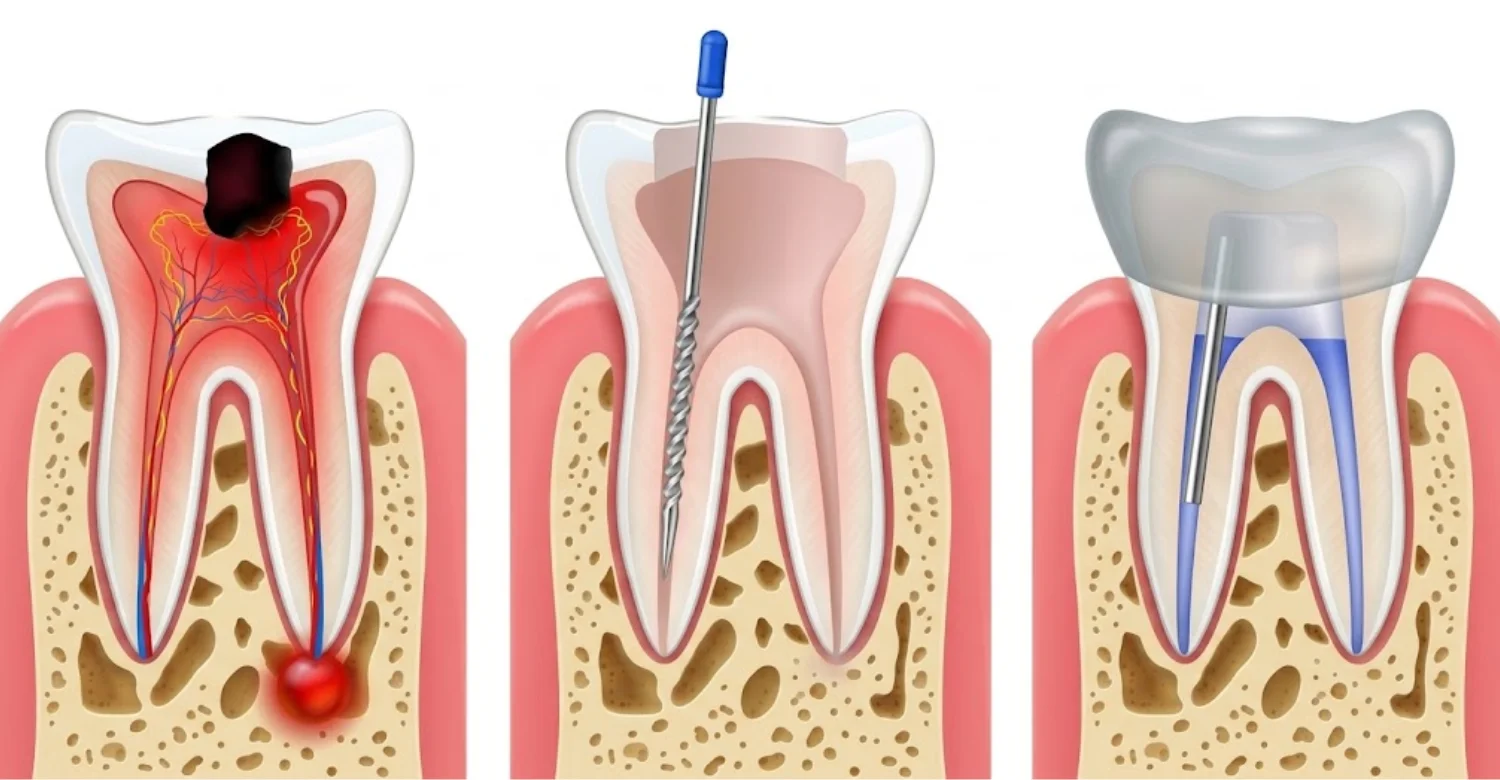
Oral antibiotics do not remove infected pulp or repair a damaged tooth. The pulp is the soft tissue containing nerves and blood vessels inside the tooth. Root canal treatment removes affected tissue and cleans the internal space. When a tooth cannot be saved, extraction may be considered after assessment.
Why Might Antibiotics Not Relieve Toothache Caused by Inflamed Dental Pulp?
Antibiotics taken prior to dental work may not relieve pain caused primarily by inflamed pulp. Inflammation can occur without an infection requiring systemic medication. The affected tissue may remain painful until the dentist treats the underlying problem. Paracetamol can provide temporary pain relief when suitable, but it does not resolve the dental cause.
Can Root Canal Treatment Be Necessary Even After Infection Symptoms Improve?
Taking medication does not make definitive treatment unnecessary simply because swelling or pain decreases. Symptoms can improve while the damaged pulp remains inside the tooth. A dentist must determine whether root canal treatment, drainage, restoration, or extraction is appropriate. Do not delay planned care without professional advice.
What Are the Limitations of Root Canal Infection Medicine?
Antibiotic before root canal procedures have important limitations because medicines may not reach all affected tissue effectively. They cannot restore a cracked tooth or remove dead pulp. Unnecessary use can also cause side effects and contribute to antimicrobial resistance. Treatment must address the diagnosis, not just the symptoms.
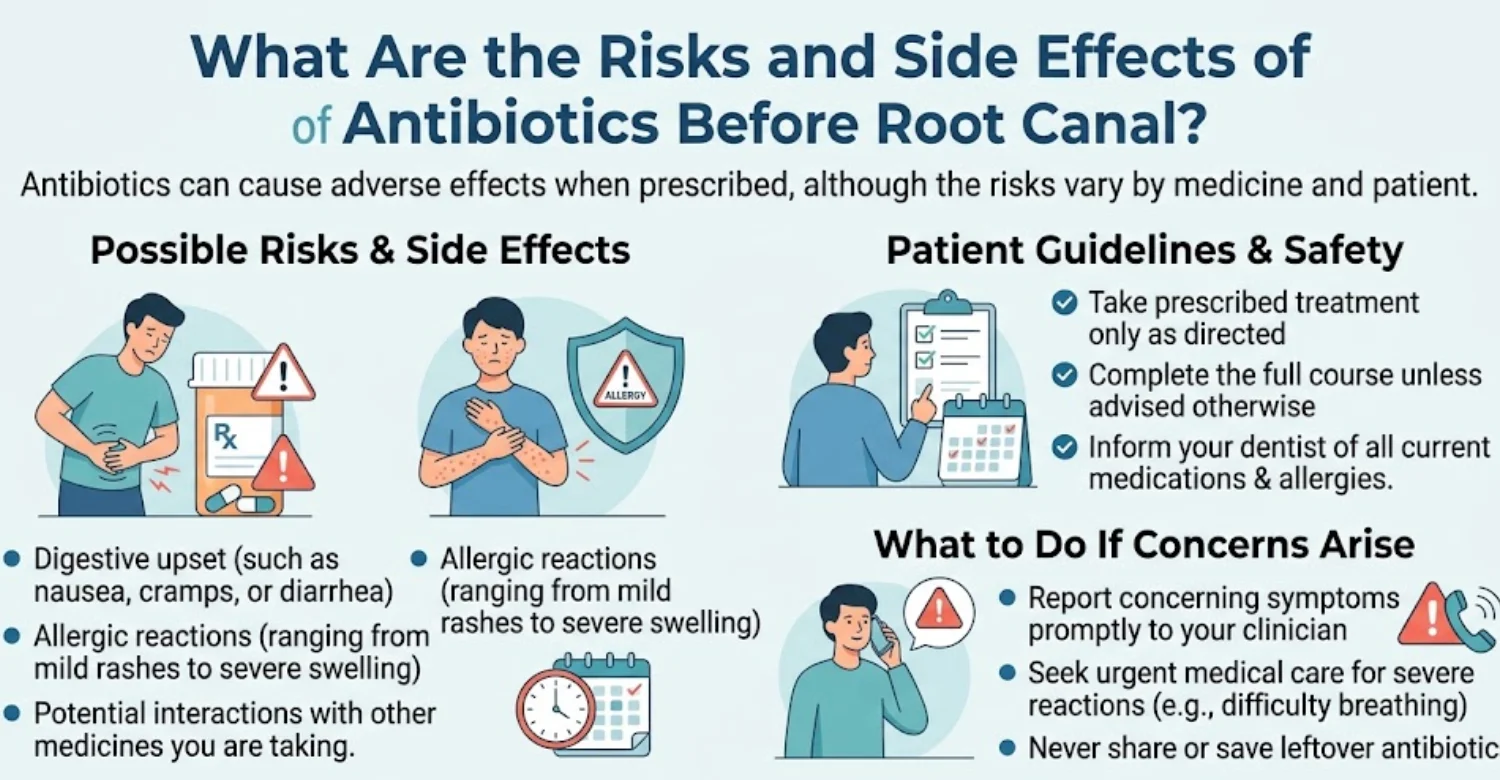
What Common Side Effects Can Occur During Antibiotic Treatment?
These medications may cause nausea, diarrhoea, abdominal discomfort, or other unwanted effects. The possible reactions depend on the prescribed medicine. Ask the prescribing clinician or pharmacist what to expect. Seek advice if symptoms are severe, persistent, or interfere with hydration.
Can Antibiotics Cause Allergic Reactions or Other Serious Adverse Effects?
Certain antibiotics can occasionally cause serious allergic reactions. Warning signs may include widespread hives, swelling of the lips or tongue, wheezing, or difficulty breathing. Seek emergency medical help if breathing or swallowing becomes difficult. Tell your dentist about any previous medicine reaction before a prescription is considered.
How Can Unnecessary Antibiotic Use Contribute to Antimicrobial Resistance?
Antibiotics should be used only when clinically indicated. Unnecessary exposure encourages bacteria to develop resistance, making some infections harder to treat. Taking leftover medicine, sharing prescriptions, or changing the prescribed schedule can also create risks. Follow the prescriber's instructions and ask questions if the plan is unclear.
Who Should Take Extra Precautions Before Starting Antibiotics?
Antibiotic regimens require careful assessment when patients have allergies, chronic illnesses, pregnancy, or complex medication schedules. Provide a complete medical history before starting treatment. Do not assume a medicine is suitable because it helps someone else. Your dentist or prescriber can assess individual risks.
Patients With Previous Allergic Reactions
Antibiotic before root canal therapy should never be started without discussing previous serious medicine reactions. Describe the symptoms, timing, and suspected medicine if known. A rash and breathing difficulty require different levels of concern, but both deserve disclosure. Do not test a suspected allergy by taking another dose yourself.
Patients With Chronic Medical Conditions or Other Prescribed Treatments
Prescribing antibiotic before root canal procedures may require additional precautions for people with liver or kidney disease, immune conditions, or complex prescriptions. Interactions can occur with other medicines and combination products. Provide an up-to-date medication list, including supplements. Follow individualized instructions rather than changing treatment independently.
Pregnant or Breastfeeding Patients
Antibiotic choices during pregnancy or breastfeeding require individualized clinical advice. Tell the dentist if you are pregnant, planning pregnancy, or breastfeeding. The clinician can weigh the risks of untreated infection against treatment options. Do not delay urgent dental assessment because of pregnancy concerns.
What Should Patients Know Before Taking Antibiotics for an Infected Tooth?
Antibiotic Before Root Canal should be considered only after an appropriate professional assessment. The right decision depends on the infection, medical history, and urgency of dental treatment. Medication should support a treatment plan rather than replace necessary care.
Should Patients Take Antibiotics Only After Professional Assessment?
Antibiotic Before Root Canal should be prescribed by an authorized healthcare professional when clinically appropriate. Toothache alone does not prove that antibiotics are needed. Examination helps distinguish pulp inflammation, abscess, and other causes. Seek prompt assessment instead of self-treating with unprescribed medication.
Why Should Patients Follow Their Dentist's Instructions Carefully?
Antibiotic Before Root Canal should be taken exactly according to the prescription and accompanying instructions. Do not change the dose, duration, or timing without professional advice. Ask the prescriber what to do if you miss a dose or experience side effects. Contact them before stopping treatment early.
What Should Patients Do if Symptoms Persist or Worsen During Treatment?
Antibiotic Before Root Canal may not prevent symptoms from worsening if the tooth needs urgent treatment. Contact your dentist promptly if pain, swelling, or fever increases. Seek emergency help for breathing difficulties, swallowing problems, or rapidly spreading swelling. Do not wait until the prescribed course ends if warning signs develop.
Why Should Patients Avoid Using Leftover Antibiotics or Someone Else's Prescription?
Antibiotic Before Root Canal should never involve leftover or shared prescription medicines. The medicine may be unsuitable, expired, or ineffective for the current problem. Incorrect use can delay proper care and cause harm. Arrange an assessment so the cause of pain can be identified.
What Can Help Relieve Tooth Pain Before a Root Canal?
Antibiotic Before Root Canal are not the only consideration when managing toothache. Temporary self-care may reduce irritation while a dental appointment is arranged. These measures do not cure an infected pulp or replace urgent treatment when needed.
Can Avoiding Very Hot, Cold, or Hard Foods Help Reduce Tooth Sensitivity?
Antibiotic Before Root Canal do not directly address sensitivity triggered by temperature or chewing. Choose soft foods and avoid items that reliably trigger pain. Chew on the opposite side when practical. Arrange dental care if pain persists, returns, or interferes with eating or sleep.
How Can Patients Keep the Affected Area Clean Without Irritating It?
Antibiotic Before Root Canal do not replace gentle oral hygiene. Brush carefully with a soft toothbrush and avoid forceful pressure around the painful tooth. Clean the surrounding teeth as comfortably as possible. Do not place aspirin, alcohol, or harsh substances directly on the gums or tooth.
Can Non-Medication Approaches Provide Temporary Toothache Relief?
Antibiotic Before Root Canal may not be needed for every cause of toothache. Resting, choosing soft foods, and avoiding triggers can make waiting more manageable. A cool compress on the outside of the cheek may help some people with swelling. Do not apply ice directly to the tooth or delay professional care.
Why Does Pain Relief Not Mean the Underlying Infection Has Resolved?
Antibiotic Before Root Canal decisions should not rely on pain intensity alone. Pain can fluctuate even when the underlying dental problem remains. Paracetamol may temporarily relieve pain when used according to suitable product instructions. It cannot remove decay, clean infected pulp, drain an abscess, or replace dental treatment.
Note : All images used are for editorial and illustrative purposes only and may not originate from the original news provider or associated company.
Antibiotic Before Root Canal
Definitive Dental Treatment
Antibiotic Before Root Canal may support treatment in selected cases, but dental procedures often address the cause more directly. The appropriate plan depends on the diagnosis and whether infection has spread.
How Does Root Canal Treatment Address the Source of Infection?
Antibiotic Before Root Canal cannot remove diseased pulp from inside a tooth. Root canal treatment removes affected tissue, cleans the canals, and seals the space. The dentist then restores the tooth to help protect it. The NHS explains that untreated infection may eventually require extraction.
When Might Drainage or Another Dental Procedure Be Needed?
Antibiotic Before Root Canal may accompany drainage when a dental abscess requires it. A dentist evaluates the location and extent of the swelling before choosing treatment. Some infections need drainage, root canal treatment, or extraction. Never attempt to drain an abscess at home.
Why Is Antibiotic Treatment Sometimes Used Alongside Dental Procedures?
Antibiotic Before Root Canal may be prescribed alongside dental treatment when infection has systemic effects or is spreading. They can support infection management but do not replace source control. The clinician considers symptoms, medical risks, and access to prompt treatment. Follow-up may be needed to confirm improvement.
What Determines Whether a Dentist Can Proceed With a Root Canal Immediately?
The dentist considers the diagnosis, swelling, mouth opening, pain control, and the patient's overall health. Some teeth can be treated promptly despite local infection. Other cases need urgent stabilization, drainage, referral, or additional assessment. Only the treating clinician can decide what is safe and appropriate.
When Should You See a Dentist for a Possible Root Canal Infection?
Toothache that persists, worsens, or interrupts sleep warrants prompt dental assessment. Early evaluation helps identify whether the cause is decay, pulp inflammation, a crack, or an abscess. Do not rely on pain relief alone.
Which Toothache Symptoms Require Prompt Dental Assessment?
Contact a dentist promptly for persistent pain, pain when biting, temperature sensitivity, or gum swelling. A bad taste or discharge may indicate an infection. Pain that returns after temporary improvement also needs assessment. Avoid delaying care because symptoms temporarily settle.
When Do Facial Swelling, Fever, or Pus Require Urgent Evaluation?
Facial swelling, fever, pus, or feeling generally unwell can indicate a more serious dental infection. Seek urgent dental assessment, especially if symptoms are progressing. A clinician may need to arrange immediate treatment. Do not wait for pain medication to work before seeking help.
Which Symptoms May Indicate a Dental Emergency?
Symptoms suggesting a spreading infection need urgent attention. Seek emergency care for breathing or swallowing difficulty, rapidly increasing facial or neck swelling, or swelling near the eye. Severe difficulty opening the mouth also needs urgent evaluation. Call local emergency services when symptoms threaten breathing or general safety.
Difficulty Breathing or Swallowing
Difficulty breathing or swallowing is a medical emergency, especially with dental swelling. Call emergency services immediately. Do not wait for a dental appointment or attempt home treatment. These symptoms may indicate infection spreading into tissues that affect the airway.
Rapidly Increasing Swelling Around the Face, Mouth, or Neck
Rapidly increasing swelling around the face, mouth, or neck requires emergency assessment. This is particularly concerning when accompanied by fever or difficulty opening the mouth. Do not attempt to squeeze or drain the swelling. Follow emergency clinicians' instructions.
Swelling Near the Eye or Significant Difficulty Opening the Mouth
Swelling near the eye or marked difficulty opening the mouth needs urgent medical evaluation. These signs can indicate a spreading infection or deeper tissue involvement. Seek emergency care if swelling progresses or other severe symptoms develop.
.jpg)
.jpg)
.webp)
.webp)
.webp)
What We Notice Clinically About Root Canal Infections
Tooth pain alone cannot establish whether a patient has a bacterial infection requiring antibiotics. Examination findings, symptom history, and sometimes imaging help clarify the likely cause. Treatment decisions should follow the clinical assessment.
Why Tooth Pain Does Not Always Mean Antibiotics Are Necessary
Tooth pain can result from inflamed pulp, decay, a crack, gum disease, or an abscess. Not every cause benefits from antibiotics. The dentist identifies the source before choosing treatment. Persistent pain still requires assessment, even without visible swelling.
How Dentists Distinguish Pulp Inflammation From a Spreading Dental Infection
Dentists review pain patterns, swelling, temperature sensitivity, tenderness, and other examination findings. They may use pulp tests and dental X-rays when appropriate. These findings help distinguish inflammation inside the tooth from infection affecting surrounding tissues. No single symptom reliably confirms the diagnosis.
Clinical Note: Dr. Rifat Alsaman's Perspective on Antibiotic Before Root Canal Treatment
Dr. Rifat Alsaman's clinical approach should prioritize identifying the cause of pain before selecting treatment. Antibiotics are not a substitute for examining the affected tooth. When clinically appropriate, examination and imaging help guide decisions. Patients should discuss symptoms, medical conditions, allergies, and current medicines before treatment.
Tips for Patients Preparing for Root Canal Treatment
Preparing a clear symptom and medical history helps the dentist assess the problem efficiently. Do not start unprescribed medication before the appointment. Seek urgent care if symptoms rapidly worsen.
What Information Should Patients Share About Their Symptoms and Medical History?
Describe when the pain began, what triggers it, and whether it is worsening. Mention swelling, fever, discharge, recent dental treatment, and any previous reactions to medicines. Share your medical conditions, pregnancy or breastfeeding status, and current prescriptions. This information helps the clinician assess risks.
What Questions Should Patients Ask About Antibiotic Use and Treatment Timing?
Ask what diagnosis explains your symptoms and whether antibiotics are necessary. Clarify the planned dental procedure, expected timing, possible side effects, and follow-up arrangements. Ask how to manage pain safely while waiting. Confirm which symptoms should prompt urgent reassessment.
How Can Patients Prepare for Their Dental Appointment?
Bring a list of current medicines and relevant medical records. Note symptom timing and any previous dental treatment. Follow the clinic's instructions about eating or drinking before the appointment. Tell the team if swelling, fever, or pain changes before arrival.
What Should Patients Do if Pain Returns After Initial Improvement?
Arrange reassessment if pain returns after improving. Temporary relief does not prove the tooth has healed. The tooth may still need definitive treatment or a revised diagnosis. Seek urgent care if swelling, fever, or other warning signs develop.
Vitrin Clinic Perspective: Assessing Root Canal Infections Before Treatment
Vitrin Clinic's treatment planning should begin with identifying the cause of tooth pain. The appropriate approach depends on examination findings, tooth condition, and the patient's health. No treatment outcome can be guaranteed before assessment.
How Does Clinical Examination Help Identify the Source of Tooth Pain?
A clinical examination helps identify decay, cracks, gum changes, tenderness, and signs of swelling. The dentist reviews symptoms and relevant medical history. This assessment helps distinguish problems requiring root canal treatment from those needing another approach. Treatment selection should follow the findings.
When May Dental X-Rays or Additional Diagnostic Tests Be Appropriate?
Dental X-rays may help assess the roots, surrounding bone, and signs of infection. Additional tests may be appropriate when symptoms and examination findings do not provide enough information. Imaging is selected according to clinical need. It should not replace a thorough examination.
How Is a Personalized Treatment Plan Developed for an Infected Tooth?
A treatment plan depends on whether the tooth can be restored and whether infection has spread. Options may include root canal treatment, drainage, restoration, or extraction. The dentist explains expected steps, limitations, estimated costs, and follow-up needs. Patients should have an opportunity to ask questions.
Why Are Antibiotic Decisions Based on Clinical Findings and Individual Risk Factors?
Antibiotic decisions depend on infection severity, systemic symptoms, medical history, and potential risks. Routine use is not appropriate for every toothache. The clinician weighs likely benefits against adverse effects and resistance. Patients should not use leftover medication or alter a prescription independently.
How Vitrin Clinic Supports Your Treatment Journey
Vitrin Clinic can explain assessment findings, proposed treatment, and practical arrangements for patients considering dental care in Istanbul. Treatment suitability and timing depend on clinical evaluation. Patients should arrange appropriate follow-up, especially when infection or swelling is present.
How Can Patients Arrange a Consultation for Persistent Tooth Pain?
Patients can contact Vitrin Clinic to discuss persistent tooth pain and request an assessment. They should describe symptoms and disclose any swelling or fever. Severe or rapidly progressing symptoms require local urgent care rather than waiting for travel arrangements. Initial information cannot replace an in-person diagnosis.
How Are Diagnostic Findings and Treatment Options Explained?
The dental team should explain the findings, proposed treatment, alternatives, risks, and estimated costs. X-rays or other tests may support the explanation when clinically appropriate. Patients should ask what is included in the estimate. Written treatment plans can help clarify expected appointments and follow-up.
How Can International Patients Coordinate Dental Appointments and Follow-Up Care?
International patients should discuss appointment timing, travel plans, and follow-up before treatment. Infection symptoms may require prompt local assessment before travel. Ask how urgent concerns will be handled after returning home. Travel and accommodation costs should be considered separately from clinical fees.
Dental Treatment Costs: What Should Patients Budget For?
Costs vary by country, clinic, tooth location, and complexity. The table gives published examples, not guaranteed quotes.
Treatment | United States | United Kingdom | Turkey |
Exam and X-ray | Local quote | NHS England: $27.90 band | $33 consultation; $20 periapical X-ray |
Filling | Local quote | NHS England: $76.60 band | $60–$90 |
Root canal | Local quote | NHS England: $76.60 band | $60–$135 |
Extraction | Local quote | NHS England: $76.60 band | From $30 |
Abscess treatment | Depends on procedure | Urgent NHS care: $27.90 band | Individual quote |
Key Takeaways
Root Canal Pain Relief: Mild tenderness after root canal treatment is common and usually improves over several days.
Home Care: Eat soft foods, avoid chewing hard foods on the treated tooth, maintain gentle oral hygiene, and follow your dentist’s instructions.
Pain Medication: Paracetamol may help relieve discomfort when appropriate. Follow the product label and seek professional advice if you are unsure whether it is safe for you.
Persistent Pain: Ongoing discomfort may result from inflammation, a high dental restoration, a crack, persistent infection, or another dental problem.
Pain When Biting: Mild tenderness can occur during recovery, but sharp or persistent pain should be assessed by your dentist.
Warning Signs: Severe or worsening pain, swelling, fever, or symptoms that do not improve require prompt dental assessment. Difficulty breathing or swallowing, or rapidly spreading facial or neck swelling, requires emergency medical care.
Follow-Up Care: Attend recommended appointments and contact your dentist if symptoms worsen, return, or persist instead of relying solely on home remedies.
Understanding the expected recovery process helps patients manage discomfort safely. If pain continues or becomes more severe after root canal treatment, a dental examination can identify the cause and determine whether further treatment is needed.
When Antibiotics May Be Appropriate
Antibiotics may be appropriate when a dental infection spreads or causes systemic illness. They are not routinely needed for every toothache. A dentist should assess symptoms and medical risks before prescribing.
Why Definitive Dental Treatment Is Essential
Root canal treatment, drainage, or extraction may be necessary to address the source of infection. Antibiotics alone cannot remove infected pulp or repair a damaged tooth. Pain relief does not confirm that the underlying problem has been resolved.
How to Recognize Warning Signs and Seek Timely Care
Seek prompt dental assessment for persistent pain, swelling, fever, or pus. Rapidly increasing facial or neck swelling requires urgent evaluation. Breathing or swallowing difficulties require emergency medical attention.
Ready to transform your smile?
Talk to our team and get a personal FREE treatment plan.
Medical Disclaimer
This article provides general educational information and does not replace professional diagnosis or treatment. Antibiotic decisions must be made by an appropriately qualified clinician. Paracetamol may temporarily relieve pain when suitable, but safe use depends on the product label, age, health conditions, and other medicines. Ask a clinician or pharmacist before use if you have liver or kidney problems, drink heavily, are pregnant or breastfeeding, or take other medicines. Suspected paracetamol overdose requires immediate professional medical advice, even without symptoms. Do not delay urgent dental or emergency care.
Reference
FAQs

Dr. Rifat Alsaman has more than 5 years of clinical experience in dentistry and currently serves as the Head of the Medical Team at Vitrin Clinic. He is dedicated to providing exceptional patient care, overseeing treatment planning, and ensuring the highest clinical standards across the team. His expertise, attention to detail, and commitment to continuous professional development have helped countless patients achieve healthier, more confident smiles.


