General Dentistry
September 30, 2026
Dental Sealants vs Fluoride Treatment: Which Is Better for Preventing Cavities?
 Dr. Rifat Alsaman
When comparing dental sealants vs fluoride treatment, it helps to know that both are preventive dental treatments that work in different ways. Sealants are thin protective coatings placed on the chewing surfaces of back teeth, while fluoride strengthens enamel. The right choice depends on age, cavity risk, tooth anatomy, and overall oral health.
What Are Dental Sealants and Fluoride Treatments?
Understanding the basics makes this comparison much clearer. Both aim to prevent cavities, but each one targets a different weakness in the tooth.
What Are Dental Sealants?
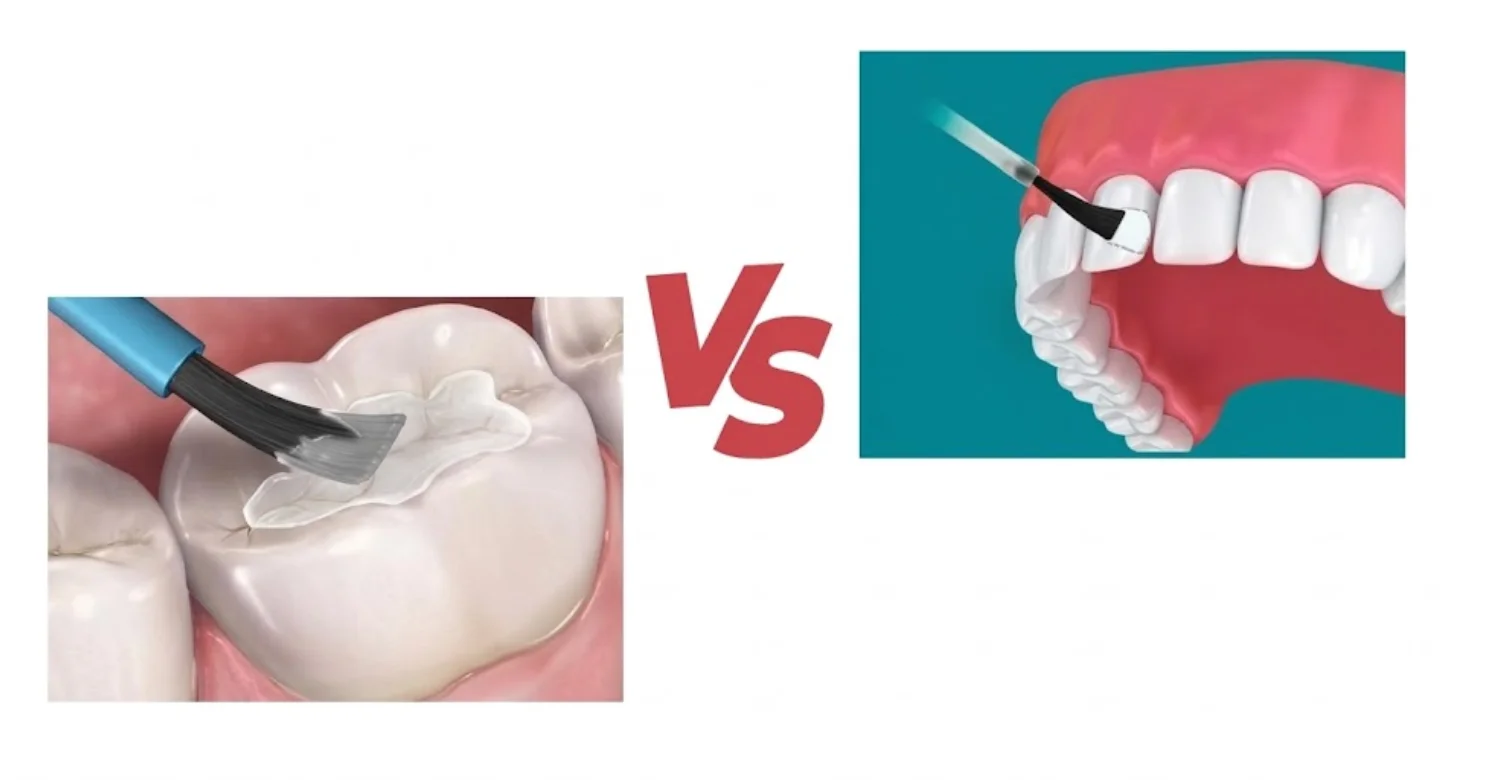
Dental sealants are thin, tooth-colored or clear protective coatings applied to the chewing surfaces of back teeth. They flow into the natural pits and grooves, then harden to seal them off, keeping food particles and plaque bacteria out. Sealants are most commonly placed on molars and premolars, where deep grooves make decay more likely.
What Is a Fluoride Treatment?
A professional fluoride treatment is a concentrated fluoride product applied by the dental team to strengthen enamel. Fluoride helps rebuild minerals lost during acid attacks, a process called remineralization, making teeth more resistant to decay. Common forms include fluoride varnish painted onto the teeth, gels, and foams, sometimes delivered in a tray.
Dental Sealants vs Fluoride Treatment: What Is the Difference?
The key difference in dental sealants vs fluoride treatment lies in how they work. Sealants act as a physical shield over the grooves of back teeth, while fluoride strengthens enamel on all tooth surfaces. Sealants block decay in specific areas, and fluoride improves overall resistance. They are not competitors and can be used together.
Causes of the Condition
Before comparing these two treatments in depth, it helps to understand what causes cavities in the first place and why certain teeth are more at risk.
What Causes Tooth Decay?
Tooth decay develops when plaque bacteria feed on sugars and carbohydrates, producing acids that dissolve enamel. Frequent snacking, poor oral hygiene, and insufficient fluoride exposure raise the risk. Deep pits and fissures trap plaque, while dry mouth reduces the protective effect of saliva. A previous history of cavities also signals higher future risk.
Why Are Molars More Vulnerable to Cavities?
Molars have deep grooves and pits on their chewing surfaces that easily trap food and bacteria. Toothbrush bristles often cannot reach deep inside these narrow fissures, so plaque stays behind. This is why sealants are often recommended specifically for susceptible molars.
Compare options in Single Dental Implant vs Multiple Implants
Problems Caused by the Condition
Untreated decay can progress from a small spot to a serious infection, which is why preventive choices such as fluoride vs dental sealants matter from an early stage.
What Can Happen if Tooth Decay Is Not Prevented or Treated?
Decay begins by damaging the enamel, the tooth's hard outer layer. If it progresses, it reaches the softer dentin underneath, often causing sensitivity and pain. Deeper decay can infect the tooth's inner tissues, leading to a dental abscess. In severe cases, the tooth may become too damaged to save and may need extraction.
Why Is Early Prevention Important?
Early prevention stops decay before it causes pain or requires fillings. Sealants and fluoride each play a role: fluoride strengthens enamel and helps reverse early mineral loss, while sealants protect the vulnerable grooves that are hardest to clean. Preventing cavities is simpler, more comfortable, and less costly than treating them.
Learn how to manage a Fissured Tongue
Fluoride vs Dental Sealants: How Do They Work?
The table below summarizes dental sealants vs fluoride treatment side by side, showing how each one works and which parts of the tooth it protects.
Feature | Dental Sealants | Fluoride Treatment |
How it works | Creates a physical barrier over grooves | Strengthens enamel and supports remineralization |
Areas protected | Chewing surfaces of molars and premolars | All tooth surfaces |
Main purpose | Keeps plaque and food out of pits and fissures | Helps teeth resist acid attacks |
Application | Painted on and hardened, often with a curing light | Varnish, gel, or foam applied by the dental team |
Duration | Several years, checked at regular visits | Repeated periodically based on cavity risk |
Can be combined? | Yes | Yes |
How Do Dental Sealants Protect Teeth?
Sealants form a physical barrier over the chewing surfaces of back teeth. By filling and covering deep pits and fissures, they create a smoother surface that is easier to clean. This reduces plaque retention in vulnerable grooves and prevents bacteria and food particles from settling where decay most often begins.
How Does Fluoride Protect Teeth?
Fluoride strengthens enamel by becoming part of its mineral structure, making it harder for acids to dissolve. It also supports remineralization, repairing early weak spots before they become cavities. When comparing fluoride treatment vs sealants, fluoride's advantage is that it protects all tooth surfaces, including smooth areas and spaces between teeth.
Can Dental Sealants and Fluoride Be Used Together?
Yes. The dental sealants vs fluoride treatment question is often not either-or, because the treatments are complementary. Sealants guard the grooves, while fluoride strengthens the rest of the tooth. A dentist may recommend both for patients with high cavity risk, deep grooves, previous cavities, or difficulty maintaining thorough oral hygiene.
Discover potential causes for Jaw Pain on One Side
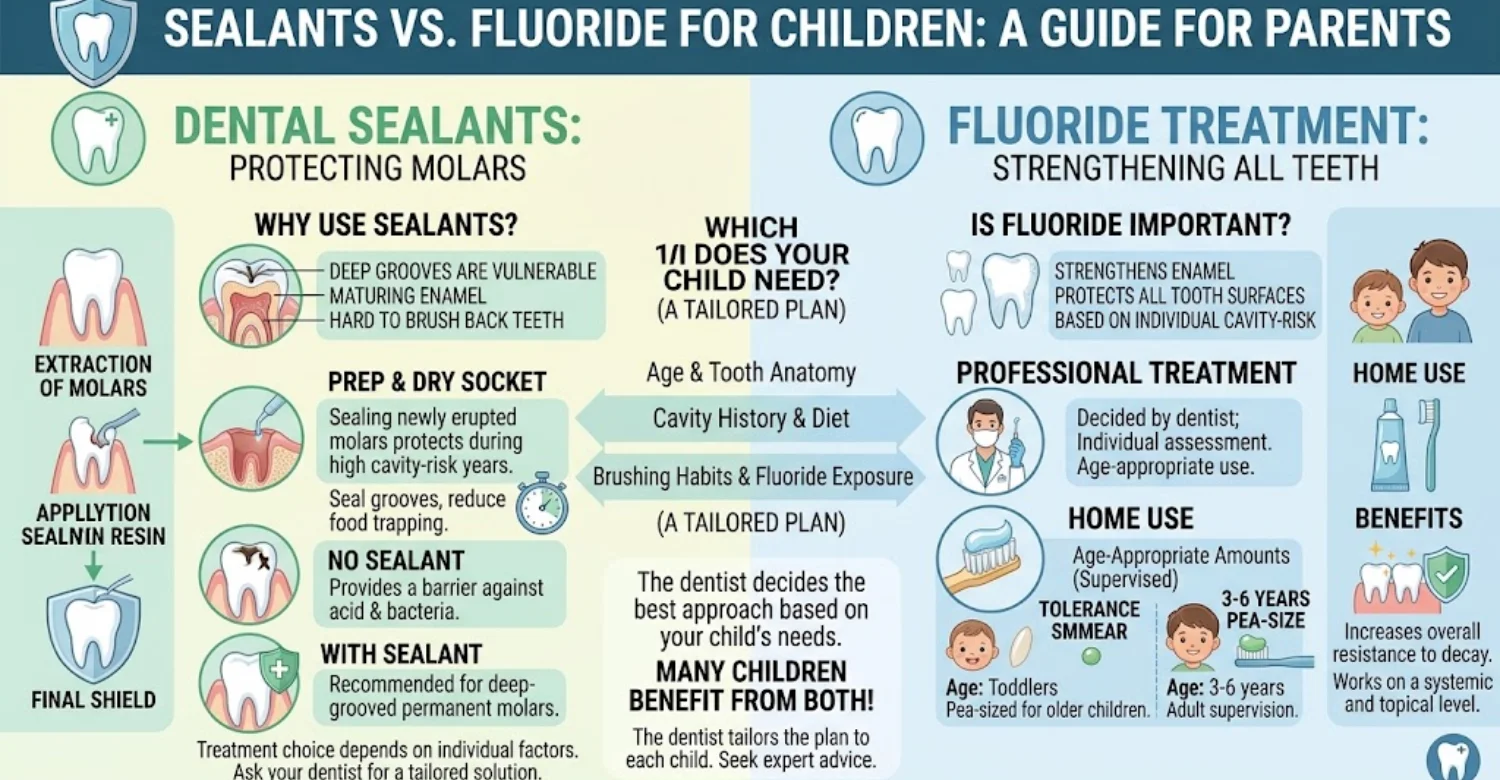
Sealants vs Fluoride for Children
Children are among the most common candidates for preventive care, so choosing between sealants and fluoride is a frequent question for parents.
Why Are Dental Sealants Commonly Used for Children?
Permanent molars usually erupt around ages six and twelve, and their deep grooves are highly vulnerable while enamel is still maturing. Children also find it hard to brush back teeth thoroughly. Sealing these newly erupted molars early protects them during the years when cavity risk is typically at its highest.
Is Fluoride Treatment Important for Children?
Fluoride helps strengthen children's developing enamel and protects all tooth surfaces. The dentist decides on professional fluoride based on an individual cavity-risk assessment. At home, fluoride toothpaste should be used in age-appropriate amounts, such as a rice-grain smear for toddlers and a pea-sized amount for children aged three to six, with adult supervision.
Dental Sealants or Fluoride: Which Does a Child Need?
There is no universal answer to dental sealants vs fluoride treatment for children. The recommendation depends on the child's age, tooth anatomy, cavity history, diet, brushing habits, and fluoride exposure. Many children benefit from both: sealants for deep-grooved molars and fluoride for overall enamel strength. The dentist tailors the plan to each child.
Dental Sealants or Fluoride: Which One Is Right for You?
Adults can also benefit from preventive care. Choosing between sealants and fluoride depends on your personal risk factors, not just your age.
When Are Dental Sealants Recommended?
Dental sealants are recommended for teeth with deep pits and fissures, especially high-risk molars that are free of decay or show only very early changes. People with previous cavities or difficulty cleaning certain chewing surfaces are also good candidates. Sealants suit both children and adults when grooves are vulnerable to decay.
When Is Fluoride Treatment Recommended?
Fluoride treatment is recommended for people with increased cavity risk, early enamel mineral loss, or limited fluoride exposure. It is also helpful for those with dry mouth, which reduces saliva's natural protection, and for patients wearing braces or other orthodontic appliances, which make plaque control harder. Exposed root surfaces may benefit too.
What Factors Does the Dentist Consider?
When weighing dental sealants vs fluoride treatment, the dentist considers age, cavity history, oral hygiene, diet, tooth anatomy, and fluoride exposure from water and toothpaste. Together, these factors determine your overall caries risk. The result is a personalized plan that may include one treatment, the other, or both.
Ready to transform your smile?
Talk to our team and get a personal FREE treatment plan.
Patient's Perspective
Many patients feel more relaxed once they know what to expect. Here is what each treatment actually feels like in the dental chair.
What Does Getting Dental Sealants Feel Like?
The procedure is quick and usually painless, with no needles or drilling. The tooth is cleaned, dried, and prepared with a mild solution that helps the sealant bond. The sealant is then painted onto the grooves and hardened, often with a special curing light. Most patients feel only minimal discomfort.
What Does a Fluoride Treatment Feel Like?
Professional fluoride is applied in minutes, usually by painting varnish on the teeth or placing gel or foam in a tray. Some products leave a temporary sticky or slightly gritty feeling. Afterwards, you may be asked to avoid eating, drinking, or brushing for a specified period so the fluoride can work.
What Are Patients Usually Concerned About?
Common concerns when choosing a preventive treatment include pain, safety, appearance, duration, and whether treatment is truly necessary. Both procedures are generally painless and considered safe when professionally applied. Sealants are clear or tooth-colored, and both appointments are short. Your dentist can explain why treatment is recommended.
Note : All images used are for editorial and illustrative purposes only and may not originate from the original news provider or associated company.
Doctor's Perspective
From a clinical point of view, dental sealants vs fluoride treatment is a decision based on careful risk assessment rather than personal preference.
How Does a Dentist Assess Cavity Risk?
A dentist assesses cavity risk through a clinical examination, checking tooth anatomy, groove depth, and any existing decay. X-rays may be used when needed. Previous dental history, oral hygiene habits, diet, and fluoride exposure are also reviewed. Together, these details show how likely new cavities are and which prevention fits best.
How Does a Dentist Choose Between Sealants and Fluoride?
Prevention is individualized. Fluoride treatment vs sealants is not a direct substitution, because they protect teeth differently: sealants shield specific grooves, while fluoride strengthens all enamel. A dentist may recommend sealants for deep-grooved molars, fluoride for general risk, or both when risk is high or multiple risk factors are present.
Learn how to tell the difference in Is It TMJ or Tooth Pain?
When Is It Serious and Requires a Checkup?
Prevention works best before symptoms appear. Whatever you decide about dental sealants vs fluoride treatment, certain signs mean it is time to see a dentist.
Warning Signs of Tooth Decay
Watch for persistent toothache, sensitivity to hot, cold, or sweet foods, and pain while chewing. Visible holes, pits, or brown, black, or white spots on teeth may also indicate decay. These signs suggest a cavity may already be present, which requires a dental examination and possibly treatment beyond prevention.
Signs That Require Urgent Dental Attention
Seek urgent dental care for facial swelling, gum swelling, pus or drainage near a tooth, or fever with dental pain, as these can indicate a spreading infection. Difficulty swallowing or breathing is an emergency and needs immediate medical attention. Do not wait for a routine appointment in these situations.
When the Patient Should Rest
One advantage shared by sealants and fluoride is that recovery is usually quick and simple.
Is Rest Needed After Dental Sealants?
Usually, no rest is needed after dental sealants. There is no anesthesia, so patients can typically eat, speak, and return to school or work right away. The bite may feel slightly different at first, and the dentist can adjust it. Always follow any individual instructions from your dental team.
Is Rest Needed After Fluoride Treatment?
Fluoride treatment usually involves no significant downtime, and you can resume normal activities immediately. However, you may be advised to avoid eating, drinking, or brushing for a certain time, or to choose soft foods and avoid hot drinks for a few hours. Follow the specific post-treatment instructions for the product used.
When Should Symptoms Not Be Managed With Rest Alone?
Rest is not the answer for persistent pain, increasing swelling, fever, or other signs of infection. These symptoms are not typical after sealants or fluoride and may indicate an underlying dental problem, such as decay or an abscess. Contact your dentist promptly so the cause can be diagnosed and treated.
Read about the safety of Acetaminophen Gummies or Soft Chews
Rest Tips
Although sealants and fluoride rarely require recovery time, a few simple habits help you stay comfortable afterwards.
How to Maintain Comfort After Preventive Dental Treatment
Follow your post-treatment instructions carefully, including any temporary food or drink restrictions. Stay hydrated to support saliva flow, and continue brushing and flossing as advised. Avoid very hard or sticky foods if instructed. If you notice unusual symptoms, such as a high bite, persistent sensitivity, or pain, contact the dental team.
Understand the causes and treatment for Condensing Osteitis
About Vitrin Clinic
At Vitrin Clinic, preventive care begins with understanding each patient's needs, so every preventive treatment recommendation is personalized.
.jpg)
.jpg)
.jpg)
.jpg)
.jpg)
What We Notice Clinically
At Vitrin Clinic, we evaluate cavity risk before recommending any preventive treatment. Our medical team emphasizes individualized preventive dental care, because sealants and fluoride have different roles. In our experience, the best dental sealants vs fluoride treatment decisions consider tooth anatomy, cavity history, oral hygiene, and each patient's overall risk.
Tips for the Patients
Brush twice daily with fluoride toothpaste and clean between your teeth every day. Keep regular dental checkups and limit frequent sugary snacks and drinks. Ask your dentist about your cavity risk and whether dental sealants or fluoride suit you. Follow post-treatment instructions, and report persistent pain or swelling promptly.
Learn how to treat a Mouth Ulcer
Resource:
FAQs
Dr. Rifat Alsaman has more than 5 years of clinical experience in dentistry and currently serves as the Head of the Medical Team at Vitrin Clinic. He is dedicated to providing exceptional patient care, overseeing treatment planning, and ensuring the highest clinical standards across the team. His expertise, attention to detail, and commitment to continuous professional development have helped countless patients achieve healthier, more confident smiles.


.webp&w=3840&q=75)