
Healthy gums are the foundation of a strong smile, because they hold your teeth firmly in place and protect the bone beneath them. Good gum health also supports your overall well-being. Learning simple ways to keep your gums healthy can make a real difference, since most gum problems start quietly and without pain.
Daily oral hygiene removes plaque, the sticky film of bacteria that irritates the gums. When plaque is controlled, the risk of gingivitis and more advanced gum disease drops significantly. Below are six practical ways to keep your gums healthy: brushing twice a day, flossing daily, using a therapeutic mouthwash when appropriate, getting regular dental cleanings, maintaining healthy habits, and watching for changes in your gums.
6 Ways to Keep Your Gums Healthy
The following habits work best together. Each habit targets plaque differently, and combining home care with professional care offers the strongest protection against gum disease.
1. Brush Your Teeth Twice a Day
Brushing at least twice a day removes plaque along the gumline before it hardens into tartar, making it the cornerstone of gum disease prevention. Use fluoride toothpaste and a soft-bristled toothbrush, since hard bristles and vigorous brushing can damage gums and enamel. Angle the bristles toward the gumline and brush gently.
2. Practice Daily Flossing
Flossing removes plaque and food particles between teeth and under the gumline, where brushing cannot reach and where gingivitis often begins. Curve the floss into a C shape around each tooth and slide it gently without snapping it into the gums. Daily flossing is one of the most effective ways to keep your gums healthy.
3. Use a Therapeutic Mouthwash When Appropriate
A therapeutic mouthwash contains active ingredients that may help reduce plaque, gingivitis, and bad breath. Your dentist may recommend one if you are prone to plaque buildup or early gum inflammation. However, it cannot physically remove plaque, so it should support, never replace, brushing and flossing.
4. Get Regular Dental Cleanings
Some plaque hardens into tartar that brushing and flossing cannot remove, irritating the gums and harboring bacteria. Professional dental cleanings remove tartar above and below the gumline, while regular visits detect gum changes early. Routine cleanings are essential for protecting your gums and stopping gum disease from progressing.
5. Maintain Healthy Daily Habits
A balanced diet supports gum tissues, while limiting frequent sugary foods and drinks reduces the fuel plaque bacteria use. Staying hydrated maintains saliva flow, which washes away food particles. Avoiding tobacco is vital, since smoking is one of the strongest risk factors for gum disease and slows healing.
6. Pay Attention to Changes in Your Gums
Healthy gums are firm, pink, and do not bleed. Watch for bleeding, redness, swelling, tenderness, persistent bad breath, or gum recession. Early gingivitis is often painless, so these changes may be the only clues. Early evaluation is among the smartest ways to keep your gums healthy, since early gingivitis can often be reversed.
Find out the facts on does at-home teeth whitening damage enamel?
Causes of Gum Problems
Knowing what causes gum problems helps you choose the right ways to keep your gums healthy. Most causes involve plaque, daily habits, or factors that affect how the gums respond to bacteria.
Plaque Buildup
Plaque is a sticky film of bacteria, food particles, and other substances that forms on teeth every day. When it collects at the gumline, the bacteria irritate gum tissue and trigger inflammation. Plaque buildup is the main cause of gingivitis, which is why daily removal matters so much.
Tartar Accumulation
When plaque is not removed, it hardens into tartar, a rough deposit that clings to teeth at and below the gumline. Tartar gives bacteria a protected place to grow and cannot be brushed or flossed away. Only professional dental cleanings can remove it safely and completely.
Poor Oral Hygiene
Skipping brushing or flossing, or cleaning too quickly, allows plaque to remain on teeth and gums. Over time, this leads to tartar, inflammation, and gingivitis. Consistent daily care is one of the simplest ways to protect your gums and stop gum problems before they start.
Smoking and Tobacco Use
Smoking is one of the most significant modifiable risk factors for gum disease. Tobacco weakens the gums' ability to fight infection, reduces blood flow to gum tissue, and slows healing after treatment. It can also hide warning signs such as bleeding, allowing gum disease to progress unnoticed.
Dietary Factors
Frequent sugary and starchy snacks feed plaque bacteria, increasing plaque formation along the gumline. Poor nutrition may also weaken the body's ability to maintain healthy tissues. A balanced diet with fruits, vegetables, and adequate nutrients supports gum health and helps your body resist infection.
Hormonal Changes
Hormonal changes during pregnancy, puberty, or menopause can make gums more sensitive and more likely to become inflamed. Pregnancy in particular can increase the gums' response to plaque. During these periods, careful oral hygiene and regular checkups are especially important for protecting your gum health.
Certain Medications and Medical Conditions
Some medications reduce saliva flow or affect gum tissue, raising the risk of gum problems. Medical conditions such as diabetes that is not well controlled also increase the risk of gum disease. Infections elsewhere in the body may contribute too, so sharing your medical history with your dentist matters.
Genetic Factors
Genetics can influence how your immune system responds to plaque bacteria. Some people develop gum disease more easily despite good oral hygiene, while others remain more resistant. If gum disease runs in your family, more frequent dental visits and careful home care support early detection and prevention.
Discover what causes a strawberry tongue
Problems Caused by Poor Gum Health
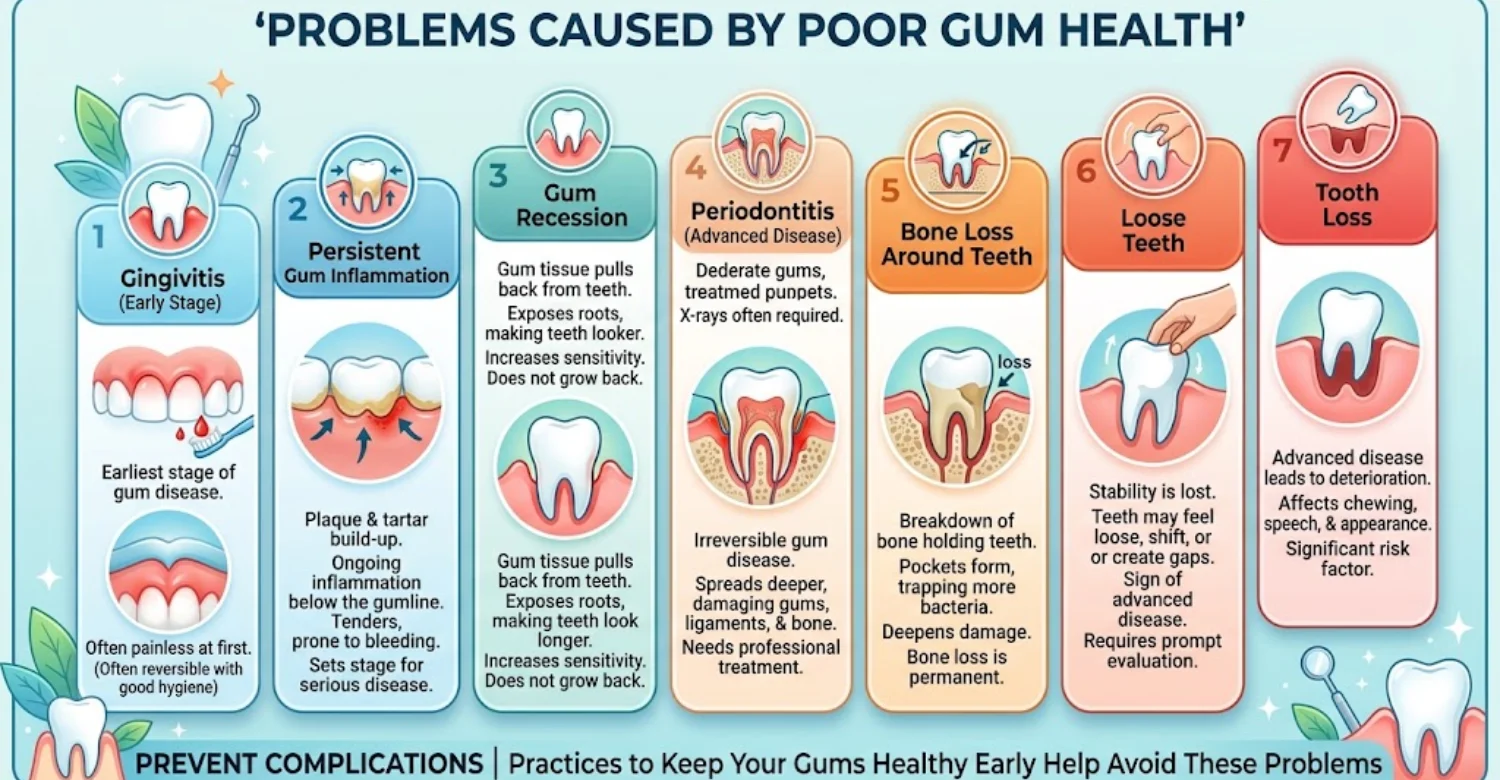
When gum care is neglected, problems tend to build on each other. Caring for your gums early helps prevent the complications below.
Gingivitis
Gingivitis is the earliest stage of gum disease, causing red, swollen gums that may bleed during brushing or flossing. It is often painless at first, so many people do not notice it. The good news is that gingivitis can often be reversed with proper oral hygiene and professional cleanings.
Persistent Gum Inflammation
If plaque and tartar are not removed, gum inflammation can become persistent and spread below the gumline. Ongoing inflammation keeps gums tender and prone to bleeding. Over time, it can begin to damage the attachment between gums and teeth, setting the stage for more serious gum disease.
Gum Recession
Gum recession occurs when gum tissue pulls back from the teeth, exposing more of the tooth and sometimes its roots. Teeth may look longer and become sensitive. Receded gums do not grow back on their own, which makes prevention one of the most valuable ways to keep your gums healthy.
Periodontitis
Periodontitis is an advanced, irreversible form of gum disease that develops when ongoing gingivitis spreads deeper. It damages the gums, ligaments, and bone that support the teeth. Dental X-rays may be needed to confirm it, and professional treatment is required to control it and prevent further damage.
Bone Loss Around Teeth
As periodontitis progresses, the bone that holds teeth in place begins to break down. Pockets form between the gums and teeth, trapping more bacteria and deepening the damage. Bone loss is permanent, so stopping gum disease early is the best way to preserve the foundation of your teeth.
Loose Teeth
When gums and supporting bone are damaged, teeth can lose their stability. They may feel loose, shift position, or create gaps that did not exist before. Loose teeth are a sign of advanced gum disease and need prompt professional evaluation to protect the remaining support.
Tooth Loss
Without treatment, advanced gum disease can lead to tooth loss as supporting tissues and bone continue to deteriorate. Losing teeth affects chewing, speech, and appearance. Practicing daily ways to keep your gums healthy and seeing your dentist regularly greatly reduces this risk.
Persistent Bad Breath
Bacteria trapped around inflamed gums and in gum pockets release unpleasant odors, causing bad breath that returns quickly after brushing. Mouthwash may mask it briefly, but it does not solve the cause. Persistent bad breath often signals gum disease that requires professional care.
Learn how early detection works during an oral cancer screening
Patient's Perspective
Patients often notice gum problems through small daily changes. Recognizing these signs encourages earlier care and better long-term gum health.
Common Symptoms Patients May Notice
Patients commonly notice bleeding, swelling, tenderness, bad breath, or changes in how their gums look. Because early gum disease is often painless, these symptoms may seem minor. However, they are important signals that plaque is affecting the gums and that a dental evaluation may be needed.
Bleeding While Brushing or Flossing
Bleeding gums are often the first sign patients notice. Many assume it comes from brushing too hard and stop cleaning the area, which worsens the problem. In most cases, bleeding reflects gum inflammation, and continued gentle brushing and flossing alongside professional care usually improve it.
Swollen or Sensitive Gums
Swollen, puffy, or tender gums can make eating and cleaning uncomfortable. Patients may notice their gums looking red instead of pink. These changes reflect inflammation caused by plaque. Adopting consistent gum care habits and seeking treatment early can calm swelling and restore comfort.
Bad Breath
Bad breath that persists despite brushing can be embarrassing and affect confidence. Patients often try mints or mouthwash without lasting results. Persistent bad breath may stem from bacteria around inflamed gums, so improving gum health is often the key to lasting fresh breath.
Changes in the Gumline
Some patients notice their teeth looking longer or small gaps forming near the gums. These changes often indicate gum recession, and patients may also feel sensitivity in exposed areas. Changes in the gumline should be checked early, since lost gum tissue does not grow back naturally.
Concerns About Tooth Stability
In advanced cases, patients may feel teeth moving slightly, shifting position, or fitting differently when biting. These concerns can cause anxiety about losing teeth. Loose or shifting teeth suggest loss of supporting tissue and bone, and they require prompt dental assessment and treatment.
Impact on Daily Oral Hygiene
Sore or bleeding gums often make patients brush and floss less thoroughly, allowing more plaque to build up. This creates a cycle that worsens inflammation. Gentle but consistent cleaning, guided by your dentist, helps break this cycle and supports healthier gums over time.

Note : All images used are for editorial and illustrative purposes only and may not originate from the original news provider or associated company.
Understand safety guidelines for hydrogen peroxide dental whitening
Doctor's Perspective
From a clinical view, protecting the gums starts with an accurate assessment. Dentists combine examination with risk evaluation to recommend the best ways to keep your gums healthy for each patient.
Clinical Examination of the Gums and Teeth
The dentist examines the color, shape, and texture of the gums, checks for bleeding, and looks for recession or swelling. Teeth are assessed for looseness, shifting, and signs of decay. This examination provides the foundation for understanding the patient's overall gum health.
Evaluation of Plaque and Tartar
The dentist checks how much plaque and tartar are present, especially along and below the gumline. Heavy buildup shows areas that are being missed during brushing and flossing. This evaluation guides professional cleaning and shows patients exactly where to improve their daily care.
Assessment of Gum Inflammation
Assessing gum inflammation involves checking redness, swelling, tenderness, and bleeding when the gums are gently examined. The level of inflammation helps the dentist distinguish mild gingivitis from more advanced disease and decide how urgent treatment is. Reducing inflammation is a central goal of care.
Evaluation of Periodontal Pockets When Necessary
When gum disease is suspected, the dentist measures periodontal pockets, the spaces between the gums and teeth. Deeper pockets suggest periodontitis and loss of attachment. Dental X-rays may also be used to check bone levels and determine how far the disease has progressed.
Identifying Risk Factors
The dentist reviews risk factors such as smoking, diabetes, pregnancy, medications, family history, and brushing habits. Understanding these factors explains why gum problems develop and helps predict future risk. Managing modifiable risk factors is one of the most effective ways to keep your gums healthy.
Developing an Individualized Gum Disease Prevention Plan
Based on the findings, the dentist creates an individualized gum disease prevention plan. It may include professional cleanings, home-care instructions, product recommendations such as a therapeutic mouthwash, and a schedule for follow-up visits. A personalized plan makes prevention practical and easier to maintain.
Ready to transform your smile?
Talk to our team and get a personal FREE treatment plan.
When Is It Serious and Requires a Checkup?
Some gum symptoms need prompt professional attention. Knowing when to seek a checkup is one of the most important ways to keep your gums healthy and protect your teeth.
Persistent Gum Bleeding
Occasional bleeding may improve with better brushing and flossing, but bleeding that continues despite good home care needs evaluation. Persistent bleeding often signals ongoing gum inflammation or gum disease that home care alone cannot resolve, and early treatment helps prevent progression.
Severe or Worsening Swelling
Swelling that becomes more severe, spreads, or does not improve with good oral hygiene should be examined. Worsening swelling may indicate infection or advancing gum disease. Early treatment helps control inflammation and prevents damage to the tissues supporting your teeth.
Persistent Gum Pain
Gum pain that lasts or worsens is not normal and should be checked. It may result from infection, trapped food, an abscess, or advanced gum disease. A dentist can identify the cause and provide treatment to relieve discomfort and protect your gums.
Pus Around the Gums or Teeth
Pus around the gums or teeth is a sign of infection and requires prompt dental care. It may indicate a gum abscess or advanced periodontal disease. Infections should never be ignored, because they can damage surrounding tissue and bone if left untreated.
Persistent Bad Breath
Bad breath that continues despite brushing, flossing, and cleaning the tongue may point to gum disease or infection. A dental checkup can identify the source. Treating the underlying gum problem is usually necessary to achieve lasting improvement in breath.
Receding Gums
Gums that pull back from the teeth, exposing more tooth surface or roots, need evaluation. Recession can increase sensitivity and may signal gum disease or harmful brushing habits. Early assessment helps slow progression and protect exposed areas from further damage.
Loose or Shifting Teeth
Loose or shifting teeth in adults are a warning sign of advanced gum disease and bone loss. They require prompt professional assessment. Early treatment may help stabilize the teeth and prevent further loss of the structures that hold them in place.
Changes in the Bite
If your teeth fit together differently when you bite, gum disease may be affecting tooth support. Bite changes deserve a dental checkup, since they can reflect shifting teeth caused by loss of bone and gum tissue. Early evaluation helps protect your remaining support.
Severe Facial Swelling or Fever
Severe facial swelling or fever alongside gum symptoms requires urgent evaluation, as it may indicate a spreading infection. Do not wait for a routine appointment. Seek prompt dental or medical care to prevent serious complications and protect your overall health.
Find out what diagnostic details are revealed in a CT scan for salivary gland
When Should the Patient Rest?
Rest needs depend on the condition and the treatment involved. Understanding recovery is an important part of good long-term gum care.
Ordinary Gingivitis Generally Does Not Require Bed Rest
Ordinary gingivitis does not usually require bed rest or time off. Most people continue their normal routine while improving brushing and flossing and attending dental cleanings. The focus is on removing plaque and reducing inflammation, not on physical rest.
Rest After Certain Dental Procedures
Rest may be recommended after certain dental procedures, such as deep cleaning or gum surgery. Short periods of rest help the body heal and reduce bleeding and swelling. If gingivitis was extensive, gum tissues may need up to two weeks to recover after a cleaning.
Importance of Following Post-Treatment Instructions
Post-treatment instructions are designed to protect healing tissue and prevent complications. They may cover cleaning, eating, medications, and activity. Following them carefully helps treatment succeed and is one of the most practical ways to keep your gums healthy after a procedure.
Avoiding Strenuous Activity When Advised
After some gum treatments, your dentist may advise avoiding strenuous exercise or heavy lifting for a short time, since intense activity can increase bleeding at the treated site. Follow this advice when it is specifically recommended, and resume normal activity as directed.
Rest Tips
Good recovery habits help treated gums heal comfortably. These tips support healing and reinforce strong gum health over the long term.
Follow Professional Aftercare Instructions
Your dentist's aftercare instructions are tailored to your specific treatment. Follow them closely, including guidance on cleaning, rinsing, and medications. If your gums are sensitive after a cleaning, warm salt-water rinses may be suggested. Contact your dentist if anything seems unusual during healing.
Choose Comfortable Foods if Gums Are Sensitive
Soft, lukewarm foods such as yogurt, soups, eggs, and mashed vegetables are gentle on sensitive gums. Avoid very hot, spicy, crunchy, or hard foods that may irritate healing tissue. Comfortable eating helps you maintain good nutrition while your gums recover.
Stay Adequately Hydrated
Drinking enough water keeps your mouth moist and supports saliva production, which helps wash away food particles and bacteria. Hydration also supports overall healing. Water is the best choice, while sugary or acidic drinks are best limited during recovery.
Avoid Tobacco Products
Tobacco slows gum healing and increases the risk of complications after treatment. Avoiding smoking and other tobacco products during recovery gives tissues the best chance to heal. Quitting entirely is one of the most powerful ways to keep your gums healthy long term.
Maintain Appropriate Oral Hygiene
Keep brushing and cleaning your teeth during recovery, but follow your dentist's instructions for treated areas. Use a soft-bristled toothbrush and gentle movements. Maintaining good hygiene prevents plaque from building up again while your gums heal.
Avoid Activities That May Interfere With Healing
Avoid habits that disturb treated areas, such as touching the gums with your fingers or tongue, using hard toothpicks, or chewing on the treated side if advised against it. Protecting the area allows tissues to recover smoothly and reduces irritation or bleeding.
Follow the Recommended Recovery Period
Healing times vary depending on the procedure and the extent of gum inflammation. Allow your gums the full recovery period your dentist recommends before returning to all usual habits. Attending follow-up visits confirms proper healing and keeps your gum health on track.
Learn about causes and management of oral lichen planus
About Vitrin Clinic
Vitrin Clinic provides comprehensive dental care focused on prevention, early detection, and personalized treatment. Our team helps patients understand practical ways to keep your gums healthy and supports them with professional cleanings, careful evaluations, and clear guidance.
.jpg)
.jpg)
.jpg)
.jpg)
What We Notice Clinically
Dr. Rifat Alsaman, Head of the Medical Team at Vitrin Clinic and a Cosmetic Dentist, notes that many patients overlook early signs such as gum bleeding, mild swelling, or small changes in the gumline. "These early symptoms are often the best opportunity to reverse gingivitis before it progresses. Identifying them early, combined with preventive care and regular evaluation, remains one of the most reliable ways to keep your gums healthy."
Tips for the Patients
Brush twice daily with fluoride toothpaste and a soft-bristled toothbrush, and floss every day. Use a therapeutic mouthwash when appropriate, schedule regular dental cleanings, and avoid tobacco. Monitor changes in your gums, and seek professional evaluation when symptoms persist. Consistency with these simple habits delivers the best results.
Understand how full-mouth restoration works with implant-supported full arch prostheses
Resource:
FAQs

Dr. Rifat Alsaman has more than 5 years of clinical experience in dentistry and currently serves as the Head of the Medical Team at Vitrin Clinic. He is dedicated to providing exceptional patient care, overseeing treatment planning, and ensuring the highest clinical standards across the team. His expertise, attention to detail, and commitment to continuous professional development have helped countless patients achieve healthier, more confident smiles.
.webp&w=3840&q=75)


