Dental Implant
October 6, 2026
What Are Implant Supported Full Arch Prostheses and How Do They Work?
 Dr. Rifat Alsaman
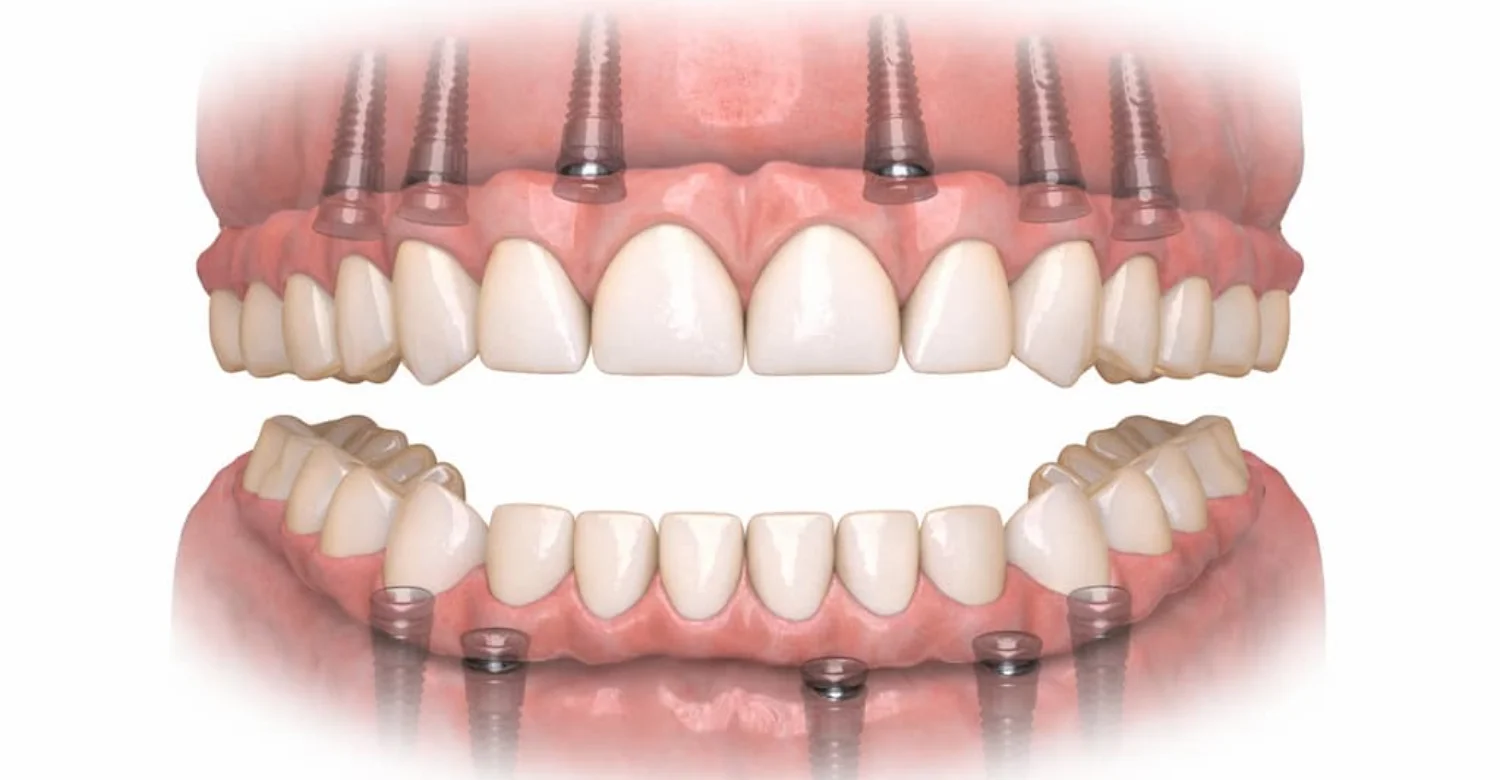
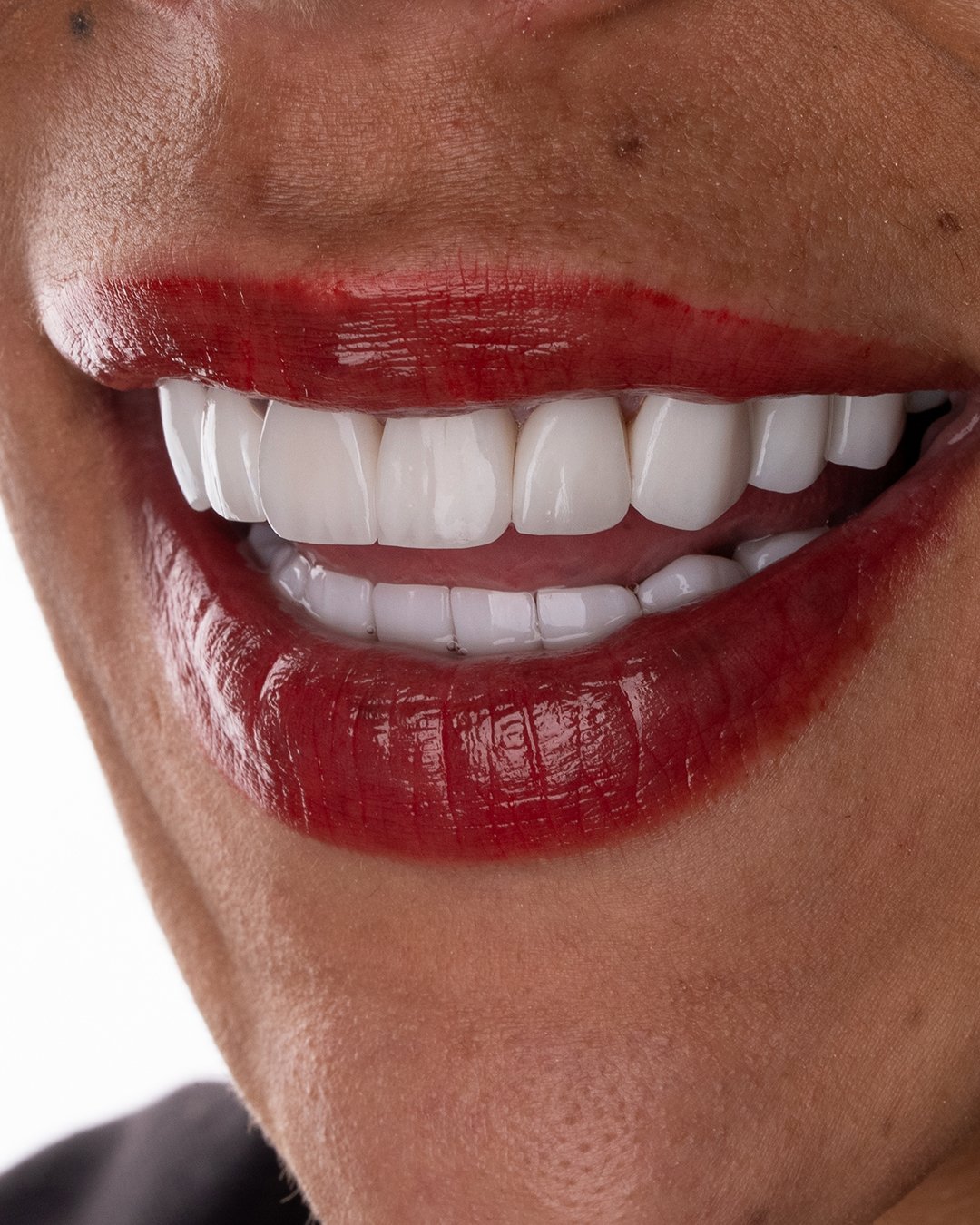
Implant Supported Full Arch Prostheses replace an entire row of missing or failing teeth using strategically placed dental implants. The implants anchor in bone, while the prosthesis provides visible teeth and gum-colored structures. Treatment is planned as one coordinated rehabilitation, not as separate replacements for each missing tooth. Good outcomes depend on close coordination between surgical placement and the final tooth position.
What Are Implant Supported Full Arch Prostheses?
These restorations combine implants, connecting components, and a prosthesis designed to restore chewing, speech, and appearance. The prosthesis may be fixed or removable, depending on the attachment system and treatment goals. Patients should expect ongoing maintenance, possible repairs, and long-term professional monitoring. At Vitrin Clinic, this topic is addressed within an individualized plan based on clinical findings.
How Does a Full Arch Implant Prosthesis Replace Missing Teeth?
Implants act as artificial roots that support a single connected arch of replacement teeth. Implant Supported Full Arch Prostheses spread chewing forces across several fixtures rather than resting on soft tissue. Because implants lack natural periodontal ligaments, sensory feedback and force transmission differ from natural teeth. Planning adjusts whenever anatomy, healing, or prosthetic requirements change.
What Is the Difference Between an Implant, Abutment, and Prosthesis?
The implant is the fixture placed in bone, acting as the foundation of the restoration. An abutment connects the implant to the restoration and manages the transition through the gum. The prosthesis is the visible arch of teeth and gum-colored material that patients see and use. Each part can develop its own problems, so each is assessed separately.
How Are Implant Supported Full Arch Prostheses Different From Traditional Dentures?
A conventional denture rests on soft tissues and the ridge, so it may move during function. Implant-supported designs transfer chewing forces through implants, which usually improves retention and stability. Fixed designs feel more stable, while removable designs allow easier hygiene access. Neither option is universally superior, because risks depend on patient circumstances.
What Does “Fixed” Mean in a Full Arch Implant Restoration?
"Fixed" means the patient cannot remove the prosthesis during daily life. It stays attached through screws or other secure connections to the implants. However, the dental team may remove it for cleaning, inspection, or repair. Fixed teeth still need daily home care and regular professional maintenance.
Explore how cavity prevention is evolving with smart peptides and dental caries
Who May Need a Full Arch Implant Prosthesis?
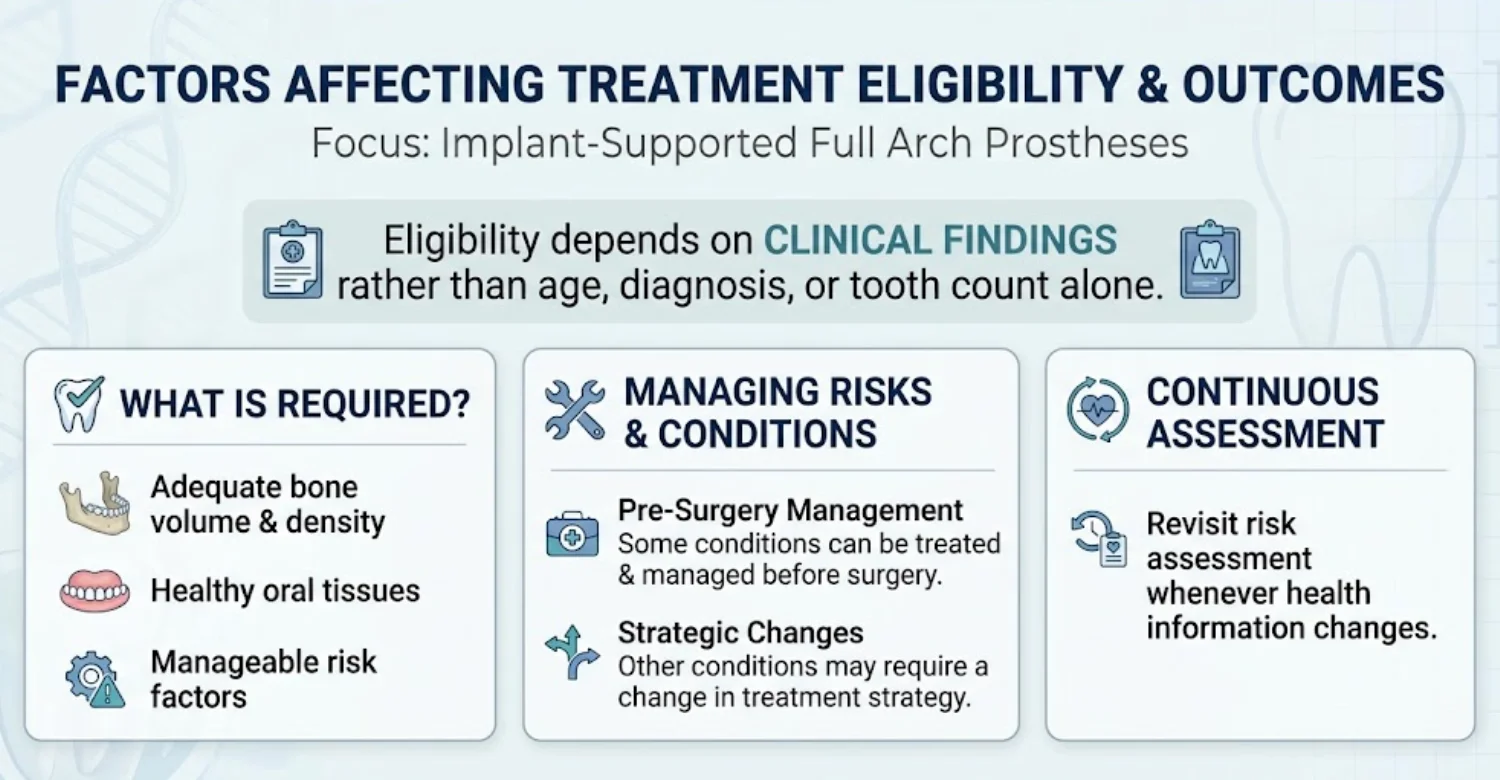
Candidates include people with complete tooth loss or extensive restorative failure across one arch. Eligibility depends on bone anatomy, gum health, remaining teeth, bite forces, and medical history. Age alone does not determine suitability, because clinical findings and goals vary widely. Implant Supported Full Arch Prostheses are considered only after a full clinical and radiographic assessment.
Complete Tooth Loss in One Arch
Complete tooth loss in one arch is one of the clearest indications for full arch planning. Many of these patients struggle with loose conventional dentures and reduced chewing efficiency. Bone availability and implant distribution must still support the planned prosthesis safely. Suitability should be reviewed again if clinical findings change before surgery.
Multiple Failing Teeth That Cannot Be Predictably Restored
Some patients have several failing teeth that cannot be restored with acceptable predictability. In these cases, Implant Supported Full Arch Prostheses can offer coordinated support for the whole arch. Each existing tooth should still be assessed individually before any extraction decision. Periodontal infection should be controlled before definitive rehabilitation whenever clinically indicated.
Severe Tooth Damage, Advanced Tooth Wear, or Extensive Dental Disease
Severe damage, advanced wear, or widespread disease may leave too little tooth structure for conventional repair. Full arch planning can then restore function, appearance, and bite height together. Patients should understand that screw loosening or material wear can still occur later. Early recognition keeps small problems from becoming complex repairs.
How Jawbone Loss Can Affect Full Arch Reconstruction
Bone loss after extractions or disease can limit where implants can be placed safely. Reduced bone may change the number, angle, or length of implants in the plan. Three-dimensional imaging helps the team understand available bone before committing to a design. In some cases, angled implants avoid the need for extensive grafting.
When Bone Grafting or Other Preparatory Treatment May Be Needed
Bone grafting may be considered when available bone does not permit the planned implant position safely. Other preparatory steps include infection control, periodontal therapy, or extraction of non-restorable teeth. These stages can extend the overall timeline and affect costs. A clear plan explains why each preparatory step is needed.
Can People With Remaining Teeth Still Qualify for a Full Arch Restoration?
Yes, people with some remaining teeth may still qualify after careful individual evaluation. Sound teeth should not be removed unnecessarily, because preserving them can reduce treatment complexity. Teeth with poor long-term prognosis may be included in the extraction plan. The final decision should reflect examination findings rather than a single formula.
Implant Supported Full Arch Prosthesis
vs Dentures
Choosing between implant-based options and conventional dentures involves retention, stability, hygiene, and cost. Implant Supported Full Arch Prostheses generally offer greater stability because forces pass through implants. Dentures remain a valid choice for some patients with specific anatomical or financial considerations. Second opinions are reasonable before any major irreversible treatment.
Fixed Implant-Supported Teeth vs Conventional Removable Dentures
Fixed implant-supported teeth stay in place and often provide a more natural chewing experience. Conventional removable dentures rely on soft tissue support and may shift during eating or speech. Removable dentures are easier to clean outside the mouth. Patient priorities, anatomy, and hygiene ability should guide the choice.
Implant Retained Full Arch Dentures vs Fixed Full Arch Implant Prostheses
Implant-retained dentures clip onto implants but can still be removed by the patient. Fixed full arch prostheses are removed only by the dental team for maintenance or repair. Overdentures usually need fewer implants and may cost less in some cases. Fixed designs often feel more stable but require specific cleaning techniques beneath the bridge.
Which Option Is Easier to Remove and Clean?
Removable designs are easier to clean because patients can take them out and inspect every surface. Fixed designs require interdental brushes, water irrigators, or floss threaders to reach beneath the prosthesis. Professional cleanings are important for both types. Hygiene ability should be honestly considered when choosing between them.
Which Option Provides Greater Retention and Stability?
Retention describes resistance to dislodgement, while stability describes resistance to rocking under chewing forces. Fixed implant restorations generally provide the highest retention and stability. Implant-retained overdentures offer a significant improvement over conventional dentures. Conventional dentures provide the least retention because they rely on soft tissues.
What Factors Determine Which Prosthetic Design Is Appropriate?
The right design depends on bone volume, restorative space, bite forces, hygiene ability, and esthetic goals. Budget, maintenance commitment, and personal preferences also shape the decision. Clinicians should explain the reasoning behind each recommendation in plain terms. Clear consent should include alternatives and relevant risks before irreversible treatment begins.
Learn about causes and management of oral lichen planus
What Are the Main Full Arch Implant Restoration Options?
Common options include fixed bridges, implant-retained overdentures, hybrid prostheses, and complete-arch ceramic restorations. Full arch rehabilitation can use four or more implants, depending on anatomy and functional demands. Implant number alone does not define quality, because distribution and engineering also matter. Each design requires assessment of bone, space, occlusion, hygiene access, and laboratory capability.
All-on-4 Full Arch Prosthesis
All-on-4 uses four implants to support a fixed complete-arch prosthesis in carefully selected patients. It commonly places two anterior implants and two angled posterior implants. The posterior angle can reduce the need for augmentation in suitable anatomy. A 2025 overview found All-on-4 outcomes broadly comparable with other full arch approaches.
All-on-6 Implant Supported Prosthesis
All-on-6 uses six implants, providing additional support points and a broader prosthetic foundation. Extra fixtures can help when bone volume and load distribution support their placement. More implants may add redundancy if one develops a problem, but this is not guaranteed. Bone anatomy still determines whether six well-positioned implants are feasible.
Full Arch Implant-Supported Bridge
A full arch bridge is a fixed, screw-retained prosthesis spanning the whole arch. Hybrid versions combine a rigid framework with acrylic or composite teeth and gum material. Bridges are removed only by the dental team when maintenance or repair is needed. Selection should consider hygiene access, repair strategy, and future component replacement.
Implant Retained Overdenture
An overdenture uses attachments that connect a removable prosthesis to implants. Patients can remove it daily for cleaning and inspection outside the mouth. Attachments wear over time and need periodic replacement. Overdentures may suit patients who prioritize hygiene access or have limited bone.
Full Mouth Implant Supported Prosthesis
A full mouth restoration treats both upper and lower arches, often in coordinated stages. Implant Supported Full Arch Prostheses in both arches require careful bite planning between opposing restorations. Material choice in one arch can affect wear on the opposing arch. Planning both arches together helps align function, appearance, and maintenance.
When Can More Than Four Implants Be Recommended?
Additional implants may be recommended when anatomy and prosthetic requirements justify extra support. Heavy bite forces, bruxism, or long spans may favor more fixtures. Patients should not choose a design from implant count alone. Implant length, diameter, primary stability, and spread all influence the decision.
Bone Availability and Implant Distribution
Implant positions depend on where sufficient healthy bone exists. A wide spread between front and back implants improves support for the prosthesis. Poor distribution can increase cantilever forces and mechanical stress. Imaging helps clinicians map bone and plan an effective implant layout.
Occlusal Forces and Functional Requirements
Patients with strong bite forces or grinding habits place greater loads on implants and components. These loads may justify additional implants or stronger framework materials. The bite scheme should distribute forces evenly across the arch. Occlusal analysis helps identify these risks before the final design is chosen.
Prosthetic Design and Long-Term Maintenance
Prosthetic design affects how easily patients and clinicians can clean and repair the restoration. Bulky contours can trap plaque and make hygiene harder. Designs should allow access for professional maintenance and component replacement. A maintainable design often matters as much as the implant number.
Find out what diagnostic details are revealed in a CT scan for salivary gland
How Do Dentists Decide Between ?
All-on-4
All-on-6
Dentists compare bone volume, implant positions, bite forces, and prosthetic design before choosing. Implant Supported Full Arch Prostheses can succeed with either approach when planning is careful. The choice should follow imaging, clinical examination, and functional needs. Patients should not choose All-on-4 or All-on-6 based on count alone.
What Is the Difference Between All-on-4 and All-on-6?
All-on-4 uses four implants, while All-on-6 uses six to support a fixed arch. All-on-4 often relies on angled posterior implants to use available bone. All-on-6 spreads support across more points when anatomy allows. A 2026 meta-analysis found similar long-term survival between All-on-4 and All-on-6 cohorts.
Does All-on-6 Always Provide a Better Result?
No, more implants do not automatically guarantee better outcomes. Surgery, prosthetic design, and maintenance remain critical variables in long-term success. Six implants may improve load distribution in some arches. However, they also add surgical time, cost, and more sites to maintain.
How Bone Volume and Implant Position Affect the Choice
Limited posterior bone may favor angled implants and an All-on-4 approach. Generous bone volume may allow six well-distributed implants without grafting. Nerve position, sinus anatomy, and bone density all influence feasible positions. The final prosthesis must be engineered around actual implant positions.
Why Implant Number Should Be Based on the Individual Treatment Plan
Current evidence suggests implant numbers should be individualized rather than selected by a universal rule. Each patient differs in anatomy, bite forces, and hygiene ability. The clinician should explain how findings connect to the recommended number. This link between diagnosis and design supports informed consent.
Understand safety guidelines for hydrogen peroxide dental whitening
What Is the Best Material for a Full Arch Implant Prosthesis?
There is no universally best material, because clinical priorities differ across patients. Common choices include acrylic, PMMA, metal-ceramic, composite, hybrid, and zirconia-based designs. Material affects strength, weight, appearance, repairability, and complication patterns. Laboratory quality and framework design can matter as much as the material label.
Acrylic and PMMA Full Arch Prostheses
Acrylic and PMMA are lighter materials often used for provisional or some definitive prostheses. They are relatively easy to adjust and repair chairside. However, acrylic teeth can wear faster than ceramic or zirconia surfaces. They may suit patients needing affordability and simple repair pathways.
Zirconia Full Arch Prostheses
Zirconia is a strong ceramic material used for durable full arch restorations. Monolithic zirconia avoids a separate veneering layer, which may reduce certain chipping problems. It resists wear and maintains appearance over time. However, repairs can be more complex, and design must account for opposing teeth.
Metal-Ceramic and Hybrid Prosthetic Designs
Metal-ceramic restorations combine a strong metal framework with a ceramic veneering layer. Hybrid designs pair a rigid framework with acrylic or composite teeth and gum material. Veneered designs offer esthetic flexibility but introduce extra material interfaces. These interfaces can create technical risks such as chipping.
Titanium Frameworks and Composite Materials
Titanium frameworks provide a rigid, lightweight base beneath acrylic or composite materials. Composite surfaces can be adjusted and repaired more easily than ceramics. Composites may wear or stain over time, requiring maintenance. This combination often balances strength, comfort, and repairability.
How Strength, Esthetics, Repairability, Weight, and Cost Compare
Zirconia offers high strength and esthetics but usually costs more and is harder to repair. Acrylic and composite cost less and repair easily but wear faster. Metal-ceramic offers good esthetics with a possible chipping risk. Material comparisons should include long-term maintenance, not just appearance or initial price.
Does Zirconia Reduce Prosthetic Complications?
Monolithic zirconia can reduce chipping associated with separate veneering layers. However, zirconia does not remove every risk, including screw loosening or biological complications. Framework design, laboratory quality, and bite control still influence outcomes. Material choice should follow clinical priorities rather than marketing claims.
What Current Evidence Says About Monolithic vs Veneered Zirconia
Available evidence suggests monolithic zirconia shows fewer chipping events than veneered designs. Veneered zirconia offers more esthetic layering but adds an interface that can fracture. Long-term comparative evidence remains limited, so conclusions should be cautious. Clinicians should weigh esthetic needs against technical risks for each patient.
Learn how early detection works during an oral cancer screening
How Is a Full Arch Implant Restoration Diagnosed and Planned?
Planning begins with a structured assessment of teeth, gums, bone, soft tissues, bite, and prosthetic space. Imaging and digital records connect the surgical plan with the intended tooth position. Implant Supported Full Arch Prostheses require this restoration-driven approach for predictable results. The final plan should explain alternatives, stages, risks, maintenance, and approximate costs.
What Happens During the Initial Implant Consultation?
The first visit includes a review of concerns, goals, medical history, and dental history. The clinician examines the mouth and may request imaging or digital scans. Treatment options are discussed in relation to findings and patient priorities. Patients should leave with a clear understanding of next steps.
Why Medical and Dental History Matter
Medical conditions and medications can affect healing, surgical planning, and implant success. Past dental treatment reveals patterns such as gum disease or repeated failures. Smoking history is especially relevant to early implant outcomes. This information helps the team assess risk accurately.
Clinical Examination of Teeth, Gums, Bone, Bite, and Soft Tissues
The clinician checks remaining teeth, gum health, ridge shape, and soft tissue quality. Bite assessment reveals jaw relationships and possible grinding habits. Prosthetic space is measured to ensure room for framework and teeth. These findings guide implant positions and design choices.
Why CBCT and 3D Imaging May Be Used
CBCT shows three-dimensional bone anatomy that conventional two-dimensional images cannot fully represent. It reveals bone height, width, and nearby structures like nerves and sinuses. This helps clinicians plan implant positions safely. Imaging is used when clinically appropriate rather than routinely for every case.
How Digital Impressions and Intraoral Scanning Support Planning
Intraoral scanning creates digital records that transfer directly into design software. Scans can be merged with CBCT data to align bone and tooth positions. This supports virtual planning and communication with the laboratory. Digital tools assist planning but do not replace clinical judgment.
How Dentists Evaluate Implant Position and Prosthetic Space
Implant positions must match the planned tooth positions and available bone. Prosthetic space must accommodate framework thickness, hygiene access, and tooth proportions. Insufficient space may lead to weak prosthetics or poor esthetics. Bone reduction or alternative designs may be considered to create adequate room.
How Occlusion and Jaw Relationships Affect Prosthetic Design
Jaw relationships influence tooth position, contact patterns, speech, and force distribution. Occlusal analysis can identify grinding that may influence material and design choices. An unbalanced bite can overload implants and components. Careful bite planning supports comfort and long-term stability.
What Is the Digital Full Arch Implant Workflow?
A digital workflow links imaging, scanning, virtual planning, surgical guidance, and prosthetic design. Implant Supported Full Arch Prostheses benefit when these steps work as one coordinated process. Digital files improve communication between clinicians, technicians, and coordinators. Technology supports planning, but it cannot eliminate biological or mechanical complications.
Digital Scanning and Three-Dimensional Imaging
Intraoral scans and CBCT images form the digital foundation of the plan. Current reviews find digital accuracy clinically acceptable, though complete-arch scanning remains technique-sensitive. One 2024 meta-analysis included 49 studies on scanning accuracy. It found meaningful differences based on implant parallelism and scanning method.
Virtual Implant Planning
Virtual planning lets teams evaluate implant positions against proposed tooth positions before surgery. Software helps avoid nerves, sinuses, and thin bone areas. Reported scanner accuracy varies across systems, so validated workflows matter. Virtual plans are reviewed and adjusted until surgical and prosthetic goals align.
Surgical Guide and Implant Placement
A surgical guide translates the virtual plan into a physical template for placement. It helps position implants at planned angles and depths when clinically appropriate. Guides support precision but do not replace surgical skill. The surgeon may adjust if actual conditions differ from the plan.
Digital Prosthetic Design and Laboratory Manufacturing
Technicians design the prosthesis digitally around actual implant positions. Computer-aided manufacturing can mill or print frameworks and teeth with consistent precision. Design files allow future replacements to be made more efficiently. Laboratory quality remains a key factor in fit and durability.
Temporary and Definitive Full Arch Prostheses
A temporary prosthesis protects function and appearance while tissues and implants heal. It also lets patients test tooth shape, speech, and bite before the final version. The definitive prosthesis is made after healing and verification of fit. Lessons from the temporary phase often guide final design improvements.
How Digital Workflows Can Improve Communication and Treatment Coordination
Shared digital files keep surgeons, prosthodontists, and technicians working from the same plan. International patients can review proposed designs before arrival. Coordinators can schedule stages more efficiently with clear digital records. Better communication reduces misunderstandings about timing and expectations.
Discover what causes a strawberry tongue
What Happens During Full Arch Dental Implant Treatment?
Treatment usually moves from diagnosis and preparation to implant placement, provisionalization, healing, and definitive restoration. Implant Supported Full Arch Prostheses follow this staged sequence even when immediate teeth are provided. Timing should follow biological stability, not a fixed marketing promise. Each stage should be explained before it begins.
Tooth Removal and Initial Preparation
Non-restorable teeth are removed and sites are cleaned of infection. Some cases need grafting, periodontal therapy, or ridge preparation first. Other cases proceed directly to implant placement on the same day. The approach depends on infection, bone quality, and stability.
Implant Placement
Implants are placed in planned positions under local anesthesia or sedation. Primary stability is checked to decide whether immediate loading is possible. Angled or straight placement depends on anatomy and design. Surgical care aims to protect bone and soft tissues for healing.
Immediate or Early Provisionalization
Some carefully selected cases receive a temporary prosthesis shortly after placement. Immediate teeth are not suitable for everyone, because implant stability determines feasibility. Patients with immediate teeth must still follow soft-diet instructions. The provisional is designed to limit stress during early healing.
Healing and Osseointegration
Osseointegration is the process where bone bonds functionally to the implant surface. It usually takes several months, varying by bone quality and health. During healing, temporary teeth protect function and appearance. Follow-up visits confirm progress and allow early adjustments.
Definitive Prosthetic Restoration
After healing, final records are taken to make the definitive prosthesis. The new prosthesis is tried in, checked for fit, and refined. Definitive delivery includes occlusal adjustment and verification of passive fit. Maintenance instructions are then provided for daily home care.
Bite Adjustment and Functional Review
After delivery, the bite is checked and refined for comfort and even contact. Small adjustments may be needed as patients adapt. Speech, chewing, and appearance are also reviewed. A night guard may be recommended for patients who grind.
How Long Does Full Arch Implant Rehabilitation Take?
Duration ranges from a few months to over a year, depending on the procedures required. Grafting, infection control, and staged healing extend the timeline. Immediate provisional teeth do not shorten the biological healing phase. Timelines should be based on the patient's actual procedures rather than generic estimates.
What Can You Expect After Full Arch Implant Treatment?
Patients can expect a recovery period followed by adaptation to new teeth. Implant Supported Full Arch Prostheses usually feel more stable than dentures once healing is complete. Speech and chewing improve progressively during the first weeks. Regular follow-up visits support comfort and early problem detection.
Normal Recovery After Implant Surgery
Recovery varies with the number of implants, extractions, grafting, and individual healing. Swelling, bruising, and tenderness are common in the first days. Most patients return to light activities within a short period. Clear instructions help distinguish normal healing from warning signs.
Pain, Swelling, Bruising, and Temporary Sensitivity
Pain and swelling usually peak within the first few days, then gradually improve. Bruising may appear on the face or neck after extensive surgery. Temporary sensitivity in gums or lips can also occur. Worsening symptoms rather than improvement require clinical reassessment.
Temporary Changes in Speech or Saliva
Speech may change when tongue space or tooth contours differ from before. Saliva flow can feel increased while the mouth adapts to new contours. These changes usually settle within days to weeks. Persistent speech problems may need prosthetic adjustment.
Eating and Soft-Diet Considerations During Healing
A soft diet reduces stress on healing tissues and provisional components. Hard, sticky, and very chewy foods should be avoided during early healing. Diet progression should follow the clinician's individual instructions. Returning too quickly to hard foods may damage the provisional prosthesis.
Relief and Safe Ways to Manage Post-Treatment Discomfort
Cold compresses during the first day may help reduce swelling. Rest, hydration, and head elevation can support comfort. Prescribed or recommended medications should be taken exactly as directed. Patients should avoid self-medicating beyond the clinician's instructions.
Medical Tips for Recovery and Oral Hygiene
Gentle cleaning should begin as instructed, avoiding direct trauma to surgical sites. Prescribed mouth rinses may be used during early healing. Smoking should be avoided because it impairs healing. Hygiene access should be checked to ensure plaque control is possible.
When Pain Relief Should Be Discussed With Your Dental Team
Patients should contact the team if pain is not controlled by recommended medication. Pain that worsens after several days needs prompt review. Medication decisions should consider medical history and other drugs being taken. Patients with allergies or chronic conditions should discuss options before surgery.
Find out the facts on does at-home teeth whitening damage enamel?
What We Notice Clinically
Clinical success depends on implants, prosthesis, bite, hygiene, and tissues working together. Implant Supported Full Arch Prostheses can have prosthetic problems even when implants remain stable. Biological issues can also develop beneath an intact prosthesis if plaque control declines. Recognizing these patterns early improves long-term outcomes.
Why “Fixed Teeth” Does Not Mean “Maintenance-Free Teeth”
Some patients believe fixed teeth need no maintenance once placed. In reality, implant restorations still require daily cleaning and professional care. Plaque can build up beneath the prosthesis and around implants. Professional removal may occasionally be needed for thorough maintenance.
Common Patient Expectations About Immediate Teeth
Many patients expect immediate teeth to be the final teeth. In most cases, these are provisional teeth that protect healing. The definitive prosthesis usually follows months later. Clear communication helps prevent disappointment about temporary limitations.
Why Prosthesis Design Matters as Much as Implant Number
A well-designed prosthesis can perform well with fewer implants. A poorly designed one may fail despite more implants. Design affects cleaning access, speech, food trapping, and cantilever load. Patients should ask about design details, not just implant count.
The Clinical Difference Between Implant Failure and Prosthetic Complications
Implant failure means loss of integration between implant and bone. Prosthetic complications involve teeth, frameworks, or screws, while implants remain stable. A 2026 umbrella review reported prosthetic survival around 89.5% to 96.8% over five to fifteen years. Implant survival in the same review ranged around 95.2% to 99.2%.
Why Existing Gum Disease Must Be Considered Before Full Arch Rehabilitation
Active gum disease indicates bacteria that may also threaten implants. Untreated periodontal infection may raise the risk of peri-implant problems. Infection should be controlled before definitive treatment whenever indicated. A history of gum disease also calls for closer long-term monitoring.
Common Misconceptions About All-on-4 and All-on-6
One misconception is that All-on-6 is always stronger than All-on-4. Another is that All-on-4 suits everyone with missing teeth. In reality, both depend on anatomy, implant positions, and prosthetic design. A 2025 overview found All-on-4 outcomes broadly comparable with other approaches.
Clinical Note
A careful clinician separates an implant complication from a prosthetic complication before treatment. Evaluating the cause should come before replacing any prosthetic component. Full arch restorations need this diagnostic approach to prevent repeated failures. Treating symptoms without finding causes often leads to recurring problems.
Dr. Rifat Alsaman: Practical Perspective on Individualized Full Arch Planning
This practical perspective holds that full arch planning should start from diagnosis rather than a preset package. Bite control, hygiene access, and biological health must be considered together. Patients benefit when each recommendation is linked to a specific clinical finding. A successful implant can still support a prosthesis needing repair, so maintenance remains essential.
Understand what factors affect your bite strength
What Are the Possible Side Effects and Complications?
Complications can be mechanical, prosthetic, biological, functional, or related to hygiene. Implant Supported Full Arch Prostheses share these risks with other implant restorations. Systematic evidence shows complication patterns vary with material, framework design, loading, and maintenance. Survival figures describe study populations and are not guarantees for individuals.
Common Short-Term Side Effects After Surgery
Short-term effects include pain, swelling, bruising, and minor bleeding. Temporary numbness or altered sensation may occur in some cases. Difficulty chewing and speech changes are common in early weeks. Most short-term effects improve steadily with proper care.
Prosthetic Complications
Prosthetic complications affect the teeth, framework, or connecting components rather than the implants. Common events include screw loosening, component fracture, veneering damage, and tooth wear. These issues are often repairable when detected early. Regular checks help identify problems before secondary damage develops.
Mechanical Complications
Mechanical complications involve screws, abutments, and frameworks under repeated chewing loads. Heavy bite forces and grinding increase this risk. Poor fit or design can also concentrate stress. Mechanical issues should be assessed promptly to prevent further damage.
Screw Loosening or Fracture
Screw loosening can reduce prosthesis stability and change the bite. If ignored, it may lead to screw fracture or component damage. Loose screws should be investigated for causes such as bite overload. Prompt tightening or replacement usually resolves the problem.
Prosthetic Fracture or Chipping
Chipping is more common in veneered restorations with layered ceramics. Monolithic designs may show different repair patterns and fewer chips. Fractures can result from heavy forces, grinding, or design weaknesses. Small chips can often be polished, while larger fractures may need repair.
Wear of Acrylic or Composite Teeth
Acrylic and composite teeth wear faster than ceramic or zirconia surfaces. Wear can change bite height, appearance, and chewing efficiency over time. These teeth are usually easier to repair or replace. Regular monitoring helps plan replacements before wear causes other problems.
Biological Complications
Biological complications affect gums and bone around implants. They include peri-implant mucositis, peri-implantitis, marginal bone loss, and implant mobility. Plaque accumulation is a major contributing factor. Early detection allows simpler and more effective treatment.
Peri-Implant Mucosal Inflammation
Peri-implant mucositis is inflammation of the soft tissue around implants without bone loss. Signs include redness, swelling, and bleeding on gentle probing. It is often reversible with improved cleaning and professional care. Untreated mucositis may progress to peri-implantitis.
Peri-Implantitis and Bone Loss
Peri-implantitis involves inflammation with progressive loss of supporting bone. It may cause deeper pockets, bleeding, pus, or eventually mobility. It requires structured clinical assessment and targeted treatment. The EFP recommends personalized supportive care after peri-implant disease treatment.
Implant Mobility or Failure
A stable osseointegrated implant should not move under normal testing. Mobility suggests loss of integration and requires urgent evaluation. Failed implants may need removal and replacement planning. Other implants and the prosthesis may sometimes continue functioning after adjustment.
Bite-Related and Functional Problems
An unbalanced bite can cause discomfort, overload, or component damage. Patients may notice biting the cheek or tongue during adaptation. Speech difficulties may persist if contours are not ideal. Bite adjustments and prosthetic refinements usually address these problems.
Hygiene-Related Problems Under a Full Arch Prosthesis
Plaque and food can accumulate beneath fixed prostheses. Bulky contours make cleaning more difficult and increase inflammation risk. Hygiene access should be evaluated before final delivery. Patients should receive training on effective cleaning tools and techniques.
What Warning Signs Should Never Be Ignored?
Warning signs should be judged by severity, duration, and progression. Implant Supported Full Arch Prostheses can develop problems that feel minor at first. Early recognition prevents small issues from becoming complex repairs. Patients should report changes rather than waiting for scheduled visits.
Persistent or Increasing Pain
Expected postoperative pain should gradually improve rather than intensify. Persistent or increasing pain is less consistent with normal healing. It may signal infection, overload, or component problems. Patients should contact their dental team for assessment.
Swelling, Pus, or Unusual Bleeding
Pus or unexplained bleeding may indicate inflammation or infection. Swelling that appears later or spreads needs prompt evaluation. Fever or feeling unwell with swelling requires urgent attention. Delaying assessment may allow biological problems to progress.
A Loose Implant or Prosthesis
A loose prosthesis does not always mean implant failure. It may result from loose screws or worn attachments. However, it still needs timely examination to find the cause. Continuing to chew on a loose prosthesis may cause further damage.
Sudden Changes in Bite or Prosthesis Fit
A sudden bite change can signal component movement, wear, or prosthetic distortion. Tissue changes beneath the prosthesis can also alter fit. Prosthetic loosening may change the bite before visible damage appears. These changes deserve prompt professional review.
When Should You See a Dentist About a Full Arch Implant Problem?
Patients should see a dentist whenever symptoms are new, worsening, or unusual. Implant Supported Full Arch Prostheses require timely review because delays increase repair complexity. Peri-implant inflammation can be painless, so regular checks remain essential. Urgency depends on severity and associated symptoms.
When Mild Postoperative Symptoms Are Expected
Mild swelling, tenderness, and bruising are expected in the first days after surgery. Temporary speech and chewing changes are also normal during adaptation. These symptoms should improve steadily over time. Following instructions supports smooth recovery.
When a Problem Needs Prompt Dental Review
Prompt review is needed for loosening, chipping, persistent soreness, or bleeding gums. Food trapping and bad taste may also signal hygiene or fit problems. Bite changes should be checked within days rather than weeks. Early review usually means simpler treatment.
When Urgent Medical or Dental Assessment Is Appropriate
Urgent assessment is needed for severe pain, spreading swelling, or difficulty swallowing. Fever, uncontrolled bleeding, or breathing difficulty requires immediate medical attention. Trauma that damages the prosthesis or implants also needs urgent review. Patients should seek emergency care if their dental team is unavailable.
Note : All images used are for editorial and illustrative purposes only and may not originate from the original news provider or associated company.
How Long Do Implant Supported Full Arch Prostheses Last?
Implant Supported Full Arch Prostheses can last many years with good maintenance and monitoring. Implants and prosthetic teeth do not have identical lifespans. A 2026 umbrella review found prosthetic survival around 89.5% to 96.8% across five to fifteen years. These figures reflect pooled literature, not a guarantee for each patient.
How Long Can the Dental Implants Last?
Implants often function for many years when tissues and bite remain healthy. Implant survival in the 2026 review ranged around 95.2% to 99.2%. Smoking, hygiene, and bite forces influence long-term implant health. Regular monitoring helps detect problems before failure develops.
How Long Can Prosthetic Teeth Last?
Prosthetic teeth usually need repair or replacement sooner than implants. Acrylic teeth may wear within several years, while zirconia usually lasts longer. Screws and attachments also wear and need periodic replacement. Lifespan depends on material, bite forces, and maintenance.
Why Implants and Prostheses Have Different Lifespans
Implants integrate with bone, while prostheses face constant mechanical wear. Their failure modes and maintenance needs therefore differ. A successful implant can still support a prosthesis needing repair. Patients should budget for future prosthetic maintenance and replacement.
What Factors Influence Long-Term Survival?
Long-term outcomes depend on tissue health, smoking, bite forces, hygiene, design, and follow-up. Implant Supported Full Arch Prostheses last longer when patients commit to maintenance. Recent evidence supports high implant survival but highlights prosthetic complications. Longevity is maintenance-dependent rather than a fixed expiration date.
Oral Hygiene and Professional Maintenance
Daily cleaning reduces plaque around implants and beneath the prosthesis. Professional visits allow inspection of tissues, components, and wear. Hygiene access should be evaluated before final delivery. Consistent maintenance is one of the strongest predictors of long-term success.
Smoking and Other Behavioral Factors
Smoking is a modifiable risk factor linked to higher early implant failure. A 2024 meta-analysis found an implant-level odds ratio of 2.59 for early failure in smokers. Irregular follow-up and poor hygiene habits also increase risk. Quitting smoking improves healing and long-term outcomes.
Bone and Gum Health
Healthy bones and gums provide a stable foundation for implants. Previous periodontal disease may increase peri-implant risk. Marginal bone levels should be monitored over time. Changes in tissue health may require targeted treatment.
Bite Forces, Bruxism, and Occlusal Load
Bruxism increases functional loads on implants, screws, and prosthetic materials. It may influence the choice of framework, material, and bite scheme. Night guards can help protect the restoration. Uncontrolled overload may lead to fractures or screw problems.
Prosthetic Material and Design
Material and design determine wear patterns, repair needs, and hygiene access. Monolithic zirconia may reduce chipping, while acrylic allows easier repairs. Laboratory quality and framework design affect long-term durability. Design should be selected for each patient's priorities.
What Does the Evidence Say About Long-Term Outcomes?
Recent systematic reviews show strong survival figures for full arch restorations. A 2025 overview reported All-on-4 cumulative survival estimates of 94.8% to 99.3%. The same overview found mean marginal bone loss around 1.1 to 1.5 millimeters. Evidence quality varies, so results should be interpreted cautiously.
How Should a Full Arch Prosthesis Be Maintained?
Maintenance combines daily home care with regular professional visits. Implant Supported Full Arch Prostheses need protocols tailored to their specific design and access. Fixed bridges, hybrids, and overdentures each require different cleaning approaches. Hygiene methods should be demonstrated and reinforced by the dental team.
Daily Cleaning Around Implant Supported Fixed Teeth
Daily cleaning should reach tissue-facing surfaces and implant components. Soft brushes, interdental brushes, and floss threaders help access difficult areas. Cleaning should avoid traumatizing the gum tissue. Consistent daily care helps prevent mucositis and peri-implantitis.
Interdental Brushes, Water Irrigators, and Specialized Cleaning Aids
Interdental brushes clean spaces between implants and beneath the prosthesis. Water irrigators help flush debris from areas brushes cannot reach. Specialized floss can clean around abutments and under bridges. Tools should be selected and demonstrated by the dental team.
Professional Hygiene Visits and Implant Monitoring
Professional visits allow clinicians to examine tissues, stability, bite, and components. Mechanical plaque removal clears deposits that home care misses. Visit frequency depends on risk factors and hygiene performance. Regular monitoring detects wear and inflammation early.
How Dentists Check the Prosthesis and Supporting Implants
Dentists inspect gums for bleeding, swelling, or recession around implants. They check screws, attachments, and prosthetic surfaces for wear or damage. Radiographs may be taken periodically to monitor bone levels. Bite contacts are reviewed to ensure balanced forces.
When the Prosthesis May Need Removal for Professional Cleaning
Fixed prostheses may be removed periodically for thorough professional cleaning. Removal allows inspection of implant connections and tissue surfaces. Frequency depends on hygiene access, inflammation, and component condition. Removal is planned carefully to avoid unnecessary screw wear.
How to Reduce the Risk of Full Arch Prosthesis Complications
Patients reduce risks by cleaning daily, attending checkups, and avoiding smoking. Wearing a night guard helps those who grind their teeth. Avoiding very hard foods protects prosthetic materials. Reporting problems early prevents minor issues from becoming major repairs.
Explore the benefits and fit of the Maryland bridges
How Much Does an Implant Supported Full Arch Prosthesis Cost?
Costs vary widely with clinical complexity, implant number, materials, laboratory work, and follow-up. Implant Supported Full Arch Prostheses also differ in price depending on what each quote includes. Published ranges can help with budgeting, but they should not be treated as guaranteed market averages. A transparent treatment plan should clearly list included and excluded services.
What Is the Average Implant Supported Full Arch Prosthesis Cost Per Arch?
The average cost of an Implant Supported Full Arch Prosthesis varies significantly by country, provider, materials, and treatment complexity. The following figures are planning references based on the ranges provided and are not fixed quotes.
Country | Approximate Cost Per Arch | Planning Reference |
United States | 18,000–30,000 | Higher professional, laboratory, and facility costs |
United Kingdom | 10,000–18,000 | Primarily private full-arch treatment |
Turkey | 3,250–8,450 | Often competitive for international patients |
These ranges can change depending on the number of implants, implant system, prosthetic material, temporary teeth, extractions, bone grafting, sedation, imaging, and aftercare. A personalized assessment is necessary before a final treatment price can be established.
Average Full Arch Implant Costs in the US, UK, and Turkey
Price differences between countries can reflect labor, laboratory expenses, regulatory requirements, clinic overhead, and treatment packages. Lower headline prices do not necessarily mean identical treatment. Patients comparing Implant Supported Full Arch Prostheses should check what is included in each quotation.
Country | Low Range | High Range | Approximate Midpoint* |
United States | $18,000 | $30,000 | $24,000 |
United Kingdom | $10,000 | $18,000 | $14,000 |
Turkey | $3,250 | $8,450 | $5,850 |
*The midpoint is calculated as (low range + high range) ÷ 2 and is provided only as a budgeting illustration. It is not a guaranteed market average or typical patient price.
United States: Approximately 18,000–30,000 Per Arch
In the United States, full-arch treatment generally carries higher costs than many international markets. The final price can increase when surgery, laboratory work, sedation, grafting, and premium prosthetic materials are included. Insurance coverage also varies and may provide limited reimbursement for implant-related treatment. Patients should request an itemized quote showing each surgical and prosthetic component.
United Kingdom: Approximately 10,000–18,000 Per Arch
In the United Kingdom, full-arch implant costs vary according to the implant system, laboratory materials, clinician experience, and aftercare package. Private treatment is commonly used for complex full-arch rehabilitation. Patients should confirm whether diagnostic imaging, provisional teeth, definitive prostheses, maintenance, and follow-up appointments are included in the quoted price.
Turkey: Approximately 3,250–8,450 Per Arch
In Turkey, international dental packages may combine several stages of care with treatment coordination and patient-support services. However, inclusions can differ substantially between clinics. Travel, accommodation, additional procedures, and future maintenance can affect the overall budget. Patients should also confirm how follow-up and complications will be managed after returning home.
Illustrative Midpoint of These Published Ranges Is Not a Guaranteed Market Average
A midpoint can be useful for comparing broad budgeting ranges, but it should not be presented as the actual average price patients pay.
Country | Range | Illustrative Midpoint |
United States | 18,000–30,000 | $24,000 |
United Kingdom | 10,000–18,000 | $14,000 |
Turkey | 3,250–8,450 | $5,850 |
Individual treatment costs depend on clinical findings, implant requirements, prosthetic design, materials, laboratory work, and additional procedures. Patients should rely on a personalized written treatment estimate rather than a calculated midpoint.
What Is Usually Included in a Full Arch Implant Quote?
Quotes typically include the planned implants, abutments, and definitive prosthesis. Depending on the provider, they may also include extractions, digital imaging, temporary teeth, consultations, and follow-up appointments. Other clinics may charge these services separately.
Potential Cost Item | Often Included? | Why It Matters |
Dental implants | Usually | Core surgical component |
Abutments | Usually | Connect implants to the prosthesis |
Temporary prosthesis | Varies | Needed during healing or staged treatment |
Definitive prosthesis | Usually | Final fixed restoration |
Extractions | Varies | May be required before implant placement |
CBCT / diagnostic imaging | Varies | Helps assess bone and implant positioning |
Follow-up visits | Varies | Important for healing and prosthetic adjustment |
Sedation | Varies | May be billed separately |
Patients should request an itemized breakdown before accepting a quote so that the advertised price and final treatment cost are easier to compare.
Which Additional Procedures Can Increase the Cost?
Additional procedures can increase treatment costs because they add surgical time, materials, laboratory work, and healing stages. Implant Supported Full Arch Prostheses may require extractions, bone grafting, sinus augmentation, sedation, or temporary prostheses. Premium materials can also raise the final price.
Additional Procedure | Possible Effect on Cost |
Extractions | Adds surgical or per-tooth fees |
Bone grafting | Adds graft material and surgical costs |
Sinus augmentation | Adds surgical and healing-stage costs |
Sedation or anesthesia | Adds professional and facility fees |
Temporary prostheses | Adds laboratory and prosthetic costs |
Premium zirconia | Increases prosthetic material and laboratory costs |
The need for these procedures should be established through clinical examination and appropriate imaging rather than assumed from the advertised package price.
Why Two Identical-Looking Full Arch Quotes May Have Different Total Costs
Two full-arch quotations can appear similar while covering different treatment components. One may include temporary teeth, advanced imaging, premium materials, and follow-up, while another may list these separately. Implant brands, laboratory standards, prosthetic design, and clinician fees can also affect the total.
Quote Comparison | Lower Headline Price | Higher Headline Price |
Implant system | May differ | May use a different system |
Temporary teeth | May be excluded | May be included |
Final prosthesis | Basic option | Premium material |
Imaging | May be separate | May be bundled |
Follow-up | Limited or separate | May be included |
Additional procedures | Often excluded | May be partly included |
Cost comparisons are meaningful only when the clinical plan, materials, number of implants, prosthesis, and included services are equivalent.
Per-Arch Cost vs Full-Mouth Cost
Per-arch pricing refers to treatment of one jaw, while full-mouth pricing generally refers to both the upper and lower arches. Treating both arches may approach twice the per-arch price, although some providers offer package pricing.
Treatment Scope | What It Covers | Budget Consideration |
One arch | Upper or lower jaw | Uses one full-arch treatment fee |
Both arches | Upper and lower jaws | Usually costs substantially more |
Staged treatment | Arches treated separately | Costs may be distributed over treatment stages |
Patients should confirm whether a quoted price applies to one arch, both arches, or a staged full-mouth treatment plan.
What Questions Should You Ask Before Accepting a Full Arch Implant Quote?
Patients should ask how many implants are planned, which implant brand will be used, and what type of prosthesis is included. They should also confirm whether temporary teeth, definitive materials, imaging, extractions, sedation, and follow-up are included.
A written quotation should clarify what happens if an implant fails, the prosthesis requires adjustment, or additional treatment becomes necessary. Warranty terms, maintenance requirements, and potential costs after treatment should also be explained before treatment begins.
Learn about the procedure and recovery for a gingivectomy
How Does Full Arch Prosthetic Rehabilitation Compare With Other Options?
Full arch rehabilitation is one of several approaches to replacing many missing teeth. Implant Supported Full Arch Prostheses offer stability that conventional dentures cannot match. Other options may suit patients with different anatomy, budgets, or priorities. Clinical decisions should balance function, health, esthetics, cost, and maintenance.
Fixed Full Arch Implant Prosthesis vs Implant Retained Denture
A fixed prosthesis stays in place and is removed only by clinicians. An implant-retained denture clips onto implants and can be removed daily. Fixed options feel more natural, while removable options offer easier cleaning. Neither design is universally superior.
Full Arch Implant Restoration vs Individual Implants for Every Missing Tooth
Individual implants for every missing tooth require many fixtures and sufficient bone. This approach can be costly and surgically demanding. Full arch restorations use fewer implants to support a connected prosthesis. The best option depends on bone, budget, and remaining teeth.
Full Arch Fixed Prosthesis vs Conventional Dentures
Conventional dentures are less expensive and require no surgery. However, they may move during eating and reduce chewing efficiency. Fixed implant prostheses offer greater stability and comfort for many patients. Ongoing bone loss under dentures is another consideration.
Full Mouth Implant Supported Prosthesis vs Other Full Mouth Rehabilitation Approaches
Other full mouth approaches include crowns, bridges, and partial dentures on natural teeth. These may suit patients with enough healthy teeth to preserve. Implant-supported full mouth restoration suits cases with widespread failure. The choice depends on diagnosis and long-term prognosis.
Bone Quantity and Bone Quality
Bone quantity determines whether implants can be placed in planned positions. Bone quality affects initial stability and healing time. Low quantity may require grafting or angled implants. Imaging helps assess both factors accurately.
Gum and Periodontal Health
Healthy gums provide a protective seal around implants. Active gum disease should be treated before implant placement. Patients with past periodontitis need closer monitoring after treatment. Good periodontal control supports long-term outcomes.
Smoking and Oral Hygiene
Smoking impairs blood flow and healing around implants. A 2024 meta-analysis linked smoking with higher early implant failure risk. Poor hygiene increases plaque and inflammation. Improving both factors before surgery strengthens outcomes.
General Health and Medication History
Conditions such as uncontrolled diabetes may affect healing. Some medications can alter surgical planning or bone healing. Patients should share their complete medication list. Coordination with physicians may be needed in complex cases.
Bruxism and Excessive Bite Forces
Bruxism increases loads on implants, screws, and prosthetic materials. It may influence the choice of framework, material, and occlusal scheme. Night guards are often recommended after delivery. Managing bite forces protects the restoration long term.
Ability to Attend Follow-Up and Maintenance Visits
Reliable follow-up allows early detection of inflammation, wear, and bite changes. Patients who travel for treatment need local aftercare arrangements. Missing visits increases the risk of undetected problems. Commitment to maintenance is part of eligibility.
Discover how to identify and treat salivary gland stones
Tips for Patients
Patients make better decisions when they prepare and ask informed questions. Implant Supported Full Arch Prostheses involve major commitments, so careful planning matters. Bringing records and clarifying alternatives improves decision quality. Overseas treatment requires extra attention to aftercare and contingencies.
What Should You Bring to a Full Arch Implant Consultation?
Patients should bring previous X-rays, scans, and dental records if available. A list of medications and medical conditions is essential. Notes about previous treatment and concerns help the discussion. Bringing written questions ensures nothing important is missed.
Questions to Ask About Implants and Prosthetic Materials
Patients should ask which implant system will be used and why. They should ask about provisional and definitive materials. Questions about repairability, expected lifespan, and maintenance are important. Patients should understand why one material suits their case.
How to Compare Full Arch Treatment Plans Safely
Compare plans by listing implant numbers, materials, provisional stages, and follow-up separately. Written plans should identify implant positions and the final material. Patients should ask what happens if an implant fails. Comparing equivalent plans prevents misleading price comparisons.
What Patients Should Check in an Overseas Dental Treatment Plan
Overseas plans should include contingency arrangements for complications after returning home. Patients should clarify who provides follow-up and what records are supplied. Travel should allow time for planned appointments and unexpected adjustments. Communication channels with the clinic should be confirmed.
What to Avoid During Healing
Patients should avoid hard, sticky, and very hot foods during early healing. Smoking and alcohol should be avoided because they impair healing. Strenuous activity should be limited in the first days. Patients should not disturb surgical sites with fingers or tongue.
How to Protect a New Full Arch Prosthesis Long Term
Long-term protection involves daily cleaning, regular checkups, and a night guard if needed. Avoid using teeth to open packages or bite hard objects. Report chips, looseness, or bite changes promptly. Keep records of treatment for future providers.
Personalized Planning for Implant Supported Full Arch Prostheses at Vitrin Clinic
At Vitrin Clinic, full arch planning is organized around individual findings and defined stages. Implant Supported Full Arch Prostheses are recommended only when examination supports their use. Digital records support communication between the clinical team, laboratory, and coordinators. Final recommendations depend on clinical examination rather than branding.
Individualized Assessment for Full Arch Implant Restoration
Each assessment considers biology, function, appearance, and long-term maintenance. The team reviews medical history, dental history, and personal goals. Findings are recorded to support transparent recommendations. Patients receive explanations for each proposed stage.
Digital X-Rays, CBCT, and 3D Scanning When Clinically Appropriate
Digital X-rays and CBCT reveal bone anatomy and nearby structures. Intraoral scans capture tooth and tissue surfaces accurately. These records are used when clinically appropriate to support planning. They help align implant positions with planned tooth positions.
Evaluating Teeth, Gums, Oral Tissues, Bite, and Available Implant Support
The team examines remaining teeth, gum health, soft tissues, and bite relationships. Available bone is evaluated to determine implant support options. Each finding is linked to function, risk, or maintenance. This evaluation forms the foundation of the treatment plan.
Developing a Personalized Full Arch Treatment Plan
The plan outlines diagnosis, implant positions, provisional design, and final material. It explains each stage, expected timelines, and approximate costs. Alternatives and risks are discussed before consent. Plans remain adaptable if findings change.
Comparing Fixed and Implant-Retained Restoration Options Based on Clinical Findings
The team compares fixed and removable options using anatomy, function, and maintenance needs. Fixed options may suit patients prioritizing stability. Removable options may suit patients needing easier hygiene access. The comparison is grounded in each patient's examination findings.
Internal Link Opportunity: Vitrin Clinic Dental Implant Treatment Page
Readers seeking broader information can visit the Vitrin Clinic dental implant treatment page. That page explains single implants, bridges, and related options. It helps patients understand where full arch treatment fits among alternatives. Linking these resources supports informed decision-making.
Learn how to detect a tooth infection on x-ray
How Vitrin Clinic Supports Your Treatment Journey
Vitrin Clinic coordinates clinical care with patient support across each treatment stage. Implant Supported Full Arch Prostheses require this coordination, especially for international patients. Appointments, transport, accommodation, and follow-up can be aligned through planning. The aim is a clear and organized patient experience.
Pre-Treatment Consultation and Treatment Coordination
The consultation reviews goals, records, and initial findings before treatment begins. Coordinators help schedule imaging, examinations, and surgical appointments. Patients receive information about stages and expected timelines. Questions are addressed before any irreversible step.
Digital Treatment Planning for International Patients
International patients can share existing records before arrival. Digital planning helps prepare preliminary options for discussion. Final decisions still require in-person clinical examination. This process helps patients plan travel more efficiently.
Coordinating Appointments and Treatment Stages
Treatment stages are scheduled to respect healing time and clinical needs. Coordinators align appointments with travel dates when possible. Flexibility is built in for unexpected adjustments. Clear schedules reduce stress during treatment.
Support During the Treatment Visit and Prosthetic Phase
Patients receive guidance during surgery, provisional delivery, and definitive restoration. Implant Supported Full Arch Prostheses are reviewed for fit, bite, and comfort at each stage. Post-operative instructions are explained clearly. Patients can ask questions throughout the process.
Follow-Up and Aftercare Planning
Follow-up planning matters when patients return home after treatment. Aftercare arrangements should cover routine checks and possible complications. Records are provided to support continued care with local dentists. Reliable follow-up helps detect problems early.
Internal Link Opportunity: Vitrin Clinic Treatments Page and Relevant Implant-Related Articles
Readers can explore the Vitrin Clinic treatments page for related services. Relevant articles on implants, grafting, and maintenance offer further detail. These resources help patients prepare informed questions. Internal links also support a clearer understanding of options.
.webp)
.webp)
.jpg)
Evidence and Clinical Guidance for Full Arch Implant Rehabilitation
Recent systematic reviews show strong survival figures for full arch rehabilitation. Implant Supported Full Arch Prostheses are supported by evidence, though quality varies across questions. Evidence should be weighed by follow-up length, bias risk, and sample size. Recommendations combine research with patient-specific examination.
What Peer-Reviewed Research Says About Full Arch Implant Survival
A 2026 umbrella review reported implant survival around 95.2% to 99.2%. Prosthetic survival in the same review ranged around 89.5% to 96.8% over five to fifteen years. These numbers reflect pooled literature, not individual guarantees. Maintenance remains essential to long-term success.
What the Literature Says About Prosthetic Complications
Literature shows complication patterns vary with material, framework design, loading, and maintenance. Common events include screw loosening, fractures, chipping, and tooth wear. Prosthetic complications remain an important long-term consideration. Early recognition allows simpler repairs.
Evidence on Prosthetic Materials and Zirconia
Some findings support monolithic zirconia for reducing certain chipping mechanisms. Veneered designs offer esthetic flexibility but introduce technical risks. Acrylic and composite remain easier to repair chairside. Long-term comparative evidence on materials remains limited.
Evidence on Implant Number and Full Arch Design
A 2026 meta-analysis found similar long-term survival between All-on-4 and All-on-6 cohorts. A 2025 overview reported All-on-4 survival estimates of 94.8% to 99.3%. Mean marginal bone loss was around 1.1 to 1.5 millimeters. The implant number should therefore be individualized.
Authoritative Sources to Review
Patients and clinicians can consult reliable sources for further information. Peer-reviewed literature, professional associations, and government health resources provide evidence-based guidance. These sources inform discussions but do not replace individual diagnosis. Implant Supported Full Arch Prostheses should be planned using both evidence and examination.
PubMed and Peer-Reviewed Prosthodontic Literature
PubMed helps locate peer-reviewed research on implants and prosthetics. Individual studies should be interpreted within the broader evidence base. Systematic reviews and meta-analyses provide stronger summaries. Study design and follow-up length affect reliability.
ADA Guidance on Dental Implants and Oral Care
ADA guidance emphasizes comprehensive examination and discussion of alternatives. It supports diagnosis-based treatment recommendations. Patient education materials explain implant care and oral hygiene. These resources help patients ask informed questions.
NIH and NIDCR Patient Education Resources
NIH and NIDCR resources support patient education on oral health. They explain gum disease, tooth loss, and related conditions. These resources do not replace individualized dental diagnosis. They help patients understand general concepts before consultation.
Relevant Professional Dental and Periodontal Guidance
Professional periodontal bodies provide guidance on peri-implant health. The EFP recommends personalized supportive care and tailored prosthesis hygiene after peri-implant disease treatment. Such guidance shapes maintenance protocols. Clinicians adapt these principles to each patient.
Ready to transform your smile?
Talk to our team and get a personal FREE treatment plan.
Key Takeaways
Successful full arch treatment combines diagnosis, surgical stability, prosthetic design, hygiene, and follow-up. Implant Supported Full Arch Prostheses offer strong outcomes when planned and maintained carefully. Published outcomes describe groups, while planning remains individualized. Clear consent should include alternatives and risks.
What to Remember About Implant Supported Full Arch Prostheses
They replace a full arch of teeth using implants and a connected prosthesis. Fixed and removable designs each have advantages and limitations. Implants and prosthetic teeth have different lifespans and maintenance needs. Long-term success depends on hygiene, monitoring, and bite control.
The Most Important Factors in Choosing a Full Arch Restoration
The key factors are biological health, implant distribution, restorative design, bite control, and maintenance access. Material and implant number should follow these priorities. Patient goals and budget also shape the decision. A personalized assessment brings these factors together.
Cost, Material, Implant Number, and Maintenance Are All Part of the Decision
Cost should be compared alongside materials, implant numbers, and included services. Cheaper options may exclude important stages or follow-up. Premium materials may reduce some complications but increase upfront costs. Maintenance costs should be included in long-term budgeting.
Persistent Pain, Swelling, Loosening, or Prosthetic Changes Need Professional Evaluation
Expected symptoms should improve gradually rather than worsen. Persistent pain, swelling, loosening, or bite changes need professional review. Early assessment usually allows simpler treatment. Patients should never ignore warning signs.
A Personalized Clinical Assessment Is Essential Before Full Arch Implant Treatment
No single treatment formula suits every patient. A personalized assessment connects findings with implant positions, materials, and design. It also identifies risks that must be managed before surgery. Implant Supported Full Arch Prostheses should always follow this individualized approach.
At Vitrin Clinic
Dental implant planning at Vitrin Clinic for Implant Supported Full Arch Prostheses is organized around individualized clinical findings and defined treatment stages. Digital scans support laboratory communication and visualization of proposed tooth shapes. International coordination aligns appointments, transport, accommodation, and follow-up. Final recommendations remain dependent on clinical examination.
Reference
FAQs
Dr. Rifat Alsaman has more than 5 years of clinical experience in dentistry and currently serves as the Head of the Medical Team at Vitrin Clinic. He is dedicated to providing exceptional patient care, overseeing treatment planning, and ensuring the highest clinical standards across the team. His expertise, attention to detail, and commitment to continuous professional development have helped countless patients achieve healthier, more confident smiles.


