General Dentistry
September 27, 2026
What Is Anodontia? Causes, Symptoms, and Treatment
 Dr. Rifat Alsaman
Anodontia is a rare developmental condition in which teeth fail to form, resulting in the complete absence of teeth in the primary dentition, the permanent dentition, or both. This guide explains its causes, symptoms, diagnosis, possible complications, and treatment options, helping patients and families understand the condition and plan appropriate dental care.
What Is Anodontia?
What is anodontia? In dental terminology, the word describes the congenital absence of all teeth because the tooth buds never developed. It differs from tooth loss caused by decay, gum disease, or injury. The condition is present from birth, although it usually becomes noticeable when expected teeth fail to erupt.
Anodontia Teeth
When discussing which teeth are affected, clinicians distinguish between the primary (baby) teeth, which normally begin erupting around six months of age, and the permanent teeth, which replace them from about age six. The condition may affect one or both sets. True absence of every tooth is extremely rare and often linked to a broader genetic syndrome.
Congenital Missing Teeth
Congenital missing teeth are teeth that never formed during development, a condition known medically as tooth agenesis. This differs from teeth that exist in the jaw but have not erupted yet because of delay, crowding, or impaction. Only dental imaging can reliably confirm whether a tooth is truly absent or simply unerupted.
See which suits you in Maryland Bridge vs Traditional Bridge
Anodontia Symptoms
Symptoms of this condition usually appear in infancy or early childhood, when teeth do not emerge on schedule. Because teeth support chewing, speech, and facial structure, their absence may also cause functional and developmental effects. Recognizing these signs early allows families to seek timely evaluation and begin supportive treatment at the right stage.
Common Signs of Anodontia
Common signs include complete or extensive absence of teeth and failure of expected teeth to erupt. Patients may have difficulty chewing and speech difficulties affecting certain sounds. Reduced lower-face height and thin lips can change facial development and appearance, which may lead to aesthetic and psychological concerns, especially during school years.
Missing Teeth in Children
Missing teeth in children are not always a sign of complete tooth agenesis, since eruption timing varies naturally. However, parents should seek a dental evaluation if no teeth appear by around 12 to 18 months, or if permanent teeth fail to emerge after baby teeth are lost. Regular monitoring helps detect developmental problems early.
Choose your treatment in Professional Teeth Whitening vs At-Home
Causes of the Condition
Anodontia causes are mainly genetic, involving disruptions in the signaling pathways that control tooth formation early in pregnancy. In many cases, the condition is linked to a broader disorder affecting tissues derived from the ectoderm, such as hair, skin, nails, and sweat glands. Purely environmental causes of complete tooth absence are rare.
Genetic Causes
Tooth development depends on genes such as EDA, EDAR, EDARADD, and WNT10A. Mutations in these genes can prevent tooth buds from forming. The condition may be inherited in X-linked, autosomal dominant, or autosomal recessive patterns, so a family history of congenital missing teeth or related features is an important clue during evaluation.
Developmental Causes
Teeth develop from tooth buds that begin forming around the sixth week of pregnancy through interactions between the ectoderm and the underlying tissue. When these interactions are disrupted, tooth buds may fail to form or may stop developing early. This abnormal tooth bud development is the underlying mechanism behind complete tooth absence and related forms of agenesis.
Associated Conditions
Extensive tooth absence is most often associated with ectodermal dysplasia, particularly the hypohidrotic form, which can also cause sparse hair, reduced sweating, and abnormal nails. Other syndromes may be involved. When multiple teeth are missing, clinicians should evaluate hair, skin, sweating, and other findings, and may recommend genetic consultation.
Problems Caused by the Condition
Anodontia affects more than appearance. Teeth play central roles in eating, speaking, supporting facial structure, and stimulating jawbone growth. Without them, patients may face functional limitations, developmental changes, and emotional challenges. Understanding these effects explains why early diagnosis and age-appropriate treatment matter for children and adults alike.
Note : All images used are for editorial and illustrative purposes only and may not originate from the original news provider or associated company.
Difficulty Chewing
Without teeth, patients have a reduced ability to bite and grind food and must rely on their gums instead. This can limit food choices to soft items and may affect nutrition, particularly in growing children. The condition can therefore lead to dietary limitations unless chewing function is restored with appropriate prosthetic treatment.
Speech Problems
Teeth help shape sounds, especially "s," "f," "v," and "th," by guiding airflow together with the tongue and lips. Extensive tooth absence can make these sounds unclear and may affect speech development in children. Early prosthetic treatment and, when needed, speech therapy can help improve pronunciation and communication.
Facial and Jaw Development
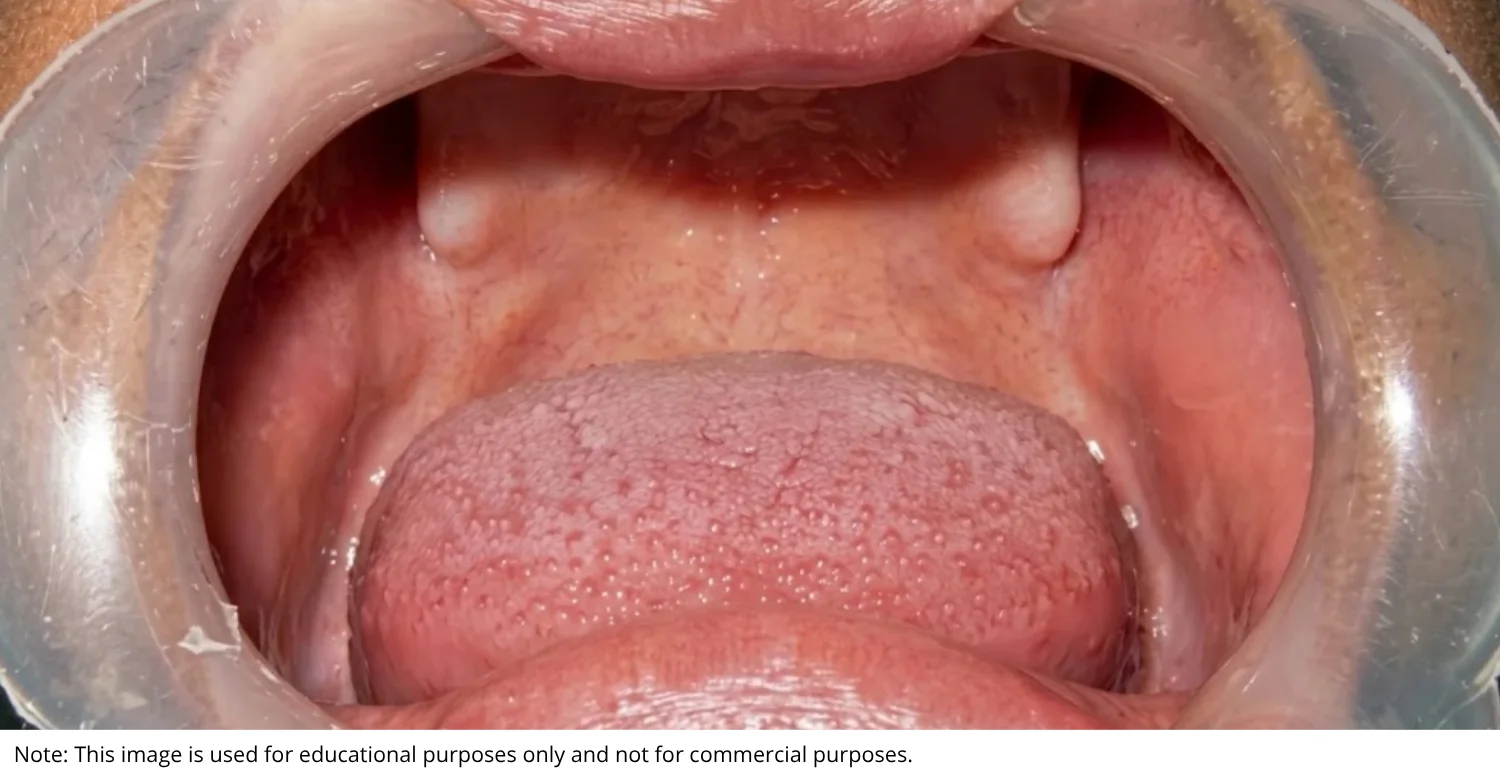
Teeth stimulate the growth of the alveolar bone that supports them. In patients with complete tooth absence, this bone remains underdeveloped, leading to reduced lower-face height, a prominent chin, and thin, sunken lips that can create an older appearance. These jawbone changes also affect later treatment options, including dental implants.
Oral and Psychological Effects
Appearance-related concerns can lower self-confidence and affect social interactions, particularly for children and teenagers. Some patients avoid smiling or speaking in public. Untreated tooth absence may also lead to long-term bone deficiency, nutritional limitations, and emotional stress, making timely, supportive care important for overall wellbeing as well as oral health.
Read about Lipodystrophy and Dental Health
Hypodontia vs Anodontia
Understanding the difference between hypodontia and complete tooth absence helps clarify the diagnosis. Both involve congenitally missing teeth, but they differ greatly in extent. Hypodontia is common and usually involves only a few teeth, while complete absence is extremely rare. The number of missing teeth shapes the diagnosis, associated conditions, and treatment approach.
What Is Hypodontia?
Hypodontia is the congenital absence of one to five teeth, not counting wisdom teeth. It is the most common dental developmental anomaly, affecting roughly 2 to 10 percent of people in the permanent dentition. The most frequently missing teeth are the lower second premolars and upper lateral incisors. Most cases occur without a syndrome.
Key Differences Between Hypodontia and Anodontia
Hypodontia involves a limited number of missing teeth, while the more severe condition involves the absence of all teeth. Hypodontia is usually mild and isolated, whereas complete absence is severe and often syndromic. Treatment for hypodontia may involve orthodontics, bridges, or single implants, while complete absence requires full-mouth prosthetic rehabilitation.
.jpg)
.jpg)
.jpg)
Oligodontia vs Anodontia
Distinguishing oligodontia from complete tooth absence is another important diagnostic step. Oligodontia sits between hypodontia and complete absence in severity: many teeth are missing, but not all of them. Because some natural teeth remain, treatment planning differs significantly, focusing on preserving existing teeth while replacing the missing ones.
What Is Oligodontia?
Oligodontia is the congenital absence of six or more teeth, excluding wisdom teeth. It is uncommon and more often associated with genetic mutations or syndromes, such as ectodermal dysplasia, than hypodontia is. Patients may also have small or cone-shaped remaining teeth and retained baby teeth that persist into adulthood.
Key Differences Between Oligodontia and Anodontia
In oligodontia, some teeth remain; in complete tooth absence, none develop. Clinically, oligodontia patients often have spaced, small, or misshapen teeth, while complete absence leaves smooth, flat gum ridges. Oligodontia treatment may combine orthodontics, restorations, and partial prostheses, whereas complete absence requires full dentures or implant-supported prostheses.
Understand the symptoms of Malocclusion of the Teeth
Doctor's Perspective
From a clinical perspective, anodontia requires careful, stepwise management. Dentists first confirm that teeth are truly absent rather than delayed, then assess growth, bone, and general health. Treatment is often long-term and evolves with the patient's age, making ongoing follow-up and coordination between dental specialists essential.
How Is Anodontia Diagnosed?
Diagnosis begins with a clinical examination of the mouth, gums, and facial features. The dentist reviews dental and medical history, family history of missing teeth, and signs of related conditions such as reduced sweating or sparse hair. Tooth eruption patterns are then compared with normal developmental timelines for the patient's age.
Role of Dental Imaging
Dental X-rays, usually a panoramic radiograph, are essential for diagnosis. Imaging shows whether tooth buds are present in the jaws, distinguishing congenital absence from delayed eruption or impaction. Three-dimensional imaging such as cone-beam CT may later assess bone volume, supporting accurate treatment planning, especially before implants.
Treatment Planning
Treatment planning considers the patient's age, stage of jaw growth and development, oral health, bone quality and quantity, and functional and aesthetic needs. For children, plans focus on temporary, adjustable solutions. For adults, more permanent options may be possible. Every plan is individualized and reviewed periodically as circumstances change.
Learn how to fix Craze Lines
Anodontia Treatment
Anodontia treatment aims to restore chewing, speech, facial support, and appearance. Since missing teeth cannot regrow, treatment relies on prosthetic replacement. Options range from removable dentures in childhood to implant-supported restorations in adulthood. The best approach depends on age, jaw growth, bone condition, and each patient's individual needs.
Treatment for Children
Children with complete tooth absence may receive removable dentures as early as two to three years of age, depending on their cooperation. Dental development is monitored closely, and dentures are adjusted, relined, or remade as the jaws grow. Because treatment must respect ongoing jaw growth, fixed or permanent options are usually postponed.
Removable Prostheses
Removable prostheses restore chewing ability, support speech, and improve facial appearance. In children and adolescents, they serve as temporary or developmental solutions that can be modified as growth continues. They also help maintain oral function and self-confidence while patients wait until they become suitable candidates for more permanent treatment.
Dentures
Complete dentures are often the first-line treatment for anodontia in both children and adults. They are considered when no teeth are present and bone support is limited. Dentures provide functional benefits for eating and speaking, as well as aesthetic benefits by restoring lip support, facial height, and a natural-looking smile.
Dental Implants
Dental implants may be appropriate once jaw growth is complete or sufficiently advanced, usually in late adolescence or adulthood. Because the jawbone is often underdeveloped in these patients, careful evaluation of bone volume and oral health is required, and bone grafting may be needed. Implants can support fixed bridges or stabilize overdentures.
Comprehensive Dental Rehabilitation
Comprehensive rehabilitation involves individualized planning that may combine prosthetic, orthodontic, surgical, and restorative approaches when necessary. Care often involves a team of dental specialists working together over many years. The goal is a stable, functional, and aesthetic result that adapts to the patient's growth, needs, and expectations throughout life.
Compare materials in Flexible Partial Dentures vs Metal
When Is It Serious and Requires a Checkup?
Anodontia itself is not a medical emergency, but it should be evaluated as early as possible. A timely checkup confirms the diagnosis, identifies associated conditions, and allows treatment to begin at the right developmental stage. Certain signs, however, suggest a different problem that requires prompt or urgent attention.
When to See a Dentist
See a dentist if multiple teeth fail to erupt, permanent teeth do not appear as expected, or several teeth are known to be congenitally missing. An evaluation is also recommended if there is difficulty chewing or speaking, or if you have concerns about your child's facial or jaw development.
When Urgent Care May Be Needed
Seek urgent care for severe dental pain, significant swelling, fever with oral symptoms, or difficulty swallowing or breathing. These symptoms are not caused by anodontia itself and may indicate infection, a denture-related sore, or another dental or medical problem. Difficulty breathing or swallowing requires emergency medical attention immediately.
When the Patient Should Rest
This condition does not normally require bed rest. Rest may be advised after oral surgery or procedures such as implant placement or bone grafting, and your dental team may recommend temporarily reducing strenuous activities. Recovery recommendations depend on the procedure performed and the patient's overall health, so always follow individual instructions.
Rest Tips
Recovery after dental treatment for congenital tooth absence is usually smooth when patients follow simple guidelines. Most discomfort after prosthetic adjustments or implant surgery is temporary. Good rest, proper nutrition, and careful oral care support healing and help new prostheses or implants settle in successfully. The following tips apply after most procedures.
After Dental Treatment
Get adequate sleep to support healing.
Follow the dental team's post-treatment instructions carefully.
Avoid strenuous activity when advised.
Maintain hydration by drinking enough water.
Follow recommended oral hygiene for gums and prostheses.
Choose soft, nutritious foods during recovery.
Avoid smoking during healing, as it delays recovery and may affect implants.
Attend all follow-up appointments.
About Vitrin Clinic
Vitrin Clinic follows an individualized approach to congenital missing teeth and anodontia. Our team evaluates each patient's age, dental development, oral health, bone condition, and functional needs. We discuss possible restorative and prosthetic solutions, from removable dentures to implant-supported options, and design a personalized treatment plan for every patient.
What We Notice Clinically
Dr. Rifat Alsaman, Head of the Medical Team at Vitrin Clinic and a Cosmetic Dentist, notes that some patients believed to have anodontia actually have delayed eruption or impacted teeth. Imaging is therefore essential before planning treatment. Jaw growth must also be considered, since placing permanent implants too early may compromise long-term results.
Clinical Note
True complete anodontia is extremely rare. It should be distinguished from hypodontia, which involves one to five missing teeth, and oligodontia, which involves six or more. Missing teeth should always be evaluated clinically and radiographically, since accurate classification guides diagnosis, genetic assessment, and long-term treatment planning.
Tips for the Patients
Seek professional evaluation for persistent missing or unerupted teeth.
Maintain regular dental checkups.
Ask whether dental imaging is necessary.
Do not assume a missing tooth will eventually erupt.
Consider age and jaw growth before permanent treatment.
Maintain good oral hygiene around existing teeth.
Discuss individualized treatment options with Vitrin Clinic.
Resource:
https://pmc.ncbi.nlm.nih.gov/articles/PMC4148747/
https://pmc.ncbi.nlm.nih.gov/articles/PMC4549998/
https://pmc.ncbi.nlm.nih.gov/articles/PMC3728879/
https://pmc.ncbi.nlm.nih.gov/articles/PMC3329693/
FAQs
Dr. Rifat Alsaman has more than 5 years of clinical experience in dentistry and currently serves as the Head of the Medical Team at Vitrin Clinic. He is dedicated to providing exceptional patient care, overseeing treatment planning, and ensuring the highest clinical standards across the team. His expertise, attention to detail, and commitment to continuous professional development have helped countless patients achieve healthier, more confident smiles.


