Dental Implant
October 12, 2026
What Is Dental Implant Sinus Perforation, and How Is It Treated?
 Dr. Rifat Alsaman
Opening answer: Dental Implant Sinus Perforation occurs when an implant procedure damages the maxillary sinus floor or its delicate lining. It may happen during implant placement or sinus augmentation surgery. Treatment depends on the perforation's size, implant position, sinus health, and symptoms. Some cases require observation, while others need membrane repair, implant revision, or specialist treatment. Early assessment helps identify complications and protect long-term oral health.
What Is Dental Implant Sinus Perforation?
This complication involves an unintended opening in the sinus membrane or penetration of the sinus floor during upper-jaw implant treatment. These are related but different clinical situations. A membrane tear can occur during sinus lifting, even when the implant remains appropriately positioned. Conversely, an implant may extend into the sinus without necessarily tearing its lining. The distinction influences treatment decisions and follow-up requirements.
The maxillary sinuses are air-filled spaces above the upper back teeth. Their position makes implant surgery more complex when the remaining jawbone is thin. Careful assessment helps clinicians determine whether the complication needs immediate correction.
A 2024 systematic review evaluated 29 publications concerning sinus perforation and implant outcomes. Researchers estimated a 2.1% implant failure rate among cases involving sinus-floor penetration. They also found no statistically significant difference in implant failure between augmented sinuses with perforated and intact membranes. These findings are reassuring but do not eliminate individual risks.
What Is the Maxillary Sinus, and What Does the Schneiderian Membrane Do?
The maxillary sinus is an air-filled cavity located inside each cheekbone, above the upper posterior teeth. Its floor may lie close to the roots of molars and premolars. Tooth loss can gradually reduce the available bone beneath this cavity.
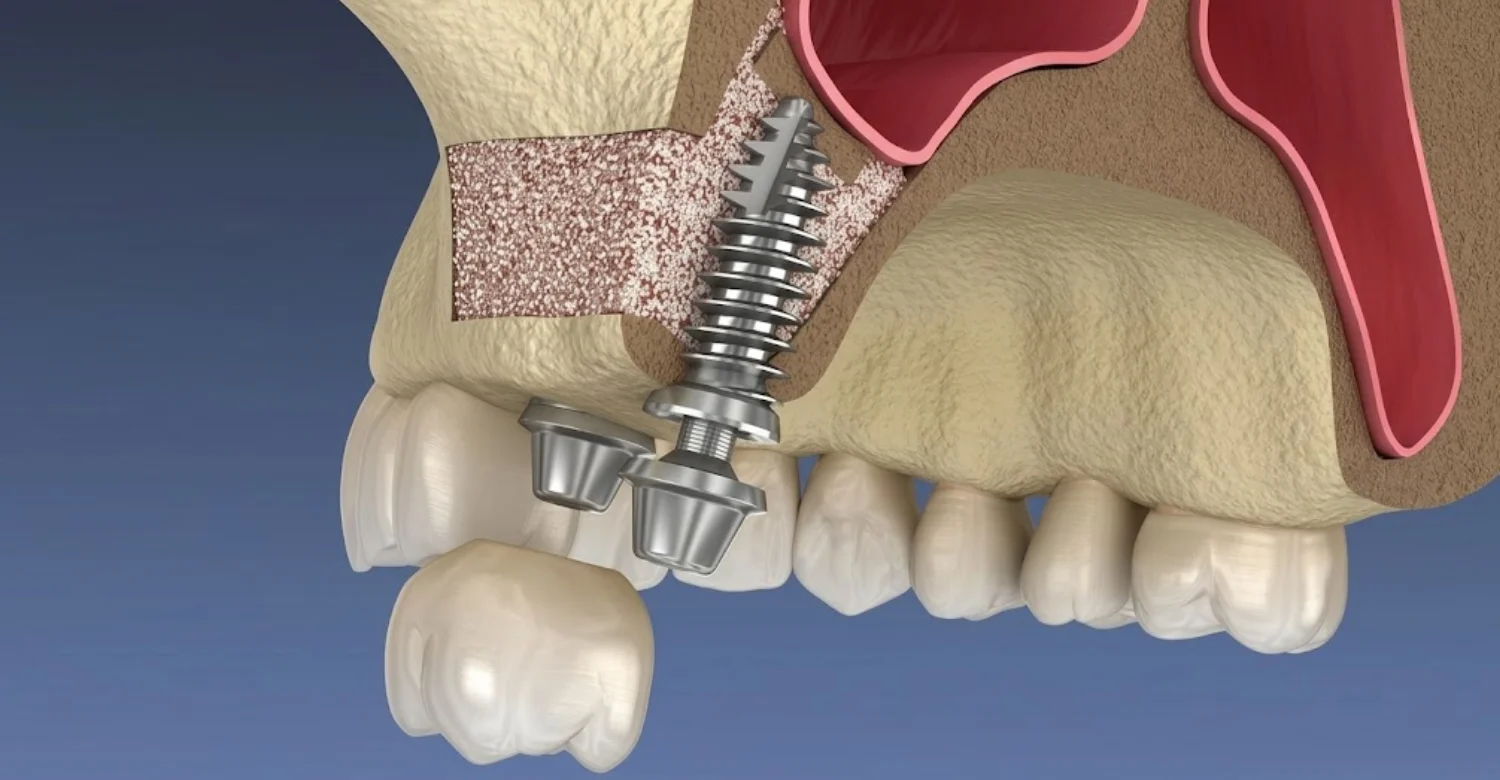
The Schneiderian membrane lines the sinus internally. This delicate tissue supports normal sinus function and helps separate the sinus cavity from surrounding bone. During sinus augmentation, surgeons carefully elevate this membrane to create space for additional bone.
A tear can complicate graft placement and increase contamination concerns. However, a small perforation does not automatically mean treatment will fail. Outcomes depend on the defect, repair method, implant stability, and existing sinus conditions.
Clinical insight: Preoperative imaging helps establish the relationship between the sinus floor and planned implant positions. Clinicians use these findings to select appropriate surgical techniques and reduce avoidable risks.
What Happens When the Sinus Membrane Is Perforated During Dental Implant Surgery?
A membrane perforation creates an opening in the tissue separating the sinus cavity from the surgical site. Its consequences depend on the opening's size, location, and timing. Small tears may be repaired during surgery, allowing treatment to continue when conditions are suitable.
Larger tears can make graft containment difficult. The surgeon may need to repair the membrane, modify the procedure, or postpone implant placement. If contamination or sinus disease is suspected, further assessment may be necessary.
After surgery, some patients experience ordinary swelling and discomfort. Others develop persistent pressure, nasal discharge, or symptoms suggesting sinus inflammation. These symptoms require clinical assessment rather than self-diagnosis.
A perforation does not automatically mean the implant must be removed. The treating clinician evaluates membrane integrity, implant stability, sinus health, and infection indicators before recommending treatment. Early communication helps identify problems before they progress.
Is a Sinus Membrane Tear the Same as a Dental Implant Protruding Into the Maxillary Sinus?
No. A sinus membrane tear and implant protrusion describe different anatomical problems. A tear occurs when the delicate sinus lining becomes damaged. Protrusion occurs when part of the implant extends beyond the bony sinus floor.
These problems can occur separately or together. An implant may extend slightly into the sinus while leaving the membrane intact. Alternatively, a sinus lift may tear the membrane without placing the implant inside the sinus cavity.
This distinction matters because management differs between cases. Some stable implants can remain in place under professional monitoring. Displaced implants, persistent infections, or significant sinus complications may require surgical intervention.
A systematic review published in 2023 examined 321 patients with implants displaced into the maxillary sinus. Sinusitis or communication between the mouth and sinus featured among reported complications. These findings concern displaced implants specifically, not every minor membrane perforation.
Can a Small Sinus Membrane Perforation Heal Without Further Surgery?
Yes, some small tears can heal following appropriate management. However, the decision depends on when the perforation occurred and whether it has already been repaired. A surgeon may observe a stable postoperative situation when examination reveals no concerning complications.
During surgery, clinicians often repair tears before proceeding with grafting. Suitable techniques may include collagen membranes or other materials selected for the defect. Larger openings may require different approaches or postponement of augmentation.
Patients should not assume that an absence of pain confirms healing. Some sinus complications develop gradually or produce mild symptoms initially. Follow-up appointments help evaluate recovery and identify changes requiring treatment.
Important: Suspected perforation after completed surgery needs professional assessment. Patients should not attempt to manage the surgical site or alter prescribed treatment independently.
What Causes Sinus Perforation During Dental Implant Placement?
Several anatomical and surgical factors can contribute to this complication. Limited bone height is particularly important in the upper posterior jaw. The sinus may extend close to the remaining ridge, leaving little space for implant placement.
Sinus augmentation introduces another potential risk because the Schneiderian membrane must be elevated carefully. Thin tissue, internal bony partitions, and difficult surgical access can increase technical challenges. Drilling depth, implant dimensions, and surgical positioning also influence the risk.
Previous sinus disease or surgery may complicate planning. Individual anatomical differences can make some procedures more demanding than others.
A systematic review reported membrane perforation rates ranging from 7% to 60% across studies of lateral sinus augmentation. This wide range reflects differences in patient anatomy, surgical methods, and study populations. It should not be interpreted as one universal risk estimate.
Why Are Upper Back Teeth More Closely Related to the Maxillary Sinus?
The roots of upper premolars and molars often lie near the maxillary sinus floor. In some people, only a thin layer of bone separates the tooth roots from the sinus cavity. The sinus may also expand downward following tooth loss.
These anatomical relationships influence implant length and placement depth. When available bone is limited, the surgeon must assess whether additional augmentation or another implant design is appropriate.
Preoperative imaging helps identify the sinus floor and important anatomical variations. A cone-beam computed tomography scan may be useful when conventional images cannot adequately answer surgical planning questions.
Careful planning reduces avoidable risks but cannot guarantee that complications will never occur. Patients should discuss the proposed implant position and available alternatives before surgery.
How Can Insufficient Upper-Jaw Bone Height Increase the Risk of Sinus Perforation?
Insufficient bone height limits the amount of bone available to anchor an implant. It can occur after tooth loss, periodontal disease, trauma, or natural anatomical variation. The maxillary sinus may also enlarge downward over time.
When the remaining bone is thin, a conventional implant may approach or cross the sinus floor. The surgeon may consider a shorter implant, a different position, or sinus augmentation. Each option depends on bone quality, bite forces, restoration design, and clinical findings.
Three-dimensional imaging can help measure residual bone height and assess the sinus anatomy. These measurements support decisions about implant dimensions and surgical technique.
Insufficient bone does not automatically prevent successful implant treatment. It does, however, make individualized planning particularly important. Patients should ask how their available bone affects treatment choices and potential complications.
Can a Sinus Lift Procedure Cause a Schneiderian Membrane Tear?
Yes. A sinus lift deliberately elevates the Schneiderian membrane to create space for bone augmentation. The membrane can tear during this process because it is thin and sometimes adheres closely to the underlying bone.
Internal sinus partitions, tissue thickness, and limited surgical access can increase technical difficulty. Excessive force or unsuitable instrument positioning may also contribute.
Many tears can be repaired during surgery. The surgeon may use a collagen membrane or another suitable technique, depending on the defect. If the opening is extensive, grafting or implant placement may need to be postponed.
Published studies report widely varying perforation rates during sinus augmentation. The 7%–60% range reflects different surgical approaches and patient populations, rather than a predictable individual outcome.
Can Incorrect Implant Angulation, Drilling Depth, or Implant Length Cause Sinus Damage?
Yes. Implant positioning and drilling depth must account for the available bone and sinus anatomy. Excessive drilling depth or an unsuitable implant length may damage the sinus floor. Incorrect angulation can also place the implant closer to vulnerable anatomical structures.
However, sinus complications do not always indicate poor technique. Thin bone, unusual anatomy, and unexpected surgical findings can contribute despite careful planning.
Clinicians use preoperative imaging, appropriate surgical guides when indicated, and controlled drilling techniques to manage these risks. Implant dimensions should reflect the patient's anatomy and restorative requirements.
If a complication occurs, the surgeon assesses implant stability and sinus involvement. The next step may involve monitoring, repair, repositioning, or specialist referral.
Can Previous Sinus Surgery, Infection, or Anatomical Variations Affect Implant Placement?
Yes. Previous sinus surgery may alter the anatomy or leave scar tissue that complicates implant planning. Active sinus infection can also affect the timing and suitability of elective implant procedures.
Anatomical variations include sinus partitions, unusually low sinus floors, and differences in membrane thickness. These features can make membrane elevation more challenging.
Patients should tell their dentist about chronic congestion, previous sinus procedures, recurrent infections, and relevant medical treatment. This information helps determine whether additional assessment is appropriate.
A clinician may recommend consultation with an ear, nose, and throat specialist when significant sinus disease is suspected. Treatment timing should reflect the patient's sinus health and dental needs.
What Are the Risk Factors for Dental Implant Sinus Perforation?
Several factors can increase the likelihood of sinus complications during upper-jaw implant treatment. These include reduced bone height, challenging sinus anatomy, membrane fragility, and pre-existing sinus disease.
Smoking and certain uncontrolled medical conditions may also affect wound healing. Previous sinus surgery can introduce additional anatomical considerations. The importance of each factor varies between patients.
Risk assessment combines medical history, clinical examination, and appropriate imaging. Clinicians then select an implant strategy suited to the patient's anatomy and restorative goals.
A 2024 systematic review included 29 publications and found generally low implant failure rates following sinus-floor penetration. Nevertheless, the authors highlighted sinus anatomy and perforation dimensions as possible influences on complications.
Does Severe Bone Loss Increase the Risk of Maxillary Sinus Perforation?
Severe bone loss can reduce the distance between the implant site and sinus cavity. This limitation increases the importance of accurate measurements and appropriate implant selection.
Bone loss may follow tooth extraction, periodontal disease, trauma, or prolonged tooth absence. The remaining bone's width and density also influence implant stability.
Clinicians may consider short implants, alternative positioning, or bone augmentation. The most suitable approach depends on anatomical findings and the planned restoration.
Three-dimensional imaging can help evaluate residual bone height and identify areas requiring additional caution. Patients should discuss the risks and benefits of available approaches before surgery.
How Can Chronic Sinusitis or Pre-existing Sinus Disease Affect Treatment Planning?
Chronic sinusitis may cause persistent inflammation, congestion, or impaired sinus drainage. These conditions can complicate implant planning, particularly when sinus augmentation is being considered.
The dentist evaluates symptoms and relevant imaging before recommending surgery. Patients with significant or uncontrolled sinus disease may need medical assessment first.
Not every history of sinusitis prevents implant placement. The decision depends on disease activity, anatomy, treatment history, and overall clinical findings.
An ear, nose, and throat specialist may help assess persistent symptoms. Coordinated care can clarify whether sinus treatment should precede dental surgery.
Does the Type of Sinus Lift Procedure Influence the Risk?
Yes. Sinus elevation may use a lateral-window approach or a transcrestal approach. Each technique has different indications, anatomical requirements, and procedural challenges.
A lateral-window approach provides direct access to the sinus membrane. However, membrane elevation can result in tearing. A transcrestal approach uses access through the implant site and may suit selected cases with adequate residual bone.
Neither technique eliminates perforation risk. The appropriate method depends on required elevation, bone availability, sinus anatomy, and surgical experience.
Patients should ask why a particular approach is recommended. The explanation should include expected benefits, alternatives, and potential complications.
Can Smoking, Poor Oral Hygiene, or Uncontrolled Medical Conditions Affect Healing?
Yes. Smoking can impair wound healing and increase the risk of complications following oral surgery. Poor oral hygiene can increase inflammation and infection risk around surgical sites.
Uncontrolled diabetes and certain other medical conditions may also affect healing. Medication use and immune-system considerations can influence treatment planning.
Patients should disclose their medical history and medications before surgery. Clinicians may recommend improving disease control or modifying treatment timing.
Maintaining oral hygiene and following postoperative instructions support recovery. Patients should also avoid smoking during the period recommended by their surgical team.
How Can CBCT Imaging Help Assess Sinus Perforation Risk Before Surgery?
Cone-beam computed tomography, or CBCT, produces three-dimensional images of teeth, bone, and relevant sinus anatomy. It can help clinicians assess residual bone height, sinus-floor shape, and internal partitions.
This information supports implant positioning and decisions about sinus augmentation. CBCT may also help evaluate suspected postoperative implant protrusion or other complications.
However, imaging should be prescribed when clinically justified. It does not independently determine whether a complication requires treatment.
The clinician interprets the images alongside symptoms, examination findings, and surgical history. This combined assessment supports an individualized management plan.
What Are the Signs and Symptoms of Sinus Perforation After Dental Implant Surgery?
Symptoms vary according to the extent of tissue damage and the presence of inflammation or infection. Some patients experience only mild postoperative discomfort. Others develop nasal symptoms, facial pressure, or persistent pain.
Possible warning signs include one-sided nasal discharge, unusual bleeding, increasing cheek tenderness, and worsening congestion. Fever or progressive swelling may suggest infection requiring prompt assessment.
Importantly, these symptoms are not specific to sinus perforation. Routine postoperative inflammation and unrelated sinus conditions can produce similar complaints.
Patients should contact their implant surgeon when symptoms persist, worsen, or differ from expected recovery. Severe or rapidly progressing symptoms may require urgent medical evaluation.
What Are the Early Signs of a Possible Sinus Complication?
Early symptoms may include unusual pressure beneath the cheekbone, persistent discomfort, or new nasal symptoms on the operated side. Some patients notice bleeding or discharge that continues beyond the expected recovery period.
Swelling and mild tenderness can occur after uncomplicated implant surgery. Their significance depends on severity, timing, and whether symptoms are improving.
Patients should monitor changes rather than relying on one symptom alone. Increasing discomfort, fever, or unusual discharge warrants professional advice.
Persistent or Increasing Pain and Pressure in the Upper Jaw or Cheek
Mild pain can occur following implant placement. Pain that progressively increases or returns after initial improvement deserves assessment.
Pressure beneath the cheekbone may accompany sinus inflammation. However, dental infection and other postoperative problems can produce similar symptoms.
The surgeon may examine the surgical site and review imaging when indicated. Patients should not assume that pressure alone confirms sinus damage.
One-Sided Nasal Congestion or Unusual Nasal Discharge
New congestion affecting one nostril may indicate irritation or sinus inflammation. Thick, discoloured, or unpleasant-smelling discharge can raise concern about infection.
These symptoms have other possible causes, including ordinary respiratory infections. Their timing relative to implant surgery helps guide assessment.
Persistent or worsening symptoms should be discussed with a clinician. Avoid inserting objects into the nose or starting unprescribed nasal medications.
Nosebleeds or Unexpected Bleeding After Surgery
Minor bleeding can occur after oral surgery. Persistent bleeding or new nasal bleeding following upper-jaw implant placement requires clinical advice.
The source may involve the surgical site, irritated tissues, or another nasal condition. Bleeding alone cannot establish whether the sinus membrane is damaged.
Heavy bleeding that does not stop requires urgent medical attention. Patients should follow their surgeon's instructions for managing postoperative bleeding.
Facial Swelling, Tenderness, or a Feeling of Sinus Pressure
Some facial swelling is expected after implant surgery. It should generally improve rather than progressively worsen.
Increasing cheek tenderness or pressure may indicate inflammation or infection. The significance depends on other symptoms and the timing of recovery.
Contact the treating clinician when swelling increases or becomes associated with fever. Rapidly spreading swelling or difficulty breathing requires emergency assessment.
Can Dental Implant Sinus Perforation Occur Without Obvious Symptoms?
Yes. Some patients have no noticeable symptoms, particularly when the penetration is limited and sinus drainage remains normal. Imaging may reveal anatomical changes that a patient cannot feel.
A 2024 systematic review found generally low implant failure rates across the included studies. However, these results do not establish that every asymptomatic complication is harmless.
Routine follow-up remains important after upper-jaw implant surgery. Clinicians can evaluate healing and investigate unexpected findings when necessary.
Patients should not request implant removal solely because imaging suggests minor penetration. Management should reflect the clinical findings, symptoms, implant stability, and potential risks.
How Can Patients Distinguish Normal Postoperative Discomfort From Possible Sinus Complications?
Normal postoperative discomfort usually begins soon after surgery and gradually improves. Mild swelling, tenderness, and temporary bruising may also occur.
Possible complications become more concerning when symptoms worsen instead of improving. Persistent one-sided nasal discharge, fever, increasing facial pressure, or unusual bleeding deserves assessment.
These patterns are useful clues, not definitive diagnostic criteria. A dentist may need an examination and additional imaging to identify the cause.
Patients should follow their individual postoperative instructions. If symptoms seem unusual or progressively worsen, contacting the surgical team is safer than waiting for the next routine appointment.
Which Symptoms May Suggest Sinusitis or an Implant-Related Infection?
Symptoms may include persistent facial pressure, nasal obstruction, unpleasant nasal discharge, fever, or worsening pain. Some patients also report reduced smell or tenderness around the affected cheek.
These findings can occur with sinusitis unrelated to dental treatment. A dental infection may also produce overlapping symptoms.
The clinician evaluates the surgical site, symptom history, and relevant imaging. An ENT assessment may be appropriate when sinus disease is suspected.
Prompt diagnosis helps determine whether medication, dental intervention, or sinus treatment is necessary. Patients should avoid taking leftover antibiotics without professional guidance.
What Complications Can Occur After Dental Implant Sinus Perforation?
Potential complications include sinus inflammation, infection, persistent nasal symptoms, and difficulties during bone augmentation. In some cases, implant displacement or an abnormal connection between the mouth and sinus can occur.
However, these outcomes are not inevitable. Many reported perforations are managed successfully, and some patients experience no significant sinus symptoms.
A 2024 meta-analysis found no statistically significant difference in implant failure between augmented sinuses with perforated membranes and those with intact membranes. This finding supports individualized assessment rather than automatic implant removal.
The main priority is identifying the specific problem and selecting appropriate treatment. Persistent symptoms, suspected infection, or a displaced implant require timely professional evaluation.
Can a Sinus Membrane Tear Cause Maxillary Sinusitis?
A membrane tear may contribute to sinus complications, particularly when infection or impaired drainage is present. Nevertheless, not every perforation leads to sinusitis.
Risk depends on factors such as defect dimensions, existing sinus disease, and surgical circumstances. Symptoms may include facial pressure, congestion, or abnormal nasal discharge.
Clinicians assess these findings before deciding whether treatment is necessary. Depending on the diagnosis, management may involve observation, medication, or specialist intervention.
Patients should seek advice when symptoms persist or worsen after surgery.
Can a Dental Implant Protruding Into the Maxillary Sinus Become Infected?
Yes. An implant extending into the sinus may be associated with inflammation or infection, although this does not occur in every case.
Risk depends on implant position, membrane integrity, sinus drainage, and other clinical factors. A displaced implant presents different concerns from minor, stable penetration.
A systematic review of 321 patients with displaced implants identified sinusitis and oroantral communication among reported complications. Because these were displaced implants, the findings should not be generalized to every protruding implant.
Clinicians determine whether monitoring, removal, or another intervention is appropriate. Patients should avoid attempting to assess implant movement themselves.
Can Sinus Perforation Affect Bone Grafting or Dental Implant Integration?
Yes. A membrane tear can make it harder to contain graft material within the intended area. This may affect the surgical procedure and require repair or modification.
Implant integration also depends on primary stability, bone quality, healing, and infection control. A perforation does not automatically prevent successful integration.
The surgeon evaluates whether grafting can continue safely. In some cases, staged treatment may be preferable to placing an implant immediately.
Follow-up helps determine whether healing is progressing appropriately. Treatment decisions should be based on clinical findings rather than the presence of a tear alone.
Can an Untreated Sinus Complication Lead to Persistent Nasal Symptoms?
Yes. Persistent inflammation or infection can cause ongoing congestion, discharge, facial pressure, or reduced smell. Displaced implants may also contribute to continuing sinus problems.
However, nasal symptoms after surgery can have several unrelated causes. Proper diagnosis is necessary before attributing them to the implant.
Patients should seek assessment when symptoms persist or worsen. Treatment may require dental intervention, sinus management, or coordinated specialist care.
Does Sinus Perforation Always Mean the Dental Implant Will Fail?
No. Implant survival depends on multiple factors, and a perforation alone does not establish failure.
What Does the Clinical Evidence Say About Implant Survival After Membrane Repair?
A 2024 systematic review included 29 publications. Across 18 studies, researchers compared 1,817 implants placed in augmented sinuses with perforated membranes against 5,043 implants placed in sinuses without perforation.
The review found no statistically significant difference in implant failure between these groups. The reported comparison does not prove that both situations carry identical risks.
Why Do Perforation Size, Implant Position, and Sinus Health Matter?
Small tears and stable implants may need less intervention than extensive defects or displaced implants. Existing sinus disease can also influence healing and treatment requirements.
Clinicians consider membrane integrity, bone support, implant stability, and infection indicators together. These findings help determine whether monitoring, repair, or revision is appropriate.
How Is Dental Implant Sinus Perforation Diagnosed?
Diagnosis combines symptom assessment, dental examination, surgical history, and appropriate imaging. The clinician checks the implant site and evaluates signs of inflammation, infection, or abnormal communication.
CBCT imaging may help assess sinus-floor anatomy and implant position. Conventional dental X-rays can provide useful information, but their limitations depend on the clinical question.
An ENT referral may be appropriate when persistent sinus disease is suspected. The clinician may also review previous scans and operative records.
Patients should bring medication lists, symptom timelines, and available dental records. Accurate information helps the team determine the next steps.
What Happens During a Dental and Oral Examination?
The clinician reviews symptoms, surgical timing, medical history, and previous sinus problems. The examination may assess swelling, tenderness, wound healing, and implant stability.
The dentist also looks for signs of infection or an abnormal connection between the mouth and sinus. Additional tests depend on the suspected complication.
Patients should describe changes in pain, nasal symptoms, and bleeding. Clear information helps guide further investigations.
Can a CBCT Scan Identify Sinus Floor Damage or Implant Protrusion?
CBCT provides three-dimensional information about bone, implant position, and sinus anatomy. It can help determine whether an implant extends beyond the sinus floor.
It may also reveal changes requiring further evaluation. However, a scan cannot always establish whether a patient has an active infection.
The clinician interprets imaging alongside symptoms and examination findings. CBCT should be used when its expected diagnostic benefit justifies the radiation exposure.
When Are Dental X-Rays Sufficient, and When Is 3D Imaging Needed?
Conventional dental X-rays may answer straightforward questions about implant position and surrounding bone. However, two-dimensional images can obscure anatomical relationships.
CBCT may be appropriate when suspected sinus involvement requires three-dimensional assessment. The decision depends on the clinical findings and whether the result will change management.
Neither imaging method replaces a clinical examination. The treating professional selects the most suitable investigation.
When Should a Dentist Recommend an ENT Specialist?
An ENT referral may be appropriate for persistent sinus symptoms, suspected chronic sinusitis, or complex sinus disease. Referral may also help when dental findings do not fully explain nasal symptoms.
The dentist and specialist can coordinate assessment when both dental and sinus problems are suspected. Urgent symptoms may require immediate medical evaluation rather than a routine referral.
How Do Clinicians Distinguish a Membrane Tear From Sinus Infection or Another Postoperative Problem?
Clinicians compare the surgical history, symptom pattern, examination findings, and imaging. A membrane tear is an anatomical injury, whereas sinusitis describes inflammation of the sinus lining.
The two conditions may coexist, but neither confirms the other. Dental infection, ordinary postoperative inflammation, and unrelated respiratory illness can produce overlapping symptoms.
Additional assessment may be needed when the diagnosis remains uncertain. Treatment follows the identified cause.
What Information Should Patients Bring to a Follow-Up Appointment?
Patients should bring their surgical date, implant details, medication list, and available dental imaging. Records of previous sinus disease or surgery are also useful.
A brief symptom timeline can clarify whether symptoms are improving or worsening. Patients should mention fever, nasal discharge, bleeding, and changes in facial pressure.
Note : All images used are for editorial and illustrative purposes only and may not originate from the original news provider or associated company.
How Is Dental Implant Sinus Perforation Treated?
Treatment depends on the defect's size, the implant's position, sinus health, and whether symptoms or infection are present. Options include monitoring, membrane repair, medication when indicated, and surgical revision.
During surgery, small membrane tears may be repaired before treatment continues. Extensive defects can require postponement of grafting or implant placement.
When an implant has entered the sinus cavity, clinicians assess whether it is stable or displaced. Removal may be necessary for certain complications, especially when infection or persistent symptoms occur.
Patients should not assume that every perforation requires surgery. Individualized assessment helps balance implant preservation against the need to protect sinus health.
What Determines the Best Treatment for a Sinus Membrane Perforation?
The clinician considers perforation dimensions, location, membrane condition, and the implant's stability. Existing sinus disease and evidence of infection also influence the decision.
Small tears may be manageable with repair and careful monitoring. Larger defects can require alternative surgical techniques or staged treatment.
Treatment plans should explain expected benefits, limitations, and possible complications. Follow-up helps establish whether healing is progressing as intended.
How Is a Small Schneiderian Membrane Tear Repaired During Implant Surgery?
The surgeon assesses the tear and determines whether the membrane can be repaired safely. Depending on its size and location, a collagen membrane or another suitable technique may be used.
The goal is to restore separation between the surgical site and sinus cavity. The surgeon then decides whether grafting or implant placement can proceed.
When Can a Collagen Membrane Be Used to Cover the Tear?
A collagen membrane may be suitable for selected perforations. Its use depends on the defect's size, location, and surrounding tissue conditions.
The surgeon determines whether the material can provide adequate coverage and stability. Larger tears may require a different approach.
When Might the Surgeon Modify or Postpone Implant Placement?
Placement may be postponed when the membrane cannot be repaired reliably or graft containment is uncertain. Active infection and inadequate implant stability can also affect timing.
Staged treatment allows healing before another procedure is attempted. The decision depends on the patient's anatomy and clinical findings.
What Happens When a Dental Implant Extends Into the Maxillary Sinus?
The clinician evaluates how far the implant extends and whether the membrane remains intact. Symptoms, implant stability, and sinus health help determine the appropriate response.
Some stable cases may be monitored. Displacement, infection, or persistent sinus complications can require surgical intervention.
When Can the Implant Be Monitored Without Immediate Removal?
Monitoring may be considered when the implant is stable, symptoms are absent, and assessment reveals no concerning sinus disease. The clinician determines whether follow-up imaging or specialist review is necessary.
Patients should report new nasal symptoms or increasing facial discomfort. Monitoring requires a clear follow-up plan.
When Might Implant Removal or Surgical Revision Be Necessary?
Removal or revision may be considered when an implant is displaced, causes persistent infection, or contributes to significant sinus complications. The surgical approach depends on its location and accessibility.
A specialist may recommend endoscopic sinus surgery or another suitable technique. Treatment planning should consider both sinus health and future dental rehabilitation.
How Is Sinusitis After Dental Implant Surgery Managed?
Management begins by identifying whether symptoms are related to the implant, an existing sinus condition, or another cause. Treatment may include prescribed medication or intervention addressing the underlying dental problem.
Persistent or complex cases may require ENT assessment. A displaced implant or ongoing source of infection may need surgical management.
When Are Antibiotics, Nasal Treatments, or Other Medications Appropriate?
Medication depends on the diagnosis and severity of symptoms. Antibiotics may be appropriate for selected bacterial infections, but they do not repair a membrane tear.
Nasal treatments may help certain sinus conditions when clinically indicated. Patients should follow professional advice and avoid self-prescribing antibiotics.
When Is Additional Sinus Surgery or ENT Treatment Needed?
Additional intervention may be considered when sinus drainage is impaired or infection persists despite appropriate treatment. Displaced implants and complex sinus disease may also require specialist management.
The ENT specialist and dental surgeon can coordinate care when both areas are involved. Treatment depends on imaging, symptoms, and clinical examination.
Can a Dental Implant Be Saved After Sinus Membrane Perforation?
Yes, an implant may be preserved when stability and sinus health remain satisfactory. A membrane tear alone does not necessarily require removal.
The clinician evaluates the defect, infection indicators, bone support, and implant position. Revision or removal may be necessary when preservation poses unacceptable risks.
What Relief and Medical Tips Can Help After Dental Implant Sinus Perforation?
Patients should follow their surgeon's postoperative instructions and seek advice about unexpected symptoms. Gentle activity, appropriate pain relief, and careful oral hygiene can support recovery.
Avoid forceful nose-blowing and other pressure-increasing activities when sinus precautions have been prescribed. Sneezing with the mouth closed may also increase pressure.
Medication choices should reflect the patient's medical history and existing prescriptions. Patients should never start antibiotics or nasal decongestants without appropriate guidance.
How Can Patients Manage Discomfort While Waiting for Professional Assessment?
Avoid disturbing the surgical site and follow the instructions already provided. Use only recommended pain relief and contact the clinician about worsening symptoms.
Do not attempt to reposition an implant or probe the surgical area. Seek urgent assessment for fever, increasing swelling, or severe pain.
Which Pain Relief Options May Be Appropriate After Dental Implant Surgery?
Depending on medical history, a clinician may recommend paracetamol or an appropriate anti-inflammatory medication. Certain medicines are unsuitable for some patients because of allergies, medical conditions, or interactions.
Follow the prescribed dose and avoid combining medicines containing the same active ingredient. Ask a pharmacist or clinician when uncertain.
Can Saline Nasal Sprays or Other Nasal Treatments Help With Symptoms?
Saline sprays may help some nasal symptoms, but suitability depends on the procedure and clinical circumstances. Patients should ask their surgeon before starting nasal treatments after sinus-related surgery.
Avoid forceful irrigation unless specifically approved. Persistent discharge or increasing pressure requires assessment rather than repeated self-treatment.
Why Should Patients Avoid Forceful Nose-Blowing and Pressure Changes During Recovery?
Forceful nose-blowing can increase pressure within the nasal passages and sinuses. After sinus-related procedures, this pressure may interfere with healing.
Follow the surgeon's instructions regarding flying, diving, and other pressure changes. Restrictions vary according to the procedure and recovery progress.
Should Patients Avoid Sneezing With Their Mouth Closed, Heavy Lifting, or Strenuous Exercise?
Patients may be advised to sneeze with their mouth open to reduce pressure. Heavy lifting and strenuous exercise may also be restricted temporarily.
The appropriate duration depends on the surgery performed. Follow the specific instructions given by the treating clinician.
Why Should Patients Avoid Self-Prescribing Antibiotics or Using Unapproved Nasal Decongestants?
Antibiotics do not treat every cause of sinus symptoms. Unnecessary use can cause adverse effects and contribute to antibiotic resistance.
Some decongestants may be unsuitable for particular medical conditions or prolonged use. Ask a healthcare professional before starting these treatments.
What Should Patients Do if They Develop Increasing Pain, Fever, or One-Sided Nasal Discharge?
Contact the implant surgeon promptly for assessment. These symptoms may indicate infection or another postoperative complication.
Seek urgent care if symptoms progress rapidly or accompany significant facial swelling. Severe breathing difficulties or eye symptoms require emergency evaluation.
What Temporary Symptoms Can Occur After Sinus Membrane Repair?
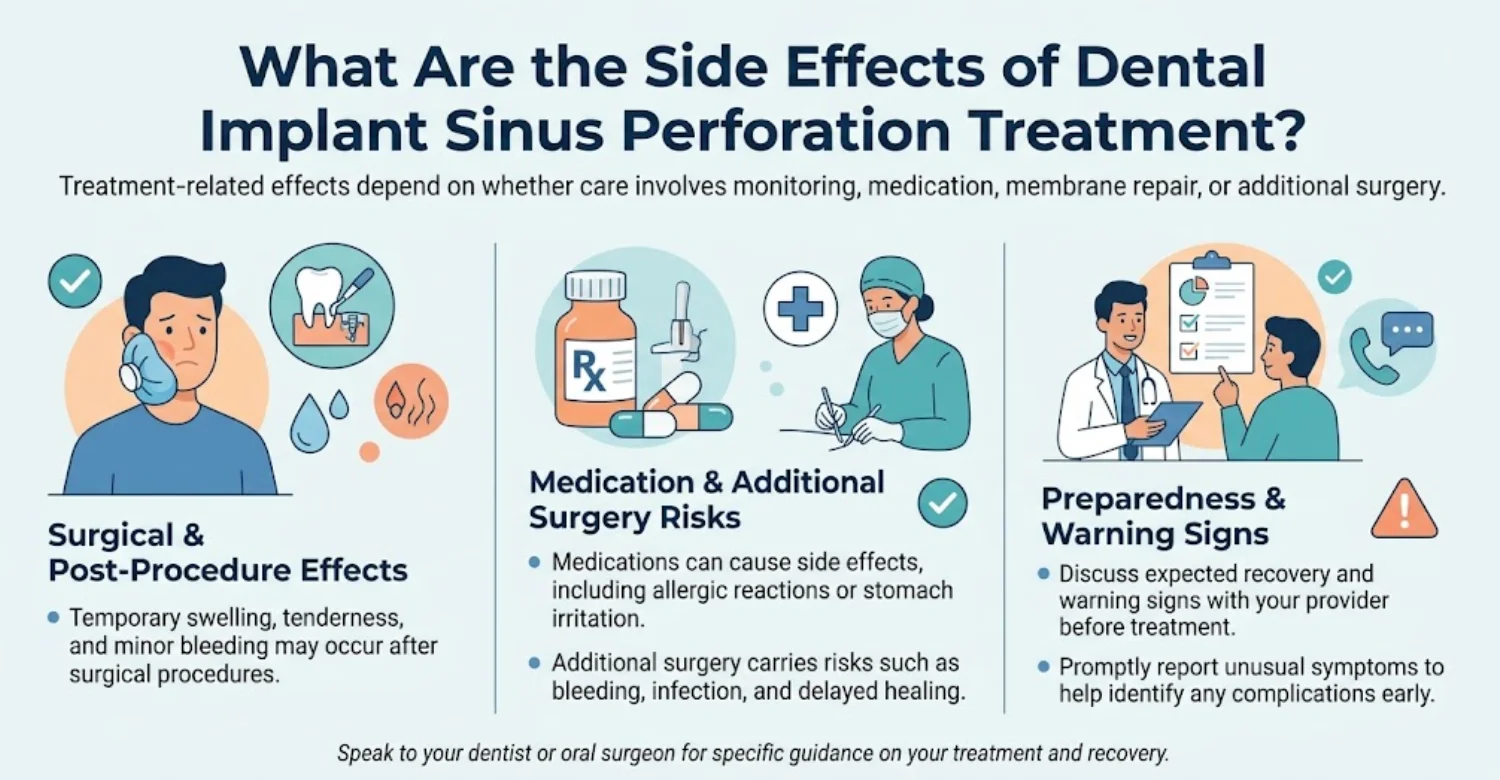
Temporary swelling, bruising, tenderness, and mild bleeding can occur after repair. These symptoms should follow the recovery pattern described by the surgeon.
Worsening pain, persistent bleeding, fever, or unusual discharge needs assessment. Recovery varies according to the defect and procedure performed.
What Are the Possible Side Effects of Antibiotics and Pain Medication?
Antibiotics may cause gastrointestinal upset, diarrhoea, or allergic reactions. Pain medicines can also cause adverse effects, depending on the medication and patient.
Follow the prescribed instructions and report concerning reactions. Breathing difficulties or facial swelling after medication require emergency care.
Can Sinus Surgery Cause Bleeding, Swelling, or Persistent Sinus Symptoms?
Yes. Surgical procedures can cause temporary bleeding, swelling, and discomfort. Some patients may experience persistent symptoms requiring further assessment.
The likelihood depends on the procedure, anatomy, and underlying sinus condition. Follow-up helps identify complications requiring additional treatment.
What Complications May Occur if an Implant Requires Removal or Replacement?
Potential complications include bleeding, infection, bone loss, and delayed healing. Replacement may require additional grafting or a longer treatment timeline.
Not every patient needs a replacement implant. The clinician evaluates bone availability, sinus health, and alternative restorative options.
How Can Patients Reduce the Risk of Treatment-Related Complications?
Disclose medical conditions, medications, allergies, and previous sinus problems. Follow surgical instructions and attend recommended follow-up appointments.
Avoid smoking during the recommended healing period. Report worsening symptoms promptly instead of changing treatment independently.
How Long Is Recovery After Sinus Membrane Perforation From Dental Implants?
Recovery depends on the perforation's size, the treatment performed, and the patient's general health. Small repaired tears may recover differently from cases requiring grafting or implant removal.
Initial swelling and discomfort often improve over several days. Deeper tissue healing may take weeks or longer, particularly after additional surgery.
There is no single recovery timeline suitable for every patient. Follow-up findings help determine when normal activities and further dental treatment can resume.
How Long Does a Small Sinus Membrane Tear Usually Take to Heal?
Healing time varies according to the tear's dimensions and repair method. Small tears repaired during surgery may recover without further intervention.
The surgeon determines when healing is sufficient for the next treatment stage. Persistent symptoms or delayed recovery require reassessment.
How Does Recovery Differ After Membrane Repair, Sinus Lift, or Implant Removal?
Membrane repair may involve fewer restrictions than extensive sinus augmentation. Implant removal or additional sinus surgery can require longer recovery and more follow-up.
The extent of tissue manipulation and any underlying infection influence healing. Patients should follow their individual postoperative instructions.
When Can Patients Return to Normal Eating, Exercise, and Daily Activities?
Many patients resume light daily activities relatively soon after uncomplicated procedures. Strenuous exercise and certain foods may require temporary restrictions.
The timing depends on surgery type and recovery progress. Follow the surgeon's advice rather than using a fixed timeline.
How Long Should Patients Follow Sinus Precautions After Surgery?
Sinus precautions may include avoiding forceful nose-blowing and pressure changes. Their duration depends on the procedure and the surgeon's assessment.
Patients should confirm when restrictions can safely end. Do not stop precautions solely because discomfort has disappeared.
When Can a Dental Implant Be Placed or Restored After a Sinus Complication?
Timing depends on membrane healing, available bone, implant stability, and sinus health. Some cases permit immediate continuation, while others require staged treatment.
The clinician assesses healing before recommending implant placement or restoration. There is no universal waiting period for every complication.
Which Follow-Up Findings Suggest That Healing Is Progressing Appropriately?
Improving discomfort, reduced swelling, and the absence of new symptoms are encouraging signs. The clinician may also assess wound healing and review imaging when indicated.
Persistent pain, fever, or nasal discharge requires further assessment. Symptoms alone cannot confirm complete healing.
When Should You Seek Urgent Care for a Possible Dental Implant Sinus Complication?
Prompt assessment is important when symptoms worsen after upper-jaw implant surgery. Fever, increasing facial swelling, persistent discharge, or severe pain may indicate a complication.
Emergency evaluation is necessary for difficulty breathing, rapidly spreading swelling, or significant eye symptoms. Heavy bleeding that does not stop also requires urgent care.
Contact the treating clinician for guidance whenever symptoms fall outside expected recovery. Do not delay emergency treatment while waiting for a routine dental appointment.
Which Symptoms Require Prompt Dental or Medical Assessment?
Increasing pain, persistent nasal discharge, fever, and worsening swelling require prompt assessment. New symptoms following initial improvement also deserve attention.
The clinician determines whether dental treatment, medication, or specialist care is needed. Severe symptoms may require emergency evaluation.
When Do Fever, Worsening Facial Swelling, or Pus Require Urgent Evaluation?
These symptoms can indicate infection requiring prompt treatment. Rapid progression, significant facial swelling, or systemic illness increases concern.
Contact a healthcare professional urgently. Seek emergency care if swelling affects breathing or swallowing.
What Should Patients Do if They Experience Heavy Bleeding or Rapidly Increasing Pain?
Contact emergency services or attend an emergency department when bleeding is severe or pain escalates rapidly. Follow any immediate instructions from the treating clinician.
Do not probe the surgical site or attempt to reposition the implant. Bring medication details and surgical records if available.
When Could Eye Swelling, Vision Changes, or Severe Headache Indicate an Emergency?
Eye swelling, vision changes, or a severe unusual headache can signal a serious complication. These symptoms require immediate medical assessment.
Do not wait for a dental follow-up appointment. Emergency clinicians can determine whether urgent specialist treatment is necessary.
Should Patients Contact Their Implant Surgeon or an ENT Specialist First?
For new symptoms following implant surgery, contacting the implant surgeon is often a useful first step. The surgeon can assess the dental site and coordinate referral.
Persistent sinus symptoms may require ENT evaluation. Emergency symptoms should be assessed immediately, regardless of which specialist performed the original treatment.
.jpg)
.jpg)
.jpg)
.jpg)
.jpg)
How Can Dental Implant Sinus Perforation Be Prevented?
Prevention begins with careful medical history, anatomical assessment, and appropriate surgical planning. Clinicians evaluate available bone, sinus anatomy, and existing disease before selecting implant dimensions.
CBCT may help when three-dimensional information is clinically necessary. Alternative implant positions or shorter implants may suit selected patients.
Surgical experience and careful technique help reduce avoidable membrane damage. However, no planning method can eliminate every complication.
Patients can contribute by disclosing sinus symptoms and following preoperative instructions. Discussing alternatives helps ensure that the proposed treatment reflects individual needs.
How Does Preoperative CBCT Planning Help Reduce Surgical Risk?
CBCT can reveal sinus-floor anatomy, residual bone height, and internal partitions. These details help clinicians plan implant positioning and decide whether augmentation is needed.
Imaging is most useful when it answers a specific clinical question. It complements, rather than replaces, examination and professional judgment.
Can Short Implants or Alternative Implant Positions Reduce the Need for Sinus Elevation?
Yes, selected patients may benefit from shorter implants or alternative positioning. These approaches can reduce the need for sinus augmentation in suitable anatomical circumstances.
Their suitability depends on bone quality, available height, bite forces, and restoration design. The clinician should explain the benefits and limitations of each option.
When Is a Sinus Lift or Bone Grafting Procedure Recommended?
Sinus augmentation may be recommended when insufficient bone remains for the planned implant. The decision depends on anatomy and restorative requirements.
Some patients may be suitable for alternative implant designs. Others may benefit from staged grafting before implant placement.
How Can Careful Surgical Technique Reduce Schneiderian Membrane Damage?
Controlled instrumentation, appropriate access, and careful membrane elevation can reduce avoidable injury. The surgeon also considers tissue thickness and anatomical variations.
If a tear occurs, prompt assessment guides repair and decisions about continuing surgery. Careful technique reduces risk but cannot guarantee prevention.
Why Should Existing Sinus Disease Be Assessed Before Implant Surgery?
Active sinus disease may complicate recovery or increase postoperative concerns. Identifying relevant symptoms beforehand helps determine whether medical assessment is needed.
Patients should report chronic congestion, recurrent infections, and previous sinus surgery. Treatment timing can then reflect the findings.
What Questions Should Patients Ask Before Upper-Jaw Dental Implant Surgery?
Patients should ask about available bone, sinus anatomy, and the need for augmentation. They should also discuss alternative implant designs and possible complications.
Ask how the surgeon would manage a membrane tear or suspected infection. Clarify follow-up arrangements and whom to contact if symptoms develop.
What We Notice Clinically
Clinical assessment focuses on identifying the precise anatomical problem rather than assuming every sinus-related symptom has the same cause. A membrane tear, implant protrusion, and sinus infection require different considerations.
Clinicians review imaging, implant stability, symptoms, and surgical history together. This helps avoid unnecessary intervention while identifying cases needing specialist care.
The 2024 systematic review found no statistically significant difference in implant failure between perforated and intact membranes after sinus augmentation. Individual findings still determine appropriate treatment.
Why Does a Sinus Membrane Tear Not Automatically Mean Implant Failure?
A tear may be repaired successfully, and the implant may remain stable. Failure depends on multiple factors beyond membrane integrity.
The clinician evaluates bone support, infection, implant stability, and healing. Monitoring or revision is selected according to those findings.
How Do Clinicians Distinguish Membrane Perforation From Implant Protrusion?
Membrane perforation involves damage to the sinus lining. Implant protrusion describes extension beyond the bony sinus floor.
Clinical examination and imaging help establish which condition is present. Both can coexist, so assessment must consider the full anatomical picture.
Why Can Some Patients Have Sinus Complications Without Severe Dental Pain?
Sinus inflammation may produce congestion, discharge, or facial pressure rather than intense dental pain. Some anatomical changes may cause no obvious symptoms.
The absence of severe pain does not exclude a complication. Persistent or unusual symptoms warrant assessment.
Clinical Note: Dr. Rifat Alsaman's Perspective on Sinus Perforation Assessment
A careful assessment should establish the source of symptoms before treatment begins. The clinician considers the implant's position, available bone, sinus health, and evidence of infection.
Treatment should reflect the patient's findings rather than a single standard approach. When necessary, collaboration between dental and ENT specialists supports coordinated care.
Why the Size of the Tear, Implant Position, and Sinus Health Guide Treatment Decisions
Small tears may be manageable with repair and monitoring. Larger defects or displaced implants can require more extensive intervention.
Existing sinus disease may change treatment timing. These factors help clinicians balance implant preservation against potential complications.
How Much Does Dental Implant Sinus Perforation Treatment Cost in the US, UK, and Turkey?
The cost of Dental Implant Sinus Perforation treatment depends on the severity of the injury, diagnostic requirements, and whether treatment involves monitoring, membrane repair, implant removal, or sinus surgery. A consultation and imaging usually cost less than a complex surgical procedure.
There is no single verified national average for treating this specific complication. The following tables distinguish published prices for related procedures from estimates that require confirmation with individual providers.
What Is the Average Cost of Dental Implant Sinus Perforation Treatment in the United States?
In the United States, treatment costs depend on whether the patient needs a dental examination, specialist assessment, medication, or surgery. Hospital-based procedures and complex sinus complications may increase the total expense.
Treatment or Service | Estimated Cost (USD) |
Initial dental or specialist consultation | Request a provider-specific quote |
Dental imaging or CBCT scan | Varies by facility and scan type |
Minor sinus membrane repair | Requires an individualized surgical quote |
Dental implant removal | Depends on surgical complexity |
Endoscopic sinus surgery | Depends on the procedure and hospital |
Follow-up appointments and medication | May be charged separately |
These figures cannot be reduced to one reliable average without a defined diagnosis and treatment plan. Patients should request an itemized estimate covering professional fees, imaging, anesthesia, surgical costs, medication, and postoperative reviews.
What Is the Average Cost of Dental Implant Sinus Perforation Treatment in the United Kingdom?
In the United Kingdom, private dental and ENT fees vary by provider, location, and surgical complexity. Published provider price lists offer useful reference points for related procedures, but they do not establish a national average for implant-related sinus perforation repair.
Treatment or Service | Published Price Reference |
Oral surgery consultation | $50–$135 at one specialist practice |
CBCT scan | $125–$250 at one specialist practice |
Minor oroantral communication surgery | $625 at one specialist practice |
More complex oroantral communication surgery | $835 at one specialist practice |
Private sinus surgery | Approximately $3,000–$6,000 for functional endoscopic sinus surgery |
Patients should ask whether the estimate includes the surgeon's fee, hospital charges, anesthesia, imaging, and postoperative care. NHS eligibility and the clinical circumstances may also affect costs.
What Is the Average Cost of Dental Implant Sinus Perforation Treatment in Turkey?
In Turkey, prices depend on the treating clinic, the surgeon's experience, the diagnostic work required, and whether treatment is limited to the dental site or involves an ENT specialist.
Treatment or Service | Cost Information |
Initial consultation | May be complimentary at some clinics; confirm what is included |
CBCT imaging | Depends on the clinic and imaging requirements |
Sinus membrane repair | Requires a procedure-specific quote |
Implant removal | Depends on implant position and surgical complexity |
Sinus surgery | Requires a hospital or specialist estimate |
Medication and follow-up | May be included or billed separately |
A published Turkish dental clinic price list, for example, lists open sinus-lifting surgery without bone graft materials at approximately $714. This is a price reference for a related dental procedure, not a verified price for repairing a perforation caused by an implant.
International patients should request a written treatment plan before travelling. Confirm whether diagnostic imaging, surgical fees, medication, accommodation, transfers, and follow-up are included in the quoted package.
How Do Sinus Membrane Repair, Implant Removal, and Sinus Surgery Costs Compare?
The total cost of Dental Implant Sinus Perforation treatment depends substantially on the intervention required. Minor repair may be less expensive than implant removal or surgery for persistent sinus disease.
Treatment Option | Relative Cost | Main Cost Considerations |
Monitoring and conservative management | Generally lower | Consultation, assessment, medication if needed, and reviews |
Sinus membrane repair | Variable | Surgical technique, tear size, and clinical setting |
Implant removal | Moderate to high | Implant position, bone condition, and surgical difficulty |
Bone grafting or additional reconstruction | High in complex cases | Graft materials, surgical time, and healing requirements |
Endoscopic sinus surgery | Generally higher | ENT specialist, hospital, anesthesia, and extent of disease |
Implant replacement and restoration | Additional expense | New implant components, surgery, and final prosthesis |
These relative categories are general budgeting guidance, not guaranteed price rankings for every patient. Some cases require more than one procedure, while others can be managed without surgery.
What Factors Affect the Total Cost of Treatment?
The total cost depends on the diagnosis, the complexity of the intervention, and the follow-up care required.
Cost Factor | Potential Effect on the Total |
Diagnostic imaging | Adds scan and interpretation fees |
Specialist consultations | May involve separate dental and ENT fees |
Membrane repair | Depends on the technique and surgical complexity |
Bone grafting | Adds surgical and material costs |
Implant removal or replacement | Requires additional surgical and restorative work |
Medication | Depends on the prescribed treatment |
Follow-up appointments | May involve additional consultation fees |
Travel and accommodation | Increases the budget for international patients |
Diagnostic Imaging, Specialist Consultations, and Follow-Up Appointments
CBCT imaging may help clarify implant position and surrounding sinus anatomy when clinically indicated. Specialist consultations and repeat assessments may be billed separately. Patients should confirm the number of included visits and whether further imaging might be required.
Membrane Repair, Bone Grafting, and Additional Surgical Procedures
Surgical costs depend on the location and extent of the perforation and the condition of the surrounding tissues. Bone grafting or additional reconstruction may increase the total. Not every perforation requires surgery, so the treatment recommendation should follow a clinical assessment.
Medication, Implant Replacement, and Restoration Costs
Medication may be charged separately from surgical treatment. If implant removal or replacement is necessary, the patient may also need new implant components, restorative work, and additional laboratory services. These costs should be identified separately in the treatment estimate.
Travel, Accommodation, and Aftercare for International Patients
Patients travelling abroad should budget for flights, accommodation, local transport, and time away from work. They should also establish how complications and follow-up appointments will be managed after returning home. Urgent symptoms should be assessed locally rather than waiting for a planned trip.
Does Dental Insurance or Private Health Insurance Cover Sinus Perforation Treatment?
Coverage for Dental Implant Sinus Perforation depends on the policy, the cause of the complication, and whether the proposed treatment is classified as dental or medically necessary sinus surgery.
Insurance Consideration | What to Confirm |
Dental insurance | Whether implant complications and corrective surgery are covered |
Private medical insurance | Whether sinus treatment is eligible under the policy |
Preauthorization | Whether approval is required before treatment |
Exclusions | Whether complications from previous treatment are excluded |
Deductibles and limits | How much the patient must pay out of pocket |
Treatment abroad | Whether overseas procedures and follow-up are covered |
Patients should obtain written confirmation from their insurer before treatment begins. Coverage should not be assumed simply because the procedure is medically necessary.
How Can Patients Compare Written Treatment Plans Across Countries?
When comparing Dental Implant Sinus Perforation treatment in the US, UK, and Turkey, patients should compare equivalent procedures and the full expected cost rather than advertised starting prices.
Comparison Point | What the Estimate Should Clarify |
Diagnosis | The suspected complication and recommended investigations |
Proposed treatment | Monitoring, repair, implant removal, or sinus surgery |
Professional fees | Dental surgeon, ENT specialist, and other clinician charges |
Imaging and medication | Whether scans, prescriptions, and interpretation are included |
Surgical expenses | Anesthesia, hospital fees, and materials |
Follow-up | Number of visits and postoperative assessments |
Complications | How additional procedures and unexpected costs are handled |
International aftercare | Support and arrangements after returning home |
What Should a Treatment Quote Include to Avoid Unexpected Costs?
A complete quote should itemize consultations, diagnostic imaging, surgical procedures, anesthesia, medication, and follow-up appointments. It should also identify exclusions, explain possible additional charges, and describe how unexpected complications will be managed.
For international treatment, request written confirmation of the aftercare arrangements and any warranty limitations. The most useful comparison is between treatment plans addressing the same clinical problem, with the same services included.
Tips for Patients Preparing for Assessment or Treatment
Preparation helps clinicians understand symptoms and recommend appropriate care. Patients should gather medical history, medication details, and previous dental imaging.
Write down when symptoms began and whether they have changed. Include previous sinus infections, operations, and relevant allergies.
Ask about treatment alternatives, recovery restrictions, and emergency contact arrangements. International patients should confirm follow-up plans before travelling.
What Should Patients Tell Their Dentist About Symptoms and Previous Sinus Problems?
Describe pain, pressure, congestion, discharge, bleeding, and symptom timing. Mention previous sinus surgery, recurrent infections, and relevant medications.
What Questions Should Patients Ask About Treatment Options and Expected Recovery?
Ask about diagnosis, treatment alternatives, likely benefits, and possible complications. Confirm expected restrictions and the timing of follow-up appointments.
How Can Patients Prepare for a Second Opinion or Specialist Consultation?
Gather imaging, surgical notes, treatment plans, and medication information. Prepare a brief timeline of symptoms and previous interventions.
What Records Should Patients Request Before Seeking Treatment Abroad?
Request dental images, implant details, operative notes, and recent clinical findings. These records help another clinician evaluate the situation.
How Can Patients Plan Follow-Up Care After Returning Home?
Arrange a local dentist or specialist who can review recovery. Obtain written instructions and the original clinic's contact details.
At Vitrin Clinic: How Is Dental Implant Sinus Perforation Assessed?
Vitrin Clinic emphasizes individualized assessment when evaluating Dental Implant Sinus Perforation. The evaluation considers symptoms, implant position, available bone support, medical history, and any relevant sinus conditions to help determine the appropriate next steps.
Digital dental X-rays or CBCT imaging may be recommended when clinically appropriate for Dental Implant Sinus Perforation. The findings help the clinician consider whether monitoring, repair, implant revision, or referral to a specialist may be necessary.
Treatment recommendations for Dental Implant Sinus Perforation should reflect the patient's diagnosis, overall health, and clinical findings. Complex sinus conditions may require coordinated assessment by an oral surgeon or an ear, nose, and throat (ENT) specialist.
How Does Individualized Assessment Help Identify the Source of Sinus Symptoms?
An individualized assessment of Dental Implant Sinus Perforation involves reviewing symptoms, medical history, and the surgical site. Imaging may help distinguish implant-related complications from other dental or sinus conditions, supporting a more appropriate treatment recommendation.
When May Digital X-Rays or CBCT Imaging Be Appropriate?
For suspected Dental Implant Sinus Perforation, digital dental X-rays may help assess selected dental concerns, while cone-beam computed tomography (CBCT) can provide three-dimensional information about implant position and surrounding sinus anatomy when clinically justified.
How Is a Personalized Treatment Plan Developed for Implant-Related Sinus Complications?
A personalized plan for Dental Implant Sinus Perforation considers diagnostic findings, symptom severity, implant stability, sinus health, and patient preferences. The clinician explains the available options, their potential benefits and risks, and any limitations before recommending a course of action.
When May Referral to an Oral Surgeon or ENT Specialist Be Appropriate?
Referral for Dental Implant Sinus Perforation may be appropriate when implant positioning is complex, symptoms persist, or sinus disease requires specialist evaluation. Coordination between dental and medical professionals can help address both the implant-related concern and the patient's sinus health.
How Are Treatment Options Discussed When Implant Preservation or Revision Is Being Considered?
When discussing Dental Implant Sinus Perforation, the clinician explains whether monitoring, membrane repair, or implant revision may be appropriate. The decision depends on clinical findings, implant stability, sinus health, and the patient's preferences after reviewing the potential benefits and risks.
How Vitrin Clinic Supports Your Treatment Journey
Clear communication is important when patients seek an assessment for Dental Implant Sinus Perforation. Vitrin Clinic can discuss available consultation arrangements and explain which dental records, imaging files, and medical details may help support an initial review.
International patients considering an assessment for Dental Implant Sinus Perforation should receive clear information about appointment arrangements and potential specialist referrals. Treatment recommendations require sufficient clinical information and an appropriate examination.
Aftercare following treatment for Dental Implant Sinus Perforation should include instructions about medication, activity restrictions, warning signs, and follow-up appointments. Patients should also understand how to contact their treating team if symptoms develop or worsen after returning home.
How Can Patients Arrange an Initial Consultation and Share Existing Dental Records?
Patients concerned about Dental Implant Sinus Perforation can contact Vitrin Clinic to ask about consultation arrangements. Existing dental imaging, operative notes, medication details, and a description of symptoms may help the clinical team understand the concern before determining the next steps.
How Are Clinical Findings and Treatment Options Explained Before a Decision Is Made?
During an assessment for Dental Implant Sinus Perforation, the clinician should explain the suspected problem, any recommended investigations, and the available treatment options. Patients should understand the potential benefits, limitations, risks, and expected follow-up before making an informed decision.
How Can International Patients Coordinate Appointments and Relevant Specialist Care?
International patients seeking care for Dental Implant Sinus Perforation should confirm appointment availability, the records required, and whether an oral surgeon or ENT specialist may need to be involved. Travel plans should allow enough flexibility for clinical evaluation and any necessary follow-up.
Why Are Follow-Up Instructions and a Clear Aftercare Plan Important?
A clear aftercare plan following treatment for Dental Implant Sinus Perforation helps patients understand medication use, activity restrictions, and symptoms that require prompt attention. Written instructions and scheduled follow-up appointments support ongoing monitoring and help patients know when to seek further assessment.
Ready to transform your smile?
Talk to our team and get a personal FREE treatment plan.
Key Takeaways
Sinus-related complications after upper-jaw implant surgery vary in severity. Some involve small membrane tears, while others involve implant protrusion or sinus infection.
The correct response depends on clinical findings, not the complication's name alone. Early assessment can help determine whether monitoring, repair, medication, or specialist intervention is appropriate.
What Patients Should Know About Dental Implant Sinus Perforation
A perforation does not automatically mean implant failure. Assessment should establish the defect's extent and whether the sinus is affected.
Why Early Assessment and Individualized Treatment Matter
Early evaluation helps identify infection and other complications. Treatment should reflect anatomy, symptoms, implant stability, and overall health.
Which Symptoms Should Prompt Professional or Urgent Medical Care?
Persistent discharge, worsening pain, fever, and increasing swelling require prompt assessment. Vision changes, breathing difficulties, or severe bleeding require emergency care.
How Careful Planning, Appropriate Treatment, and Follow-Up Support Recovery
Appropriate imaging, surgical planning, and aftercare help manage risk. Follow-up confirms progress and identifies problems requiring further treatment.
At Vitrin Clinic
Dental implant treatment at Vitrin Clinic begins with an individualized assessment of oral health, bone support, implant position, and the patient's treatment needs. When Dental Implant Sinus Perforation is suspected, the evaluation may include reviewing symptoms, previous surgical records, and existing dental imaging.
Digital dental X-rays or CBCT scans may be recommended when clinically appropriate to assess the implant's relationship to the maxillary sinus. Based on the findings, the clinician can discuss suitable next steps, which may include monitoring, corrective treatment, or referral to an oral surgeon or ENT specialist.
For international patients considering dental implant treatment in Istanbul, Vitrin Clinic can provide information about consultation arrangements, treatment planning, and expected costs. Any recommendation should be based on clinical findings, with clear explanations of treatment options, potential risks, recovery expectations, and follow-up requirements.
Patients considering treatment in Istanbul should request a clear explanation of the proposed procedures, costs, and follow-up arrangements. Clinical recommendations should remain individualized, with realistic expectations about outcomes and recovery.
Reference
FAQs
Dr. Rifat Alsaman has more than 5 years of clinical experience in dentistry and currently serves as the Head of the Medical Team at Vitrin Clinic. He is dedicated to providing exceptional patient care, overseeing treatment planning, and ensuring the highest clinical standards across the team. His expertise, attention to detail, and commitment to continuous professional development have helped countless patients achieve healthier, more confident smiles.


.webp&w=3840&q=75)

