General Dentistry
October 12, 2026
What Is Denture Stomatitis? Causes, Symptoms, Treatment, and Prevention
 Dr. Rifat Alsaman
Denture Stomatitis is inflammation of the oral tissues beneath a removable denture, most commonly affecting the palate under an upper denture. It may cause redness, soreness, burning, or swelling, although some people have no noticeable symptoms. Common contributing factors include wearing dentures overnight, inadequate denture hygiene, poor fit, and overgrowth of Candida yeast. Treatment depends on the cause and may involve daily denture cleaning, removing dentures during sleep, adjusting the fit, or using prescribed antifungal medication when appropriate. Prevention includes maintaining oral hygiene, cleaning dentures correctly, and attending regular dental checkups. Persistent or recurring symptoms should be assessed by a dentist to confirm the diagnosis and rule out other oral conditions.
What Is Denture Stomatitis?
Denture Stomatitis is inflammation of the oral tissues beneath a removable denture. It most often affects the palate under an upper denture. The tissue may look red, swollen, or tender, and some people feel burning. Others notice no symptoms, even when inflammation is clearly visible. Candida overgrowth, denture biofilm, continuous wear, and poor fit often work together. Effective care therefore looks at both the mouth and the denture. A dentist can examine the area and identify the likely contributing factors. Clinical insight: a red palate does not automatically confirm a fungal infection.
How Denture Stomatitis Affects the Oral Mucosa
The oral mucosa is the soft tissue lining the mouth. A denture covers part of this tissue for many hours each day. This creates a warm, moist space where microorganisms gather. Covered tissue receives less natural cleansing from saliva and the tongue. Biofilm on the fitting surface can then irritate the mucosa. The area may appear red, swollen, or unusually smooth. These findings are not specific to one diagnosis, so professional examination matters. Overnight removal and daily cleaning help the tissues recover. Older adults may also have thinner mucosa that irritates more easily. Tissue health therefore depends on both daily habits and the appliance itself.
Is Denture Stomatitis the Same as Oral Thrush?
No, the two are related but not identical. Both can involve Candida, a yeast commonly found in healthy mouths. Oral thrush often produces creamy white patches that may leave red tissue underneath. Denture-related inflammation usually stays limited to the mucosa touching the denture. Its outline often matches the appliance closely. Finding Candida does not by itself prove active infection. Dentists weigh symptoms, examination findings, and risk factors before recommending antifungal treatment. Thrush can also appear in people who do not wear dentures. The location and pattern of redness therefore offer useful clues.
What Is Chronic Erythematous Candidiasis in Denture Wearers?
Chronic erythematous candidiasis describes persistent red inflammation linked to Candida. In denture wearers, it usually appears beneath the fitting surface. The tissue looks red and irritated without obvious white patches. Some people feel a burning or altered taste, while others feel nothing. Biofilm, prolonged wear, reduced saliva, and poor cleaning often act together. Treatment generally targets the tissues and the denture surface at the same time. This form is the most common Candida pattern seen under dentures. A dentist can confirm it and plan suitable treatment.
How Common Is Denture Stomatitis Among Denture Wearers?
Research shows the condition is fairly common among removable denture wearers. A 2024 systematic review reported prevalence estimates from roughly 20% to 67%. This range reflects different populations, diagnostic methods, and wearing habits. The review included 28 studies on the condition and related Candida colonization. Continuous wear, biofilm buildup, and poor hygiene emerged as key contributing factors. Younger, healthy wearers can also be affected, so regular reviews matter for everyone. It should not be read as one universal prevalence figure. Early detection usually makes management simpler and more comfortable.
What Are the Signs and Symptoms of Denture Stomatitis?
Symptoms vary with severity and the underlying cause. Some people notice redness, burning, tenderness, or discomfort beneath their dentures. Others only learn about the problem during a routine examination. The absence of pain does not mean the tissues are healthy. These signs can also overlap with pressure injuries and other oral conditions. Self-diagnosis may therefore delay appropriate care. Noting when symptoms started and what eases them helps your dentist. Bring these observations to your appointment.
Redness and Inflammation Beneath Dentures
Redness under a denture is one of the most common findings. The affected area often follows the shape of the fitting surface. Inflammation develops when biofilm sits against the mucosa for long periods. Poor fit and continuous wear can make it worse. Redness alone cannot confirm Candida infection, because pressure and friction look similar. Avoid filing or sanding the denture yourself at home. Home changes can damage the appliance and create new pressure points. A dentist can assess the fit and recommend suitable care.
Burning, Soreness, and Tenderness on the Roof of the Mouth
Burning or tenderness may develop where an upper denture rests on the palate. Symptoms often increase during eating or when inserting the denture. Inflammation, friction, dryness, and biofilm can all contribute. Spicy, acidic, or very hot foods may feel uncomfortable. Persistent soreness needs assessment rather than repeated self-treatment. Difficulty swallowing or breathing problems require urgent medical attention. The severity of pain does not always match the degree of inflammation. Softer foods and cooler drinks can offer temporary relief.
Swelling, Palatal Irritation, and Changes in Oral Tissue
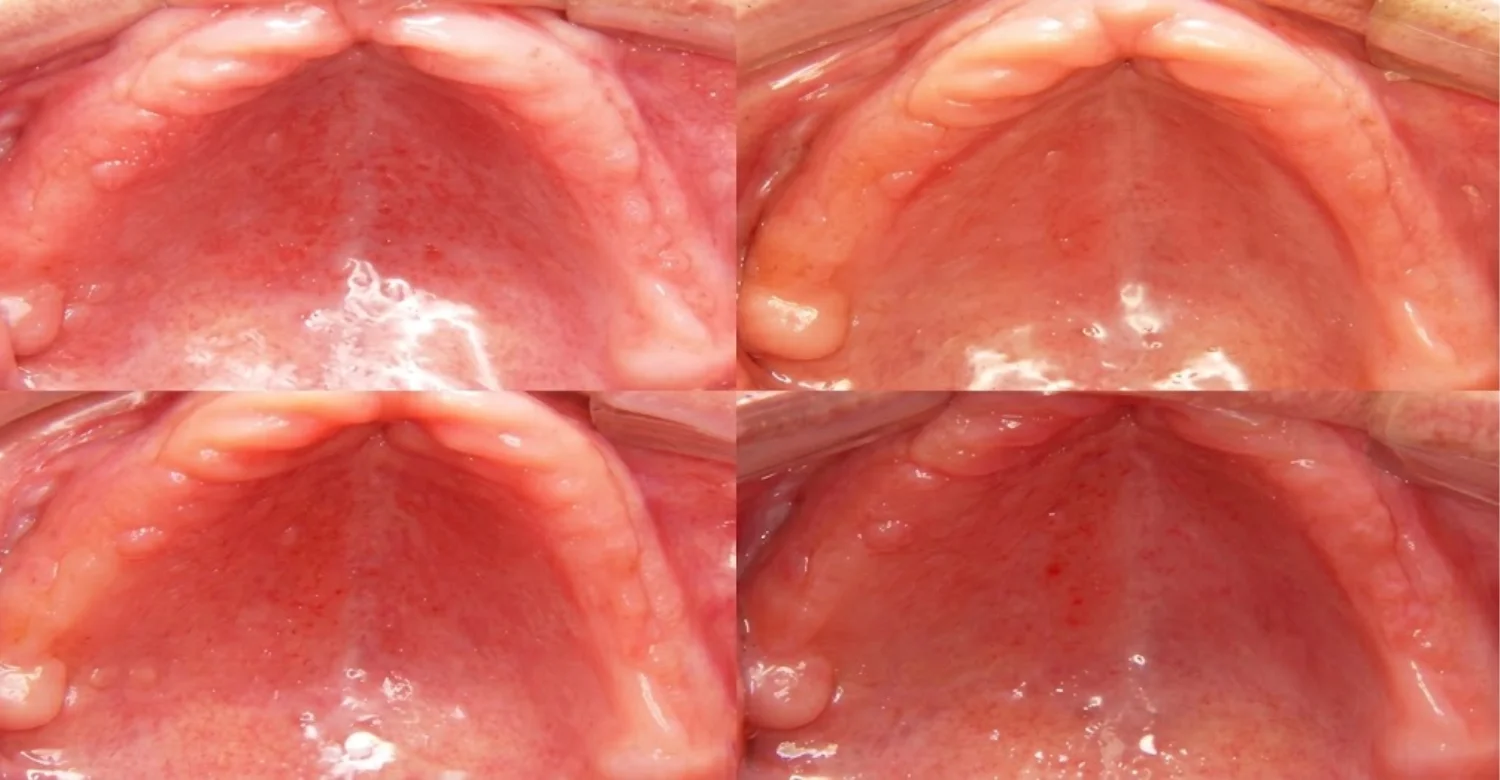
Inflamed palatal tissue may appear swollen, red, or irritated. The surface can become smoother or develop small raised areas. Long-standing inflammation sometimes produces papillary changes across the palate. A poorly fitting denture may press repeatedly on the mucosa. Do not assume every tissue change comes from denture wear. Persistent lumps, ulcers, or unusual patches need professional evaluation. Biofilm and Candida may contribute at the same time. Treatment should target the identified cause rather than appearance alone.
Can Denture Stomatitis Occur Without Pain or Obvious Symptoms?
Yes, some wearers have visible inflammation without pain or burning. This is why routine examinations matter, even when dentures feel comfortable. Dentists may find redness, plaque buildup, or an unstable fit during a check. Asymptomatic inflammation does not automatically need antifungal medication. Improved hygiene and overnight removal are often the first steps. Arrange an examination if redness persists or new changes appear. Silent inflammation is still worth addressing early. Continue cleaning your dentures and mouth every day.
How to Recognize Possible Candida Infection Under Dentures
Candida-associated inflammation may cause redness, burning, or altered taste. However, none of these symptoms is specific to fungal infection. Friction, pressure, and dryness can cause similar changes. A dentist assesses the mucosa, denture biofilm, hygiene routine, and medical history. A swab may help when the diagnosis is uncertain or treatment fails. Avoid using leftover antifungal medication without professional guidance. Denture Stomatitis linked to Candida usually responds best when the denture is treated too. Early assessment also lowers the risk of recurrence.
What Causes Denture Stomatitis?
The condition usually develops through several interacting factors. Microbial biofilm, prolonged wear, and mechanical irritation are the most common. Candida frequently contributes, but inflammation can occur without it playing the main role. Reduced saliva, smoking, diabetes, and weakened immunity increase susceptibility. Identifying these factors helps dentists choose suitable treatment. Some medications contribute indirectly by causing dry mouth. Effective management usually combines better hygiene with targeted care.
Candida Infection Under Dentures
Candida is a yeast that naturally lives in many mouths. Under certain conditions, it multiplies within biofilm on the denture's fitting surface. Continuous wear creates a sheltered environment that encourages this growth. Poor hygiene, dry mouth, diabetes, and immune suppression can raise the risk. Detecting Candida does not always prove it caused the inflammation. Treating the yeast without cleaning the denture often leads to recurrence. Denture material and surface irregularities also affect how much biofilm is retained. Dentists interpret test results alongside symptoms and history.
Denture Stomatitis Caused by Poor Oral Hygiene
Inadequate cleaning allows plaque, debris, and microorganisms to accumulate. These deposits irritate tissues and support Candida growth. Dentures need daily cleaning even when they look clean. A contaminated denture keeps exposing sore tissue to biofilm. Brush the appliance with a denture brush and a compatible cleanser. Gently clean the tongue, palate, gums, and any remaining teeth too. Avoid hot water, which could distort some denture materials. A consistent routine at the same time each day makes hygiene easier.
Poorly Fitting Dentures and Palatal Inflammation
A poorly fitting denture can move during speaking, chewing, or swallowing. This movement creates friction, pressure points, and localized inflammation. A loose appliance may also trap food debris against the mucosa. Warning signs include rubbing, instability, and difficulty chewing. A dentist can check stability, borders, bite, and supporting tissues. Avoid modifying the appliance at home with tools or adhesives. Gum and bone changes over time gradually loosen many dentures. Periodic fit checks are therefore especially important.
Wearing Dentures Overnight or for Extended Periods
Continuous wear reduces the time oral tissues spend uncovered. It encourages biofilm buildup and prolongs contact with the mucosa. Continuous wear is strongly linked with this inflammation, especially with poor hygiene. Remove dentures before sleeping unless your clinician advises otherwise. Clean the appliance and store it according to professional instructions. A bedtime routine makes the habit easier to keep. Some people need individual guidance after oral surgery or other procedures. Ask your dentist about a suitable wearing schedule.
Plaque and Biofilm Accumulation on Denture Surfaces
Denture biofilm is a community of microorganisms attached to the appliance. It may include bacteria, Candida, and other oral organisms. Rough surfaces and hardened deposits make thorough cleaning harder. A denture that looks clean may still carry substantial biofilm. Daily brushing and suitable cleaning products help control buildup. Never use abrasive household cleaners or unsuitable disinfectants on dentures. Professional cleaning helps when deposits are hard to remove at home. Smooth, well-maintained surfaces are much easier to keep clean.
Reduced Saliva Production and Dry Mouth
Saliva lubricates tissues and keeps the oral environment balanced. Reduced saliva increases friction and makes denture wear uncomfortable. Medications, dehydration, and medical conditions often contribute to dry mouth. Symptoms include sticky saliva, thirst, and difficulty swallowing dry foods. Sip water regularly unless your fluid intake is restricted. Persistent dryness deserves assessment by your dentist or doctor. Sugar-free gum or saliva substitutes may ease symptoms for some people. Dryness can also make hygiene less effective.
Other Factors That May Contribute to Denture-Related Oral Mucosal Inflammation
Smoking, diabetes, immune suppression, and certain medications may increase susceptibility. Nutritional deficiencies or other oral disorders can also coexist. Poorly controlled blood glucose may encourage fungal growth. Allergic reactions to denture materials are less common but possible. Share your full medical history and medication list with your dentist. This information supports safer, more individualized treatment. Persistent inflammation despite good care should prompt a fresh assessment. Even small details, such as a new supplement, may be relevant.
Who Is at Risk of Developing Denture Stomatitis?
Anyone who wears removable dentures can develop this inflammation. Risk depends on hygiene, denture fit, wearing habits, and general health. Some groups need closer monitoring because of medical or lifestyle factors. Understanding your personal risk helps guide practical prevention. Denture Stomatitis is more likely when several risk factors occur together. Consistent cleaning and regular assessments matter for every age group.
People Who Wear Complete or Partial Removable Dentures
Complete and partial dentures both create surfaces where microorganisms collect. The palate beneath an upper complete denture is the most commonly affected area. Partial dentures may trap debris around remaining teeth, clasps, and gums. Careful cleaning protects natural teeth and soft tissues alike. Regular professional reviews help check fit, stability, and tissue health. Clasps and connectors need special attention during cleaning. Well-maintained appliances support both comfort and long-term oral health.
People With Diabetes or Weakened Immune Function
Diabetes and immune suppression influence how easily oral infections develop. Poorly controlled blood glucose may favor Candida overgrowth. Inflammation may also last longer when health factors remain unmanaged. However, red tissue under a denture does not automatically indicate diabetes. People receiving chemotherapy or immunosuppressive treatment should report oral changes early. Good blood glucose control can support healthier oral tissues. Dentists can coordinate with doctors when systemic conditions affect treatment.
Denture Wearers Taking Antibiotics or Certain Medications
Antibiotics can disturb the normal microbial balance in the mouth. This may encourage Candida overgrowth in susceptible people. Antihistamines, some antidepressants, and other medicines may cause dry mouth. Inhaled steroids can also affect the mouth if it is not rinsed afterward. Never stop prescribed medication without speaking to your clinician. Tell your dentist about every medicine and supplement you use. Your pharmacist can explain which medicines may affect saliva. Taking antibiotics does not mean infection will inevitably follow.
Smokers and People With Persistent Dry Mouth
Smoking irritates oral tissues and is linked with poorer oral health. Dry mouth increases friction and makes dentures less comfortable. These factors are harder to manage when cleaning is inadequate. Consider smoking cessation support and discuss persistent dryness with a professional. Regular hydration may help when no fluid restriction applies. Stopping smoking brings wider health benefits beyond the mouth. Your dental team can point you toward local cessation support.
How Age, Denture Material, and Daily Habits May Affect Risk
Age may coincide with changes in saliva, medication use, and general health. However, older age alone does not establish any diagnosis. Rough surfaces and damaged materials retain biofilm more easily. Older dentures may also lose their fit as gums and bone change. Daily cleaning and overnight removal support healthier tissues. Small daily habits often matter more than any single product. Choose cleaning products compatible with your denture material. Your dentist can advise whether repair or relining is appropriate.
What We Notice Clinically
In practice, this inflammation often appears as redness across the upper palate. Dentists assess it together with fit, hygiene, symptoms, and medical history. Some patients have extensive redness but little discomfort. Others feel burning despite subtle visible changes. The goal is to identify contributing factors before choosing treatment. This mismatch between appearance and symptoms is common. A careful history often reveals clues the examination alone would miss.
Redness That Follows the Shape of the Denture
Inflammation may closely match the area the denture covers. This pattern suggests a link between the appliance and the tissue. Denture Stomatitis often produces this outline where biofilm contacts the mucosa. Pressure or friction can create a similar pattern. A matching outline is a useful clue, not definitive proof. Further assessment decides which cause is most likely. Dentists examine the fitting surface and supporting tissues carefully. Sometimes more than one cause is present at once.
Why Some Patients Have Inflammation Without Significant Pain
Inflammation does not always produce noticeable discomfort. Symptom severity varies with individual sensitivity and the underlying cause. Pain is therefore an unreliable measure of tissue health. Painless inflammation can still involve heavy biofilm or an unstable fit. Avoid delaying assessment because eating still feels comfortable. Regular examinations can identify problems before they cause real discomfort. A comfortable denture is a good sign, but not a guarantee.
Distinguishing Candida-Associated Inflammation From Mechanical Irritation
These two causes can look very similar. Localized sore spots near denture edges often point toward pressure. Diffuse redness across the whole fitting area may suggest biofilm involvement. Microbiological testing can help when the diagnosis remains uncertain. Antifungal medication will not correct an unstable denture. Treatment should reflect the actual clinical findings. Sometimes both causes are present at the same time. In that case, each one needs its own treatment.
Why Symptoms May Return After Antifungal Treatment
Symptoms return when contributing factors remain unresolved. A denture may still carry biofilm after the tissues improve. Poor cleaning, continuous wear, and poor fit can all restart inflammation. Antifungals do not correct mechanical irritation. Repeated courses without reassessment can delay finding the real problem. Treating the denture matters as much as treating the mouth. Dry mouth and medical conditions may also play a part. A dentist can review your response and denture hygiene.
Common Misconceptions About Denture Stomatitis
Several common beliefs can delay effective care. Some people think dentures need cleaning only when they look dirty. Others believe antifungal medication alone guarantees recovery. Some assume dentures must be worn all night to keep their shape. In reality, biofilm builds invisibly, and most dentures should be stored overnight. Another misconception is that household bleach is a safe denture cleaner. Follow professional guidance for safe cleaning and disinfection.
Does Every Red Palate Under a Denture Mean a Fungal Infection?
No, redness can have several causes. Candida, friction, pressure, and allergic reactions can all produce it. A dentist evaluates the appearance alongside your clinical history. Assuming a fungal cause can lead to unnecessary medication. It can also delay correcting a poorly fitting appliance. Testing may help when findings are unclear. An accurate diagnosis leads to more effective, lasting treatment.
Can Cleaning the Denture Alone Resolve Persistent Inflammation?
Better cleaning helps when biofilm drives the inflammation. However, it may not solve pressure points, infection, or dry mouth. A dentist can check whether adjustment or medication is also needed. If redness persists after several weeks of good hygiene, reassessment is sensible. Cleaning remains the foundation of almost every successful plan.
Clinical Note: Dr. Rifat Alsaman's Perspective
A careful assessment considers both the oral tissues and the denture. Treating visible redness without exploring its causes may give incomplete results. Dr. Rifat Alsaman encourages patients to bring their dentures to every relevant appointment. Honest discussion about cleaning and nighttime wear is also valuable. This allows the appliance and the tissues to be examined side by side. Such details often explain why symptoms persist or return.
Dr. Rifat Alsaman, on Identifying Contributing Factors Before Treatment
Dr. Rifat Alsaman emphasizes identifying possible causes before recommending treatment. The examination considers tissue appearance, denture stability, cleaning habits, and medical history. The condition should not automatically be treated as a confirmed fungal infection. This approach avoids unnecessary prescriptions and missed mechanical problems. It also helps patients understand why each recommendation is made. Clear explanations tend to improve long-term adherence to hygiene routines.
Why Denture Fit, Oral Hygiene, and the Condition of the Underlying Tissue Should Be Evaluated Together
These factors influence one another constantly. A loose denture traps debris and irritates the mucosa. Irritated tissue then becomes more vulnerable to microbial overgrowth. Inflammation may persist when only one factor receives attention. A combined assessment uncovers problems needing separate interventions. The treatment plan should reflect each person's individual findings. Reviewing progress later confirms that every factor was addressed.
How Is Denture Stomatitis Diagnosed?
Diagnosis begins with examining the oral tissues and the removable denture. Dentists look for redness, swelling, tenderness, and pressure injuries. They also ask about nighttime wear, cleaning routines, dry mouth, and medications. Microbiological testing is not needed for every patient. Persistent or atypical lesions may require further investigation. Denture Stomatitis is usually identified through clinical assessment rather than appearance alone. The aim is to separate it from conditions needing different treatment.
What Happens During a Dental Examination?
The dentist first asks about your symptoms and any change in denture comfort. They then examine both your mouth and the appliance. They check for redness, deposits, and possible pressure points. They may watch how the denture sits while speaking and chewing. Bring your dentures and an up-to-date medication list. Gentle pressure on the tissues can reveal areas of tenderness. Most examinations are quick, painless, and very informative.
Examining the Palate, Gums, Tongue, and Denture-Fitting Surfaces
The examination covers every tissue that contacts the denture. The tongue, gums, cheeks, and remaining teeth are inspected too. The fitting surface is checked for deposits, roughness, and cracks. Its borders and stability can reveal sources of irritation. Persistent ulcers or unexplained lumps deserve closer assessment. Cracks or worn areas may harbor biofilm that home cleaning cannot reach. Further investigation depends on how long changes have been present.
When Is a Candida Swab or Microbiological Test Necessary?
A swab is not routinely needed for straightforward cases. Dentists consider testing when the diagnosis is uncertain or treatment fails. Samples can come from both the tissues and the denture surface. Results must be interpreted alongside examination findings. Candida can live in the mouth without causing disease. Your dentist decides whether sampling is appropriate. Avoid interpreting a positive result without professional guidance.
How Dentists Assess Denture Fit, Wear, and Surface Condition
Dentists check whether the appliance sits securely and spreads pressure evenly. They look for rough areas, cracks, and accumulated deposits. They may ask how old the denture is and when it was last relined. Recommendations can include cleaning, adjustment, relining, repair, or replacement. Do not reshape the denture yourself. Surface irregularities can make daily cleaning less effective. Improper home modifications can make irritation worse.
Which Conditions Can Look Similar to Denture Stomatitis?
Several oral conditions produce redness, soreness, or tissue changes. Oral lichen planus and aphthous ulcers can also cause confusing symptoms. The dentist evaluates each lesion's location, appearance, and duration. Persistent unexplained changes may need specialist assessment or biopsy. Avoid assuming that every symptom comes from the denture. An accurate diagnosis prevents inappropriate treatment and unnecessary worry.
Oral Thrush and Other Forms of Oral Candidiasis
Oral thrush can cause white patches, redness, burning, or altered taste. Other forms of candidiasis produce mainly red, sore tissue. Thrush may also affect the tongue, cheeks, or throat. Not every inflamed area represents candidiasis. Testing may help in selected or recurring cases. Angular cheilitis, with sore cracks at the mouth corners, sometimes occurs alongside it. Accurate identification ensures medication is used only when helpful.
Traumatic Ulcers and Pressure-Related Inflammation
A denture that rubs repeatedly can cause localized ulceration. Sharp edges, instability, and uneven pressure may contribute. These ulcers often heal quickly once pressure is removed. A dentist can locate pressure points and adjust the appliance. An ulcer that fails to heal within a few weeks needs closer examination. Pressure-indicating materials show exactly where the denture presses too hard. Persistent ulcers need reassessment rather than indefinite observation.
Persistent Red or White Oral Lesions That Need Further Investigation
Persistent red or white patches may have causes beyond denture irritation. Changes that bleed, ulcerate, enlarge, or fail to heal deserve prompt evaluation. Smoking and heavy alcohol use increase the importance of review. A biopsy is a routine way to confirm what a lesion is. Early assessment ensures significant conditions are not overlooked.
Note : All images used are for editorial and illustrative purposes only and may not originate from the original news provider or associated company.
Denture Stomatitis Treatment Options for Denture Wearers
Treatment depends on the cause, severity, and condition of the denture. Options include improved hygiene, professional cleaning, antifungal medication, and appliance adjustments. Attention to both tissues and the denture surface is usually essential. Follow-up visits confirm whether inflammation is resolving. Treating only the tissues may leave contributing factors unresolved. The clinician may also investigate dry mouth, diabetes, or medication effects.
Professional Denture Cleaning and Oral Hygiene Improvement
Professional cleaning removes deposits that home cleaning cannot fully eliminate. Dentists may also spot surface damage that encourages biofilm. Patients receive instructions for brushing, soaking, and overnight storage. Avoid abrasive cleaners, boiling water, and unapproved disinfectants. Persistent redness requires reassessment for additional causes. Your dentist may demonstrate the most effective brushing technique. Regular cleaning reduces microbial buildup but cannot guarantee prevention.
Antifungal Treatment for Denture-Associated Stomatitis
Antifungal medication may help when Candida contributes to inflammation. The choice depends on findings, medical history, and possible drug interactions. Denture Stomatitis may recur if the denture stays heavily contaminated. Clinicians therefore combine medication with improved appliance hygiene. Antifungals do not correct poor fit or pressure injuries. Some regimens also include disinfecting the denture during treatment. Follow the prescribed dose and duration carefully.
When Dentists May Recommend Topical Antifungal Medication
Topical antifungals may suit localized oral Candida infections. They act within the mouth and are chosen to fit individual circumstances. Some are applied to tissues, while others are held in the mouth. Certain products are also applied to the denture fitting surface. Do not share medication or reuse leftover prescriptions. The clinician considers allergies, swallowing ability, and other medicines. Persistent symptoms require reassessment rather than repeating the same treatment.
When Systemic Antifungal Medication May Be Considered
Systemic antifungals are taken by mouth or through another systemic route. Clinicians consider them when infection is extensive, severe, or hard to manage locally. Many cases respond to local treatment instead. Systemic medicines may interact with other prescriptions or affect liver function. Never start them without professional advice. People taking several regular medicines need particular care. Follow-up may be needed to monitor response and side effects.
Adjusting Poorly Fitting Dentures to Reduce Tissue Irritation
A dentist can identify pressure points, unstable borders, and uneven contact. Careful adjustments reduce friction and improve comfort. Inflammation can persist when mechanical irritation continues despite medication. Temporary soft liners are sometimes used while tissues heal. Home modifications can damage the denture. Adjustments should always be done by a qualified dental professional. Relining or replacement may follow if adjustments are insufficient.
When Denture Relining, Repair, or Replacement May Be Necessary
Relining reshapes the fitting surface to improve tissue contact. Repair addresses cracks, broken clasps, or other structural problems. Replacement may suit dentures damaged beyond repair or no longer matching oral anatomy. Not every inflamed palate requires a new denture. The decision balances comfort, function, durability, and cost. A dentist evaluates stability, material condition, and bite. Follow-up confirms whether the chosen solution improves tissue health.
Treating Contributing Factors Such as Dry Mouth or Uncontrolled Diabetes
Addressing health factors supports recovery and reduces recurrence. Your doctor or pharmacist can review dry-mouth causes. Improving diabetes control may also help tissue healing. However, inflammation alone does not prove a systemic disease. Never stop prescribed medicines without medical advice. An individualized approach coordinates oral care with general health. Recommendations depend on clinical findings and personal circumstances.
How Long Does Denture Stomatitis Treatment Usually Take?
Duration varies with the cause, severity, and response to care. Mild irritation may improve within a couple of weeks after correcting hygiene or fit. Candida-related cases may need a prescribed antifungal course. Some patients need extra visits for adjustments or investigation. Attend all recommended reviews to confirm progress. Persistent symptoms should not be ignored simply because treatment has started. Patience and consistency usually bring the best results.
Why Treating Both the Oral Tissues and Denture Surface Matters
The tissues and the denture influence each other's microbial environment. A contaminated appliance can reinfect healing tissue repeatedly. Inflammation returns when medication helps but denture hygiene stays poor. A complete plan targets every identified cause. Think of the mouth and denture as one system. Mechanical pressure may also keep irritating the mucosa. Regular monitoring shows whether further intervention is needed.
How Can You Get Relief From Denture Stomatitis?
Relief begins with reducing irritation and keeping good hygiene. Remove the denture when advised, especially during sleep. Choose comfortable foods and avoid anything that worsens soreness. Do not apply harsh chemicals or unprescribed medication to inflamed tissue. Seek advice if symptoms persist or keep returning. Denture Stomatitis often eases once friction and biofilm exposure are reduced. Keeping well hydrated can also ease dryness and discomfort.
Safe Ways to Reduce Oral Soreness and Irritation
Use a soft toothbrush and avoid scrubbing sensitive areas. Remove the appliance when advised and arrange an assessment if it rubs. Drink water regularly unless your intake is restricted. Avoid smoking and very hot, spicy, or acidic foods. Ask before applying gels, as some contain irritating ingredients. Gentle hygiene keeps irritated tissues clean without further damage. Soft, mild foods may also be more comfortable during recovery.
Should You Remove Your Dentures When Your Mouth Is Inflamed?
Removal reduces pressure and friction against inflamed tissues. Your dentist can advise how long removal is appropriate. However, removal alone may not resolve infection or poor hygiene. Clean the appliance properly before wearing it again. If the denture is essential for eating, discuss temporary alternatives with your team. Short breaks during the day can also give sore tissues relief. Store the appliance safely using a method suited to its material.
Why Removing Dentures at Night May Help
Nighttime removal gives covered tissues several hours without contact. It also reduces prolonged exposure to accumulated biofilm. Overnight removal is part of most recommended care routines. Store the clean denture in an appropriate container. Ask whether your appliance should be kept moist or dry. Clean the denture before storing it according to manufacturer guidance. Some clinical situations require different instructions.
What Foods and Drinks May Be More Comfortable During Recovery?
Soft foods reduce chewing discomfort while tissues recover. Examples include oatmeal, scrambled eggs, yogurt, soups, and mashed potatoes. Acidic, spicy, or very hot foods may feel uncomfortable. Drink enough water and limit sugary drinks. Persistent difficulty eating warrants a dental assessment. Soft fish, ripe fruit, and well-cooked vegetables are also easy options. Avoid foods needing heavy chewing if the denture feels unstable.
Which Home Remedies Should You Avoid?
Avoid applying alcohol, concentrated peroxide, bleach, or harsh chemicals to oral tissues. Essential oils and undiluted vinegar can also irritate sensitive mucosa. Household cleaners may permanently damage denture materials. Do not use leftover antibiotics or antifungals without guidance. Unverified remedies can delay a proper diagnosis. Incorrect medication may cause side effects or fail to treat the real problem. A clinician can recommend products suited to your appliance.
Can Saltwater Rinses or Antiseptic Mouthwash Help With Symptoms?
A mild saltwater rinse may bring temporary comfort. However, it does not reliably eliminate Candida or fix a poor fit. Antiseptic mouthwashes differ in ingredients, benefits, and side effects. Alcohol-based rinses can increase dryness. Never use mouthwash as a substitute for cleaning your denture. Ask your dentist before introducing any medicated rinse. Seek assessment if inflammation continues despite these measures.
Common Side Effects of Antifungal Medications
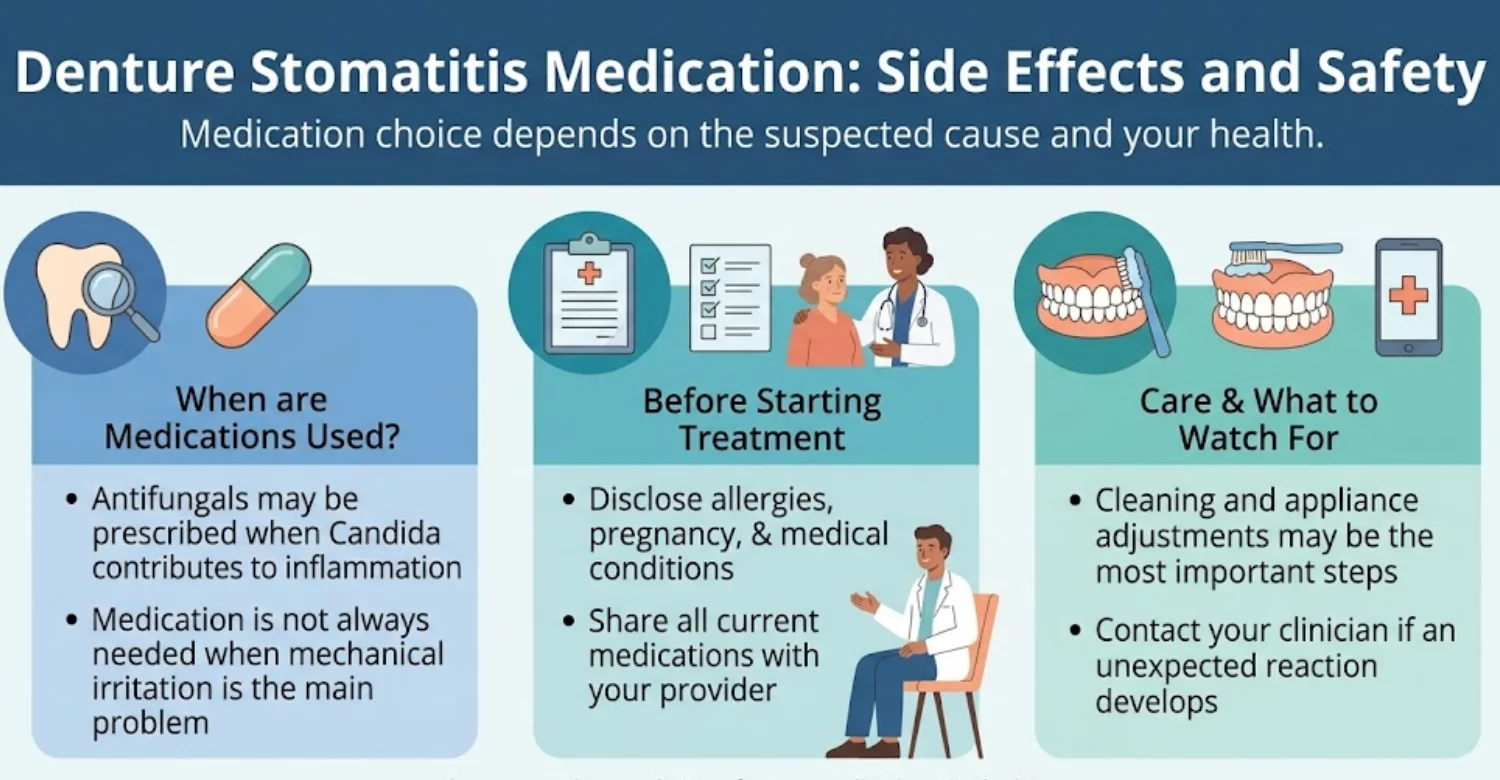
Side effects depend on the specific medicine and formulation. Topical preparations may cause local irritation, unpleasant taste, or stomach upset. Systemic antifungals can cause nausea or other digestive symptoms. Some may affect liver function. Most side effects are mild and settle after the course ends. Read the patient information leaflet carefully. Seek medical advice about any severe or unexpected reaction.
Potential Interactions Between Antifungals and Other Medicines
Certain antifungals change how the body processes other medicines. Blood thinners, some heart medicines, and certain cholesterol drugs need attention. Even some topical antifungals can be absorbed enough to matter. Tell your clinician about supplements and nonprescription products. A pharmacist can check for potential interactions. Do not stop or change prescribed medicines on your own. The safest option depends on your full medication list.
Why You Should Not Use Leftover Antifungal Medication Without Advice
Leftover medication may not suit your current symptoms or diagnosis. It may have targeted a different infection entirely. Old medicine may also be expired or stored incorrectly. Incorrect use can cause side effects or delay assessment. Seek professional advice before starting another course. Some medicines have important interactions or specific administration requirements. Recurrent symptoms may need diagnostic reassessment instead.
Can Repeated Antifungal Treatment Contribute to Resistance?
Repeated or inappropriate use can contribute to resistance in some circumstances. The risk depends on the organism, medication, and pattern of use. Persistent symptoms do not automatically mean resistance has developed. Poor hygiene, continuous wear, or misdiagnosis can also explain recurrence. Laboratory tests can identify the Candida species when needed. Use medication exactly as prescribed. Avoid repeating courses without professional reassessment.
Why Denture Disinfectants Must Be Used According to Product Instructions
Disinfectants vary in ingredients, strength, and material compatibility. Incorrect use may damage appliances or expose users to harmful chemicals. Some products are unsuitable for metal components. Follow soaking times, dilution, and rinsing instructions exactly. Never mix cleaning chemicals. Keep cleaning products away from children and confused adults. Ask your dentist which cleanser suits your denture.
When to Stop a Product and Seek Medical Advice
Stop using a nonessential oral-care product if it causes a new reaction. Seek advice if irritation, swelling, or discomfort develops. Note when you started the product and when symptoms appeared. Seek urgent care for breathing difficulty or rapidly spreading swelling. Keep the packaging to help clinicians identify ingredients. A new product may not be the underlying cause. Assessment therefore remains important even after stopping it.
How Can You Prevent Oral Yeast Infections Under Dentures?
Prevention focuses on reducing biofilm, protecting tissues, and managing risk factors. Daily cleaning and regular examinations are essential. Clean your mouth even if no natural teeth remain. Consistent routines reduce risk, though none can guarantee complete protection. Denture Stomatitis may recur when appliances stay contaminated or are worn continuously. Small, steady habits usually make the biggest difference.
Daily Denture Hygiene Practices to Reduce Stomatitis Recurrence
Clean removable dentures every day with a suitable brush and cleanser. Focus on fitting surfaces where biofilm tends to accumulate. Clean your mouth before reinserting the appliance each morning. Clean the storage container too, since it can harbor microorganisms. Inspect the denture regularly for cracks or roughness. Gently brush remaining teeth, gums, tongue, and palate as well. Regular care helps identify problems before they become persistent.
How to Clean and Disinfect Removable Dentures Safely
Rinse dentures after meals to remove loose debris. Brush all surfaces gently with a denture-compatible product. Work over a towel or basin of water to prevent breakage. Avoid hot water, abrasive toothpaste, and household chemicals. Follow the manufacturer's soaking and rinsing instructions. Rinse the appliance thoroughly when product instructions require it. Ask your dentist about methods suited to your specific denture.
Why You Should Clean Your Mouth Even When You Have No Natural Teeth
Mouths without teeth still contain mucosa, a tongue, and microorganisms. These surfaces collect debris and need regular cleaning. Removing dentures gives access to otherwise hidden areas. Gently brush the tongue, palate, and gums with a soft toothbrush. A damp cloth suits very sensitive tissues. Regular cleaning supports comfort and overall oral health. Contact your dentist if persistent redness develops.
Choosing Appropriate Denture Cleansers for Your Denture Material
Denture materials respond differently to chemicals and cleaning methods. Acrylic dentures and those with metal parts may need different products. The wrong cleanser can scratch surfaces or leave residues. Scratches then trap biofilm more easily. Ask your dentist for material-specific recommendations. Read product labels carefully and avoid combining cleaning agents. Advice can also account for any existing damage.
How Often Should Dentures Be Professionally Checked?
Review frequency depends on oral health, stability, and individual risk. Many people benefit from at least an annual review, even without natural teeth. Routine checks detect unstable fit or surface damage early. Your dentist may suggest more frequent visits when inflammation persists. New pain or ulcers warrant an earlier appointment. Keep your dentures clean between visits. Professional assessment complements daily home care rather than replacing it.
The Importance of Removing Dentures Overnight
Overnight removal gives tissues a regular break from coverage. It shortens the time microorganisms stay trapped against the mucosa. Continuous wear is one of the strongest known risk factors. Store the denture safely away from pets and small children. Ask your dentist if you are unsure about nighttime removal. Follow professional instructions about moisture and storage containers. Certain clinical situations may require individualized advice.
Managing Dry Mouth, Smoking, and Other Contributing Factors
Dry mouth increases friction and makes dentures uncomfortable. A clinician can review medications and suggest dry-mouth management. Drink water regularly unless medically restricted. Limiting alcohol and caffeine may reduce dryness. Consider smoking cessation support and maintain care for chronic conditions. Never stop prescribed medication on your own. Discuss persistent dryness or recurrent inflammation with your healthcare team.
How to Reduce the Risk of Denture Stomatitis Returning
Long-term prevention combines daily cleaning, good fit, and overnight removal. Follow your treatment plan even after symptoms improve. Replace old toothbrushes and storage containers periodically. Seek reassessment if redness returns or medication keeps becoming necessary. No single measure guarantees complete prevention. Regular dental reviews help catch emerging problems early. Consistent hygiene and professional guidance offer the best practical approach.
What Are the Possible Complications of Untreated Denture Stomatitis?
Untreated inflammation may persist and cause ongoing discomfort. Repeated episodes occur when contributing factors remain unresolved. Prolonged irritation can accompany papillary changes on the palate. Other unexplained lesions may need investigation to exclude unrelated conditions. Seek assessment when symptoms persist, worsen, or keep returning. Early evaluation reduces avoidable discomfort.
Persistent Inflammation and Ongoing Oral Discomfort
Ongoing inflammation makes eating, speaking, and wearing dentures uncomfortable. Some people begin avoiding social meals. Soreness can also reduce appetite and affect nutrition. A dentist can assess the tissue and appliance together. Persistent discomfort deserves investigation rather than indefinite self-treatment. Treatment may involve cleaning, medication, or adjustments based on findings. Seek reassessment if symptoms do not improve as expected.
Recurrent Candida-Associated Inflammation
Candida-associated inflammation returns when contributing conditions remain present. These include contaminated dentures, continuous wear, dry mouth, or poorly controlled diabetes. Recurrence does not automatically mean the medication failed. A clinician can review adherence, hygiene, fit, and test results. Addressing several factors supports longer-term control. Disinfecting or replacing the storage container is sometimes overlooked. Avoid repeating medication without professional advice.
Papillary Changes in the Inflamed Palatal Tissue
Persistent inflammation may produce small raised changes on the palate. This appearance is often called inflammatory papillary hyperplasia. Mild cases may improve once irritation and biofilm are controlled. More extensive changes may need further treatment. Never attempt to remove raised tissue at home. A dentist should assess denture fit alongside the tissue changes. Professional assessment determines whether further intervention is needed.
When Persistent Oral Lesions Require Further Assessment
Lesions that fail to heal need careful examination. Persistent patches, ulcers, lumps, or bleeding deserve attention. Denture Stomatitis should not explain every lesion beneath an appliance. Lesions lasting longer than about three weeks generally warrant review. Your clinician may recommend referral or biopsy when indicated. Early evaluation separates routine irritation from more serious disease. Do not delay because the area lies beneath a denture.
.jpg)
.jpg)
.jpg)
.jpg)
When Should You See a Dentist or Doctor?
Seek dental advice when redness, soreness, or irritation persists beneath a denture. Recurrent symptoms also warrant assessment. Prompt evaluation matters for ulcers, bleeding, or unusual tissue changes. Breathing difficulty or rapidly spreading swelling requires emergency care. People with weakened immunity may need earlier evaluation. When in doubt, contacting your dental team early is always reasonable.
Symptoms That Need a Routine Dental Appointment
Book an appointment for persistent redness, mild burning, or recurring irritation. A change in denture fit also deserves evaluation. Bring your denture and medication list. Explain whether symptoms ease after removing the appliance. Continue your cleaning routine while waiting. Denture Stomatitis may cause visible inflammation without much pain. Avoid starting leftover prescription medication while you wait.
When Persistent Redness, Ulcers, or Bleeding Need Prompt Assessment
Persistent redness or unexplained ulceration should never be ignored. Bleeding, enlarging lesions, and unusual patches need timely examination. Arrange prompt care rather than repeatedly treating symptoms yourself. A clinician can judge whether referral or biopsy is appropriate. Do not wait for pain before seeking help. Seek earlier advice if you have weakened immunity. Prompt action often means simpler treatment and greater peace of mind.
When Pain, Swelling, or Difficulty Eating Requires Urgent Attention
Significant pain or swelling needs prompt assessment. Difficulty eating may result from inflammation, ulceration, or an unstable appliance. Contact a dentist promptly when symptoms interfere with eating or drinking. Avoid forcing a painful denture into place. Seek urgent medical help if swelling spreads. Follow professional advice about appliance use until the cause is assessed. Staying hydrated remains important even when eating is difficult.
When Fever, Spreading Swelling, or Difficulty Swallowing or Breathing Requires Urgent Medical Care
Fever with oral swelling may indicate an infection needing urgent assessment. Spreading facial or neck swelling also requires prompt attention. Denture inflammation alone rarely explains severe whole-body symptoms. Difficulty breathing requires emergency medical assistance. Do not delay emergency care while trying home remedies. Another infection or medical condition may be responsible. In an emergency, call local emergency services without delay.
Why People With Weakened Immunity Should Seek Advice Earlier
Weakened immunity increases susceptibility to infection and slows recovery. Examples include chemotherapy, immunosuppressive therapy, and organ transplants. Contact your healthcare team about any new oral changes. Never adjust immunosuppressive medication on your own. Early evaluation guides appropriate testing and treatment. The clinician considers your medical history and symptom severity. Individual recommendations depend on the underlying condition.
How Much Does Denture Stomatitis Treatment Cost in ?
US
UK
Turkey
The cost of treating denture stomatitis depends on the severity of inflammation, the condition of the existing denture, and the treatment required. Mild cases may need an examination, hygiene advice, and antifungal medication, while more persistent cases may require denture adjustment, relining, or replacement. The tables below provide approximate 2026 prices for general budgeting. Actual costs vary by clinic, location, and individual treatment needs.
Average Denture Stomatitis Treatment Cost in the United States
In the United States, the total cost depends on consultation fees, medication, and whether denture adjustments or relining are necessary. Insurance coverage may reduce out-of-pocket expenses.
Treatment or Service | Estimated Cost (USD) |
Comprehensive dental examination | 75–200 |
Periodic dental examination | 50–150 |
Soft denture reline | 150–500 per arch |
Hard chairside denture reline | 280–750 per arch |
Laboratory denture reline | 350–900 per arch |
Professional denture cleaning | Varies by clinic |
Antifungal medication | Depends on the medication and pharmacy |
Estimated Total Treatment Costs in the United States
Treatment Scenario | Estimated Total Cost (USD) |
Examination and medication for a simple case | 100–350 |
Examination, medication, and denture reline | 400–1,100+ |
Denture replacement | Depends on denture type and materials |
These totals are planning estimates rather than standardized national averages. The final price may be higher when additional tests, specialist consultations, or more extensive denture repairs are required.
Average Denture Stomatitis Treatment Cost in the United Kingdom
In the United Kingdom, treatment costs depend on whether patients receive NHS or private dental care. The NHS figures below apply specifically to England; Scotland, Wales, and Northern Ireland have different charging arrangements.
NHS Dental Treatment and Private Consultation Costs
Consultation or Treatment | Estimated Cost |
NHS Band 1 course of treatment | $27.90 |
NHS Band 2 course of treatment | $76.60 |
NHS Band 3 course of treatment | $332.10 |
Private dental consultation | Approximately $23–$180 |
Reported private consultation median | Approximately $65 |
NHS prescription charge in England | $9.90 per item |
The NHS dental charges above took effect on 1 April 2026. Band 1 covers examinations, diagnosis, and advice; Band 2 includes additional treatments such as certain extractions; Band 3 includes more complex treatment, including dentures. Eligibility for free NHS treatment or prescription charges may reduce costs.
Private Denture Adjustment, Cleaning, and Medication Costs
Treatment or Service | Estimated Cost |
Minor denture adjustment | Varies by practice |
Denture reline | Request a clinic-specific quote |
Professional denture cleaning | Varies by practice |
NHS-prescribed medication in England | $9.90 per item, unless exempt |
Private medication | Depends on the drug and pharmacy |
The total cost of denture stomatitis treatment may be relatively low when examination and hygiene advice are sufficient. However, private denture relining, replacement, or specialist treatment will increase the overall expense. Confirm whether the quoted NHS band or private fee covers all planned procedures.
Average Denture Stomatitis Treatment Cost in Turkey
Turkey often offers lower dental treatment prices than the US and UK, although fees vary between clinics and hospitals. International patients should also account for travel, accommodation, and follow-up care.
Dental Consultation and Denture Assessment Costs
Consultation or Service | Estimated Cost (USD) |
Initial consultation at participating clinics | May be free |
Hospital consultation with a treatment plan | 110–280 |
X-rays or additional diagnostic tests | Depends on the tests required |
Denture assessment | Confirm whether it is included in the consultation |
A free initial consultation may not include a complete clinical examination, diagnostic imaging, or medication. Patients should confirm the scope of the appointment before booking.
Denture Adjustment, Professional Cleaning, Medication, and Replacement Costs
Treatment or Service | Estimated Cost (USD) |
Denture adjustment | Request a written quote |
Denture reline | Request a written quote |
Professional denture cleaning | Varies by clinic |
Basic removable denture | Approximately 350–630 |
Complete denture for one arch | Approximately 500–1,500 |
Antifungal medication | Depends on the medication and pharmacy |
Denture replacement may be unnecessary if the existing denture fits adequately and can be maintained. A dentist should determine whether an adjustment, reline, repair, or replacement is clinically appropriate.
What Is the Average Total Cost of Treating Denture Stomatitis in Each Country?
The total cost depends on whether treatment requires only an examination and medication or additional denture work. The following comparison summarizes the approximate budgets described above.
Country | Simple Treatment | Treatment Including Denture Relining or Replacement |
United States | 100–350 | Approximately 400–1,100+ with relining; replacement costs extra |
United Kingdom | NHS Band 1 plus one NHS prescription item: $37.80, if applicable charges are payable | Private denture work costs extra; NHS charges depend on the applicable treatment band |
Turkey | Consultation may be free or cost approximately 110–280, before medication and other services | Add the quoted reline or replacement cost; complete dentures may cost approximately 500–1,500 per arch |
Important: These figures are indicative planning estimates, not guaranteed package prices or confirmed national averages. They are not directly equivalent because NHS treatment charges, private clinic fees, and international treatment packages cover different services. Travel, accommodation, additional investigations, and complications may increase the total.
What Factors Affect the Final Treatment Price?
Several clinical and practical factors determine how much a patient pays for denture stomatitis treatment.
Cost Factor | How It Affects the Price |
Severity of inflammation | Persistent or severe symptoms may require additional investigations or treatment |
Existing denture condition | Damaged or poorly fitting dentures may need repairs, adjustment, or replacement |
Additional diagnostic tests | Swabs, laboratory tests, or specialist assessments may incur extra fees |
Treatment method | Medication and hygiene advice generally cost less than extensive denture work |
Follow-up appointments | Additional visits may be charged separately |
Location and clinic type | Private fees vary by country, city, and provider |
Insurance or NHS eligibility | Coverage and exemptions may reduce the patient's out-of-pocket expenses |
Travel and accommodation | International treatment involves additional practical costs |
Severity of Inflammation and Need for Additional Tests
Mild inflammation may improve with appropriate denture hygiene, cleaning, and treatment of contributing factors. Persistent or unexplained lesions may require additional assessment, microbiological testing, or specialist referral. These investigations can increase the overall cost.
Type and Condition of the Existing Denture
A well-fitting denture in good condition may need only minor adjustments. Older dentures may develop worn or damaged surfaces that retain plaque and microorganisms. Cracks, broken components, and poor retention can require more extensive repairs or replacement.
Whether Denture Repair, Relining, or Replacement Is Required
Denture adjustment is generally less expensive than relining, while laboratory relining and complete replacement may cost considerably more. The appropriate option depends on the fit, stability, structural condition, and age of the denture. Replacing a denture solely because inflammation is present may be unnecessary.
Prescription Costs, Follow-Up Visits, and Additional Dental Procedures
Antifungal medication, when clinically indicated, adds to the treatment cost. Private follow-up appointments, management of other oral conditions, and further denture adjustments may also increase expenses. Patients should ask whether reviews and adjustments are included in the initial estimate.
Does Denture Stomatitis Treatment Cost Less Than Replacing a Denture?
In many cases, yes. When the denture remains serviceable, treatment may involve hygiene improvements, denture cleaning, management of contributing factors, and medication when indicated. These measures can cost substantially less than replacing an entire denture.
Treatment Option | Relative Cost | When It May Be Appropriate |
Denture hygiene and clinical advice | Usually low | Mild cases and prevention |
Antifungal treatment | Usually low to moderate | When a fungal infection is diagnosed or treatment is clinically indicated |
Denture adjustment | Usually low to moderate | Pressure points or minor fit problems |
Denture relining | Moderate | When the fitting surface needs improvement |
Denture replacement | Usually higher | When the denture is damaged, unsuitable, or cannot be adequately repaired |
A dental examination helps determine the most appropriate option and reduces the risk of spending money on unnecessary replacement.
How to Compare Treatment Estimates Across Countries
When comparing prices in the US, UK, and Turkey, patients should evaluate the complete treatment plan rather than relying on advertised consultation or denture prices alone.
What to Compare | Questions to Ask |
Examination and diagnosis | Are the clinical examination and necessary tests included? |
Medication | Is prescribed medication included in the quoted price? |
Denture work | Are adjustment, relining, repair, or replacement costs itemized? |
Follow-up care | How many review appointments are included? |
Additional treatment | What happens if symptoms persist or another condition is identified? |
Travel expenses | Are flights, accommodation, and local transport included? |
Aftercare | How will the clinic support patients after they return home? |
Request a written, itemized estimate before starting treatment. For international dental care, also confirm clinician qualifications and arrangements for follow-up treatment. The most suitable option is one that addresses the underlying cause of denture stomatitis while providing a clear and realistic account of the total expected cost.
Tips for Patients Managing Denture Stomatitis
Practical habits make treatment more effective. Preparing for appointments helps your dentist reach an accurate diagnosis. Daily routines reduce the chance of recurrence. Careful symptom monitoring helps you know when to seek review.
What to Do Before Your Dental Appointment
Note when symptoms began and where irritation occurs. Record whether discomfort improves after removing your dentures. Keep cleaning your dentures and mouth as usual. Avoid starting leftover medication before the visit. Bring your dentures, even if they feel uncomfortable.
What Information to Share About Your Symptoms and Medications
Explain how long you wear your dentures each day. Describe how you clean and store them. Mention recent adjustments, new products, and previous treatments. List every medicine and supplement you take. Share conditions such as diabetes or immune problems.
Questions to Ask About Antifungal Treatment and Denture Fit
Ask whether Candida is likely contributing to your symptoms. Ask how to use any prescribed medicine and for how long. Check whether the denture also needs treatment or disinfection. Ask whether adjustment, relining, or replacement is needed. Confirm when you should return for review.
How to Follow a Daily Denture-Care Routine
Rinse your dentures after each meal. Brush them thoroughly once a day with a suitable cleanser. Clean your tongue, palate, and gums gently. Remove dentures before bed and store them correctly. Clean the storage container regularly as well.
How to Monitor Symptoms Without Self-Diagnosing
Watch for changes in redness, soreness, or denture comfort. Taking dated photos can help you track progress. Avoid guessing the cause or starting new treatments yourself. Report new ulcers, patches, or bleeding promptly. Let your dentist interpret what the changes mean. Keep a simple symptom diary between appointments. Share it with your dentist at your next visit.
When to Arrange a Follow-Up Appointment
Attend any review your dentist recommends. Book sooner if symptoms worsen or fail to improve. Return if redness comes back after treatment. Arrange a visit if your denture becomes loose, cracked, or painful. Regular checks remain important even after recovery.
At Vitrin Clinic: Assessment and Personalized Care for Denture-Related Inflammation
At the Vitrin Clinic, care begins with understanding why inflammation developed. Our team examines both the oral tissues and the denture. Recommendations follow the clinical findings rather than assumptions. Patients receive clear explanations at every stage.
Evaluating Oral Tissues and Existing Dentures Before Recommending Treatment
The assessment covers the palate, gums, tongue, and other oral tissues. The denture is checked for fit, stability, surface damage, and deposits. Hygiene habits and wearing patterns are discussed in detail. This full picture guides safer, more effective treatment.
Identifying Whether Inflammation May Relate to Candida, Denture Fit, or Another Condition
Similar-looking redness can have very different causes. The clinician considers Candida, pressure, friction, and other oral conditions. Swabs or further tests are arranged when findings are unclear. Persistent or unusual lesions may be referred for specialist assessment.
Individualized Treatment Planning Based on Clinical Findings
Each plan reflects the patient's findings and medical history. It may combine hygiene guidance, medication, and denture adjustment. Medication is recommended only when clinically appropriate. Progress is reviewed and the plan adjusted when needed.
When Denture Adjustment or Replacement May Need to Be Considered
Adjustment may help when pressure points or instability irritate the tissues. Relining may restore fit when the gums or bone have changed. Replacement is considered when the denture is damaged or fits poorly. The clinician explains why each option is suggested.
Explaining Treatment Options, Expected Costs, and Follow-Up Requirements
Patients receive a clear explanation of available options. Expected costs are discussed before treatment begins. Follow-up requirements are outlined so patients can plan ahead. Questions are welcomed at every stage.
How Vitrin Clinic Supports Your Treatment Journey
Vitrin Clinic supports patients from first contact through aftercare. The aim is coordinated, transparent, and individualized care. Each step is explained so patients feel informed and comfortable. Patients know what to expect before, during, and after treatment. Questions are welcomed throughout.
Initial Consultation and Review of Your Dental Concerns
The first consultation reviews your symptoms, history, and concerns. Your dentures and current routine are discussed. Relevant medical conditions and medicines are recorded. This review shapes the next steps.
Coordinating Appropriate Clinical Assessment and Diagnostic Tests
The team arranges the examinations your case requires. Swabs or other tests are coordinated when clinically indicated. Specialist referral is organized for unusual or persistent lesions. Results are explained clearly once available.
Explaining Personalized Treatment Recommendations and Alternatives
Recommendations are explained in plain language. Alternatives are discussed, including their benefits and limitations. Patients can ask questions before agreeing to treatment. Decisions are made together.
Coordinating Appointments for International Patients When Appropriate
International patients may receive help scheduling appointments efficiently. Visits can be planned around travel arrangements where clinically appropriate. Follow-up options after returning home are discussed in advance. Treatment timing always follows clinical needs.
Providing Aftercare Guidance and Follow-Up Planning
Patients receive clear instructions on denture cleaning and storage. Medication guidance is provided when treatment is prescribed. Follow-up appointments are planned to confirm healing. Patients are told when to seek an earlier review.
Ready to transform your smile?
Talk to our team and get a personal FREE treatment plan.
Key Takeaways
Effective management depends on accurate assessment and consistent daily care. These points summarize the most important information.
The Main Causes and Symptoms of Denture Stomatitis
Common causes include biofilm, continuous wear, poor fit, and Candida overgrowth. Symptoms include redness, burning, and soreness beneath the denture. Some people have no symptoms at all.
The Importance of Treating Both Oral Inflammation and Denture-Related Factors
Treating only the tissues often leads to recurrence. The denture surface, fit, and wearing habits also need attention. A combined approach gives longer-lasting results.
Safe Relief Measures, Medication Precautions, and Daily Hygiene
Remove dentures overnight and clean them daily. Choose soft foods and avoid harsh home remedies. Use antifungals only as prescribed, never leftover medication.
Warning Signs That Need Professional Evaluation
Seek assessment for persistent redness, ulcers, bleeding, or unusual patches. Fever, spreading swelling, or breathing difficulty needs urgent care.
Treatment Costs and the Importance of Individualized Assessment
Costs vary by country, clinic, and the treatment required. Simple cases usually cost far less than denture replacement. An individualized assessment ensures you pay only for necessary care.
At Vitrin Clinic
At Vitrin Clinic, Our treatment planning begins with a careful evaluation of your denture and oral tissues. Our team identifies contributing factors before recommending any treatment. We explain your options, expected costs, and follow-up clearly. Contact Vitrin Clinic to arrange an individualized assessment.
Reference
FAQs
Dr. Rifat Alsaman has more than 5 years of clinical experience in dentistry and currently serves as the Head of the Medical Team at Vitrin Clinic. He is dedicated to providing exceptional patient care, overseeing treatment planning, and ensuring the highest clinical standards across the team. His expertise, attention to detail, and commitment to continuous professional development have helped countless patients achieve healthier, more confident smiles.


