General Dentistry
August 12, 2026
Ear Pain vs Tooth Pain: How Can You Tell the Difference?
 Dr. Rifat Alsaman
Pain around the ear, jaw, and teeth can be difficult to identify because these areas share sensory nerve pathways. Ear Pain vs Tooth Pain becomes especially confusing when dental inflammation refers pain toward the ear. Dental infections, impacted molars, and temporomandibular disorders can produce ear symptoms without an ear infection.
A useful clue is whether chewing, biting, temperature, or tooth pressure changes the pain. Hearing changes, ear discharge, and fullness may instead suggest an ear-related condition. However, symptoms can overlap, so professional examination may be necessary.
At Vitrin Clinic, dental evaluation can help determine whether pain originates from a tooth, gums, jaw joint, or another oral structure. Persistent pain should not be diagnosed from symptoms alone.
Ear Pain vs Tooth Pain: How to Tell the Difference
Distinguishing between dental and ear pain starts with location, triggers, and accompanying symptoms. Tooth-related pain often changes with chewing, biting, or hot and cold foods. Ear-related pain may occur with hearing changes, discharge, pressure, or recent respiratory symptoms.
Dental causes are particularly important because molars can refer pain toward the ear. Clinical literature identifies dental infections and temporomandibular disorders among common causes of secondary ear pain.
An apparently normal ear does not always mean the pain has no physical cause. Secondary ear pain can originate from structures sharing sensory nerve pathways with the ear. A dental examination can therefore be valuable when ear symptoms occur without obvious ear findings.
What Does Tooth Pain Feel Like?
Tooth pain commonly feels localized around a specific tooth or nearby gum tissue. Telling the two conditions apart may become easier when symptoms respond strongly to dental triggers.
Pain from tooth decay can become sharper with cold, heat, sweets, or chewing. Inflamed dental pulp may cause spontaneous pain that continues after the original trigger disappears. A cracked tooth may hurt when biting or releasing pressure.
Dental abscesses can produce persistent throbbing, tenderness, swelling, or an unpleasant taste. NHS guidance recommends dental assessment when toothache lasts longer than two days.
Pain does not always remain directly over the affected tooth. Molars can refer to discomfort toward the jaw, temple, or ear. Therefore, identifying the exact source requires more than simply pointing to the painful area.
What Does Ear Pain Feel Like?
Ear pain can feel deep, sharp, aching, burning, or pressure-like. Distinguishing Ear Pain vs Tooth Pain can be confusing because referred dental pain may feel surprisingly close to the ear.
Primary ear problems may accompany hearing reduction, ear fullness, discharge, or dizziness. Ear infections can produce persistent discomfort and tenderness around the ear. External ear inflammation may become more noticeable when the outer ear is touched or moved.
However, an ear examination may appear normal when pain originates elsewhere. Dental disease and temporomandibular disorders are recognized causes of secondary ear pain. If pain occurs without hearing symptoms, dental or jaw causes deserve consideration. Persistent or severe symptoms require assessment rather than repeated self-treatment.
Key Differences Between Earache and Toothache
The key difference involves the symptoms accompanying the pain. Evaluating your symptoms becomes clearer when you compare triggers, location, and associated signs.
Toothache often responds to biting, chewing, temperature, or pressure around a particular tooth. Earache may involve hearing changes, discharge, fullness, or balance symptoms.
Jaw movement can complicate the distinction because temporomandibular disorders can cause ear discomfort. Clinical reviews identify TMJ disorders and dental infections among important causes of secondary otalgia.
A dental examination can assess teeth, gums, bite, pulp health, and jaw function. An ear examination may be needed when hearing or ear-specific symptoms are present. Neither symptom pattern provides a definitive diagnosis by itself.
Pain Location
Pain location can provide clues, but it cannot reliably identify the source. The overlap of discomfort may involve areas around the cheek, jaw, temple, and ear.
Tooth-related discomfort may initially seem centered around a molar. The pain can then spread toward the ear or jaw because sensory nerves overlap. Dental causes of referred ear pain commonly involve molar teeth.
Ear-related pain may feel deeper inside the ear canal or behind the ear. However, patients may struggle to localize referred pain accurately.
At Vitrin Clinic, dentists can examine the suspected tooth and surrounding structures. They can also assess whether jaw movement reproduces the discomfort. Location provides useful information, but examination confirms the likely source.
Pain Triggers
Pain triggers can provide useful clues when comparing dental and ear-related conditions. The discomfort may behave differently during chewing, temperature exposure, or jaw movement.
Tooth pain often increases with biting, chewing, sweets, or hot and cold foods. Cracked teeth may produce pain during specific biting movements. Inflamed dental pulp can sometimes continue hurting after temperature exposure ends.
Ear pain may worsen with pressure changes, touching the outer ear, or certain infections. Temporomandibular disorders may worsen during chewing, clenching, or prolonged jaw activity.
Clinical assessment considers aggravating and relieving factors when investigating ear pain.
Recording exactly what triggers your pain can help your dentist understand the underlying pattern.
Associated Symptoms
Associated symptoms can help separate dental conditions from primary ear disorders. Comparing Ear Pain vs Tooth Pain becomes more informative when additional symptoms are considered together.
Dental problems may produce tooth sensitivity, pain while biting, gum swelling, bad taste, or facial tenderness. Severe infections can also cause fever and significant swelling.
Ear disorders may cause hearing changes, discharge, fullness, tinnitus, or dizziness. However, referred dental pain can occur without obvious ear abnormalities.
Research on ear pain emphasizes associated symptoms during diagnostic evaluation. Hearing loss, ear discharge, and fullness can suggest primary ear disease.
No single symptom confirms the diagnosis. A healthcare professional should evaluate persistent pain, especially when symptoms worsen or new warning signs develop.
Can a Toothache Cause Ear Pain?
Yes, dental problems can refer pain toward the ear through shared sensory nerve pathways. The origin of discomfort therefore cannot always be determined by pain location alone.
The trigeminal nerve provides sensory information from many structures around the face and mouth. Dental inflammation can activate pathways perceived as pain around the ear. Clinical reviews identify dental infections as recognized causes of secondary otalgia.
This phenomenon is called referred pain. The painful structure and the location where pain is perceived are not necessarily identical.
A dentist can investigate cavities, pulp inflammation, abscesses, periodontal problems, wisdom teeth, and jaw disorders. Identifying the actual source prevents unnecessary treatment of an otherwise healthy ear.
How Tooth Pain Radiates to the Ear
Tooth pain can radiate toward the ear because sensory pathways overlap between dental structures and regions surrounding the ear. Ear Pain vs Tooth Pain can therefore feel surprisingly similar.
The trigeminal nerve is especially important in referred facial pain. Dental inflammation can stimulate branches that communicate with sensory regions perceived around the ear.
Molars are particularly relevant because dental sources involving posterior teeth commonly produce referred otalgia. A patient may therefore describe an earache despite having a normal ear examination.
The pain may remain constant or fluctuate depending on the dental condition. Chewing, biting, temperature, or pressure can provide additional clues.
At Vitrin Clinic, dentists can combine clinical findings with appropriate imaging when necessary. This approach helps identify whether the painful tooth is responsible for the perceived ear symptoms.
Why Dental Nerves Can Cause Referred Ear Pain
Dental nerves can contribute to referred ear pain because facial sensory pathways converge within the nervous system. A dentist evaluating Ear Pain vs Tooth Pain considers how different physical causes can involve the same perceived region.
The trigeminal nerve carries sensory signals from teeth, facial structures, and surrounding tissues. Some sensory information can be interpreted as originating near the ear.
This explains why a patient may feel ear discomfort without an obvious ear abnormality. Dental infections, pulp inflammation, and TMJ disorders can all contribute to secondary otalgia.
The nervous system does not always provide a precise map of the original painful structure. Consequently, identifying the source requires clinical examination.
Dentists assess teeth, gums, bite, jaw movement, and tenderness. These findings help distinguish dental pain from primary ear disease.
Tooth Pain That Radiates to the Ear
Posterior teeth are particularly capable of producing pain perceived near the ear. Differentiating symptoms can become difficult when discomfort begins around a lower or upper molar.
Dental decay, pulp inflammation, periodontal infection, and impacted wisdom teeth can all produce referred facial pain. Dental causes of ear pain commonly involve molar teeth.
Patients may notice pain while chewing or biting on one side. Temperature sensitivity can also suggest a dental source. Some patients experience ear discomfort without recognizing the original tooth problem.
A dentist can test individual teeth and compare their responses. Percussion, bite testing, pulp testing, and imaging can help identify the affected structure.
Do not assume ear treatment will resolve symptoms when dental signs are present. Treating the underlying dental condition is essential when the tooth is responsible.
Can an Infected Tooth Cause Ear Pain?
An infected tooth can cause pain perceived around the ear, particularly when posterior teeth are involved. Diagnosis becomes challenging when infection produces diffuse facial discomfort. Get the full picture on this specific infection in the types of dental abscess.
Dental infections may cause throbbing pain, tenderness, swelling, fever, or an unpleasant taste. Clinical references identify dental infections as important causes of secondary ear pain.
A dental abscess requires professional assessment because infection can spread beyond the original tooth. Treatment usually focuses on controlling the dental source rather than simply masking pain.
Antibiotics are not automatically the primary solution for every dental abscess. Dental treatment or drainage may be required to address the source.
If facial swelling becomes severe or affects swallowing or breathing, urgent medical care is necessary.
Clinical Note
From a clinical perspective, referred pain should always be considered when ear symptoms occur without clear ear findings. Ear Pain vs Tooth Pain may represent two different conditions with remarkably similar sensations.
A normal ear examination can occur with secondary otalgia from dental disease or TMJ disorders. Clinical reviews specifically identify dental infections and TMJ syndrome among common secondary causes.
A careful dental assessment should examine posterior teeth, periodontal tissues, occlusion, and jaw function. The clinician should also consider the patient's pain triggers and symptom duration.
At Vitrin Clinic, this diagnostic process can help prevent assumptions based solely on pain location. Appropriate referral to an ENT specialist may be considered when dental findings do not explain symptoms.
How to Know If Ear Pain Is From a Tooth
Certain patterns make a dental source more likely than a primary ear condition. Ear Pain vs Tooth Pain becomes easier to evaluate when symptoms change with dental stimulation.
Pain during chewing, biting, or tooth pressure can suggest dental involvement. Hot and cold sensitivity may also indicate tooth-related inflammation. Gum swelling or localized tooth tenderness provides additional evidence.
By contrast, hearing loss, ear discharge, and significant ear fullness may favor an ear-related cause.
However, symptoms can overlap considerably. A professional examination remains the most reliable approach when pain persists or becomes severe.
Signs Your Ear Pain May Be Dental
Dental signs often appear when ear discomfort originates from a tooth. Ear Pain vs Tooth Pain should be considered when chewing or temperature exposure changes the symptoms.
You may notice pain around a particular molar, sensitivity to cold, or discomfort while biting. The gum around an affected tooth may become swollen or tender.
A bad taste can occur when an infected tooth drains into the mouth. Facial or jaw swelling may indicate a more advanced dental infection.
Some dental conditions produce referred ear pain without obvious toothache. This makes clinical testing particularly important.
A dentist can examine individual teeth and surrounding tissues to identify the painful source. Early assessment can prevent a localized dental problem from becoming more extensive.
Pain When Biting or Chewing
Pain during biting is an important clue when investigating possible dental causes. Ear Pain vs Tooth Pain may become clearer when chewing consistently reproduces the discomfort.
A damaged tooth can become painful when pressure is applied. Cracked teeth may produce sharp discomfort during particular biting movements. Inflammation around a tooth can also make normal chewing uncomfortable.
Dental infections may cause tenderness when the affected tooth contacts its opposing tooth. Periodontal inflammation can create localized sensitivity during pressure.
Clinical examination can reproduce symptoms using controlled bite and percussion tests. These tests help compare the suspected tooth with neighboring teeth.
If chewing repeatedly triggers pain near the ear, dental assessment is reasonable. Persistent tooth-related pain should not be ignored.
Hot and Cold Sensitivity
Hot and cold sensitivity can provide useful information about tooth health. Ear Pain vs Tooth Pain may be easier to distinguish when temperature reliably triggers symptoms.
Brief sensitivity may occur when exposed dentin responds to cold or sweet foods. More persistent or spontaneous pain can indicate deeper pulpal inflammation.
The exact response matters, including intensity, duration, and whether pain continues after removing the stimulus. Dentists can compare responses between teeth during pulp testing.
Temperature sensitivity does not automatically prove that ear pain originates from a tooth. Other dental conditions may produce similar symptoms.
At Vitrin Clinic, diagnostic testing can help identify whether a particular tooth responds abnormally. This information can guide further treatment decisions.
Tooth Tenderness
Tenderness around one tooth can strongly suggest a dental source. Ear Pain vs Tooth Pain becomes more informative when pressure around a specific tooth reproduces the symptoms.
A dentist may gently tap individual teeth to identify unusual tenderness. Pain during percussion can indicate inflammation involving tissues surrounding a tooth.
Localized gum tenderness may accompany periodontal infection or an abscess. A cracked tooth can also produce localized discomfort during functional testing.
However, tenderness must be interpreted alongside the patient's complete symptoms. A single finding rarely establishes a definitive diagnosis.
Professional examination can compare the suspected tooth with adjacent teeth. This helps determine whether the painful area corresponds with an actual dental abnormality.
Swollen or Inflamed Gums
Swollen gums can indicate inflammation around a tooth or periodontal tissues. Ear Pain vs Tooth Pain should include gum assessment when ear discomfort accompanies mouth symptoms.
Localized swelling around a molar may indicate periodontal inflammation or an infection. Redness, tenderness, bleeding, or a bad taste can provide additional clues.
A dental abscess may produce swelling around the affected tooth. NHS guidance recommends urgent dental evaluation for toothache accompanied by swelling or other concerning symptoms.
Severe swelling involving the face, mouth, or neck requires immediate attention when breathing or swallowing becomes difficult. At Vitrin Clinic, gum and tooth examination can help determine whether inflammation contributes to referred facial pain.
Signs the Pain May Come From the Ear
Certain symptoms make a primary ear source more likely. Ear Pain vs Tooth Pain should be evaluated differently when hearing or ear-specific symptoms dominate.
Hearing changes, ear discharge, fullness, or dizziness may point toward an ear condition. These symptoms are less typical of isolated dental pain.
Ear examination can identify abnormalities involving the ear canal or eardrum. When the ear examination is normal, secondary causes should be considered.
Dental and TMJ disorders are recognized sources of secondary ear pain. Therefore, a normal ear examination does not mean the pain is imaginary.
Persistent symptoms should receive appropriate medical assessment. Depending on findings, evaluation may involve a dentist, physician, or ENT specialist.
Hearing Changes
Hearing changes can provide an important clue that the ear itself may be involved. Ear Pain vs Tooth Pain becomes less straightforward when pain accompanies noticeable hearing reduction.
Dental pain generally does not directly cause hearing loss. A patient experiencing new hearing changes should therefore consider medical evaluation.
Ear disorders may produce conductive or sensorineural hearing changes depending on the underlying cause. The exact pattern requires professional assessment.
If hearing suddenly decreases, urgent medical evaluation is important. Sudden hearing loss can represent an emergency requiring prompt treatment.
Dental symptoms can coexist with ear problems, so one condition does not exclude another. A comprehensive assessment is appropriate when both symptoms occur.
Ear Discharge
Ear discharge is more suggestive of an ear-related condition than isolated dental pain. Ear Pain vs Tooth Pain should be reconsidered when fluid or pus comes directly from the ear.
Dental infections can produce bad taste or drainage inside the mouth. They do not normally cause discharge from the ear canal.
Ear discharge can accompany infections or other ear disorders. The appearance, amount, duration, and associated hearing symptoms can help guide evaluation.
Avoid inserting objects or cotton swabs deeply into the ear. Professional examination can determine whether the eardrum or ear canal is involved.
If discharge accompanies severe pain, fever, or hearing changes, medical assessment should not be delayed.
Ear Pressure or Fullness
A sensation of fullness may suggest an ear-related problem, especially when accompanied by hearing changes. Ear Pain vs Tooth Pain becomes less likely to represent isolated dental disease when pressure dominates.
Ear fullness can occur with several conditions affecting pressure regulation or middle-ear function. Dental pain can sometimes feel deep and diffuse, but true ear pressure deserves separate consideration.
A healthcare professional can examine the ear and assess hearing when necessary. This helps distinguish primary ear disease from referred facial pain.
Jaw disorders may also create a sensation of fullness around the ear. TMJ disorders are recognized causes of secondary otalgia.
Symptoms that persist should receive professional evaluation rather than prolonged self-treatment.
What We Notice Clinically
Clinically, the most useful clues often involve reproducible triggers rather than pain location alone. Ear Pain vs Tooth Pain requires identifying which structure actually reproduces the patient's symptoms.
Pain triggered by biting, temperature, or percussion can support a dental diagnosis. Pain associated with hearing changes or ear discharge may favor an otologic source.
Jaw movement also deserves attention because TMJ disorders can produce ear discomfort. Clinical literature identifies TMJ syndrome as a leading cause of secondary otalgia in adults.
At Vitrin Clinic, dentists can assess dental, periodontal, and jaw-related causes systematically. When findings do not explain symptoms, appropriate medical referral may be recommended.
The goal is not simply to locate pain. The goal is to identify the structure generating the pain.
Earache Caused by Tooth Infection
A tooth infection can create pain that feels like an earache, especially when posterior teeth are involved. Ear Pain vs Tooth Pain can therefore become difficult to identify from location alone. Dental infections may produce throbbing pain, chewing sensitivity, swelling, fever, or an unpleasant taste. Infection around a molar can activate sensory pathways shared with areas around the ear. Clinical reviews recognize dental infections as important causes of secondary ear pain. At Vitrin Clinic, dentists assess the tooth, surrounding gums, bite, and jaw before determining the likely source. Prompt treatment matters because untreated dental infections can extend into surrounding tissues. Severe facial swelling or breathing difficulty requires urgent medical attention. Dental pain that persists should receive professional evaluation instead of prolonged home treatment.
How a Tooth Infection Causes Ear Pain
A tooth infection can irritate nerves supplying both dental and facial structures. Ear Pain vs Tooth Pain may therefore involve referred pain rather than disease inside the ear. Infection can develop within the dental pulp before spreading toward surrounding tissues. As inflammation increases, sensory signals can become stronger and more widespread. Patients may perceive these signals around the jaw, temple, or ear. Posterior teeth are especially relevant because their sensory pathways can produce referred facial symptoms. Clinical literature identifies dental infection among recognized causes of secondary otalgia. The perceived ear pain does not necessarily mean the ear itself is infected. Dental examination can help determine whether an affected tooth explains the symptoms. Treatment should address the underlying infection rather than only reducing discomfort temporarily.
Tooth Infection Causing Ear Pain
An infected tooth may produce continuous, throbbing, or pressure-related discomfort. Ear Pain vs Tooth Pain can overlap when infection causes pain around the jaw and ear. Patients may notice worsening symptoms while chewing or applying pressure. Some people also develop sensitivity to hot or cold foods. Gum swelling, facial tenderness, and unpleasant taste can provide additional dental clues. A dental abscess may develop when infection progresses around the tooth. NHS guidance recommends professional dental assessment for persistent toothache and concerning symptoms. Pain medication can temporarily reduce symptoms without eliminating the infection. At Vitrin Clinic, dentists can determine whether restorative treatment, root canal treatment, drainage, or extraction is appropriate. Early diagnosis can reduce the risk of complications. Curious what this procedure actually involves? Read the root canal procedure in detail.
Which Teeth Can Cause Referred Ear Pain?
Posterior teeth are frequently associated with pain referred toward the ear. Ear Pain vs Tooth Pain is especially confusing when symptoms originate around the lower molars. Lower molars can share sensory pathways with areas around the ear and jaw. Upper molars can also produce discomfort involving the cheek, temple, and facial region. Wisdom teeth may create additional problems because they can become impacted or inflamed. Dental infection, pulp inflammation, cracks, and periodontal problems can all produce referred pain. Research on referred otalgia recognizes dental conditions among important non-ear causes. However, pain location cannot identify the exact tooth. Dentists may use percussion, pulp testing, bite testing, and imaging. These findings help determine whether a particular tooth is responsible.
When a Tooth Infection Needs Urgent Treatment
A dental infection requires prompt attention when symptoms become severe or rapidly worsen. Ear Pain vs Tooth Pain should never distract from warning signs indicating potentially spreading infection. Facial swelling can indicate significant inflammation around the affected tooth. Fever may accompany infection and should not be ignored. Difficulty swallowing can indicate that swelling is affecting deeper tissues. Difficulty breathing represents an emergency requiring immediate medical attention. NHS guidance identifies breathing difficulty and significant swelling among emergency dental warning signs. Antibiotics alone may not eliminate the dental source. Definitive treatment can require drainage, root canal treatment, or extraction. Vitrin Clinic can evaluate the dental source and determine appropriate treatment. Patients should avoid delaying care because pain temporarily improves.
Clinical Note
A dental infection can produce surprisingly distant symptoms because facial sensory pathways overlap. Ear Pain vs Tooth Pain therefore requires examination rather than diagnosis based solely on location. A patient may report severe ear discomfort while the ear examination remains normal. In such situations, dental and jaw causes deserve careful consideration. Clinical evidence recognizes dental infections and temporomandibular disorders as causes of secondary otalgia. Dentists should evaluate posterior teeth carefully when symptoms remain unexplained. At Vitrin Clinic, assessment can include tooth testing, periodontal examination, occlusal evaluation, and appropriate imaging. When dental findings do not explain symptoms, medical or ENT evaluation may be appropriate. A coordinated approach helps prevent incorrect treatment.
Ear Pain From Wisdom Teeth
Wisdom teeth can cause discomfort around the jaw, cheek, and ear when inflammation develops. Ear Pain vs Tooth Pain becomes particularly confusing when an impacted wisdom tooth affects nearby tissues. Partially erupted wisdom teeth can trap food and bacteria beneath surrounding gum tissue. This condition can cause inflammation around the tooth, known as pericoronitis. Symptoms may include swelling, jaw discomfort, bad taste, and difficulty opening the mouth. Impacted teeth can also place pressure on surrounding structures. Get the full breakdown of this procedure in wisdom tooth extraction. At Vitrin Clinic, dentists can evaluate wisdom teeth clinically and with dental imaging when indicated. Treatment depends on the tooth position, inflammation, symptoms, and long-term risks. Persistent wisdom tooth pain should receive professional assessment rather than repeated home treatment.
Why Wisdom Teeth Can Cause Ear Pain
Wisdom teeth sit near sensory structures that can refer discomfort toward the jaw and ear. Ear Pain vs Tooth Pain becomes harder to distinguish when inflammation surrounds a lower wisdom tooth. A partially erupted tooth can create a pocket where food and bacteria accumulate. This environment can contribute to gum inflammation and infection. Pain may spread toward the jaw, temple, or ear. Patients may also experience tenderness during chewing or mouth opening. Clinical examination helps determine whether the wisdom tooth is actually responsible. Dental imaging can show whether the tooth is impacted or positioned abnormally. At Vitrin Clinic, dentists can assess both the tooth and surrounding structures. Treatment may involve cleaning, inflammation control, monitoring, or extraction.
Impacted Wisdom Teeth and Ear Pain
An impacted wisdom tooth remains partially or completely trapped within the jaw. Ear Pain vs Tooth Pain can become confusing when an impacted tooth causes pressure or surrounding inflammation. Impacted teeth may remain symptom-free for long periods. Problems can develop when the surrounding tissues become inflamed or infected. Patients may experience jaw soreness, swelling, unpleasant taste, or restricted mouth opening. Some symptoms can extend toward the ear because of shared facial sensory pathways. Dental imaging is useful for evaluating the position and relationship of impacted teeth. The dentist can then assess whether monitoring or removal is appropriate. Vitrin Clinic uses individualized assessment rather than assuming every impacted wisdom tooth requires extraction. Symptoms and clinical findings guide treatment decisions.
Wisdom Tooth Infection and Jaw Pain
A wisdom tooth infection can cause significant discomfort around the back of the jaw. Ear Pain vs Tooth Pain may be difficult to distinguish when swelling extends toward nearby tissues. Pericoronitis commonly affects partially erupted wisdom teeth. Food and bacteria can accumulate beneath the gum covering the tooth. Inflammation may cause tenderness, swelling, bad taste, and difficulty opening the mouth. Severe infections can produce facial swelling or systemic symptoms. Dental assessment is important when these symptoms develop. Treatment depends on the severity and position of the wisdom tooth. Vitrin Clinic can evaluate the tooth and surrounding tissues before recommending treatment. Ignoring repeated wisdom tooth infections may allow symptoms to return or worsen.
Signs Your Wisdom Tooth Is Causing Ear Pain
Several symptoms can suggest that a wisdom tooth contributes to pain around the ear. Ear Pain vs Tooth Pain becomes easier to assess when symptoms occur alongside obvious wisdom tooth problems. Swelling behind the last molar is an important clue. Pain while opening the mouth can indicate inflammation around the posterior jaw. Bad breath or unpleasant taste may accompany infection around a partially erupted tooth. Jaw stiffness can also occur when surrounding tissues become inflamed. However, these signs do not prove that the wisdom tooth causes the ear symptoms. A dental examination remains necessary for confirmation. At Vitrin Clinic, dentists can evaluate wisdom tooth position and surrounding inflammation. Imaging may provide additional information when clinical findings are unclear.
Swollen Gum Behind the Molar
Swelling behind the last molar can indicate inflammation around an erupting wisdom tooth. Ear Pain vs Tooth Pain should be considered when this swelling accompanies discomfort near the ear. The gum surrounding a partially erupted tooth can trap food and bacteria. This can contribute to pericoronitis and localized inflammation. Patients may notice redness, tenderness, unpleasant taste, or bleeding. Swelling can sometimes make chewing uncomfortable on the affected side. Recurrent inflammation deserves professional evaluation because the underlying tooth position may contribute to repeated episodes. Vitrin Clinic can assess the gum and wisdom tooth using clinical examination. Treatment depends on the severity and whether the tooth presents ongoing problems.
Pain When Opening the Mouth
Pain during mouth opening can occur when tissues around a wisdom tooth become inflamed. Ear Pain vs Tooth Pain may become confusing because jaw movement can also aggravate nearby ear structures. Inflammation around a lower wisdom tooth can restrict comfortable jaw movement. Patients may experience stiffness when yawning, chewing, or speaking. Severe restriction can indicate more significant inflammation requiring prompt assessment. Temporomandibular disorders can produce similar symptoms, so the wisdom tooth should not automatically be blamed. A dentist can examine the posterior gum and assess jaw movement. Vitrin Clinic can distinguish dental inflammation from other causes of jaw discomfort. Persistent restricted opening warrants professional evaluation.
Bad Breath or Bad Taste
Bad breath or a persistent unpleasant taste can accompany infection around a wisdom tooth. Ear Pain vs Tooth Pain becomes more suggestive of dental involvement when these symptoms accompany posterior jaw discomfort. Food can become trapped beneath the gum covering a partially erupted tooth. Bacteria can then contribute to inflammation and unpleasant taste. Drainage from an infected area can also create a bad taste in the mouth. These symptoms should not be dismissed when combined with swelling or increasing pain. Dental assessment can determine whether the wisdom tooth or surrounding tissues are infected. Vitrin Clinic can evaluate the area and recommend appropriate treatment. Good oral hygiene helps, but it cannot replace treatment when significant infection exists.
Jaw Stiffness
Jaw stiffness can develop when inflammation affects tissues surrounding a wisdom tooth. Ear Pain vs Tooth Pain may become difficult to separate because the jaw and ear are anatomically close. Patients may notice difficulty opening the mouth fully. Chewing can become uncomfortable, particularly around the affected posterior tooth. Jaw stiffness can also occur with temporomandibular disorders. Therefore, the symptom requires proper clinical assessment rather than automatic attribution to wisdom teeth. Significant or worsening restriction may indicate more serious inflammation. A dentist can examine the wisdom tooth and surrounding tissues. Vitrin Clinic can assess the cause and determine whether treatment or referral is necessary. Early evaluation can prevent worsening discomfort.
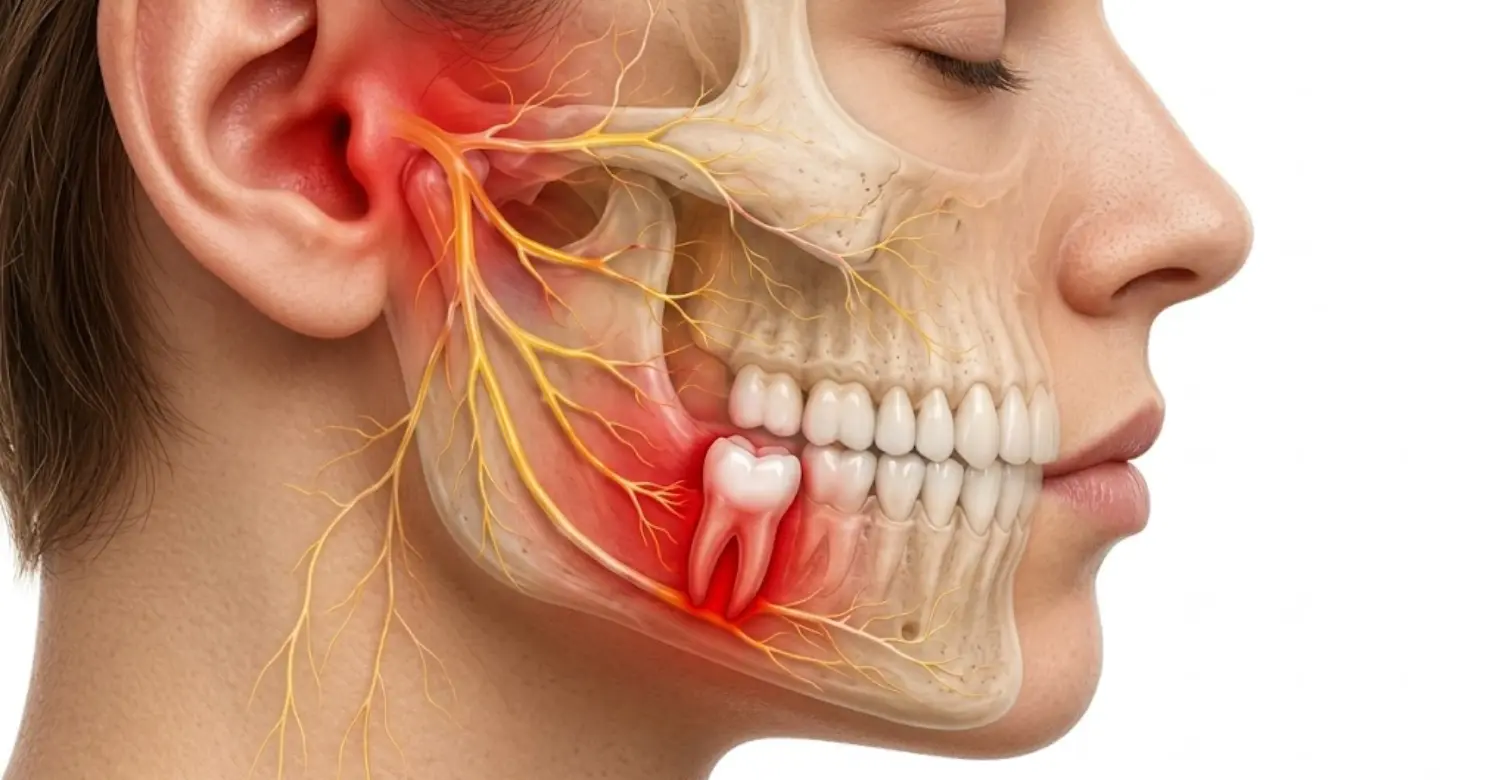
Jaw Pain, Ear Pain, and Tooth Pain: What's the Connection?
The jaw, teeth, and ear share sensory pathways, making referred pain common in this region. TMJ problems can produce pain near the ear without infection inside the ear. Teeth grinding can increase pressure on jaw muscles and joints. Patients may develop facial soreness, headaches, tooth sensitivity, or ear discomfort. Clinical reviews identify temporomandibular disorders as important causes of secondary otalgia. A careful examination should consider teeth, muscles, jaw joints, and bite function. At Vitrin Clinic, evaluating these structures can help identify the primary pain generator. Treatment should target the underlying cause rather than treating the perceived ear pain alone.
Can TMJ Problems Cause Ear and Tooth Pain?
Temporomandibular disorders can produce pain around the jaw, ear, temple, and teeth. Jaw symptoms can mimic dental or ear disease. TMJ-related pain may worsen during chewing, yawning, clenching, or prolonged jaw activity. Some patients report clicking, stiffness, headaches, or limited mouth opening. Tooth discomfort can also develop because excessive muscle activity increases pressure on the teeth. However, TMJ symptoms should not automatically explain every dental complaint. Dentists evaluate jaw movement, muscle tenderness, joint sounds, and bite function. Clinical reviews recognize TMJ disorders as common causes of secondary ear pain. Vitrin Clinic can assess whether jaw dysfunction contributes to the patient's symptoms.
How Bruxism Can Trigger Jaw and Ear Pain
Bruxism involves repeated clenching or grinding of the teeth. Excessive jaw activity can create widespread facial discomfort. Repeated muscle contraction can fatigue the muscles responsible for chewing. Patients may experience morning jaw soreness, headaches, tooth sensitivity, or discomfort near the ears. Long-term bruxism can also contribute to tooth wear and fractures. Learn about the lasting damage in the effects of bruxism on teeth. Stress, sleep-related factors, and other influences may contribute to grinding. Discover what's really driving your grinding in the causes of bruxism. Diagnosis should consider symptoms, dental wear, muscle tenderness, and jaw function. Treatment depends on the individual cause and severity. Vitrin Clinic can evaluate signs of excessive tooth loading and jaw strain. A customized management approach may help reduce repeated stress on the teeth and jaw.
TMJ Pain vs Tooth Pain vs Ear Pain
TMJ pain often changes with jaw movement, while tooth pain may respond to biting or temperature. Primary ear conditions may produce hearing changes, discharge, or pressure symptoms. TMJ disorders may cause clicking, jaw stiffness, muscle tenderness, and pain around the ear. Dental conditions may produce tooth sensitivity, chewing pain, swelling, or localized tenderness. These patterns can overlap, creating diagnostic uncertainty. A dentist can evaluate teeth and jaw structures during one examination. Medical or ENT assessment may be appropriate when ear-specific findings are present. At the Vitrin Clinic, identifying the pain source is essential before selecting treatment.
Clinical Note
Jaw disorders deserve consideration when ear pain occurs alongside chewing discomfort. TMJ-related referred pain can sometimes mimic dental infection rather than representing a primary ear condition. The temporomandibular joint sits directly in front of the ear canal. Inflammation or dysfunction around this joint can therefore feel like ear pain. Muscle tenderness can create additional discomfort across the cheek and temple. Clinical reviews recognize TMJ disorders as common secondary causes of ear pain. Dental examination can identify whether tooth disease exists alongside jaw dysfunction. Vitrin Clinic can assess both dental and jaw-related findings during evaluation. Treating the correct source can prevent unnecessary dental or ear procedures.
Difference Between Earache and Toothache
The distinction depends on symptom patterns rather than pain location alone. Dental and ear pain can involve similar areas because facial sensory pathways overlap. Toothache commonly responds to chewing, biting, temperature, or pressure. Earache may accompany hearing changes, fullness, discharge, or balance symptoms. TMJ problems can mimic either condition and complicate the diagnosis. Clinical evaluation considers the complete symptom pattern and examination findings. Dental imaging may help identify decay, infection, impacted teeth, or other abnormalities. Ear examination can identify conditions involving the ear canal or eardrum. At Vitrin Clinic, dental assessment can help determine whether oral structures contribute to facial pain. Persistent symptoms deserve professional evaluation rather than repeated self-diagnosis.
Earache Symptoms
Earache symptoms vary depending on the underlying condition. Primary ear disorders can produce deep aching, sharp pain, pressure, or burning sensations. Hearing changes may occur alongside some ear conditions. Discharge can indicate inflammation or infection involving the ear canal or middle ear. Dizziness or balance problems may also accompany certain ear disorders. However, referred dental pain can occur without these symptoms. A normal ear examination may therefore require investigation of dental and jaw causes. Healthcare professionals can determine whether the symptoms require medical or dental evaluation. Persistent ear pain should not automatically be treated as an infection.
Toothache Symptoms
Toothache commonly involves pain associated with a particular tooth or nearby gum tissue. Dental discomfort may spread toward the ear or jaw. Dental pain may worsen during chewing, biting, or temperature exposure. Tooth sensitivity can occur with decay, exposed dentin, or pulp inflammation. Cracked teeth may produce sharp pain during specific biting movements. Dental infections may cause swelling, tenderness, fever, or unpleasant taste. NHS guidance recommends dental assessment when toothache persists beyond two days. See what your options are for a damaged tooth in repairing chipped teeth. Vitrin Clinic can evaluate the tooth and surrounding tissues to determine the cause. Early diagnosis can help prevent progression of untreated dental disease.
Symptoms Both Conditions Can Share
Dental and ear conditions can both produce aching, pressure, and discomfort around the jaw. Both conditions can become particularly difficult to distinguish when symptoms are diffuse rather than localized. Both conditions may cause pain that interferes with sleep or daily activities. Jaw movement can aggravate symptoms in dental, ear, and TMJ disorders. Referred pain can make a dental problem feel like an ear condition. Similarly, ear discomfort can sometimes spread toward the jaw and face. This overlap explains why symptom location alone cannot establish a diagnosis. Clinical examination remains important when symptoms persist. At Vitrin Clinic, dentists can assess oral structures and jaw function when dental causes are suspected.
Why Referred Pain Makes Diagnosis Difficult
Referred pain occurs when discomfort is perceived away from its original source. Dental and ear symptoms can therefore feel identical even when the underlying causes differ. Sensory pathways from the teeth, jaw, and ear interact within the nervous system. The brain may interpret signals from one structure as discomfort near another. This phenomenon is particularly relevant to dental infections and TMJ disorders. Clinical reviews emphasize referred pain when evaluating patients with ear symptoms and normal ear examinations. Dentists and physicians therefore examine multiple possible sources. Accurate diagnosis depends on history, physical examination, testing, and imaging when appropriate. This approach reduces the risk of treating the wrong structure.
Can a Toothache Cause Ear Pain Without an Infection?
Yes, dental pain can refer toward the ear even without bacterial infection. Tooth sensitivity, cracks, pulp inflammation, or jaw tension may create referred discomfort. Exposed dentin can cause sharp sensitivity to cold or sweet foods. A cracked tooth may hurt during specific biting movements. Inflamed dental pulp can cause spontaneous or persistent pain without an abscess. Bruxism can also overload teeth and surrounding jaw muscles. These conditions require different treatments from dental infections. Antibiotics are therefore not appropriate for every tooth-related pain condition. At Vitrin Clinic, dentists can determine whether symptoms originate from the tooth, supporting tissues, or jaw. Accurate diagnosis prevents unnecessary treatment and focuses care on the actual cause.
Tooth Sensitivity
Tooth sensitivity occurs when exposed dentin responds to external stimuli. Sharp dental sensitivity can sometimes spread toward nearby facial structures. Cold drinks commonly trigger short, sharp sensations in sensitive teeth. Sweet foods may also stimulate exposed dentin. Gum recession, enamel wear, and certain dental conditions can contribute to sensitivity. Persistent or worsening sensitivity should receive dental evaluation. A dentist can determine whether sensitivity is uncomplicated or associated with deeper dental disease. Treatment depends on the underlying cause and may involve desensitizing products or restorative care. Vitrin Clinic can assess the affected tooth and identify factors contributing to sensitivity. Do not assume persistent sensitivity is harmless.
Cracked Teeth
A cracked tooth can produce unpredictable pain during chewing. Crack-related discomfort may spread toward the jaw or ear. Patients may notice pain when biting down or releasing pressure. Cold sensitivity can also occur depending on crack depth and pulpal involvement. Cracks can progress if the underlying structural problem remains untreated. Dental examination may include bite testing and magnification. Imaging can sometimes assist evaluation, although not every crack appears clearly on conventional radiographs. Treatment depends on the location, depth, and condition of the tooth. Vitrin Clinic can evaluate suspected cracks and develop an appropriate treatment plan.
Dental Pulp Inflammation
Dental pulp inflammation can produce significant pain without an established abscess. Inflamed pulp can cause diffuse facial discomfort that may be difficult to localize. Reversible inflammation may produce brief sensitivity after cold or sweet exposure. More advanced inflammation can produce spontaneous or lingering pain. Learn the difference between the two in reversible vs. irreversible pulpitis. Symptoms may become difficult to localize as inflammation progresses. Dentists use history, sensitivity testing, percussion, and imaging to assess pulp health. The appropriate treatment depends on whether inflammation can resolve or has become irreversible. Root canal treatment may be necessary when the pulp cannot recover. At the Vitrin Clinic, diagnosis should precede treatment selection. Treating the correct tooth is essential when pain is poorly localized.
Teeth Grinding and Jaw Tension
Grinding and clenching can overload teeth and jaw muscles without causing infection. Ear Pain vs Tooth Pain may become confusing when muscle tension produces pain near the ear. Bruxism can contribute to tooth wear, sensitivity, fractures, and morning jaw discomfort. Muscle tenderness may extend toward the temples and facial region. TMJ symptoms can also develop alongside excessive jaw activity. Dentists assess tooth wear, muscle tenderness, jaw movement, and bite patterns. Management varies according to the underlying cause and individual risk factors. Vitrin Clinic can evaluate signs of excessive loading and jaw strain. Addressing the contributing factors may reduce recurring discomfort and protect dental structures.
How Dentists Diagnose Tooth-Related Ear Pain
Diagnosing dental and ear-related pain requires more than identifying where the patient feels discomfort. Dentists first review the pain pattern, duration, triggers, and associated symptoms. They examine teeth, gums, bite relationships, and jaw movement for potential sources. Tooth testing can identify abnormal responses to cold, heat, percussion, or pressure. Dental imaging may reveal decay, infection, bone changes, or impacted teeth. TMJ assessment can identify joint or muscle problems that mimic dental pain. Clinical reviews emphasize considering dental and temporomandibular causes when ear examinations are normal. At Vitrin Clinic, a structured diagnostic approach helps connect symptoms with measurable clinical findings. The goal is identifying the underlying source before treatment begins.
Dental Examination
A comprehensive dental examination is often the first step when symptoms suggest a dental source. Posterior teeth may refer discomfort toward the ear because facial sensory pathways overlap. The dentist examines visible decay, fractured restorations, damaged enamel, and tooth structure. Gum tissues are checked for swelling, bleeding, recession, and localized inflammation. The dentist also evaluates tenderness around individual teeth and surrounding tissues. Bite relationships may reveal excessive pressure affecting specific teeth. Dental examination provides essential information before imaging or specialized testing. At Vitrin Clinic, dentists can combine clinical findings with the patient's complete pain history. This approach helps determine whether further testing is necessary.
Tooth Sensitivity and Pulp Testing
Pulp testing evaluates how individual teeth respond to controlled sensory stimulation. Testing can help identify whether one tooth reacts differently from neighboring teeth. Dentists may use cold testing or other controlled methods to evaluate pulp response. The duration and intensity of the response provide useful diagnostic information. Abnormal responses can indicate inflammation or compromised pulp health. However, pulp testing should always be interpreted alongside clinical findings. A single test cannot independently establish the final diagnosis. Dentists may compare several teeth to identify unusual responses. Vitrin Clinic can use appropriate diagnostic testing when referred pain makes the source difficult to identify.
Bite and Percussion Testing
Bite and percussion tests help determine whether specific teeth react abnormally to pressure. Testing becomes especially useful when biting consistently reproduces the patient's discomfort. A dentist may gently tap teeth to identify tenderness around the supporting tissues. Bite testing can help identify cracks or pressure-related dental problems. Pain during specific biting movements can provide an important diagnostic clue. However, results must be interpreted with other examination findings. Cracked teeth can sometimes produce inconsistent symptoms, making diagnosis challenging. Dentists may combine bite testing with magnification and imaging when necessary. At the Vitrin Clinic, these tests can help narrow down the suspected pain source.
Gum and Periodontal Examination
Healthy supporting tissues are important when investigating unexplained dental and facial pain. Ear Pain vs Tooth Pain may involve periodontal inflammation when gum symptoms accompany discomfort. Don't ignore persistent gum swelling — see what it means in what periodontal disease looks like. Dentists examine gum color, swelling, bleeding, recession, and periodontal pocket measurements. Localized periodontal infection can produce tenderness around individual teeth. Advanced periodontal inflammation may also affect supporting bone and tooth stability. Periodontal examination helps distinguish gum-related pain from pulp-related problems. It also identifies conditions requiring separate treatment. At Vitrin Clinic, evaluating the gums alongside teeth provides a more complete diagnostic picture. Persistent gum swelling or localized tenderness should receive professional assessment.
Dental X-Rays and Imaging
Dental imaging can reveal abnormalities that cannot be identified during visual examination. Ear Pain vs Tooth Pain may require imaging when symptoms remain unexplained after clinical testing. Curious how dentists see beneath the surface? Explore tooth canal anatomy and imaging. X-rays can help identify deep decay, bone changes, root abnormalities, and some dental infections. Panoramic imaging can provide broader information about wisdom teeth and jaw structures. Three-dimensional imaging may be considered when conventional images do not provide enough information. Imaging should be selected according to clinical indications rather than used automatically. At Vitrin Clinic, dentists can determine which imaging method provides useful diagnostic information. Imaging findings should always be interpreted alongside clinical symptoms and examination results.
TMJ and Jaw Examination
The temporomandibular joints and surrounding muscles can contribute to pain around the ear. Ear Pain vs Tooth Pain becomes especially difficult when jaw symptoms occur alongside facial discomfort. Dentists evaluate jaw opening, movement patterns, joint sounds, and muscle tenderness. They may also assess whether chewing or clenching reproduces symptoms. TMJ disorders can produce pain near the ear without an actual ear infection. Clinical reviews identify temporomandibular disorders as important causes of secondary otalgia. At Vitrin Clinic, jaw assessment can be combined with dental examination. This helps distinguish tooth disease from muscular or joint-related pain.
What We Notice Clinically
Clinical diagnosis becomes more reliable when several findings point toward the same structure. Ear Pain vs Tooth Pain should therefore be evaluated through patterns rather than isolated symptoms. Pain reproduced by biting can support a dental source. Temperature sensitivity can provide additional information about pulp involvement. Hearing changes may shift attention toward an ear-related condition. Jaw movement that reproduces pain can suggest TMJ involvement. A normal ear examination may increase consideration of dental or jaw causes. Research identifies dental disease and TMJ disorders among recognized causes of secondary ear pain. At Vitrin Clinic, dentists can integrate these findings into an individualized diagnostic plan.
When Ear Pain and Tooth Pain Need Urgent Care
Some symptoms require prompt professional attention because they can indicate serious infection or another urgent condition. Ear Pain vs Tooth Pain should never delay treatment when warning signs appear. Dental emergencies can involve significant facial swelling, fever, swallowing difficulty, or breathing problems. Severe tooth infections can spread into surrounding tissues and require urgent intervention. Ear-related emergencies can include sudden hearing loss, severe dizziness, or significant discharge. NHS guidance identifies breathing difficulty and serious dental swelling as emergency warning signs. Patients should not rely on painkillers to manage worsening symptoms indefinitely. Vitrin Clinic can evaluate suspected dental causes and determine whether urgent treatment or referral is required. When symptoms suggest a medical emergency, immediate medical care takes priority.
Dental Warning Signs
Dental warning signs indicate that facial or ear discomfort may require prompt dental assessment. Ear Pain vs Tooth Pain becomes less important than identifying potentially serious complications. Significant facial swelling can indicate an advancing dental infection. Fever may accompany systemic involvement and should not be ignored. Difficulty swallowing can indicate inflammation affecting deeper tissues. Difficulty breathing requires emergency medical attention. NHS guidance recommends urgent care when dental symptoms involve serious swelling or breathing difficulties. Severe pain combined with swelling should not be managed solely with home remedies. At Vitrin Clinic, dentists can assess the suspected dental source and determine appropriate treatment.
Facial or Jaw Swelling
Facial or jaw swelling can indicate inflammation around an infected tooth or other oral structure. Ear Pain vs Tooth Pain should not distract from swelling that is rapidly increasing. Dental abscesses can cause localized swelling around the affected tooth. More extensive infections can produce visible facial enlargement. Swelling near the jaw may also accompany wisdom tooth inflammation. The severity and location of swelling help determine urgency. NHS guidance identifies significant swelling involving the mouth or face as requiring urgent attention. Patients should seek prompt dental assessment rather than waiting for swelling to disappear. Vitrin Clinic can evaluate the source and determine whether drainage or dental treatment is necessary.
Fever
Fever can indicate that a dental infection is producing systemic effects. Ear Pain vs Tooth Pain becomes secondary when fever accompanies worsening dental symptoms. Fever may occur alongside swelling, throbbing pain, or an unpleasant taste. However, fever does not identify the exact cause by itself. Dental infections require assessment to determine whether treatment of the affected tooth is necessary. Antibiotics may sometimes be indicated, but they do not replace definitive dental treatment when a source remains. Clinical management depends on the patient's condition and infection severity. Vitrin Clinic can assess the dental source and recommend appropriate care. High fever with severe swelling requires urgent professional attention.
Difficulty Swallowing
Difficulty swallowing can be an important warning sign during a suspected dental infection. Ear Pain vs Tooth Pain should not be the primary concern when swallowing becomes difficult. Significant dental infections can cause swelling that extends into surrounding tissues. This may interfere with normal swallowing and potentially affect deeper anatomical spaces. Difficulty swallowing accompanied by facial swelling requires urgent assessment. Breathing difficulty represents an even more serious emergency. Patients should not wait for symptoms to resolve independently. NHS guidance recommends emergency care when serious dental swelling affects breathing or other vital functions. Professional evaluation should occur promptly when swallowing becomes difficult.
Difficulty Breathing
Difficulty breathing is an emergency warning sign requiring immediate medical attention. Ear Pain vs Tooth Pain becomes irrelevant when swelling potentially threatens the airway. Severe dental infections can occasionally spread into deeper facial and neck spaces. Such swelling can compromise normal breathing or swallowing. Patients should not attempt to manage this situation with home remedies. Emergency medical evaluation is necessary when breathing becomes difficult. NHS guidance specifically identifies breathing difficulties associated with dental swelling as an emergency. Dental treatment may still be required after immediate medical stabilization. Vitrin Clinic can address the underlying dental source when appropriate after urgent assessment.
Ear-Related Warning Signs
Certain ear symptoms require medical evaluation regardless of possible dental involvement. Ear Pain vs Tooth Pain should not cause patients to overlook sudden hearing changes or severe dizziness. Hearing loss can occur with several ear conditions and requires appropriate assessment. Ear discharge may indicate inflammation or infection involving the ear canal or middle ear. Severe dizziness can sometimes indicate problems involving the inner ear or other systems. These symptoms are not typical features of uncomplicated toothache. An ENT specialist can examine the ear and assess hearing when indicated. If dental findings do not explain symptoms, medical referral may be appropriate.
Sudden Hearing Loss
Sudden hearing loss requires prompt medical assessment. Ear Pain vs Tooth Pain should not lead patients to assume sudden hearing changes originate from a tooth. Dental conditions generally do not directly produce sudden sensorineural hearing loss. A sudden reduction in hearing may require urgent evaluation by an appropriate medical specialist. Additional symptoms can include ear fullness, tinnitus, or dizziness. The exact cause cannot be determined through dental symptoms alone. Patients experiencing sudden hearing loss should seek medical attention promptly. Dental evaluation may still be appropriate when facial pain occurs simultaneously. However, hearing changes should receive independent medical consideration.
Ear Discharge
Ear discharge is an important symptom that can indicate a primary ear condition. Ear Pain vs Tooth Pain should be reconsidered when fluid or pus emerges from the ear canal. Dental infections generally drain into the mouth rather than through the external ear. Ear discharge can occur with several conditions affecting the ear canal or middle ear. The appearance and duration of discharge provide useful clinical information. Patients should avoid inserting objects into the ear while waiting for assessment. Medical examination can determine whether infection, inflammation, or another condition is responsible. Dental evaluation may still be necessary when tooth symptoms occur simultaneously.
Severe Dizziness
Severe dizziness can indicate an ear-related or neurological problem rather than ordinary toothache. Ear Pain vs Tooth Pain becomes less relevant when significant balance symptoms accompany ear discomfort. Inner-ear conditions can affect balance and produce dizziness or vertigo. Dental infections do not typically explain severe dizziness by themselves. Patients experiencing intense or sudden dizziness should seek appropriate medical evaluation. Additional warning symptoms can increase the urgency of assessment. These may include sudden hearing loss, weakness, confusion, or difficulty walking. Dental evaluation may still be appropriate if separate tooth symptoms exist. However, severe dizziness should not be attributed to a tooth without medical assessment.
Clinical Note
Urgency depends more on associated warning signs than pain intensity alone. Ear Pain vs Tooth Pain should never delay evaluation of potentially serious symptoms. Facial swelling, fever, swallowing difficulty, and breathing problems can indicate significant dental infection. Sudden hearing loss, severe dizziness, and ear discharge may indicate primary ear disease. The correct specialist depends on the symptoms and examination findings. Dental professionals can investigate suspected oral causes and provide appropriate treatment. ENT specialists can evaluate suspected ear-related conditions. At Vitrin Clinic, dental assessment can help identify oral sources when symptoms suggest dental involvement. Patients should seek emergency medical care when breathing or swallowing becomes compromised.
Tips for Patients With Ear or Tooth Pain
Patients should avoid guessing the cause based only on pain location. Ear Pain vs Tooth Pain can overlap because dental, jaw, and ear structures share sensory pathways. Note when the pain began and whether chewing changes the symptoms. Record sensitivity to hot or cold foods and drinks. Look for swelling, fever, hearing changes, discharge, or jaw stiffness. Avoid placing aspirin directly against gums because it can damage oral tissues. Maintain gentle oral hygiene while arranging professional evaluation. Pain medication should be used according to appropriate medical guidance and product instructions. Vitrin Clinic can assess suspected dental causes and recommend individualized treatment. Persistent or worsening symptoms deserve professional evaluation rather than prolonged self-treatment.
What to Do Until Your Dental Appointment
Until your appointment, keep the affected area clean and avoid unnecessary irritation. Ear Pain vs Tooth Pain can worsen when patients repeatedly test painful teeth with hard foods. Brush gently around sensitive areas and clean between teeth carefully. Choose softer foods if chewing increases discomfort. Avoid extremely hot, cold, sugary, or acidic foods when they trigger symptoms. Do not place household substances directly onto painful teeth or gums. Follow medication instructions carefully if you use an over-the-counter pain reliever. Do not exceed recommended doses or combine medicines without checking suitability. If swelling increases rapidly, seek urgent professional care. Vitrin Clinic can provide an examination when symptoms suggest a dental source.
Foods and Drinks to Avoid
Certain foods can intensify symptoms when teeth are sensitive or inflamed. Ear Pain vs Tooth Pain may become more noticeable after extreme temperatures or sugary foods. Very hot drinks can aggravate sensitive teeth and inflamed dental pulp. Ice-cold beverages can trigger sharp sensitivity in exposed dentin. Sticky sweets can remain around cavities and increase discomfort. Hard foods may aggravate cracked teeth or painful chewing areas. Acidic drinks can contribute to enamel erosion and sensitivity over time. Softer foods at moderate temperatures may feel more comfortable temporarily. Patients should still seek professional assessment when pain persists. Dietary adjustments reduce irritation but do not treat the underlying dental condition.
Pain Relief and Home Care
Home care can temporarily reduce discomfort but cannot identify or eliminate its underlying cause. Ear Pain vs Tooth Pain should be professionally evaluated when symptoms persist or worsen. Gentle brushing helps maintain cleanliness around painful teeth and gums. Soft foods can reduce pressure on sensitive areas during chewing. Appropriate over-the-counter pain medication may provide temporary relief for suitable patients. Medication should always follow package instructions and personal medical advice. Avoid placing painkillers directly against the gums because tissue irritation can occur. Cold compresses may provide temporary comfort when facial swelling is present. However, significant swelling requires professional assessment. Vitrin Clinic can determine whether definitive dental treatment is necessary.
Why You Should Not Ignore Persistent Pain
Persistent pain often indicates that an underlying problem remains unresolved. Ear Pain vs Tooth Pain should not become a reason for repeatedly postponing professional evaluation. Tooth decay can progress toward deeper dental structures when untreated. Cracks can worsen under repeated chewing forces. Not sure if it's serious? See how to stop tooth pain fast and when to seek help. Dental infections can spread beyond the original tooth. TMJ-related symptoms may also persist when contributing habits remain unchanged. NHS guidance recommends dental assessment when toothache lasts longer than two days. Temporary pain relief does not necessarily mean the underlying condition has disappeared. Early evaluation can clarify the source and prevent avoidable complications. Vitrin Clinic can develop an appropriate treatment plan based on clinical findings.
When to See a Dentist
You should see a dentist when pain persists, recurs, or changes during chewing. Ear Pain vs Tooth Pain deserves dental assessment when tooth sensitivity or gum symptoms accompany ear discomfort. Dental evaluation is particularly important when pain affects sleep or daily activities. Swelling around a tooth also warrants prompt assessment. Already feeling discomfort when you eat or drink? Read why your teeth hurt when you eat. Repeated episodes may indicate an unresolved cavity, crack, infection, or wisdom tooth problem. Dentists can perform clinical testing and imaging when necessary. Vitrin Clinic can assess dental and jaw-related causes of facial pain. If dental findings do not explain the symptoms, referral to another healthcare professional may be recommended. Prompt evaluation helps avoid unnecessary treatment.
When to See an ENT Specialist
An ENT specialist may be appropriate when symptoms suggest a primary ear disorder. Ear Pain vs Tooth Pain becomes less likely to represent isolated dental disease when hearing symptoms dominate. Ear discharge, sudden hearing loss, significant fullness, and severe dizziness deserve medical assessment. An ENT specialist can examine the ear canal, eardrum, and related structures. Hearing tests may also help identify functional changes. A normal dental examination does not rule out an ear condition. Likewise, a normal ear examination does not eliminate dental causes. Coordinated dental and medical evaluation can be useful when symptoms overlap. Patients should seek urgent care when sudden hearing loss or severe symptoms develop.
Treatment for Tooth-Related Ear Pain
Treatment depends entirely on the dental condition causing the referred discomfort. Ear Pain vs Tooth Pain should therefore be diagnosed before selecting treatment. Tooth decay may require restoration, while advanced pulp inflammation may require root canal treatment. Dental abscesses require management of the infection source. Wisdom tooth problems may require cleaning, monitoring, or removal. Cracked teeth require treatment based on structural damage and restorability. TMJ-related symptoms require a different management strategy. Antibiotics are not a universal treatment for dental pain. At Vitrin Clinic, dentists can create an individualized plan after examination and appropriate diagnostic testing. Treating the underlying dental problem is the most important step toward resolving referred symptoms.
Treatment for Tooth Decay
Treatment for tooth decay depends on how extensively the tooth structure has been damaged. Learn how this process unfolds in the causes of tooth decay. Ear Pain vs Tooth Pain may improve when the underlying cavity is appropriately treated. Early cavities may require preventive management or minimally invasive restorative treatment. More advanced decay may require a dental filling. If decay reaches the pulp, root canal treatment may become necessary. The dentist evaluates the remaining tooth structure before selecting treatment. Pain symptoms alone cannot determine the required procedure. Vitrin Clinic can assess decay using clinical examination and appropriate imaging. Restoring the tooth can remove the source of irritation when decay causes the symptoms. Preventive care can help reduce the risk of future decay.
Root Canal Treatment
Root canal treatment can preserve a tooth when inflammation or infection has significantly affected its pulp. Ear Pain vs Tooth Pain may resolve when the diseased pulp is appropriately treated. During treatment, the dentist removes affected pulp tissue and cleans the internal canal system. The canals are then shaped, disinfected, and sealed. A suitable restoration protects the remaining tooth structure afterward. Root canal treatment is not required for every toothache. Diagnosis must establish whether the pulp is irreversibly damaged or infected. Vitrin Clinic can evaluate pulp health using clinical tests and imaging. Successful treatment focuses on eliminating the internal source of inflammation while preserving the natural tooth whenever possible.
Treatment for Dental Abscesses
Dental abscess treatment focuses on controlling the infection and eliminating its source. Ear Pain vs Tooth Pain may improve once an infected tooth receives appropriate treatment. Depending on the tooth condition, treatment can involve drainage, root canal therapy, or extraction. Antibiotics may be appropriate in selected situations, particularly when systemic involvement exists. However, antibiotics alone generally do not remove the underlying dental source. Clinical management should therefore address the affected tooth or surrounding infection. NHS guidance emphasizes urgent assessment for serious dental swelling and systemic symptoms. Vitrin Clinic can assess the severity and determine the most suitable treatment. Emergency evaluation is essential when breathing or swallowing becomes difficult.
Wisdom Tooth Treatment
Wisdom tooth treatment depends on symptoms, tooth position, inflammation, and future risk. Impacted or inflamed wisdom teeth may cause pain around the jaw and ear, particularly when surrounding gum tissue becomes infected. Mild inflammation may sometimes be managed with professional cleaning and improved local hygiene. Recurrent infection may require further intervention. Impacted teeth can require removal when they repeatedly cause disease or significant complications. Not every impacted wisdom tooth automatically requires extraction. Dental examination and imaging help determine the appropriate approach. Vitrin Clinic can evaluate wisdom tooth position and surrounding structures. Individualized planning helps balance immediate symptom relief with long-term oral health considerations.
Treatment for Cracked Teeth
Cracked teeth require careful evaluation because treatment depends on crack location and severity. Ear Pain vs Tooth Pain may improve when the damaged tooth receives appropriate structural treatment. Minor cracks may require monitoring or restorative treatment. Deeper cracks involving the pulp can require root canal treatment and protective restoration. Some teeth may become unrestorable when cracks extend extensively below the gumline. Bite testing and clinical examination can help identify suspicious cracks. Imaging may provide additional information but cannot detect every crack. Vitrin Clinic can evaluate the tooth's structural condition and treatment options. Early assessment is important because continued chewing forces can worsen structural damage.
TMJ and Bruxism Treatment
TMJ and bruxism treatment focuses on reducing harmful jaw loading and managing contributing factors. Excessive jaw activity can create discomfort around the teeth, jaw, and ear without an underlying dental infection. See how a custom night guard protects your teeth in night guard for bruxism. Management can include behavioral changes, jaw exercises, stress reduction, and appropriate dental appliances. Treatment should be individualized according to the specific diagnosis. Severe or persistent symptoms may require additional specialist assessment. Dentists evaluate tooth wear, muscle tenderness, joint function, and bite patterns. Vitrin Clinic can assess whether grinding or jaw dysfunction contributes to facial discomfort. Protecting teeth from excessive forces can also reduce the risk of fractures and sensitivity. Treatment should focus on long-term function rather than temporary symptom suppression.
Dr. Rifat Alsaman's Clinical Opinion
Dr. Rifat Alsaman emphasizes that pain location alone should not determine the dental diagnosis. Ear Pain vs Tooth Pain can involve referred symptoms from posterior teeth or jaw structures. A patient may identify the ear as painful while the actual source lies within the mouth. Clinical examination should therefore evaluate teeth, gums, occlusion, and jaw function. Diagnostic testing becomes particularly valuable when symptoms are poorly localized. Treatment should target the confirmed source rather than the perceived pain location. At Vitrin Clinic, individualized assessment supports a more precise treatment strategy. Persistent pain should always be evaluated when the initial cause remains uncertain. This approach helps reduce unnecessary procedures and supports more predictable patient care.
Why Choose Vitrin Clinic for Tooth-Related Ear Pain?
Choosing an experienced dental team can be valuable when facial pain has multiple possible sources. Ear Pain vs Tooth Pain requires careful assessment because dental, periodontal, wisdom tooth, and TMJ conditions can overlap. Vitrin Clinic can evaluate these potential dental sources through structured clinical examination. Diagnostic findings can then guide individualized treatment planning. The goal is to identify the underlying cause before recommending invasive procedures. Dental imaging may be used when clinical findings require additional clarification. The clinic's approach can also consider the patient's symptoms, dental history, and functional concerns. When findings suggest an ear-related condition, appropriate medical evaluation may be recommended. This patient-centered approach supports safer and more targeted dental care.
Comprehensive Dental Diagnosis
A comprehensive diagnosis considers more than the tooth that appears painful. Several nearby structures may need evaluation before the source of referred facial discomfort becomes clear. See how imaging shapes your treatment plan in Digital Smile Design. Dentists can examine teeth, gums, periodontal tissues, bite relationships, and jaw function. Pulp testing can assess whether individual teeth respond abnormally. Percussion and bite testing can identify pressure-related symptoms. Dental imaging can reveal abnormalities hidden beneath visible tooth surfaces. Vitrin Clinic can combine these findings into a complete diagnostic assessment. This approach is particularly useful when pain radiates toward the ear. Identifying the source first helps prevent unnecessary treatment of healthy teeth.
Personalized Treatment Planning
Treatment should reflect the specific diagnosis, tooth condition, symptoms, and patient's long-term needs. Similar pain patterns can result from several different conditions, so there is no universal treatment approach. A decayed tooth may need restoration, while infected pulp may require root canal treatment. Wisdom tooth inflammation may require a different approach. TMJ-related discomfort requires management focused on jaw function. Vitrin Clinic can develop treatment plans based on individual clinical findings. Patients can discuss available options, expected outcomes, and maintenance requirements. Personalized planning helps ensure treatment addresses the underlying problem rather than simply masking symptoms.
Expert Dental Care at Vitrin Clinic
Expert dental care involves accurate diagnosis, appropriate treatment, and continued monitoring. Referred or poorly localized facial pain can require several diagnostic steps before the underlying source becomes clear. Vitrin Clinic can assess dental and jaw-related causes using clinical examination and appropriate diagnostic methods. The treatment plan can then focus on preserving oral health and resolving the underlying source. Patient education is also important because persistent symptoms can indicate unresolved disease. Follow-up appointments help evaluate healing and treatment outcomes. Maintaining good oral hygiene can reduce the risk of future dental problems. When symptoms suggest an ear condition, appropriate referral may be necessary. A coordinated approach supports comprehensive patient care.
Advanced Diagnostic Approach
Modern dental diagnosis combines clinical examination with targeted diagnostic technologies. Ear Pain vs Tooth Pain can be challenging when conventional examination does not immediately identify the source. Dentists may use digital radiographs to examine teeth and surrounding bone. Three-dimensional imaging can provide additional information when clinically justified. Pulp testing helps evaluate the condition of individual teeth. Bite and percussion tests provide functional information about suspected dental structures. TMJ assessment can identify jaw-related sources of referred discomfort. Vitrin Clinic can select diagnostic methods according to individual clinical needs. The purpose of advanced diagnostics is not simply collecting images. It is identifying clinically meaningful information that supports accurate treatment.
Personalized Patient Care
Personalized care begins by understanding how symptoms affect each individual patient. Ear Pain vs Tooth Pain can present differently depending on the underlying dental or jaw condition. Dentists should consider symptom duration, triggers, previous dental treatment, and relevant medical history. Patients should receive clear explanations of diagnostic findings and proposed treatments. Understanding the cause can help patients make informed treatment decisions. Vitrin Clinic emphasizes individualized assessment rather than applying identical treatment to every patient. Follow-up recommendations should reflect the patient's specific condition and treatment. Good communication also helps patients recognize warning signs requiring earlier reassessment.
Follow-Up and Long-Term Oral Health
Follow-up care helps confirm whether treatment has resolved the underlying dental problem. Pain should not remain unexplained after definitive treatment. Dentists can reassess symptoms, tooth function, gum health, and jaw comfort during follow-up. Additional investigation may be necessary when symptoms continue unexpectedly. Preventive care can reduce the risk of recurrent decay, gum disease, and dental infection. Regular examinations also allow problems to be detected before they become advanced. Vitrin Clinic can provide ongoing dental monitoring based on individual oral health needs. Long-term care should focus on maintaining healthy teeth, gums, and functional jaw structures.
Reference
FAQs
Dr. Rifat Alsaman has more than 5 years of clinical experience in dentistry and currently serves as the Head of the Medical Team at Vitrin Clinic. He is dedicated to providing exceptional patient care, overseeing treatment planning, and ensuring the highest clinical standards across the team. His expertise, attention to detail, and commitment to continuous professional development have helped countless patients achieve healthier, more confident smiles.


.webp&w=3840&q=75)

