
How Long Does Laser Gum Reshaping Take to Heal? , Laser gum reshaping usually requires several days for early recovery and several weeks for tissue maturation. The exact timeline depends on treatment depth, gum health, and individual healing. Minor cosmetic reshaping may feel comfortable within a few days. However, the gumline can continue changing subtly during later tissue maturation. Clinical evidence from gingivectomy research reports complete wound healing over approximately four to six weeks.
Patients should distinguish between feeling better and being completely healed. Tenderness and swelling often improve before the tissues fully stabilize. Laser techniques may reduce bleeding and postoperative discomfort in some procedures. However, they do not eliminate normal biological healing requirements. At Vitrin Clinic, recovery planning should consider the treated gumline, periodontal condition, and planned cosmetic outcome. This guide walks through the full recovery process in detail from the first hours after treatment through complete tissue maturation weeks later so patients know what to expect at every stage and can recognize the difference between normal healing and something that needs professional attention.
How Long Does Laser Gum Reshaping Take to Heal?
Most patients experience noticeable improvement during the first week after treatment. The treated gum tissue may require several additional weeks for complete maturation. Minor reshaping can recover faster than extensive gingival surgery. The dentist's technique and the amount of tissue removed also influence recovery. Existing inflammation can prolong the healing period. Smoking may also interfere with normal tissue repair. Patients with milder disease can also review whether mild periodontitis can be reversed before elective reshaping.
Published research provides useful context rather than one universal timeline. Gingivectomy wounds commonly require approximately four to six weeks for complete healing. Therefore, patients should not judge final results during the first few days. Vitrin Clinic can evaluate healing progression during scheduled follow-up appointments.
It also helps to understand that recovery is rarely a straight line. Some days will feel noticeably better than the day before, while other days may bring mild setbacks such as slight puffiness after a long day or minor sensitivity after eating something acidic. This back-and-forth pattern is a normal part of soft-tissue repair and does not necessarily indicate a problem.
Quick Answer: Laser Gum Reshaping Healing Time
Early healing commonly becomes noticeable within several days. Many patients feel substantially more comfortable within one week. However, complete soft-tissue maturation may take several weeks. Research on gingivectomy reports approximately four to six weeks for complete wound healing. Laser treatment may provide practical advantages during early recovery. Some studies report reduced bleeding and postoperative discomfort compared with conventional approaches.
These findings do not mean every patient heals faster. Laser settings, treatment extent, and tissue condition differ between procedures. Patients should follow their dentist's individualized instructions throughout recovery. As a general reference point, patients can think of recovery in three broad phases: an initial settling-in period of roughly two to three days, a comfort-focused period lasting through the first week or two, and a longer background maturation period that continues quietly for several more weeks. Understanding this three-phase structure can make the entire process feel more predictable and less confusing.
What to Expect During the First Few Days
The first two days usually involve the most noticeable changes. Mild tenderness, sensitivity, swelling, or altered gum appearance can occur. Some patients experience little discomfort, particularly after limited cosmetic reshaping. The treated tissue may also appear red or slightly different from surrounding gums. A soft diet can reduce mechanical irritation during early healing. Patients should avoid aggressive brushing directly over treated areas unless instructed otherwise. Increasing bleeding requires professional assessment. Patients with concerning symptoms can also review common periodontal abscess symptoms.
Bleeding should generally remain limited after the procedure. Increasing bleeding requires professional assessment. Vitrin Clinic patients should follow their specific postoperative instructions rather than general online advice. During these first days, many patients also notice that the treated gum tissue feels slightly firmer or tighter than usual. This sensation is typically related to localized swelling and the initial inflammatory response rather than a sign of complication. Staying hydrated, resting adequately, and avoiding unnecessary strain on the mouth (such as wide yawning or biting into firm foods) can help make this period more comfortable.
When Do Gums Usually Return to Normal?
Gums can look substantially improved within one to two weeks. However, the tissues may continue remodeling after visible improvement. Mild redness or uneven coloration can sometimes remain temporarily. Final appearance should therefore be assessed after sufficient tissue stabilization. Research on gingivectomy healing indicates that epithelialization and connective-tissue maturation continue for weeks. This explains why early photographs may differ from later results.
Patients should avoid judging symmetry immediately after treatment. Your dentist can determine whether the gumline is progressing normally. It is worth noting that "returning to normal" and "reaching the final cosmetic result" are two different milestones. Gums can feel functionally normal comfortable, non-tender, easy to clean well before the tissue has fully matured into its permanent shape and color. Patients who understand this distinction tend to feel less anxious about subtle changes they notice in the weeks following treatment.
Factors That Can Affect the Healing Timeline
Several factors influence how quickly gum tissue recovers. Treatment extent is one of the most important considerations. Larger treatment areas generally require more healing time. Existing periodontal inflammation can also delay tissue recovery. Smoking may negatively influence wound healing and increase postoperative concerns. Oral hygiene also matters because plaque accumulation can irritate healing tissues. Regular periodontal cleaning may be recommended when professional plaque control is needed. Individual biological differences influence inflammatory responses and tissue remodeling. Medical conditions and medications can sometimes affect healing as well.
The type of laser and treatment settings also matter. For broader context on laser technology, patients can review the clinic guide. Therefore, published timelines should be considered general guidance rather than guarantees. Vitrin Clinic can personalize recovery expectations after examining the treated tissues. These variables are exactly why the answer to How Long Does Laser Gum Reshaping Take to Heal is different for every patient, even when two people undergo what looks like a similar procedure.
Other contributing factors include the patient's age, baseline nutritional status, hydration levels, and even sleep quality, since tissue repair relies heavily on the body's regenerative processes during rest. Chronic conditions such as diabetes, when not well controlled, can also slow gum healing meaningfully, which is why a thorough medical history review before treatment matters as much as the procedure itself.
What Is the Laser Gum Reshaping Healing Process?
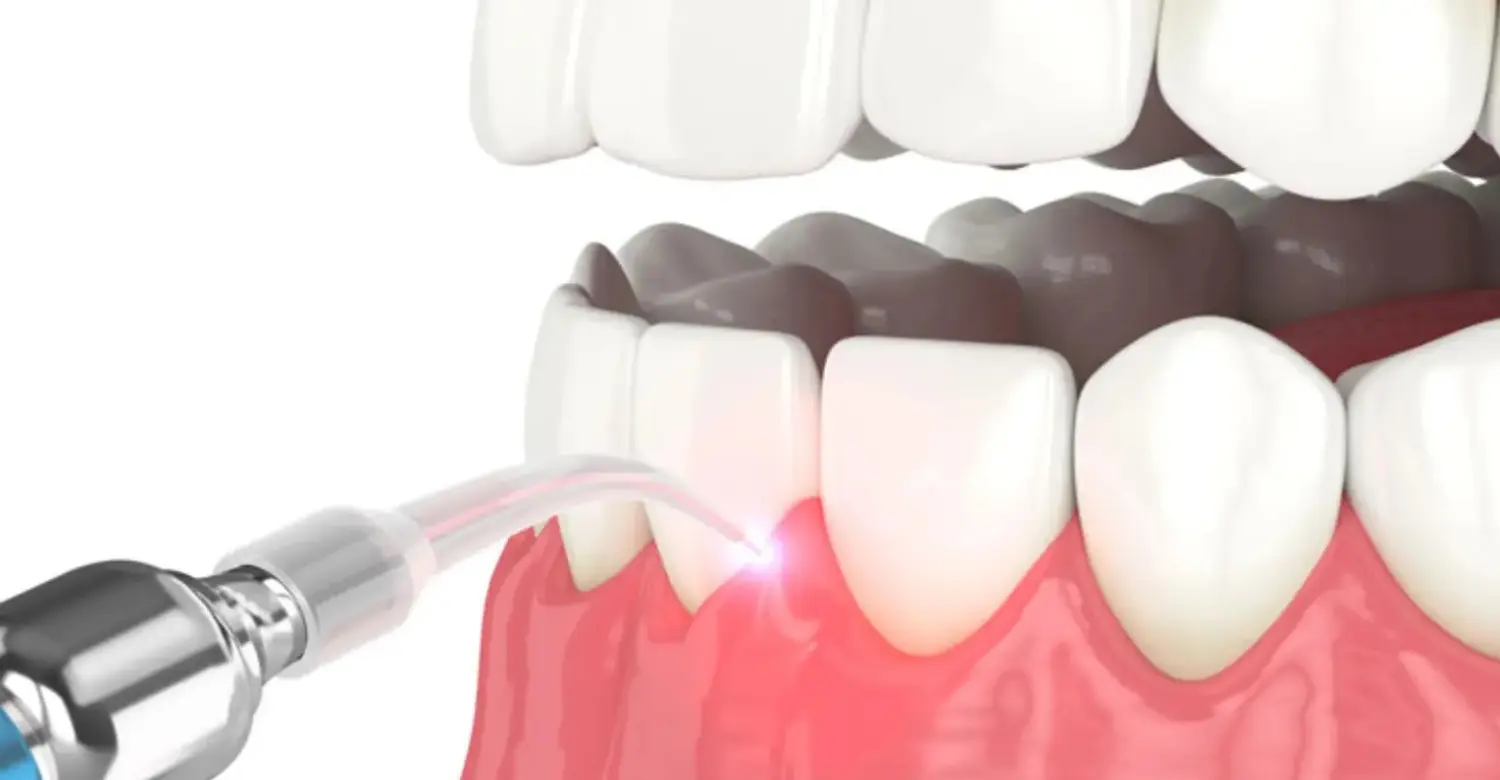
Healing begins immediately after the laser procedure. The body first controls bleeding and initiates an inflammatory response. New tissue then develops while the wound gradually becomes covered with epithelium. Later stages involve collagen remodeling and tissue maturation. Laser treatment can influence the surgical environment differently from a conventional scalpel.
Certain diode laser procedures can provide coagulation during tissue removal. This may help control bleeding during treatment. Clinical studies have reported lower bleeding with diode laser gingivectomy compared with scalpel procedures. However, laser treatment does not bypass normal biological healing. The tissues still require time for epithelialization and maturation. A related overview of laser treatment for gum disease explains another periodontal use of laser technology. This underlying biology is the reason so much of the guidance in this article focuses on realistic expectations rather than promising a fixed number of days every mouth follows the same general biological script, but the pacing differs from person to person.
How Laser Treatment Affects Gum Tissue
Laser energy removes or reshapes targeted soft tissue. The effect depends on wavelength, power, exposure time, and clinical technique. Some wavelengths interact strongly with water, hemoglobin, or melanin. This makes different lasers suitable for different soft-tissue applications. During treatment, controlled thermal effects can help coagulate small blood vessels. This may contribute to reduced operative bleeding.
Research involving cosmetic gingivectomy has reported lower bleeding scores with diode lasers. The dentist must control energy delivery carefully. Excessive thermal exposure can damage surrounding tissue. Therefore, proper technique remains more important than simply choosing a laser. A skilled clinician calibrates the settings to the specific tissue type and thickness being treated, which is one reason experience and training matter as much as the equipment itself. This calibration is directly connected to How Long Does Laser Gum Reshaping Take to Heal for any individual case.
Why Laser Treatment May Support a Comfortable Recovery
Laser procedures may offer reduced bleeding during selected soft-tissue treatments. Some clinical research also reports lower early postoperative discomfort. These potential benefits can make the recovery experience more comfortable. A 2023 systematic review evaluated six clinical studies involving low-level laser therapy after gingivectomy. It found improved healing indices on postoperative days three and seven. However, the authors emphasized differences between laser protocols and study designs.
Therefore, laser treatment should not automatically be described as universally faster. Recovery remains dependent on individual treatment characteristics. Vitrin Clinic should evaluate each patient's tissues before establishing expectations. Patients considering the procedure should ask their dentist which laser type will be used and why it was selected for their specific case, since this context can help set more accurate personal expectations.
Laser Gum Reshaping vs. Traditional Gum Contouring Recovery
Laser and conventional gum contouring can produce similar biological healing requirements. The primary difference involves how tissue is removed and bleeding is controlled. Laser techniques may provide coagulation during tissue cutting. This can reduce visible bleeding during selected procedures. One controlled study involving cosmetic gingivectomy found lower bleeding and pain scores with diode laser treatment. Another recent clinical study reported similarly favorable bleeding outcomes.
However, those findings do not establish identical recovery for every patient. Treatment size, technique, laser settings, and periodontal health remain important. Your dentist should select the appropriate method after clinical examination. In many practices, the choice between laser and conventional instruments is guided less by which one heals faster in general and more by which one suits the specific anatomy and treatment goal in front of the clinician. For periodontal applications, laser periodontal treatment is another treatment-focused resource. Regardless of technique, How Long Does Laser Gum Reshaping Take to Heal ultimately comes down to the biology of the individual patient.
Laser Gum Reshaping Healing Stages
Healing generally progresses through overlapping biological stages. These stages include inflammation, tissue formation, epithelial coverage, and remodeling. Visible improvement does not necessarily mean complete biological maturation. Patients often notice the largest comfort improvement during the first week. Later changes can be subtler and mostly involve tissue maturation. Published gingivectomy evidence suggests complete healing may require four to six weeks. Breaking recovery into stages is one of the most useful ways to answer how long does laser gum reshaping take to heal, because it replaces a single vague number with a series of concrete, observable milestones that patients can actually track.
Stage 1: The First 24–48 Hours
The first 24–48 hours represent the initial recovery phase. Mild tenderness and sensitivity can occur around treated tissues. Swelling may also appear, although many laser procedures produce limited postoperative swelling. The tissue may look different from the final expected gumline. Patients should avoid unnecessary touching or stretching of the treated area. Soft foods can reduce mechanical pressure during early healing. Any medication should be taken according to the dentist's instructions. Persistent bleeding or severe pain should not be dismissed as normal. This is also the window during which most patients should limit vigorous physical activity, since increased blood pressure and heart rate can occasionally increase minor oozing at the treatment site.
Stage 2: Days 3–7
Days three through seven commonly bring noticeable improvement. Tenderness often decreases as the inflammatory phase settles. Patients may find eating and routine oral hygiene easier during this period. Research on adjunctive low-level laser therapy found improved healing indices on days three and seven. These results provide useful clinical context but do not predict individual outcomes. The treated gumline may still appear slightly red or irregular. Such changes can improve as epithelialization continues. Patients should continue protecting the area from unnecessary irritation. Many people describe this stage as the point where the procedure "stops feeling like a recent event" and starts feeling like a normal part of their mouth again.
Stage 3: Weeks 2–3
During weeks two and three, the tissues generally become more stable. Redness and sensitivity may continue decreasing. The gumline can also begin looking closer to its expected contour. However, connective tissue remodeling continues beneath the visible surface. Patients should not assume that every subtle contour change represents treatment failure. Research has reported clinically detectable healing differences around day 14 after gingivectomy. Individual results remain dependent on treatment characteristics. This stage is often when patients start comparing their smile to photographs taken before treatment, and it is a reasonable time to schedule a check-in visit if one has not already been arranged.
Stage 4: Long-Term Gumline Stabilization
Long-term stabilization involves continued collagen remodeling and tissue maturation. The gumline may become more consistent as the healing process progresses. Complete healing is different from the point when symptoms disappear. A patient may feel comfortable while tissue remodeling continues. Gingivectomy literature commonly describes complete healing within approximately four to six weeks. More extensive procedures may require additional time. Your dentist should determine when the gumline has stabilized sufficiently. Some patients, particularly those who underwent more extensive reshaping across several teeth, may be advised to wait even longer sometimes into the second or third month before any further cosmetic touch-ups are considered.
What Changes Are Normal During Each Healing Stage?
Temporary redness, mild swelling, tenderness, and appearance changes can occur. These findings should gradually improve rather than progressively worsen. Early gum tissue may appear brighter, darker, or more uneven than expected. Healing tissues can also look different depending on lighting and moisture. The important pattern is progressive improvement. Increasing pain, swelling, bleeding, or discharge requires dental assessment. Patients should take photographs only as supplementary observations. Clinical examination provides a more reliable assessment of tissue healing. Vitrin Clinic can monitor changes during follow-up visits. A useful habit is keeping a brief daily note of comfort level, appearance, and any new symptoms; this simple log can make follow-up conversations with your dentist far more precise than relying on memory alone, and it also gives you a clearer personal answer to How Long Does Laser Gum Reshaping Take to Heal in your specific case.
Laser Gum Contouring Recovery Timeline
Recovery should be viewed as a progression rather than a single deadline. Symptoms often improve before the gumline reaches final stability. The timeline below provides general guidance for How Long Does Laser Gum Reshaping Take to Heal at each stage. Your dentist's postoperative assessment remains more important than any generic schedule.
What Happens Immediately After Treatment?
Immediately after treatment, the gumline may appear sharper or more defined. Local anesthesia can temporarily mask discomfort. Mild tenderness may become noticeable after sensation returns. Laser treatment can provide coagulation during soft-tissue procedures. This may help reduce visible bleeding compared with some conventional techniques. Patients should avoid disturbing the treated tissues. The first hours should focus on protection and adherence to postoperative instructions. It is common for the numbness from local anesthesia to persist for one to a few hours, and patients should be careful not to bite the lip or cheek accidentally during this window.
What to Expect After 3 Days
By day three, many patients notice reduced tenderness. The tissue may still appear red or slightly swollen. Some areas can develop temporary surface changes during epithelialization. Research involving low-level laser therapy reported improved healing indices by day three. This does not mean complete healing occurs within three days. Patients should continue their prescribed oral-care routine carefully. Any worsening symptoms should be discussed with the treating dentist.
What to Expect After 1 Week
After one week, early recovery is usually substantially more advanced. Many patients can perform normal daily activities comfortably. The gumline may still undergo visible changes. Mild sensitivity or redness can persist, especially after larger treatment areas. Clinical research has identified meaningful healing changes by day seven after gingivectomy. Nevertheless, tissue maturation continues beyond this milestone. By this point, most patients ask a version of the same question how long does laser gum reshaping take to heal from here and the honest answer is that the visible improvement will keep gradually continuing for several more weeks.
What to Expect After 2 Weeks
At two weeks, the treated tissues should generally appear more settled. Swelling and tenderness should usually be substantially reduced. The gumline may look closer to its intended contour. However, subtle remodeling can continue for several additional weeks. One clinical study reported significant healing differences at day 14 following gingivectomy. Patients should still attend recommended follow-up appointments.
When Is the Final Gumline Appearance Visible?
The final appearance becomes easier to judge after early inflammation subsides. However, tissue maturation can continue for weeks. Four to six weeks is a useful reference from gingivectomy literature. Cosmetic cases may vary because treatment depth and tissue removal differ. Your dentist may recommend waiting before making aesthetic judgments. Vitrin Clinic can assess symmetry, tissue stability, and periodontal health during follow-up.
How Long Do Gums Take to Heal After Laser Treatment?
Gum healing occurs in stages rather than instantly. Early surface recovery may occur within days. Deeper connective-tissue maturation generally takes longer. Published gingivectomy research commonly reports approximately four to six weeks for complete healing. Some patients may recover sooner, while others require longer observation. The distinction between symptom relief and complete healing is important. Reduced tenderness does not necessarily indicate complete tissue maturation. Patients sometimes assume that once discomfort disappears, healing has finished but the underlying tissue architecture can still be actively remodeling well after symptoms are gone. This is why How Long Does Laser Gum Reshaping Take to Heal is best answered with a range rather than a single day.
Does Gum Tissue Heal Quickly After Laser Reshaping?
Gum tissue can show noticeable recovery relatively quickly. Many patients experience significant comfort improvements during the first week. Laser techniques may help control bleeding during soft-tissue procedures. Some research also suggests potential improvements in early postoperative comfort. However, complete healing remains a biological process. Tissue remodeling cannot be guaranteed within a specific number of days. Speed of visible improvement should never be mistaken for the completion of biological healing.
How Long Does Gum Tenderness Last?
Tenderness commonly decreases during the first several days. Mild sensitivity may persist longer after extensive treatment. The amount of tissue treated can strongly influence discomfort. Existing inflammation can also make the recovery experience more noticeable. A systematic review found lower pain scores with adjunctive low-level laser therapy on days three and seven. These findings concern specific protocols and should not be generalized to every laser procedure. If tenderness lingers beyond two weeks without any improvement, it is reasonable to schedule an evaluation rather than assume it will resolve on its own.
When Should Healing Be Considered Complete?
Healing should be considered complete when the dentist confirms stable tissue condition. Symptoms alone are insufficient for determining complete recovery. The gumline should show stable contour, healthy tissue characteristics, and no concerning symptoms. Gingivectomy literature suggests approximately four to six weeks for complete wound healing. Extensive procedures can require longer maturation. Your dentist may recommend additional monitoring when treatment involves deeper or broader tissue changes. Ultimately, the question of how long does laser gum reshaping take to heal is best answered jointly by the patient's comfort level and the dentist's clinical examination, rather than by either measure alone.
Laser Gum Reshaping Recovery Period: What Affects Healing?
Recovery depends on several patient-specific and treatment-specific variables. The amount of reshaping is particularly important. Healthy gum tissue generally provides a better starting environment for recovery. A general introduction to periodontics can help explain the role of gum health in treatment planning. Poor plaque control can increase irritation around healing tissues. Lifestyle factors also influence recovery. Smoking can negatively affect tissue repair and periodontal health. The type of laser and treatment settings also influence tissue response. Therefore, no single recovery timeline applies to every procedure, and How Long Does Laser Gum Reshaping Take to Heal will always be a range rather than a fixed number.
Extent of Gum Reshaping
Limited contouring usually creates a smaller healing area. Larger procedures create more tissue that requires repair and maturation. Treatment involving several teeth can therefore require more recovery than minor reshaping. The depth of tissue removal also matters. Patients should ask how much tissue will be altered before treatment. This information helps establish realistic recovery expectations. If periodontal treatment is also required, periodontal surgery may involve a separate treatment plan.
Individual Healing Response
People heal at different rates. Age, general health, medications, nutrition, and tissue quality can influence recovery. Inflammatory responses also vary between individuals. Some patients experience minimal postoperative symptoms. Others notice tenderness or swelling for longer periods. A personalized assessment is therefore more useful than comparing your recovery with another patient's experience.
Existing Gum Health
Healthy gums provide a better foundation for cosmetic reshaping. Existing gingivitis or periodontal disease should be evaluated before treatment. A broader overview of periodontal disease can help explain why this assessment matters. Inflamed tissues can respond unpredictably after surgical manipulation. Active periodontal problems may also affect the final cosmetic result. The distinction between gingivitis and periodontitis can help explain why periodontal status matters before reshaping. The dentist should evaluate gum inflammation, bleeding, periodontal pockets, and tissue thickness before reshaping. When pocket measurements are needed, the periodontal pocket provides an important clinical reference.
Oral Hygiene During Recovery
Oral hygiene remains important during healing. However, aggressive cleaning can traumatize newly treated tissue. Patients should follow their dentist's instructions for brushing and cleaning around the treated area. Ongoing periodontal maintenance can also support long-term gum health. Plaque accumulation can also irritate healing tissues. The correct approach balances cleanliness with gentle tissue protection. Vitrin Clinic can provide personalized oral-care instructions following treatment.
Smoking and Other Lifestyle Factors
Smoking can compromise periodontal health and interfere with normal tissue healing. Avoiding tobacco during recovery is therefore strongly advisable. Alcohol and other irritants may also conflict with individual postoperative instructions. Patients should follow their dentist's specific restrictions. Adequate nutrition, hydration, sleep, and stress management can support general recovery. These factors cannot guarantee faster healing, but neglecting them can meaningfully slow it down.
Why Gum Health Should Be Evaluated Before Treatment
Pre-treatment gum health influences both healing and aesthetic predictability. Inflamed gums can make cosmetic contouring less predictable. The dentist should assess periodontal stability before performing elective reshaping. Treating active inflammation may need to precede cosmetic procedures. This approach protects both oral health and the planned smile appearance, and it can meaningfully shorten How Long Does Laser Gum Reshaping Take to Heal by starting from a healthier baseline. Vitrin Clinic can evaluate the gumline before developing a reshaping plan.
Laser Gum Reshaping Aftercare and Recovery
Aftercare protects the treated tissues during the vulnerable early period. Good instructions can reduce unnecessary irritation and support predictable recovery. Patients should follow their dentist's recommendations instead of copying another patient's routine, since aftercare habits directly influence How Long Does Laser Gum Reshaping Take to Heal.
Follow Your Dentist's Post-Treatment Instructions
Postoperative instructions should be considered specific to your procedure. Laser settings, treatment depth, and treated areas differ between patients. Your dentist may provide recommendations for cleaning, eating, medications, and activity. Following these instructions consistently reduces avoidable complications. Patients should contact the clinic when instructions seem unclear. Vitrin Clinic can clarify recovery steps according to the treatment performed.
Keep the Treated Area Clean
Gentle oral hygiene helps reduce plaque around healing tissues. However, direct brushing may need modification temporarily. Patients should follow their dentist's instructions regarding toothbrush type and cleaning technique. A related question is whether mouthwash helps periodontal disease, particularly when planning daily oral care. Avoid scrubbing the treated gumline unless specifically instructed. Clean surrounding teeth normally when appropriate. Maintaining oral cleanliness supports a healthier environment during healing.
Choose Soft Foods During Early Healing
Soft foods can reduce mechanical irritation during early recovery. Examples may include yogurt, eggs, mashed vegetables, and soft grains. Patients should avoid foods that scrape, puncture, or strongly irritate treated tissues. Extremely hot foods may also feel uncomfortable. Gradually returning to normal foods depends on comfort and healing progress. Your dentist can advise when dietary restrictions can be relaxed.
Avoid Irritating the Treated Gumline
Avoid touching healing tissues with fingers or objects. Do not repeatedly pull the lip to inspect the area. Hard foods can mechanically irritate newly treated gums. Excessive brushing can also disrupt delicate surface tissue. Patients should avoid activities that create unnecessary trauma. Protection is especially important during the first several days.
Attend Follow-Up Appointments
Follow-up visits help confirm that healing is progressing appropriately. They also allow early identification of unusual inflammation or tissue changes. Your dentist can assess gum color, contour, tenderness, and tissue stability. These findings provide more reliable information than photographs alone. Follow-up timing depends on treatment extent and individual risk factors. Vitrin Clinic can adjust monitoring according to each patient's recovery.
What Should You Avoid During Laser Gum Healing?
Avoid smoking, aggressive brushing, hard foods, and unnecessary manipulation. Avoid self-prescribing antibiotics or other medications without professional advice. Patients should also avoid assuming that persistent symptoms are automatically normal. Worsening pain or swelling requires assessment. Exercise restrictions depend on treatment extent and individual instructions. Follow the recommendations provided by the treating dental team, since avoidable irritation is one of the most common reasons How Long Does Laser Gum Reshaping Take to Heal ends up longer than expected.
Tips for Patients During Laser Gum Reshaping Recovery
Simple protective habits can make early recovery more comfortable. The goal is to protect tissue while maintaining appropriate oral hygiene. Patients should prioritize professional instructions over generic recovery advice, since good habits are one of the few things patients can control when it comes to How Long Does Laser Gum Reshaping Take to Heal.
Tips for Managing Early Tenderness
Use only pain-relief medication recommended by your dentist or healthcare professional. Do not exceed the prescribed or labeled dosage. Choose softer foods while tenderness remains noticeable. Avoid unnecessary pressure against the treated gumline. Tenderness should generally trend downward as healing progresses. Increasing discomfort requires professional evaluation.
Tips for Protecting the Healing Gumline
Protect the gumline from hard foods and unnecessary mechanical contact. Avoid pulling your lip repeatedly to inspect healing tissues. Follow recommended cleaning instructions carefully. Avoid aggressive brushing around sensitive areas. Patients should also protect the tissues from tobacco exposure.
FAQs

Dr. Rifat Alsaman has more than 5 years of clinical experience in dentistry and currently serves as the Head of the Medical Team at Vitrin Clinic. He is dedicated to providing exceptional patient care, overseeing treatment planning, and ensuring the highest clinical standards across the team. His expertise, attention to detail, and commitment to continuous professional development have helped countless patients achieve healthier, more confident smiles.


