General Dentistry
September 29, 2026
Prion Diseases and Oral Health: Does it affect Your teeth?
 Dr. Rifat Alsaman
Prion diseases and oral health are connected mainly through the effects these rare neurological conditions have on daily function. Prion diseases affect the brain, not the teeth directly. Yet progressive changes can make brushing, eating, and dental visits harder. this may raise the risk of plaque build-up, tooth decay, gum inflammation, and dry mouth. Understanding prion diseases & oral health helps patients, caregivers, and dental teams plan comfortable, realistic, and supportive care.
Prion Diseases and Oral Health: How Can They Affect the Mouth?
Prion diseases & oral health are linked indirectly rather than through a specific dental disease. As neurological symptoms advance, a person may lose the ability to care for their own mouth. Small problems can then go unnoticed. Prion diseases and dental health therefore depend heavily on support from caregivers and dental professionals. The sections below explain what prion diseases are, whether they cause dental problems, and why daily oral care becomes harder over time.
What Are Prion Diseases?
Prion diseases are rare, progressive neurodegenerative disorders. They are caused by abnormal prion proteins that fold incorrectly and damage brain tissue. They mainly affect the brain and nervous system. They are not primary dental diseases. Examples include Creutzfeldt-Jakob disease (CJD), variant CJD, fatal familial insomnia, and Gerstmann-Sträussler-Scheinker disease. When discussing prion diseases and oral health, the key point is function. As symptoms progress, coordination, memory, and independence decline, and these changes shape daily oral care.
Can Prion Diseases Directly Cause Dental Problems?
A systemic neurological disease differs from a primary oral disease. Tooth decay and gum disease are driven mainly by plaque bacteria, diet, and oral hygiene. Current evidence does not show that prion disease directly causes periodontitis or cavities. Instead, the relationship between prion diseases & oral health points to secondary factors. Reduced brushing, dietary changes, dehydration, and missed dental visits can all contribute. These indirect effects explain most dental problems in this group. Each problem still needs its own diagnosis.
Why Oral Care May Become More Difficult as the Disease Progresses
Oral care often becomes harder as neurological symptoms advance. Tremors, stiffness, or poor coordination can make brushing and flossing unreliable. Memory and thinking changes may make instructions hard to follow. Some patients cannot clearly describe pain or discomfort, so dental problems may go unnoticed. Travelling to appointments can also become tiring or impractical. This is where prion disease and oral hygiene meet. The link between prion diseases and oral health grows stronger as independence declines.

Note: All images used are for editorial and illustrative purposes only and may not originate from the original news provider or associated company.
Prion Disease Oral Symptoms and Mouth Symptoms to Recognize
Recognizing prion disease oral symptoms early helps prevent avoidable pain. Most prion disease mouth symptoms are not unique to the illness. They are common dental findings that appear when daily care becomes difficult. Caregivers are often the first to notice them. Knowing what to look for supports faster assessment and simpler treatment. This awareness is an important part of managing prion diseases and oral health at home. The following sections outline possible problems, likely causes, and when to seek help.
Possible Oral and Mouth-Related Problems
Several oral problems may appear as the disease progresses. Plaque can build up along the gumline when brushing is incomplete. Gums may become red or bleed easily. Dental caries can develop, especially near the gums and around old fillings. Halitosis, or persistent bad breath, is also common. Dry mouth may cause discomfort or sensitivity. Some patients have difficulty chewing or swallowing. Others show changes in eating habits, such as avoiding certain foods or eating less.
Are These Symptoms Caused by the Prion Disease?
In most cases, these findings are indirect consequences of neurological decline. Reduced oral hygiene allows plaque to accumulate. An altered diet may increase sugar exposure. Dehydration and reduced saliva leave the mouth dry and vulnerable. Difficulty eating may also affect nutrition and tissue health. For this reason, prion disease oral symptoms should not automatically be attributed to the disease itself. A balanced view of prion diseases & oral health means examining each finding and identifying its real cause.
When Oral Symptoms Need Professional Assessment
Some oral changes should always be checked by a dentist or doctor. Seek assessment for persistent oral pain, swelling, or bleeding that does not settle. New tooth sensitivity may signal decay or a cracked tooth. Difficulty eating because of oral discomfort also needs attention. Sudden changes in swallowing should be reported to the medical team promptly. A suspected dental infection, such as facial swelling or pus near a tooth, needs urgent care. Early review usually means simpler treatment.
Learn why you might see Saliva Blood When Spitting
How Hereditary Prion Disease Can Affect Dental Care
Hereditary prion disease is caused by inherited changes in the prion protein gene. It includes familial Creutzfeldt-Jakob disease, Gerstmann-Sträussler-Scheinker disease, and fatal familial insomnia. Like other forms, it mainly affects the nervous system. Yet it can still shape dental care in practical ways. Examination, treatment, and infection control may all need adjustment. This section connects clinical findings with real treatment challenges, adding another layer to prion diseases & oral health. Planning begins with understanding each patient's stage and abilities.
Dental Problems Reported in Patients With Hereditary Prion Disease
Hereditary prion disease does not appear to directly cause tooth decay or gum disease. However, case reports describe patients developing ordinary dental problems. These include caries, dental infections, and periapical disease, which is inflammation or infection around the tip of a tooth root. Such findings should be interpreted carefully. They often reflect reduced oral hygiene, dietary changes, and limited access to dental care. As with other prion disease oral symptoms, the real cause of each finding must be identified.
Challenges During Dental Examination and Treatment
Progressive neurological changes can make dental examination difficult. Patients may struggle to communicate pain, follow instructions, or keep their mouth open. Involuntary movements can make imaging and treatment unsafe. For this reason, dental X-rays, cleaning, or fillings may need adapted approaches. These include shorter steps, supportive positioning, or sedation when medically appropriate. Any sedation decision requires medical input. Dental care for patients with prion disease should always be individualized according to the patient's neurological and medical condition.
Infection Control Considerations
Prions are unusually resistant to standard sterilization methods. For this reason, prion diseases require particular attention to infection control in dental settings. Dental teams follow current national guidance on instrument handling and decontamination. This may include using single-use instruments where possible and applying specific reprocessing or disposal procedures. Careful record-keeping also matters. When prion disease is confirmed or suspected, the dental team should coordinate with relevant medical specialists. Safe practice protects patients and staff while supporting prion diseases and oral health care.
Providing Patient-Centered Dental Care
Patient-centered care focuses on what matters most to the patient. Essential treatment, oral comfort, and prevention come first. Treatment goals should be realistic for the patient's condition. Communication should be simple, calm, and adapted to the patient's abilities. Appointment length can be shortened to reduce fatigue. Caregivers should be involved when appropriate, as they often understand the patient's needs best. Choosing between preventive, restorative, surgical, or supportive care depends on the patient's overall condition and wellbeing.
Find out what causes it when All My Teeth Hurt Suddenly
Tips for Patients
Maintain consistent oral hygiene: Small, regular habits can make a significant difference in daily oral health.
Keep daily routines simple: Adapt brushing and other oral-care activities as the patient's abilities change.
Check the mouth regularly: Look for gum bleeding, swelling, mouth sores, broken teeth, persistent bad breath, or signs of discomfort.
Encourage appropriate hydration: Adequate fluid intake may help reduce dry-mouth discomfort when medically appropriate.
Keep dental visits practical: Inform the dental team about changes in the patient's condition and consider shorter or adapted appointments when necessary.
Watch for swallowing concerns: Report new or worsening difficulty swallowing to the medical team, as it may require further assessment.
Support care at home: Caregivers may need to assist with brushing, denture care, or other oral-hygiene tasks as abilities change.
Seek individualized guidance: Discuss specific concerns with the dental and medical team because every patient's needs and limitations are different.
Support prion diseases and oral health: Consistent home care can help maintain oral comfort and reduce preventable dental problems.
Prion Diseases and Periodontal Health: Is There a Connection?
Prion diseases and periodontal health are connected mainly through daily hygiene. The gums need regular, effective plaque removal to stay healthy. When brushing becomes difficult, inflammation can develop quickly. However, the disease itself is not considered a direct cause of gum disease. Understanding this distinction helps caregivers focus on what they can control. Within the wider topic of prion diseases and oral health, gum care is one of the most practical areas for prevention. Small daily steps make a real difference.
Prion Diseases and Gum Disease
Gingivitis is inflammation of the gums, usually causing redness, swelling, and bleeding. Periodontitis is a more advanced condition that damages the tissues and bone supporting the teeth. Plaque is the primary local driver of both. Regarding prion diseases and gum disease, there is not enough evidence to call the disease a direct cause of periodontitis. Instead, impaired oral hygiene may increase periodontal risk indirectly. Plaque left on teeth for longer allows inflammation to develop and progress.
Factors That May Increase the Risk of Gum Problems
Several factors may raise the risk of gum problems. Reduced brushing ability is the most important. Dependence on caregivers can mean brushing is rushed or skipped on difficult days. Fewer dental visits allow tartar and inflammation to go unchecked. Dry mouth reduces the natural cleansing effect of saliva. Soft diets or frequent snacks can increase plaque. A general decline in function combines these risks, which is why prion diseases and periodontal health need ongoing attention.
Why Gum Health Still Matters
Gum health still matters, even when a serious neurological illness is the main concern. Healthy gums help prevent avoidable inflammation, bleeding, and discomfort. They also support comfortable eating, which is important for nutrition and wellbeing. Preventing gum disease reduces the need for urgent dental procedures that may be stressful or hard to tolerate. In discussions of prion diseases & oral health, comfort and quality of life are central goals. Good gum care directly supports both.
Check out the differences in Root Canal vs Crown
Oral Health Complications of Prion Diseases
Oral health complications of prion diseases usually develop gradually. They often result from reduced self-care, dietary changes, and lower fluid intake. Tooth decay, dry mouth, chewing problems, and hygiene challenges are the most common concerns. Each one can affect comfort and nutrition. Recognizing them early allows simpler, less burdensome management. The sections below explain how these complications arise within prion diseases and oral health, and what dental teams usually consider. Prevention remains the most effective strategy.
Tooth Decay and Prion Disease
Prion disease and tooth health are linked mainly through plaque control. When brushing becomes less effective, bacteria remain on the teeth for longer. These bacteria produce acids that weaken enamel and cause caries. Frequent carbohydrate-containing foods, sweet drinks, or soft diets can increase this risk. Fluoride helps strengthen enamel and slow early decay. Regular dental monitoring can detect small cavities before they become painful. Early detection matters, because complex treatment may become harder to tolerate later.
Dry Mouth and Oral Discomfort
Dry mouth, or xerostomia, is common in people with advanced neurological illness. Inadequate fluid intake, certain medications, and mouth breathing can all reduce saliva. Reduced self-care may worsen the problem. Saliva protects teeth and soft tissues, so dryness raises the risk of caries. It can also make chewing and swallowing harder. The lining of the mouth may feel sore or sticky. Managing dryness is an important part of prion diseases and oral health care.
Chewing and Swallowing Difficulties
Neurological dysfunction can affect the muscles and coordination needed to chew and swallow. This may lead to coughing, choking, or slow eating. It is important to distinguish dental problems from neurological dysphagia. A painful tooth or loose denture can make chewing hard, and a dentist can treat this. Neurological swallowing difficulty needs a different approach. When swallowing problems appear, a medical or speech-and-swallowing assessment is recommended. Both assessments may be needed for safe eating.
Oral Hygiene Challenges
Prion disease and oral hygiene challenges usually increase over time. Toothbrushing may become incomplete or irregular. Interdental cleaning with floss or small brushes often becomes too difficult. Denture care may also be missed, allowing plaque and irritation to build up. Caregiver assistance may become necessary when brushing is no longer reliable. Gentle, consistent support usually works better than complex routines. This shared approach keeps prion diseases and oral health care manageable as independence declines.
Learn which procedure you need between Bone Graft vs Sinus Lift
How Dental Treatment May Change as Prion Disease Progresses
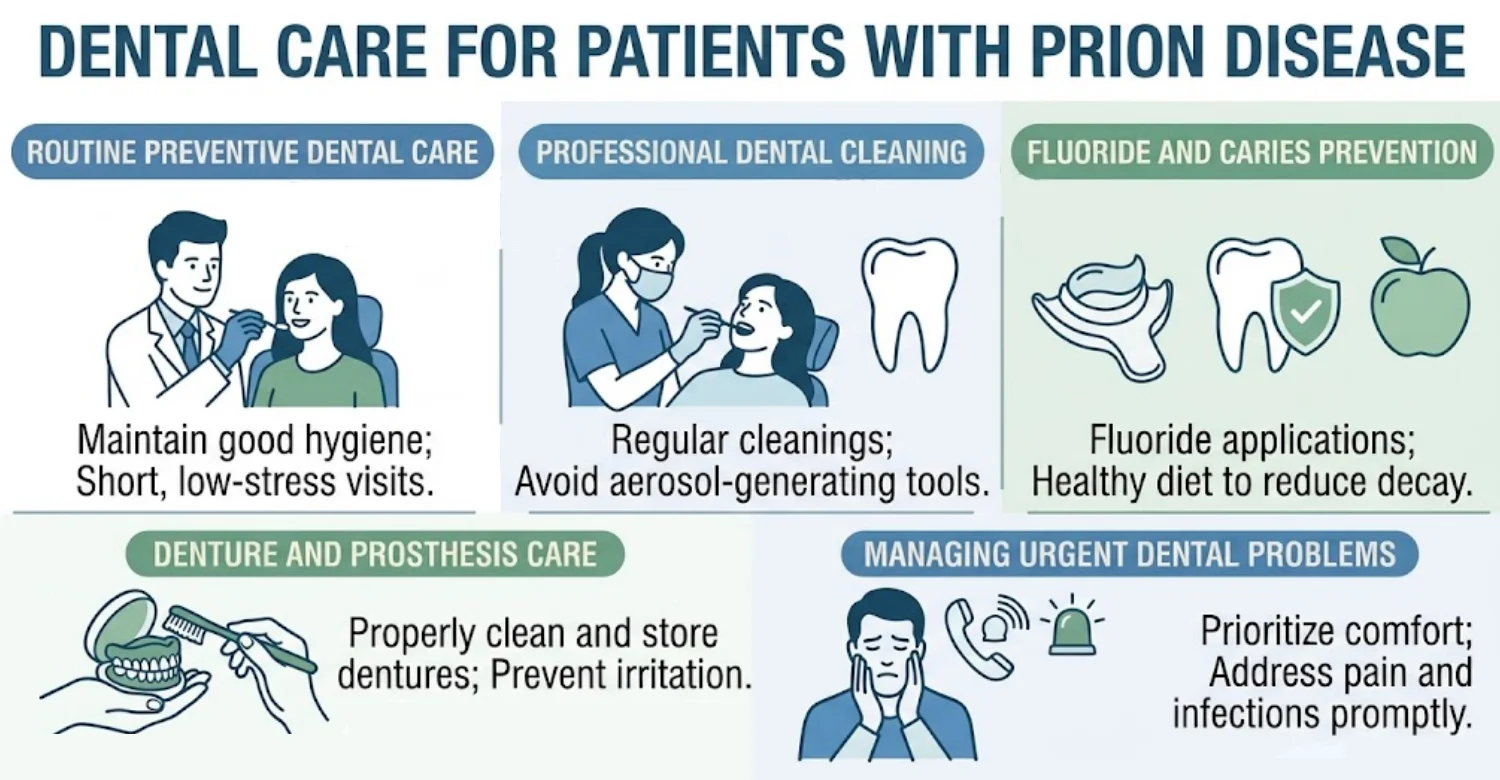
Dental treatment usually changes as prion disease progresses. Early priorities differ from those in later stages. As function declines, the focus shifts from full treatment to comfort and prevention. Plans should be reviewed regularly with caregivers and the medical team. This flexible approach reflects how prion diseases and oral health interact over time. It also helps avoid procedures that no longer offer meaningful benefit. The stages below provide a general guide, although every patient's course differs.
Early Disease
In early disease, the patient may still manage much of their own oral care. The focus is on prevention and maintaining normal oral hygiene. This is a good time to complete necessary dental treatment, such as fillings or cleanings, where appropriate. Addressing problems early may prevent more difficult care later. The dental team can also help establish a practical long-term routine. Involving caregivers from the start makes later transitions smoother and less stressful.
Progressive Disease
As the disease progresses, oral-hygiene routines should be simplified. A power toothbrush or adapted handle may help. Caregiver involvement usually increases, especially for brushing and denture care. The focus moves further toward comfort and prevention. Unnecessary or burdensome procedures are reduced where possible. Dental care for patients with prion disease at this stage often means shorter visits, clear communication, and realistic goals. Regular review helps the team adjust care as abilities change.
Advanced Disease
In advanced disease, treatment is individualized according to the patient's condition and care goals. Priorities include pain relief, infection management, oral comfort, and safe eating. Gentle mouth cleaning and moisturizing may matter more than complex procedures. The dental team coordinates closely with the medical and caregiving team. At this stage, prion diseases and oral health care is centred on dignity and comfort. Every decision should consider what truly benefits the patient.
Evaluate your choices in Implant Supported Bridge vs Traditional Bridge
What We Notice Clinically
Dr. Rifat Alsaman, Head of the Medical Team at Vitrin Clinic and a cosmetic dentist, emphasizes that oral findings in complex neurological conditions should be assessed in context. They should not automatically be attributed to the underlying disease. Dr. Rifat Alsaman also notes that basic oral hygiene becomes harder when coordination, communication, or independence decline. For this reason, the dental team should identify preventable problems early. The oral-care plan should then match the patient's abilities. This is central to prion diseases and oral health.
Why Individualized Assessment Matters
Oral symptoms can have several different causes. A dental examination helps distinguish caries, periodontal disease, infection, trauma, and mucosal problems. Each needs its own management. The patient's ability to cooperate with treatment must also be considered. Caregiver involvement may be important, particularly for medical history and home care. Finally, treatment should reflect the patient's overall medical condition and care goals. Individualized assessment keeps dental care for patients with prion disease accurate, safe, and genuinely helpful.
Clinical Note
Prion diseases are primarily neurological disorders, so oral symptoms should be interpreted carefully. There is no basis for describing prion disease as a routine direct cause of tooth decay or periodontal disease. However, neurological decline may make oral hygiene, eating, hydration, communication, and dental attendance more difficult. These secondary factors can contribute to dental problems. Dr. Rifat Alsaman, Head of the Medical Team at Vitrin Clinic and a cosmetic dentist, recommends identifying the actual cause of each oral finding. This is essential for understanding prion diseases and oral health accurately.
See what fits your needs in Dental Implants vs Implant Supported Dentures
Prevention and Long-Term Oral Care
Long-term oral care is built on prevention, regular review, and teamwork. Consistent daily habits reduce the risk of decay and gum inflammation. Scheduled dental reviews detect problems early. Coordination between professionals keeps care practical and safe. Together, these steps protect comfort as the illness progresses. Prevention is the most reliable strategy for prion diseases and oral health. It also reduces the need for difficult or urgent treatment later, which benefits both patients and caregivers.
Establish a Consistent Oral-Hygiene Routine
A consistent routine is easier to maintain than a complicated one. Use fluoride toothpaste at every brushing. Brush regularly, ideally twice a day, at the same times. Add interdental cleaning with floss or small brushes when feasible. If the patient wears dentures, clean them daily and remove them overnight where advised. Routine helps caregivers stay organized and helps patients feel secure. Over time, this consistency supports prion diseases and dental health.
Schedule Appropriate Dental Reviews
Appropriate dental reviews help detect caries and periodontal inflammation early. They also allow the team to monitor oral tissues and check dentures or other prostheses. The interval between visits depends on risk and tolerance. Higher-risk patients may need more frequent reviews. As functional status changes, the care plan can be adjusted accordingly. Regular reviews help reduce oral health complications of prion diseases before they cause pain or eating difficulty. Early findings usually need simpler care.
Coordinate Dental and Medical Care
Communication between dental professionals, physicians, caregivers, and other healthcare professionals helps ensure treatment is appropriate. Physicians can share medical information, medications, and overall care goals. Caregivers provide daily insight into eating, comfort, and behaviour. Speech and swallowing specialists may advise on safe eating. The dental team can then plan care that fits the full picture. This joined-up approach makes prion diseases and oral health management more practical, consistent, and patient-centred.
Vitrin Clinic's Approach to Complex Dental Care
At Vitrin Clinic, dental planning begins with a careful assessment of the patient's oral condition, medical circumstances, and treatment needs. Where appropriate, the dental team may use clinical examination, digital scanning, radiographic imaging, and other diagnostic tools. Under the clinical leadership of Dr. Rifat Alsaman, Head of the Medical Team at Vitrin Clinic and a cosmetic dentist, treatment planning is individualized rather than based solely on a diagnosis. For complex cases involving prion diseases and oral health, the team considers each patient's overall circumstances before recommending care.
.jpg)
.jpg)


Ready to transform your smile?
Talk to our team and get a FREE treatment plan.
References:
FAQs
Dr. Rifat Alsaman has more than 5 years of clinical experience in dentistry and currently serves as the Head of the Medical Team at Vitrin Clinic. He is dedicated to providing exceptional patient care, overseeing treatment planning, and ensuring the highest clinical standards across the team. His expertise, attention to detail, and commitment to continuous professional development have helped countless patients achieve healthier, more confident smiles.


