General Dentistry
August 9, 2026
Hidden Sugars, Acids & Teeth-Friendly Choices: restaurant chain, restaurant food, oral health
 Dr. Rifat Alsaman
When it comes to restaurant food and oral health, every meal you eat at a chain eatery affects more than your appetite, it shapes your teeth too. Menu items are often built for convenience and flavor. They are packed with sugar, refined starches, and acidic ingredients. Over time, these ingredients quietly damage teeth and gums. This guide covers how chain menus, everyday dining habits, and dental wellness are closely connected. Research backs this up: adults eating two or more fast-food meals a week show notably higher rates of decayed, missing, and filled teeth than those who eat less, according to a 2024 NHANES-based study. Understanding which ingredients pose the greatest risk, and which choices protect your smile, makes dining out safer for your teeth.
How Does Chain Dining Affect Your Smile?
Eating out affects your smile through repeated exposure to sugar, starch, and acid in a single sitting. Every menu tends to combine sauces, bread, and sweetened drinks. This creates multiple attacks on enamel per meal. This is a core part of the connection covered throughout this guide.
The Connection Between Dining Out and Your Teeth
The link between what you eat out and your teeth comes down to frequency and composition. Meals from a typical chain often pair sugar with acid, think soda with a burger, or dressing with bread. This extends the time your teeth spend under attack. Restaurant chain, restaurant food, oral health patterns like this repeat across nearly every casual dining visit.
What Makes Restaurant Meals Risky for Your Teeth?
Restaurant meals become risky for your teeth when they combine several damaging elements at once: sugar, starch, acid, and stickiness. A single plate from a chain menu can hit all four categories. This means your teeth face a longer, more intense exposure than a simple, home-cooked meal would typically create. This is the heart of the issue when it comes to chain dining and dental wellness. Curious what else in your daily diet affects your smile? See our full guide to gut health and oral health.
High Sugar Content
Many chain menu items, including desserts, sauces, and beverages, contain hidden sugar that feeds cavity-causing bacteria. This is one of the clearest mechanisms behind fast food teeth problems. High-sugar items commonly served at fast-food outlets are considered a key driver of caries risk, according to NHANES-based research.
Refined Carbohydrates
White bread, buns, and fries break down into sugars quickly in the mouth. A cross-sectional study of urban adolescents found dental caries prevalence of 36.7%, with dining-out frequency listed among the dietary factors studied. This shows how refined carbs from chain menus contribute to decay.
Acidic Ingredients
Vinegar-based dressings, citrus garnishes, and tomato sauces lower the pH in your mouth, softening enamel temporarily. When this acid exposure happens repeatedly through frequent takeout meals, enamel erosion becomes more likely, especially without proper rinsing or waiting before brushing.
Sticky Foods
Caramel, syrups, and chewy bread cling to tooth surfaces longer than other dishes, giving bacteria extended access to sugar. A Brazil-based birth cohort study tracked ultra-processed and fast food intake from ages 10 to 13. It found this stickiness pattern closely tied to higher caries rates later in adolescence.
Tips for the Patients
Rinse with water after eating out, choose grilled over fried items, and avoid lingering over sugary drinks. Keeping restaurant food and oral health habits in mind at every meal reduces the daily impact on your teeth.
Can Fast Food Cause Tooth Problems?
Yes, fast food can cause tooth problems including cavities, enamel wear, and gum irritation. Frequent fast food teeth issues stem from repeated sugar and acid exposure. This is combined with fast eating habits that leave little time for saliva to neutralize acids. Already noticing a nagging ache after a fast-food meal? Read tooth decay pain for what it might mean.
Fast Food Teeth and Dental Health
Fast food teeth concerns are well documented. A Bangladesh-based study of 345 teenagers found 90.4% ate fast food regularly, and dental caries affected 36.8% of that group. This shows a clear statistical link between frequent takeout intake and measurable decline in tooth health among younger patients, real-world evidence of how closely diet and dental health are tied together.
How Frequent Fast Food Consumption Can Increase Dental Risks
Eating fast food often increases dental risk because each visit typically includes sugar, acid, and starch together. Over time, this repeated combination from a chain menu overwhelms the mouth's natural defenses. It can lead to plaque buildup, cavities, and inflamed gums if hygiene doesn't compensate.
Fast Food and Plaque Buildup
Plaque forms faster when sugary and starchy meals are eaten frequently without brushing soon after. Bacteria feed on leftover residue, producing acid that erodes enamel. Regular fast food teeth exposure without proper cleanup accelerates this cycle significantly.
Fast Food and Cavities
Cavities develop when sugar from a chain meal interacts with bacteria to produce enamel-eroding acid. A geographic study near Las Vegas found dental caries rates were significantly linked to living within one mile of fast-food and convenience stores. This highlights how easy access drives cavity risk.
Fast Food and Gum Health
Gum health suffers when sticky, sugary chain meals sit against the gumline. Inflammation and early gingivitis can follow, especially in patients who skip flossing after these meals. This is another way the link between diet and dental health shows up clinically. See the earliest warning signs you shouldn't ignore in how gingivitis starts.
Tips for the Patients
Balance fast food teeth exposure by drinking water with meals, choosing fiber-rich sides, and brushing within an hour of eating. These habits limit the damage frequent chain visits can cause to your gums and enamel.
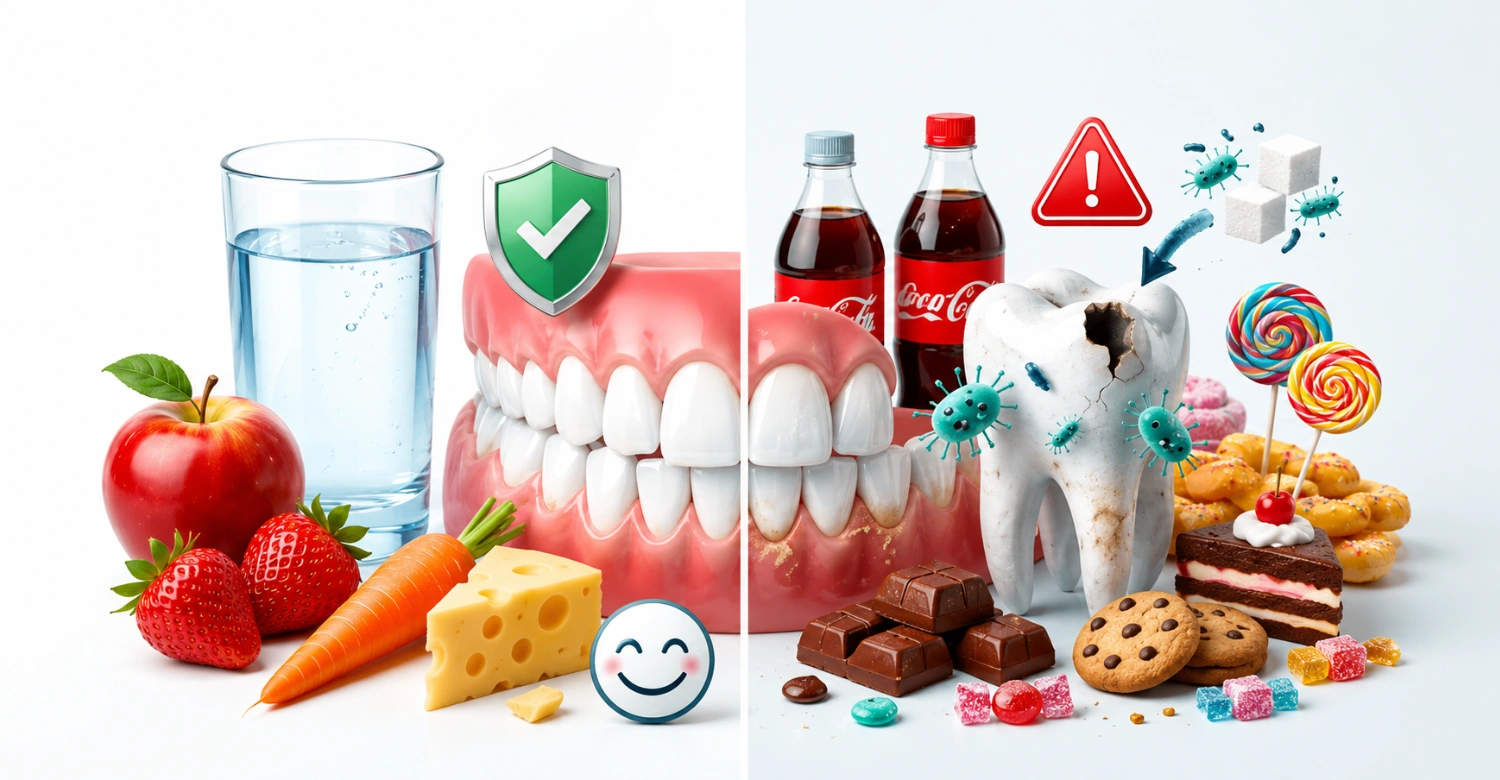
How Do Sugary Drinks Affect Your Teeth?
Sugary drinks affect your teeth by feeding decay-causing bacteria and softening enamel through acid content. Sodas, sweetened coffee, and juice served at nearly every chain are among the biggest contributors to cavities and enamel erosion. Restaurant food and oral health outcomes are shaped heavily by beverage choice. Thinking about switching to diet soda instead? See what the research actually says in are artificial sweeteners bad for your teeth.
Sugary Drinks and Cavities
Sugary drinks are a leading cause of cavities because sugar in liquid form coats every tooth surface instantly. Choosing water over soda when eating out is one of the simplest ways to protect your teeth without changing the rest of your diet.
Sugary Drinks and Enamel Erosion
Beyond sugar, many drinks are also acidic, which directly weakens enamel. This dual effect of sugar and acid from chain beverages makes sugary drinks especially harmful. They often cause faster enamel erosion than sugar from solid food alone.
Soft Drinks
Carbonation and sugar combine in soft drinks to create a strong acid attack on enamel. Regularly ordering soda with a takeout meal significantly raises the risk of both cavities and enamel erosion over time.
Sweetened Coffee
Sweetened coffee drinks, common at many chain locations, add sugar syrup that lingers on teeth. Frequent consumption without rinsing contributes meaningfully to plaque buildup and long-term dental decline.
Energy Drinks
Energy drinks are typically both highly acidic and high in sugar, making them one of the harshest beverage choices for teeth. Ordering these alongside chain meals compounds enamel erosion risk considerably.
Fruit-Based Sugary Beverages
Fruit juices and smoothies seem healthy but often contain concentrated natural sugars and acids. When paired with other menu items, they add another layer of cavity and enamel erosion risk.
Tips for the Patients
Swap sugary drinks for water or unsweetened tea when dining out, and use a straw to limit contact with front teeth. This simple change reflects good restaurant food and oral health practice.
Can Restaurant Food Cause Enamel Erosion?
Yes, these meals can cause enamel erosion, particularly through acidic sauces, marinades, and carbonated beverages common on chain menus. Repeated acid exposure softens enamel. Without enough recovery time between meals, this erosion becomes progressive and permanent. Get the full science behind this process in tooth enamel erosion.
What Is Enamel Erosion?
Enamel erosion is the gradual wearing away of the tooth's protective outer layer due to acid exposure. Unlike cavities, it isn't caused by bacteria alone. Frequent acidic meals and drinks are a major contributing factor to this irreversible damage.
Menu Items That May Contribute to Enamel Erosion
Several common chain items directly contribute to enamel erosion, especially acidic sauces, pickled sides, carbonated drinks, and citrus garnishes. Understanding these risks helps patients choose better substitutes.
Acidic Sauces
Vinaigrettes, ketchup, and tangy dipping sauces found across most menus are surprisingly acidic. Frequent use on multiple dishes per meal adds up, gradually weakening enamel with each visit to a chain. Wondering if fizzy water is any safer than soda? Find out in sparkling water and teeth.
Pickled Foods
Pickles and fermented sides carry high acidity that can soften enamel on contact. While flavorful, regular consumption alongside other dishes adds an extra acid load your teeth must recover from.
Carbonated Drinks
Carbonated drinks, sweetened or not, contain acids that lower mouth pH quickly. Ordering these regularly with chain meals is one of the most common contributors to enamel erosion seen in dental patients.
Citrus-Based Foods
Lemon and lime garnishes, common in menu presentation and dressings, are highly acidic. Sucking on citrus wedges or squeezing them directly onto food increases direct acid contact with enamel.
Tips for the Patients
Wait 30 minutes before brushing after acidic meals, and rinse with water immediately after eating. This protects softened enamel from abrasion and reflects sound restaurant food and oral health habits. Get the full timing guidance in our related guide to acidic drinks and enamel protection.
What Restaurant Foods Increase the Risk of Cavities?
Foods that increase cavity risk share common traits: high sugar, refined starch, and stickiness. Desserts, breads, and sauces served across chain menus are frequent culprits. They feed the bacteria that produce the acid responsible for tooth decay. Learn exactly how this process unfolds in the causes of tooth decay.
Sugary Desserts
Cakes, pastries, and ice cream served at the end of a meal deliver concentrated sugar directly to teeth. This final course often does the most cavity-related damage of the entire dining experience. It's why awareness matters most at dessert.
Refined Carbohydrates
Fries, white bread, and pasta break down into sugar almost immediately in the mouth. These staples of chain menus feed decay-causing bacteria just as effectively as candy, despite tasting less sweet.
Sticky Restaurant Foods
Caramel sauces, chewy bread, and syrup-coated dishes cling to teeth far longer than other dishes. This gives bacteria extended time to produce acid, a pattern worth watching for. See the full list of everyday snacks putting your teeth at risk in the causes of tooth decay.
Sweet Sauces and Dressings
Barbecue sauce, honey mustard, and sweet glazes add hidden sugar to savory dishes. These condiments, common across chain menus, often go unnoticed as cavity contributors compared to obvious desserts or drinks.
Tips for the Patients
Choose fruit over sugary dessert, ask for sauces on the side, and rinse after eating sticky dishes. These small adjustments reduce cavity risk without limiting your dining options.
What Are the Best Healthy Restaurant Meals for Your Teeth?
The best healthy restaurant meals for your teeth combine protein, crunchy vegetables, and low sugar content. Grilled proteins, salads, and dairy-based sides found at most chains support strong enamel and healthy gums far better than fried or sugary alternatives.
Choose Protein-Rich Meals
Grilled chicken, fish, and lean meats provide phosphorus and protein that help remineralize enamel. Choosing protein-focused dishes over breaded or fried versions is one of the simplest upgrades for your teeth.
Add Crunchy Vegetables
Raw vegetables like carrots and celery, often available as sides, naturally scrub plaque from teeth while chewing. They also stimulate saliva production, which helps neutralize acids from the rest of the meal.
Choose Dairy-Based Options When Appropriate
Cheese and yogurt-based dishes supply calcium and help buffer acid in the mouth. Adding these to your order can offset some of the acidic or sugary elements found elsewhere on the plate. Curious how nutrition ties into your whole-body wellness too? Explore gut health and oral health.
Drink Water Instead of Sugary Beverages
Replacing soda or juice with water is the single most effective change you can make when eating out. This one habit sums up good restaurant food and oral health practice in a nutshell.
Tips for the Patients
Build your plate around protein and vegetables, request dressings on the side, and finish meals with water rather than dessert. These choices make dining out noticeably friendlier to your teeth.
How Can You Follow a Dental Diet When Eating at a Restaurant Chain?
Following a dental diet at a chain means prioritizing calcium, protein, and fiber while limiting added sugar and acid. With a little planning, most menus offer enough flexibility to support a genuinely tooth-friendly meal.
Choose Foods That Support Strong Teeth
Strong teeth are supported by nutrient-dense choices available on most menus. Prioritizing calcium, protein, fiber, and low-sugar items over fried or sweetened options makes a real difference in long-term dental health.
Calcium-Rich Foods
Cheese, yogurt, and leafy greens strengthen enamel and support the dental diet. Many menus include a cheese or dairy-based side that can easily fit this goal.
Protein-Rich Foods
Lean meats, fish, and eggs supply nutrients that help repair and maintain tooth structure. Choosing these as the main component of your order supports a stronger dental diet overall.
Fiber-Rich Foods
Vegetables and whole grains increase saliva production, which naturally helps clean teeth during a meal. Adding a side salad to your order is a simple dental diet upgrade.
Low-Sugar Choices
Opting for unsweetened items and skipping dessert reduces the overall sugar load of a meal. This is one of the easiest dental diet rules to apply anywhere you eat out.
Foods and Drinks to Limit
Certain menu items should be limited to protect your dental diet, particularly added sugars, sugary drinks, acidic foods, and sticky snacks. Together, these combine to raise cavity and enamel erosion risk the most.
Added Sugars
Desserts, sauces, and sweetened sides quietly add sugar throughout a meal. Watching for these in chain dishes helps keep your overall dental diet on track.
Sugary Drinks
Soda, sweetened tea, and juice are some of the largest single sources of sugar in a typical order. They should be limited or replaced with water whenever possible.
Acidic Foods
Citrus, vinegar-based dressings, and pickled sides can erode enamel with frequent use. Limiting these within your order protects your teeth from unnecessary acid exposure.
Sticky Snacks
Caramel, taffy-like desserts, and syrup-coated dishes cling to teeth. They're best treated as occasional indulgences rather than regular parts of your routine.
Tips for the Patients
Plan your order before arriving, ask about preparation methods, and don't hesitate to request modifications. Following this guidance is achievable at nearly any eatery.
How Can You Protect Your Teeth After Eating Out?
Protecting your teeth after eating out involves simple post-meal habits: drinking water, rinsing, sticking to your brushing routine, cleaning between teeth, and avoiding constant snacking. Together, these habits limit lingering sugar and acid exposure.
Drink Water After Your Meal
Drinking water immediately after a meal helps rinse away sugar and dilute acid before it can settle on enamel. It's one of the fastest and easiest post-meal habits for protecting teeth.
Rinse Your Mouth When Appropriate
When a toothbrush isn't available, swishing water around your mouth after eating out offers a similar rinsing benefit. It helps clear food particles and reduce the concentration of sugar and acid.
Maintain Your Daily Brushing Routine
Sticking to a consistent brushing routine, even on days filled with dining out, ensures plaque doesn't build up unnoticed. Waiting slightly after acidic meals before brushing protects softened enamel from added abrasion. Still deciding on the right toothpaste? Compare your options in fluoridated vs. fluoride-free toothpaste.
Clean Between Your Teeth
Flossing removes trapped food particles between teeth that brushing alone misses, particularly sticky residue left behind by sauces and desserts common at chains. This step is essential for preventing cavities between teeth. Not flossing after meals yet? Learn why it matters in how to use dental floss.
Avoid Constant Snacking
Grazing throughout the day on leftovers keeps your mouth in a near-constant acidic state, giving teeth little time to recover. Sticking to defined mealtimes supports the restaurant food and oral health balance this guide focuses on. Learn why timing matters as much as what you eat in oral health and sleep — since nighttime habits matter too.
What Should You Know About Restaurant Chain Food and Your Smile?
Chain food doesn't have to threaten your smile if you understand the risks and make informed choices. Balancing occasional indulgence with mindful ordering keeps both your enjoyment of eating out and your dental health intact.
Balance Is Key
Enjoying meals out occasionally isn't the concern, frequency and follow-up care are what matter most. Balancing indulgent meals with tooth-friendly choices most of the time protects your smile long-term.
Small Dietary Changes Can Protect Your Teeth
Simple swaps, like choosing water over soda or a side salad over fries, add up over time. These small dietary changes make a measurable difference in how your smile holds up over the years.
Regular Dental Care Still Matters
No amount of careful ordering fully replaces regular dental checkups. Routine visits catch early signs of cavities or enamel erosion caused by eating out before they become larger problems. See what a proactive dental routine actually looks like in preventive dentistry at Vitrin Clinic.
Restaurant Food and Oral Health at Vitrin Clinic
At Vitrin Clinic, we see firsthand how restaurant food and oral health habits interact in our patients every day. Our team combines preventive guidance with personalized treatment to help patients enjoy dining out without compromising their smile.
How Vitrin Clinic Approaches Dental Care
Vitrin Clinic approaches dental care through prevention first, treatment second. We look closely at each patient's diet, including how often they eat out, to identify risk factors before cavities or enamel erosion develop.
Personalized Dental Care at Vitrin Clinic
Every patient at Vitrin Clinic receives a dental plan tailored to their lifestyle, including realistic guidance for managing frequent chain meals. We focus on practical adjustments rather than unrealistic dietary restrictions.
Preventive Care and Patient Education
Vitrin Clinic places strong emphasis on patient education, helping people understand exactly how restaurant food and oral health habits connect. This knowledge empowers patients to make smarter choices without giving up eating out entirely. See how everyday choices connect to long-term results in our complete guide to dental treatment at Vitrin Clinic.
What We Notice Clinically
Clinically, our team at Vitrin Clinic frequently observes that patients who eat at chains multiple times per week show earlier signs of enamel wear and cavity formation compared to those who dine out less often.
Clinical Note
Our clinical team at Vitrin Clinic notes that pairing sugary desserts with acidic drinks during a meal appears to accelerate enamel softening. This reinforces the importance of water and timely brushing after eating out. Already dealing with sensitivity after sweets? Find out why in why your teeth hurt when you eat.
Tips for the Patients
Schedule regular checkups at Vitrin Clinic, especially if eating out is a frequent part of your routine. This keeps restaurant food and oral health monitoring consistent over time.
Reference:
In conclusion, the food choices you make at a restaurant chain can have a direct impact on your oral health. Frequently consuming sugary drinks, fast food, and highly processed meals may increase the risk of cavities and other dental problems. Research published on PubMed Central also highlights the relationship between frequent fast-food consumption and poorer dental health, reinforcing the importance of choosing balanced, tooth-friendly meals.
https://pmc.ncbi.nlm.nih.gov/articles/PMC11096624/
FAQs
Dr. Rifat Alsaman has more than 5 years of clinical experience in dentistry and currently serves as the Head of the Medical Team at Vitrin Clinic. He is dedicated to providing exceptional patient care, overseeing treatment planning, and ensuring the highest clinical standards across the team. His expertise, attention to detail, and commitment to continuous professional development have helped countless patients achieve healthier, more confident smiles.


.webp&w=3840&q=75)

