General Dentistry
October 1, 2026
Idiopathic Multicentric Castleman Disease and Dental Health: Is There a Connection?
 Dr. Rifat Alsaman
Idiopathic Multicentric Castleman Disease and dental health are linked through careful planning rather than direct cause. Idiopathic multicentric Castleman disease (iMCD) is a rare immune disorder. It causes enlarged lymph nodes in several body regions and widespread inflammation. This systemic activity can shape how dental care is delivered. However, iMCD does not automatically cause cavities, gum disease, or other dental diseases. Some oral problems relate to medications, immune status, inflammation, bleeding tendencies, or general health instead. Understanding Idiopathic Multicentric Castleman Disease & dental health helps patients and dentists separate these causes. The dentist protects oral health while coordinating with the patient's medical team.
Idiopathic Multicentric Castleman Disease and Dental Health: What Is the Connection?
Idiopathic Multicentric Castleman Disease & dental health connect mainly through the body's overall condition. iMCD is a systemic disease driven by excessive inflammatory signaling, often involving interleukin-6. Patients may experience fever, fatigue, lymph node enlargement, low blood counts, and organ dysfunction. Each factor can influence dental management.
Oral findings in an iMCD patient generally fall into four groups:
Direct oral manifestations of the disease itself
Indirect effects of systemic illness
Treatment-related oral complications
Unrelated dental conditions occurring alongside iMCD
Research specifically connecting iMCD with common dental diseases remains limited. Most knowledge comes from case reports. For this reason, every oral symptom deserves an individualized assessment rather than an automatic assumption.
Does Idiopathic Multicentric Castleman Disease Directly Cause Dental Problems?
Current evidence does not show that iMCD directly causes tooth decay, gum disease, or dental infections. These conditions have well-known causes, such as plaque bacteria, sugar exposure, and trauma. Only a small number of reports describe oral or throat findings in Castleman disease. These findings are rare. Assuming a direct link can delay the correct diagnosis. A tooth abscess still needs dental treatment, even in a patient with iMCD. Clinical examination clarifies the real source. This approach keeps Idiopathic Multicentric Castleman Disease and dental health in proper perspective.
Why Systemic Inflammation Matters to Oral Health
Systemic inflammation affects the whole body, and the mouth is no exception. Fever, fatigue, and weight loss can reduce energy for daily brushing and flossing. Poor appetite may affect nutrition and tissue repair. Patients who feel unwell may also tolerate long dental procedures less easily. These factors shape Idiopathic Multicentric Castleman Disease oral health planning. Still, this does not mean iMCD directly causes periodontal disease. It means dentists must consider general health when timing treatment. Idiopathic Multicentric Castleman Disease and dental health require that wider view.

Note: All images used are for editorial and illustrative purposes only and may not originate from the original news provider or associated company.
Learn how to fix Craze Lines
Castleman Disease Oral Manifestations: What Can Appear in or Around the Mouth?
Castleman Disease oral manifestations are uncommon and should be described carefully. Most documented head-and-neck findings involve lymph nodes rather than teeth or gums. Lymph node enlargement can occur in the neck, under the jaw, or near the oropharynx. These areas sit close to the mouth, so patients may link them to dental problems. However, a swollen lymph node is not a dental or periodontal disease. Any unexplained swelling, discomfort, or mass needs professional assessment. This careful view supports Idiopathic Multicentric Castleman Disease and dental health decisions.
Swollen Lymph Nodes Around the Jaw or Neck
Cervical lymph nodes lie along the neck and beneath the jaw. In iMCD, lymph nodes in several regions may enlarge. Dentists routinely feel these areas during an oral examination. They may notice firm, enlarged, or persistent nodes that the patient has missed. This finding is useful, but it is not diagnostic. Lymph nodes also enlarge with dental infections, throat infections, and many other conditions. A dentist who finds unusual nodes should document them. Medical evaluation should be recommended when appropriate.
Mouth or Throat Swelling
Unusual swelling inside the mouth or throat always deserves evaluation. It may come from infection, salivary gland problems, or lymphoid tissue changes. Rare reports have described lymphoid involvement near the base of the tongue in Castleman disease. This is not a typical dental manifestation, and patients should not expect it. A dentist can examine the area and look for an obvious dental cause. If none is found, referral to a physician or an ear, nose, and throat specialist may be appropriate.
Bleeding or Bruising Around the Mouth
Some patients with iMCD develop low platelet counts, called thrombocytopenia. Platelets help blood clot, so low levels can cause easy bruising or gum bleeding. However, most gum bleeding comes from plaque-induced gingival inflammation or brushing trauma. Spontaneous bleeding without an obvious cause is more concerning. Before extractions or deep cleanings, current blood counts may need review when medically indicated. This step is central to Idiopathic Multicentric Castleman Disease &dental health safety.
Compare materials in Flexible Partial Dentures vs Metal
Castleman Disease Mouth Symptoms: Which Signs Should Patients Watch For?
Castleman Disease mouth symptoms are rarely specific to the disease itself. Many oral signs have ordinary dental causes. Others may reflect systemic illness, medication effects, or blood count changes. A practical framework helps patients decide what to report and when. Signs fall into three groups. Some are worth discussing with a dentist. Some likely have dental causes. Others need medical evaluation. Using this framework supports better Idiopathic Multicentric Castleman Disease & dental health outcomes without unnecessary worry.
Possible Oral Symptoms to Discuss With a Dentist
Mention any of these changes at your next visit, or sooner if they persist:
Unexplained oral swelling
Persistent mouth discomfort
Unusual bleeding
Gum swelling or tenderness
Persistent sores or lesions
Difficulty maintaining oral hygiene because of fatigue or systemic illness
Changes noticed around the tongue, throat, or jaw
These Castleman Disease oral symptoms may or may not relate to iMCD. Reporting them early allows a timely examination and the right next step.
Symptoms That May Have Another Dental Cause
Many mouth problems in iMCD patients have common dental explanations:
Gingivitis from plaque buildup
Periodontal disease affecting gums and supporting bone
Dental abscess from an infected tooth
Tooth decay causing pain or sensitivity
Dry mouth, often linked to medications
Trauma-related lesions from biting or sharp edges
Medication-related oral effects, such as fungal infections
Identifying these causes matters. They respond to standard dental treatment. They should not be blamed on Castleman disease without a proper examination.
When a Mouth Symptom Needs Medical Evaluation
Some changes need assessment beyond the dental chair:
Persistent or unexplained swelling
Enlarged lymph nodes
Significant or unexplained bleeding
Fever or systemic symptoms
Difficulty swallowing or breathing
Rapidly developing oral or neck changes
These signs may reflect disease activity, infection, or another medical problem. Contact your treating physician promptly. Breathing or swallowing difficulty requires emergency care. Prompt action protects both general health and Idiopathic Multicentric Castleman Disease & dental health.
Castleman Disease and Gum Disease: Is There a Direct Link?
Castleman Disease and gum disease are often discussed together, but no direct link has been proven. Gum disease mainly develops from bacterial plaque and the body's response to it. Established risk factors include smoking, diabetes, poor oral hygiene, and genetics. Systemic inflammatory disease can make overall health management more complex. It may also affect energy, nutrition, and treatment timing. However, complexity is not causation. Evaluating Idiopathic Multicentric Castleman Disease & dental health means treating gum disease on its own clinical merits.
Castleman Disease and Periodontal Disease
Periodontal disease is a separate oral inflammatory condition. It damages the gums, ligaments, and bone supporting the teeth. Understanding Castleman Disease and periodontal disease as distinct problems helps guide treatment. Plaque control at home remains the foundation of prevention. Professional periodontal assessment measures pocket depths, bleeding, and bone levels. Before invasive or extensive dental treatment, periodontal status should be documented when appropriate. This record helps the dentist plan safely. It also allows accurate monitoring of changes over time.
Can Gum Inflammation Make an iMCD Patient Feel Worse?
Active oral infection adds to the body's overall burden. Controlling gum inflammation and dental infections is therefore an important part of general care. Patients may feel more comfortable once painful gums or infected teeth are treated. However, treating gum disease does not treat iMCD. There is no evidence that periodontal therapy changes the course of Castleman disease. The best approach combines good dental care with ongoing medical management. Dental and medical teams should communicate when patients have complex needs.
Discover treatments for Enamel Hypoplasia
Castleman Disease and Dental Complications: What Can Increase Dental Risk?
Castleman Disease and dental complications usually relate to specific medical factors rather than the diagnosis alone. Low blood counts can raise bleeding risk during procedures. Certain treatments can affect immune function and infection response. General illness may slow recovery in some patients. Not every patient faces these risks. Each factor should be checked before treatment begins. Reviewing these issues is essential for Idiopathic Multicentric Castleman Disease and dental health planning, especially before extractions, implants, or surgery.
Blood Count Abnormalities and Dental Bleeding
Thrombocytopenia, when present, increases the risk of bleeding after dental procedures. Extractions and periodontal surgery carry the highest concern. Anemia may also affect healing and energy levels. Before invasive treatment, the dentist may request recent laboratory results. These results sometimes need review with the treating physician. Together, they decide whether the procedure is safe now or should be timed differently. Local measures, such as sutures and hemostatic agents, help control bleeding when treatment proceeds.
Infection and Oral Health
Identifying active dental infections is a priority. Untreated infections can spread and cause pain, swelling, and fever. Systemic illness may change how the body responds to infection. Some iMCD treatments, including corticosteroids and immune-modulating medications, can also affect infection risk. This may influence whether antibiotics are needed. It may also change how closely patients are monitored. Patients should report dental pain, facial swelling, fever, or drainage promptly. Early assessment usually allows simpler treatment and fewer complications.
Healing and Recovery After Dental Procedures
Healing after dental treatment varies between individuals. Several factors shape recovery, including disease activity, medications, blood counts, nutritional status, and overall medical condition. A patient in stable remission may heal like anyone else. A patient with active disease may need closer follow-up. For this reason, healing expectations should be individualized. Dentists should avoid promising delayed healing in every iMCD patient. Realistic expectations are part of good Idiopathic Multicentric Castleman Disease and dental health care.
Find out how CT Scans Detect Medication-Related Osteonecrosis of the Jaw
How Is Dental Care Managed for Patients With Idiopathic Multicentric Castleman Disease?
Dental care for iMCD patients follows standard principles with added planning. The process begins with a thorough examination and medical review. The dental team then decides whether communication with the medical team is needed. Finally, active dental disease is treated in a safe sequence. Simple procedures may proceed normally in stable patients. More invasive treatments may need extra preparation. This structured approach keeps Idiopathic Multicentric Castleman Disease & dental health priorities aligned for each patient.
Comprehensive Dental Examination
A complete examination is the foundation of safe care. It typically includes:
Medical and medication history
Current iMCD status, including recent disease activity
Oral and periodontal examination
Evaluation of suspicious lesions or swelling
Dental radiographs when clinically indicated
This information shows the true state of the teeth and gums. It also reveals medical factors that may affect treatment. The dentist can then build a plan that fits the patient's overall health.
Coordination With the Medical Team
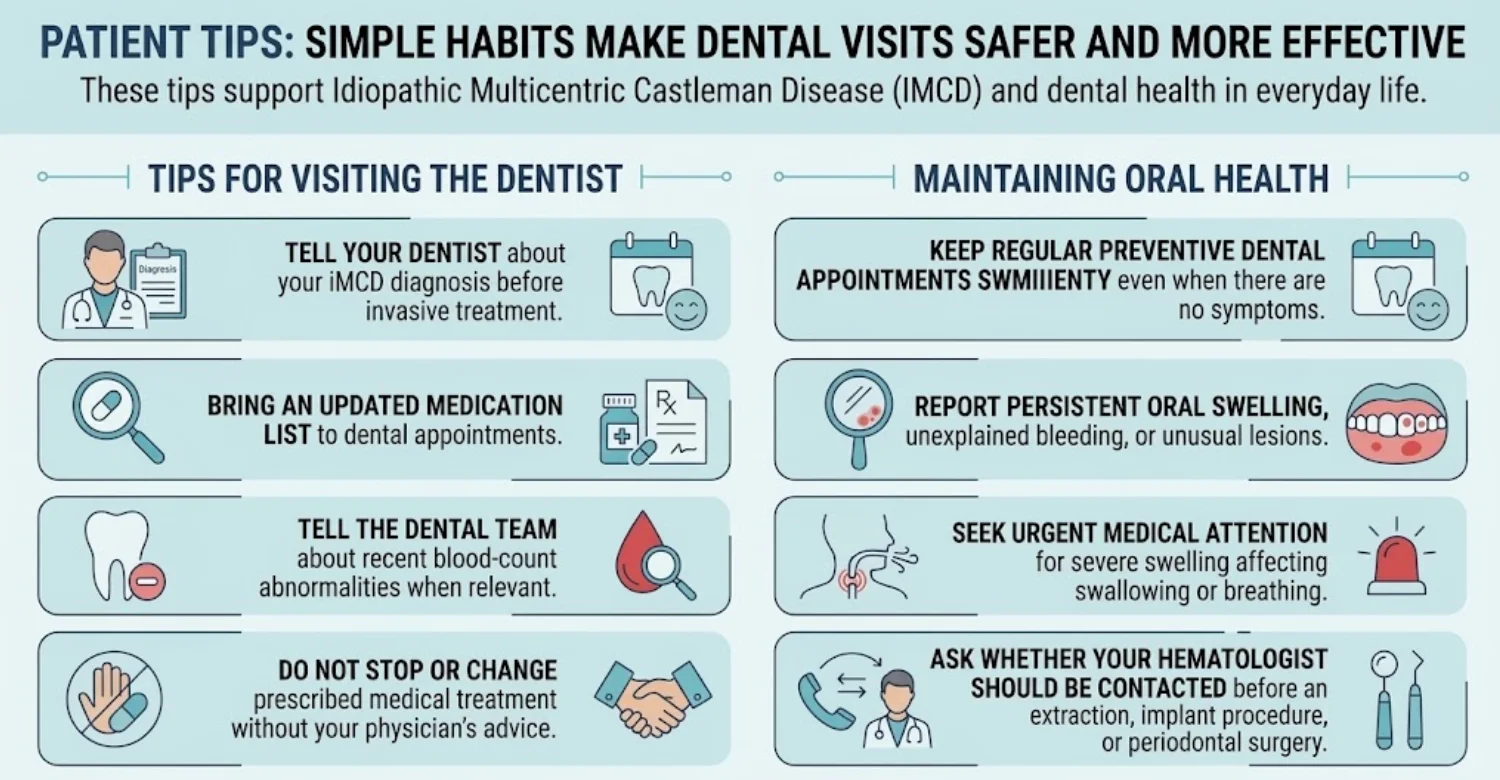
Communication with the hematologist or treating physician helps in several situations. These include planned extractions, surgery, recent low blood counts, or active disease. The teams may review medications, laboratory results, disease activity, and the planned procedure. Together, they can choose the safest timing. Dentists should not independently alter systemic medications. Any medication change must come from the medical team. This coordination is a key strength of Idiopathic Multicentric Castleman Disease and dental health management.
Managing Active Dental Disease
Active dental problems should be treated rather than ignored. Options may include:
Professional periodontal treatment when indicated
Caries treatment to remove decay
Endodontic treatment when appropriate to save infected teeth
Management of dental abscesses
Extraction only when clinically necessary
Conservative treatment when appropriate for the patient's medical situation
The goal is to remove infection, relieve pain, and preserve natural teeth. Treatment choices balance dental needs with the patient's current medical condition.
Read about Vitamin B1 Deficiency and Tooth Damage
What Dental Treatments May Be Appropriate for Patients With Castleman Disease?
Many standard dental treatments may be appropriate for patients with Castleman disease. The choice depends on oral findings, medical status, and the invasiveness of each procedure. Preventive care is usually the first priority. Periodontal and restorative treatments follow when needed. Oral surgery requires the most careful planning. Treatment is not limited by the diagnosis alone. Instead, the dentist matches each step to the patient's condition. This tailored approach reflects sound Idiopathic Multicentric Castleman Disease & dental health practice.
Preventive Dental Care
Prevention reduces the need for invasive treatment later. Key preventive measures include:
Professional cleanings to remove plaque and tartar
Fluoride where indicated, especially for patients with dry mouth
Daily plaque control at home
Regular dental examinations to detect problems early
These steps are simple, low-risk, and highly effective. For patients managing a systemic illness, prevention also means fewer dental emergencies. It keeps future treatment more predictable and comfortable. Your dentist can suggest the right visit frequency.
Periodontal Treatment
Gum treatment is tailored to the severity of disease. Common steps include:
Scaling and root planing when indicated
Periodontal monitoring to track pocket depths and bleeding
Management of active gingival inflammation
Individualized maintenance intervals
Deep cleaning may cause some bleeding. For this reason, blood counts may be reviewed first when relevant. Most patients benefit from regular maintenance visits. The interval depends on gum health, home care quality, and medical status.
Restorative Dental Treatment
Restorative treatment repairs damaged teeth and restores function. Options include:
Fillings for caries
Crowns when clinically appropriate
Replacement of failing restorations
Treatment planning based on overall medical status
Longer appointments may be split into shorter visits for patients with fatigue. Restorative work is generally low-risk, but timing still matters during active disease. Restoring teeth helps patients chew comfortably and maintain good nutrition. Durable materials also reduce the need for repeated procedures.
Oral Surgery and Tooth Extraction
Oral surgery needs the most careful preparation. Bleeding risk should be assessed before any extraction. Current platelet levels and medical recommendations may guide timing where relevant. Infection control is also important, especially for patients on immune-modulating treatment. After surgery, the dentist monitors healing and watches for bleeding or infection. For medically complex patients, coordination with the treating medical team is essential. Careful surgical planning protects Idiopathic Multicentric Castleman Disease and dental health together.
Learn How to Stop Acid Erosion on Teeth
Can Dental Treatment Improve Oral Symptoms in Castleman Disease?
Dental treatment can improve many oral symptoms, but its limits must be clear. Periodontal treatment can reduce plaque-related gum inflammation when present. Treating a dental infection can resolve the infection and relieve its pain and swelling. Repairing damaged teeth can restore comfort and chewing. However, dental treatment does not treat the underlying systemic Castleman disease. Swollen lymph nodes linked to iMCD need medical management. Understanding this difference supports realistic Idiopathic Multicentric Castleman Disease & dental health expectations.
Before and After Dental Treatment: What Should Patients Expect?
Results depend on the problem treated and the patient's overall health. Patients can reasonably expect:
Reduced plaque and gingival inflammation when periodontal disease is treated
Improved comfort when a dental infection or damaged tooth is addressed
Healing expectations based on the individual patient's medical condition
Need for ongoing maintenance rather than assuming treatment permanently eliminates risk
Good results last longer with consistent home care. Regular checkups help maintain them over time.
Understand the link in Sinonasal Disease and Dental Health
Clinical Note
Dr. Rifat Alsaman, Head of the Medical Team at Vitrin Clinic and a cosmetic dentist, stresses that patients with complex systemic conditions require individualized dental planning. In his view, iMCD does not automatically mean routine dental treatment is contraindicated. The treatment sequence depends on medical status, medications, blood results when relevant, oral findings, and procedure invasiveness. Complex cases may require dental and medical teams to communicate first. Active infection or periodontal disease should come before cosmetic dentistry. This principle guides Idiopathic Multicentric Castleman Disease and dental health care.
Castleman Disease Oral Hygiene: A Practical Daily Routine
A consistent routine is the foundation of Castleman Disease oral hygiene. Daily care reduces plaque, prevents gum inflammation, and lowers the chance of dental infections. It also reduces the need for invasive procedures later. Routines should be gentle and realistic, especially during periods of fatigue. Simple habits done well matter more than complicated ones. The following steps support Idiopathic Multicentric Castleman Disease & dental health every day. They also strengthen Idiopathic Multicentric Castleman Disease oral health over the long term.
Brushing
Brush twice daily with fluoride toothpaste. Fluoride strengthens enamel and helps prevent tooth decay. Use a soft-bristled toothbrush and a gentle technique, especially around inflamed or sensitive tissues. Angle the brush toward the gumline and use small circular movements. Brush for about two minutes each time. An electric toothbrush can help patients with fatigue or reduced hand strength. Replace your brush every three months, or sooner if the bristles become frayed.
Cleaning Between the Teeth
A toothbrush cannot reach every surface between the teeth. Use dental floss or interdental brushes depending on your spacing and gum health. Your dentist can recommend the right size and type. Some bleeding may occur when gums are inflamed. Bleeding should not automatically lead you to stop cleaning, since plaque removal often reduces it. However, persistent or significant bleeding should be evaluated. This is especially important if you have known blood count abnormalities.
Cleaning the Tongue and Maintaining Overall Oral Hygiene
The tongue surface holds bacteria that contribute to bad breath and plaque. Clean it gently with a toothbrush or tongue cleaner once a day. Avoid aggressive scraping when tissues are sore or irritated. Rinse with water after meals if brushing is not possible. Ask your dentist before using strong alcohol-based mouthwashes. They may irritate dry or sensitive tissues. Check your mouth regularly for sores, swelling, or color changes, and report anything unusual.
Diet, Hydration, and Oral Health
Diet and hydration directly affect the mouth. Drink enough water throughout the day to support saliva flow. Saliva protects teeth and helps wash away food particles. Limit frequent exposure to sugary foods and drinks, which feed decay-causing bacteria. Systemic illness can reduce appetite or make eating difficult. Soft, nutritious foods may help during challenging periods. A dietitian can provide extra support when needed. Good nutrition strengthens Idiopathic Multicentric Castleman Disease and oral health together.
Check the effects of Secondhand Smoke and Tooth Enamel Development
What We Notice Clinically
At Vitrin Clinic, clinical experience shapes how we approach medically complex patients. Dr. Rifat Alsaman, Head of the Medical Team at Vitrin Clinic and a cosmetic dentist, guides this perspective. Patients with systemic conditions often worry that every mouth change relates to their diagnosis. Others have delayed dental care because of their illness. Both situations benefit from a calm, structured assessment. Our approach to Idiopathic Multicentric Castleman Disease and dental health centers on accurate diagnosis, careful planning, and clear communication.
When Should a Patient With Castleman Disease See a Dentist?
Patients with Castleman disease should see a dentist regularly, not only when problems appear. Routine visits catch issues early, when treatment is simpler. Some changes need a prompt appointment. Others require urgent care without delay. Knowing the difference helps patients act at the right time. It also prevents small problems from becoming complex ones. Clear timing guidance is a practical part of Idiopathic Multicentric Castleman Disease and dental health management.
Routine Dental Visits
Regular preventive visits include an examination and professional cleaning. The dentist checks the teeth, gums, soft tissues, and lymph node areas. Many patients benefit from visits every six months. Some may need more frequent appointments, depending on gum health and medical status. Your dentist will establish an individualized maintenance schedule. Inform the team about any changes in your health or medications since your last visit. Consistent visits build a reliable record of your oral health.
Book an Appointment for Persistent Oral Changes
Book a dental appointment if you notice any of these changes:
Persistent gum bleeding
Oral swelling
New or unexplained lesions
Tooth pain
Sensitivity that does not resolve
Difficulty chewing
These symptoms are not emergencies in most cases. However, they should not be ignored for weeks. Early assessment identifies the cause and prevents worsening. Mention your iMCD diagnosis when booking so the team can prepare properly.
Seek Urgent Care for Serious Symptoms
Some symptoms require urgent medical or emergency care:
Rapid facial or neck swelling
Difficulty breathing
Difficulty swallowing
Significant uncontrolled bleeding
Fever accompanied by signs of a dental infection
These signs may indicate a spreading infection, airway risk, or a serious medical problem. Do not wait for a routine dental appointment. Go to the nearest emergency department or contact emergency services. Inform your treating physician as soon as possible.
Compare treatments in Professional Teeth Whitening vs Whitening Strips
Dental Care at Vitrin Clinic for Medically Complex Patients
Vitrin Clinic is a dental clinic in Istanbul offering individualized treatment planning for international patients. For medically complex cases, oral and periodontal health is assessed before extensive restorative or cosmetic treatment when clinically indicated. Multidisciplinary coordination is arranged when dental needs are medically complex. Digital technologies support this process where appropriate:
Digital intraoral scanning
CBCT/3D imaging when clinically indicated
Digital treatment planning
Comprehensive periodontal assessment
Technology supports diagnosis and planning, but it never replaces clinical judgment. Dr. Rifat Alsaman, Head of the Medical Team at Vitrin Clinic and a cosmetic dentist, leads this individualized approach to Idiopathic Multicentric Castleman Disease and dental health.
Book Your FREE Treatment Plan
Please share your medical history and current medications before your consultation. Treatment recommendations depend on individual clinical and medical assessment.
.jpg)
.jpg)
.jpg)
Final Takeaway: Protecting Oral Health With Castleman Disease
Idiopathic Multicentric Castleman Disease and dental health should be considered together. However, iMCD should not be assumed to cause every oral condition. Most dental problems have dental causes and respond to standard treatment. Preventive dentistry, early assessment of unusual findings, and communication between dental and medical teams remain essential. Treatment should always match the patient's systemic condition and dental needs. Protecting Idiopathic Multicentric Castleman Disease and oral health is an ongoing partnership. Book your free consultation with Vitrin Clinic to start your personalized plan.
Ready to transform your smile?
Talk to our team and get a FREE treatment plan.
References:
FAQs
Dr. Rifat Alsaman has more than 5 years of clinical experience in dentistry and currently serves as the Head of the Medical Team at Vitrin Clinic. He is dedicated to providing exceptional patient care, overseeing treatment planning, and ensuring the highest clinical standards across the team. His expertise, attention to detail, and commitment to continuous professional development have helped countless patients achieve healthier, more confident smiles.


