General Dentistry
October 1, 2026
Circadian Rhythm and Oral Health: How Does Your Body Clock Affect Your Mouth?
 Dr. Rifat Alsaman
.webp&w=3840&q=75)
Your body follows internal timing systems that coordinate sleep, hormones, metabolism, immunity, and tissue activity. These rhythms run on roughly 24-hour cycles and respond strongly to light, meals, and activity. Circadian Rhythm and Oral Health intersect through saliva, behavior, inflammation, and daily routines. Research has identified circadian activity in salivary glands, oral tissues, and periodontal environments. However, disrupted sleep does not automatically cause cavities, gingivitis, or periodontitis. This guide explains what is established and what remains under study. Vitrin Clinic considers sleep patterns alongside clinical findings rather than treating sleep disruption as a standalone diagnosis.
What Is the Circadian Rhythm and Why Does It Matter for Oral Health?
The circadian rhythm is the body's 24-hour internal clock. It guides sleep, hormones, and immunity, and it also influences saliva and oral tissues. Understanding it helps explain daily changes in your mouth.
What is the circadian rhythm?
The circadian rhythm is an internal timing system operating across roughly 24-hour cycles. It coordinates sleep, wakefulness, hormone release, body temperature, and metabolism. The central clock sits in the brain's suprachiasmatic nucleus. Peripheral clocks also operate in many tissues, including those involved in oral function. Light is the strongest synchronizing signal, while meals and activity also shape timing. Shift work and travel across time zones can temporarily misalign these internal clocks.
How does the sleep-wake cycle influence normal body functions?
The sleep-wake cycle organizes physiological activity across day and night. Waking hours bring more eating, drinking, movement, and environmental exposure. During sleep, restorative and regulatory processes become more prominent. Melatonin rises at night, and immune signaling also varies across the day. Disrupted sleep can therefore shift several factors that indirectly influence the oral environment. These changes rarely act alone and usually interact with lifestyle and medical factors.
Is oral health affected by the body’s internal clock?
Circadian Rhythm and Oral Health are linked through rhythms affecting saliva and oral tissue function. Salivary gland activity changes according to time of day. Oral epithelial tissues also show clock-related molecular activity. Still, plaque, diet, fluoride, genetics, and medications remain major drivers of dental disease. The body clock is one possible influence, not a single cause. Understanding this balance helps patients set realistic expectations about prevention.
How do daily biological rhythms influence saliva, immunity, and oral tissues?
Daily rhythms influence salivary gland output and the behavior of oral tissues. Saliva protects teeth through lubrication, buffering, cleansing, and support for remineralization. Immune processes help regulate responses to microbes within periodontal tissues. Many mechanistic findings remain under investigation rather than established treatment rules. Current dental care still depends on examination, diagnosis, and evidence-based treatment. Timing research may eventually support more individualized preventive approaches.
How Does Circadian Rhythm Affect Oral Health?
The body clock affects the mouth through saliva, immune activity, and daily habits. Lower saliva at night reduces natural protection. Irregular schedules can also disrupt brushing, meals, and dental visits.
What are the main circadian rhythm effects on oral health?
Circadian Rhythm and Oral Health connect through saliva production, immune signaling, behavior, and tissue maintenance. Salivary flow declines substantially during sleep, leaving teeth less protected from acids. Sleep timing can also change brushing, meal timing, hydration, and dental attendance. These pathways describe possible influences on risk. They do not prove that disrupted rhythms directly cause dental disease. Researchers continue to study how strongly each pathway affects specific dental conditions.
How can circadian rhythm disruption affect teeth and gums?
Disrupted schedules can weaken several protective routines at once. Night work may shift brushing, meals, hydration, and sleep periods. Short sleep may also coincide with inflammatory changes and poorer health habits. Some studies link insufficient sleep with periodontal disease, but most are observational. Existing cavities or gum disease still require clinical diagnosis regardless of sleep pattern. Maintaining hygiene and professional care stays important even when schedules vary.
Can an irregular sleep schedule change oral hygiene habits?
An irregular schedule can make consistent oral hygiene harder to maintain. Night workers may brush before work rather than following conventional morning and evening routines. Meals may fall during periods when saliva flow is naturally lower. Fatigue can also reduce motivation for flossing and appointments. A practical routine should follow actual waking and sleeping periods, not clock times. The goal is consistency rather than forcing brushing into traditional hours.
How are circadian rhythm disruption and oral inflammation connected?
Circadian disruption may influence inflammation through hormonal, immune, and cellular signaling. Recent research describes possible links involving melatonin, cortisol, and periodontal immune balance. However, causal mechanisms remain insufficiently defined. Plaque, smoking, diabetes, medications, and genetics also drive inflammation. Discussions of Circadian Rhythm and Oral Health should therefore stay grounded in clinical findings.
What is known about circadian clock activity in periodontal tissues?
Periodontal tissues contain molecular pathways influenced by circadian regulation. Clock signaling may affect cell activity, inflammatory responses, tissue repair, and bone metabolism. Some experiments suggest disrupted regulation may increase inflammatory vulnerability. However, laboratory findings cannot automatically predict effects in every patient. Periodontitis remains driven by microbial dysbiosis and destructive host inflammatory responses. Further longitudinal research is needed before rhythm-based interventions become routine periodontal treatment.
Which findings are well established and which are still being studied?
Reduced saliva during sleep is a well-recognized normal pattern. Circadian activity in oral tissues is also supported by research. Associations between sleep and periodontal disease appear across observational studies, though their strength remains uncertain. Chronotherapy and rhythm-targeted dental treatments are still developing research areas. Patients reading about Circadian Rhythm and Oral Health should separate proven prevention from emerging hypotheses.
See what works best for you with Fixed Retainers vs Removable Retainers
What Happens to Saliva During the Day and at Night?
Saliva flows freely while you are awake and drops sharply during sleep. This normal pattern leaves teeth less protected overnight. Medications, dehydration, and mouth breathing can make nighttime dryness worse.
Does saliva follow a circadian rhythm?
Saliva production changes across the day and night. Flow is generally higher while awake and falls markedly during sleep. Salivary composition also varies with collection time and other conditions. These changes help explain why the mouth often feels drier overnight. Still, saliva volume alone does not determine whether someone develops dental disease. Diet, plaque, fluoride exposure, and medications remain equally important.
Why is nighttime saliva flow lower?
Salivary glands receive less stimulation during sleep. Reduced oral movement and the absence of eating also lower normal output. This decline is part of normal physiology, not a sign of disease. Medications, dehydration, mouth breathing, or medical conditions can intensify overnight dryness. Persistent symptoms deserve assessment rather than being blamed only on sleeping.
How can reduced nighttime saliva affect dental health?
Lower saliva reduces several protective functions in the mouth. Saliva clears food particles, buffers acids, and supports mineral balance. It also lubricates tissues for comfortable speaking and swallowing. When flow drops substantially, caries and sensitivity become more likely. Sugar frequency, oral hygiene, and fluoride use strongly modify that risk. A 2026 umbrella review of 13 systematic reviews found the sleep-periodontal link plausible but unresolved. Good fluoride-based care becomes especially important for people with persistent dryness.
Can nighttime dry mouth increase the risk of tooth decay?
Circadian Rhythm and Oral Health intersect clearly when nighttime dryness reduces salivary protection. Lower flow increases susceptibility to demineralization and dental caries. Risk rises further with frequent sugar or acid exposure before bed. Mouth breathing and certain medications can aggravate overnight dryness. Occasional morning dryness, however, does not always mean reduced gland function. The ADA distinguishes subjective dry mouth from objectively measured salivary hypofunction.
How does saliva help neutralize acids and protect enamel?
Saliva maintains conditions that support tooth mineral stability. Bicarbonate and other components help neutralize acids after eating and drinking. Saliva also cleanses surfaces and supports enamel remineralization. Fluoride carried in saliva adds further resistance against acid attack. When flow falls, these protective processes become less effective over time. That does not mean enamel is damaged during every short dry period.
What is the difference between feeling dry and having objectively reduced salivary flow?
Xerostomia means the subjective feeling of dry mouth. Hyposalivation means objectively reduced salivary gland output. A person can feel dry without markedly reduced measured flow. Conversely, reduced flow may exist before symptoms are noticed. The distinction matters because treatment depends on the cause, and salivary testing may help selected patients. Dentists can also consider medications and dehydration before recommending any test.
Learn what treatment you need in Dental Inlays vs Onlays
Circadian Rhythm and Gum Health
Gum tissues follow daily biological rhythms that influence inflammation and repair. Poor sleep may make gum problems harder to control. However, plaque remains the main cause of gingivitis and periodontitis.
Can circadian disruption affect gum health?
Periodontal tissues show biological timing activity, so the gums are part of this picture. Clock regulation may influence inflammatory and cellular pathways in gum tissue. However, disrupted sleep is not a diagnosis of gum disease. Plaque accumulation remains central to gingivitis and periodontitis. Research on Circadian Rhythm and Oral Health treats sleep as one interacting factor among many. Smoking, diabetes, genetics, and medications also shape how gums respond to plaque.
What is the relationship between sleep, inflammation, and periodontal disease?
Both sleep and periodontal disease involve inflammatory and behavioral processes. Some studies report poorer sleep alongside worse periodontal findings. However, the direction of the relationship is not always clear. Painful or inflamed gums can also disturb sleep quality. Smoking, age, diabetes, and income can confound these results. Sleep should therefore be considered within a broader periodontal risk assessment.
Can poor sleep make existing gingivitis or periodontitis harder to manage?
Fatigue and inconsistent routines can complicate gum disease management. Tired patients may skip interdental cleaning or miss appointments. Sleep disturbance may also interact with inflammatory regulation. Yet established periodontitis does not resolve simply because sleep improves. Professional treatment and daily plaque control remain necessary alongside better sleep. Vitrin Clinic can incorporate daily routine information into periodontal planning when clinically relevant.
What does current research say about circadian disruption and periodontal inflammation?
Research increasingly examines how disrupted biological timing might modify periodontal inflammation. A 2026 review described possible links involving melatonin, cortisol, and immune homeostasis. Another 2026 review discussed circadian disruption and cellular senescence in periodontal tissues. These papers highlight scientific interest, not diagnostic criteria. Studies of Circadian Rhythm and Oral Health still need longitudinal confirmation. Until then, prevention should continue emphasizing proven periodontal care.
Why should association not be confused with direct causation?
An association means two features occur together more often than expected. It does not prove that one directly causes the other. Many sleep and periodontal studies are observational, limiting causal conclusions. Reverse causation is possible when oral disease disturbs sleep. Accurate patient education reflects evidence strength rather than assuming causation. This distinction keeps patient education accurate and medically responsible.
Find your ideal smile with Teeth Whitening vs Veneers
What Is the Connection between ?
Sleep Deprivation
Oral Health
Sleep deprivation can affect your mouth indirectly through fatigue, skipped hygiene, and changes in diet. Some studies link short or poor sleep with gum disease. However, these links are associations, not proof of direct cause.
Can sleep deprivation affect your teeth and gums?
Inadequate sleep can make consistent oral hygiene harder for some people. It may also coincide with changes in diet, hydration, and stress. Observational research links sleep characteristics with periodontal outcomes. Still, sleep loss alone does not guarantee dental disease. Circadian Rhythm and Oral Health are best protected by improving sleep while keeping preventive care. Individual risk still depends on hygiene, diet, tobacco use, and existing dental findings.
Does sleeping too little increase the risk of periodontal problems?
Findings on sleep duration and periodontal disease are mixed. A 2023 meta-analysis linked sleeping under seven hours with periodontal disease. A 2024 meta-analysis found a stronger signal at five hours or less. Both relied mainly on cross-sectional studies, so causation remains unproven. The 2023 analysis pooled 107,777 participants and reported an odds ratio of 1.19. Periodontal symptoms still require dental assessment. Sleep duration should be weighed alongside sleep quality and broader risk factors.
Can poor sleep affect plaque control and oral hygiene?
Poor sleep can disrupt established cleaning routines. Fatigue may reduce the thoroughness of brushing and interdental cleaning. Irregular schedules can also make appointments easier to forget. Precise timing matters less than effective daily plaque removal. Fluoride toothpaste and interdental cleaning remain central to prevention. A customized routine makes dental care more realistic for people with variable schedules.
Can sleep deprivation contribute to dry mouth or bad breath?
Sleep deprivation does not automatically cause dry mouth. However, it often overlaps with mouth breathing, dehydration, and irregular fluid intake. Reduced saliva lets odor-producing compounds build up more noticeably. The ADA notes that dry mouth affects comfort and raises oral disease risk. Persistent dryness deserves assessment rather than assumptions about sleep. Assessment can identify contributing causes and determine appropriate preventive measures.
What does the evidence say about sleep duration versus sleep quality?
Sleep duration and sleep quality are different measures. Someone may spend enough hours in bed yet sleep poorly. A 2021 systematic review found conflicting results for self-reported duration. Some included studies linked poorer sleep quality with worse periodontal conditions. Evidence on Circadian Rhythm and Oral Health therefore looks beyond hours alone. A 2021 systematic review of 20 studies still described the overall evidence as conflicting.
Why are sleep and oral health considered potentially interconnected?
Sleep and oral health share overlapping biological and behavioral processes. Saliva changes during sleep, and immune activity follows daily cycles. Oral pain or dryness can also disturb sleep. Researchers therefore study whether effects run in both directions. Each area should still be evaluated according to its own symptoms. Patients should avoid assuming that every sleep problem signals an oral disease.
Compare options in Snap-On Veneers vs Porcelain Veneers
Shift Work and Oral Health
Shift work moves sleep, meals, and hygiene to unusual hours. These changes can raise risks such as dryness, snacking, and missed appointments. A routine built around your real schedule reduces these risks.
Does night shift work affect dental health?
Night shift work changes the timing of sleep, meals, and activity. These shifts can indirectly affect dental routines and habits. The schedule itself does not diagnose or directly cause dental disease. Common issues include overnight snacking, dehydration, and missed appointments. Circadian Rhythm and Oral Health matter for shift workers mainly through these practical routines. Dental professionals should ask about schedule patterns when they affect treatment planning.
Why may shift workers have a higher risk of oral health problems?
Shift workers often face several challenges at the same time. Meals may include frequent snacks or sweetened drinks during biologically unusual hours. Sleep may be shorter or fragmented. Workplace access to water and brushing facilities also varies. Risk should be assessed individually rather than blamed on shift work alone. Fatigue can also make preventive care harder to maintain consistently.
How can irregular working hours affect brushing, meals, hydration, and dental visits?
Changing hours can disrupt the normal rhythm of oral care. Brushing should link to waking and sleeping periods rather than clock time. Meals should be planned to limit constant sugar and acid exposure. Water should stay accessible during long shifts. Vitrin Clinic can coordinate treatment steps around international patients' available travel time. Appointments can also be arranged around actual work and sleep periods.
Is shift work associated with periodontal disease?
Researchers have investigated whether shift work corresponds with periodontal disease. Any link may reflect biological, behavioral, occupational, and socioeconomic factors together. Current evidence does not show that shift work independently causes periodontitis. Diagnosis requires assessing bleeding, pockets, recession, and radiographs. Persistent gum bleeding needs professional evaluation. Work schedules provide useful context but never replace a clinical examination.
What does recent research in shift workers show?
Studies focused on shift workers remain fewer than broader sleep research. Definitions of shift work and oral outcomes vary widely. This makes direct comparisons difficult. Strong longitudinal data on Circadian Rhythm and Oral Health in shift workers is still limited. Until better evidence appears, preventive routines remain the practical foundation. Future studies should separate occupational timing from smoking, diet, and access to care.
Which lifestyle factors may influence the association?
Several lifestyle factors shape oral outcomes on unusual schedules. Frequent sugary drinks increase repeated acid exposure and caries risk. Low water intake can worsen dryness, while smoking raises periodontal risk. Irregular brushing increases plaque, and some medications reduce saliva. Considering these factors gives a clearer picture than focusing on shift work alone.
Check out the comparison of Immediate Dental Implants vs Delayed Implants
Melatonin and Oral Health
Melatonin is the hormone that signals nighttime to the body. It appears in saliva and has attracted periodontal research interest. Still, it is not a proven treatment for gum disease.
What is melatonin and how is it connected to circadian rhythm?
Melatonin is a hormone that signals biological nighttime. Its production normally rises in the evening and at night. It acts as a timing signal rather than a dental medicine. Researchers have detected melatonin in saliva and oral tissues. Its antioxidant properties interest periodontal researchers, but routine treatment use is not established. Patients should distinguish naturally produced hormone patterns from supplement use.
Does melatonin naturally increase at night?
Yes, melatonin generally rises during the biological night. Its timing depends strongly on the circadian clock and light exposure. Salivary melatonin also shows daily rhythmic variation. Age, light, and sleep schedules affect individual timing. Night shift workers may therefore have altered melatonin patterns, though this is not a dental diagnosis. Nighttime increases support the biological signal associated with sleep timing.
What does research suggest about melatonin and periodontal tissues?
Melatonin has been studied for antioxidant and immunomodulatory effects. A systematic review identified possible benefits in certain periodontal inflammatory pathways. Research has also examined effects on oxidative stress and bone cells. These findings belong to a developing field. Within Circadian Rhythm and Oral Health research, melatonin remains an emerging topic. Some systematic evidence suggests possible adjunctive value, but it cannot replace established therapies.
Can melatonin be used to treat gum disease?
Melatonin is not a proven standalone treatment for gum disease. Studies have explored possible adjunctive effects only. Treatment must still address plaque, calculus, inflammation, and tissue destruction. Supplements also carry possible medication interactions. Vitrin Clinic can assess gum findings and recommend evidence-based periodontal care when indicated. Patients should discuss any supplementation with a qualified healthcare professional.
What is the difference between naturally occurring melatonin and melatonin supplements?
Natural melatonin is produced by the body as part of circadian signaling. Supplements provide an external dose that can shift sleep timing. The two are not clinically interchangeable. Supplements may cause side effects or interact with medicines. Dental symptoms should not automatically be treated with melatonin. Patients should distinguish natural hormone patterns from supplement use.
What are the possible side effects of melatonin supplements?
Melatonin supplements can cause side effects in some people. Reported effects include daytime sleepiness, headache, dizziness, and stomach upset. Responses vary with dose, formulation, and timing. Product quality also differs between markets. People taking medications should review interactions with a doctor or pharmacist. Pregnancy and certain medical conditions may require additional professional guidance.
Can melatonin cause dry mouth?
Dry mouth has been reported with some melatonin products, though not universally. Dose, formulation, and other medications all influence responses. Many unrelated conditions can also cause persistent dryness. Patients should not automatically blame melatonin. A dentist can check for complications, while a pharmacist can review supplement suitability.
Who should discuss melatonin use with a doctor or pharmacist?
People on regular medications should seek advice before starting melatonin. The same applies to those with significant medical conditions or complex sleep problems. Older adults may be more sensitive to sedation. Pregnant or breastfeeding patients need medical guidance. Anyone with persistent dryness should mention supplements at dental visits.
Explore the best choice between No-Prep Veneers vs Traditional Veneers
What Oral Health Problems May Be More Noticeable When Sleep and Circadian Rhythms Are Disrupted?
Disrupted sleep can make certain oral symptoms easier to notice. Common examples include dry mouth, morning breath, gum irritation, and sensitivity. Some improve with routine care, while others need professional evaluation.
Dry mouth and increased thirst at night
Nighttime dryness becomes noticeable as saliva naturally decreases during sleep. Mouth breathing, dehydration, or medications can strengthen the sensation. Some people wake thirsty with sticky tissues. Reduced saliva raises the likelihood of caries and oral infections. Circadian Rhythm and Oral Health discussions often begin with this common symptom. Persistent dryness requires investigation of possible causes. A dentist can also check whether dryness has caused tooth or soft-tissue complications.
Bad breath after waking
Morning breath is common because saliva flow drops during sleep. Reduced cleansing lets odor-producing microbes accumulate temporarily. Mouth breathing makes both dryness and odor more noticeable. Persistent bad breath may also come from gum disease, decay, or tongue coating. A strong ongoing odor deserves examination rather than repeated masking with mouthwash. Routine brushing, tongue cleaning, and hydration usually help with ordinary morning breath.
Plaque accumulation and gingival irritation
Irregular schedules can make plaque removal less consistent. Plaque left along the gumline triggers gingival inflammation. Signs include redness, swelling, tenderness, and bleeding when cleaning. Sleep disruption may complicate routines but does not prove disease is present. Professional cleaning may be needed when calculus forms. Consistent brushing and interdental cleaning remain the first line of defense.
Tooth sensitivity and increased decay risk
Reduced saliva can increase sensitivity and carry susceptibility. Frequent acids or sugars add further challenge to enamel. Sensitivity may also come from recession, abrasion, erosion, or cracks. It is a symptom, not a diagnosis. Fluoride care helps, but persistent sensitivity needs examination to identify its cause. The underlying cause determines the appropriate treatment.
Mouth discomfort and difficulty maintaining oral hygiene
Dryness can create sticky, uncomfortable, or burning sensations. These feelings can make brushing and eating unpleasant. Severe discomfort may reduce adherence to oral care. A practical schedule should fit real sleep and waking periods. Persistent symptoms need investigation for medication, salivary, mucosal, or dental causes.
Which symptoms can be managed with routine oral care?
Mild morning dryness and temporary bad breath often improve with routine care. Water, fluoride toothpaste, interdental cleaning, and tongue cleaning support daily health. Sugar-free gum may stimulate saliva in suitable patients. Home care cannot repair established cavities or advanced periodontal damage. Practical Circadian Rhythm and Oral Health advice starts with these simple habits. Consistent routines work best when they fit real waking and sleeping periods.
Which symptoms require professional evaluation?
Dry mouth that persists despite good hydration should be evaluated. Bleeding gums may indicate gingival inflammation or periodontal disease. Persistent pain, swelling, sensitivity, or visible damage also warrants examination. Severe symptoms should never be blamed only on poor sleep. Early evaluation supports timely management and prevents avoidable progression.
.jpg)
.jpg)
.jpg)
.jpg)
.jpg)
.jpg)
What We Notice Clinically
In clinical practice, irregular sleep often appears alongside dryness, snacking, and inconsistent hygiene. These patterns add useful context. However, diagnosis always depends on what the examination actually shows.
What oral health patterns can appear in patients with irregular sleep schedules?
Patients with irregular schedules may report inconsistent brushing, snacking, dryness, or missed visits. Some have morning breath or gum irritation without advanced disease. Others have cavities unrelated to their sleep patterns. Vitrin Clinic assesses the actual oral condition before recommending treatment. Sleep and work details add useful context to that assessment. It should complement examination rather than replace dental diagnosis.
Why is nighttime dryness clinically important?
Saliva normally provides continuous oral protection. During sleep, flow declines and the mouth becomes naturally drier. Medications or mouth breathing can add further dryness. Long-term reduced flow may increase decay and infection risks. A brief dry feeling after waking differs from chronic salivary dysfunction. Assessment becomes more important when dryness repeatedly accompanies dental damage.
Why should dentists look beyond sleep duration alone?
Duration is only one aspect of sleep health. Timing, regularity, interruptions, and quality also shape daily routines. Someone sleeping seven hours may still have fragmented sleep. A night worker may get enough sleep at unconventional hours. Assessing Circadian Rhythm and Oral Health means considering the patient's complete routine.
How can shift work, dehydration, mouth breathing, medications, and oral hygiene overlap?
Several causes of oral symptoms often occur together. A shift worker may sleep by day and take saliva-reducing medication. Mouth breathing and dehydration can intensify dryness during long shifts. Inconsistent brushing then increases plaque buildup. Clinical history helps separate these overlapping causes and find modifiable risks. Many of these risks are reversible once they are clearly identified.
What misconceptions do patients commonly have about circadian rhythm and dental health?
Some patients believe poor sleep directly causes every dental problem. Others assume normal morning dryness always means a salivary disorder. Some think better sleep alone can reverse cavities. Research does not support these simple conclusions. Clear education on Circadian Rhythm and Oral Health explains links without overstating causation.
Does every person with poor sleep develop dental disease?
No, poor sleep does not guarantee cavities or gum disease. Outcomes depend on many biological, behavioral, and environmental factors. Some people keep excellent oral health despite variable sleep. Others develop disease despite regular sleep because of different risks. Prevention should therefore remain individualized. Research describes associations rather than universal outcomes for every patient.
Can improving sleep alone reverse established cavities or periodontal disease?
Better sleep may support healthier routines but cannot reverse structural damage. Active decay requires appropriate dental treatment. Established periodontitis needs professional therapy and ongoing plaque control. Sleep improvement should complement treatment, not replace it. Vitrin Clinic considers both the clinical problem and relevant lifestyle factors. Treating Circadian Rhythm and Oral Health as connected topics helps patients stay engaged with care.
Dr. Rifat Alsaman : How sleep patterns can fit into a broader dental assessment
Dr. Rifat Alsaman emphasizes that sleep patterns add useful context during dental assessment. Patients may describe dryness, irregular hygiene, nighttime snacking, or difficulty keeping appointments. These details reveal practical barriers to prevention. They do not establish a diagnosis on their own. In his view, Circadian Rhythm and Oral Health questions support examination rather than replace it. Treatment should reflect the patient's actual dental condition. This patient-centered approach connects daily routines with practical oral care.
Understand the causes and treatment for Anodontia
How Is Circadian-Related Oral Health Risk Evaluated?
No single dental test measures circadian disruption. Dentists combine a detailed history with oral examination, periodontal assessment, and imaging when indicated. This approach identifies real oral problems and their contributing factors.
Is there a specific dental test for circadian rhythm disruption?
No routine dental test independently diagnoses circadian rhythm disruption. Dentists assess oral consequences and relevant contributing factors instead. History may cover sleep timing, work, hydration, medications, and hygiene. The ADA notes no FDA-approved salivary tests predict caries or periodontal risk. Suspected sleep disorders may need medical evaluation outside dentistry. Dental and medical assessments can therefore complement one another when appropriate.
What should a dentist ask about sleep and work schedules?
A dentist may ask when you sleep, wake, work, eat, and brush. Questions may cover nighttime thirst, mouth breathing, and snacking. Medication use matters because many drugs reduce salivary flow. Symptoms may differ between workdays and rest days. Mapping Circadian Rhythm and Oral Health patterns this way supports clinical reasoning. The questions should support care rather than label a patient.
How are dry mouth symptoms assessed?
Assessment begins with questions about dryness, thirst, swallowing, and speaking. The dentist inspects tissues for dryness, irritation, caries, or infection. Medical history and medications are reviewed. Objective salivary flow measurements may help in selected cases. Persistent symptoms may justify coordination with medical professionals. The cause must be considered before any treatment is chosen.
How are cavities and gum disease diagnosed?
Cavities are diagnosed through clinical examination and imaging when indicated. Periodontal assessment checks inflammation, bleeding, attachment, and pocketing. X-rays reveal findings hidden from direct inspection. Sleep patterns provide context but cannot replace these steps. Treatment should follow the confirmed diagnosis. Radiographic selection should reflect individual needs rather than routine repetition.
Oral examination of teeth, gums, and oral tissues
A direct examination evaluates visible dental and soft-tissue findings. The clinician inspects teeth, restorations, gums, mucosa, and tongue. Signs of caries, inflammation, wear, recession, and dryness may appear. This examination guides whether further tests are needed. Vitrin Clinic uses individualized assessment rather than assuming one cause.
Dental X-rays when clinically indicated
X-rays reveal disease or structural changes not visible clinically. The ADA recommends imaging based on each patient's situation. Updated 2026 recommendations emphasize appropriate selection for two-dimensional and CBCT imaging. Not every patient needs the same type or frequency of radiographs. Expected benefits should be balanced against radiation exposure.
Periodontal measurements and gum assessment
Periodontal assessment examines inflammation and supporting tissues. Dentists may measure pockets and record bleeding on probing. Recession, mobility, attachment loss, and bone changes also guide diagnosis. These measurements separate superficial gingivitis from deeper periodontal disease. Sleep history alone cannot provide equivalent information.
Reviewing medications, hydration, mouth breathing, and daily habits
A thorough history can reveal causes of dryness or discomfort. Medications are a recognized cause of xerostomia. Dehydration, caffeine, mouth breathing, and acidic drinks may also contribute. The clinician can ask how these vary between workdays and days off. Reviewing Circadian Rhythm and Oral Health habits supports targeted, practical care.
When a medical or sleep evaluation may also be appropriate
Some sleep problems need assessment beyond the dental chair. Persistent insomnia or severe daytime sleepiness may indicate a sleep disorder. Persistent dry mouth can also have medical causes. Dentists can flag oral findings that justify medical discussion. Dental treatment should continue according to diagnosed oral conditions. Collaborative care becomes useful when symptoms cross clinical specialties.
Find out what means a Black Spot Inside Your Cheek
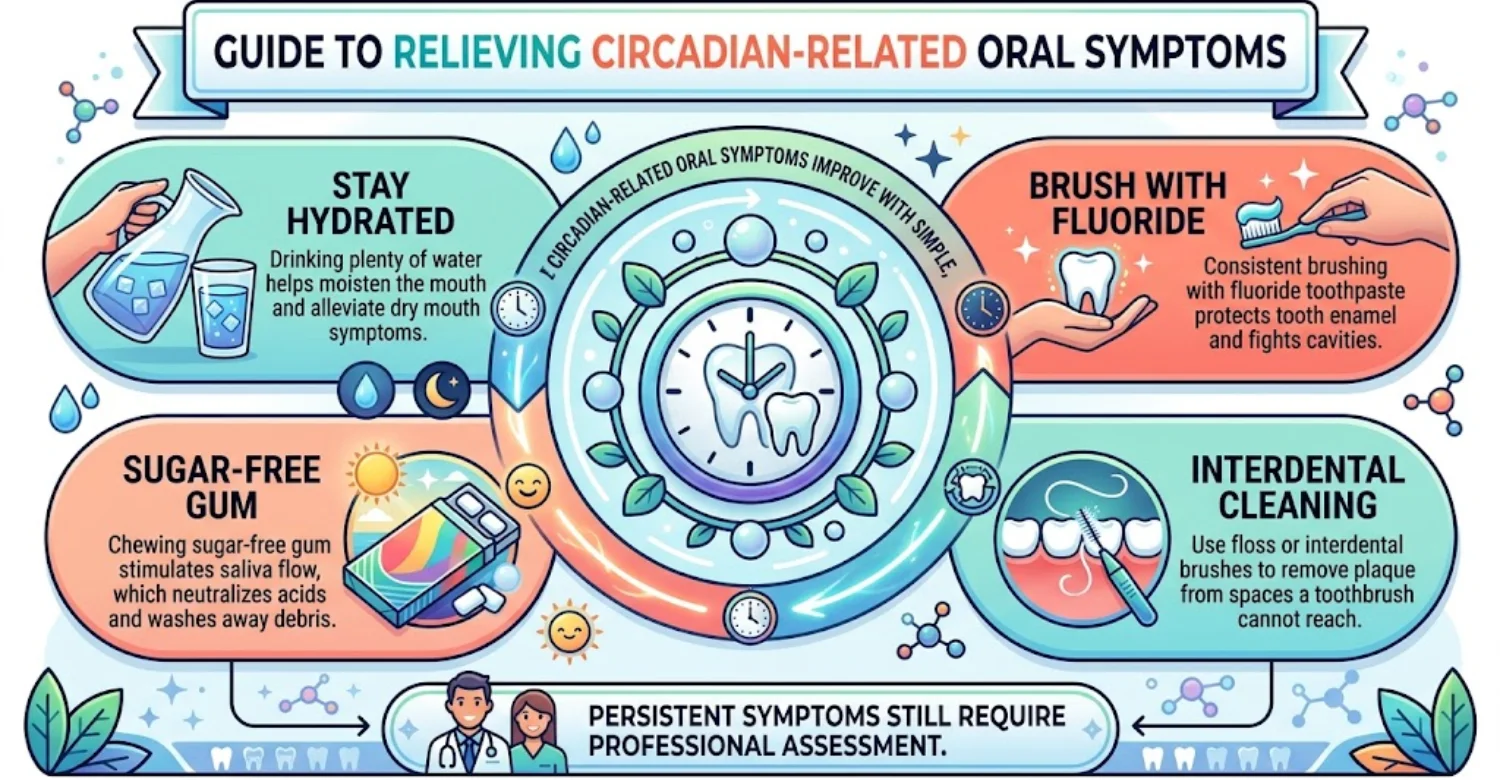
How can you relieve nighttime dry mouth?
Regular hydration and saliva-supporting habits can ease nighttime dryness. Small sips of water relieve discomfort without sugar exposure. Sugar-free gum may stimulate saliva when chewing is appropriate. A bedroom humidifier helps some people. Alcohol-containing rinses and sugary drinks may worsen symptoms, so persistent dryness needs investigation.
What can help protect teeth when saliva flow is reduced?
Fluoride-based care is especially important when caries risk rises. The ADA recognizes fluoride as effective for preventing and controlling decay. Interdental cleaning reduces plaque between teeth. Frequent sugary or acidic exposures should be minimized. Protecting teeth is the most practical goal in Circadian Rhythm and Oral Health care.
What oral hygiene routine is useful for people with irregular schedules?
An effective routine follows your actual sleep schedule. Brush after waking and before your main sleep period. Make interdental cleaning a stable daily habit. Keep fluoride toothpaste in every routine. Storing supplies at work removes practical barriers when shifts change.
Can hydration improve nighttime oral discomfort?
Adequate hydration reduces dryness caused by low fluid intake. Water is better than sugary drinks for frequent sipping. However, hydration cannot correct every cause of xerostomia. Medication effects and gland disorders may need additional management. Persistent dryness still warrants clinical assessment. Excessive acidic drinks can create a separate dental risk, so plain water is best.
What should shift workers do differently during overnight hours?
Shift workers can organize oral care around actual sleep and waking periods. Keep water available throughout long shifts. Limit frequent sugary or acidic snacks where practical. Sugar-free gum can stimulate saliva for suitable patients. Simple adjustments make Circadian Rhythm and Oral Health guidance realistic for night workers.
Use fluoride toothpaste as recommended
Fluoride toothpaste strengthens enamel and helps prevent decay. The ADA recognizes fluoride as effective for adults and children. Brush consistently according to professional guidance. High-risk patients may receive prescription-strength products when recommended. Consistent use matters most when saliva protection is reduced.
Maintain regular brushing and interdental cleaning
Brushing removes plaque from accessible surfaces and along the gumline. Interdental cleaning reaches areas a toothbrush misses. Together they help prevent gingivitis and caries. Irregular schedules should not become a reason to skip these steps. Reliable daily completion matters more than the exact clock time.
Keep water available during long shifts
Accessible water helps manage dryness and keeps oral function comfortable. It avoids the repeated sugar exposure of sweetened drinks. Water can relieve temporary dryness during overnight work. Avoid replacing it with frequent acidic energy drinks. Persistent xerostomia despite hydration may need medication review.
Limit frequent sugary or acidic drinks and snacks
Frequent sugar gives bacteria repeated opportunities to produce acid. Acidic drinks directly challenge enamel and can cause erosive wear. The risk increases when saliva flow is low. Night shifts often encourage repeated snacking for energy. Planning fewer exposure episodes reduces the cumulative challenge to teeth. Dietary advice should still respect individual nutritional and medical needs.
Consider sugar-free gum when appropriate to stimulate saliva
Sugar-free gum can stimulate saliva in suitable patients. More saliva improves lubrication and acid buffering. Avoid chewing when jaw conditions make it painful. Sugar-containing gum does not offer the same protective advantage. Gum should complement fluoride care, never replace brushing.
Learn about causes and prevention for Throat Ulcers
Medical Tips for Protecting Oral Health With an Irregular Sleep Schedule
An irregular sleep schedule does not have to harm your teeth. Link brushing to waking and sleeping, plan meals carefully, and track symptoms. Share your schedule with your dentist for practical advice.
How can you maintain a consistent oral hygiene routine while working nights?
Build your routine around your waking period, not conventional daytime labels. Brush after waking and before your main sleep. Clean between teeth at a predictable daily point. Use water for thirst instead of sweetened beverages. Consistency is the core Circadian Rhythm and Oral Health tip for night workers.
When should you brush if your sleep schedule changes?
Connect brushing with waking and sleeping rather than the clock. A night worker can treat waking as the start of the day. Brush again before the main sleep period. People at higher caries risk may need extra guidance. Fluoride toothpaste remains the key preventive element. The aim is reliable plaque removal across every schedule.
How can meal timing affect dental health during night shifts?
Meal timing affects how often teeth meet sugar and acid. Repeated overnight snacking gives bacteria more chances to produce acid. Lower nighttime saliva makes the mouth less protective. Planned meals with water are better than continual grazing. Timing meals is an underrated part of Circadian Rhythm and Oral Health.
What should you discuss with your dentist if you regularly work overnight?
Tell your dentist about sleep timing, work hours, dryness, and snacking. Mention any medications that may cause dry mouth. Describe whether bleeding or sensitivity changes during work periods. Ask whether your routine fits your schedule. Vitrin Clinic can factor these details into treatment for patients with limited travel time.
Plan dental check-ups around your actual work and sleep schedule
Appointments should match your real schedule. Night workers may feel poorly right after a long shift. Booking after sufficient rest can improve comfort. International patients may need several closely coordinated visits. Vitrin Clinic can coordinate steps around available treatment windows while clinical needs set the sequence.
Track recurring dry mouth, bleeding gums, sensitivity, or tooth pain
Symptom tracking reveals patterns that are otherwise hard to recall. Note when dryness appears relative to sleep and work. Record whether bleeding happens during brushing or spontaneously. List sensitivity triggers such as cold, heat, or sweets. A simple Circadian Rhythm and Oral Health diary helps dentists target their examination. Tracking supports, but never replaces, a professional diagnosis.
What Are the Side Effects and Oral Considerations of Melatonin Use?
Melatonin supplements are widely used, but they are not risk-free. Some users report sleepiness, headache, or dry mouth. Supplements should never replace proper sleep management or dental care.
Can melatonin cause dry mouth?
Some people notice dry mouth while taking melatonin supplements. However, dryness has many other possible causes. A symptom appearing after supplementation deserves discussion but does not prove causation. Persistent dryness can raise caries and infection risk. Any change to supplements should follow professional guidance.
What other common melatonin side effects should patients know?
Melatonin can cause unwanted effects in some users. These include sleepiness, headache, dizziness, and digestive symptoms. Individual responses vary substantially with dose and formulation. Over-the-counter availability does not make a supplement risk-free. A pharmacist or doctor can review whether use is suitable.
Does melatonin replace proper sleep management or dental care?
Melatonin does not replace healthy sleep habits or dental care. Sleep routines should address light exposure, consistency, and timing. Cavities and gum disease require condition-specific treatment. Melatonin research in dentistry is still emerging. Good Circadian Rhythm and Oral Health care never relies on supplements alone. Supplements should never be marketed as substitutes for established dental care.
Why supplements should not be used as a substitute for professional assessment
Supplements cannot explain why someone has dry mouth or tooth pain. They cannot diagnose gum disease or repair damaged teeth. Persistent symptoms may need specific medical or dental treatment. Laboratory findings do not automatically become routine recommendations. Professional evaluation helps patients avoid inappropriate self-treatment. Evidence-based dentistry integrates research, clinical expertise, and individual patient needs.
.webp)
Note : All images used are for editorial and illustrative purposes only and may not originate from the original news provider or associated company.
When Should You See a Dentist or Doctor?
Some symptoms should not be blamed on poor sleep. Persistent dryness, bleeding gums, tooth pain, or swelling need assessment. Severe pain, fever, or difficulty swallowing require urgent care.
When is persistent dry mouth a reason to seek evaluation?
Seek evaluation when dry mouth affects comfort or daily function. It matters more when decay, sensitivity, or recurrent infections appear. The ADA notes reduced salivary flow raises several oral disease risks. Medication review may reveal an adjustable cause. Persistent dryness should not be accepted as a normal effect of sleeping.
When does gum bleeding require a dental assessment?
Bleeding gums can signal gingival inflammation and should not be ignored. Periodontal disease may also cause bleeding during cleaning. Occasional bleeding from aggressive brushing may have a different cause. Persistent or recurrent bleeding needs professional assessment. Early intervention helps prevent progression of gum inflammation. Sleep disruption should never explain bleeding without a proper examination.
When should tooth pain, sensitivity, or swelling be checked?
Persistent tooth pain should be evaluated promptly. Sensitivity that lasts or worsens may reflect several dental conditions. Swelling may indicate infection and should never be blamed on sleep. The NHS includes severe dental conditions and abscesses within urgent care. Self-care should not delay assessment of significant symptoms. Severe dental infections can require urgent treatment.
When might a sleep problem require medical evaluation?
Sleep problems need medical evaluation when they persist or impair daily life. Examples include severe daytime sleepiness or suspected sleep disorders. Dentists may notice oral findings that suggest further sleep assessment. However, dentistry cannot diagnose every sleep disorder independently. Coordinated care on Circadian Rhythm and Oral Health helps when symptoms overlap.
Warning signs that should not be attributed only to poor sleep
Severe pain, swelling, fever, pus, or sudden tooth changes need dental attention. Persistent bleeding or unexplained oral lesions also deserve assessment. Difficulty swallowing or breathing can be an emergency. Symptoms that worsen despite better hydration should not be ignored. Sleep disruption may coexist with these findings without causing them.
Severe pain, facial swelling, fever, or signs of infection
Severe dental pain with facial swelling can indicate significant infection. Fever may accompany some dental infections. These signs need urgent professional assessment. Seek emergency care immediately if breathing or swallowing becomes difficult. Management may include examination, imaging, drainage, medication, or dental treatment.
Persistent oral symptoms despite improved hydration and oral hygiene
Symptoms continuing despite better hydration deserve further evaluation. Persistent dryness may have medication-related or medical causes. Ongoing sensitivity may indicate recession, decay, or enamel loss. Continued bleeding suggests unresolved gum inflammation. Vitrin Clinic can evaluate persistent findings and develop individualized treatment plans. Lifestyle measures should continue while the underlying problem is investigated.
Understand the risks of Acidic Sugar-Free Candy and Tooth Erosion
How Can Circadian-Related Oral Problems Be Treated?
Treatment depends on the confirmed diagnosis, not on sleep history alone. Options range from fluoride care and cleaning to fillings, periodontal therapy, and root canals. Contributing causes are addressed alongside the dental problem.
Treatment for dry mouth and reduced salivary flow
Treatment begins by identifying contributing factors. Medication-related causes may need discussion with the prescribing professional. Hydration, sugar-free gum, and saliva substitutes help selected patients. Fluoride-based prevention matters because low saliva raises caries risk. Treating Circadian Rhythm and Oral Health problems means relieving symptoms and preventing complications.
Treatment for tooth decay linked to reduced saliva
Treatment depends on whether decay is early, cavitated, extensive, or affecting the pulp. Fluoride supports remineralization of susceptible enamel. Established cavities may need restorations. Severe decay may require root canal treatment or extraction. Managing the salivary problem reduces the chance of new decay.
Treatment for gingivitis and periodontal disease
Gingivitis and periodontitis require different levels of treatment. Gingivitis usually responds to plaque control and professional cleaning. Periodontitis may need deeper therapy and long-term maintenance. Smoking and other risk factors should also be addressed. Vitrin Clinic can incorporate Periodontics before restorative or cosmetic procedures when gum health requires attention.
How does treatment change when an underlying medical or medication-related cause is identified?
Treatment can change when a reversible cause is found. Medication-related dryness may need review by the prescribing clinician. Dehydration may respond to better fluid intake. Mouth breathing may need assessment of nasal or airway factors. Dental care continues alongside, addressing any existing oral damage. The goal is to treat both symptoms and their contributing causes where possible.
Preventive fluoride care
Fluoride is a core strategy for reducing caries risk. It strengthens enamel against acid-related mineral loss. Higher-risk patients may receive professionally recommended extra fluoride. Product and concentration should reflect age, risk, and clinical needs. Within Circadian Rhythm and Oral Health care, fluoride offers dependable protection.
Professional dental cleaning and periodontal treatment when indicated
Professional cleaning removes plaque and calculus beyond home care. Periodontal treatment becomes necessary when disease extends past gingivitis. The plan depends on periodontal measurements and severity. Sleep patterns may affect appointment planning but not treatment type. Maintenance remains important after active therapy. Patients should continue daily brushing and interdental cleaning between visits.
Restorative treatment for damaged or decayed teeth
Restorative treatment depends on the extent and location of damage. Small cavities may need fillings. Larger structural loss may require crowns. Pulpal infection may require root canal treatment, which falls under NHS Band 2 in England. Lifestyle changes help prevent recurrence after restoration.
Coordination with a physician when sleep or medication factors require attention
Dental care sometimes benefits from medical coordination. This applies when medications cause dryness or sleep disorders are suspected. Medication changes belong to the prescribing professional. Patients should share complete medication and supplement lists. Collaboration on Circadian Rhythm and Oral Health avoids treating only visible symptoms.
How Much Can Related Dental Treatment Cost in the US, UK, and Turkey?
Dental costs differ widely between countries, providers, and treatment plans. The figures below are 2026 planning benchmarks, not fixed quotes. Always request an individualized written estimate before treatment.
Explore the link between Long-Distance Endurance Exercise and Tooth Erosion
What are typical 2026 dental cost benchmarks in the United States?
US dental costs vary by region, provider, insurance, and complexity. A CareCredit guide reports an exam, cleaning, and X-rays averaging about $203. It lists fillings at 139–976 and crowns at 697–1,399. A September 2026 guide reports an average root canal of about $978. These are planning references, not guaranteed prices.
Dental Treatment | Typical 2026 US Cost |
Dental examination, cleaning, and X-rays | ~$203 average |
Dental fillings | 139–976 |
Dental crowns | 697–1,399 |
Root canal treatment | 679–1,733 |
Root canal national average | ~$978 |
Dental examination, cleaning, and X-rays: around $203 on average
CareCredit reports roughly $203 as the average for an exam, cleaning, and X-rays. The figure comes from a 2023–2024 US procedural cost study. It may not reflect every practice or location in 2026. Insurance plans cover preventive services differently. Ask for a practice-specific estimate before treatment.
Dental fillings: approximately 139–976
CareCredit reports a broad US filling range of 139–976. Tooth location, material, complexity, and geography all affect the fee. Insurance can change what you pay. A range is never a fixed quote. Ask which material and procedure an estimate includes.
Dental crowns: approximately 697–1,399
CareCredit lists crowns at roughly 697–1,399. Materials, laboratory work, and tooth condition influence pricing. Some crowns need foundational treatment first. A root canal may add further cost when required. Confirm exactly what a quoted crown price includes.
Root canal treatment: approximately 679–1,733
A 2026 CareCredit guide reports a root canal range of 679–1,733. It identifies a national average near $978. Molars usually need more complex treatment than front teeth. Crowns and imaging may be billed separately. Request a written estimate based on the diagnosed tooth.
Find out when Subperiosteal Implants for Maxillary Reconstruction are used
What are typical 2026 dental cost benchmarks in the UK?
NHS dental charges in England follow standardized treatment bands. From April 1, 2026, Band 1 costs $27.90. Band 2 costs $76.60, and Band 3 costs $332.10. The band depends on the treatment needed in each course of care. Private prices follow different systems and vary by provider.
NHS Dental Band | 2026 Charge | Main Treatment Coverage |
Band 1 | $27.90 | Examination, diagnosis, necessary X-rays, and preventive care |
Band 2 | $76.60 | Band 1 care plus fillings, root canal treatment, and certain extractions |
Band 3 | $332.10 | Band 1 and 2 care plus crowns, dentures, and bridges |
NHS England Band 1: $27.90
The current Band 1 charge is $27.90 from April 1, 2026. It covers examination, diagnosis, necessary X-rays, and preventive care. Simple gum treatment may be included when needed. Note the charge is in pounds, not dollars. Eligibility and exemptions can change what an individual pays.
NHS England Band 2: $76.60
The 2026 Band 2 charge is $76.60. It includes Band 1 care plus fillings and root canal treatment. Extractions and some oral surgery may also fall here. This is not a private treatment price. Check current NHS guidance before relying on any figure.
NHS England Band 3: $332.10
From April 1, 2026, Band 3 costs $332.10. It covers Band 1 and Band 2 care plus complex procedures. Examples include crowns, dentures, and bridges. Private alternatives can cost substantially more. Always verify the current charge with NHS guidance.
Private treatment: why prices can vary substantially by practice and region
Private dentistry does not follow the NHS band system. Practices set fees based on local costs, materials, and laboratory work. Provider experience and technology can also affect pricing. Urban and specialist services may charge more. A written quote should list diagnostics, treatment, materials, and follow-up.
Root canal treatment: typical private guide ranges around $300–$1,200
Private root canal costs in the UK vary widely. The planning range of $300–$1,200 is only an illustrative estimate. Exchange rates can change any international currency conversion significantly. Specialist endodontic care may cost more. Verify actual pricing directly with the chosen practice.
What are typical 2026 dental cost benchmarks in Turkey?
Turkey has a competitive private dental market with wide price variation. Fees depend on the city, provider, materials, laboratory standards, and complexity. Published Istanbul filling prices start from around $60. Root canal planning ranges sit around 130–400. A clinical examination is required before any individualized quote.
Dental Treatment | Typical 2026 Turkey Cost |
Dental consultation and diagnostic imaging | Varies by clinic and diagnostic needs |
Dental fillings | From ~$60 |
Root canal treatment | ~130–400 |
Crowns | Varies by material and complexity |
Dental consultation and diagnostic imaging
Consultation and imaging costs depend on the clinic and diagnostic needs. A basic exam usually costs less than complex implant planning. CBCT should be used only when clinically justified. International patients should ask whether imaging is included. A clear quote explains every diagnostic component.
Dental fillings: commonly published Istanbul prices from around $60
Published Istanbul filling prices begin around $60. Fees vary with material, tooth location, and complexity. Composite and other materials may be priced differently. Examination and imaging may be charged separately. The final figure should follow diagnosis and treatment planning.
Root canal treatment: published 2026 guide ranges around 130–400
Published 2026 guides place Turkish root canal fees around 130–400. This is a planning range, not a guaranteed price. Tooth location, infection severity, and restorative needs affect fees. A crown may be needed afterwards. Vitrin Clinic provides individualized planning after clinical assessment.
Crowns and restorative treatment: why material and case complexity matter
Crown costs vary with material and laboratory requirements. Zirconia and porcelain involve different production processes and fees. Remaining tooth structure also affects complexity. Root canal or periodontal treatment may come first. Vitrin Clinic explains material choices according to clinical needs and treatment goals.
Spot the early signs of Tongue Cancer
How do dental costs compare in the ?
US
UK
Turkey
The following table provides a simple 2026 planning comparison for commonly referenced treatments. UK NHS charges are shown separately from private treatment because the NHS uses standardized treatment bands.
Treatment | United States | UK NHS England | UK Private | Turkey |
Exam, cleaning & X-rays | ~$203 average | $27.90 | Varies | Varies |
Dental filling | 139–976 | $76.60 Band 2 | Varies | From ~$60 |
Root canal | 679–1,733 | $76.60 Band 2 | ~$300–$1,200 | ~130–400 |
Dental crown | 697–1,399 | $332.10 Band 3 | Varies | Varies |
These figures should be used only as general planning benchmarks. The UK NHS figures are treatment-band charges rather than typical private dental fees.
What affects the final dental treatment cost?
Final cost depends on diagnosis, number of teeth, complexity, and materials. Advanced imaging can add cost when needed. Gum or restorative problems may require treatment before cosmetic work. Follow-up needs also influence total expense. International patients should budget for travel and accommodation too.
Cost Factor | Why It Can Change the Final Price |
Diagnosis and imaging | Determines the examinations and scans required |
Number and condition of teeth | More teeth or greater damage can increase treatment complexity |
Periodontal or restorative treatment | Additional gum, restorative, or infection treatment may be necessary |
Materials and laboratory work | Different restorative materials and laboratory processes have different costs |
Follow-up and aftercare | Reviews, adjustments, and post-treatment care can add to the overall expense |
Diagnosis and imaging requirements
Diagnosis determines what treatment is appropriate. Simple problems may need limited imaging. Implant or complex restorative cases often need advanced diagnostics. CBCT provides three-dimensional detail when clinically indicated. A quote should state which scans and examinations are included.
Number and condition of affected teeth
Treating several teeth creates a different scope than treating one. Each tooth may have distinct structural or endodontic needs. Infection, bone loss, or extensive damage can increase complexity. The number of laboratory restorations also affects cost. Vitrin Clinic bases recommendations on individual clinical findings.
Type of periodontal or restorative treatment required
Periodontal care ranges from preventive cleaning to advanced therapy. Restorative care includes fillings, crowns, bridges, or tooth replacement. Diagnosis determines the level of intervention. Disease should be treated before elective cosmetic work. A staged plan makes international treatment easier to understand.
Materials, laboratory work, and complexity
Materials strongly influence restorative pricing. Laboratory fabrication involves different technology and craftsmanship. Complex cases may need temporary restorations and multiple visits. A higher price does not automatically mean better clinical suitability. The plan should explain why a material is recommended.
Follow-up and aftercare requirements
Aftercare shapes the overall treatment journey. Some procedures need reviews or adjustments. International patients should know how follow-up works after returning home. Vitrin Clinic provides patient coordination around treatment and follow-up needs. A realistic budget includes expected aftercare.
Vitrin Clinic’s Approach to Oral Health and Circadian-Related Concerns
At Vitrin Clinic, sleep and work patterns are part of a broader dental assessment. Examination findings guide every recommendation. Digital diagnostics are used only when clinically appropriate.
How is oral health assessed when sleep or circadian disruption may be relevant?
Vitrin Clinic begins with an individualized assessment of the dental condition. History may include sleep schedule, work pattern, dryness, medications, and hygiene. The examination focuses on teeth, gums, and oral tissues. Circadian Rhythm and Oral Health information provides context, not a standalone diagnosis. Treatment planning follows identified dental needs and patient priorities.
How can dental examination help identify dry mouth, decay, gum inflammation, or other oral problems?
Examination reveals visible changes linked to dryness and dental disease. Dentists inspect teeth, gums, restorations, mucosa, and irritated areas. Caries may be detected clinically and through imaging. Gum inflammation is evaluated visually and with periodontal measurements. The assessment focuses on oral conditions, not diagnosing sleep disorders.
When are digital X-rays, CBCT, or 3D intraoral scanning clinically appropriate?
Digital X-rays help when internal tooth structures need assessment. CBCT provides three-dimensional information for selected complex cases. The ADA's 2026 recommendations stress clinically justified imaging. Intraoral scanning supports digital planning for suitable restorative cases. Vitrin Clinic selects diagnostic tools according to each treatment situation.
How is treatment planning individualized according to the patient’s oral condition and symptoms?
Planning begins with diagnosis rather than a predetermined procedure. The dentist evaluates teeth, gums, restorations, bite, and patient priorities. Symptoms and daily routines are then integrated into the plan. Some patients need prevention first, others periodontal or restorative care. Linking Circadian Rhythm and Oral Health factors to findings keeps plans realistic.
How can Periodontics support gum health before restorative or cosmetic treatment?
Healthy gums provide a foundation for restorative and cosmetic work. Active gingivitis or periodontitis may need treatment first. Assessment identifies bleeding, pockets, recession, and tissue loss. Controlling disease improves conditions for later treatment. Vitrin Clinic can coordinate Periodontics before restorative or cosmetic treatment when indicated.
How Vitrin Clinic Supports Your Treatment Journey
Vitrin Clinic guides patients from the first consultation through follow-up. Plans are organized around clinical needs and available travel time. Clear communication continues after treatment ends.
How does the initial dental consultation identify the patient’s priorities and oral health needs?
The first consultation covers symptoms, goals, concerns, and treatment history. The clinical team reviews the oral condition before discussing options. International patients can explain travel limits and scheduling preferences. Digital records support efficient communication throughout treatment. A clear consultation helps patients understand the next steps. Clear explanations help patients make confident decisions about each stage. The goal is to identify needs without assuming one approach suits everyone.
How are clinical findings translated into an individualized treatment plan?
Findings are organized by urgency, function, disease control, and restorative needs. Active disease may need treatment before cosmetic procedures. Missing teeth may need different replacement approaches. Material selection depends on tooth condition and function. Plans can be adjusted as new diagnostic information emerges.
How can digital diagnostics support treatment planning when clinically appropriate?
Digital diagnostics improve visualization and planning in selected cases. Three-dimensional imaging supports complex implant and anatomical assessment. Digital scanning creates accurate models for restorative workflows. These tools should serve a defined diagnostic purpose. Technology supports, but never replaces, professional examination.
How are appointments and treatment steps coordinated for international patients with limited time?
International patients need efficient coordination between consultation and treatment stages. Plans organize diagnostic, clinical, laboratory, and review appointments. Travel schedules influence planning without changing clinical requirements. International coordinators help organize practical details. The clinical team still decides the appropriate treatment sequence.
How does follow-up support continue after treatment?
Follow-up focuses on healing, function, hygiene, and remaining concerns. Some procedures need early review appointments. International patients may return home before long-term maintenance. Vitrin Clinic provides treatment information for continued local care. Ongoing attention to Circadian Rhythm and Oral Health habits protects results. Long-term maintenance remains essential after restorative or periodontal treatment.
Ready to transform your smile?
Talk to our team and get a personal FREE treatment plan.
Key Takeaways
Here are the most important points from this guide. They summarize how sleep, saliva, and daily routines affect your mouth. They also explain when to seek professional care.
Circadian rhythm and oral health are connected through sleep, saliva, behavior, and biological processes
Daily biological timing influences salivary activity, tissue regulation, and behavior. Sleep disruption can affect hygiene, meals, hydration, and appointments. Research increasingly studies circadian regulation in oral tissues. These links are not simple causal rules. Clinical diagnosis remains the foundation of treatment. A balanced view of Circadian Rhythm and Oral Health supports realistic prevention. Understanding these connections can still improve everyday preventive planning.
Reduced nighttime saliva can make the mouth more vulnerable to dryness and dental problems
Saliva flow decreases markedly during sleep. This reduces lubrication, cleansing, and buffering. Medications, dehydration, or mouth breathing add further dryness. Fluoride and consistent hygiene lower preventable risks. Persistent dryness still requires professional assessment.
Poor sleep and shift work are associated with some oral health outcomes, but they do not automatically cause dental disease
Studies link sleep characteristics with periodontal outcomes. However, designs, definitions, and populations differ widely. Shift work also affects eating, hydration, smoking, and hygiene. Across Circadian Rhythm and Oral Health research, sleep serves as context rather than diagnosis. Regular dental care should continue regardless of schedule.
Persistent dry mouth, bleeding gums, tooth pain, swelling, or other unexplained symptoms deserve professional evaluation
Persistent symptoms may need specific dental or medical management. Dry mouth raises caries risk when salivary protection drops. Bleeding gums can reflect periodontal inflammation. Severe pain and swelling may require urgent care. Symptoms should not automatically be blamed on sleep deprivation.
Relief and prevention focus on hydration, fluoride-based oral care, consistent hygiene, healthy routines, and appropriate dental follow-up
Water helps manage some dryness symptoms. Fluoride protects against caries, while brushing and interdental cleaning control plaque. Limiting sugary and acidic exposures reduces enamel challenges. Shift workers should match habits to their real schedules. These steps summarize practical Circadian Rhythm and Oral Health prevention.
Dental treatment costs vary by country, provider, diagnosis, complexity, materials, and treatment plan
Prices vary widely between countries and providers. US estimates show broad ranges for fillings, crowns, and root canals. England's NHS bands were updated from April 2026. Turkish prices depend on clinic, materials, and complexity. Request individualized written estimates and budget for travel.
At Vitrin Clinic
Vitrin Clinic Our treatments are a structured dental journey rather than a single procedure. Clinical assessment comes before restorative, cosmetic, implant, or periodontal recommendations. Symptoms, lifestyle patterns, and priorities shape the plan. Digital tools support diagnosis when clinically appropriate. International patients receive coordinated scheduling around travel time. The focus stays on individualized needs, clear communication, and follow-up. Patients exploring Circadian Rhythm and Oral Health concerns receive guidance grounded in examination findings. include preventive care, professional cleaning, Periodontics, fillings, and root canal treatment. We also offer crowns, bridges, dental implants, and cosmetic dentistry when clinically indicated. Each treatment is selected after examination, so your plan matches your actual oral health needs.
Reference
FAQs
Dr. Rifat Alsaman has more than 5 years of clinical experience in dentistry and currently serves as the Head of the Medical Team at Vitrin Clinic. He is dedicated to providing exceptional patient care, overseeing treatment planning, and ensuring the highest clinical standards across the team. His expertise, attention to detail, and commitment to continuous professional development have helped countless patients achieve healthier, more confident smiles.


