General Dentistry
September 30, 2026
Sports Drinks and Dental Erosion: How Do They Affect Your Teeth?
 Dr. Rifat Alsaman
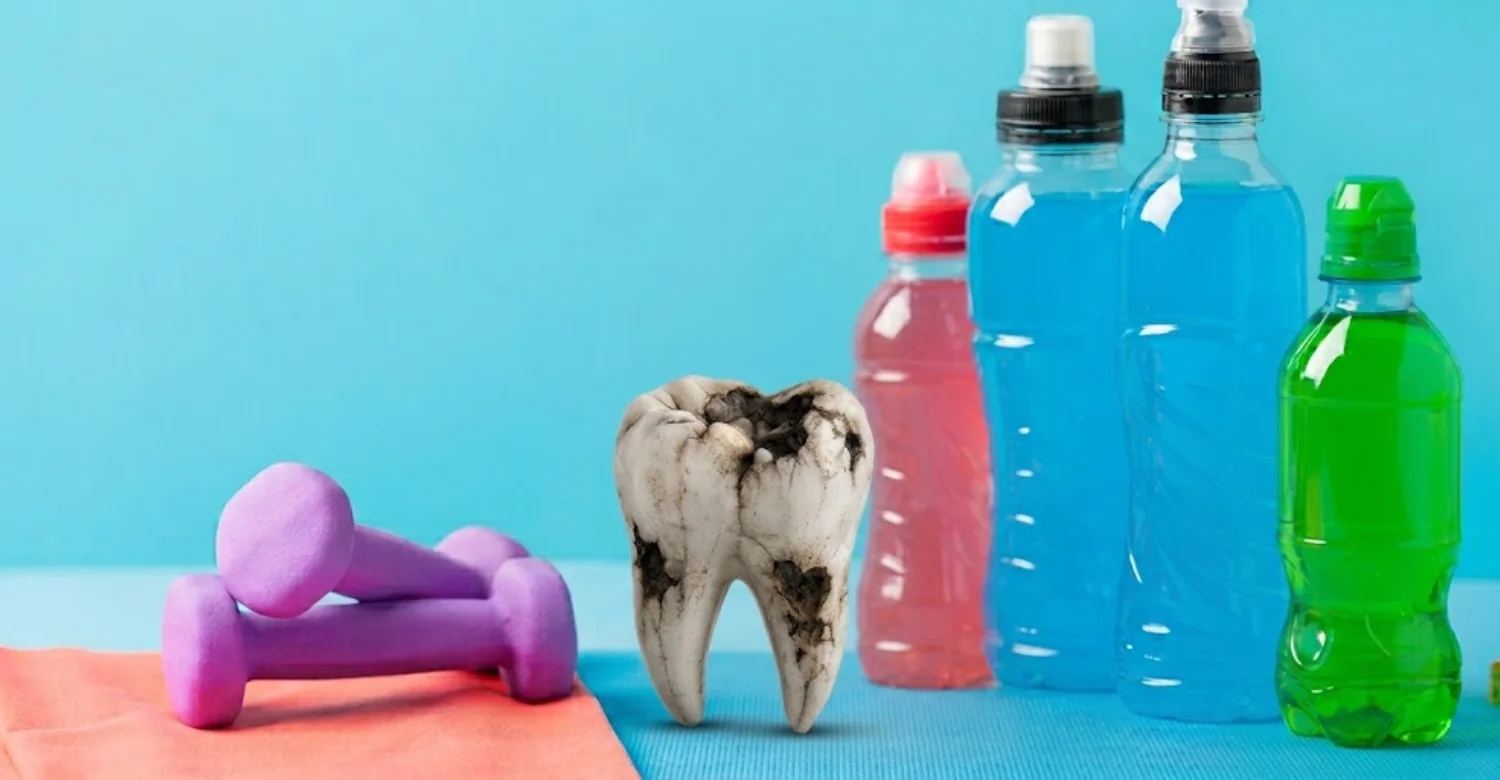
Sports drinks and dental erosion are closely linked, because many sports drinks are acidic and often sipped repeatedly during training. Over time, this acid can soften and wear away tooth enamel. This guide from Vitrin Clinic explains how sports drinks affect teeth, the warning signs, and practical ways to protect your smile.
What Is the Link Between Sports Drinks and Dental Erosion?
Understanding this problem starts with how acid interacts with enamel. Unlike cavities, erosion is a chemical process that does not need bacteria. Sports drinks, with their low pH and frequent use, can gradually dissolve the mineral surface of teeth, affecting both appearance and comfort.
What Is Dental Erosion?
Dental erosion is the irreversible loss of tooth enamel caused by acids that do not come from bacteria. These acids may come from food, drinks, or stomach acid. When discussing sports drinks and dental erosion, the acid source is the beverage itself, which softens enamel minerals and makes surfaces easier to wear away.
Why Are Sports Drinks Acidic?
Sports drinks often contain citric acid and other acids that add tangy flavor, preserve the product, and balance sweetness. Many have a pH around 3, well below 5.5, the level at which enamel starts to dissolve. This acidity explains why acidic drinks and tooth erosion are so often discussed together.
How Sports Drinks Affect Teeth
How sports drinks affect teeth depends on acidity, frequency, and contact time. Each sip lowers the pH in the mouth, softening the outer enamel layer. Saliva normally neutralizes acid and helps remineralize enamel, but repeated sipping can outpace this natural repair, allowing erosion to progress over time.
Clinical Note
Dental erosion usually progresses gradually and may cause no noticeable symptoms early on. Enamel can thin slowly for months or years before sensitivity or visible changes appear. By then, some structure may already be lost. Regular dental checkups help detect early signs of erosion before it becomes more advanced or harder to manage.
Explore the best choice between Mini Dental Implants vs Regular Implants
Do Sports Drinks Damage Your Teeth?
Do sports drinks damage your teeth? For many regular drinkers, the answer can be yes. The connection between sports drinks and dental erosion comes from repeated acid exposure that weakens enamel. The level of damage depends on how often, how long, and how you consume these drinks.
How Sports Drinks Damage Tooth Enamel
Sports drinks damage teeth mainly through acid. When the drink touches enamel, acid draws calcium and phosphate out of the tooth surface, a process called demineralization. The softened enamel then becomes vulnerable to wear from brushing, chewing, or grinding. Repeated cycles gradually thin the protective outer layer of each tooth.
Sports Drinks and Enamel Erosion
Sports drinks and enamel erosion are closely related because enamel is the first surface acid reaches. Enamel cannot regenerate once lost, since it contains no living cells. This is why acid wear deserves attention: small, repeated losses add up and may eventually expose the more sensitive dentin underneath.
Sports Drinks and Tooth Erosion
Sports drinks and tooth erosion often affect specific areas, such as the front surfaces of upper teeth and the chewing surfaces of back teeth. These spots receive the most direct contact as the drink passes through the mouth. Holding the drink in your mouth before swallowing can further increase acid exposure.
Why Frequent Exposure Increases the Risk
Frequency matters more than total volume. Each sip triggers a new acid attack, and saliva needs time to restore a neutral pH. Sipping slowly throughout a workout or day keeps enamel under constant challenge. This is a key reason erosion is common among people who drink sports drinks habitually.
Tips for the Patients
Drink sports drinks during a set time rather than sipping continuously. Avoid prolonged sipping or keeping the bottle beside you all day. Rinse your mouth with water after drinking to help wash away acid. Keep up regular dental visits so early enamel changes can be identified and managed promptly.
Note : All images used are for editorial and illustrative purposes only and may not originate from the original news provider or associated company.
Are Sports Drinks Bad for Your Teeth?
Are sports drinks bad for your teeth? They are not harmful in every situation, but their acidity and sugar can create real risks with frequent use. Understanding sports drinks and dental erosion helps you decide when these drinks are useful and when water may be the better choice.
Sports Drinks and Teeth: What Happens After Consumption?
When you drink, the mouth's pH drops quickly, often below the level where enamel softens. This acidic state can last several minutes, and longer if you keep sipping. Saliva gradually neutralizes the acid. This short window explains the relationship between sports drinks and teeth, and why timing and habits matter.
Sports Drinks and Dental Health
Sports drinks and dental health are connected through both acid and sugar. Occasional use during intense or long exercise may be reasonable, but daily casual drinking increases risk. Knowing how enamel erosion develops allows athletes and active people to balance hydration needs with long-term protection of their teeth.
The Role of Acidity and Sugar
Acidity and sugar harm teeth in different ways. Acid directly dissolves enamel minerals, while sugar feeds bacteria that produce their own acids. Many sports drinks contain both, creating a double challenge. Even reduced-sugar versions may still be acidic, so choosing a low-sugar option does not remove the risk of erosion.
Can Sports Drinks Contribute to Tooth Decay?
Yes, the sports drinks tooth decay risk comes from their sugar content. Oral bacteria ferment sugar and release acid that damages teeth, leading to cavities over time. Combined with direct acidity, erosion can occur alongside decay, especially when brushing, fluoride use, and dental checkups are inconsistent.
Sports Drinks and Tooth Decay: Is Sugar the Only Problem?
Many people assume sugar is the only concern, but acidity plays an equally important role. When examining sports drinks and dental erosion, both ingredients matter. Sugar supports cavity-causing bacteria, while acid wears enamel directly, meaning a single drink can affect teeth in more than one way at the same time.
How Sugar in Sports Drinks Can Affect Teeth
Sugar in sports drinks gives oral bacteria a ready energy source. These bacteria form plaque and produce acids as they digest sugar, lowering the pH around teeth. Over time, this repeated acid production can create cavities, particularly along the gumline and between teeth where plaque tends to collect.
Acidic Drinks and Tooth Erosion
Acidic drinks and tooth erosion go hand in hand, and sports drinks belong to the same group as sodas, energy drinks, and citrus juices. Their acids act on enamel immediately, without needing bacteria. Seeing sports drinks as part of this wider pattern helps you evaluate your overall beverage habits.
Why Acid and Sugar Can Create Different Dental Risks
Acid causes broad, smooth wear across tooth surfaces, while sugar-related decay creates localized cavities. Erosion tends to affect larger areas, whereas decay usually starts in specific spots where plaque sits. Because these processes differ, prevention also differs slightly, combining reduced acid contact with good plaque control and regular fluoride use.
Sports Drinks Compared With Other Sugary Beverages
Sports drinks are often seen as healthier than soda, yet many are similarly acidic and contain notable sugar. Energy drinks can be even more erosive. The concern with sports drinks and dental erosion is that they are frequently consumed in large amounts during long activities, increasing the total exposure time.
Clinical Note
Dental erosion is caused mainly by acids acting directly on enamel, while tooth decay results from bacteria metabolizing sugars and producing acid. Erosion does not require bacteria; decay does. The same sports drink can contribute to both processes at once, so prevention should address acidity, sugar intake, and daily oral hygiene together.
Ready to transform your smile?
Talk to our team and get a personal FREE treatment plan.
Understand the causes of Itchy Gums
How Do Sports Drinks Affect Teeth During Exercise?
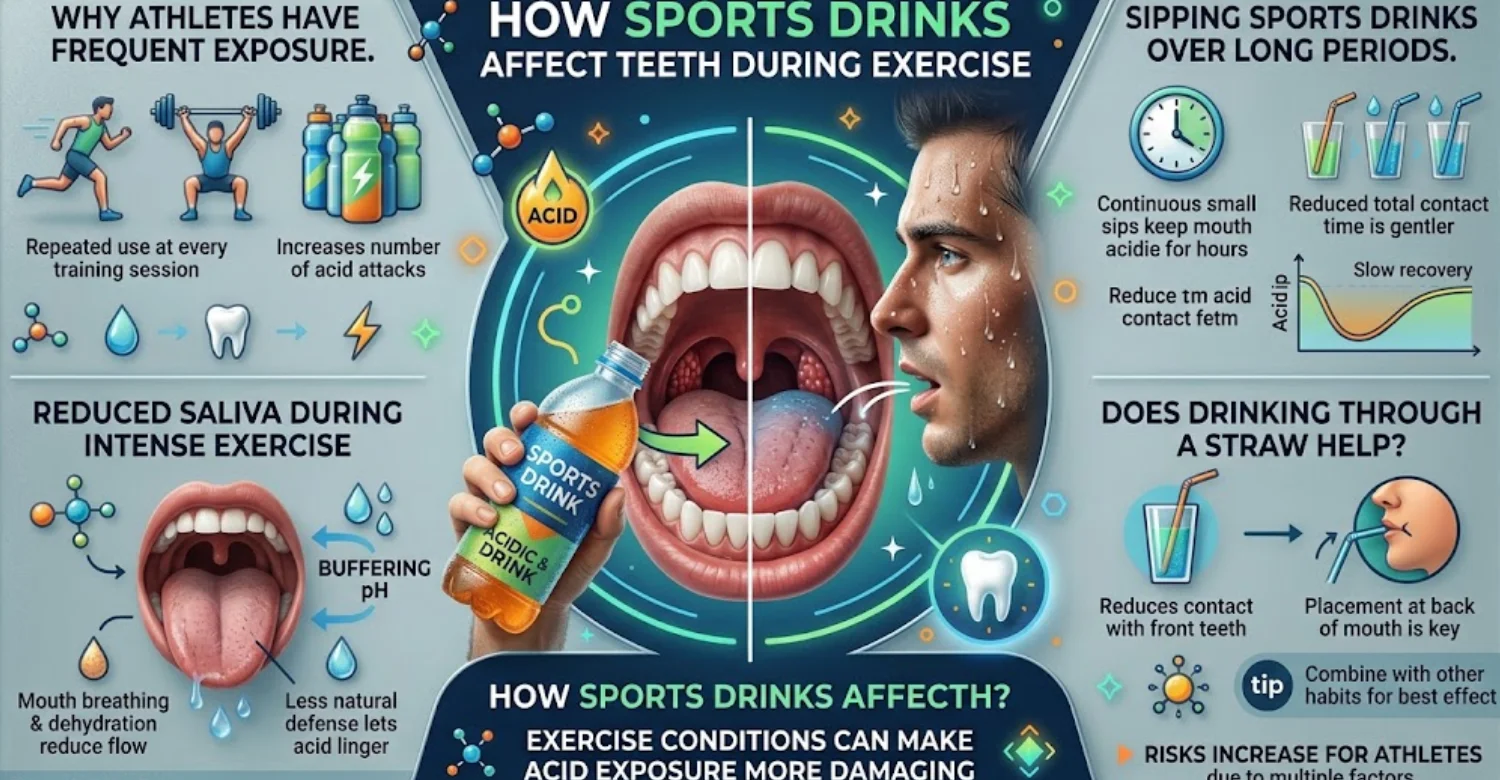
Exercise creates conditions that can make acid exposure more damaging. Frequent sipping, heavy breathing, and reduced saliva all play a role. For athletes, sports drinks and dental erosion can become a greater concern because these factors often combine during training sessions, matches, and long endurance events throughout the week.
Why Athletes May Have More Frequent Exposure
Athletes may train several times a week and drink sports drinks at every session, sometimes before and after as well. This repeated use increases the number of acid attacks teeth face. Over months and years, the effect of this repeated acid exposure becomes more noticeable in regularly active individuals.
Sipping Sports Drinks Over Long Periods
Taking small sips over an hour or more keeps the mouth acidic for long stretches, giving saliva little chance to recover. Drinking a set amount at planned breaks is generally gentler on enamel than continuous sipping. Reducing total contact time is one of the simplest ways to limit erosion.
Reduced Saliva During Intense Exercise
Saliva is the mouth's natural defense against acid, buffering pH and helping minerals return to enamel. During intense exercise, dehydration and mouth breathing can reduce saliva flow. With less protection, erosion may progress faster, as acid stays on tooth surfaces longer than usual.
Does Drinking Sports Drinks Through a Straw Help?
Using a straw may reduce contact between the drink and the front teeth, especially when the straw is placed toward the back of the mouth. However, it does not eliminate exposure completely. A straw works best alongside other habits, such as limiting frequency and rinsing with water afterward.
Tips for the Patients
Choose water for shorter or lighter workouts when a sports drink is not needed. Reduce unnecessary sips of acidic drinks throughout the day. Avoid holding or swishing sports drinks around your mouth. After exercise, rinse with water, wait before brushing, and follow a consistent fluoride-based oral hygiene routine.
See what works best for you with Veneers vs Dentures
What Are the Signs of Sports Drink-Related Enamel Erosion?
Early erosion is easy to miss, but certain changes can signal enamel loss. Recognizing the signs of sports drinks and dental erosion helps you seek care earlier, when protective measures may be simpler. The following symptoms are common indicators that acid may be affecting your teeth.
Increased Tooth Sensitivity
Sensitivity to cold, hot, or sweet foods is often an early sign. As enamel thins, the underlying dentin, which contains tiny channels leading toward the nerve, becomes more exposed. Sharp twinges when drinking cold water or eating ice cream may suggest that acid erosion is affecting your teeth.
Smooth or Shiny Tooth Surfaces
Eroded teeth may look unusually smooth, glassy, or shiny, as the natural surface texture wears away. Small grooves and ridges can disappear. This change is often subtle and gradual, so many people do not notice it themselves. A dentist can usually identify these surface changes during a routine examination.
Tooth Discoloration
Teeth may appear more yellow as erosion progresses. This happens because enamel becomes thinner and more translucent, allowing the naturally yellow dentin beneath to show through. When linked to acidic drinks, discoloration usually reflects structural loss rather than surface staining, so whitening alone may not solve it.
Changes in Tooth Shape or Edges
Front teeth may develop thin, translucent, or slightly chipped edges. Back teeth may show small cup-shaped dents on chewing surfaces. Fillings may seem to stand higher than surrounding tooth structure. These shape changes indicate that enamel has been lost over time and may benefit from professional assessment.
Enamel Thinning
Enamel thinning is the underlying change behind most erosion symptoms. Once thin, teeth become weaker, more sensitive, and more prone to chipping or wear. Because enamel does not grow back, the goal is to stop further loss early and protect the remaining structure with good habits and professional support.
Choose the right fit between Fixed Dentures vs Removable Dentures
Sports Drinks and Dental Erosion: How to Protect Your Teeth
Prevention focuses on reducing acid contact and strengthening enamel. You do not necessarily need to give up sports drinks entirely. Small, consistent habit changes can make a meaningful difference in protecting your enamel, while still supporting hydration during demanding exercise and recovery.
Limit the Frequency of Sports Drink Consumption
Reserve sports drinks for long or intense exercise, typically sessions lasting over an hour or in hot conditions. For daily hydration, water is usually enough. Fewer drinks mean fewer acid attacks, which is one of the most effective ways to reduce the link between sports drinks and dental erosion.
Drink Water After Sports Drinks
Following a sports drink with water helps rinse acid and sugar from tooth surfaces and supports a quicker return to neutral pH. Alternating sips of water with the sports drink during exercise can also help. This simple habit costs nothing and fits easily into most training routines.
Avoid Brushing Immediately After Acidic Drinks
Enamel is temporarily softened after acid exposure. Brushing right away can wear this weakened surface. Wait about 30 to 60 minutes before brushing so saliva can begin rehardening enamel. Protecting your teeth includes knowing that good habits, done at the wrong time, may still cause harm.
Maintain Regular Fluoride and Oral Hygiene Practices
Brush twice daily with fluoride toothpaste, using a soft-bristled brush and gentle technique. Fluoride helps strengthen enamel and makes it more resistant to acid. Clean between teeth daily to reduce plaque. Your dentist may also recommend additional fluoride products if you are at higher risk of erosion.
When Should You See a Dentist?
See a dentist if you notice ongoing sensitivity, yellowing, shiny surfaces, or thinning edges. Even without symptoms, regular checkups allow early detection. If you drink sports drinks often, mention it during your visit so your dentist can evaluate your risk and recommend suitable protective steps for your teeth.
Tips for the Patients
If you drink sports drinks regularly, finish them within a short time, use a straw, and rinse with water afterward. Chew sugar-free gum to stimulate saliva. Swap casual drinks for water on rest days. These lifestyle changes reduce repeated acid exposure and help protect enamel long term.
Find out the difference between a Dental Bridge vs Flipper
How Can Vitrin Clinic Help With Sports Drinks and Dental Erosion?
At Vitrin Clinic, care begins with understanding each patient's habits, symptoms, and goals. The team focuses on identifying the causes behind enamel loss and recommending suitable options. For patients concerned about acid-related enamel wear, the clinic provides assessment, guidance, and treatment tailored to individual needs.
.jpg)
.jpg)
.jpg)
.jpg)

Assessing Enamel Damage at Vitrin Clinic
Vitrin Clinic assesses erosion through a detailed dental examination, reviewing tooth surfaces, edges, sensitivity, and existing restorations. The team also asks about diet, drinking habits, and exercise routines. This helps determine the extent of enamel damage and whether sports drinks and dental erosion are connected in your case.
Personalized Treatment Planning
Treatment depends on the severity of enamel loss, the level of sensitivity, remaining tooth structure, and cosmetic concerns. Mild cases may need only preventive advice and fluoride support, while advanced cases may need restoration. Vitrin Clinic creates a plan that suits each patient's oral health, lifestyle, and personal expectations.
Restoring Teeth Affected by Enamel Erosion
Not every patient needs restorative treatment. When appropriate, options may include desensitizing treatments, tooth-colored bonding, veneers, or crowns for more extensive loss. For those affected by drink-related enamel loss, Vitrin Clinic chooses the most conservative suitable approach to protect teeth and improve function and appearance.
Dr. Rifat Alsaman's Clinical Perspective
Dr. Rifat Alsaman, Head of the Medical Team at Vitrin Clinic and a cosmetic dentist, emphasizes identifying the cause of ongoing enamel erosion before choosing any cosmetic or restorative solution. If acid exposure continues, even well-made restorations may be affected. Addressing daily habits first helps treatment results last longer.
Tips for the Patients
Share your drinking and exercise habits openly during your visit. Follow the prevention advice provided, even after treatment. Attend regular checkups so changes can be monitored. Report new sensitivity early. Combining professional care at Vitrin Clinic with daily protective habits offers the best chance of preserving your enamel.
Explore solutions for Microdontia
Resource:
https://pubmed.ncbi.nlm.nih.gov/39940260/
https://pubmed.ncbi.nlm.nih.gov/12218278/
https://pubmed.ncbi.nlm.nih.gov/?term=Effects+of+sports+drinks+and+other+beverages+on+dental+enamel
FAQs
Dr. Rifat Alsaman has more than 5 years of clinical experience in dentistry and currently serves as the Head of the Medical Team at Vitrin Clinic. He is dedicated to providing exceptional patient care, overseeing treatment planning, and ensuring the highest clinical standards across the team. His expertise, attention to detail, and commitment to continuous professional development have helped countless patients achieve healthier, more confident smiles.


.webp&w=3840&q=75)