General Dentistry
September 13, 2026
Stress Oral Habits: How Stress Can Affect Your Teeth, Gums, and Daily Oral Health?
 Dr. Rifat Alsaman
Stress oral habits are the small, often unconscious behaviors that stress adds to a person's daily routine. They can quietly affect teeth, gums, and overall oral health. Pressure can build at work, at home, or during major life changes. The body and mind respond, and that response often reaches the mouth. Sleep changes, saliva shifts, diet patterns, and hygiene consistency can all be affected. Common examples include teeth grinding, jaw clenching, nail biting, cheek or lip biting, frequent snacking, and skipping brushing or flossing. Stress and oral health are closely linked, but stress does not automatically cause dental disease on its own. It can, however, encourage behaviors that raise oral health risks over time. This guide explains how emotional stress and oral health connect. It offers practical, professional insight rather than assuming stress alone explains every dental symptom.
Stress Oral Habits and Their Impact on Oral Health
Stress oral habits form when tension changes what a person does with their mouth, often without conscious awareness. Oral health and stress can influence each other in both directions. A sore tooth adds stress, and stress-related habits can worsen oral symptoms. Current stress and poor oral health frequently appear together, though one does not always cause the other. Psychological stress is the emotional experience; the oral effects are the physical results, like clenching, biting, or irregular hygiene. Recognizing this difference helps patients and dental teams address the actual behavior. It matters more than just treating the visible damage it leaves behind.
Why Stress Can Change Everyday Oral Hygiene
During stressful periods, daily oral hygiene habits are often the first routine to slip. Brushing sessions get shorter, flossing gets skipped, and dental appointments get postponed. Convenience foods and sugary snacks may replace balanced meals, while sleep and daily schedules shift unpredictably. None of these changes happen all at once. Together, though, they let plaque build up and gum inflammation progress unnoticed. These lapses are rarely dramatic; they build quietly until a dental visit reveals the cumulative effect.
Emotional Stress and Oral Health: What Happens in the Mouth?
Emotional stress and oral health intersect through several channels at once. These include muscle tension, saliva changes, appetite shifts, and reduced attention to hygiene. Many people clench their jaw without realizing it, tightening muscles that later ache. Stress can also reduce saliva flow, especially when combined with dehydration or certain medications, producing dry mouth. A drier mouth loses some of its natural protection against bacteria and acid, which raises cavity risk. These effects are usually gradual, making them easy to dismiss until discomfort becomes noticeable.
Discover more about heartburn and jaw pain
Which Stress Oral Habits Can Damage Your Teeth and Gums?
Several stress oral habits carry direct risk to teeth and gums, and each affects the mouth differently. Grinding and clenching apply repeated mechanical force to enamel and jaw muscles. Cheek and lip biting create localized soft-tissue irritation. Nail biting and object chewing add abnormal pressure on individual teeth. Frequent snacking increases sugar and acid exposure throughout the day. Neglected brushing and flossing allow plaque to build undisturbed. Understanding which habit is active helps guide a more targeted, effective response from both the patient and the dental team.
Teeth Grinding and Jaw Clenching
Bruxism describes involuntary grinding or clenching of the teeth, and stress is a common trigger. Daytime clenching tends to happen quietly during concentration, while nighttime grinding is often more forceful and less controlled. Over time, this can wear down enamel, create cracks or fractures, and heighten tooth sensitivity. Jaw muscles may fatigue, leading to soreness, headaches, or temporomandibular joint symptoms. Because grinding often goes unnoticed until damage appears, a dental exam is frequently the first place this habit gets identified.
Cheek and Lip Biting
Cheek and lip biting often appear during periods of tension, sometimes as a repetitive, almost automatic behavior. Over time, this can cause chronic irritation, visible ridges along the cheek line, or recurring small sores. Occasional biting is common and usually harmless. However, sores that recur frequently, take longer than expected to heal, or change in appearance should be professionally evaluated. Persistent tissue trauma is a pattern patients often underestimate until a dentist points it out.
Nail Biting and Object Chewing
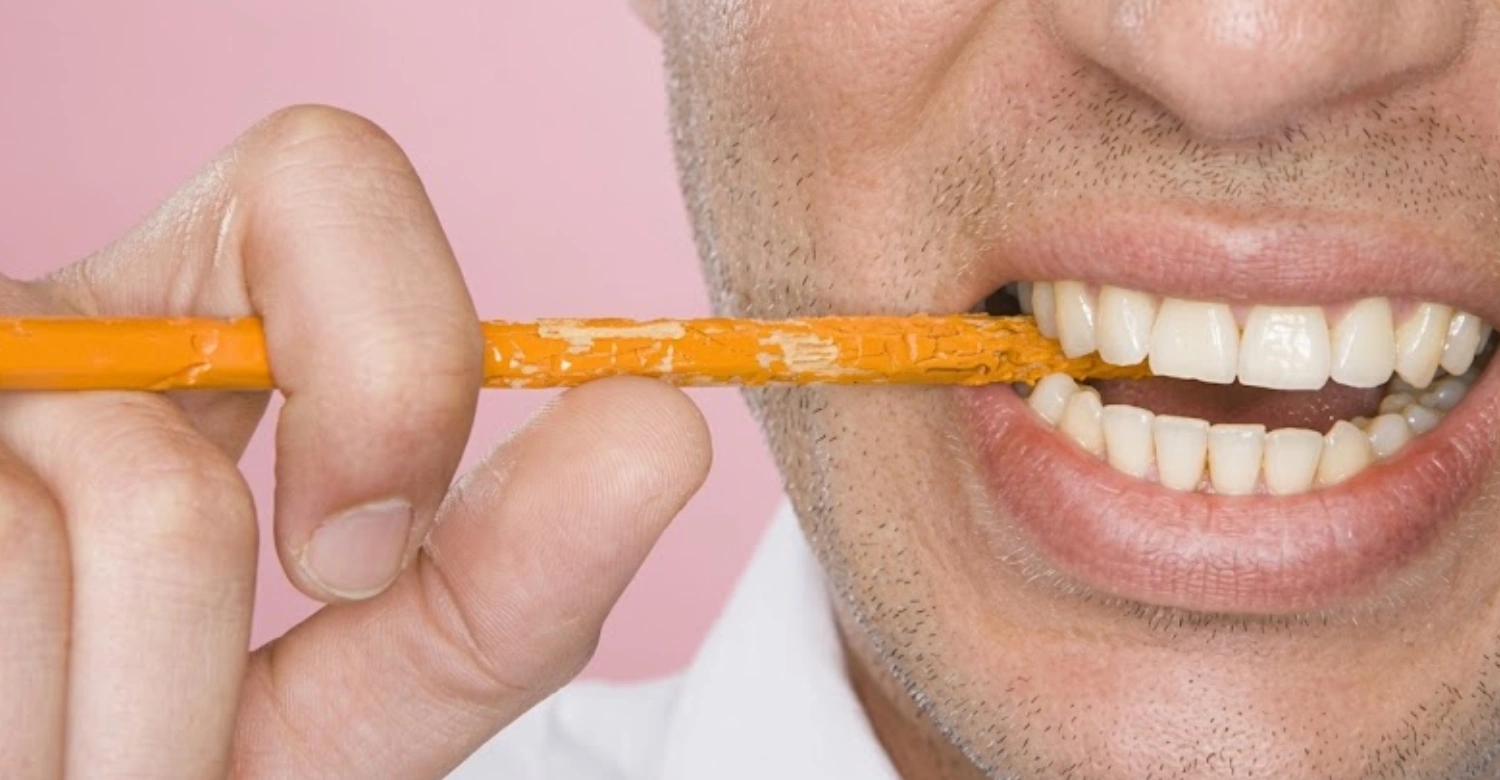
Chewing on nails, pens, pencils, or other objects places uneven, unnatural forces on the front teeth. This can chip enamel, shift bite alignment slightly, and strain the jaw joint over time. Trying to stop through willpower alone often fails. The habit is usually tied to concentration or anxiety, not conscious choice. Replacing the behavior with a safer alternative, such as a stress ball or chewing gum, tends to work better. Addressing this habit early helps protect enamel before visible damage develops.
Stress Snacking and Frequent Sugar Exposure
Stress can trigger frequent snacking or reaching for sugary drinks throughout the day. What matters most for cavity risk is not just sugar quantity, but how often the mouth is exposed to it. Each snack restarts an acid cycle that can weaken enamel. Acidic drinks and snacks add further erosion on top of sugar exposure. Spacing out meals and limiting grazing can significantly reduce this risk. This holds true even when stress levels remain high during a demanding week.
Neglecting Brushing and Flossing During Stressful Periods
A single missed brushing session rarely causes harm, but stress can turn a temporary lapse into a repeated pattern. Skipping flossing regularly allows plaque to build between teeth where a toothbrush cannot reach. Over weeks, this contributes to gingivitis, bad breath, and early periodontal changes. Because the shift happens gradually, patients often do not notice until a dental visit reveals visible plaque or bleeding gums. Rebuilding a simple, consistent routine helps reverse many of these early changes.
Note: All images used are for editorial and illustrative purposes only and may not originate from the original news provider or associated company.
Learn more about myotonic dystrophy and oral health
What Dental Problems Can Develop From Stress-Related Habits?
Left unaddressed, stress oral habits can lead to measurable dental problems rather than just temporary discomfort. Repeated mechanical forces gradually wear enamel and change tooth surfaces. Gums can become inflamed when hygiene lapses allow plaque to accumulate. Saliva changes linked to stress can dry the mouth and raise cavity risk. Jaw muscles under constant tension may develop soreness, tightness, or recurring headaches. Each of these problems has its own diagnostic path, but stress-related behavior is frequently the underlying thread connecting them.
Tooth Wear, Sensitivity, and Enamel Damage
Repeated grinding or clenching gradually flattens tooth surfaces and thins enamel. Wear differs from erosion, which comes from acid exposure. Both differ from a fracture, which is a sudden structural break. Patients may notice flattened edges, increased sensitivity to hot or cold, or small chips. These symptoms rarely appear overnight; they build slowly across months or years. A sudden increase in sensitivity, a visible crack, or a rough edge on a tooth is different. It should prompt a dental examination rather than being dismissed as normal.
Gum Inflammation and Bleeding
When oral hygiene lapses during stressful periods, plaque can build along the gumline and trigger inflammation. Gums may appear redder, feel tender, or bleed during brushing. Stress alone should not be treated as the sole cause of gum disease, since bacteria and plaque are the direct drivers. Still, stress-related neglect of hygiene can accelerate the process. Bleeding that persists for more than a week or two warrants a professional periodontal assessment. This helps rule out more established gum disease.
Dry Mouth and Increased Cavity Risk
Saliva plays a protective role, rinsing away food particles and buffering acid produced by bacteria. Stress, dehydration, mouth breathing, and certain medications can all reduce saliva flow. When the mouth stays dry for extended periods, this natural protection weakens, and cavity risk rises. Warning signs include a persistent sticky feeling, difficulty swallowing dry foods, or a frequent need for water. Persistent dry mouth deserves attention, since prolonged dryness can quietly accelerate decay even with otherwise reasonable oral hygiene.
Jaw Pain, Facial Tension, and Headaches
Clenching and grinding place ongoing strain on jaw muscles, which can lead to overuse, soreness, and radiating facial tension. Some patients experience headaches that concentrate around the temples or jaw joint. When these symptoms recur regularly, they may indicate a temporomandibular disorder rather than simple muscle fatigue. Self-diagnosis is unreliable here, since jaw pain can stem from several different causes. Persistent or worsening jaw pain should be assessed by a dental professional rather than managed indefinitely with home remedies.
Find out more about how to get feeling back in mouth after dentist
How Are Stress-Related Oral Habits Diagnosed?
Diagnosing stress oral habits starts with a careful clinical examination combined with a conversation about daily routines. A dentist looks for physical evidence such as wear patterns, tenderness, or tissue irritation. Questions about sleep, work pressure, and habits like snacking or nail biting come next. This combination helps separate a behavioral pattern from an unrelated dental or medical condition. Because symptoms can have more than one explanation, this process is essential before deciding on any treatment plan.
What Your Dentist Looks for During an Examination
During an exam, a dentist checks for specific physical signs linked to stress-related habits. This includes tooth wear patterns, small fractures, or increased sensitivity to touch or temperature. Bite changes and jaw muscle tenderness are also assessed, along with any signs of cheek or lip trauma. Plaque buildup and gum inflammation are noted, as is any indication of persistent dry mouth. Together, these findings help build a clearer picture of which habits may be affecting the patient.
Questions Your Dentist May Ask
Beyond the physical exam, a dentist typically asks questions to understand when and why a habit occurs. This can include whether symptoms worsen during work, sleep, or particularly stressful situations, and whether sleep patterns have changed recently. Caffeine and sugar intake, current medications, and headache or jaw pain frequency are common topics. Past dental problems also help build context. These questions matter because two patients with similar symptoms may have very different underlying triggers behind their behavior.
Why Identifying the Trigger Matters
Repairing a damaged tooth without addressing the habit that caused it often leads to the same problem returning. If clenching or grinding continues, a new restoration can wear down just as the original tooth did. The trigger might be work pressure, poor sleep, or an unconscious daytime habit. Identifying it allows treatment to target the actual cause. Combining dental treatment with habit awareness and appropriate stress management gives restorative work a better chance of lasting over time.
Tips for Patients
Small daily awareness can prevent stress oral habits from becoming long-term dental problems. These practical tips help patients notice early warning signs and protect their teeth and gums during demanding periods.
Notice When Your Jaw Is Clenched - Pause occasionally to check if your teeth are pressed together, and consciously relax your jaw.
Keep a Simple Oral Hygiene Routine During Stressful Periods - Anchor brushing and flossing to a fixed time so it survives a busy schedule.
Reduce Frequent Sugary and Acidic Snacking - Space out snacks and choose water over sugary or acidic drinks when possible.
Pay Attention to Warning Signs - Sensitivity, sores, or jaw soreness are signals worth noting, not ignoring.
Do Not Ignore Persistent Symptoms - Ongoing discomfort deserves a dental evaluation rather than a wait-and-see approach.
Explore more about tongue posture and teeth
Treatment Options for Stress-Related Oral Problems
Treatment for stress oral habits depends entirely on which symptoms and findings are present during examination. Tooth damage may call for restorative work, while active grinding may require a protective appliance. Gum problems often respond to professional cleaning and better home care, and dry mouth benefits from hydration and saliva-supportive strategies. There is no single fix for every patient. The underlying behavior and its dental consequences vary widely from one case to another.
Treating Tooth Damage and Sensitivity
Mild sensitivity may respond to fluoride applications or desensitizing approaches. More significant damage often requires restorations such as fillings, bonding, or crowns, depending on severity. Some cases of mild wear are simply monitored over time rather than treated immediately, since not every worn surface needs intervention. When wear or fractures are more extensive, restorative treatment becomes necessary to protect the tooth and restore comfortable function. The right approach depends on the extent of damage found during examination.
Managing Teeth Grinding and Clenching
Occlusal splints, sometimes called night guards, are used when clenching or grinding is clinically confirmed. A professionally evaluated appliance, fitted to the individual bite, works far better than a generic solution. Alongside an appliance, dentists monitor tooth wear over time and may discuss behavioral factors contributing to the habit. This combined approach addresses both the physical protection of the teeth and the underlying pattern driving the grinding itself.
Managing Gum Problems
When gum inflammation is present, a professional cleaning is usually the first step to remove built-up plaque and calculus. Improving home-care technique, including brushing angle and flossing consistency, helps maintain results afterward. If gum disease has progressed further, periodontal treatment may be required to address deeper issues. Regular reassessment allows the dental team to track healing. This matters most if hygiene lapses tend to return during busy periods.
Managing Dry Mouth
Managing dry mouth often starts with simple steps like increased hydration. Saliva-supportive products, such as sugar-free gum or specific rinses, can help too. If dryness is linked to a medication, reviewing this with the prescribing healthcare professional may help identify alternatives. Sometimes dry mouth persists despite these adjustments. Increased preventive care, including more frequent checkups, then helps offset the added cavity risk. Addressing the cause alongside the symptom generally produces better long-term comfort.
Learn more about craniofacial disorders and dental health
Can Treating Stress Oral Habits Improve Your Smile?
Treating stress oral habits can meaningfully improve comfort and appearance, though results depend on the specific condition being addressed. Reducing active grinding, healing gum inflammation, and restoring damaged teeth all contribute to a healthier, more comfortable smile. However, treatment works best when paired with awareness of the underlying habit. Ongoing forces can otherwise undermine even well-done restorative work. Expectations should stay realistic and tailored to each patient's actual findings rather than a generic outcome.
What Patients Can Expect Before and After Treatment
Before treatment, patients often notice sensitivity, visible wear, jaw tension, and gum bleeding. Bad breath, recurrent cheek or lip irritation, and anxiety about worsening damage are also common. After appropriate treatment and better habit control, many experience reduced sensitivity and better gum health. Hygiene improves too, along with more comfortable eating and speaking. Remaining tooth structure is better protected going forward. It's worth noting that treatment results depend on the specific dental condition. Damaged enamel cannot simply grow back once it has worn away.
Clinical Note
Stress-related dental symptoms should be evaluated based on clinical findings, not assumed from stress alone. Persistent bleeding, tooth fractures, severe sensitivity, unexplained oral sores, or ongoing jaw pain deserve a professional examination. A wait-and-see approach is not enough. Oral symptoms can have several possible causes. A dentist's role is to distinguish a stress-related habit from an independent dental or medical condition. As Dr. Rifat Alsaman explains, stress becomes clinically relevant when it changes what a patient does with their teeth, or how consistently they care for their mouth. The goal is understanding why the damage is happening, not just repairing it.
Discover how to get rid of numbness after dentist
How Can You Prevent Stress From Affecting Your Oral Health?
Preventing stress oral habits from affecting long-term oral health starts with consistency. Building brushing and flossing into fixed parts of the day makes them easier to maintain under pressure. Keeping dental appointments even during demanding periods catches problems early. Identifying personal triggers for clenching, biting, or snacking helps interrupt the pattern before damage builds. Staying hydrated, prioritizing sleep, and using appropriate stress-management strategies all support oral health indirectly. Dentists can address the oral consequences, while broader stress management may call for support from another healthcare professional.
Explore the link between atherosclerosis and periodontal disease
Stress and Oral Health in Different Patient Situations
Stress and oral health intersect differently depending on a patient's lifestyle and circumstances. Busy professionals, people going through major life changes, and residents of high-pressure urban environments each experience stress oral habits differently. Recognizing these patterns helps patients understand why symptoms may appear during certain periods of their life. The underlying dental risks remain similar. The daily triggers behind them, though, can look quite different from one patient to another.
Stress and Oral Health in Busy Professionals
Long working hours often bring irregular meals, frequent caffeine intake, and unconscious jaw clenching during periods of concentration. Skipping meals or rushing through oral hygiene becomes easier to justify when schedules are packed. Over time, these small adjustments accumulate into measurable oral health risks. Professionals juggling demanding roles may not notice these habits forming at first. Sensitivity, jaw soreness, or a dental exam often brings the pattern to their attention.
Stress and Oral Health During Major Life Changes
Major life changes, whether a move, a new job, or a personal transition, often disrupt sleep and daily routines. Increased snacking becomes more common as a coping response, and dental-care consistency can drop during the adjustment period. Many patients also become more aware of jaw tension during these times, even if it was present before. These periods are a common point where stress oral habits first become noticeable enough to prompt a dental visit.
Stress and Oral Health: NYC and Other High-Stress Urban Environments
Stress and oral health NYC searches often reflect how demanding schedules, long commutes, and constant work pressure shape daily habits. This happens in fast-paced cities everywhere. Irregular routines can make it harder to maintain consistent brushing, flossing, and balanced eating. It's worth noting that the same behavioral patterns can occur in any busy urban environment, not just one particular city. Living somewhere fast-paced does not directly cause oral disease. It simply creates conditions where stress oral habits are more likely to take hold.
What We Notice Clinically
Dr. Rifat Alsaman, Head of the Medical Team at Vitrin Clinic, emphasizes identifying the underlying behavior first. This comes before planning any cosmetic or restorative treatment. Cosmetic dentistry should never substitute for managing an active, damaging habit. New restorations remain vulnerable to the same forces that damaged the original teeth. According to Dr. Rifat Alsaman, restorative work should begin with understanding the condition of the teeth and the habits affecting them. Protecting the results matters as much as improving how they look.
When Stress Should Not Be Assumed to Be the Cause
Certain symptoms should never be automatically attributed to stress oral habits without a proper evaluation. These include persistent oral ulcers, severe or unexplained tooth pain, and significant gum bleeding. Swelling, loose teeth, or a sudden change in bite also count. Persistent dry mouth that doesn't improve with simple adjustments also warrants attention. Symptoms that continue despite improved oral hygiene point toward a separate underlying issue. That issue needs proper diagnosis, not dismissal as stress-related.
Vitrin Clinic's Approach to Stress-Related Dental Concerns
Vitrin Clinic assesses stress oral habits individually, since no two patients present the exact same pattern of symptoms. Clinical examination always comes before recommending cosmetic or restorative treatment. Digital imaging, CBCT or 3D imaging when clinically indicated, intraoral scanning, and digital treatment planning all help. Together they evaluate tooth structure, restorations, and bite relationships accurately. These tools support combining functional dental health with aesthetic goals. Dr. Rifat Alsaman, Head of the Medical Team, brings this professional perspective to every case. Cosmetic treatment never resolves a habit on its own.
Learn more about the veneers Turkey package
Protect Your Oral Health When Stress Is High
Stress oral habits can be easy to overlook because so many occur automatically, without conscious awareness. Recognizing them early helps protect teeth, gums, and jaw function before damage accumulates. Patients experiencing persistent symptoms are encouraged to seek an individualized dental assessment rather than waiting for discomfort to worsen.
References:
FAQs
Dr. Rifat Alsaman has more than 5 years of clinical experience in dentistry and currently serves as the Head of the Medical Team at Vitrin Clinic. He is dedicated to providing exceptional patient care, overseeing treatment planning, and ensuring the highest clinical standards across the team. His expertise, attention to detail, and commitment to continuous professional development have helped countless patients achieve healthier, more confident smiles.


