
Yes, a tongue thrust open bite can develop when repeated forward tongue pressure interferes with normal bite development. Tongue thrusting is a common oral habit. The tongue pushes against or between the teeth during swallowing. Over time, this pattern may keep the front teeth from meeting properly. This article explains how the condition forms, its causes, and how Vitrin Clinic approaches evaluation and treatment.
What Is a Tongue Thrust Open Bite?
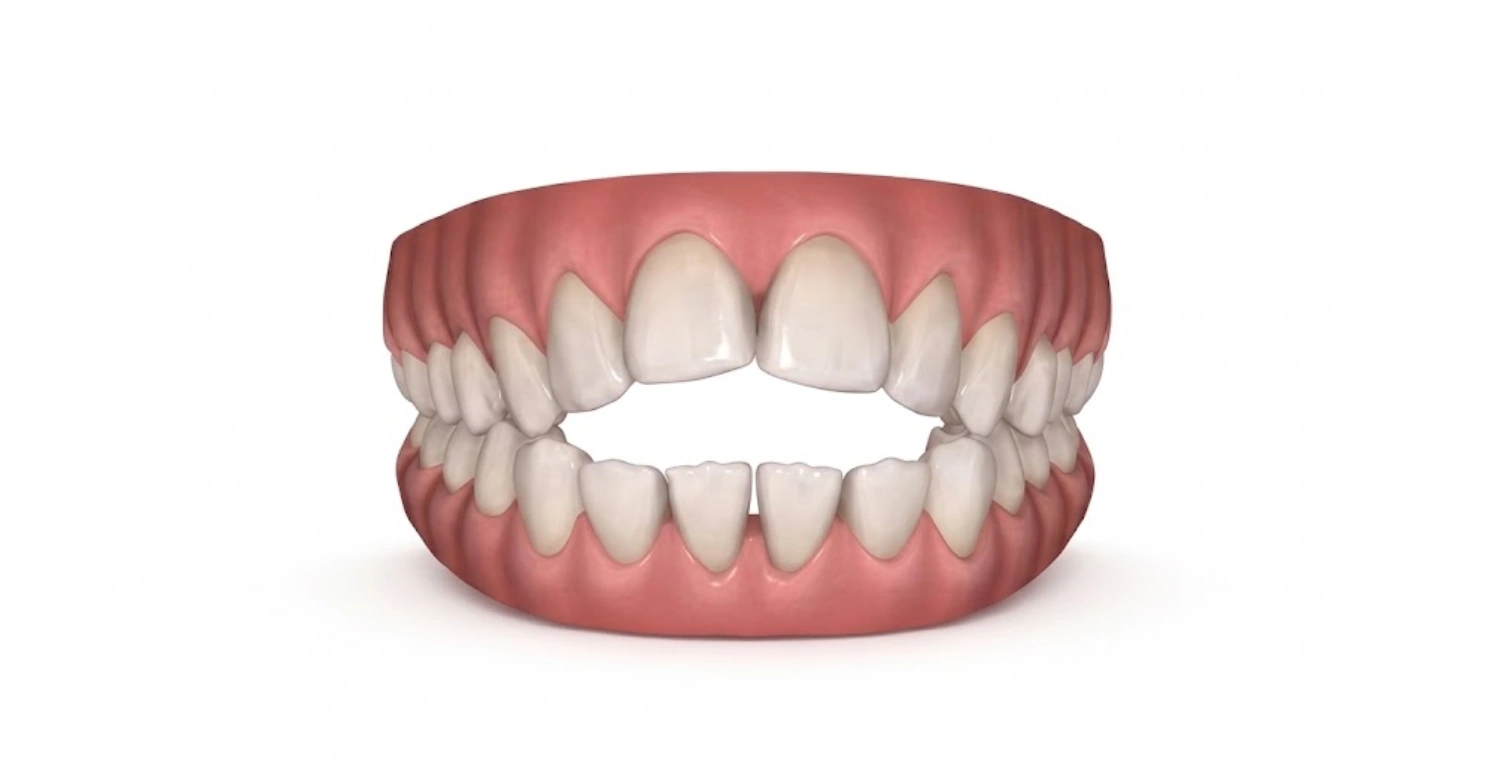
A tongue thrust open bite occurs when persistent tongue pressure against the front teeth prevents them from closing together normally. This combination of an oral habit and dental alignment change is a common pattern practitioners look for. Ongoing tongue thrusting can gradually reshape how the upper and lower teeth relate during rest and function.
Understanding Tongue Thrusting
Tongue thrusting happens when the tongue moves forward against or between the teeth while swallowing. This differs from a resting tongue position against the roof of the mouth. Repeated tongue pressure applied this way may gradually influence tooth position and bite development. The habit can occur in children and adults alike. Its long-term effects often depend on frequency, force, and duration.
What Is an Anterior Open Bite?
An anterior open bite is a condition where the upper and lower front teeth fail to meet when the mouth is closed. This leaves a visible gap between them. Tongue posture and oral habits, including tongue thrusting, are closely linked to this pattern. When the tongue consistently occupies the space between the teeth, it can prevent normal front-tooth contact from developing.
Learn more about angular stomatitis and cheilosis
How Does Tongue Thrust Cause an Open Bite?
A tongue thrust open bite develops gradually. Repeated tongue pressure pushes against the front teeth, resisting their natural closure. Over months or years, this pressure can shift tooth position enough to create a lasting gap. This connection between tongue behavior and dental alignment is an important part of understanding the condition.
The Role of Tongue Pressure
Repeated forward tongue pressure can gradually influence the position of the front teeth, especially during the developmental years. Persistent tongue thrusting may interfere with normal bite development. It does this by resisting the natural forces that bring teeth into contact. The extent of this effect varies depending on the person's age, the severity of the habit, and how long it continues.
How Tongue Posture Affects Dental Alignment
Resting tongue position plays an important role in how teeth settle into place over time. Abnormal tongue posture may contribute to changes in tooth positioning by applying uneven or constant pressure. Tongue posture, dental alignment, and jaw development are closely connected. Because of this link, ongoing habits can meaningfully shape the surrounding bite structure.
Clinical Note
Tongue thrust is only one potential contributor to a tongue thrust open bite, and it rarely acts alone. Professional evaluation is necessary to determine the underlying cause. Skeletal patterns, habits, and developmental factors can all play a role. A thorough assessment helps distinguish tongue thrusting from other possible causes
Find out more about dental trauma
.
What Are the Main Causes of an Open Bite?
Open bite causes vary widely. This specific pattern is just one possible outcome among several developmental and habitual factors. Understanding the range of contributing causes helps clarify why some cases involve tongue thrusting alone. Others reflect a combination of skeletal, habitual, and functional influences.
Oral Habits and Tongue Thrusting
Prolonged oral habits can influence bite development well before permanent teeth fully settle into position. Tongue thrusting is one of the most frequently discussed habits linked to open bite causes. This is especially true when it continues into later childhood. The longer such habits persist, the more likely they are to affect alignment.
Other Open Bite Causes
Several factors beyond tongue thrusting can contribute to open bite causes. These include genetics and skeletal development, prolonged oral habits, abnormal tongue posture, pacifier or thumb-sucking habits in childhood, and certain functional or developmental factors. Each of these can act independently or alongside tongue thrusting to influence how the bite ultimately develops.
Compare dental implants vs bridges
What Problems Can a Tongue Thrust Open Bite Cause?
This condition can create a range of dental and functional concerns beyond appearance. These effects may involve difficulty with certain everyday functions. The severity often depends on how pronounced the gap is and how long the underlying tongue thrusting habit has continued.
Effects on Dental Alignment
An open bite may affect the position and alignment of surrounding teeth as they shift to accommodate the gap. Some patients also experience difficulty biting certain foods. This is especially true for foods that require a clean, even bite from the front teeth. These effects tend to become more noticeable the longer the condition remains unaddressed.
Effects on Speech and Oral Function
Some people with an anterior open bite may experience functional or speech-related difficulties. Front-tooth contact plays a role in certain sounds and oral movements. The severity and symptoms differ between patients. This depends on the size of the gap, the strength of the tongue thrusting habit, and individual oral anatomy.
Tips for the Patients
Patients should avoid ignoring persistent tongue-thrusting habits. Early attention can prevent further changes to dental alignment. Professional assessment is recommended if the front teeth do not meet properly. Early evaluation may help identify contributing oral habits before the condition becomes more difficult to manage.
Note : All images used are for editorial and illustrative purposes only and may not originate from the original news provider or associated company.
Explore the connection between oral health and overall well-being
How Is Tongue Thrust Open Bite Diagnosed?
Diagnosing a tongue thrust open bite involves looking closely at two things: the physical gap between the teeth and the habits that may be causing it. A combined approach helps determine whether tongue thrusting is the primary factor or one of several contributing causes affecting the bite.
Dental and Bite Examination
Dentists assess the relationship between the upper and lower teeth to determine the extent of the open bite. This includes evaluating overall dental alignment, the size of the gap, and how the teeth interact during normal function. This examination forms the foundation for identifying the condition accurately.
Evaluating Tongue Posture and Oral Habits
The tongue's resting and swallowing position may be assessed to understand its role in the condition. Relevant oral habits are also considered, including thumb-sucking or prolonged pacifier use. These habits can contribute alongside tongue thrusting to the development or persistence of an open bite.
Clinical Note
Diagnosis should consider both dental and functional factors. It should not focus exclusively on the visible gap between the teeth. This condition often involves overlapping causes. Evaluating tongue posture, oral habits, and bite development together provides a more complete and accurate clinical picture.
Learn more about food allergies and oral health
How Is a Tongue Thrust Open Bite Treated?
Treating a tongue thrust open bite typically involves addressing both the physical gap and the habit contributing to it. Every case differs. Treatment plans are shaped around the patient's specific bite development, age, and the underlying cause identified during diagnosis.
Orthodontic Treatment
Orthodontic treatment can help improve dental alignment. It can close certain types of open bites by gradually repositioning the teeth. The specific approach depends on the patient's age, the severity of the open bite, and the underlying cause. This type of open bite may require different considerations than other bite irregularities.
Addressing Tongue Thrusting
When tongue thrusting contributes to the open bite, addressing the underlying habit is an important part of treatment. Controlling the oral habit can support long-term treatment stability. Correcting tooth position alone may not prevent the tongue from continuing to apply the same pressure that caused the original shift.
Treatment Planning at Vitrin Clinic
Vitrin Clinic creates treatment plans based on each individual patient's dental condition and bite. The clinic does not apply a single standard approach. This includes assessing dental alignment, bite development, tongue posture, and contributing oral habits. Vitrin Clinic's clinical team emphasizes treating the underlying cause of a tongue thrust open bite. The focus goes beyond tooth appearance alone.
Tips for the Patients
Patients should follow the recommended treatment plan consistently and attend all follow-up appointments. Avoiding a return to persistent oral habits after treatment helps protect results. It is also worthwhile to ask the dental team about long-term retention and bite stability related to this condition.
Can Tongue Thrust Open Bite Be Prevented?
Not every case can be fully prevented. However, early attention to habits and bite development can reduce the likelihood of this condition forming or worsening. Recognizing warning signs early gives more options for guiding healthy tooth positioning.
Recognizing Abnormal Oral Habits Early
Persistent tongue thrusting should be evaluated as soon as it is noticed. Early habits are often easier to influence than long-standing ones. Monitoring bite development in children is particularly important. This is when the teeth and jaw are most responsive to ongoing pressure from oral habits.
Maintaining Healthy Tongue Posture
Maintaining an appropriate resting tongue position supports normal dental alignment over time. Patients should not attempt to force their tongue into a specific position without professional guidance. Improper self-correction may not effectively address the underlying cause of a tongue thrust open bite.
Discover more about thyroid eye disease and oral health
Can Tongue Thrust Open Bite Return After Treatment?
This condition can return after treatment if the contributing habits are not fully resolved. Relapse is a recognized possibility in cases involving ongoing tongue thrusting. This is why long-term monitoring and habit management remain part of a complete treatment approach.
Why Relapse Can Occur
Open bite relapse can occur when contributing habits persist even after the teeth have been repositioned. Tongue thrusting that continues unaddressed can gradually undo orthodontic progress. The same pressure that shaped the original bite may reapply itself, threatening long-term dental stability.
Maintaining Dental Alignment
Following retention recommendations is essential for maintaining results after treatment for this condition. Addressing persistent oral habits remains equally important. Retention devices alone may not fully counteract ongoing tongue pressure if the underlying behavior has not been corrected.
Clinical Note
Long-term stability depends on the original cause, the treatment approach used, the patient's age, and compliance with post-treatment recommendations. A case involving strong or long-standing tongue thrusting may require closer monitoring to reduce the chance of relapse.
Learn more about polyarteritis nodosa and oral health
Vitrin Clinic's Approach to This Condition
Vitrin Clinic approaches these cases through detailed evaluation and individualized planning, rather than a one-size-fits-all method. This section outlines how the clinic assesses patients and develops treatment strategies suited to each person's specific bite and habit profile.
Personalized Dental Evaluation
Vitrin Clinic evaluates patients with bite and alignment concerns through a comprehensive process. This includes assessing tongue posture, oral habits, bite development, and dental alignment together. This allows the clinical team to build an accurate picture of how the condition may have developed in each individual case.
Personalized Treatment Planning
Treatment at Vitrin Clinic is planned according to the patient's individual condition. The clinic does not use the same approach for every open bite. Identifying the underlying cause before selecting a treatment method helps ensure that this condition is addressed at its source, rather than only through surface-level correction.
What We Notice Clinically
Dr. Rifat Alsaman, Head of the Medical team at Vitrin Clinic and a cosmetics dentist, assesses tongue thrusting, bite development, and dental alignment together when evaluating this condition. This combined perspective reinforces that improving appearance alone may not address the functional cause of the condition. Lasting results depend on managing both the bite and the habit behind it.
Tips for the Patients
Patients are encouraged to complete the recommended evaluation and follow both treatment and retention instructions closely. Maintaining regular dental follow-ups supports long-term stability. Discussing any persistent tongue-thrusting habit with the dental team helps prevent this condition from recurring after treatment.
Explore HIV symptoms and oral health
Resource:
https://pmc.ncbi.nlm.nih.gov/articles/PMC10888353/
FAQs

Dr. Rifat Alsaman has more than 5 years of clinical experience in dentistry and currently serves as the Head of the Medical Team at Vitrin Clinic. He is dedicated to providing exceptional patient care, overseeing treatment planning, and ensuring the highest clinical standards across the team. His expertise, attention to detail, and commitment to continuous professional development have helped countless patients achieve healthier, more confident smiles.


