
Can acid reflux affect teeth and gums? Yes. When stomach acid regularly reaches the mouth, it can wear down enamel and irritate soft gum tissue over time. GERD-related acid exposure lowers the mouth's pH. This weakens the protective layer on teeth and disrupts the oral bacterial balance that keeps gum health healthy. That is why acid reflux and dental health are now studied together. Dentists often notice the signs before a patient is even diagnosed with reflux disease. One meta-analysis pooling 28 studies found dental erosion in 51.5% of GERD patients, compared with 21.4% of people without reflux. That is roughly five times higher. Understanding this connection helps patients catch problems early, before damage becomes permanent.
Can Acid Reflux Damage Teeth?
This is one of the most common questions dentists hear. Repeated contact between stomach acid and enamel gradually softens and dissolves the tooth's outer layer. Unlike cavities caused by bacteria, this kind of damage is chemical, not bacterial. It tends to affect surfaces closest to where acid pools during reflux episodes, especially the back of the upper front teeth.
How Does Acid Reflux Affect Your Teeth?
Reflux exposes enamel to a highly acidic environment, far below the pH at which minerals begin dissolving. Each reflux episode strips away a small amount of surface enamel. Over months and years, this damage accumulates. Enamel thins, sensitivity increases, and teeth start to look and feel different to the tongue.
Why Does Stomach Acid Damage Tooth Enamel?
Enamel is the hardest tissue in the body, but it is still mineral, and it reacts to acidity. Stomach acid has a pH far lower than enamel can tolerate without losing calcium and phosphate. Frequent, repeated exposure, rather than one isolated episode, is what drives gradual mineral loss and long-term erosion.
Can Acid Reflux Cause Tooth Erosion?
Yes. Acid-related erosion is different from mechanical wear like grinding. Erosion is a chemical process, where acid softens and removes enamel. Wear from grinding or brushing is physical friction instead. A case-control study found dental erosion in 98.1% of GERD patients, compared with only 19.0% of people without reflux, a striking difference.
Clinical Note
Erosion related to reflux can develop gradually. Patients may not notice significant changes at first. Because the process is often silent, many people only learn their teeth are affected when a dentist points out thinning, sensitivity, or unusual smoothness during a routine exam.
Acid Reflux Teeth Damage: What Happens to Enamel?
This kind of damage primarily targets enamel, the protective outer shell of every tooth. Once minerals are lost from repeated acid contact, enamel becomes thinner and weaker. It becomes less able to protect the sensitive layers underneath. This sets the stage for sensitivity, discoloration, and structural changes that can affect how teeth function.
What Is Acid Reflux Enamel Erosion?
This term refers to the gradual dissolving of tooth surface minerals, caused by repeated stomach acid exposure. It is a well-documented finding among GERD patients. A systematic review of 17 studies reported a median dental erosion prevalence of 24%, part of the growing evidence linking reflux to measurable, clinically recognized dental changes.
How Acid Reflux Weakens Tooth Enamel
Every acid exposure pulls calcium and phosphate out of enamel's crystal structure. Saliva normally helps neutralize acid and restore some minerals. Frequent reflux, however, overwhelms this natural buffering. Over time, weakened enamel becomes thinner and more porous. It grows increasingly vulnerable to everyday chewing forces, temperature changes, and further acid attacks.
Signs of Enamel Erosion From Acid Reflux
Common signs include increased tooth sensitivity and surfaces that look smooth or shiny compared to their original texture. Many patients also notice a yellowish appearance, as underlying dentin becomes more visible beneath the thinning enamel. In more advanced cases, teeth may look flattened or shortened, with changes around the biting edges. These signs are usually gradual rather than sudden.
Tips for the Patients
Avoid brushing immediately after an acid exposure, since softened enamel is more easily worn away. Rinse the mouth with water instead. Follow the reflux management plan recommended by a healthcare professional, and keep up with regular dental exams so early enamel changes are caught sooner.
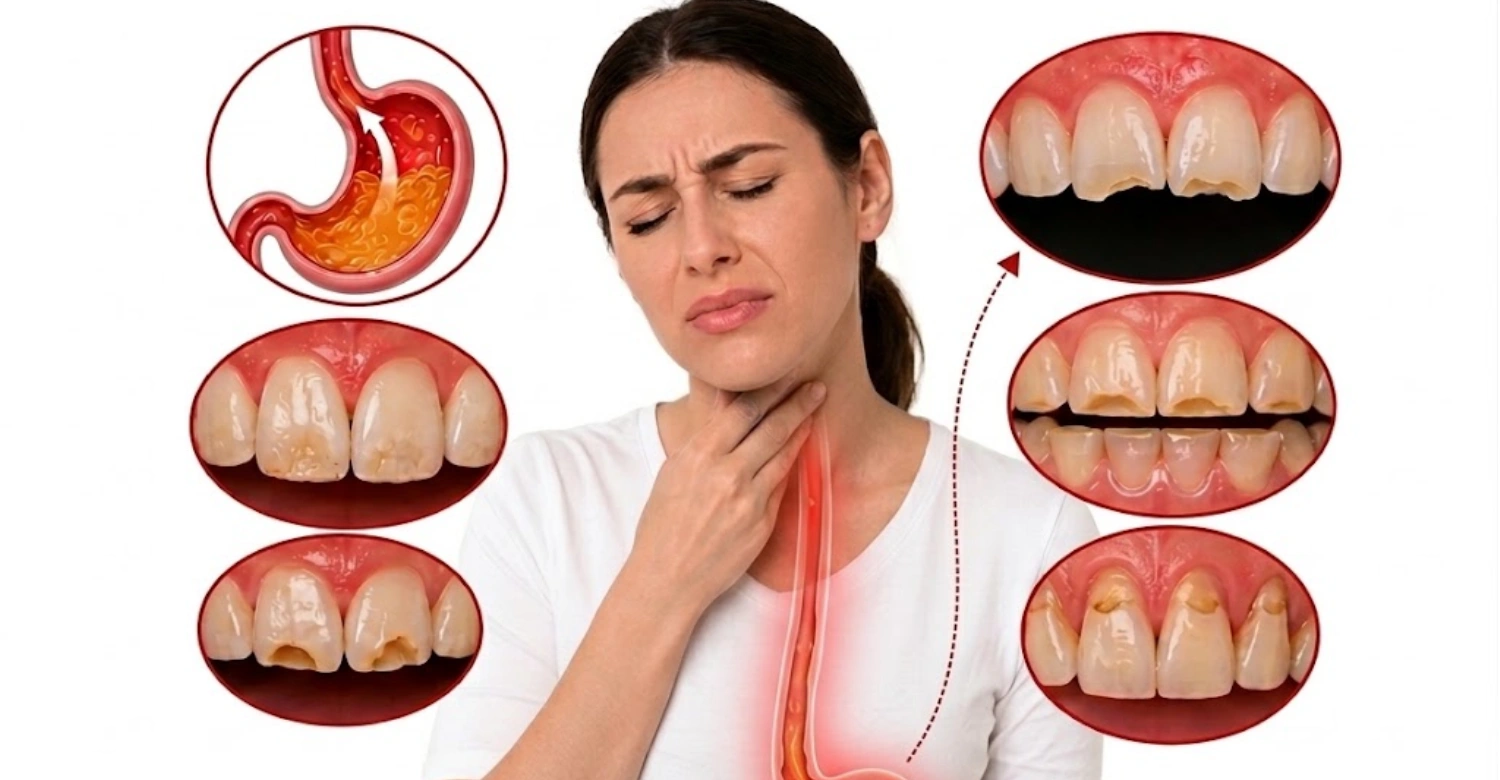
How Can Acid Reflux Affect Teeth and Gums? The GERD Connection
GERD and teeth are connected through repeated, often unnoticed acid exposure in the mouth. Because reflux can happen silently, especially at night, many patients do not realize their digestive condition is affecting their smile. Often, a dentist is the first to identify erosion patterns consistent with acid exposure, rather than diet or brushing habits alone.
Can GERD Cause Tooth Erosion?
This is a frequent concern, and the evidence supports a real link. An earlier systematic review found that among adults who already had dental erosion, GERD prevalence reached 32.5%. This suggests a two-way relationship: reflux contributes to erosion, and unexplained erosion can prompt a reflux evaluation.
How Does GERD Affect Oral Health?
GERD interacts with the mouth through enamel erosion, tooth sensitivity, and gradual changes in tooth shape. Beyond enamel, weakened tooth structure becomes more vulnerable to decay and chipping. The mouth is one of the first places acid contacts outside the digestive tract, so oral health often reflects how well reflux is being managed.
GERD Teeth Erosion Symptoms
Typical symptoms include sensitivity to hot, cold, or sweet foods, smoother or thinner-looking enamel, and a yellowish tint as dentin becomes exposed. A clinical study of 88 GERD patients found palatal erosion in 80% of those with frequent respiratory symptoms, like chronic cough. This hints that more severe reflux tracks with worse erosion.
Clinical Note
Dental findings alone cannot confirm GERD. Persistent reflux symptoms should also be discussed with an appropriate medical professional. A dentist can flag patterns that look acid-related, but only a broader medical evaluation can confirm whether reflux disease is the underlying cause.
What Are the Symptoms on Teeth and Gums?
Symptoms range from subtle sensitivity to visible enamel changes and, less directly, gum irritation. Recognizing these symptoms early gives patients and dentists a chance to intervene, before erosion progresses to more advanced structural damage.
Acid Reflux Teeth Symptoms
Common symptoms include tooth sensitivity, gradual enamel thinning, and noticeable discoloration as the enamel wears down. Some patients notice their enamel becoming rougher or unusually smooth in different areas. Discomfort with hot or cold foods is another frequent complaint. Over time, changes in tooth shape can also develop as erosion progresses.
Can Reflux Affect Your Gums?
Reflux primarily damages teeth through direct acid exposure, while gum symptoms may stem from other contributing factors. A Mendelian randomization study using genetic data found a causal effect of GERD on periodontitis, with an odds ratio of 1.229, alongside nominal associations with toothache and bleeding gums. Oral dryness, irritation, hygiene habits, and altered bacterial balance from lowered saliva pH can all influence gum health alongside reflux.
Symptoms to Watch
Symptoms that suggest acid-related damage tend to appear on specific tooth surfaces and develop gradually. This is unlike common cavities, which usually form in pits, grooves, or between teeth regardless of reflux. Distinguishing between the two patterns is one reason a dental exam matters.
When Symptoms May Need Dental Evaluation
A dental evaluation is worth considering when sensitivity persists rather than passing quickly, or when enamel changes become visibly noticeable. Recurrent tooth damage, unexplained wear that doesn't match diet or brushing habits, and ongoing discomfort are all reasonable grounds to schedule an appointment, rather than waiting for symptoms to resolve on their own.
Tips for the Patients
Keep track of when sensitivity or discomfort occurs, particularly after meals or at night. Maintain good oral hygiene. Tell your dentist if you experience frequent reflux, since this history helps them evaluate your specific case.
Can Acid Reflux Cause Cavities?
This is a common point of confusion. Reflux itself does not directly cause bacterial decay, but the enamel erosion it causes can make teeth more vulnerable to cavities. This is especially true when combined with sugar intake, plaque buildup, or inconsistent oral hygiene.
Does Acid Reflux Directly Cause Tooth Decay?
Erosion and cavities differ in cause. Erosion is a chemical process from stomach acid, while cavities form when oral bacteria feed on sugars and produce their own acid. Reflux does not create the bacteria responsible for decay, but it does change the environment those bacteria operate in.
How Enamel Erosion May Increase Cavity Risk
Once enamel is thinned by acid, its natural protective barrier is reduced, giving bacteria easier access to deeper tooth layers. Combined with plaque buildup, diet, and inconsistent oral hygiene, this weakened state can raise the practical risk of cavities forming where erosion has already occurred.
Erosion vs. Cavities: How Can You Tell the Difference?
Erosion tends to appear as smooth, widespread thinning across multiple tooth surfaces. Cavities usually show up as isolated, defined spots instead. Because both can occur together, a dental exam is often needed to tell which issue is primary.
Clinical Note
Acid erosion and cavities are different conditions, although enamel damage can contribute to increased vulnerability to decay. Patients experiencing both should not assume one explains the other. Each requires a slightly different prevention and treatment approach.
What Does Acid Reflux Tooth Erosion Look Like?
This kind of erosion has a recognizable progression, starting subtly and becoming more visible over time. Knowing what early versus advanced signs look like helps patients understand why this pattern is worth monitoring, rather than dismissing as ordinary wear.
Early Signs of Acid Reflux Tooth Erosion
Early on, patients often notice only mild sensitivity, easy to dismiss as ordinary sensitivity from diet or temperature. Enamel surfaces may start to feel unusually smooth to the tongue. Subtle changes in tooth texture can appear well before any visible damage. Increased sensitivity to acidic foods is often one of the earliest, most consistent clues.
Advanced Signs of Acid Reflux Enamel Damage
As erosion progresses, more dentin becomes visible, giving teeth a yellowish look. Teeth may appear flattened along the biting surfaces, chip more easily, or seem shorter and thinner than before. These advanced signs reflect significant, often long-standing damage, rather than a recent development.
Where Does Acid Reflux Usually Affect the Teeth?
The pattern of erosion can vary, depending on how refluxed acid contacts the teeth during episodes. It often reaches surfaces near the back of the throat first. An international consensus panel of 44 physicians reached 96% agreement that erosion on lingual and palatal surfaces is increased in GERD patients. This is why dentists evaluate multiple tooth surfaces, rather than relying on a single sign.
How Is Acid Reflux Teeth Damage Diagnosed?
Diagnosis combines a visual dental exam with a careful medical history. Because erosion patterns can resemble other forms of tooth wear, dentists look at multiple clues together, rather than assuming reflux is the cause based on appearance alone.
Dental Examination for Enamel Erosion
A dental exam assesses tooth surfaces, enamel thickness, sensitivity, and wear patterns across the whole mouth. Dentists look for the smooth, rounded, thinned appearance typical of acid exposure. They compare affected areas against surfaces less likely to contact refluxed acid, to build a clearer clinical picture.
Medical and Dental History
Dentists ask about reflux, heartburn, regurgitation, diet, medications, and oral habits, since each factor can contribute to enamel wear differently. Because many patients are unaware they have GERD, dentists are often the first to raise reflux as a possible explanation for otherwise unexplained erosion.
How Dentists Distinguish Acid Erosion From Other Tooth Wear
Dentists differentiate acid erosion from other causes of tooth wear, such as bruxism, which comes from grinding, and abrasion, which results from physical friction like aggressive brushing. Attrition from normal chewing and dietary acid from acidic foods and drinks are also considered. Each produces a slightly different wear pattern.
Clinical Note
A thorough dental assessment helps determine whether enamel changes are consistent with acid exposure or another cause of tooth wear. This distinction matters, because treatment and prevention strategies differ depending on whether reflux, grinding, or diet is the primary driver.
How Can You Protect Your Teeth From Acid Reflux Damage?
Protection involves both dental habits and reflux management working together. Reducing how often and how intensely acid reaches the mouth is central to slowing further erosion.
Protecting Enamel After Acid Reflux
Rinse with water after reflux episodes, to help dilute and clear acid from the mouth. Avoid aggressive brushing right afterward, since enamel is temporarily softened. Regular dental care allows small changes to be caught and addressed, before they progress into more significant erosion.
Oral Hygiene and Fluoride Protection
Appropriate brushing technique paired with fluoride toothpaste helps strengthen remaining enamel and supports remineralization of early, superficial mineral loss. Consistent plaque control also reduces the combined burden on teeth already weakened by acid.
Dietary Habits That May Help Protect Enamel
Reducing frequent exposure to acidic foods and drinks gives enamel more recovery time between acid attacks. Avoiding prolonged sipping of acidic beverages limits how long teeth stay in contact with low pH liquids. Balanced eating habits overall support both digestive comfort and long-term enamel resilience.
Managing the Underlying Acid Reflux
Managing reflux itself is essential for reducing repeated acid exposure in the mouth. Patients experiencing frequent heartburn or regurgitation should seek medical advice. Controlling the underlying condition addresses the root cause, rather than only managing dental consequences after the fact.
Tips for the Patients
Don't ignore recurring heartburn or acid coming into the mouth. Tell your dentist about reflux symptoms, even if they seem unrelated to dental care. Keep routine dental appointments to monitor enamel changes, since consistent monitoring is one of the most reliable ways to catch erosion early.
Can Acid Reflux Damage Already Weakened Teeth?
Yes. Teeth weakened by prior wear, decay, or existing erosion have less protective structure left. Additional acid exposure tends to produce more visible, faster changes than it would on healthy enamel.
Why Existing Enamel Damage May Become More Noticeable
When enamel has already thinned from prior wear or erosion, repeated acid exposure accelerates visible changes. There is simply less protective mineral structure remaining. Sensitivity, shape changes, and discoloration can progress more quickly on teeth that were already vulnerable before reflux-related exposure began.
Can Enamel Grow Back After Acid Reflux Damage?
Enamel cannot naturally regenerate once it is permanently lost, since it contains no living cells capable of rebuilding lost structure. Very early, superficial mineral loss, however, may be partially remineralized with fluoride and good oral care. This is why catching erosion early matters so much.
Dental Treatments for Acid-Related Tooth Damage
Treatment options generally start with fluoride-based preventive care, to strengthen remaining enamel, alongside sensitivity management for day-to-day comfort. When more structure has been lost, bonding or restorative treatment can rebuild affected areas. In cases of significant structural damage, crowns or other restorations may be needed to protect the tooth long-term.
Vitrin Clinic: Protecting Teeth From Acid Reflux Damage
At Vitrin Clinic, protecting teeth from reflux-related damage starts with recognizing how acid reflux can affect teeth and gums in ways patients may not notice on their own. A structured evaluation helps identify erosion patterns early and guides an appropriate, personalized response.
Dental Evaluation at Vitrin Clinic
Vitrin Clinic assesses tooth sensitivity, enamel erosion, visible tooth wear, and other dental concerns associated with acid exposure. This evaluation looks beyond surface appearance, considering wear patterns, affected surfaces, and patient history together, to determine whether reflux is likely contributing to the changes being observed.
Personalized Treatment Planning
Treatment at Vitrin Clinic varies according to the severity of enamel damage, ranging from preventive fluoride care for early changes to restorative options for more significant structural loss. Addressing both prevention and existing damage together helps patients manage reflux and dental health as one connected, ongoing process.
What We Notice Clinically
The clinical team at Vitrin Clinic emphasizes evaluating the pattern and severity of enamel erosion carefully, before choosing any restorative or cosmetic treatment. This approach helps ensure that treatment addresses the actual cause of the damage, not just its cosmetic result.
Clinical Note
Early recognition of acid-related enamel changes may help patients take preventive steps before more extensive structural damage develops. Regular visits to Vitrin Clinic support this early recognition, giving patients a clearer long-term picture of their oral health.
Resource
In conclusion, acid reflux can affect teeth and gums, particularly when stomach acids repeatedly reach the mouth. As highlighted in a study published in Cureus, GERD is significantly associated with dental erosion, since gastric acids can soften and wear away enamel over time. Managing reflux and maintaining regular dental care can help protect your teeth and gums from further damage.
https://pmc.ncbi.nlm.nih.gov/articles/PMC7428125/
https://pmc.ncbi.nlm.nih.gov/articles/PMC9667903/
https://www.sciencedirect.com/science/article/abs/pii/S0300571222003037
FAQs

Dr. Rifat Alsaman has more than 5 years of clinical experience in dentistry and currently serves as the Head of the Medical Team at Vitrin Clinic. He is dedicated to providing exceptional patient care, overseeing treatment planning, and ensuring the highest clinical standards across the team. His expertise, attention to detail, and commitment to continuous professional development have helped countless patients achieve healthier, more confident smiles.

.webp&w=3840&q=75)


