General Dentistry
October 19, 2026
Stannous Fluoride: What Is It, and How Does It Help Your Teeth and Gums?
 Dr. Rifat Alsaman

Stannous Fluoride (Tin(II) fluoride) is a fluoride compound used in toothpaste to help prevent tooth decay. In suitable formulations, it may also support gum health and reduce tooth sensitivity. You may be reading this because your gums bleed when you brush. Perhaps cold drinks cause a sharp twinge, or plaque keeps building along your gumline. You may simply be unsure which fluoride toothpaste to choose. Its benefits depend on the formulation, your brushing habits, and the condition of your teeth and gums. This guide explains how it compares with sodium fluoride and what side effects are possible. It also explains when a professional dental assessment may be necessary.
.jpg)
.jpg)
.jpg)
.jpg)
.jpg)
.jpg)
Ready to transform your smile?
Talk to our team and get a FREE treatment plan.
What Is Stannous Fluoride, and How Does It Work?
Tin(II) fluoride is an active ingredient that delivers fluoride to the tooth surface and adds the activity of tin. Fluoride helps enamel resist acid and recover from early mineral loss. The stannous (tin) component may interfere with plaque bacteria and help seal exposed dentin. Manufacturers include it because one ingredient can target several common concerns. These include cavities, plaque, gum inflammation, and sensitivity. However, how well it performs depends heavily on how the complete toothpaste is formulated and stabilized.
What Is Stannous Fluoride Made Of?
Its chemical formula is SnF₂, a compound of tin and fluoride. In toothpaste, SnF₂ is the active ingredient. The complete product also contains abrasives, humectants, detergents, flavoring, and stabilizers. These other ingredients matter because tin ions can react with water and oxygen and lose activity. This is why manufacturers developed stabilized Tin(II) fluoride formulations. Stabilization helps keep enough active tin and fluoride available in the tube. As a result, the ingredient can still work when it reaches your teeth and gums.
How Does Stannous Fluoride Protect Your Teeth?
Fluoride supports remineralization. It helps restore minerals to early, non-cavitated enamel lesions, which often appear as chalky white spots. It also forms a more acid-resistant mineral on the tooth surface. The tin component adds a second layer of action. It may slow the metabolism of plaque bacteria and reduce their ability to cause inflammation. However, there is an important limit. Once decay has created a hole in the tooth, no toothpaste can rebuild that missing structure. A dentist must restore it.
Why Is Stannous Fluoride Used in Toothpaste?
Manufacturers use it because a well-formulated stannous fluoride toothpaste may address several problems at once. These include cavity prevention, plaque control, gingival inflammation, and dentin hypersensitivity. The American Dental Association recognizes Tin(II) fluoride as an established anticaries ingredient. It also acknowledges that certain formulations show additional benefits. However, these extra benefits are not automatic. They vary between products, and each claim should be supported by evidence for that specific formulation. Checking the label and the product's stated, tested benefits is therefore worthwhile.
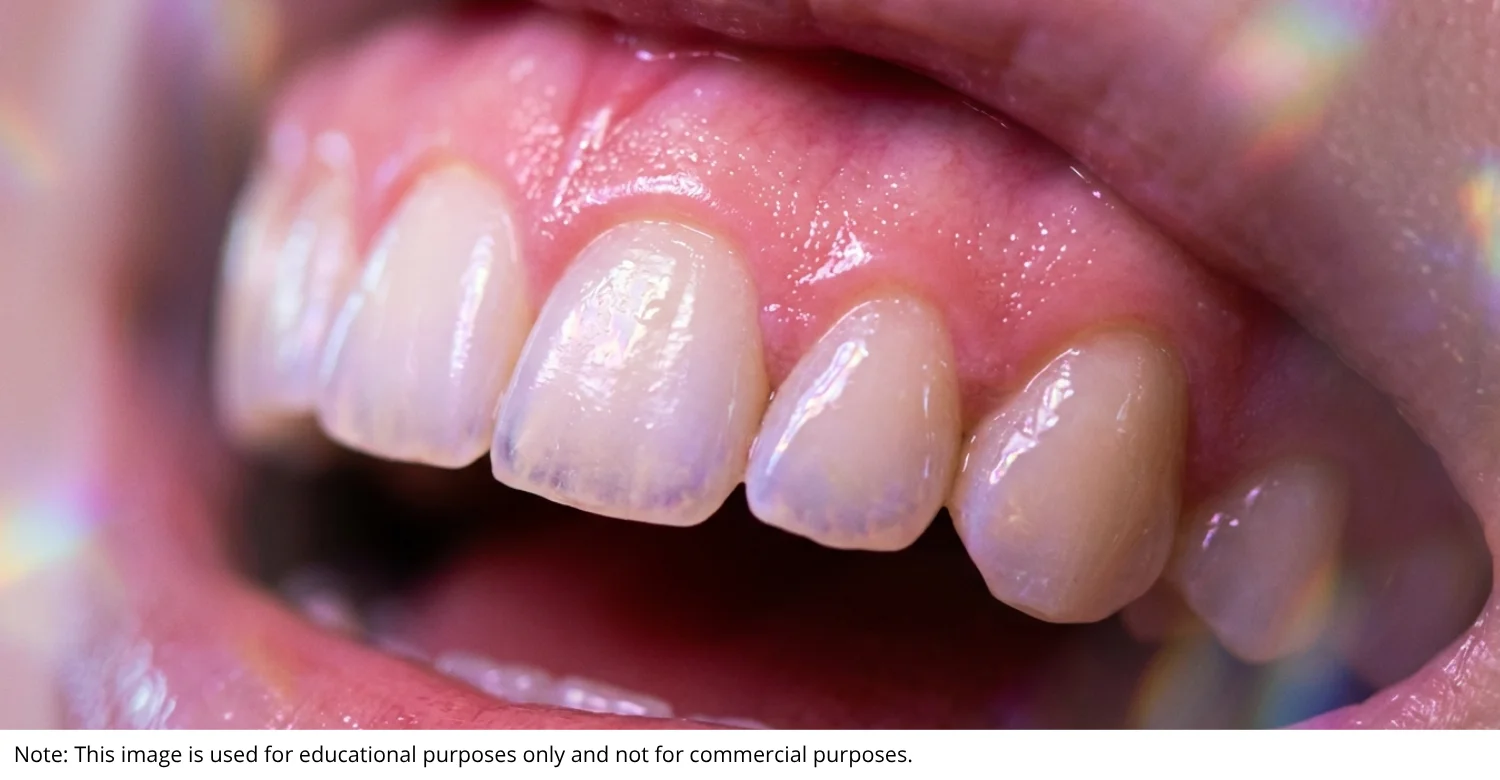
Note: All images used are for editorial and illustrative purposes only and may not originate from the original news provider or associated company.
What Oral Health Problems Can Stannous Fluoride Help With?
Many readers notice everyday symptoms before they think about toothpaste ingredients. Gums may bleed during brushing. Teeth may ache with cold water. Plaque may feel rough along the gumline. Some of these problems respond well to better home care and a suitable toothpaste. Others signal conditions that need professional treatment. The sections below explain where this ingredient may help. They also explain where its role stops, so you can recognize when home care alone is not enough.
Stannous Fluoride for Plaque Buildup
Dental plaque is a sticky bacterial biofilm that forms on teeth every day. When it collects near the gumline, the gums can react with inflammation, redness, and bleeding. Using stannous fluoride for plaque control may help reduce plaque activity and its effect on the gums. However, toothpaste is only one part of the routine. Thorough brushing removes plaque mechanically. Daily interdental cleaning reaches areas a brush misses. Together, these habits do most of the work that toothpaste supports.
Stannous Fluoride for Gingivitis and Bleeding Gums
Gingivitis is inflammation of the gums, most commonly caused by plaque buildup. Bleeding during brushing or flossing is often one of its earliest signs. Clinical studies show that some formulations using stannous fluoride for gingivitis can reduce gingival inflammation and gingival bleeding compared with certain other toothpastes. Even so, not all bleeding has the same cause. Brushing trauma, hormonal changes, some medications, and other conditions can also contribute. Recurrent bleeding therefore deserves attention rather than assumptions.
Stannous Fluoride for Sensitive Teeth
Dentin hypersensitivity is a brief, sharp pain triggered by cold, heat, touch, or sweet foods. It happens when dentin becomes exposed and its tiny tubules carry stimuli toward the nerve. Some formulations of stannous fluoride for sensitive teeth help by forming deposits that block these exposed tubules. Relief usually builds with regular use. However, persistent or localized sensitivity may not be simple hypersensitivity. Decay, a cracked tooth, or a damaged filling can cause similar pain and need examination.
Can Stannous Fluoride Help With Gum Disease?
The answer depends on the stage. Gingivitis is reversible inflammation of the gums. Periodontitis is more advanced and affects the tissues and bone supporting the teeth. Using Tin(II) fluoride for gum disease may support daily plaque control in both situations. However, toothpaste cannot remove established tartar below the gums. It also cannot restore bone that has already been lost. If symptoms persist, a periodontal assessment helps determine the stage and the treatment needed.
Can Stannous Fluoride Help Prevent Tooth Decay?
Yes. Fluoride strengthens enamel against acid attacks from plaque bacteria and helps repair early mineral loss. When used as directed, twice daily, a fluoride toothpaste contributes meaningfully to cavity prevention. Still, toothpaste works within a wider picture. How often you eat or drink sugar, how thoroughly you clean, how much saliva you produce, and your individual cavity risk all matter. Someone with frequent snacking or dry mouth may need additional preventive measures from their dentist.
What Are the Signs That You Might Benefit From Stannous Fluoride Toothpaste?
You may recognize yourself in one or more of the experiences below. Perhaps you see pink in the sink after brushing. Maybe you avoid iced drinks on one side of your mouth. You might feel a furry film along your gums by evening. These signs suggest a toothpaste with added gum or sensitivity benefits could be worth discussing. They do not confirm a diagnosis. Each one can have more than one cause.
Your Gums Bleed When You Brush or Floss
Recurring gingival bleeding is often associated with plaque-induced inflammation. In that situation, using stannous fluoride for bleeding gums, alongside better brushing and interdental cleaning, may help the gums settle. However, bleeding can have other causes too. Brushing too hard, a new flossing routine, pregnancy, certain medications, and some medical conditions can all contribute. If bleeding continues despite consistent home care, the cause should be identified by a dental professional rather than guessed.
Your Teeth Hurt When You Eat or Drink Something Cold
A quick, sharp twinge with cold food or drink often points to exposed dentin. This can follow gum recession or enamel wear. A sensitivity-focused toothpaste may help when the cause is suitable for home management. It works by reducing how easily stimuli reach the nerve. However, pain that lingers, appears without a trigger, or centers on a single tooth is different. It may indicate decay, a crack, or a failing restoration that needs examination.
You Notice Plaque Along Your Gumline
Plaque tends to build up where the brush struggles to reach. Common areas include the gumline, behind the lower front teeth, and between the back teeth. You may feel a rough or furry coating or notice a yellowish film. A suitable toothpaste can support plaque control. However, technique matters more. Angling the brush toward the gumline and cleaning between teeth daily remain essential. Plaque left in place can eventually harden into tartar.
You Have Persistent Bad Breath or Gum Discomfort
Plaque and gum inflammation can contribute to bad breath and tender gums. In those cases, improving plaque control may help. However, persistent bad breath has many possible sources. Dry mouth, tongue coating, decay, deep gum pockets, and some medical conditions can all play a role. Gum discomfort may also come from food impaction or a localized infection. If these symptoms continue despite good home care, a dental examination is the most reliable way to find the cause.
What Causes Plaque, Gingival Bleeding, and Tooth Sensitivity?
These three problems often overlap, but their causes range from simple to serious. The most common causes involve how well plaque is removed each day. Less common causes include gum recession, damaged teeth, and periodontal disease. Some systemic and medication-related factors can also play a role. Understanding the likely cause helps you decide whether a toothpaste change is reasonable. It also shows when professional care is needed. The causes below run from most common to more concerning.
Inadequate Plaque Removal
This is the most common cause of gum inflammation. Plaque forms continuously, and bacteria in it release substances that irritate the gums. If plaque stays along the gumline for several days, the gums become red, swollen, and prone to bleeding. Gingival bleeding is often the first sign that plaque removal is not thorough enough. The good news is that plaque-induced gingivitis usually improves when daily cleaning becomes consistent and effective.
Brushing Technique and Interdental Cleaning Problems
Brushing quickly or skipping certain areas allows plaque to build up in the same places repeatedly. The spaces between teeth are especially easy to miss without floss or interdental brushes. Technique problems can work in the opposite direction too. Scrubbing hard or using a hard-bristled brush can irritate the gums. Over time, it may contribute to gum recession and enamel wear. Gentle, thorough cleaning is more effective than forceful brushing.
Gum Recession and Exposed Dentin
Gum recession happens when the gum margin moves away from the crown, exposing part of the root. Root surfaces are covered by cementum and dentin rather than enamel. As a result, they react more easily to temperature and touch. Exposed roots are also more vulnerable to root decay. Recession can result from periodontal disease, aggressive brushing, thin gum tissue, or tooth position. Identifying the cause matters, because protecting the root may require more than a new toothpaste.
Tooth Decay, Cracks, or Worn Restorations
Some sensitivity has nothing to do with simple exposed dentin. A cavity can let stimuli reach the inner tooth. A crack can flex during biting and cause sharp pain. An old filling may leak at its edges or wear down over time. These problems often cause sensitivity focused on one tooth. They may also cause pain when biting. A desensitizing toothpaste cannot repair them. Diagnosis and restorative treatment are usually required.
Periodontitis and Other Underlying Conditions
When gingivitis persists, inflammation can extend deeper and damage the ligament and bone supporting the teeth. This is periodontitis. Smoking, diabetes, certain medications, hormonal changes, and some blood disorders can also influence gum health and bleeding. Some medications reduce saliva, which raises the risk of decay. A toothpaste does not treat these underlying causes directly. It can support daily care, but the underlying condition needs appropriate dental and, sometimes, medical management.
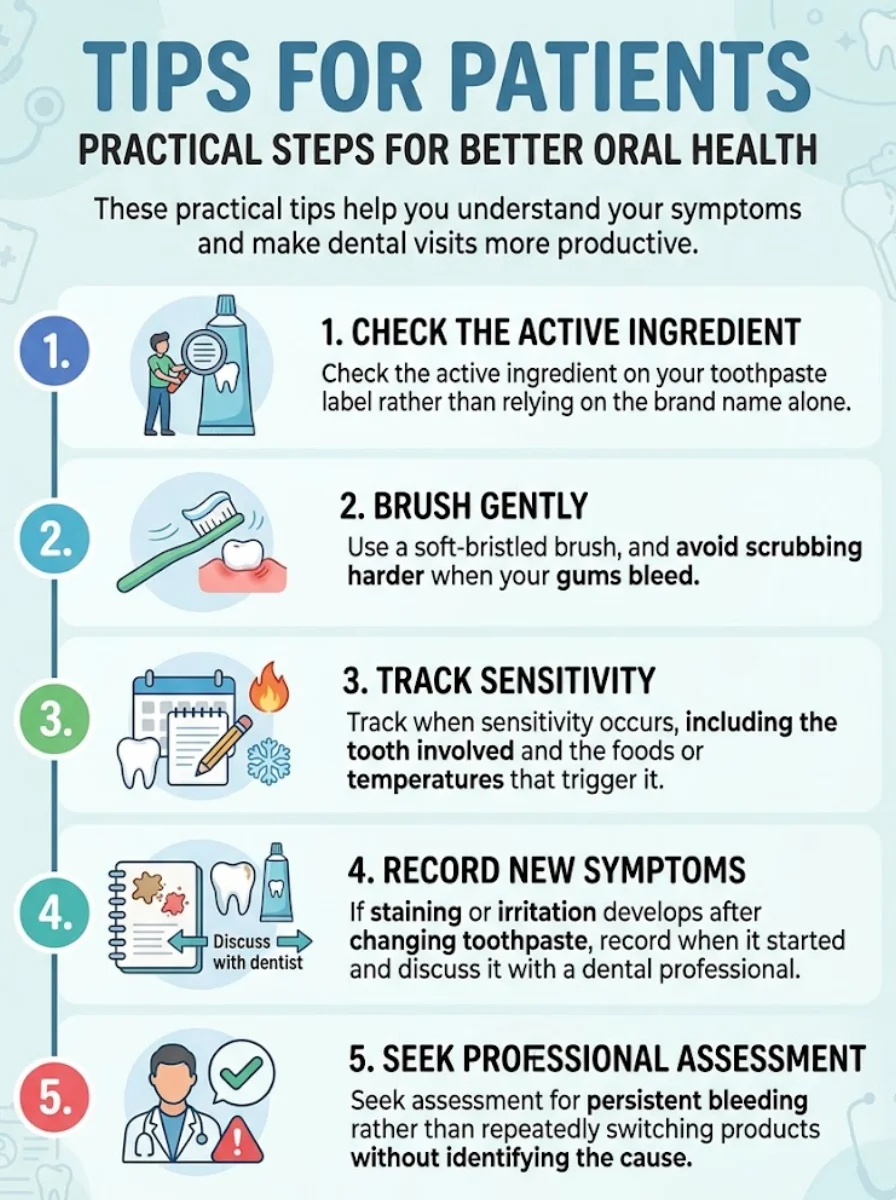
How Can You Use Stannous Fluoride Toothpaste at Home?
Using the product correctly matters as much as choosing it. A good formulation gives limited benefit if it is used inconsistently or with poor technique. The steps below focus on safe, practical habits you can start today. They cover how much toothpaste to use, how to brush, how to clean between teeth, and what to do afterward. They also explain how long to wait before judging results. Professional treatment options are covered later.
Brush Twice Daily With the Recommended Amount
Follow the directions on your product. For adults, a pea-sized amount is typical. Children need smaller, age-appropriate amounts under supervision. Use a soft-bristled toothbrush and brush for about two minutes. Clean the outer, inner, and chewing surfaces of every tooth. Angle the bristles gently toward the gumline, where plaque tends to collect. Avoid vigorous scrubbing. Hard pressure does not remove more plaque. Instead, it can irritate the gums and wear exposed root surfaces.
Clean Between Your Teeth Every Day
A toothbrush cannot reach fully between teeth, where plaque and gum inflammation often begin. Dental floss works well for tight contacts. Interdental brushes are often easier and more effective for larger spaces, bridges, or gaps around receding gums. Choose a size that fits snugly without forcing. Cleaning between teeth complements toothpaste by removing plaque the brush misses. Once daily is usually enough, ideally as part of your evening routine.
Follow the Product Instructions After Brushing
After-brushing advice is not identical everywhere. Many dental guidelines suggest spitting out excess toothpaste rather than rinsing with water. This helps leave more fluoride on the teeth. Some products, however, include their own specific directions. Local recommendations may also differ. The safest approach is to follow your product's label and any advice your dentist gives you. Do not assume one routine applies to every formulation. When unsure, ask a dental professional.
Give the Product Time to Work
Results are rarely immediate. Improvements in plaque-related gum inflammation usually require consistent use over several weeks, combined with good brushing and interdental cleaning. Sensitivity may also need repeated, regular use before relief becomes noticeable. The exact timeline depends on the formulation and the cause of your symptoms. If you see no improvement after a reasonable period, do not keep switching products. Instead, seek an assessment to find out what is really happening.
Which Tools Can Help You Control Plaque and Gum Inflammation?
Toothpaste works best alongside the right tools. A suitable brush, an interdental cleaning aid that fits your mouth, and a product chosen with care all contribute to healthier gums. No single tool is best for everyone. The right combination depends on your dexterity, the spacing between your teeth, any dental work you have, and the problems you are trying to manage. The following sections explain what to consider for each tool.
Soft-Bristled Manual or Electric Toothbrushes
Both manual and electric toothbrushes can remove plaque effectively when used correctly and consistently. Some people find electric brushes easier, especially those with limited dexterity or braces. Pressure sensors on some models can help prevent over-brushing. Whichever you choose, soft bristles are generally recommended to protect the gums and exposed roots. Replace the brush or brush head every three months, or sooner if the bristles become frayed.
Dental Floss and Interdental Brushes
The right tool depends on the spaces between your teeth. Floss or floss picks suit tight contacts. Interdental brushes come in different sizes and often clean wider spaces more effectively. Water flossers may help people with braces, implants, or limited dexterity, although they are usually an addition rather than a replacement. A dental professional can show you which sizes fit your mouth. They can also show you how to use them without damaging the gums.
Toothpaste Formulation and Product Labels
Read the label rather than relying on the brand name or packaging. Check the active ingredient and the fluoride concentration, usually listed in parts per million. Then read the usage directions and age guidance. Look at which benefits the product actually claims, such as gum health, sensitivity relief, or cavity protection. Choose a product with credible evidence for the benefit you need. Marketing language alone is not proof of effectiveness.
.jpg)
Ready to transform your smile?
Talk to our team and get a FREE treatment plan.
When Should You See a Dentist Instead of Relying on Toothpaste?
This is the turning point between self-care and professional evaluation. Toothpaste can support healthy teeth and gums. However, it cannot diagnose a problem or treat established disease. Some symptoms suggest that home care alone is not enough, while others signal infection or tissue damage. Recognizing these signs early can prevent more complex treatment later. The situations below describe when to book a dental appointment and when urgent care is needed.
Bleeding Gums That Keep Returning
Occasional bleeding after a missed day of flossing is common. Recurring gingival bleeding is different, particularly when it continues despite good home care. It warrants assessment, especially with swelling, tenderness, or persistent bad breath. These signs may indicate ongoing gingivitis or early periodontitis. A dental professional can measure the gums, check for tartar below the gumline, and identify other contributing factors. Repeatedly switching toothpastes without a diagnosis may delay the treatment you actually need.
Loose Teeth, Gum Recession, or Changes in Your Bite
These signs are more serious than bleeding alone. Teeth that feel loose, gums that appear to be shrinking, new gaps between teeth, or a bite that feels different may indicate damage to the supporting tissues. Periodontitis can progress with little pain, so these changes should not be dismissed. Prompt assessment allows the extent of the problem to be measured. Treatment can then begin before further support is lost.
Persistent or Severe Tooth Sensitivity
Mild, brief sensitivity to cold often responds to a desensitizing toothpaste. Pain that persists for weeks, lingers after the trigger is removed, or occurs spontaneously needs examination. The same applies to pain that wakes you at night or affects one particular tooth. These patterns can indicate decay, a crack, a failing restoration, or inflammation inside the tooth. Each of these requires diagnosis and treatment rather than toothpaste alone.
Facial Swelling, Pus, or Severe Dental Pain
These signs may indicate a dental infection, such as an abscess, and need urgent dental care. Do not wait to see whether a toothpaste helps. Swelling in the face or jaw, pus around a tooth or gum, fever, or throbbing pain should be assessed promptly. Facial swelling accompanied by difficulty breathing or swallowing is a medical emergency. In that situation, seek emergency medical care immediately.
What Are the Clinical Treatment Options for Plaque, Gingivitis, and Sensitivity?
Treatment depends on the diagnosis, not just the symptom. Two people with bleeding gums may need very different care. Professional management usually starts with conservative measures, such as guidance and cleaning. It moves to more involved treatment only when needed. The options below are listed from the most conservative to the most involved. Your dentist will recommend the approach that matches your clinical findings and how your gums respond to initial care.
Professional Oral Hygiene Guidance and Product Selection
A dental professional can watch how you brush and clean between your teeth, then point out the areas you miss. They can recommend the right brush, interdental brush sizes, and technique adjustments. They can also assess whether a stannous fluoride formulation suits your needs or whether another product is more appropriate. This personalized guidance is often the most cost-effective step in improving gum health.
Professional Scaling and Plaque Removal
Once plaque hardens into tartar (calculus), brushing cannot remove it. Tartar has a rough surface that attracts more plaque and keeps the gums inflamed. Professional scaling removes these deposits above and slightly below the gumline using hand instruments, ultrasonic scalers, or both. Polishing can also remove some surface stains. For many people with gingivitis, scaling combined with improved home care allows the gums to return to health.
Periodontal Treatment for Persistent Gum Disease
When periodontitis is diagnosed, treatment usually involves deeper cleaning below the gumline. This is often called root surface debridement or scaling and root planing. It removes bacterial deposits from the root surfaces inside the gum pockets. Afterward, the gums are re-evaluated to measure healing. Ongoing periodontal maintenance visits help keep the condition stable. Additional treatment depends on the severity of the disease and how well it responds to initial care.
Clinical Management of Persistent Tooth Sensitivity
Effective treatment starts by identifying the cause. If hypersensitivity is confirmed, a dentist may apply professional desensitizing agents or high-concentration fluoride varnishes. They may also cover exposed areas with bonding material. If the cause is decay, a crack, or a worn restoration, the damaged tooth structure may need to be restored. Habits such as aggressive brushing, acidic diets, or teeth grinding may also need attention to prevent recurrence.
Further Treatment for Advanced Periodontal Damage
In selected cases, deep pockets or significant tissue loss may require periodontal surgery or other specialist procedures. Examples include pocket reduction surgery, regenerative procedures, or gum grafting for recession. These treatments are chosen based on the specific findings and the patient's overall health. It is important to keep perspective. Most cases of bleeding gums are gingivitis, which responds to professional cleaning and better home care. Only a small proportion ever needs surgery.
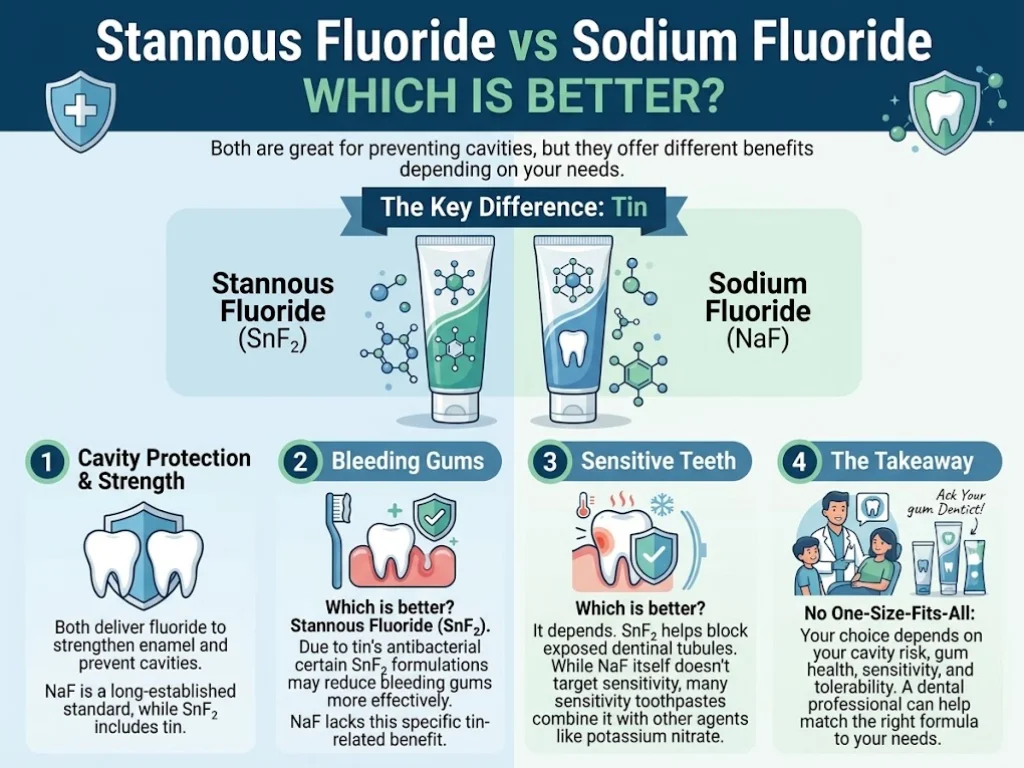
Ready to transform your smile?
Talk to our team and get a FREE treatment plan.
What Are the Possible Side Effects of Stannous Fluoride?
Toothpastes containing this ingredient are generally well tolerated when used as directed. Like any oral-care product, though, they can cause side effects in some people. The most commonly discussed are surface staining, mild mouth irritation, and an altered or metallic taste. Most are cosmetic or temporary rather than harmful. Knowing what to expect helps you decide whether a product suits you. It also helps you recognize when to seek advice.
Can Stannous Fluoride Cause Tooth Staining?
Yes, in some users. Tin can bind with pigments from foods and drinks such as tea, coffee, and red wine. This can produce a yellow-brown extrinsic stain on the tooth surface. Extrinsic stain sits on the surface rather than inside the tooth, and professional cleaning can usually remove it. Newer formulations were designed to reduce this tendency. If staining develops, discuss it with a dental professional, who can advise on cleaning or an alternative product.
Can It Cause Mouth Irritation or Altered Taste?
Some people notice a metallic or astringent taste, especially with older formulations. Others may experience mild gum or cheek irritation or, rarely, sensitivity to another ingredient in the toothpaste, such as a flavoring or detergent. These effects are usually mild. If irritation persists, stop using the product where appropriate. Then seek professional advice. Ulcers, peeling tissue, or swelling that does not settle should always be examined.
Is Stannous Fluoride Safe for Daily Use?
Approved toothpaste formulations are designed for daily use as directed on the label. Adults should use the recommended amount and spit out excess toothpaste rather than swallowing it. Children need age-appropriate products and amounts. Adults should supervise their brushing to reduce swallowing. Keep toothpaste out of reach of young children. If you have specific medical concerns or a history of reactions to oral-care products, ask your dentist or pharmacist before switching.
What We Notice Clinically
Dr. Rifat Alsaman, Head of the Medical Team and cosmetic dentist at Vitrin Clinic, emphasizes identifying the cause of gingival bleeding before recommending a specific oral-care routine. Plaque-related gingivitis may improve with effective brushing, interdental cleaning, and a suitable toothpaste. However, persistent bleeding can signal tartar below the gumline, periodontitis, or other contributing factors. In those cases, a periodontal assessment is needed. Changing toothpaste alone may simply hide the problem for a while.
Why Tooth Sensitivity Requires an Individual Assessment
Dr. Rifat Alsaman, Head of the Medical Team and cosmetic dentist at Vitrin Clinic, emphasizes that sensitivity needs to be evaluated in context. Dentin hypersensitivity from exposed roots or worn enamel can often be managed with suitable products and gentler habits. Pain caused by decay, cracks, or damaged restorations is different. It requires restorative treatment. Distinguishing between these causes prevents months of unsuccessful product switching. It also allows the right treatment to begin sooner.
Clinical Note
Stannous fluoride is an established anticaries ingredient. It may also benefit plaque control, gingival inflammation, and dentin hypersensitivity.
Evidence is formulation-specific. Not every fluoride toothpaste produces the same additional effects.
Gingival bleeding is a symptom, not a diagnosis.
Toothpaste does not replace professional tartar removal or appropriate periodontal treatment.
Gingivitis and periodontitis are different conditions. No toothpaste reverses established periodontal destruction.
Any clinical recommendation should reflect the reader's symptoms, dental findings, product instructions, and individual needs.
Patient Reviews
How Can You Prevent Plaque Buildup and Gum Inflammation?
Prevention is simpler and less costly than treatment. Most plaque-related gum problems can be prevented with consistent daily habits and regular professional checks. A suitable toothpaste supports these habits but cannot replace them. The four areas below cover the foundations of long-term gum and tooth health. These are a daily routine, the right product, sensible diet choices, and regular dental reviews. Together, they reduce your risk of gingivitis, decay, and sensitivity.
Maintain a Consistent Oral Hygiene Routine
Brush twice a day for about two minutes with a fluoride toothpaste and a soft-bristled brush. Clean between your teeth once a day using floss or interdental brushes. Consistency matters more than intensity. Gentle, thorough cleaning every day prevents plaque from maturing and irritating the gums. Skipping days allows plaque to build up again quickly. Many people find it easier to stay consistent when the routine happens at the same times each day.
Choose Toothpaste According to Your Oral Health Needs
Start by identifying what you need most. If cavity risk is high, prioritize fluoride content and consistent use. If your gums bleed easily, look for a product with evidence for gum benefits. If cold triggers sensitivity, consider a formulation designed to relieve it. Tolerability also matters. A toothpaste you dislike is one you may use less often. Your dentist can help you balance these factors.
Limit Frequent Sugar Exposure
Each time you eat or drink something sugary, plaque bacteria produce acid that attacks enamel. The frequency of exposure matters more than the total amount. Sipping sweet drinks throughout the day or snacking often keeps teeth under repeated acid attack. Try to keep sugary foods to mealtimes. Choose water between meals. Be aware of hidden sugars in flavored coffees, juices, and sauces. Saliva needs time between exposures to help teeth recover.
Attend Dental Checkups and Periodontal Reviews
Regular dental examinations allow problems to be found before they cause pain or damage. Your dentist can detect early decay, measure gum health, and spot recession or worn restorations. Professional cleaning, when indicated, removes tartar that brushing cannot. People with a history of gum disease may need more frequent periodontal reviews. Your dentist will recommend an interval based on your individual risk, rather than a one-size-fits-all schedule.
Takeaway — Is Stannous Fluoride Right for You?
Stannous fluoride helps prevent tooth decay. Certain formulations may also offer additional benefits for plaque control, gum inflammation, and sensitivity. However, bleeding gums and persistent pain should never be ignored or managed with toothpaste alone. Choose a product based on your oral health needs and the evidence behind it. If symptoms continue, seek a dental assessment. Vitrin Clinic in Istanbul offers individualized evaluation to identify the cause and recommend appropriate care.
How Vitrin Clinic Approaches Gum Health and Tooth Sensitivity
Vitrin Clinic in Istanbul, Türkiye, takes a diagnosis-first approach to bleeding gums and tooth sensitivity. Rather than recommending a product based on symptoms alone, the team evaluates each patient’s teeth, gums, existing restorations, and daily oral hygiene habits to identify the underlying cause. This helps distinguish dentine hypersensitivity from other conditions that can cause similar pain and determine the factors contributing to gum bleeding. Toothpaste recommendations and personalized oral hygiene guidance are tailored to each patient’s findings and combined with any additional treatment needed.
The clinic offers a wide range of treatments, including periodontics, gingival esthetics, endodontics, dental crowns, dental bridges, veneers, Hollywood Smile, teeth whitening, Invisalign, dental implants, subperiosteal implants, and same-visit dentistry. The following sections explain how clinical assessment, personalized toothpaste recommendations, daily oral hygiene guidance, and further care work together to address each patient’s needs. The aim is to provide practical, realistic care and support informed decisions at every stage.
Assessing Gum Health Before Recommending Treatment
An assessment may include examining the gums for inflammation, bleeding, and recession, and checking how much plaque and tartar are present. The dentist may also measure the gum pockets around the teeth to evaluate the periodontal tissues. Dental imaging may be considered when clinically indicated, for example to assess bone levels or detect hidden decay. These findings help separate simple gingivitis from more advanced problems that need further treatment.
Individualized Guidance for Toothpaste and Oral Hygiene
Recommendations reflect each patient's symptoms, dental findings, sensitivity triggers, and current routine. A patient with bleeding gums may receive specific advice on brushing angle and interdental brush sizes. Someone with sensitivity may be guided toward a suitable desensitizing product. Bringing your current toothpaste to the appointment helps the team review what you already use. Guidance is practical and aimed at habits you can maintain at home.
When Further Periodontal or Restorative Care May Be Needed
Vitrin Clinic offers periodontal care for patients whose assessment shows gum disease that needs professional treatment. Recommendations depend on the clinical findings. They may range from professional cleaning to deeper periodontal therapy. When sensitivity is caused by decay, cracks, or damaged fillings, restorative treatment may be advised. In every case, toothpaste advice is designed to complement necessary treatment, never to replace it.






Ready to transform your smile?
Talk to our team and get a FREE treatment plan.
References:
FAQs
Dr. Rifat Alsaman has more than 5 years of clinical experience in dentistry and currently serves as the Head of the Medical Team at Vitrin Clinic. He is dedicated to providing exceptional patient care, overseeing treatment planning, and ensuring the highest clinical standards across the team. His expertise, attention to detail, and commitment to continuous professional development have helped countless patients achieve healthier, more confident smiles.


