General Dentistry
October 13, 2026
Dental Fluorosis Treatment: How Can You Improve White Spots and Tooth Discoloration?
 Dr. Rifat Alsaman

Dental fluorosis treatment can help when white streaks, cloudy patches, or brown marks make your smile look uneven. These changes often show most on the front teeth. They can affect your confidence in photos and everyday conversations.
The right approach depends on how severe the fluorosis is, the condition of your enamel, and your cosmetic goals. Options range from minimally invasive procedures to restorative treatments. At Vitrin Clinic, Dr. Rifat Alsaman, Head of the Medical Team and cosmetic dentist at Vitrin Clinic, assesses each case before recommending any procedure.
Dental Fluorosis Treatment: What Are Your Options for Improving Tooth Appearance?
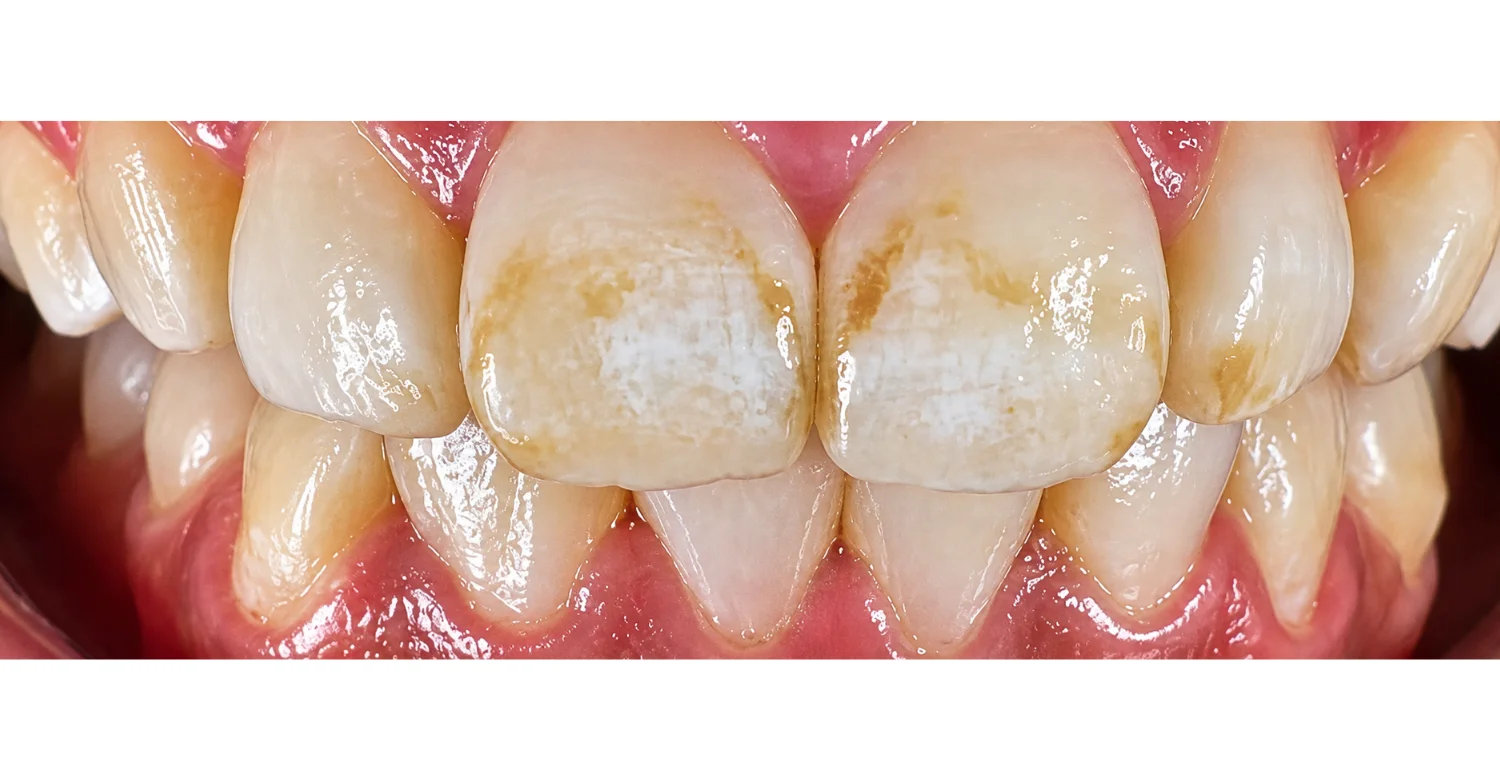
Dental fluorosis treatment starts with understanding the condition. Dental fluorosis is a change in enamel development caused by too much fluoride while teeth are still forming. Mild cases usually appear as white lines or spots. More pronounced cases may show brown staining or surface irregularities.
Fluorosis is not caused by fluoride use after your teeth have fully developed. Treatment aims to improve appearance while preserving as much natural enamel as possible. For this reason, a dental examination should always come before any cosmetic procedure.
.jpg)
.jpg)
.jpg)
.webp)
.jpg)
.jpg)
.jpg)
What Does Dental Fluorosis Look Like, and Which Areas of Your Teeth Can It Affect?
Dental fluorosis usually affects teeth in a symmetrical pattern. Matching teeth on both sides of the mouth often show similar changes. The front teeth are the most visible, but premolars and molars can be affected too.
The appearance ranges from barely noticeable white flecks to brown stains and pitted enamel. Dentists often grade severity using recognized scales, such as Dean's index. This index runs from questionable and very mild to moderate and severe. The grade helps guide dental fluorosis treatment choices.
White Spots and Chalky Patches on the Front Teeth
Mild fluorosis often appears as faint white lines, cloudy areas, or scattered opaque patches. The lines may follow the natural horizontal growth pattern of the enamel. Some people also notice white flecks on the edges of the front teeth or the tips of the back teeth.
These changes can become more noticeable under bright lighting or in photographs. A camera flash reflects off opaque enamel differently from healthy enamel. As a result, spots that seem subtle in a mirror may look much stronger in pictures.
Brown Stains and Uneven Tooth Color
In moderate to severe fluorosis, the enamel may develop yellow or brown discoloration. This staining usually appears after the teeth erupt. Porous fluorotic enamel can absorb pigments from food and drinks over time.
However, brown stains have many possible causes. Tobacco, tea, coffee, old fillings, tooth decay, and some medications can also discolor teeth. For this reason, a dentist should confirm the diagnosis before treatment. The right plan depends on what is actually causing the color change.
Rough Enamel, Pitting, and Surface Irregularities
Severe fluorosis can affect the structure of the enamel, not just its color. The surface may show small pits, rough patches, or areas where enamel has chipped away. Dentists sometimes describe this as post-eruptive enamel breakdown.
These changes influence treatment selection. Surface-level procedures may not fully correct deep pits or missing enamel. Teeth with structural defects often need restorative options, such as bonding or veneers. A careful assessment shows how much healthy enamel remains to support each procedure.
Treatments We Provide at Vitrin Clinic, Turkey
Treatment | Average Cost |
≈ $1,500 – $3,000 per tooth | |
≈ $3,000 – $10,000+ (full set) | |
≈ $500 – $1,500 per tooth | |
≈ $800 – $2,500 per tooth | |
≈ $3,000 – $7,000 | |
≈ $3,000 – $7,000 | |
≈ $300 – $1,000 | |
≈ $150 – $300 per quadrant (deep cleaning) to $1,000–$3,000 (surgery) | |
≈ $100 – $350 per tooth | |
≈ $600 – $1,500 per tooth | |
≈ $600 – $1,800 per tooth | |
≈ $450 – $1,000 (€400 – €900) total bridge cost |
Comparative Pricing for Major Dental Treatments (US, UK, Turkey)
Dental Treatment | Turkey (USD) | United States (USD) | United Kingdom (USD / GBP) |
Dental Implants (per tooth) | ≈$400 – $900 | $3,000 – $5,500 | $2,200 – $4,500 (£1,800 – £3,500) |
Hollywood Smile (full set) | ≈$2,000 – $5,000 | $15,000 – $35,000+ | $6,000 – $20,000 (£5,000 – £15,000) |
Dental Crowns (per tooth) | ≈$180 – $400 | $800 – $2,500 | $500 – $1,200 (£400 – £900) |
Veneers (per tooth) | ≈$150 – $350 | $900 – $2,500 | $600 – $1,300 (£500 – £1,000) |
Invisalign | ≈$1,500 – $3,000 | $3,500 – $8,000 | $2,500 – $5,500 (£2,000 – £4,500) |
Subperiosteal Implants (per tooth) | ≈$1,500 – $2,500 | $4,000 – $6,000 | $3,000 – $5,000 (£2,400 – £4,000) |
Teeth Whitening | ≈$150 – $300 | $400 – $1,000 | $350 – $800 (£250 – £600) |
Periodontics (deep cleaning / per quadrant) | ≈$100 – $250 | $200 – $500 | $150 – $400 (£120 – £300) |
Gingival Esthetics (per tooth) | ≈$100 – $250 | $300 – $800 | $200 – $600 (£150 – £450) |
Endodontics (root canal / per tooth) | ≈$120 – $300 | $700 – $1,500 | $400 – $1,000 (£300 – £800) |
Same Visit Dentistry | ≈$200 – $450 | $1,000 – $2,200 | $700 – $1,500 (£550 – £1,200) |
Dental Bridges in Turkey (full bridge) | ≈$300 – $800 | $1,500 – $4,500 | $1,000 – $3,000 (£800 – £2,400) |
Ready to transform your smile?
Talk to our team and get a FREE treatment plan.
What Causes Dental Fluorosis, and How Can You Tell Whether You Have It?
Dental fluorosis develops only while teeth are forming beneath the gums. Once enamel has fully matured, extra fluoride cannot cause new fluorosis. For the permanent teeth, the risk period is mainly the first eight years of life.
You may suspect fluorosis if the white lines or spots have been present since your adult teeth came in. They often appear symmetrically and change little over time. Still, only a dental examination can confirm the diagnosis and rule out other conditions before dental fluorosis treatment begins.
Excessive Fluoride Exposure During Tooth Development
Fluorosis develops when too much fluoride reaches the developing teeth, especially in early childhood. Common sources include:
Swallowing fluoride toothpaste. Young children often swallow toothpaste instead of spitting it out.
High-fluoride drinking water. Some regions have naturally high fluoride levels in groundwater.
Inappropriate supplement use. Fluoride supplements taken without professional guidance add to total intake.
Fluoride remains valuable for preventing tooth decay. Problems arise from excessive intake during tooth development, not from appropriate use.
How Fluorosis Differs From Other Causes of White Spots
Several conditions can create white spots on teeth:
Early tooth decay. These spots often appear near the gumline, where plaque collects, and are common after braces.
Molar-incisor hypomineralization (MIH). These patches usually have sharp borders and affect the first molars and incisors unevenly.
Other developmental enamel defects. Infection or injury to a baby tooth can affect a single permanent tooth.
Fluorosis tends to be diffuse and symmetrical. Appearance, location, dental history, and examination help distinguish these conditions. Not every white spot is fluorosis.
When Discoloration May Indicate Another Dental Problem
Fluorosis is present from the time a tooth erupts. Discoloration that is new, localized, or changing suggests another cause. A dentist should investigate these changes promptly.
Several problems can resemble fluorosis:
Cavities, which may begin as chalky spots and later turn brown.
Enamel defects caused by trauma or childhood illness.
External staining from coffee, tea, wine, or tobacco.
A single darkening tooth, which may signal nerve damage.
Early diagnosis allows simpler care. It also prevents an active problem from being hidden under cosmetic work.
Can Dental Fluorosis Cause Sensitivity or Other Dental Symptoms?
Mild fluorosis is mainly a cosmetic concern and usually causes no symptoms. The teeth function normally in daily use.
Severe fluorosis is different. Pitted or fragile enamel may chip, wear, or trap stains more easily. Damaged areas can sometimes contribute to sensitivity.
However, sensitivity should not automatically be blamed on fluorosis. Gum recession, cavities, cracked teeth, and worn enamel are more common causes. If you notice pain, new sensitivity, or visible deterioration, book an assessment. Finding the true cause comes before any cosmetic procedure.
What Can You Do at Home Before Considering Dental Fluorosis Treatment?
Home care cannot reverse fluorosis, but it keeps your teeth healthy and ready for future procedures. Good habits also stop new stains and decay from making discoloration look worse.
Focus on three priorities: a gentle daily routine, avoiding harsh products, and realistic expectations. Before you start any dental fluorosis treatment, healthy gums and clean enamel give your dentist a clearer view of the actual defects. They also support better results from whitening, infiltration, or bonding.
Maintain a Gentle, Consistent Oral Hygiene Routine
Brush twice daily with a fluoride toothpaste suited to your age. Use a soft-bristled toothbrush and gentle, circular movements. Clean between your teeth every day with floss or interdental brushes.
Brushing removes plaque and some external surface stains. This can make teeth look brighter and more even. However, brushing cannot reverse established fluorosis, because the changes lie within the enamel itself. Regular hygiene mainly protects your teeth and gums while you plan professional care.
Avoid Unsupervised Whitening and Abrasive Products
Many products promise quick stain removal, but some can cause harm:
Charcoal powders. These can be abrasive and may wear enamel over time.
Aggressive polishing pastes. Repeated use can roughen the tooth surface.
Overused whitening kits. Excessive bleaching may cause sensitivity and gum irritation.
Home remedies such as lemon juice or vinegar rinses are also risky, because acids can erode enamel. None of these methods can remove fluorosis-related changes within the enamel.
Understand the Limits of At-Home Fluorosis Removal
Many people search for quick dental fluorosis removal at home. In reality, established fluorosis cannot simply be brushed or scrubbed away. The opaque or stained areas are part of the enamel structure.
Over-the-counter bleaching kits may lighten your overall shade. However, they can also make white spots temporarily more noticeable. Uneven or pitted enamel may react unpredictably.
For these reasons, get a professional assessment before using bleaching kits or abrasive treatments. This matters most if your enamel is uneven or sensitive.
How Much Are Dental Crowns in Turkey?
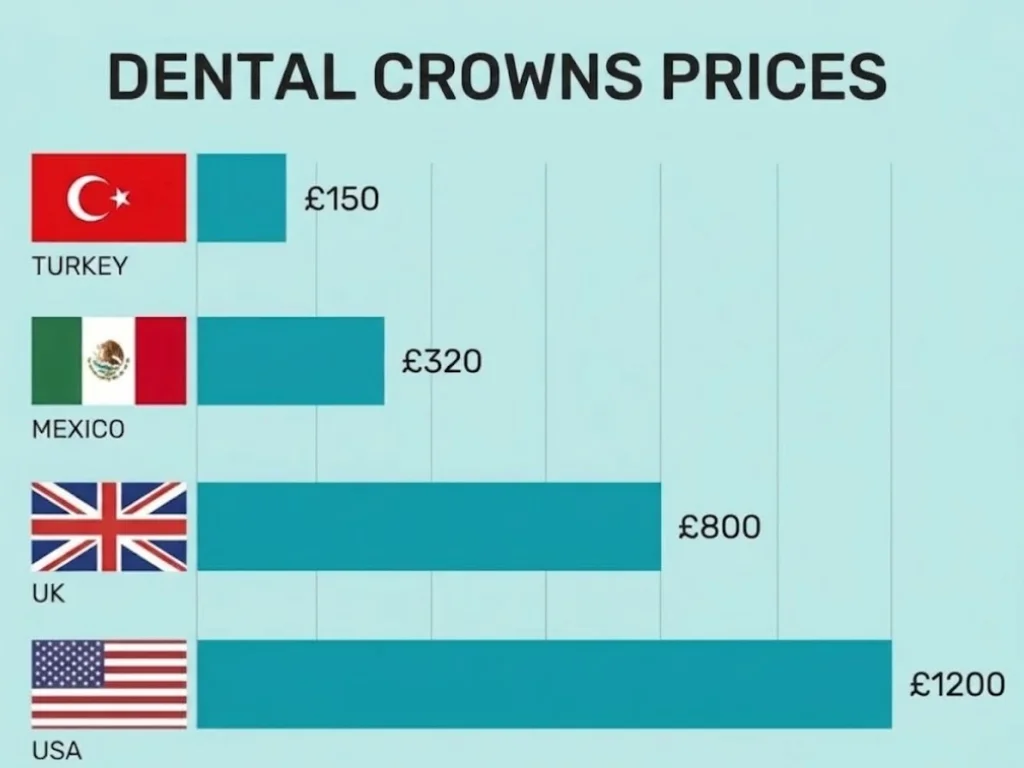
The cost of dental crowns in Turkey depends on the material used (e.g., Porcelain fused to metal, Zirconia, or E.max/Glass Ceramic), the total number of crowns required, and whether preparatory work (such as root canal therapy or tooth extraction) is needed before placement. You will receive a personalized treatment plan after the dentist examines your mouth and X-rays.
Treatment | Price |
Single Metal-Fused Porcelain Crown | ≈ £125 |
Single Zirconia Crown | ≈ £175 |
Single E.max / Premium Crown | ≈ £225 |
Full Set of Crowns (16 Teeth) | ≈ £2,400 |
Full Set of Crowns (20 Teeth) | ≈ £3,000 |
Full Set of Crowns (24 Teeth) | ≈ £3,600 |
Full Set of Crowns (28 Teeth - Both Jaws) | ≈ £4,200 |
What do Dental Crown packages include?
At Vitrin Clinic Istanbul, our all-inclusive dental crown packages cover every stage of your cosmetic and restorative treatment. Designed for international patients, these packages combine advanced Digital Smile Design with full travel and accommodation support for a stress-free experience. Package inclusions feature:
FREE Consultation & Digital Smile Design planning
Full dental examination, Panoramic X-rays, and 3D CBCT scans
Local anaesthesia for comfortable tooth preparation
High-grade temporary crowns while your permanent set is custom-crafted
5-Star Hotel Accommodation for the duration of your stay
VIP Airport, Hotel, and Clinic transfers
Written 2–5 Year Guarantee and dedicated virtual aftercare support
FULL SET OF CROWNS (16 TEETH)
FROM: ≈ £2,400 / $3,000
Perfect for brightening and aligning the primary smile line across both arches.
16 Custom High-Grade Zirconia or E.max Crowns
5-Star Hotel Stay Included
VIP Private Transfers (Airport / Hotel / Clinic)
3D Intraoral Scanning & Panoramic X-Rays
Written Material & Workmanship Warranty
FULL SET OF CROWNS (20 TEETH)
FROM: ≈ £3,000 / $3,800
Covers all visible teeth when smiling wide, delivering a complete cosmetic transformation.
20 Custom High-Grade Zirconia or E.max Crowns
5-Star Hotel Stay Included
VIP Private Transfers (Airport / Hotel / Clinic)
3D Intraoral Scanning & Panoramic X-Rays
Written Material & Workmanship Warranty
FULL MOUTH RESTORATION (24 TO 28 TEETH)
FROM: ≈ £3,600 – £4,200 / $4,500 – $5,300
Comprehensive full-arch rehabilitation for complete functional and aesthetic restoration.
24 to 28 Custom High-Grade Zirconia or E.max Crowns
5-Star Hotel Stay Included
VIP Private Transfers (Airport / Hotel / Clinic)
3D Intraoral Scanning & Panoramic X-Rays
Written Material & Workmanship Warranty
Ready to transform your smile?
Talk to our team and get a FREE treatment plan.
What Tools Can Help You Assess Tooth Discoloration Before Treatment?
Several tools help dentists document discoloration and plan dental fluorosis treatment:
Clinical photographs. Images record the location, size, and appearance of white spots or stains.
Shade guides. These allow consistent comparison of tooth color before and after treatment.
Standardized photography. The same lighting and angles make progress easier to judge.
Digital imaging and intraoral scanning. These support restorative planning when veneers or crowns are considered.
These tools support planning, but they do not diagnose fluorosis on their own. A clinical examination remains essential.
Are Dental Crowns in Turkey cost-effective?
The Dental Crowns Turkey price is significantly lower than in the US and UK, usually by 60% to 70%. This substantial savings is linked to lower operating overhead, lab production costs, and favorable exchange rates, not to lower treatment standards.
At Vitrin Clinic Istanbul, we adhere strictly to international clinical standards, utilizing Digital Smile Design technology alongside top-tier, internationally certified crown materials such as Ivoclar E.max and high-grade monolithic Zirconia.
When Should You See a Dentist About Dental Fluorosis?
Book an examination if any of these apply:
Discoloration affects your confidence.
The enamel looks pitted, rough, or chipped.
You are considering whitening, veneers, or other cosmetic procedures.
You notice pain, new sensitivity, cavities, or changes that were not there before.
A professional diagnosis matters before any procedure that alters enamel, because enamel does not grow back. Fluorosis itself is usually a stable developmental condition. However, other dental problems can develop alongside it and need separate care.
.jpg)
Dental Fluorosis Treatment Options: From Conservative Care to Cosmetic Procedures
Knowing how to treat dental fluorosis starts with matching the procedure to the severity. Most dental fluorosis treatment options follow a step-by-step approach:
Monitoring and preventive care for very mild cases.
Microabrasion or resin infiltration for superficial white spots.
Professional whitening to improve the overall shade.
Composite bonding for localized deeper defects.
Veneers for persistent discoloration across visible teeth.
Crowns for severe structural damage.
Treatments are often combined. The least invasive option that meets your goals should come first.
Mild Dental Fluorosis Treatment: Monitoring and Conservative Options
Very mild fluorosis often needs nothing beyond routine preventive care. Many people barely notice faint white flecks, and some decide the appearance does not bother them.
When improvement is desired, mild dental fluorosis treatment usually begins with the most conservative choices. These include professional cleaning, whitening, resin infiltration, or microabrasion. Each aims to reduce contrast between the spots and the surrounding enamel.
Enamel preservation is the priority. Expectations should stay realistic, since faint traces may remain after treatment.
Dental Microabrasion for Fluorosis
Dental microabrasion for fluorosis removes a very thin surface layer of enamel. The dentist applies a mild acid combined with a fine abrasive paste under controlled pressure. This can remove superficial opaque or stained layers.
Microabrasion works best when discoloration is shallow. It is less suitable for deep white patches or pitted enamel, which would need more enamel removal. Because enamel removal is irreversible, careful case selection matters. Dentists often combine this dental fluorosis treatment with whitening for a more even result.
Resin Infiltration for Selected White Spots
Resin infiltration fills porous areas inside the enamel with a very fluid resin. The dentist first prepares the surface with a mild etching gel, then dries it and applies the resin. Once the pores are filled, light passes through the area more like healthy enamel. This reduces the visual contrast of the spot.
The procedure removes very little enamel and needs no drilling. Suitability depends on the type and depth of the opacity. Results vary, and not every fluorosis lesion responds equally.
Dental Fluorosis Teeth Whitening
Dental fluorosis teeth whitening uses professional bleaching gels to lighten the overall tooth shade. This can reduce the contrast between brown stains or white spots and the surrounding enamel.
However, whitening does not remove fluorosis. White spots may stay visible after bleaching. Shortly after treatment, existing white areas can look more noticeable, because bleaching temporarily dehydrates the enamel. This effect usually settles within days.
Temporary sensitivity is also common. Your dentist can adjust gel strength and timing to manage it.
Severe Dental Fluorosis Treatment: Restorative Options
Severe dental fluorosis treatment often requires more than surface procedures. Pronounced discoloration, deep pitting, or missing enamel may not respond well to microabrasion or whitening alone.
Direct composite bonding is one option for selected areas. The dentist applies tooth-colored resin to cover defects and blend the shade. It usually needs little or no enamel removal and can often be completed in one visit.
Bonding to fluorotic enamel can be more demanding, so technique matters. The final plan depends on remaining enamel, defect severity, and your aesthetic goals.
Dental Fluorosis Veneers
Dental fluorosis veneers are thin restorations bonded to the front surfaces of selected teeth. Porcelain veneers can mask persistent discoloration that conservative methods cannot correct. Composite veneers are another option in some cases.
Key points to consider:
Enamel removal. Most veneers require some tooth preparation, which is irreversible.
Maintenance. Veneers may chip and eventually need replacement.
Cost. They usually cost more than conservative treatments.
Veneers are not automatically necessary for mild fluorosis. They suit cases where simpler options are unlikely to give acceptable results.
When Are Dental Crowns Considered?
Dental crowns cover the entire visible part of a tooth. They may be considered when severe enamel damage, large fractures, or other structural problems need full coverage.
Crowns generally involve more tooth preparation than veneers, bonding, or microabrasion. More natural tooth structure is removed, and this cannot be reversed. For that reason, crowns are rarely the first choice for fluorosis alone.
The least invasive suitable dental fluorosis treatment should always be considered first. Crowns are typically reserved for teeth with significant structural damage.
Ready to transform your smile?
Talk to our team and get a FREE treatment plan.
Dental Fluorosis Before and After: What Results Can You Realistically Expect?
Dental fluorosis before and after results vary from person to person. Outcomes depend on fluorosis severity, lesion depth, baseline tooth shade, and the chosen procedure.
Possible improvements include more uniform color and better masking of visible spots. Microabrasion may improve superficial defects, while veneers can conceal more persistent discoloration.
No procedure guarantees a perfectly uniform shade or completely invisible enamel changes. Before starting any dental fluorosis treatment, ask for standardized photographs and a clear discussion of its limitations. This helps you judge progress fairly.
Dental Fluorosis Treatment Cost: What Determines the Price?
Dental fluorosis treatment cost depends on several factors:
The number of affected teeth.
The severity and depth of fluorosis.
The procedure type and materials used.
Case complexity and the number of visits.
A clinical examination is necessary before a reliable estimate can be given. Ask whether the fee includes assessment, sensitivity management, follow-up visits, and any necessary repairs.
Treatment | Relative Cost | Invasiveness | Best Suited For |
Microabrasion | Lower | Minimal enamel removal | Shallow white or brown stains |
Resin infiltration | Lower to moderate | Very minimal | Selected porous white spots |
Professional whitening | Lower to moderate | Non-invasive | Overall shade improvement |
Composite bonding | Moderate | Minimal or none | Localized pits or deeper stains |
Veneers | Higher | Moderate enamel removal | Persistent, widespread discoloration |
Crowns | Higher | Extensive preparation | Severe structural damage |
What We Notice Clinically
Patients often assume veneers are the only solution for white spots. In practice, the right dental fluorosis treatment depends on what the spots actually are and how deep they go.
Dr. Rifat Alsaman, Head of the Medical Team and cosmetic dentist at Vitrin Clinic, follows a diagnosis-first approach. Each case is assessed for enamel condition, discoloration pattern, and aesthetic goals before any option is discussed. The sections below summarize the clinical principles that guide this planning.
Why the Correct Diagnosis Comes Before Cosmetic Treatment
In the clinical approach of Dr. Rifat Alsaman, Head of the Medical Team and cosmetic dentist at Vitrin Clinic, diagnosis always comes first. White spots can result from fluorosis, early decay, MIH, or other enamel defects.
Each cause behaves differently. Early decay may need remineralization and prevention rather than cosmetic work. Fluorosis may respond to infiltration or microabrasion. A correct diagnosis helps avoid unnecessary enamel removal.
The guiding principle is simple: treatment should address the actual enamel condition, not appearance alone.
Why Mild and Severe Fluorosis Need Different Approaches
Dr. Rifat Alsaman, Head of the Medical Team and cosmetic dentist at Vitrin Clinic, matches treatment intensity to the depth of discoloration and the degree of enamel damage.
A conservative procedure may suit a superficial defect very well. However, the same procedure may not adequately address deep staining or pitting. In those cases, repeated abrasion would remove too much enamel without solving the problem.
Individualized planning prevents both undertreatment and overtreatment. It also helps patients set realistic cosmetic expectations from the start.
Why More Treatment Does Not Always Mean Better Results
Dr. Rifat Alsaman, Head of the Medical Team and cosmetic dentist at Vitrin Clinic, emphasizes balancing aesthetic improvement with preservation of natural tooth structure.
Veneers and crowns can produce dramatic changes, but they are irreversible. They also bring long-term maintenance and future replacement. When less invasive options can achieve an acceptable result, those options should come first.
Natural enamel is the best foundation a tooth has. Keeping it intact leaves more choices open if your needs change later.
Clinical Note
Fluorosis severity ranges from subtle enamel opacity to marked discoloration and pitting. The appropriate procedure depends on diagnosis, enamel condition, aesthetic goals, and the risks and benefits of each option.
Whitening changes tooth color, but it does not reverse the developmental cause of fluorosis. Enamel removal is irreversible, so every dental fluorosis treatment plan should be made carefully.
From the clinical perspective of Dr. Rifat Alsaman, Head of the Medical Team and cosmetic dentist at Vitrin Clinic, no single procedure suits every patient, and results cannot be guaranteed.
How Can You Prevent Further Enamel Problems?
Established fluorosis cannot be reversed through prevention. However, you can reduce future dental problems and protect children from developing fluorosis:
Use the right toothpaste amount. Children under three need a rice-grain-sized smear. Children aged three to six need a pea-sized amount.
Supervise young children. Encourage them to spit out toothpaste rather than swallow it.
Follow local guidance. Ask before using fluoride supplements, and check your drinking water's fluoride content where relevant.
Attend routine checkups. These help identify decay, sensitivity, or enamel concerns early.
Tips for Patients
Preparing well helps you get the most from your consultation:
Take clear photographs of your teeth in natural light.
Note when you first noticed the discoloration and whether it has changed.
Bring details about childhood fluoride supplements or drinking-water exposure, if available.
Ask whether a conservative option could work before agreeing to enamel removal.
Request a realistic explanation of results, limitations, maintenance, and total cost.
Choosing the Right Dental Fluorosis Treatment
The right dental fluorosis treatment depends on the severity and depth of enamel changes, not simply how visible the spots appear. Whitening, microabrasion, resin infiltration, bonding, and veneers each serve different purposes and have different limitations.
An accurate diagnosis should always come first. Conservative options deserve discussion before any irreversible procedure, because natural enamel cannot be replaced.
Your next step is simple: arrange a dental assessment to understand which approach may be appropriate for your teeth.
Patient Reviews
Dental Fluorosis Care at Vitrin Clinic
Vitrin Clinic in Istanbul, Turkey, provides individualized dental assessment and cosmetic treatment planning for patients concerned about fluorosis. An assessment may include examination of enamel condition, discoloration pattern, tooth structure, and your aesthetic priorities.
Options are considered from conservative approaches to restorative procedures, depending on clinical suitability. Dr. Rifat Alsaman, Head of the Medical Team and cosmetic dentist at Vitrin Clinic, leads individualized cosmetic treatment planning. No outcome is guaranteed, and not every patient needs a cosmetic procedure.






Ready to transform your smile?
Talk to our team and get a FREE treatment plan.
References:
FAQs
Dr. Rifat Alsaman has more than 5 years of clinical experience in dentistry and currently serves as the Head of the Medical Team at Vitrin Clinic. He is dedicated to providing exceptional patient care, overseeing treatment planning, and ensuring the highest clinical standards across the team. His expertise, attention to detail, and commitment to continuous professional development have helped countless patients achieve healthier, more confident smiles.


