Periodontics
September 30, 2026
Osseous Surgery: When Is Pocket Reduction Surgery Needed for Periodontitis?
 Dr. Rifat Alsaman
Osseous surgery is a periodontal procedure used when deep periodontal pockets remain after non-surgical treatment. You may also hear it called pocket reduction surgery or periodontal surgery. Deep pockets trap plaque below the gumline, and brushing and flossing cannot reach them well. Still, surgery is not automatically needed for every case of periodontitis. This guide covers diagnosis, scaling and root planing, the surgical procedure, recovery, alternatives, risks, and prevention. It will help you understand when surgery makes sense for your gums.
What Is Osseous Surgery and Why Might You Need It?
Osseous surgery is a gum and bone procedure that treats deep pockets caused by periodontitis. Over time, inflammation and bone loss can change the shape of the tissues around your teeth. These changes create pockets that careful brushing and flossing cannot fully clean. The surgery aims to improve access for cleaning and reduce disease-related pocketing where clinically appropriate. Your dentist decides based on a periodontal examination, pocket measurements, bone levels, and your response to initial therapy. It is not a first-line step.
What Happens Inside a Periodontal Pocket?
A periodontal pocket is an abnormal space between the gum and the tooth. In healthy gums, this space is shallow. When bacterial plaque builds up below the gumline, it can harden into calculus. These deposits keep the gums inflamed. Persistent inflammation may slowly destroy the attachment fibers and supporting bone. As a result, the pocket grows deeper over time. A deeper pocket holds more bacteria and is harder to reach with a toothbrush or floss. Home cleaning becomes less effective.
How Can Periodontitis Lead to the Need for Surgery?
Periodontitis is an advanced form of gum disease. It affects the gums, periodontal ligament, and bone that support your teeth. Ongoing inflammation breaks down these tissues and forms periodontal pockets. Many patients improve after non-surgical treatment. However, some deeper pockets may remain because of their depth or shape. In these sites, bacteria can continue to cause damage. Surgery is usually considered based on the remaining periodontal condition. A diagnosis of periodontitis alone does not mean you need an operation.
Compare cavity prevention in Dental Sealants vs Fluoride Treatment
What Symptoms and Dental Problems Can Deep Periodontal Pockets Cause?
Many patients worry because gum disease often progresses with little pain. Instead, it shows subtle warning signs that are easy to ignore in daily life. Watch for:
Bleeding when brushing or flossing
Persistent bad breath
Swollen or tender gums
Gum recession
Tooth sensitivity
Teeth that appear longer
Changes in how teeth fit together
Loose or increasingly mobile teeth
Food becoming trapped around certain teeth
Painful chewing or localized deep aching pain
Can You Have Deep Periodontal Pockets Without Severe Pain?
Yes. The absence of pain does not mean your gums are healthy. Periodontitis is often a chronic, slow process. Inflammation can destroy attachment and bone gradually over months or years. Because the change is slow, your body adapts and you may feel little discomfort. Many people only notice a problem when teeth become loose. Book a periodontal evaluation if you notice bleeding, recession, mobility, or ongoing inflammation. Measuring your pockets is the only reliable way to know their depth.
Find out the causes and solutions for a Scalloped Tongue
What Causes Periodontal Pockets to Become Difficult to Treat?
Some periodontal pockets respond well to treatment, while others stay deep. Several factors explain this difference. Hardened deposits below the gumline can keep tissues inflamed. Long-standing disease may leave uneven bone defects that trap bacteria. Some sites also respond poorly to non-surgical care because instruments cannot reach them fully. Smoking, diabetes, and inconsistent home care can slow healing too. Understanding the cause helps your dental team choose the right next step. The sections below explain each factor in detail.
Persistent Plaque and Calculus
Plaque is a soft, sticky film of bacteria that forms on teeth every day. If it is not removed, minerals in saliva harden it into calculus, also called tartar. Calculus below the gumline creates a rough surface where more plaque collects. This keeps the gums constantly inflamed. Ordinary brushing cannot remove hardened calculus, especially inside deep pockets. Only professional instruments can clean these deposits. Without removal, inflammation continues and pockets may deepen further. This cycle is why regular cleanings matter.
Advanced Periodontitis and Supporting Bone Loss
Long-standing periodontitis can damage the gums, periodontal ligament, and jawbone. As bone is lost, the pocket around the tooth becomes deeper. Bone loss is not always even. It can create craters, ledges, or angular defects between teeth. These irregular shapes trap bacteria and make cleaning very difficult. Teeth may also lose stability as support decreases. Standard non-surgical treatment may not fully reach these areas. For this reason, deeper defects sometimes need more advanced periodontal management, such as surgical access or regenerative procedures.
Inadequate Response to Non-Surgical Periodontal Treatment
Scaling and root planing is often the first treatment for periodontitis. It removes bacterial deposits from above and below the gumline. It also smooths contaminated root surfaces so the gums can heal. Most sites improve after this care. Your dentist reassesses the gums after several weeks. However, some sites may keep deep pockets despite appropriate treatment. Complex root shapes, furcations, or bony defects can limit access. When this happens, surgery may be discussed as one possible next step, if clinically indicated.
Tips for Patients
A few simple steps can help you get the most from your periodontal care:
Ask how deep your periodontal pockets are and which sites need attention.
Ask whether scaling and root planing has been sufficient before considering surgery.
Follow your personalized post-operative cleaning instructions carefully.
Tell your dental team about persistent sensitivity, bleeding, or changes in tooth mobility.
Bring a list of medications and relevant medical conditions to your consultation.
Ask whether your case may benefit from regenerative treatment such as guided tissue regeneration.
Compare options in Implant-Supported Dentures vs Traditional Dentures
What Happens Before Osseous Surgery?
Every surgical decision starts with careful diagnosis. Before recommending treatment, your dental team will usually complete:
A comprehensive periodontal examination
Periodontal pocket measurements
Evaluation of gum inflammation
Assessment of tooth mobility
Dental imaging when clinically indicated
Review of previous periodontal treatment
Assessment of oral hygiene and risk factors
Pocket depth alone does not decide treatment. The plan should reflect your individual findings, including bone levels, healing response, and your ability to keep the area clean. This protects you from unnecessary procedures.
Is Scaling and Root Planing Tried Before Surgery?
In most cases, yes. Scaling and root planing is the standard non-surgical first step. It cleans deposits from the roots and allows the gums to heal. After several weeks, your dental team reassesses the area. They remeasure pockets, check for bleeding, and review your home care. If deep pockets persist, surgical options may be discussed. Many patients respond well to this treatment and never need surgery. Healthy healing after deep cleaning can be enough to control the disease.
Evaluate your choices in Tooth Extraction vs Dental Implant
What Is the Osseous Surgery Procedure Like?
Every case differs, but the osseous surgery procedure usually follows these steps. First, local anesthesia numbs the treatment area. The dentist then gently lifts the gum tissue to see the affected roots and bone. Next, calculus and inflammatory tissue that deep cleaning could not reach are removed. Irregular bone contours may be reshaped when clinically necessary. Finally, the gums are repositioned and secured with sutures. The exact approach depends on the location and severity of your periodontal defects.
What Does Bone Reshaping Mean in Osseous Surgery?
Bone reshaping means smoothing and recontouring bone that periodontitis has left uneven. Craters and sharp ledges can trap bacteria and keep pockets deep. By creating smoother contours, the gums can sit closer to the bone. The goal is an anatomy that is easier to clean and maintain. This is different from bone grafting, which adds material to rebuild lost bone. Not every surgical case requires extensive reshaping. Some sites need only minor adjustments or none at all.
Can Guided Tissue Regeneration Be Used Instead?
Guided tissue regeneration is a regenerative periodontal technique. Instead of reshaping bone, it aims to help lost tissues regrow. A barrier membrane is placed over the defect. It keeps fast-growing gum cells away, giving bone and ligament cells time to fill the space. Bone graft or other regenerative materials may be added when appropriate. This works best in selected defects, such as deep, narrow ones. It is not interchangeable with conventional surgery in every situation.
What Can You Expect From Osseous Surgery Before and After?
Comparing osseous surgery before and after helps set realistic goals rather than promising a specific visual result.
Before treatment:
Persistent periodontal pockets may remain
Bleeding or inflammation may continue
Certain areas may be difficult to clean
Bone support may already be reduced
After treatment:
Gums may look different during healing
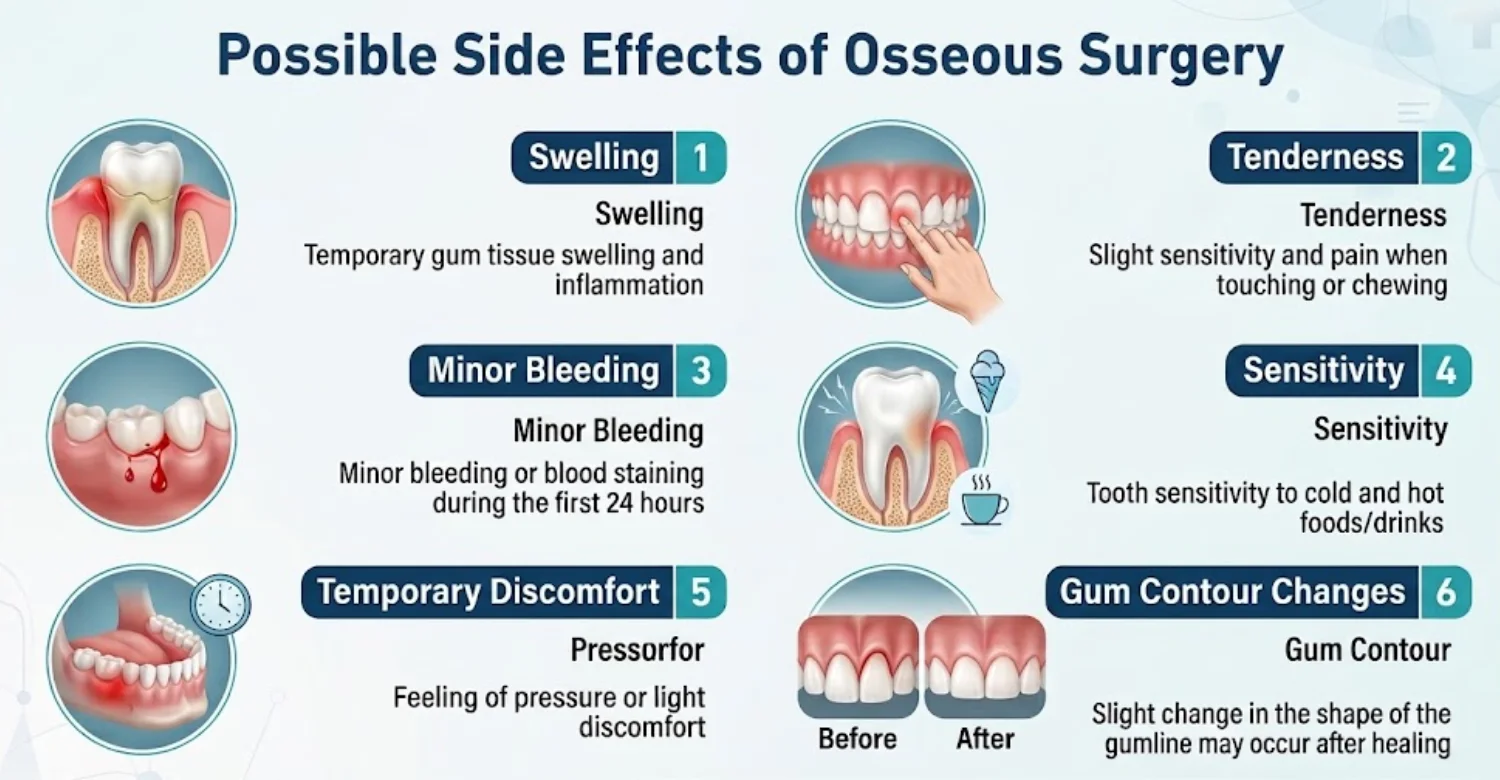
Swelling and sensitivity may occur temporarily
Gum recession may become more noticeable in some areas
Pocket depth may improve
Long-term results depend heavily on periodontal maintenance and home care.
What Might the Gums Look Like During Healing?
In the first days, the gums may look swollen, red, and tender. Stitches and a protective dressing may be visible. Sensitivity to cold or touch is common. Over the following weeks, swelling settles and the gum contour changes. Gums may sit slightly lower than before. Do not judge the final appearance immediately after surgery. Tissues continue to mature for months. Healing speed varies by the treated area, your general health, and how carefully you follow instructions.
Does Osseous Surgery Reverse Existing Bone Loss?
No, it does not fully reverse existing bone loss. Its main goal is disease control, not regrowth. The procedure improves access, reduces pocket depth, and supports periodontal stability. By removing bacteria and smoothing defects, it helps stop further damage. Lost bone, however, usually stays lost. When regrowth is possible, regenerative procedures may be considered in selected defects. Guided tissue regeneration, for example, may help rebuild some periodontal support. Your dentist will explain which outcome is realistic for your case.
Understand symptoms and treatment for Oral Herpes
Clinical Note
Osseous surgery is generally considered after careful periodontal assessment and appropriate non-surgical therapy, when clinically indicated. Treatment depends on pocket depth, attachment loss, bone shape, inflammation, tooth prognosis, and your ability to maintain oral hygiene. Dr. Rifat Alsaman, Head of the Medical Team and cosmetic dentist at Vitrin Clinic, emphasizes individualized planning over one approach for everyone. Each site is assessed on its own merits. Regenerative procedures may suit selected defects. Other sites may respond better to conventional periodontal surgery or continued maintenance.
What Is Osseous Surgery Recovery Like?
Osseous surgery recovery usually begins with mild swelling and tenderness for a few days. Your dental team will explain how to adjust your oral hygiene around the treated area. Soft foods are often recommended at first. Take any prescribed medication exactly as instructed. Keep the sutures clean and undisturbed. Follow-up appointments check healing and remove stitches when needed. Normal brushing and flossing return gradually. Rest helps your body heal. Recovery varies according to the extent and location of treatment.
What Should You Avoid During Osseous Surgery Recovery?
A few habits can slow healing or damage the surgical site. During recovery, you should:
Avoid smoking or tobacco exposure, as advised by your dental team
Avoid touching, pulling, or disturbing the surgical area
Follow prescribed medication instructions without skipping doses
Avoid hard, crunchy, spicy, or very hot foods that may traumatize the area
Follow your dental team's instructions on brushing and cleaning
Tobacco especially reduces blood flow to the gums. Protecting the site in the early weeks supports stable, predictable healing.
When Should You Contact Your Dental Team During Recovery?
Some discomfort is normal, but certain signs need professional assessment. Contact your dental team if you notice:
Persistent or worsening bleeding
Severe or increasing pain
Significant swelling
Fever
Signs of infection, such as pus or a bad taste
Problems with the surgical dressing or sutures
Do not try to manage these symptoms on your own. Early contact allows your team to check the site and act quickly. Keep your clinic's contact details close during the first week.
Recognize the early signs of Salivary Gland Cancer
What Are the Alternatives to Osseous Surgery?
The right osseous surgery alternatives depend on your periodontal findings. Options may include:
Improved home oral hygiene
Professional periodontal maintenance
Scaling and root planing
Reassessment after non-surgical treatment
Localized periodontal procedures
Regenerative approaches such as guided tissue regeneration in selected defects
Extraction when a tooth has an unfavorable prognosis
No alternative suits every periodontal defect. Your dental team will weigh pocket depth, bone shape, and tooth stability before recommending a path. Some patients combine several options over time.
Explore the difference in Dental Implants vs Snap-In Dentures
When Should You See a Periodontist or Dental Professional?
Home care is important, but some signs need professional treatment. Persistent bleeding, deep pockets, gum recession, mobility, or recurring inflammation all warrant an evaluation. Seek timely assessment if you notice:
Loose teeth
Significant swelling
Persistent gum bleeding
Pus around the gums
Rapid changes in tooth position
Persistent bad breath with gum symptoms
Difficulty chewing
Do not wait for pain to appear, since periodontitis often progresses quietly. Early care often means simpler treatment and a better chance of keeping your teeth.
Find out what causes and treats White Spots on Teeth
How Can You Prevent Periodontal Problems From Returning?
Periodontal treatment does not remove the need for lifelong maintenance. Prevention focuses on controlling plaque and catching recurrence early. Key habits include:
Brushing your teeth twice daily
Cleaning between teeth every day
Attending regular professional examinations
Following periodontal maintenance when recommended
Avoiding tobacco
Managing contributing medical or lifestyle factors, such as diabetes or stress
Keeping to your individualized recall intervals
Consistent habits protect the results of treatment and help keep your gums stable for years. Small daily efforts make a big difference.
What We Notice Clinically
In daily practice, the most successful periodontal outcomes come from careful diagnosis and consistent follow-up. Two patterns stand out clearly. First, treatment works best when it reflects the whole periodontal picture, not a single measurement. Second, results last longer when patients treat maintenance as part of the plan. Dr. Rifat Alsaman, Head of the Medical Team and cosmetic dentist at Vitrin Clinic, guides this approach. The sections below explain both observations and why they matter for your gum health.
Why Long-Term Maintenance Matters After Periodontal Surgery
Surgery does not replace daily oral hygiene. Bacteria return quickly if plaque is not controlled. Dr. Rifat Alsaman, Head of the Medical Team and cosmetic dentist at Vitrin Clinic, stresses that maintaining the treated area is part of the overall treatment plan. Regular periodontal maintenance visits allow the team to remove deposits you cannot reach at home. They also remeasure pockets and check for bleeding. This monitoring helps identify recurrent inflammation or pocketing early, when it is easier to manage.
Periodontal Care at Vitrin Clinic
Healthy gums are the foundation of every lasting smile, and Vitrin Clinic treats them that way. The clinic provides periodontics treatment on site, so your gum care stays under one roof, from first measurement to long-term maintenance. Before restorative, implant, or cosmetic work, your gums may be checked first when indicated. Depending on your needs, your assessment may include:
A comprehensive dental examination
A detailed periodontal assessment
Digital imaging when indicated
CBCT/3D imaging when clinically appropriate
Intraoral scanning where useful
Dr. Rifat Alsaman, Head of the Medical Team and cosmetic dentist at Vitrin Clinic, leads a team that connects periodontal, restorative, implant, and cosmetic care into one clear plan. Are your pockets still deep, or do your gums keep bleeding? Book an individualized assessment. Together, you can decide whether non-surgical treatment, periodontal surgery, regenerative care, or maintenance is your best next step.
.jpg)
.jpg)
.jpg)
Ready to transform your smile?
Talk to our team and get a FREE treatment plan.
References:
FAQs
Dr. Rifat Alsaman has more than 5 years of clinical experience in dentistry and currently serves as the Head of the Medical Team at Vitrin Clinic. He is dedicated to providing exceptional patient care, overseeing treatment planning, and ensuring the highest clinical standards across the team. His expertise, attention to detail, and commitment to continuous professional development have helped countless patients achieve healthier, more confident smiles.


