Endodontics
September 28, 2026
Root Canal vs Apicoectomy: What Is the Difference and When Is Each Needed?
 Dr. Rifat Alsaman
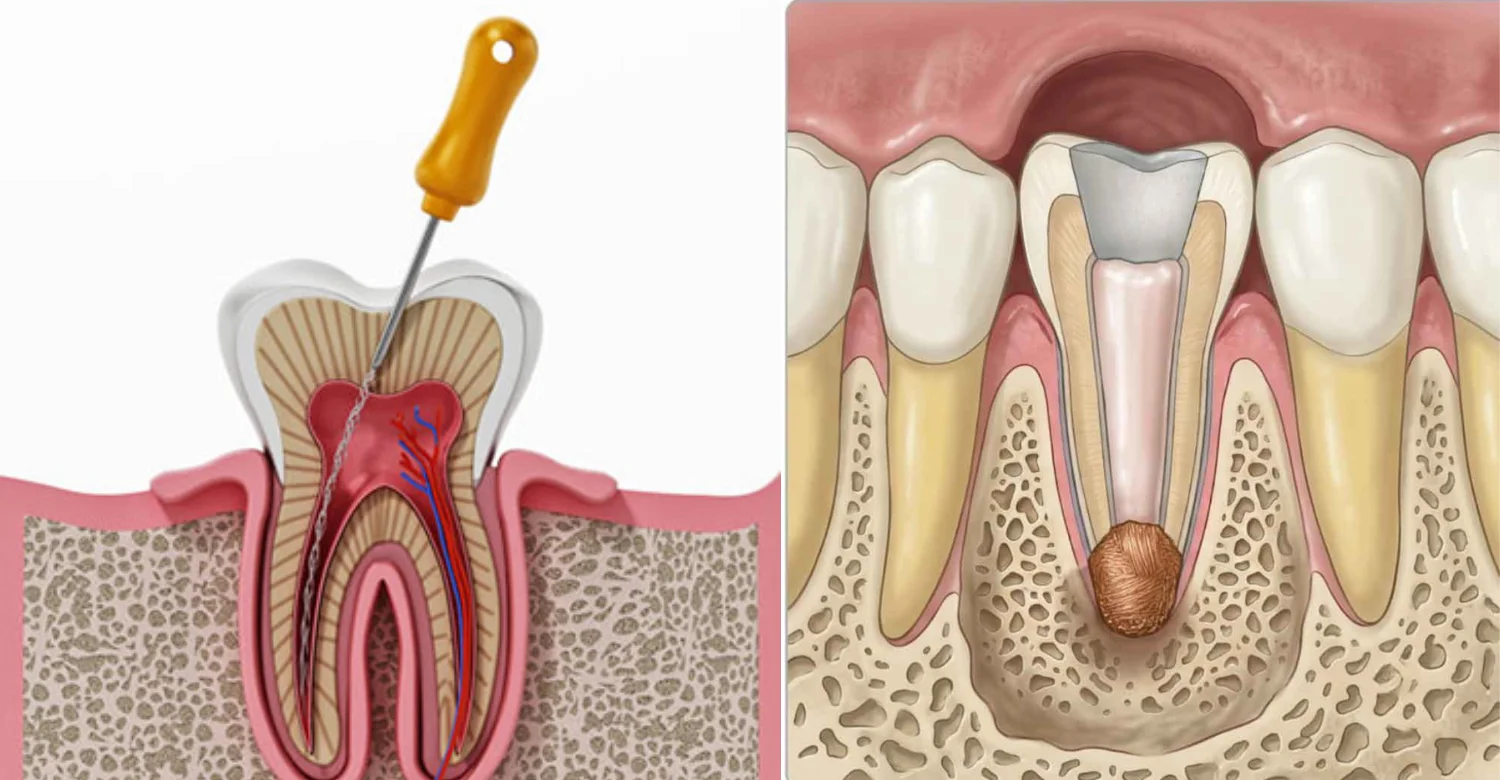
Root canal treatment and apicoectomy are two different endodontic procedures with different treatment approaches. Both can help preserve a natural tooth affected by infection or inflammation. Root canal treatment addresses disease inside the tooth's root canal system. An apicoectomy approaches the problem through the gum and surrounding bone. The root canal vs apicoectomy question depends on the tooth's condition, previous treatment, root anatomy, and restoration.
Modern assessment may include a dental examination, periapical radiographs, and CBCT when clinically appropriate. At Vitrin Clinic, treatment planning focuses on preserving healthy tooth structure whenever predictable treatment remains possible. Each case requires individual assessment rather than choosing a procedure from symptoms alone.
Root Canal vs Apicoectomy: What Is the Difference?
The main difference involves where the dentist treats the problem. Root canal treatment works through the tooth's crown and into its internal canal system. The dentist removes infected or inflamed pulp, cleans the canals, and seals them. An apicoectomy approaches the root tip surgically through the gum instead. The dentist removes inflamed tissue and usually a small portion of the root tip.
An apicoectomy is commonly considered when infection persists after previous root canal treatment. The American Association of Endodontists describes it as the most common endodontic surgical procedure. In the root canal vs apicoectomy comparison, both procedures address related problems through different access routes.
What Is Root Canal Treatment?
Root canal treatment removes infected or inflamed pulp from inside a tooth. The dentist then cleans, shapes, disinfects, and seals the root canals. The pulp contains nerves, blood vessels, and connective tissue. Deep decay, trauma, cracks, or repeated dental procedures can damage this tissue. Treatment stops infection from progressing and preserves the natural tooth. A permanent restoration is then usually required to protect it. Back teeth often need substantial protection because they carry heavy chewing forces.
What Is an Apicoectomy?
An apicoectomy is a surgical endodontic procedure that treats the root-end area. It is also called root-end resection or apical surgery. The dentist creates access through the gum to reach the bone around the root tip. Inflamed tissue is removed, and a small portion of the root tip is resected. The root end is then sealed, and stitches support soft-tissue healing. The AAE states that it may help when inflammation persists after root canal treatment. It may also help when calcified canals block conventional instruments.
How Are Root Canal Treatment and Apicoectomy Different?
Both procedures aim to control endodontic disease and preserve the natural tooth. Their main difference is the treatment pathway. Root canal treatment approaches the infection through the tooth's crown. Apicoectomy approaches the root through the surrounding gum and bone. This distinction matters when a previously treated tooth develops persistent disease. Retreatment may address untreated canals or inadequate previous cleaning. Surgery may suit cases that retreatment cannot adequately reach or resolve.
Where the Dentist Accesses the Tooth
Root canal treatment begins through a small opening in the tooth's crown. This opening gives access to the internal canal system. Instruments and irrigation then clean the accessible canal spaces. An apicoectomy uses a small surgical opening in the gum instead. The underlying bone is exposed just enough to reach the root tip. This explains why the two procedures feel and heal differently.
What Tissue Is Removed
During root canal treatment, the dentist removes diseased pulp from inside the canals. During an apicoectomy, the dentist removes inflamed tissue surrounding the root end. The root tip itself is also resected, but only as much as necessary. The surrounding bone may gradually heal after successful treatment. At Vitrin Clinic, planning distinguishes internal canal disease from persistent root-end disease.
When Each Procedure Is Usually Considered
Root canal treatment is considered when the pulp becomes irreversibly inflamed or infected. Apicoectomy is usually considered when disease persists around the root tip after treatment. Retreatment may be preferred when missed canals, poor cleaning, or leakage caused the problem. A 2023 systematic review found insufficient evidence to call one approach universally superior. The root canal vs apicoectomy decision therefore depends on the individual tooth.
Is an Apicoectomy the Same as a Root Canal?
No, an apicoectomy and root canal treatment are distinct procedures. Root canal treatment cleans and seals the internal canal system. An apicoectomy surgically treats the root-end region from outside the tooth. It can follow earlier root canal treatment when inflammation remains around the root tip. This does not automatically mean the original treatment was performed incorrectly. Understanding the root canal vs apicoectomy distinction helps patients discuss realistic options.
When Is Root Canal Treatment Needed?
Root canal treatment is generally considered when the dental pulp becomes irreversibly inflamed or infected. The condition may develop gradually or follow sudden trauma. Symptoms can include persistent pain, temperature sensitivity, biting discomfort, or swelling. However, some teeth have significant disease without obvious symptoms. The dentist considers symptoms, clinical tests, dental history, and radiographs together. Treatment removes diseased tissue and stops continued bacterial contamination. A well-restored tooth is then better protected against further structural problems.
What Problems Can a Root Canal Treat?
Root canal treatment treats disease affecting the dental pulp and root canal system. It can address infected or irreversibly inflamed pulp. It may also help when bacteria have spread into surrounding tissues. However, it does not repair every type of tooth damage. A vertical root fracture can substantially change the outlook. At Vitrin Clinic, evaluation considers the complete tooth rather than only the painful area.
What Causes a Tooth to Need Root Canal Treatment?
Several processes can damage the pulp and allow bacteria inside the tooth. Dental decay is among the most common causes. Trauma can damage pulp tissue even when the crown looks intact. Cracks and leaking restorations can also let bacteria reach deeper tissues. Some teeth produce strong symptoms, while others stay relatively quiet.
Deep Tooth Decay
Deep decay can extend through enamel and dentin toward the pulp. Bacterial products may then trigger severe pulpal inflammation. When inflammation becomes irreversible, a simple filling may no longer be enough. Symptoms can include lingering temperature sensitivity and spontaneous pain. Radiographs can show decay depth and possible changes around the root.
Cracks, Fractures, or Dental Trauma
Cracks can allow bacteria and irritants to reach deeper dental tissues. Traumatic injuries can also damage the pulp, sometimes with delayed effects. Not every cracked tooth can be treated with root canal therapy. If the tooth remains restorable, endodontic treatment may be part of the plan. If a fracture extends into the root, the prognosis can change substantially.
Pulp Infection or Inflammation
Pulp inflammation can result from bacteria, trauma, or restorative procedures. Reversible inflammation may settle once the irritant is removed. Irreversible inflammation generally requires removal of the affected pulp. Once bacteria colonize the canals, they can persist in complex anatomical spaces. Effective treatment therefore requires careful cleaning and sealing.
Dental Abscess and Periapical Infection
An infected canal can cause inflammation and pus around the root tip. A dental abscess can cause swelling, tenderness, or a small gum pimple. Root canal treatment removes the internal source when the tooth can be preserved. Antibiotics do not replace definitive dental treatment. Rapidly spreading swelling or breathing difficulty requires urgent medical attention.
What Symptoms May Lead to a Root Canal?
Symptoms vary considerably between patients and between stages of disease. Temperature sensitivity can indicate pulpal irritation. Pain during chewing can point to inflammation around the tooth. Swelling or a gum pimple may indicate drainage from an infected area. The absence of symptoms does not always mean the tooth is healthy. Self-diagnosis cannot reliably settle the root canal vs apicoectomy choice.
Persistent Toothache
Persistent toothache can come from pulpal inflammation or infection. It can also originate from gum, muscle, sinus, or structural problems. The pain's duration, triggers, and location offer useful clues. However, pain patterns overlap across several dental conditions. If pain persists or worsens, professional assessment should not be delayed.
Sensitivity to Hot or Cold
Temperature sensitivity is a common sign of pulpal irritation. Lingering sensitivity often means more than brief sensitivity. Cold testing helps compare the affected tooth with its neighbors. Sensitivity can also come from exposed dentin, gum recession, or cracks. It does not automatically mean root canal treatment is necessary.
Pain When Biting or Chewing
Pain during biting can occur when inflammation affects tissues around the root. It can also accompany cracks or traumatic injuries. Percussion and bite tests help the dentist locate the source. Early disease may not appear clearly on radiographs. Treatment depends on the underlying cause rather than the symptom alone.
Swelling or a Gum Pimple
A gum pimple can be a drainage pathway from an infected tooth. Swelling can also develop when infection builds up without drainage. Facial swelling requires particularly prompt assessment. The dentist must first confirm which tooth is responsible. Root canal treatment may address the source when that tooth is restorable.
Symptoms May Be Absent Despite Disease
Some teeth develop significant endodontic disease without obvious pain. Radiographs may reveal changes around a root before discomfort appears. The AAE notes that teeth can become diseased months or years after treatment. Patients should not assume that no pain means complete healing. Follow-up imaging may be recommended in selected cases.
Learn what treatment you need in Dental Inlays vs Onlays
When Is an Apicoectomy Needed Instead of Root Canal?
An apicoectomy is considered when conventional treatment cannot resolve persistent root-end disease. It is commonly linked to teeth that already had root canal treatment. Surgery may help when canals are blocked, calcified, inaccessible, or hard to retreat. The AAE describes surgery as an option when nonsurgical treatment cannot save the tooth. Planning should evaluate restorability, periodontal support, root anatomy, and previous treatment. In practice, root canal vs apicoectomy is not a question of basic versus advanced care.
Can an Apicoectomy Be Needed After a Root Canal?
Yes, a previously treated tooth can develop persistent disease around its root tip. Complex anatomy may have prevented complete treatment of every canal. A leaking restoration or new decay can also recontaminate the canals. The AAE lists untreated canals, restoration problems, new decay, and fractures as causes. Retreatment may be considered when it can predictably correct the cause. Surgery becomes useful when conventional access is limited.
What Happens When Infection Persists Around the Root Tip?
Persistent infection can inflame the bone around the root tip. Radiographs may show a dark area called a periapical radiolucency. A poorly treated canal may need nonsurgical retreatment. A blocked canal may instead need surgical access to the root end. During apicoectomy, inflamed tissue is removed and the root tip is resected. Bone healing is then monitored over several months.
When Is Root Canal Retreatment Considered First?
Retreatment may be considered when earlier treatment did not adequately clean or seal the canals. It can address missed canals, leakage, or new contamination. The dentist reopens the tooth and removes previous filling materials. The canals are then cleaned and sealed again. Retreatment may require removing a crown, post, or core first.
Missed or Untreated Canals
Some teeth contain extra canals that are difficult to find. If a canal remains untreated, bacteria may persist inside it. Magnification and imaging can improve identification of complex anatomy. Retreatment gives access to these missed canals. If a canal cannot be reached safely, surgery may become an alternative.
Complex or Blocked Canal Anatomy
Canals can become narrow, curved, calcified, or obstructed. These conditions may stop instruments reaching the full canal length. The AAE identifies calcified canals as one reason to consider surgery. Retreatment remains possible in many complex cases with specialized techniques. The clinician must balance potential benefits against procedural risks.
New Decay or Leakage Around a Restoration
A restored tooth can develop new decay around its filling or crown. A defective restoration can also allow bacterial leakage into the canals. Retreatment may be appropriate when the tooth remains restorable. The old restoration may need removal or replacement. This is why the final restoration matters in long-term endodontic care.
Persistent Infection After Previous Treatment
Persistent infection does not automatically mean the tooth needs extraction. The cause should be identified before selecting the next step. Retreatment can address technical problems within the canal. Apical surgery can address disease concentrated around the root end. For this reason, root canal vs apicoectomy planning remains centered on individual case factors.
When Can Apicoectomy Be Considered Instead of Retreatment?
Apicoectomy can be considered when retreatment cannot access or resolve the root-end problem. It provides direct surgical access when internal access is blocked. It may also help when disease persists despite technically adequate treatment. The AAE lists inaccessible canals and damaged root surfaces among surgical indications. The tooth must still have enough structural and periodontal support.
When the Canal Cannot Be Safely Reached or Retreated
Calcification, posts, separated instruments, or complex anatomy can block a canal. Removing these obstacles may weaken the tooth or cause perforation. Surgery offers another route to the root end. This helps when conventional access would sacrifice important tooth structure.
When Infection Persists at the Root End
Root-end infection may remain despite apparently adequate internal treatment. An apicoectomy gives direct access to the affected region. The diseased tissue and root tip can then be removed. A root-end filling seals the canal at the surgical endpoint. Healing depends on anatomy, tooth structure, and patient factors.
When a Post or Restoration Makes Conventional Retreatment Difficult
A post may fill much of a previously treated canal. Removing it or a crown can create structural risks. In selected cases, surgery avoids removing a sound restoration. However, that restoration must still provide a reliable long-term seal.
When the Root Surface or Surrounding Bone Requires Surgical Management
Some cases involve damaged root surfaces or pathology around the root. Direct surgical access lets the clinician inspect and treat the area. The AAE notes that surgery can manage damaged root surfaces and surrounding bone. This approach reveals details that internal access cannot show.
Can an Apicoectomy Save a Tooth That Has Already Had a Root Canal?
In selected cases, yes. The outcome depends on periodontal support, tooth structure, root anatomy, and fracture status. A tooth with a vertical root fracture usually needs a different pathway. However, persistent disease alone does not automatically require extraction. At Vitrin Clinic, evaluation focuses on whether predictable preservation remains possible. Benefits and limitations should be explained before surgery begins.
Find your ideal smile with Teeth Whitening vs Veneers
Root Canal Retreatment vs Apicoectomy: How Do Dentists Decide?
Choosing between retreatment and surgery requires an assessment of the entire tooth. Previous treatment, root anatomy, restoration, and infection location all matter. Retreatment focuses on the internal canal system. Surgery focuses mainly on the root-end region and surrounding tissues. A 2023 systematic review found no approach universally superior. Modern endodontics therefore emphasizes diagnosis and individualized planning.
What Factors Influence the Treatment Decision?
Several clinical and anatomical factors shape the treatment pathway. Previous treatment quality is particularly important. The dentist also checks whether the tooth remains structurally restorable. Existing crowns and posts may complicate conventional access. CBCT can sometimes add useful three-dimensional information. Weighing these factors turns the root canal vs apicoectomy choice into a reasoned plan.
Condition of the Tooth and Root
Remaining tooth structure influences whether treatment can restore long-term function. Large restorations reduce the natural structure available. Vertical root fractures may make predictable preservation difficult. The clinician also evaluates gum attachment and surrounding bone. The decision weighs infection control against long-term restorability.
Quality of the Previous Root Canal
Poorly cleaned or filled canals may harbor persistent microorganisms. Missed canals can provide a pathway for continued infection. Poor sealing can also allow contamination after treatment. Retreatment can sometimes correct these technical problems. Imaging helps identify such deficiencies beforehand.
Location of the Infection
Disease inside the canal may suit retreatment. Disease concentrated around the root tip may sometimes suit surgery. However, a periapical lesion does not automatically mean surgery is required. Comparing current and older radiographs shows whether healing is occurring.
Presence of a Crown or Post
Crowns and posts can make internal retreatment more complex. Removing a bonded post can risk dentin loss or root damage. Surgical access can sometimes avoid removing a serviceable restoration. However, that restoration must still seal the tooth adequately.
Root Anatomy and Accessibility
Root canals vary in shape, number, curvature, and size. Calcified and curved canals are particularly difficult to negotiate. CBCT may reveal anatomy that standard radiographs cannot show. Surgery may become relevant when internal access is unsafe.
Cracks or Structural Damage
Cracks may extend through enamel, dentin, or deeper root structures. Not every cracked tooth requires extraction. The crack's location and extent determine whether preservation is realistic. Certain root fractures, however, prevent predictable long-term survival.
Is Root Canal Retreatment Better Than Apicoectomy?
Neither treatment is universally superior for every patient. Retreatment corrects problems within the existing canal system. Surgery directly approaches the root-end area. Retreatment may help when missed canals cause persistent disease. Surgery may help when internal access is limited. Selection should depend on diagnosis, anatomy, restoration, and tooth structure.
Can Both Retreatment and Apicoectomy Be Needed?
In selected situations, both procedures may become part of long-term management. Retreatment can correct internal problems first. Surgery can then address residual disease around the root end. However, combining procedures is not automatically necessary. The clinician should identify a clear reason for each intervention.
What Does Current Evidence Say About Retreatment vs Apical Surgery?
Research suggests both approaches can achieve meaningful healing in well-selected cases. A 2023 systematic review found no sufficient evidence to call one universally superior. A 2024 systematic review reported pooled healing rates of 78.8% using strict criteria. Broader criteria produced a pooled estimate of 87.5%. These figures are not guaranteed for individual patients. Evidence in the root canal vs apicoectomy debate should guide, not replace, individual diagnosis.
Compare options in Snap-On Veneers vs Porcelain Veneers
How Is Root Canal or Apicoectomy Diagnosed?
Diagnosis begins with the patient's dental history and current symptoms. The dentist then examines the tooth and surrounding oral tissues. Tests may include percussion, palpation, temperature testing, and bite testing. Radiographs can reveal changes around the root. CBCT may be considered when conventional imaging is insufficient. Previous treatment records and older radiographs are also valuable. A clear diagnosis is the foundation of every root canal vs apicoectomy recommendation.
What Happens During the Dental Examination?
The dentist reviews symptoms, previous treatment, trauma, and restorations. The examination then focuses on the suspected tooth and nearby gums. Periodontal probing can reveal defects linked to gum disease or fractures. Pulp and periapical tests provide further information. Treatment should follow the diagnosis rather than symptoms alone.
Which X-Rays Are Used?
Periapical radiographs are commonly used to examine teeth and surrounding bone. Different angles can reveal additional anatomical detail. Bitewing radiographs mainly help detect certain types of decay. CBCT provides three-dimensional images when conventional radiographs are insufficient. The AAE and the American Academy of Oral and Maxillofacial Radiology support CBCT when clinically justified.
Periapical Dental X-Ray
A periapical radiograph shows the whole tooth from crown to root tip. It also shows the surrounding supporting bone. Dentists use it to spot lesions, root shape, and existing restorations. However, it is a two-dimensional image with some limitations.
When CBCT May Be Useful
CBCT helps when standard radiographs cannot explain the clinical findings. It may reveal extra canals, root fractures, or complex anatomy. It should not be performed routinely for every dental infection. The smallest suitable field of view limits unnecessary exposure.
What Can CBCT Show Before Apicoectomy?
CBCT can show root shape and the position of periapical lesions. It can also demonstrate nearby nerves, sinuses, and cortical bone. This information assists surgical access planning. It may also reveal untreated canals or fractures. Such findings can change the proposed root canal vs apicoectomy plan entirely.
How Does the Dentist Determine Whether the Tooth Can Be Saved?
Tooth preservation depends on more than infection alone. The clinician evaluates remaining structure, periodontal support, root integrity, and restorability. Certain root fractures can significantly change the prognosis. If preservation is realistic, treatment focuses on infection control and function. If not, alternatives should be discussed openly.
Why Is Diagnosis Important Before Choosing Between Retreatment and Surgery?
Retreatment and surgery address different anatomical problems. A missed canal may need internal retreatment. A blocked canal with root-end disease presents a different situation. A structural fracture may require another strategy altogether. Accurate diagnosis reduces unnecessary procedures.
Check out the comparison of Immediate Dental Implants vs Delayed Implants
How Is a Root Canal Performed?
Root canal treatment begins with anesthesia and isolation of the tooth. The dentist then creates an access opening into the pulp chamber. The canals are located, measured, cleaned, and shaped. Irrigation disinfects accessible spaces before the canals are sealed. A final restoration then protects the tooth against leakage and fracture. Understanding these steps clarifies the root canal vs apicoectomy difference in approach.
Step-by-Step Root Canal Treatment
The procedure follows several clinical stages. The dentist first establishes anesthesia and isolation. Access is then created through the crown. The canals are cleaned, shaped, dried, and sealed. A temporary or permanent restoration closes the access cavity.
Local Anesthesia and Isolation
Local anesthesia numbs the tooth before treatment starts. A rubber dam is commonly placed to isolate the tooth. It keeps saliva away from the working area. It also protects the patient from instruments and solutions.
Accessing the Root Canals
The dentist creates an opening through the tooth's crown. The canal openings are then located with fine instruments. Access design should preserve as much healthy structure as possible. Magnification can assist when anatomy is complex.
Cleaning and Shaping the Canals
Cleaning and shaping remove diseased tissue from the canals. Irrigation flushes debris and microorganisms from accessible spaces. The aim is to reduce contamination throughout the canal system. Irregular spaces can be difficult to reach mechanically.
Filling and Sealing the Canals
After cleaning, the canals are filled with a suitable material. The goal is a stable, bacteria-tight seal. A radiograph is often taken to check the result. Good coronal sealing helps stop bacteria from re-entering.
Restoring the Tooth
Endodontic treatment does not replace the need for a final restoration. The choice depends on remaining structure and tooth position. Back teeth often need cuspal coverage such as a crown. Timing should follow the treating dentist's recommendation.
How Long Does Root Canal Treatment Take?
A straightforward case may be completed in one appointment. Complex molars, severe infection, or difficult anatomy can require more time. Retreatment usually takes longer than first-time treatment. The number of visits should be confirmed after examination. International patients should discuss scheduling before travel.
What Can You Expect After a Root Canal?
Mild tenderness can occur after treatment. Discomfort usually eases as healing progresses. Avoid heavy chewing until the final restoration is placed. A properly restored tooth can then function normally. New swelling or worsening pain should prompt reassessment.
.jpg)
.jpg)
.jpg)
How Is an Apicoectomy Performed?
An apicoectomy is performed through a small surgical opening near the affected root. Local anesthesia is generally used. The dentist reaches the root tip through the gum and bone. Inflamed tissue is removed, and the root tip is resected. The root end is sealed, and stitches support healing. Modern microsurgery uses magnification, illumination, and specialized instruments. This surgical route is the practical heart of the root canal vs apicoectomy distinction.
Step-by-Step Apicoectomy
The procedure begins with local anesthesia. The dentist creates access through the gum and a small bony window. Inflamed tissue is removed, and the root end is resected. A root-end preparation is created and sealed. The gum is then repositioned with sutures.
Local Anesthesia
Local anesthesia numbs the treatment area completely. The patient stays awake throughout the procedure. Extra anesthetic can be given if needed. The clinician will recommend suitable pain control afterward.
Accessing the Root Through the Gum
A small incision provides access to the affected area. The gum is gently lifted to expose the underlying bone. A limited bony window then reveals the root tip. Pre-surgical imaging helps locate the root and nearby structures.
Removing Inflamed or Infected Tissue
Inflamed tissue around the root tip is removed during surgery. This allows direct inspection of the affected area. The tissue may be sent for laboratory examination when indicated. Healthy structure is preserved as much as possible.
Removing the Root Tip
The apical portion of the root is then resected. The amount removed depends on anatomy and the clinical situation. The cut surface is examined under magnification. This can reveal cracks or canals missed during conventional treatment.
Sealing the Root End
A small root-end preparation is created after resection. A biocompatible material is placed to seal the remaining canal. The seal blocks communication between the canal and surrounding tissues. Magnification helps the clinician place it precisely.
Suturing and Healing
The gum tissue is repositioned once the area is treated. Sutures hold the tissue in place during early healing. Soft tissue usually heals faster than the underlying bone. Radiographic bone healing can take considerably longer.
What Is Endodontic Microsurgery?
Endodontic microsurgery uses magnification and specialized instruments during root-end surgery. It gives the clinician a clearer view of the root-end area. Modern techniques allow smaller access and more precise treatment. Ultrasonic instruments may assist root-end preparation. Outcomes still depend on diagnosis, anatomy, restoration, and patient factors.
How Long Does Apicoectomy Recovery Take?
Discomfort and swelling can occur during the first few days. These symptoms generally improve as healing progresses. Sutures may be removed at a follow-up visit. Bone healing takes longer than gum healing. Radiographic review may therefore occur months after surgery.
Explore the best choice between No-Prep Veneers vs Traditional Veneers
Root Canal vs Apicoectomy :
Pain
Recovery
Side Effects
Both procedures are performed with local anesthesia. Most discomfort happens after treatment rather than during it. Root canal treatment may cause temporary tenderness around the treated tooth. Apicoectomy can produce localized swelling and surgical tenderness. Recovery depends on infection severity, complexity, and individual healing. Mild discomfort can occur even after technically successful treatment. Severe or worsening symptoms require reassessment. Knowing what to expect makes the root canal vs apicoectomy recovery less worrying.
Is a Root Canal Painful?
Modern root canal treatment is performed under local anesthesia. Patients should not usually feel significant pain during treatment. Tenderness can appear after the anesthetic wears off. Infection severity and earlier inflammation can influence this discomfort. Contact the dental team if pain becomes severe or keeps worsening.
Is an Apicoectomy Painful?
An apicoectomy is performed under local anesthesia. The surgical area should stay numb throughout the procedure. Tenderness, swelling, or mild bruising can occur afterward. These effects generally improve during the first days of healing. In a root canal vs apicoectomy comparison, surgery usually brings more swelling.
What Relief Can You Expect After Treatment?
Successful treatment should address the source of endodontic inflammation. Infection-related pain usually decreases gradually afterward. Immediate relief is not guaranteed in every case. Radiographic healing usually lags behind symptom improvement. Persistent or worsening symptoms require reassessment.
What Side Effects Can Occur After a Root Canal?
Temporary tenderness is one of the most common effects. Some patients notice discomfort while chewing for several days. Rare complications include instrument separation, perforation, or persistent infection. The risk rises with anatomical and technical complexity. Specialist care may suit technically difficult cases.
What Side Effects Can Occur After an Apicoectomy?
Apicoectomy involves surgical handling of gum and bone tissue. Mild swelling, tenderness, or bruising can therefore follow. Complications are uncommon but include persistent infection or delayed healing. Injury to nearby structures is a rare but recognized risk. CBCT can help identify important anatomy before surgery.
Mild Pain or Tenderness
Mild tenderness is common after surgical treatment. Pain should become easier to manage as healing continues. Follow the clinician's medication instructions carefully. Increasing pain may justify a review appointment.
Swelling
Swelling often peaks during the first few days after surgery. Cold applications may sometimes be recommended early on. Rapidly increasing swelling differs from ordinary postoperative swelling. It should receive prompt professional assessment.
Gum Sensitivity
The gum can remain sensitive after an incision. Brushing near the site may feel tender at first. The clinician may recommend modified oral hygiene during early healing.
Temporary Discomfort When Chewing
The treated area may feel tender when chewing. Patients are often advised to chew on the opposite side initially. Persistent biting pain should be reassessed if it does not settle.
Which Procedure Has a Longer Recovery?
Apicoectomy involves more direct handling of gum and bone tissue. Root canal treatment usually causes localized tenderness without an incision. Apical surgery involves soft-tissue healing followed by slower bone healing. Bone remodeling can continue for months. Individual recovery depends on infection, complexity, and general health.
Understand the causes and treatment for Anodontia
What Are the Risks and Possible Complications?
Endodontic procedures carry potential risks despite high clinical success. The risks depend heavily on tooth anatomy and treatment complexity. Root canal complications can include instrument separation, perforation, or persistent infection. Surgical complications can include delayed healing or injury to nearby structures. A heavily restored tooth may also remain vulnerable to fracture. Discussing these risks openly is part of any root canal vs apicoectomy consultation.
Possible Root Canal Complications
Curvature, calcification, and narrow canals increase technical difficulty. Instrument separation can occur during canal preparation. Perforation can happen if instruments leave the natural canal path. Persistent infection may result from untreated anatomy or coronal leakage. Specialist referral may be considered for difficult anatomy.
Possible Apicoectomy Complications
Apical surgery combines endodontic and surgical considerations. Potential complications depend on the root's position in the jaw. Nearby nerves, sinuses, or other structures may need careful protection. Root fracture can also compromise long-term preservation.
Persistent Infection
Persistent infection may occur despite technically appropriate treatment. Causes include residual microorganisms, leakage, or structural problems. Further diagnosis is necessary before another intervention.
Incomplete Healing
Radiographic healing can take many months. A lesion still visible soon after treatment does not necessarily mean failure. Symptoms and imaging should be interpreted together.
Root or Tooth Fracture
A fracture can compromise the tooth's structural integrity. Some fractures are hard to detect without magnification. Endodontic procedures cannot repair every type of fracture.
Soft-Tissue or Bone-Related Complications
Surgery can temporarily affect surrounding soft tissue and bone. Swelling and tenderness are the most common examples. Nearby anatomical structures should be assessed during planning.
What Factors Can Affect Healing?
Healing depends on infection control, treatment quality, tooth structure, and periodontal health. General health also plays a role. A good seal helps prevent bacterial re-entry. The quality of the final restoration matters too. Follow-up is valuable because symptoms and bone healing progress differently.
Does the Size of a Periapical Lesion Determine Treatment Success?
Lesion size provides useful clinical information. However, it should not be used alone to predict success. A large lesion does not automatically require surgery. The underlying cause remains the key factor. In the root canal vs apicoectomy decision, lesion size is only one piece of evidence.
Find out what means a Black Spot Inside Your Cheek
Are They the Same?
Root Canal
Wisdom Teeth Removal
Root canal treatment and wisdom tooth removal have different purposes. One preserves a tooth, while the other removes it. Root canal treatment treats disease inside a tooth's pulp and canals. Wisdom tooth removal extracts a third molar when preservation is unsuitable. A wisdom tooth can sometimes receive endodontic treatment or even an apicoectomy. Its position, anatomy, and usefulness influence that decision.
Why Root Canal Treatment and Wisdom Tooth Removal Are Different Procedures
Root canal treatment aims to keep the natural tooth in place. Wisdom tooth removal takes the whole tooth out. Dentists may recommend extraction when the tooth causes repeated problems. The decision depends on function, position, hygiene access, decay, and gum health. Each tooth should be evaluated individually.
Note : All images used are for editorial and illustrative purposes only and may not originate from the original news provider or associated company.
Can a Wisdom Tooth Have Root Canal Treatment?
Yes, some wisdom teeth can receive root canal treatment. The tooth should be functional and restorable. Severe curvature or limited access can increase difficulty. A wisdom tooth with a useful opposing tooth has greater value. The final decision should follow examination and imaging.
When Is Wisdom Tooth Removal Considered Instead?
Extraction may be considered when a wisdom tooth is severely decayed or compromised. Recurrent infection can also support that decision. Impacted teeth can harm adjacent teeth and surrounding tissues. The decision should be individualized rather than based on age alone.
Does an Apicoectomy Apply to Wisdom Teeth?
An apicoectomy can be performed on some third molars. However, surgical access is often challenging. Wisdom tooth roots can lie close to important nerves. CBCT may help show these relationships before any decision. Extraction may be preferred when preservation offers little practical benefit.
Root Canal vs Apicoectomy: Cost Comparison in the USA, UK, and Turkey
Dental costs vary between countries, clinics, tooth types, and treatment complexity. A simple root canal usually costs less than complex retreatment or surgery. Molars often need more canals and longer appointments. An apicoectomy can involve surgical fees, imaging, and follow-up visits. International patients should compare complete treatment plans rather than single prices. A fair cost comparison must include every related service.
Country | Root Canal Treatment | Main Cost Factors | Possible Additional Costs |
USA | Approximately 700–1,800 | Tooth type, specialist care, complexity | Crown, imaging, retreatment |
UK | Approximately $250–$900 privately | Location, tooth type, complexity | Crown, specialist care, imaging |
Turkey | Approximately $3,000–$14,000+ | Clinic, tooth type, complexity, expertise | Crown, CBCT, retreatment, surgery |
How Much Does Root Canal Treatment Cost in the USA?
Private root canal prices in the United States vary widely. Tooth type and location strongly affect the cost. Molars usually cost more than front teeth. Specialist care and retreatment typically add to the fee. A crown and imaging are often charged separately. Ask for an itemized estimate and confirm insurance coverage.
How Much Does Root Canal Treatment Cost in the UK?
Private root canal fees vary across the United Kingdom. London and other major cities can have different fee structures. Molar treatment generally takes more time and technical work. Specialist treatment and retreatment can carry higher fees. A crown may also be charged separately.
How Much Does Root Canal Treatment Cost in Turkey?
Private dental prices in Turkey vary between clinics and cities. Tooth type, complexity, materials, and expertise all affect the final cost. Planning figures may range around $3,000–$14,000+ for conventional treatment. These figures are not fixed quotations. Request a personalized treatment plan before relying on advertised prices.
Treatment or Cost Factor | USA | UK | Turkey |
Root canal treatment | 700–1,800 | $250–$900 | $3,000–$14,000+ |
Retreatment | Usually higher than primary treatment | Usually higher than primary treatment | Varies by complexity |
Apicoectomy | Additional surgical fee | Additional surgical fee | Additional surgical fee |
Crown | Usually separate | Usually separate | May be separate |
CBCT | May be separate | May be separate | May be separate |
Specialist care | May increase cost | May increase cost | May increase cost |
How Much Does an Apicoectomy Cost Compared With Root Canal Retreatment?
An apicoectomy is surgical and may need extra clinical resources. Retreatment involves reopening and managing an existing canal system. Neither procedure has one universal price. Retreatment may require removing a post or crown. Surgery may require additional imaging and review visits. This is where treatment budgeting often becomes more complicated.
Procedure | Typical Cost Considerations | Possible Extra Charges |
Root canal retreatment | Previous treatment quality and canal complexity | Post removal, crown removal, imaging |
Apicoectomy | Surgical complexity and root anatomy | CBCT, surgical materials, follow-up |
Root canal + crown | Endodontic treatment plus restoration | Laboratory and restorative fees |
Retreatment + apicoectomy | Multiple treatment stages | Additional imaging and appointments |
What Is the Average Root Canal Cost in Turkey vs USA vs UK?
International price comparisons should be treated as rough planning information. Commonly cited ranges are approximately 700–1,800 in the USA. UK private treatment may range around $250–$900. Turkey can vary around $3,000–$14,000+, depending on tooth type and clinic. Exchange rates can also shift these comparisons.
Country | Approximate Planning Range | Currency | Important Consideration |
USA | 700–1,800 | USD | Specialist and restoration fees may increase totals |
UK | 250–900 | GBP | Location and tooth type influence fees |
Turkey | 3,000–14,000+ | TRY | Clinic, complexity, and included services vary |
USA: Approximately 700–1,800 for the Root Canal Procedure
A US root canal can fall anywhere within this broad range. Molar and specialist treatment usually cost more. The quote may exclude the final crown. Request a complete written estimate before treatment.
UK: Approximately $250–$900 Privately
Private UK fees vary with complexity and location. A molar may need extra canals and appointments. A final crown may be charged separately. Ask exactly what the quote includes.
Turkey: Approximately $3,000–$14,000+ Depending on Tooth and Clinic
Prices differ by clinic, city, materials, and complexity. A quote may cover the endodontic procedure only. Crowns or imaging may be separate. Vitrin Clinic plans treatment around clinical findings rather than a generic price.
What Can Increase the Final Dental Treatment Cost?
Treatment complexity is one of the most important cost factors. Retreatment can require extra procedures and equipment. Imaging, specialist consultations, restorations, and surgery may be billed separately. International packages may also add transport or accommodation.
Tooth Type and Number of Canals
Teeth with several canals generally need more clinical time. Molars often have more complex anatomy. Back teeth also tend to need stronger restorations.
Endodontist or Specialist Treatment
Specialist endodontic treatment can carry higher fees. Complex retreatment and surgery may need specialist expertise. Ask about the clinician's experience with similar cases.
Retreatment Complexity
Retreatment can require removing old filling materials, posts, or crowns. Calcified canals or separated instruments add further challenges. These factors can extend appointments and raise costs.
CBCT or Additional Imaging
CBCT adds an imaging cost when standard radiographs are insufficient. Not every case needs it. Ask why extra imaging is recommended.
Crown or Other Final Restoration
The tooth may need a crown or another restoration afterward. Its cost depends on materials and laboratory work. Confirm whether it is included in your quote.
Apicoectomy and Surgical Fees
Surgical endodontics can involve extra professional and facility fees. Imaging and postoperative visits may also add costs. A clear estimate should list these separately.
What Should Patients Check Before Comparing International Dental Prices?
Compare complete treatment plans rather than individual procedure prices. Ask whether examination and imaging are included. Confirm whether temporary and permanent restorations are separate. Ask who will perform the procedure. Clarify aftercare arrangements before traveling.
Before Comparing Prices | What Patients Should Confirm |
Diagnosis | What condition is being treated? |
Imaging | Are X-rays or CBCT included? |
Treatment | Is this primary treatment or retreatment? |
Restoration | Is a crown included? |
Specialist | Who will perform the procedure? |
Follow-up | Are postoperative reviews included? |
Additional treatment | What happens if another procedure becomes necessary? |
International care | What support is available after returning home? |
Root Canal in Turkey: What Should International Patients Know?
Turkey has become a popular destination for international dental treatment. Patients should still check clinical standards, planning, and follow-up arrangements carefully. A root canal is a medical procedure, not a cosmetic one. Diagnosis and infection control remain central to treatment quality. Share previous radiographs and dental records whenever possible. Allow enough time in your travel plans for examinations and procedures. Vitrin Clinic can coordinate diagnostic assessment and treatment scheduling for international patients. Individual findings should always decide the final plan, including any root canal vs apicoectomy choice.
What Is Included in Root Canal Treatment in Turkey?
Included services depend on the clinic and the treatment package. Some plans include examination and imaging, while others charge separately. Confirm whether anesthesia, radiographs, CBCT, temporary fillings, and final restorations are covered. Retreatment should not be priced like first-time treatment. Request an itemized treatment plan to avoid confusion about extra costs.
What Should You Ask About Before Traveling for Root Canal Treatment?
Understand your diagnosis before arranging travel. Ask which tooth needs treatment and why. Request details about imaging and the proposed procedure. Ask whether treatment can be completed within your planned visit. Clarify restoration requirements and follow-up arrangements before departure. If surgery is mentioned, ask why it is being considered.
Diagnostic Imaging
Ask whether recent periapical radiographs are sufficient. CBCT may be advised when three-dimensional detail could change the plan. Bring previous scans to avoid unnecessary duplicate imaging.
Endodontist Experience
Ask who will perform your treatment. Complex cases may need advanced endodontic experience. This matters most when previous treatment has failed.
Temporary and Permanent Restorations
Ask whether the tooth will receive a temporary restoration first. Confirm when the permanent restoration should be placed. Find out whether restorative work happens during the same trip.
Follow-Up Care
Ask how follow-up will work after you return home. Clarify which symptoms mean you should contact the clinic. Keep your treatment records and radiographs for your local dentist.
Root Canal in Istanbul: What Should Patients Consider?
Istanbul offers many dental providers with different approaches and pricing. Compare treatment plans carefully rather than headline prices. Look for clear diagnostic protocols and transparent recommendations. Ask whether complex cases receive specialist evaluation. Vitrin Clinic's international pathway can coordinate consultations, treatment, transport, and follow-up.
Can Root Canal Treatment and Additional Dental Procedures Be Coordinated During One Trip?
Several dental procedures can sometimes be coordinated during one visit. Endodontic treatment often comes before restorative or cosmetic work. Infection control should generally be addressed before elective treatment. The dentist decides whether procedures fit safely within your schedule. Clinical sequencing should always remain the priority.
Learn about causes and prevention for Throat Ulcers
What We Notice Clinically
Clinical presentation does not always reveal the underlying endodontic problem. Some patients have significant symptoms, while others feel little discomfort. A previously treated tooth raises different questions than a newly infected one. Imaging can reveal findings that symptoms cannot explain. We often see patients arrive with a fixed root canal vs apicoectomy preference. At Vitrin Clinic, planning focuses on the specific tooth and its surrounding tissues instead.
Why Patients Often Confuse Root Canal Treatment With Apicoectomy
Patients often link both procedures with dental infection. Root canal treatment works from inside the tooth. Apicoectomy works through surrounding tissues to reach the root end. Surgery may also follow earlier nonsurgical treatment on the same tooth. Clear explanations of root canal vs apicoectomy help patients understand their proposed plan.
A Failed Root Canal Does Not Automatically Mean the Tooth Must Be Extracted
Persistent disease after treatment needs investigation before extraction is considered. Missed canals, poor sealing, leakage, and complex anatomy are common contributors. Retreatment or surgery may preserve selected teeth. The decision depends on restorability and the underlying cause. A failed outcome should trigger reassessment rather than automatic extraction.
Why Persistent Symptoms Need Evaluation Rather Than Self-Diagnosis
Dental pain can come from several different structures. Symptoms overlap between endodontic, gum, and restorative conditions. Self-diagnosis cannot tell whether a tooth needs retreatment or surgery. Clinical testing is required to find the true source.
Why Retreatment and Apicoectomy Should Be Considered Case by Case
Each treated tooth has its own anatomy and history. No single procedure suits every clinical situation. Previous treatment, tooth structure, and root anatomy all affect what is feasible. The final decision should integrate all available evidence.
Previous Treatment Quality
The dentist checks whether all accessible canals were treated. Filling length, density, and seal quality give useful clues. Retreatment becomes more relevant when a correctable deficiency is found.
Tooth Structure
Adequate remaining structure is essential for long-term restoration. Extensive decay or fractures can reduce restorability. Endodontic care should be planned together with the final restoration.
Root and Canal Anatomy
Canal number, curvature, calcification, and root shape all affect difficulty. CBCT and magnification can add useful detail.
Radiographic Findings
Comparing images over time helps evaluate healing. A persistent dark area does not automatically mean failure. Symptoms and imaging should always be interpreted together.
Clinical Note
Endodontic treatment decisions should be individualized after appropriate examination and imaging. The root canal vs apicoectomy question is always answered tooth by tooth.
Dr. Rifat Alsaman
Dr. Rifat Alsaman, Head of the Medical Team at Vitrin Clinic and cosmetic dentist, emphasizes individualized dental assessment. Symptoms alone cannot show whether retreatment, surgery, or another option is appropriate. Clinical examination, suitable imaging, previous records, and restorability should guide the plan.
How Can You Relieve Discomfort Before and After Treatment?
Temporary dental discomfort can often be managed with professional guidance. Avoiding pressure on a painful tooth can reduce irritation. After treatment, protecting the area supports early recovery. Do not place unapproved substances directly on the tooth or gum. Comfort measures support care but never replace the root canal vs apicoectomy decision itself.
What Can Help With Temporary Dental Pain?
Dentists may recommend suitable over-the-counter pain medication. The right choice depends on your medical circumstances. A cold compress can sometimes ease facial discomfort. Pain medication does not treat the underlying infection.
What Should You Avoid Until the Tooth Is Evaluated?
Avoid chewing hard foods on a painful tooth. Do not place aspirin directly against the gum. Do not delay evaluation when swelling develops. Never try to drain an abscess yourself.
How Can You Protect a Treated Tooth During Recovery?
Avoid heavy chewing until your dentist confirms it is safe. This matters most before the final restoration is placed. Keep gentle oral hygiene around the treated area. Attend all recommended follow-up appointments.
When Should Pain or Swelling Be Reassessed?
Increasing or severe pain justifies professional reassessment. Pain should normally become more manageable as healing progresses. Significant swelling should also be evaluated promptly. Fever or spreading facial swelling needs urgent attention.
What Warning Signs Mean You Should See a Dentist Promptly?
Certain symptoms require prompt dental assessment. Persistent pain, swelling, fever, and drainage can signal active infection. Difficulty swallowing or breathing is particularly urgent. Seek emergency medical care if breathing becomes difficult. Rapid facial or neck swelling also needs urgent assessment. Early review also keeps more treatment options open for the affected tooth.
Persistent or Increasing Tooth Pain
Persistent pain can signal ongoing inflammation or infection. Increasing pain after treatment should be discussed with the dental team. Worsening symptoms should never be ignored.
Facial or Gum Swelling
Facial or gum swelling can indicate an active dental infection. Drainage does not mean the infection has gone. Prompt professional assessment is important.
Fever or Feeling Generally Unwell With Dental Infection
Fever with dental swelling requires prompt evaluation. Antibiotics may help when clinically indicated. However, medication alone may not remove the underlying cause.
Difficulty Opening the Mouth, Swallowing, or Breathing
These symptoms can indicate a spreading infection. They require urgent medical assessment. Do not wait for them to settle alone. Emergency evaluation may be necessary, especially when swelling spreads toward the neck.
A Previously Treated Tooth That Develops New Symptoms
A previously treated tooth can develop new disease years later. Possible causes include leakage, new decay, untreated anatomy, or fracture. Each cause may point toward a different root canal vs apicoectomy pathway.
Why Urgent Assessment May Be Necessary
Early assessment can identify the cause before complications develop. It also shows whether retreatment or surgery is still possible. New swelling should never be managed with self-treatment alone. Professional examination is especially important after previous endodontic treatment.
Tips for Patients
Bringing previous dental records makes treatment discussions easier. Ask what caused the current problem. Request an explanation of alternatives and their limitations. Make sure you understand restoration and follow-up needs. Informed patients make better root canal vs apicoectomy decisions with their dentist.
Questions to Ask Before Choosing Root Canal Treatment or Apicoectomy
Ask which tooth needs treatment and what the diagnosis is. Find out whether retreatment is possible. If surgery is proposed, ask why it is preferred. Discuss appointments, recovery, restoration, and possible complications.
What Dental Records Should You Bring to a Consultation?
Bring previous radiographs and treatment reports whenever available. Share details of crowns, posts, trauma, and other restorations. List your medications and relevant medical history. Previous records can prevent unnecessary repeat tests. They also show how the problem developed over time.
How to Prepare for an Endodontic Consultation
Write down when symptoms begin and what triggers them. Note whether pain is spontaneous or linked to chewing. Prepare questions about alternatives and expected recovery. Tell the dentist about any earlier endodontic treatment on the same tooth.
What Should You Ask About Retreatment vs Apicoectomy?
Ask why the previous treatment failed or remains unresolved. Ask whether the canals can be predictably retreated. Discuss expected healing and possible complications. Understanding the reasoning makes the root canal vs apicoectomy choice much clearer.
How Can You Compare Treatment Costs Safely?
Compare complete treatment plans rather than procedure prices alone. Confirm whether consultation, imaging, anesthesia, and restorations are included. Ask whether specialist fees and postoperative visits are separate. For travel packages, also ask about transport and accommodation details.
How Vitrin Clinic Evaluates Root Canal and Apicoectomy Cases
Vitrin Clinic's assessment begins with the condition of the tooth and surrounding tissues. Evaluation can include examination, digital imaging, and CBCT when clinically appropriate. The goal is to learn whether the natural tooth can be treated predictably. Patients receive a clear explanation of the root canal vs apicoectomy options that apply to them.
How Vitrin Clinic Assesses a Tooth Before Endodontic Treatment
The assessment covers the tooth, gums, restorations, and previous treatment. Symptoms are reviewed alongside the clinical examination. This separates pulpal disease from gum or structural problems.
Teeth, Gums, and Oral-Tissue Examination
The examination evaluates the suspected tooth and neighboring structures. Clinical tests help identify the source of pain. Restorability is assessed before treatment begins.
Digital Dental X-Rays
Digital radiographs provide detailed views of roots and surrounding bone. They support both treatment planning and follow-up.
CBCT When Clinically Appropriate
CBCT provides three-dimensional information about roots and nearby anatomy. Vitrin Clinic uses it when clinical findings justify additional assessment.
How Vitrin Clinic Develops an Individualized Treatment Plan
Planning combines examination findings, imaging, dental history, and structural assessment. The plan may involve treatment, retreatment, surgery, restoration, or another option. Each root canal vs apicoectomy recommendation is explained before treatment starts.
How Dental Implant Treatment May Be Considered When a Tooth Cannot Be Predictably Saved
Some teeth cannot be restored successfully. Severe fractures, inadequate structure, or poor gum support can change the pathway. When preservation is unpredictable, Dental Implant Treatment may be discussed. Implant planning requires a separate assessment of bone, gums, and spacing.
Natural Tooth Preservation and Treatment Alternatives
Preserving a natural tooth makes sense when adequate structure and support remain. However, preservation should not mean repeating unsuccessful procedures indefinitely. If preservation is unpredictable, alternatives should be explained clearly.
Internal Link Opportunities for Vitrin Clinic
Relevant internal links help patients move from education to treatment information. Each link should use descriptive anchor text that matches its destination.
Root Canal / Endodontic Treatment Page
This link connects readers to Vitrin Clinic's endodontic treatment details.
Dental Implant Treatment Page
This link explains implant options when a tooth cannot be predictably preserved.
Dental Emergency Treatment Page
This link supports readers with severe pain, swelling, or urgent symptoms.
Related Dental Abscess or Tooth Infection Article
This article can explain infection symptoms and the need for professional assessment.
How Vitrin Clinic Supports Your Treatment Journey
International dental treatment needs both clinical planning and practical coordination. Vitrin Clinic can coordinate consultation, diagnostics, scheduling, and aftercare planning. The clinical pathway always remains based on examination findings. Travel arrangements should support the treatment plan rather than determine it. Sharing previous dental records before arrival helps the team prepare in advance.
Consultation and Initial Dental Assessment
The consultation starts with a review of your concerns and previous treatment. The tooth and surrounding tissues are then examined. Clinical findings guide which diagnostic tests are appropriate. It also frames the root canal vs apicoectomy discussion clearly from the start.
Digital Diagnostic Planning When Clinically Appropriate
Digital radiographs show roots and surrounding bone clearly. CBCT adds three-dimensional detail when clinically justified. Extra imaging is used only when it can influence treatment.
Personalized Coordination for International Patients
Patient coordinators help organize appointments around the planned clinical sequence. Please allow some flexibility for unexpected clinical findings. New diagnostic information can occasionally change the planned schedule.
Treatment Scheduling and Clinical Coordination
Appointments follow the clinical priorities identified during examination. Complex cases, retreatment, or surgery may need extra visits. The schedule is based on clinical needs rather than a fixed travel itinerary.
Follow-Up and Aftercare Planning
Patients receive guidance on hygiene, chewing, medication, and follow-up. International patients should know how concerns will be handled after returning home. Clinical records and radiographs help your local dentist continue care.
What Patients Should Confirm Before Traveling to Istanbul
Confirm the proposed diagnosis and what the quoted fee includes. Ask how many appointments may be needed. Ask what happens if additional treatment becomes necessary during your stay. Clarify whether a root canal vs apicoectomy decision could change your schedule.
Key Takeaways
Endodontic decisions depend on diagnosis, anatomy, previous treatment, and restorability. Retreatment can correct missed canals and inadequate earlier treatment. Surgery may provide access when retreatment is difficult. Every recommendation should follow examination, imaging, and a clear explanation of the alternatives.
Root Canal vs Apicoectomy: The Main Difference
The primary distinction is the access route and treatment target. Root canal treatment works inside the tooth's canal system. Apicoectomy reaches the root tip through the gum and bone.
When Root Canal Treatment Is Usually Considered
It is considered when the pulp is irreversibly inflamed or infected. Common causes include deep decay, trauma, and cracks.
When Apicoectomy May Be Considered
It may be considered when disease persists around the root end after treatment. It also helps when conventional access is blocked.
Relief, Recovery, and Possible Side Effects
Both treatments use local anesthesia. Surgery can add swelling or gum sensitivity. Worsening symptoms require reassessment.
Why Diagnosis Should Come Before Treatment Selection
Similar symptoms can come from different dental conditions. Diagnosis is what makes the root canal vs apicoectomy choice reliable.
When to Seek Professional Dental Care
See a dentist for persistent pain, swelling, or drainage. Breathing or swallowing difficulty requires urgent medical attention.
What to Know About Treatment Costs in the USA, UK, and Turkey
Fees vary with tooth type, complexity, imaging, and location. Compare complete plans rather than headline prices.
At Vitrin Clinic
At Vitrin Clinic, every endodontic case starts with a careful look at the tooth, gums, and previous treatment. Our team combines clinical examination with digital radiographs and CBCT when clinically justified. This helps us decide whether primary treatment, retreatment, or apical surgery offers the most predictable result. We explain each option, its limitations, and its expected recovery before any treatment begins. Our goal is to preserve your natural tooth whenever a reliable outcome remains possible. When preservation is not predictable, we discuss suitable alternatives such as Dental Implant Treatment. International patients also receive coordinated scheduling, clear written estimates, and structured follow-up. You can share previous records before arrival so planning can begin early.
Reference
FAQs
Dr. Rifat Alsaman has more than 5 years of clinical experience in dentistry and currently serves as the Head of the Medical Team at Vitrin Clinic. He is dedicated to providing exceptional patient care, overseeing treatment planning, and ensuring the highest clinical standards across the team. His expertise, attention to detail, and commitment to continuous professional development have helped countless patients achieve healthier, more confident smiles.


