Cosmetic Dentistry
September 24, 2026
Snap In Dentures vs Traditional Dentures: Which Should I Choose?
 Dr. Rifat Alsaman
Snap In dentures vs traditional dentures is a common comparison when you are replacing several or all missing teeth. The choice matters because it shapes how your teeth feel, function, and stay in place every day. Traditional dentures rest on the gums. Snap In dentures are supported by dental implants placed in the jaw. Comfort, stability, chewing ability, maintenance, and treatment time can differ between them.
So, which should you choose? Neither option is automatically right for everyone. Your bone volume, gum health, oral anatomy, general health, budget, and treatment goals all influence the decision. Understanding Snap In dentures vs. traditional dentures in practical terms helps you ask better questions and set realistic expectations before treatment.
Snap In Dentures vs Traditional Dentures: What Is the Difference?
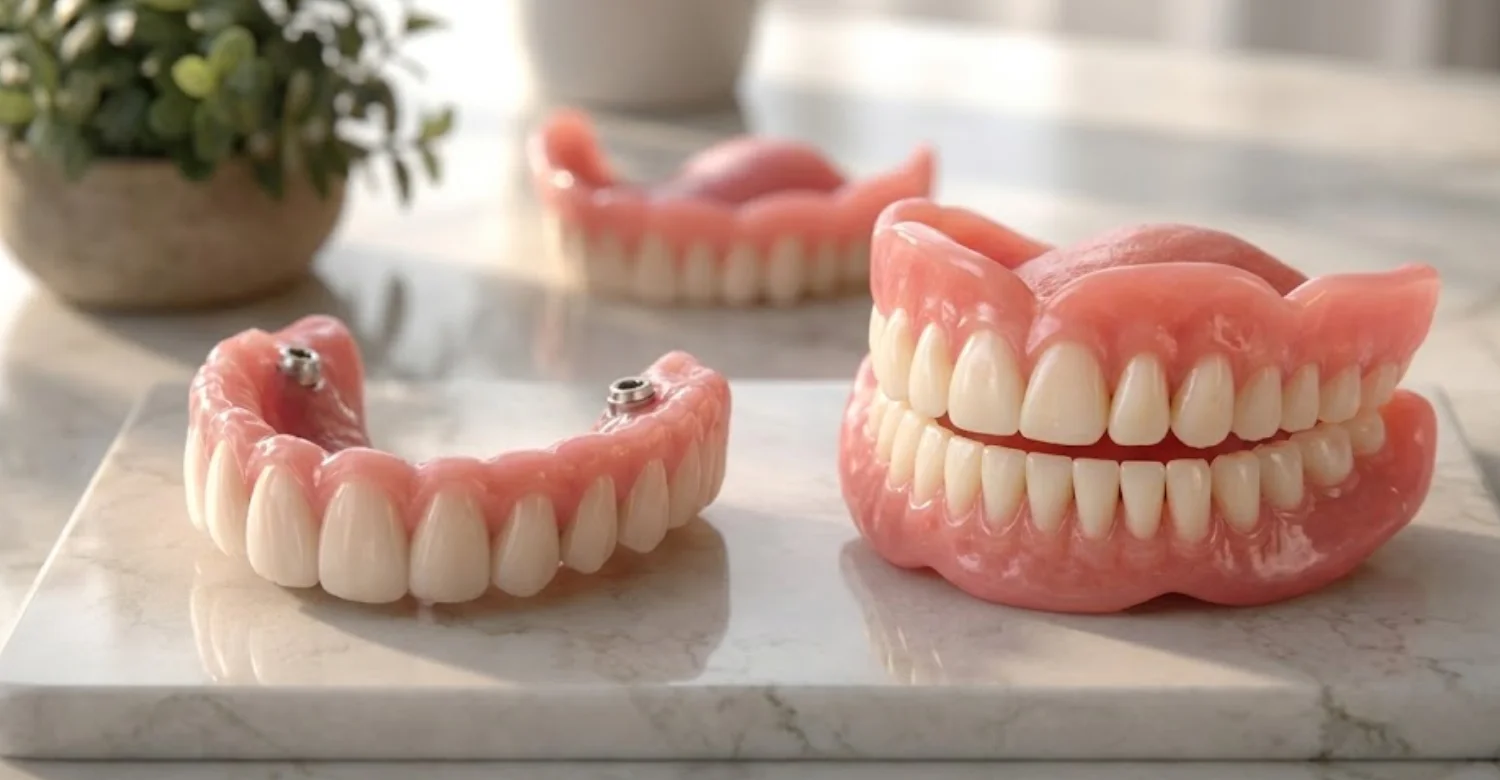
Snap In dentures vs. traditional dentures differ mainly in how each one stays in place. Traditional dentures rely on the gums and oral tissues for support. They stay in position through suction, fit, and the shape of your jaw. Snap In dentures are a type of implant-retained denture. They clip onto implants placed in the jawbone, which adds retention. Both options are removable for cleaning. The real difference lies in the support system, and that affects stability, treatment steps, and cost.
How Traditional Dentures Work
Conventional dentures replace missing teeth and the surrounding gum structures with a removable prosthesis. They are custom-made to fit the ridges of your jaw. Retention comes from several factors working together: suction, accurate fit, a thin layer of saliva, and the shape of the jaw. Traditional dentures can suit people who need a removable option without implant surgery. However, some movement can occur, especially when eating or speaking. The jawbone may also change over time, which gradually affects the fit.
How Snap In Dentures Work
Snap In dentures attach to dental implants placed in the jaw. The implants act as anchors, and attachment components on the denture clip onto them. You can still remove the denture for daily cleaning. This attachment mechanism can reduce unwanted movement compared with a conventional denture. For many people, that is the key point when weighing Snap In dentures vs traditional dentures. Still, suitability depends on bone availability, oral health, and individual treatment planning. Not every patient is a candidate for implants.
Snap In vs Conventional Dentures at a Glance
When comparing snap in vs conventional dentures, a side-by-side view makes the main differences easier to see. The table below summarizes how each option works in practice. It does not declare one option universally better. Instead, it shows the trade-offs you may discuss with your dentist.
Feature | Traditional Dentures | Snap In Dentures |
Support | Gums and oral tissues | Implants plus gums and tissues |
Stability | Depends on fit and suction; movement can occur | Attachments usually reduce movement |
Chewing | Can work well when properly fitted; some foods harder | May feel more secure with firmer foods |
Removability | Removable | Removable; clips onto implants |
Implant surgery | Not required | Required |
Bone considerations | Bone changes may affect fit over time | Sufficient bone usually needed |
Maintenance | Cleaning, relining, adjustments | Cleaning, relining, attachment servicing, implant checks |
Treatment duration | Usually shorter | Usually longer due to healing |
Initial cost | Generally lower | Generally higher |
Long-term considerations | Periodic relining or replacement | Component replacement and implant monitoring |
Use this overview of Snap In dentures vs traditional dentures as a starting point, not a final decision. Your own examination results will show which features matter most for you.
Note: All images used are for editorial and illustrative purposes only and may not originate from the original news provider or associated company.
Dive deeper into the oral microbiome
What Does Each Option Feel Like in Daily Life?
Technical comparisons only tell part of the story. What most people want to know is how each denture feels during ordinary moments. Eating a meal, chatting with friends, and wearing a denture all day are where differences become noticeable. When you think about Snap In dentures vs traditional dentures in daily life, focus on the situations that matter to you. The sections below look at chewing, speech, and comfort. These are the most common everyday concerns.
Eating and Chewing
Denture movement can make some foods harder to eat. Tough meats, crusty bread, raw vegetables, and sticky foods often challenge a loose denture. Food particles can also slip underneath and cause soreness. Implant support may provide greater stability for some people, so biting and chewing can feel more secure. However, traditional dentures can work well when they are properly fitted and adjusted. Many wearers learn to chew evenly on both sides, which helps keep a conventional denture balanced.
Speaking and Social Situations
Many people worry that a denture will move while they talk, laugh, or speak for long periods. A loose denture can click, shift, or change how certain sounds are formed. This can feel embarrassing in social situations. Snap In dentures may reduce this movement because the attachments hold them more firmly. With either option, adaptation matters. Most people need some practice before speech feels natural. A good fit and simple practice, such as reading aloud, usually help speech improve.
Comfort and Gum Pressure
Traditional dentures distribute chewing pressure across the gums and the tissues beneath them. When the fit is good, this pressure is spread evenly. When the fit changes, certain areas may become sore. Snap In dentures transfer some of this support through the implants. However, they still involve the denture-bearing tissues, so the gums continue to play a role. This is a helpful point when comparing Snap In dentures vs. traditional dentures. Comfort with either option depends heavily on fit and tissue health.
.jpg)
What Factors Can Affect My Choice?
Your choice should come from an individualized dental assessment rather than price or appearance alone. Two people with similar tooth loss may need very different plans. A dentist will look at your bone, gums, bite, and general health. They will also ask about your daily habits and priorities. Weighing Snap In dentures vs traditional dentures without this information can lead to unrealistic expectations. The following factors often shape the final recommendation. Each one deserves careful discussion.
Jawbone Volume and Implant Suitability
Implants need enough bone to be placed securely. After tooth loss, the jawbone can gradually shrink because it no longer receives stimulation from tooth roots. This process is called bone resorption. The longer teeth have been missing, the more bone may be lost. Imaging, such as 3D scans, may be used to assess the height, width, and quality of the available bone. These findings help determine whether implants are possible or whether additional procedures may be needed first.
Gum Health and Oral Condition
Healthy gums matter for both types of dentures. Inflammation, infection, or sore spots can affect comfort and fit. Before considering implants or a new denture, a dentist should evaluate your gums and any remaining teeth. Existing problems such as gum disease, decay, or untreated lesions may need attention first. Some patients may also have conditions that affect healing. Addressing these issues early supports a more predictable outcome, whichever option you ultimately choose.
Your Budget and Long-Term Goals
Cost is part of the Snap In dentures vs traditional dentures decision, but it involves more than the first invoice. Initial treatment costs differ, and so do ongoing maintenance needs. Traditional dentures usually cost less at the start but may need relining or replacement. Snap In dentures involve implants and attachments, which raise the initial cost. Fixed prices are not useful here. Costs vary according to the number of implants, prosthetic design, preparatory procedures, and individual needs.
Your Preference for Removability and Stability
Both options are removable, which surprises some patients. You take out a traditional denture for cleaning and usually at night. You also remove a Snap In denture for cleaning. The difference is that Snap In dentures attach to implant-supported components for additional retention. If you want a removable denture but dislike movement, this feature may appeal to you. If you prefer to avoid surgery, a well-fitted traditional denture may better match your preferences and comfort level.
Tips for Patients
These practical tips can help you prepare for a productive consultation:
Ask whether your jawbone and gum condition have been assessed before choosing an implant-retained option.
Bring your current denture to your consultation if you are considering replacement.
Tell your dentist which foods or daily activities your denture makes difficult.
Ask what maintenance the attachment system may require over time.
Ask how long you may need to adapt before judging the final comfort and function.
What Are the Benefits and Limitations of Each Option?
Every treatment involves trade-offs. A balanced view of Snap In dentures vs. traditional dentures looks at what each option can offer and where it may fall short. Neither option is universally superior. The right choice depends on how these benefits and limitations match your anatomy, health, lifestyle, and budget. Reviewing both sides helps you have a more informed conversation with your dentist and avoid surprises after treatment. The lists below summarize the points patients consider most often.
Potential Benefits of Traditional Dentures
Traditional dentures remain a reliable option for many people. Their main benefits include:
No implant placement is required.
They can provide a removable solution for extensive tooth loss.
Treatment may involve fewer surgical steps.
They can often be adjusted or relined as the mouth changes.
These advantages make conventional dentures suitable for patients who prefer a non-surgical approach. They also suit people who are not currently candidates for implants. A well-made denture can restore appearance and function effectively.
Potential Limitations of Traditional Dentures
Traditional dentures also have some limitations to consider:
They may move while chewing or speaking.
Fit can change as the jawbone gradually resorbs.
Some foods may feel more difficult to chew.
Periodic relining, adjustment, or replacement may be needed.
These limitations do not mean conventional dentures are a poor choice. They simply mean regular reviews are important. Many wearers manage these issues well with proper fit, good habits, and timely adjustments by their dentist.
Potential Benefits of Snap In Dentures
Snap In dentures offer several potential advantages:
Implant attachments may improve denture retention.
Movement may be reduced during eating and speaking.
They remain removable for daily cleaning.
Implant support may help maintain functional stability.
For people frustrated by a slipping denture, these benefits can make a noticeable difference. Still, results vary between individuals. Stability depends on implant position, the number of implants, the attachment type, and the condition of the surrounding tissues.
Potential Limitations of Snap In Dentures
Snap In dentures also come with limitations:
Implant surgery is required.
Adequate bone and healthy tissues may be important.
Treatment may take longer than conventional dentures.
The total cost is generally higher because implants and related components are involved.
Attachments and prosthetic components may require maintenance.
Understanding these points is essential when comparing Snap In dentures vs traditional dentures. Extra stability comes with extra planning, time, and ongoing care.
Find out about osteogenesis imperfecta dental treatment
Snap In Dentures vs Regular Dentures: What About Chewing and Stability?
When people compare snap in dentures vs regular dentures, stability is often the main concern. In the wider comparison of Snap In dentures vs traditional dentures, chewing confidence is frequently the deciding factor. Regular dentures depend heavily on tissue support, suction, and fit. As the jaw changes, they may move during meals. Snap In dentures receive additional retention from implants, which can help keep the denture in place. Individual experiences differ, though. Implant support does not guarantee complete immobility.
Learn about plaque and gum disease treatment
Implant Retained Dentures vs Traditional Dentures: Which Treatment Takes Longer?
The treatment sequence differs clearly in implant retained dentures vs traditional dentures. Traditional dentures follow a prosthetic process of assessment, records, try-ins, and fitting. Implant-retained dentures add surgical and healing stages before the final denture is connected. This extra time allows the implants to integrate with the bone. When planning Snap In dentures vs. traditional dentures, it helps to know the total timeline can range from weeks to several months, depending on individual factors.
Traditional Denture Timeline
Traditional denture treatment usually follows these stages:
Oral assessment to check gums, bone, and remaining teeth
Impressions or digital scans to record your mouth
Denture design, including tooth shape, shade, and bite
Try-in stages, when applicable, to check fit and appearance
Final fitting of the finished denture
Adjustment period to relieve pressure spots
Because no implant healing is needed, this path is often shorter. Extractions or other preparatory treatment may extend it.
Snap In Denture Timeline
Snap In denture treatment usually includes more stages:
Initial dental assessment
Imaging when indicated, to evaluate bone
Implant placement
Healing and integration period, often lasting several months
Attachment and prosthetic stages
Final fitting of the Snap In denture
Follow-up and adjustments
The exact duration varies according to healing, bone conditions, preparatory treatment, and prosthetic complexity. In some cases, a temporary denture is worn during healing. This is one of the clearest practical differences in Snap In dentures vs traditional dentures.
Discover the importance of preventive dental care
What Does Snap In Denture Treatment Usually Cost Compared With Traditional Dentures?
Looking at snap in dentures cost vs regular dentures, the main difference comes from the number of treatment components. Regular dentures involve assessment, records, and the prosthesis itself. Snap In dentures add implants, surgical placement, attachment parts, and often more detailed imaging. Each of these elements contributes to the total. For this reason, Snap In dentures vs traditional dentures usually shows a higher initial cost for the implant-retained option. Exact figures depend on your personalized treatment plan.
What Can Influence Traditional Denture Cost?
Several factors can influence the cost of traditional dentures:
Denture material, as some acrylics and teeth are more durable or natural-looking
Number of teeth being replaced, whether full or partial
Denture design, including complexity and aesthetics
Preliminary dental procedures, such as extractions or gum treatment
Adjustments or relining over time
Because each plan combines these elements differently, a quoted price only makes sense after an examination. Ask for a clear breakdown so you understand each item.
What Can Influence Snap In Denture Cost?
Snap In denture cost can depend on:
Number of implants, often two or more per jaw
Implant system and its components
Bone preparation if needed
Attachment system, such as ball or bar designs
Denture materials
Imaging and planning
Follow-up and maintenance
Publishing a universal price would be misleading because treatment plans differ. When reviewing Snap In dentures vs traditional dentures, compare complete plans rather than headline figures.
Understand the process of swallowing
Can You Improve Denture Comfort at Home?
Some simple measures may help while you adapt to new dentures. Small habits can make eating, speaking, and wearing a denture feel easier. These tips apply to both options in the Snap In dentures vs. traditional dentures comparison. However, home care has limits. Persistent pain, sores, or instability should not simply be managed at home. These signs may point to a fit or tissue problem that needs professional assessment rather than more patience.
Give Yourself Time to Adapt
Speaking and eating with a new denture often feel unfamiliar at first. Your tongue, cheeks, and lips need time to learn how the denture behaves. You may notice more saliva, minor speech changes, or a sense of fullness. These usually improve over several weeks. Reading aloud, speaking slowly, and wearing the denture as advised can support gradual adaptation. Try not to judge the final comfort too early, but report any pain that does not ease.
Choose Easier Foods Initially
Start with softer foods while you learn how your denture behaves. Good options include eggs, fish, cooked vegetables, soups, and soft fruits. Cut food into smaller pieces and chew slowly on both sides. This helps keep the denture balanced and reduces pressure on sore areas. As confidence grows, you can gradually reintroduce firmer foods. Very hard, sticky, or chewy foods may remain challenging, particularly with conventional dentures, so introduce them carefully.
Keep Your Denture and Mouth Clean
Daily cleaning protects both the denture and your oral tissues. Brush the denture with a soft brush and a non-abrasive cleaner recommended by your dentist. Regular toothpaste can scratch some denture materials. Rinse after meals when possible. Clean your gums, tongue, and any remaining natural teeth every day. For Snap In dentures, clean around the implant attachments carefully. Good hygiene helps reduce odor, staining, gum irritation, and inflammation around implants.
Avoid Adjusting the Denture Yourself
If your denture feels tight, loose, or sharp, it may be tempting to fix it yourself. Do not file, bend, cut, or modify the prosthesis at home. Home repair kits and over-the-counter relines can alter the fit and damage the material. They may also hide a problem that needs attention. For Snap In dentures, never try to adjust attachments or implant parts. Contact your dentist so the issue can be assessed and corrected safely.
Explore restless legs syndrome and oral health
When Should You Ask a Dentist to Check Your Denture?
Self-care helps during adaptation, but some signs need professional attention. Seek a dental evaluation if you notice:
Persistent gum soreness or ulcers
A denture that repeatedly slips
Difficulty eating despite adaptation
Pain around an implant
Bleeding or swelling
Changes in the bite
Cracks or damage to the denture
Loose or damaged attachment components
Persistent symptoms may indicate a fit, tissue, implant, or prosthetic issue. Early assessment can stop small problems from becoming more difficult to manage.
Find out how stress and oral habits may affect your mouth
How Are Traditional and Snap In Dentures Treated Clinically?
Clinical treatment depends on the current problem and your goals. Options range from simple adjustments to more involved implant-based care. A dentist usually starts with the least invasive approach that can solve the issue. When considering Snap In dentures vs traditional dentures clinically, the aim is to match treatment to your anatomy and needs. Choosing the most advanced option by default is not the goal. The approaches below move from less invasive to more involved.
Denture Adjustment or Relining
As the jawbone and gums change, a denture that once fit well can become loose. A dentist may adjust pressure points to relieve soreness. Relining adds new material to the fitting surface so the denture matches the current shape of your tissues. This can be done for both traditional and Snap In dentures. Relining is often the first step when fit changes gradually. It can also extend the useful life of a well-made denture.
New Traditional Denture
Sometimes adjustment or relining is no longer enough. Replacement may be considered when an existing denture is worn, damaged, or no longer provides adequate fit or function. Teeth can wear down, affecting the bite and appearance. The base may also become stained or cracked. A new traditional denture is designed around your current anatomy. This option suits people who want an updated removable solution without implants, or who are not candidates for implant surgery.
Implant-Supported or Snap In Denture Treatment
Implant-supported or Snap In denture treatment begins with a detailed assessment, including imaging when indicated. Implants are then placed in planned positions in the jaw. A healing period follows, allowing the implants to integrate with the bone. Next, attachment components are connected, and the denture is fitted with matching parts. Final checks confirm fit, bite, and retention. This path suits people choosing stability in Snap In dentures vs traditional dentures, provided their bone and tissues allow it.
Bone-Related Procedures When Needed
Some patients may need additional procedures before implants can be placed. If bone volume is insufficient, bone grafting may be considered to rebuild the area. In the upper jaw, a sinus lift may sometimes be needed. These procedures add time and cost to treatment. However, not every patient needs them. Many people have enough bone for implant placement. Imaging and clinical examination help determine whether bone-related procedures are necessary in your specific case.
Discover the connection between sugar and bacteria
How Can You Maintain Your Dentures Long Term?
Long-term care helps both types of dentures last and function well. Good maintenance includes:
Clean your denture according to professional instructions.
Clean your gums and remaining natural teeth daily.
Remove removable dentures when advised.
Attend periodic dental reviews.
Monitor changes in fit.
Avoid using damaged dentures.
Replace worn components when recommended.
Whatever you choose between Snap In dentures vs traditional dentures, consistent care protects your comfort, oral health, and investment over time.
Clinical Note
Implant-retained dentures still require professional monitoring. The implants, attachments, denture base, gums, and surrounding tissues can all need periodic evaluation. Attachment parts wear with daily use and may lose retention over time.
Clinical Note: Dr. Rifat Alsaman, Head of the Medical Team at Vitrin Clinic and cosmetic dentist, notes that a stable denture is only one part of successful long-term care. Regular reviews can help identify changes in the fit, attachment components, gum condition, or oral hygiene before they become more difficult to manage.
What We Notice Clinically
Dr. Rifat Alsaman, Head of the Medical Team at Vitrin Clinic and cosmetic dentist, emphasizes that denture selection should begin with a detailed assessment. Implant support should not be assumed appropriate for everyone. The condition of the gums, available bone, bite, existing restorations, and the patient's functional goals can all influence the treatment plan.
Learn why your teeth may feel tight
Vitrin Clinic: Individualized Denture Treatment Planning
Vitrin Clinic approaches denture treatment through individualized assessment. The evaluation may include a dental examination, gum assessment, bite analysis, digital scanning, and 3D imaging when clinically indicated. Dr. Rifat Alsaman, Head of the Medical Team at Vitrin Clinic and cosmetic dentist, can use these findings to help determine whether traditional dentures, implant-retained dentures, or another restorative approach may be appropriate. Discussions focus on realistic expectations, maintenance requirements, and your individual oral condition. The goal is an informed decision about Snap In dentures vs traditional dentures, not a promised result.
Find out why teeth can hurt when you have the flu
References:
FAQs
Dr. Rifat Alsaman has more than 5 years of clinical experience in dentistry and currently serves as the Head of the Medical Team at Vitrin Clinic. He is dedicated to providing exceptional patient care, overseeing treatment planning, and ensuring the highest clinical standards across the team. His expertise, attention to detail, and commitment to continuous professional development have helped countless patients achieve healthier, more confident smiles.


