General Dentistry
August 24, 2026
PreWorkout and Teeth: Can PreWorkout Damage Your Teeth?
 Dr. Rifat Alsaman
PreWorkout and Teeth is an important topic for people who exercise regularly and use performance supplements. preworkout products can contain acids, sugars, caffeine, and other ingredients affecting oral conditions. However, the dental risk depends heavily on the specific formula, frequency, and drinking habits. Some products may expose teeth to acids that contribute to enamel erosion. Others may contain little or no sugar but remain highly acidic. Hydration, saliva, oral hygiene, and exposure time can also influence dental outcomes. The American Dental Association identifies frequent acidic beverage consumption as an important contributor to erosive tooth wear. At Vitrin Clinic, dental professionals can evaluate enamel condition, sensitivity, decay, and gum health together. Understanding the ingredients and consumption pattern can help patients make safer choices.
What Is PreWorkout and How Does It Affect Your Body?
preworkout products are supplements designed to support exercise performance, alertness, energy, or endurance. Their formulas vary considerably between brands and products. Some contain caffeine, amino acids, creatine, beta-alanine, electrolytes, or flavoring acids. Others include carbohydrates or artificial sweeteners. These ingredients do not affect teeth equally. The oral effects depend mainly on acidity, sugar exposure, hydration, and consumption frequency. A 2024 study examining energy and preworkout beverages found an average pH of 3.3. Most analyzed beverages had pH values considered potentially erosive to enamel. Therefore, PreWorkout and Teeth should be considered from the entire formula rather than the product name alone.
What Is PreWorkout?
preworkout is a supplement consumed before exercise. It is usually marketed for energy, focus, endurance, or exercise performance. Many formulations contain stimulants, amino acids, flavoring compounds, or performance-support ingredients. Some products are powders mixed with water. Others are ready-to-drink beverages. The dental effects can differ substantially between these forms. Powdered products may contain acids that become active after mixing. Ready-to-drink formulas may provide longer direct exposure to teeth. Serving size also matters because larger servings can increase ingredient exposure. Drinking behavior matters as well. Slowly sipping a drink can maintain an acidic environment around teeth for longer. A quicker intake followed by water may reduce exposure duration. Therefore, PreWorkout and Teeth depend on both formulation and consumption habits.
Common PreWorkout Ingredients That Affect Teeth
Several preworkout ingredients deserve attention when considering oral health. Caffeine can contribute indirectly through hydration and saliva-related factors. Acids can directly lower oral pH and contribute to enamel erosion. Sugars can provide fermentable carbohydrates for plaque bacteria. Sweeteners may reduce cavity risk when replacing sugar, but they do not automatically eliminate erosion risk. Flavoring compounds can also make beverages more acidic. Citric acid is particularly relevant because acidic formulations can challenge enamel. The 2026 systematic review found limited evidence connecting energy drinks with dental erosion. However, higher frequency or greater consumption was associated with greater erosion risk in several studies. For PreWorkout and Teeth, reading the ingredient label provides more useful information than relying on marketing claims.
Caffeine and Oral Health
Caffeine does not directly dissolve enamel. However, caffeine-containing products may influence oral conditions indirectly. Some people experience reduced mouth moisture after consuming stimulant-heavy products. Exercise itself can also increase fluid losses through sweating and breathing. Reduced saliva availability may make acid clearance less efficient. Saliva normally helps buffer acids and supports natural protection against dental challenges. The American Dental Association notes that saliva helps neutralize acids and supports enamel protection. Caffeine therefore should not automatically be considered harmful to teeth. The surrounding formula and hydration habits matter more. A caffeinated product without significant acidity may present a different dental profile. A highly acidic caffeinated beverage may create greater concern. PreWorkout and Teeth should therefore be evaluated through the complete product composition.
Acids and Flavoring Agents
Acids are among the most important ingredients when evaluating dental erosion. Citric acid and other food acids can lower beverage pH substantially. Repeated exposure can soften enamel and increase susceptibility to mechanical wear. The American Dental Association explains that dietary acids are major contributors to extrinsic dental erosion. A 2024 study specifically examining energy and preworkout beverages reported an average pH of 3.3. Researchers concluded that many tested beverages had pH levels potentially threatening enamel. However, pH alone does not determine the complete erosive potential. Buffering capacity, mineral content, saliva, and exposure duration also matter. Therefore, PreWorkout and Teeth concerns should focus on repeated acid exposure rather than acidity alone.
Sugar and Sweeteners
Sugar can increase cavity risk because plaque bacteria metabolize fermentable carbohydrates. This process produces acids that contribute to enamel demineralization. Frequent sugar exposure can therefore increase the opportunity for decay. The American Dental Association recognizes sugar consumption as an important factor associated with dental caries.
Sugar-free products remove one important cavity-related factor. However, sugar-free does not necessarily mean enamel-safe. Acidic sugar-free beverages can still contribute to erosion. The ADA has highlighted research showing that acids in sugar-free beverages can erode enamel. For PreWorkout and Teeth, both sugar content and acidity should therefore be evaluated. A sugar-free product may reduce cavity concerns while retaining an erosion concern.
Clinical Note: Why the Formula Matters More Than the Name
A product labeled “ preworkout” does not automatically indicate its dental risk. Two products can have completely different acid, sugar, and sweetener profiles. One may contain substantial acids and sugars. Another may contain minimal sugar but several acidic flavoring compounds. Serving size can also vary between products. Frequency creates another major difference between occasional and habitual exposure. A person consuming an acidic drink three times weekly has a different exposure pattern from someone sipping it daily. The method of consumption also matters. Holding or swishing acidic liquids around the teeth increases contact time. The ADA recommends reducing prolonged exposure to acidic beverages. At Vitrin Clinic, evaluating the patient’s actual routine can provide more useful information than judging a supplement category alone.
How PreWorkout Affects Your Teeth
The relationship between PreWorkout and Teeth mainly involves acidity, sugar, saliva, and exposure patterns. Acidic beverages can temporarily soften the outer mineralized surface of teeth. Repeated exposure may contribute to erosive tooth wear. Sugar-containing products can create additional decay risk through bacterial metabolism. Dehydration may also reduce the mouth’s natural ability to clear acids. Exercise can increase fluid loss through sweating and increased breathing. This combination may make dental protection particularly relevant during frequent training. A 2025 systematic review examined sports, energy, and isotonic beverages among athletes. Four studies involving 567 athletes were included. Reported dental erosion prevalence ranged from 19.4% to 100% across the included populations. However, the researchers emphasized that evidence quality and study methods varied. Therefore, PreWorkout and Teeth should be considered as a risk-management issue rather than an automatic cause-and-effect relationship.
PreWorkout and Enamel Erosion
Enamel erosion occurs when acids chemically dissolve minerals from dental hard tissues. Unlike bacterial cavities, erosion does not require bacteria to initiate the chemical process. Repeated dietary acid exposure can progressively weaken enamel. The American Dental Association describes dental erosion as an irreversible loss of mineralized tooth structure caused by acid dissolution. Acidic preworkout beverages may contribute to this process when consumed frequently. The risk can increase when people sip acidic drinks for extended periods. Swishing the beverage can also increase contact between acids and tooth surfaces. Exercise-related dehydration may further reduce protective saliva flow. However, individual susceptibility varies considerably. For PreWorkout and Teeth, the goal is not necessarily complete avoidance. Instead, reducing acid exposure and improving hydration can lower preventable dental risks.
PreWorkout Acidity and Teeth
PreWorkout and Teeth can become particularly relevant when beverage acidity is high. Enamel begins becoming vulnerable under acidic conditions, although exact demineralization thresholds vary with saliva and mineral availability. An ADA resource identifies approximately pH 5.5 as a commonly cited enamel critical pH. However, actual susceptibility depends on calcium, phosphate, and other environmental factors. A 2024 study found an average pH of 3.3 among examined energy and preworkout beverages. That value is substantially below the commonly cited enamel critical pH. This does not mean every serving causes visible damage. Saliva can neutralize acids and support remineralization. Frequency, duration, formulation, and personal oral health all influence the outcome.
PreWorkout Acid and Enamel Damage
Acid exposure can temporarily soften enamel surfaces. Mechanical forces can then become more relevant while enamel is softened. Brushing immediately after an acidic beverage may increase abrasive wear. The ADA recommends rinsing with water instead of brushing immediately after acidic drinks. Other habits can increase exposure. Holding the beverage inside the mouth creates prolonged acid contact. Swishing can repeatedly bathe multiple tooth surfaces. Frequent small sips can also extend the exposure period. PreWorkout and Teeth therefore involve more than the acidity of one serving. The complete pattern determines cumulative exposure. Patients who train frequently should pay attention to both product composition and drinking behavior.
Does PreWorkout Damage Tooth Enamel?
PreWorkout and Teeth concerns are justified when products are highly acidic and consumed frequently. However, current evidence does not establish that every preworkout product damages enamel. A 2024 cross-sectional study found many tested energy and preworkout beverages had potentially erosive pH values. A 2025 systematic review also found insufficient evidence to conclude that sports drinks alone consistently cause dental erosion. The authors called for better prospective research. Therefore, the correct answer is conditional. Acidic formulations can increase erosion risk, especially with repeated exposure. Low-acid formulations may present considerably less concern. Hydration and oral hygiene also influence outcomes. Patients with existing enamel wear or sensitivity may need individualized guidance.
Can PreWorkout Cause Cavities?
Cavities develop through a complex interaction involving bacteria, fermentable carbohydrates, saliva, tooth susceptibility, and time. preworkout itself is not automatically a cause of dental caries. Sugar-containing products may increase risk when consumed frequently. Sugar-free products remove fermentable sugar but may still contain acids. Acid erosion and cavities are different processes, although enamel erosion can potentially create surfaces that are more vulnerable to bacterial activity. The ADA recognizes both dietary sugar and frequent acidic beverage consumption as important oral-health considerations. For PreWorkout and Teeth, checking both sugar and acidity is therefore essential. Patients should also consider how often they consume the product. Frequent exposure can matter more than an occasional serving.
PreWorkout Drinks and Tooth Decay
Sugary preworkout drinks can contribute to tooth decay when consumed frequently. Plaque bacteria can metabolize fermentable sugars and produce acids. Repeated acid attacks can shift the balance toward mineral loss. Saliva helps counteract these effects by buffering acids and clearing food residues. Hydration can therefore support the mouth’s natural defenses. However, water cannot completely eliminate the effects of frequent sugar exposure. The American Dental Association recommends limiting dietary sugars to support oral health. PreWorkout and Teeth become especially important when the drink contains added sugar. Drinking quickly rather than sipping throughout an extended workout may reduce contact time. Rinsing with water afterward can also help clear residual ingredients. Good fluoride-based oral hygiene remains essential.
SugarFree PreWorkout and Teeth
Sugar-free preworkout can be preferable for cavity prevention because it eliminates added sugar. However, sugar-free products may still contain acids. Acidic ingredients can contribute to enamel erosion independently of bacterial sugar metabolism. The ADA has reported evidence that sugar-free acidic beverages can erode enamel. Therefore, sugar-free does not mean risk-free for enamel. Consumers should check both the carbohydrate profile and ingredient list. Citric acid and other acids deserve particular attention. Drinking frequency and exposure duration also remain important. For PreWorkout and Teeth, a lower-sugar and lower-acid product generally provides a more favorable dental profile. Water remains the simplest beverage for hydration during and after exercise.
Can PreWorkout Cause Cavities?
PreWorkout and Teeth concerns about cavities depend largely on the product’s ingredients and consumption habits. A sugar-containing product may increase cavity risk through repeated fermentable carbohydrate exposure. A sugar-free product may reduce that particular risk. However, existing plaque, inadequate fluoride exposure, dry mouth, and frequent snacking can independently increase caries risk. Therefore, blaming cavities on one supplement may oversimplify the situation. A 2026 systematic review found that evidence connecting energy drinks with dental caries remains inconclusive. The review included 10 studies involving 5,805 participants. Seven studies were considered at high or serious risk of bias. This highlights an important clinical principle. Associations do not prove that one product directly causes cavities. A dentist should assess the entire dietary and oral-health pattern.
PreWorkout and Tooth Sensitivity
Tooth sensitivity can occur when dentin becomes exposed or enamel protection is reduced. Acid erosion can contribute to enamel loss and may expose more sensitive underlying structures. Gum recession can also expose root surfaces. Other causes include cavities, cracked teeth, worn restorations, aggressive brushing, or whitening treatments. Therefore, sensitivity after preworkout consumption does not automatically prove the supplement caused it. The ADA identifies dentin hypersensitivity as a possible sign associated with progressive erosive tooth wear. For PreWorkout and Teeth, new sensitivity deserves attention rather than immediate alarm. Tracking when symptoms occur can help identify patterns. A dental examination can determine whether acid exposure is actually involved.
Why Can PreWorkout Increase Tooth Sensitivity?
PreWorkout and Teeth may be connected to sensitivity when acidic exposure contributes to enamel erosion. Acid can soften and gradually remove mineralized tooth structure. As protective enamel becomes thinner, underlying dentin may become more exposed. Dentin contains microscopic tubules connected with the dental pulp. Temperature or pressure changes can then trigger short, sharp sensations. However, acidic beverages are not the only possible cause. Gum recession can expose root dentin and create similar symptoms. Cavities, cracks, defective fillings, and grinding can also cause sensitivity. A dentist should therefore investigate persistent or worsening symptoms. Reducing acidic beverage exposure may help when erosion is contributing. Fluoride toothpaste can also support enamel protection as part of an appropriate oral-care routine.
Signs of Tooth Sensitivity to Watch For
Sensitivity can appear as a brief, sharp response to cold, hot, sweet, or acidic stimuli. Some people notice discomfort when drinking chilled water after exercise. Others experience sensitivity while brushing certain teeth. Symptoms may affect one tooth or several teeth. Persistent pain requires more careful assessment because it may indicate another dental problem. Potential warning signs include increasing sensitivity, visible enamel changes, tooth discoloration, or discomfort during chewing. Smooth or flattened tooth surfaces may also accompany erosive wear. The ADA notes that erosion can produce changes such as enamel texture loss, cupping, and flattening. PreWorkout and Teeth should therefore be considered alongside other possible causes. Early evaluation can help prevent minor enamel changes from progressing.
Clinical Note: Sensitivity Is Not Always Caused by PreWorkout
Sensitivity after consuming a preworkout drink does not prove the beverage caused dental damage. Several conditions can produce similar symptoms. Recession may expose sensitive root surfaces. Tooth decay can create sensitivity to temperature or sweetness. Cracked teeth may produce sharp discomfort during biting. Recent whitening procedures can also temporarily increase sensitivity. Clinical examination helps distinguish these causes. Dentists can evaluate enamel surfaces, gum levels, restorations, cavities, and occlusion. They can also review dietary habits and supplement use. At Vitrin Clinic, this broader approach can help identify whether acidic drinks are contributing to symptoms. Patients should provide details about product frequency and preparation. The information can help clinicians understand potential exposure patterns. PreWorkout and Teeth should therefore be evaluated within the patient’s complete oral-health history.
PreWorkout and Dry Mouth
Dry mouth can influence oral health because saliva provides several protective functions. Saliva lubricates oral tissues, helps clear food particles, and buffers acids. Reduced salivary flow can make the mouth less effective at neutralizing dietary acids. It can also increase discomfort and contribute to difficulties with swallowing or speaking. Exercise can increase fluid requirements through sweating and increased respiratory losses. Some preworkout formulas also contain stimulants that users may associate with a dry-mouth sensation. However, individual responses vary. The relationship between PreWorkout and Teeth can therefore involve hydration as much as ingredients. Drinking sufficient water before, during, and after exercise can support normal oral conditions. Persistent dry mouth should receive professional assessment.
How PreWorkout Can Contribute to Dry Mouth
PreWorkout and Teeth can involve dry-mouth concerns when exercise and stimulant intake reduce perceived oral moisture. Exercise increases fluid requirements because the body loses water through sweat. Breathing through the mouth during intense training can also increase oral dryness. Some users report dry-mouth sensations after stimulant-containing products. Dry mouth does not automatically mean that salivary flow has clinically decreased. Nevertheless, persistent dryness can affect oral comfort and dental risk. Saliva helps dilute and neutralize acids while supporting natural tooth remineralization. Hydration should therefore be part of a sensible dental strategy. Water can be consumed before and after preworkout use. During prolonged exercise, appropriate hydration should follow individual activity needs.
Why Saliva Matters for Dental Health
Saliva is one of the mouth’s natural protective systems. It helps lubricate tissues and clear food debris. It also provides buffering capacity against acids. Saliva contains minerals that participate in enamel remineralization. Adequate salivary flow therefore supports the mouth’s ability to recover after acidic exposures. The ADA explains that salivary buffering helps neutralize acids in the oral environment. This makes hydration particularly relevant for people who exercise regularly. Dehydration can reduce the protective environment around teeth. Combined with frequent acidic beverages, reduced saliva may increase concern. For PreWorkout and Teeth, maintaining hydration is a practical preventive measure. Water should remain the primary hydration choice whenever appropriate.
PreWorkout and Gum Health
PreWorkout and Teeth discussions often focus on enamel, but gum health also deserves attention. Gum tissues can be affected indirectly by dehydration, plaque accumulation, and inadequate oral hygiene. A dry mouth may make oral tissues feel uncomfortable. Sugar-containing products can also contribute to plaque-related problems when consumed frequently. preworkout itself has not been established as a direct cause of periodontal disease. Gum disease has multiple interacting causes, with dental plaque playing a central role. Lifestyle, smoking, systemic conditions, oral hygiene, and professional care can influence periodontal health. Therefore, patients should not assume that every gum symptom comes from supplements. Regular brushing, interdental cleaning, hydration, and dental examinations remain important. At Vitrin Clinic, periodontal health can be assessed alongside enamel and restorative conditions. This comprehensive approach supports more individualized preventive advice.
Is PreWorkout Bad for Your Teeth?
PreWorkout and Teeth concerns depend on acidity, sugar, frequency, hydration, and individual dental health. Not every product creates the same level of dental risk. A highly acidic drink can challenge enamel during repeated exposure. A sugary formula can additionally increase cavity risk. A sugar-free formula may reduce cavity risk without eliminating erosion concerns. Drinking habits also influence how long acids contact tooth surfaces. People who slowly sip drinks may experience longer periods of acidic exposure. People with existing erosion may have greater sensitivity to acidic products. Dental risk therefore depends on the complete consumption pattern. At Vitrin Clinic, clinicians can evaluate enamel, gums, sensitivity, and existing restorations together. This assessment can identify preventable risks before significant damage develops.
When PreWorkout May Increase Dental Risk
PreWorkout and Teeth risks may increase when products contain significant acids or added sugars. Frequent consumption can create repeated challenges for enamel and saliva. Long sipping periods can extend contact between acidic liquids and teeth. Swishing the beverage can increase exposure across multiple tooth surfaces. Poor hydration may reduce saliva availability during intense exercise. Existing enamel erosion can make teeth more vulnerable to additional acid exposure. Frequent sugary intake can also support bacterial acid production within plaque. The 2026 systematic review found limited evidence linking energy drinks with dental erosion. The researchers also reported considerable methodological limitations across available studies. Therefore, risk should be considered carefully rather than assumed from the product category alone. Individual dental examination remains important when symptoms or visible changes appear.
When PreWorkout May Have a Lower Dental Risk
PreWorkout and Teeth concerns may be lower when products contain little sugar and limited acidity. Shorter consumption periods can also reduce prolonged contact with tooth surfaces. Drinking water afterward may help clear residual beverage components. Good saliva flow provides additional natural protection against dietary acids. Regular fluoride toothpaste use supports enamel remineralization and resistance. Avoiding repeated sipping can further reduce cumulative exposure. A lower-risk formula does not guarantee complete dental safety. Individual susceptibility varies because enamel, saliva, diet, and hygiene differ. People with previous erosion should remain particularly cautious with acidic beverages. Product labels can provide useful information about sugars and acidic ingredients. At Vitrin Clinic, personalized advice can account for the patient’s entire oral-health profile.
What We Notice Clinically
PreWorkout and Teeth concerns often appear alongside other lifestyle factors during dental assessments. Patients may consume several acidic beverages throughout the same training day. Some also use sports drinks, energy drinks, flavored water, or supplements. This creates cumulative acid exposure that may be more important than one beverage. Clinicians may notice sensitivity, smooth enamel surfaces, discoloration, or changes in tooth contours. However, these findings require careful differential diagnosis. Erosion can occur alongside abrasion, attrition, cavities, or periodontal problems. Dietary history can therefore provide valuable information during assessment. Patients should report supplement frequency, serving size, and drinking duration. These details help clinicians identify possible behavioral contributors. Preventive counseling can then focus on practical changes rather than unnecessary restrictions.
Dr. Rifat Alsaman’s Opinion on PreWorkout and Dental Health
Dr. Rifat Alsaman emphasizes that dental risk should be evaluated individually. A supplement should not automatically be considered harmful because it contains stimulants. The complete formula, frequency, and drinking behavior deserve greater attention. Acid exposure is particularly relevant when patients already show enamel changes. Hydration can also support normal saliva function during exercise. Patients should avoid assuming that sugar-free means completely safe for enamel. A sugar-free acidic drink can still contribute to erosive challenges. Regular dental examinations can detect early changes before symptoms become significant. At Vitrin Clinic, prevention focuses on identifying modifiable lifestyle factors. This approach allows patients to continue appropriate exercise routines while protecting oral health. The goal is balanced advice based on evidence and individual clinical findings.
PreWorkout Supplements and Oral Health
PreWorkout and Teeth considerations extend beyond ready-to-drink beverages. Powders, capsules, gels, and flavored supplements can have different oral effects. Powders may contain acids, sweeteners, or carbohydrates after being mixed with water. Capsules generally create less direct beverage exposure. However, swallowing supplements with acidic drinks can still influence oral exposure. The ingredient list should therefore receive careful attention. Serving frequency can also determine cumulative exposure. People using multiple supplements should consider their total dietary acid intake. Hydration remains important because exercise can increase fluid requirements. Good oral hygiene provides another layer of protection. At Vitrin Clinic, clinicians can discuss supplement routines alongside preventive dental care.
Are PreWorkout Supplements Bad for Your Teeth?
PreWorkout and Teeth risks vary according to the supplement formulation. Some supplements may contain little sugar and minimal acidity. Others may include several acidic flavoring ingredients. Powdered products can also contain ingredients that change oral pH after preparation. The supplement category itself does not determine dental safety. Frequency and exposure duration remain important considerations. Existing enamel wear can further increase susceptibility to acidic products. Patients should also consider other acidic foods and beverages consumed daily. A comprehensive dietary history can reveal cumulative exposure patterns. Dentists can then recommend practical strategies based on individual risk. There is no scientific basis for claiming that every preworkout supplement damages teeth.
PreWorkout Ingredients That Affect Teeth
PreWorkout and Teeth concerns often center on acids, sugars, and sweetening agents. Citric acid can lower beverage pH and contribute to an acidic environment. Other food acids may produce similar effects depending on concentration. Added sugars can support bacterial acid production and increase caries risk. Sugar alcohols may behave differently from fermentable sugars. Caffeine does not directly dissolve enamel. However, stimulant-heavy products may accompany behaviors affecting hydration and oral moisture. Flavoring agents can also contribute to beverage acidity. The overall formulation matters more than one isolated ingredient. Consumers should examine serving size and preparation instructions carefully. A dental professional can help interpret concerns when symptoms develop.
Check for Added Sugars
Added sugars deserve attention because they can contribute to dental caries. Plaque bacteria metabolize fermentable carbohydrates and produce acids. Repeated exposure can increase opportunities for enamel demineralization. The American Dental Association recognizes dietary sugar as an important caries-related factor. Therefore, choosing products without added sugar can reduce one preventable risk. However, sugar-free formulas may still contain enamel-challenging acids. Consumers should therefore examine the complete ingredient list. Serving frequency also matters because repeated exposure increases cumulative challenges. Drinking water after consumption can help clear remaining residues. Fluoride toothpaste remains important for daily enamel protection. Patients with frequent cavities should discuss supplement choices with their dentist.
Look for Acidic Ingredients
Acidic ingredients are particularly relevant when evaluating beverage-based supplements. Citric acid is commonly used for flavor and acidity control. Other acids can also lower beverage pH. Low pH alone does not determine total erosive potential. Buffering capacity and exposure duration also influence enamel effects. Saliva can neutralize acids and support mineral recovery. Frequent acidic exposure can nevertheless overwhelm these protective processes. Consumers should avoid assuming that natural flavoring means non-acidic. Ingredient labels can help identify potential sources of acidity. A dentist can assess whether enamel changes suggest erosive wear. Reducing unnecessary acidic exposure can support long-term enamel preservation.
Consider Serving Size and Frequency
Serving size influences how much of each ingredient reaches the mouth. Frequency determines how often teeth encounter those ingredients. A product consumed occasionally creates a different exposure pattern than daily use. Repeated small servings can also prolong cumulative exposure. Drinking duration matters because acid contact continues while the beverage remains in the mouth. This makes consumption behavior clinically relevant. Athletes should consider whether they skip preworkout throughout their training sessions. Finishing the drink within a shorter period may reduce prolonged contact. Water can then help clear residual acids. These simple changes may reduce unnecessary exposure without eliminating supplementation entirely.
What Is the Best PreWorkout for Healthy Teeth?
There is no universal product that guarantees dental safety. PreWorkout and Teeth considerations should focus on lower-risk formulation and consumption habits. A preferable product may contain little added sugar and limited acidity. However, labels do not always disclose complete acid concentrations. Therefore, pH information may be useful when manufacturers provide it. Hydration also remains essential during exercise. Water should generally be the primary hydration choice. People with enamel erosion should receive individualized dietary advice. Patients with cavities should also consider their total sugar exposure. Dental examinations can identify whether supplementation is contributing to existing problems. Vitrin Clinic can provide preventive evaluation alongside broader dental care.
What Makes a PreWorkout More ToothFriendly?
PreWorkout and Teeth may have a more favorable relationship with products containing less sugar and acidity. Short consumption periods can further reduce prolonged contact. Water-based preparation can support hydration without adding extra sugars. Avoiding frequent sipping may reduce cumulative acid exposure. Products without added sugars may lower cavity-related concerns. However, artificial sweeteners do not automatically indicate enamel safety. Acidic flavoring ingredients can still contribute to erosion. Therefore, ingredient lists should be reviewed carefully. People with sensitive teeth should be especially attentive to symptoms. Existing erosion can make additional acid exposure more concerning. A personalized dental assessment can provide more reliable recommendations.
Is SugarFree PreWorkout Better for Your Teeth?
Sugar-free products can be better for cavity prevention because they contain less fermentable sugar. However, PreWorkout and Teeth concerns do not disappear when sugar is removed. Acidic ingredients can still contribute to enamel erosion. This distinction is important when choosing fitness beverages. A product can be sugar-free while remaining strongly acidic. Consumers should therefore evaluate both sugar content and acidity. Drinking water afterward can help reduce residual exposure. Avoiding prolonged sipping may further reduce contact time. Fluoride toothpaste can strengthen enamel against everyday acid challenges. People with frequent sensitivity should seek professional evaluation. The best option depends on individual oral health and product composition.
Clinical Note: There Is No Single Best PreWorkout for Everyone
Dental risk differs between individuals because oral conditions are not identical. One person may have strong enamel and normal saliva flow. Another may have erosion, recession, dry mouth, or existing sensitivity. The same beverage can therefore produce different practical risks. Dietary patterns also influence total acid and sugar exposure. Someone consuming several acidic beverages may have greater cumulative exposure. A person consuming one product occasionally may have lower exposure. Clinical assessment should therefore guide individualized recommendations. At Vitrin Clinic, preventive planning can consider lifestyle, oral findings, and dietary habits. This approach avoids unnecessarily labeling every supplement as harmful. The focus remains on measurable risk factors and practical prevention.
How to Protect Your Teeth From PreWorkout
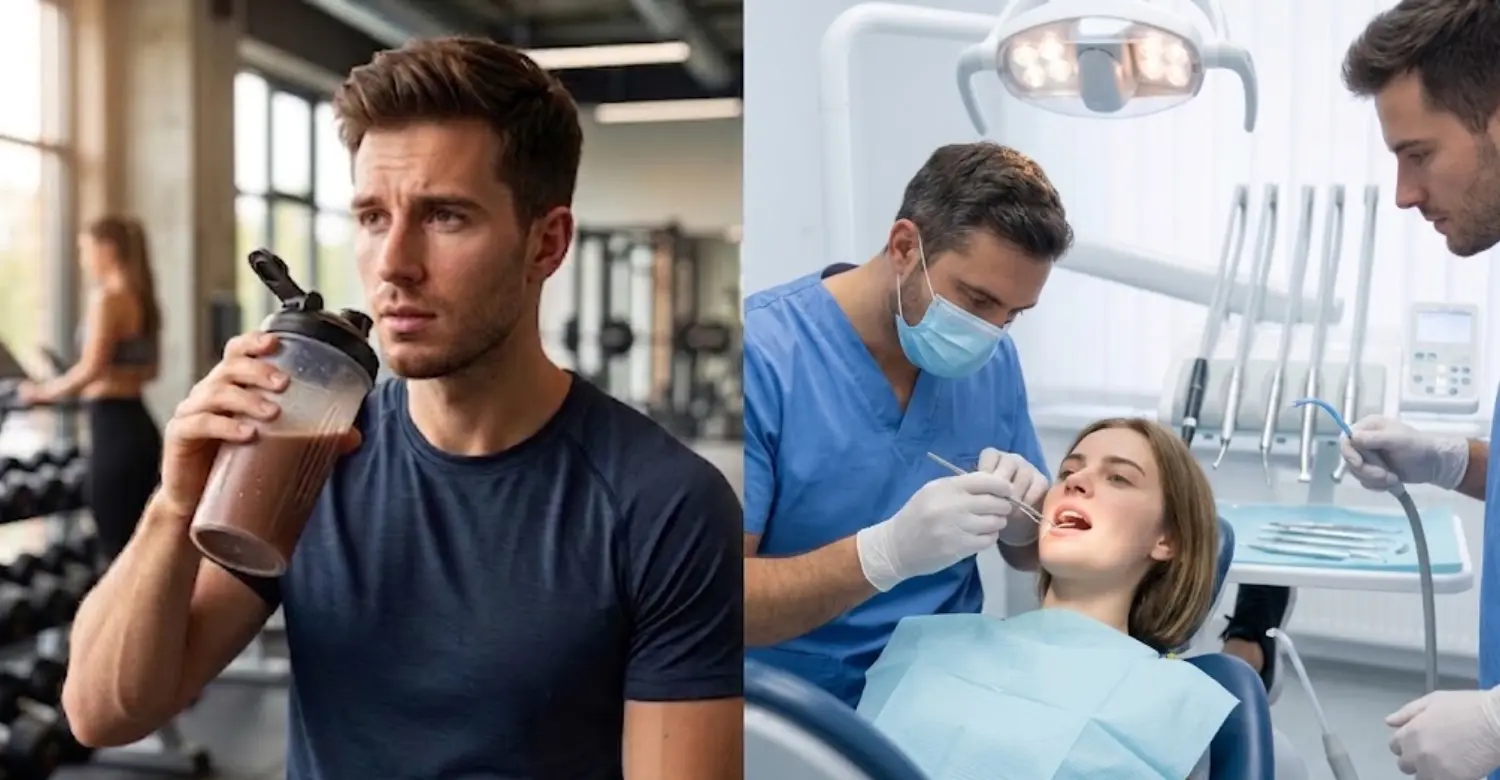
Protecting your teeth does not necessarily require abandoning preworkout supplements. PreWorkout and Teeth risks can often be reduced through simple behavioral changes. Water should remain central to hydration during exercise. Acidic beverages should not be held or swished around the mouth. Prolonged sipping should also be avoided when possible. Rinsing with water afterward can help clear acidic residues. Brushing should not occur immediately after acidic exposure. Waiting allows softened enamel to recover before mechanical cleaning. Fluoride toothpaste provides important daily protection. Regular dental examinations can identify early enamel changes. These strategies can support both athletic routines and long-term oral health.
Drink Water Before and After PreWorkout
Water supports hydration and helps maintain normal saliva function. Adequate saliva can assist with acid clearance and buffering. Drinking water before exercise can support hydration status. Water afterward can help remove beverage residues from the mouth. During prolonged exercise, fluid requirements depend on activity intensity and environmental conditions. Athletes should follow appropriate hydration guidance for their individual circumstances. Water does not neutralize every dietary acid instantly. However, rinsing and drinking water can reduce residual exposure. The strategy is simple and inexpensive. It also avoids adding more sugars or acids to the mouth. For PreWorkout and Teeth protection, hydration is one practical preventive measure.
Avoid Sipping PreWorkout for Long Periods
Prolonged sipping can extend the amount of time teeth encounter acidic liquids. Each sip can introduce another small acid challenge. Frequent exposure may provide less recovery time between acidic episodes. The ADA recommends limiting prolonged exposure to acidic beverages. Finishing a beverage within a shorter period can reduce exposure duration. This does not eliminate acidity from the product. It simply limits how long the beverage remains around teeth. Using water afterward can further help clear residues. Avoiding swishing is also useful. These behavioral changes can be especially valuable for frequent exercisers. Patients with existing erosion should discuss beverage habits with their dentist.
Rinse Your Mouth With Water After Drinking PreWorkout
Rinsing with water can help remove remaining beverage components. It also avoids immediately introducing another acidic or sugary product. Water provides a simple method for reducing residual exposure. The rinse should be gentle rather than vigorous. Swishing aggressively may increase contact with recently softened surfaces. Patients can simply drink water or gently rinse afterward. This approach can become part of a regular exercise routine. It requires no special dental products. Rinsing does not replace brushing or fluoride toothpaste. It should instead complement normal oral hygiene. For PreWorkout and Teeth, this simple habit may help reduce unnecessary exposure.
Do Not Brush Immediately After Acidic PreWorkout
Acid exposure can temporarily soften the outer enamel surface. Brushing immediately afterward may increase mechanical wear on softened enamel. The ADA recommends waiting before brushing after acidic drinks. Rinsing with water provides a gentler immediate response. Patients can brush later using fluoride toothpaste and a soft toothbrush. Aggressive brushing should also be avoided during normal routines. Pressure does not improve cleaning proportionally. Consistent technique is more important than force. People with existing erosion may benefit from professional brushing advice. This strategy helps protect enamel while maintaining effective plaque control.
Maintain FluorideBased Oral Hygiene
Fluoride remains an important tool for preventing dental caries and supporting enamel resistance. Daily brushing with fluoride toothpaste helps maintain oral protection. Interdental cleaning also helps control plaque between teeth. Patients should follow professional recommendations regarding fluoride concentration and frequency. Brushing should use gentle movements rather than excessive pressure. After brushing, patients should follow toothpaste instructions regarding rinsing. Regular dental examinations provide additional preventive support. For PreWorkout and Teeth concerns, fluoride hygiene can reduce other avoidable risks. It cannot completely cancel repeated acid exposure. Therefore, product selection and drinking behavior remain important.
Tips for Patients
Patients using preworkout products should review their complete daily routine. Look beyond the supplement itself when evaluating dental risk. Consider energy drinks, sports beverages, juices, and acidic snacks. These products can collectively increase dietary acid exposure. Hydration should prioritize water whenever appropriate. Patients should also monitor new sensitivity or visible tooth changes. Frequent symptoms should not be ignored. A dental examination can identify erosion, cavities, recession, or other causes. At Vitrin Clinic, clinicians can provide individualized preventive recommendations. Small behavioral changes can often reduce unnecessary exposure. The objective is maintaining both fitness goals and oral health.
Choose LowerSugar Options
Lower-sugar products can reduce exposure to fermentable carbohydrates. This may help reduce one contributor to dental caries. However, lower sugar does not automatically mean low acidity. Patients should therefore check both sugar and acid-related ingredients. Sugar-free products can still challenge enamel through acidic formulations. Choosing a lower-sugar product is best combined with other protective behaviors. Water consumption can help clear remaining beverage components. Regular fluoride use supports enamel protection. Patients with recurrent cavities should discuss dietary choices with their dentist. Individual recommendations can depend on overall diet and oral hygiene.
Stay Hydrated During Workouts
Hydration supports physical performance and normal physiological function. It also supports saliva production and oral comfort. Sweating can increase fluid requirements during exercise. Mouth breathing may further increase oral dryness during intense activity. Water is generally a practical hydration choice. Individual athletes may require different hydration strategies depending on exercise duration and environment. Avoid replacing every hydration opportunity with acidic beverages. Frequent acidic drinks can increase dental exposure. Maintaining adequate hydration may support the mouth’s natural defenses. For PreWorkout and Teeth, hydration remains an important part of prevention.
Avoid Prolonged Acid Exposure
Reducing exposure duration can help limit repeated acid contact. Avoid holding acidic beverages inside the mouth. Do not intentionally swish preworkout around your teeth. Avoid slowly sipping the same beverage for hours. Drink water after consumption when practical. These measures reduce exposure without necessarily changing exercise routines. Patients with existing enamel erosion should be especially careful. Professional evaluation can determine whether dietary acid contributes to observed changes. Dental prevention works best when multiple risk factors are addressed together.
Watch for New Tooth Sensitivity
New sensitivity can provide an early warning that deserves attention. Cold drinks may trigger short, sharp discomfort. Sweet foods can sometimes produce similar sensations. Sensitivity can also arise from gum recession or cavities. Therefore, symptoms should not automatically be blamed on supplements. Track when symptoms occur and what triggers them. Share this information with your dentist. Early evaluation can help identify reversible contributing factors. Prompt care may prevent progression when an underlying condition is present.
Drinking PreWorkout Without Damaging Teeth
PreWorkout and Teeth can be managed more safely through thoughtful consumption habits. The goal is reducing unnecessary acid and sugar exposure. Choosing a lower-risk formulation can help. Drinking efficiently can reduce prolonged contact time. Water afterward can help clear residues. Avoiding immediate brushing protects enamel after acidic exposure. Fluoride-based hygiene supports daily enamel protection. Patients with existing erosion require more individualized guidance. A dentist can determine whether symptoms indicate erosion or another condition. No single prevention strategy works for every patient. Combining several simple habits provides a more practical approach.
What Is the Safest Way to Drink PreWorkout?
The safest approach involves limiting unnecessary contact between the beverage and teeth. Drink the product rather than holding it in your mouth. Avoid swishing or repeatedly sipping for extended periods. Follow the manufacturer’s recommended serving size. Use water for hydration whenever appropriate. Rinse with water after consuming acidic formulations. Do not brush immediately after acidic exposure. Maintain consistent fluoride-based oral hygiene. People with existing enamel problems should seek personalized advice. These measures can reduce exposure while allowing continued supplement use. At Vitrin Clinic, dental professionals can assess individual risk factors.
Should You Drink Water After PreWorkout?
Yes, drinking water afterward can help clear residual beverage components. Water also supports hydration after exercise. It can help dilute remaining acids in the oral environment. However, water cannot completely reverse enamel erosion. The most effective approach combines rinsing with reduced acid exposure. Avoiding prolonged sipping remains important.
Patients should also maintain regular fluoride-based oral hygiene. Persistent sensitivity requires professional evaluation. Water is particularly useful because it does not add sugar or acidity. For PreWorkout and Teeth protection, this is an easy habit to adopt.
Should You Brush Your Teeth Before or After PreWorkout?
Brushing before consumption can remove plaque and provide fluoride exposure. Brushing immediately after an acidic beverage is generally discouraged. Acid can temporarily soften enamel surfaces. Mechanical brushing may increase wear during this vulnerable period. The ADA recommends waiting before brushing after acidic drinks. Rinsing with water is a better immediate response. Later brushing can restore normal oral hygiene. Patients should use gentle technique and fluoride toothpaste. People with existing enamel erosion may need personalized brushing recommendations.
Can You Reduce the Dental Effects of PreWorkout?
PreWorkout and Teeth risks can often be reduced without completely stopping supplementation. Changing frequency can reduce cumulative exposure. Changing consumption habits can shorten contact time. Choosing lower-sugar products can reduce cavity-related exposure. Selecting lower-acid products can reduce erosion concerns. Water can support hydration and oral clearance. Fluoride toothpaste provides daily enamel protection. Regular dental examinations help identify early changes. Patients should also consider other acidic products in their diet. The combined exposure may matter more than one isolated beverage. Preventive strategies should therefore address the entire lifestyle pattern.
Change the Frequency of PreWorkout Consumption
Frequency is an important factor in dietary acid exposure. Daily consumption can create repeated opportunities for acid contact.
Less frequent use may reduce cumulative exposure. However, exercise schedules and supplement requirements differ between individuals. Patients should not change medically necessary supplementation without appropriate professional advice. From a dental perspective, reducing unnecessary exposure can be beneficial. Avoiding multiple acidic beverages during the same period may also help. Water can replace some beverage occasions when appropriate. Dental professionals can help identify practical changes based on risk. At Vitrin Clinic, preventive recommendations can be tailored to individual habits.
Change the Way You Consume PreWorkout
Consumption behavior can influence dental exposure even when the formula stays unchanged. Avoid prolonged sipping whenever practical. Do not hold the drink in your mouth. Avoid swishing acidic beverages around teeth. Drink water afterward to help clear residues. Avoid brushing immediately after acidic consumption. These steps reduce contact without requiring complete product elimination. Patients with sensitivity should monitor whether symptoms improve after changing habits. If symptoms continue, another dental cause may exist. A professional examination can clarify the situation.
Improve Your Daily Oral Hygiene
Strong daily oral hygiene provides foundational protection against dental disease. Brush twice daily using fluoride toothpaste unless advised otherwise. Clean between teeth using floss or interdental devices. Limit frequent sugary snacks and beverages. Drink water regularly throughout the day. Schedule professional examinations according to individual dental needs. Oral hygiene cannot completely prevent erosion from excessive acid exposure. However, it reduces plaque-related risks and supports overall oral health. For PreWorkout and Teeth, good hygiene complements safer beverage habits. Patients should seek personalized guidance when dental problems already exist.
When Should You See a Dentist?
Dental evaluation becomes important when symptoms persist or visible changes appear. PreWorkout and Teeth concerns may warrant examination when sensitivity repeatedly follows consumption. Visible enamel changes should also receive professional attention. Warning signs include persistent sensitivity, tooth discoloration, rough surfaces, or unusual wear. Cavities and gum recession can produce similar symptoms. Therefore, professional diagnosis remains more reliable than self-diagnosis. Early assessment may identify modifiable dietary or hygiene factors. A dentist can also evaluate existing restorations and periodontal conditions. At Vitrin Clinic, comprehensive examinations can support individualized preventive planning. Patients should mention all supplements used regularly. This information can help clinicians understand potential exposure patterns.
Dental Warning Signs After Regular PreWorkout Use
Potential warning signs include increasing sensitivity to cold or acidic foods. Visible enamel thinning may also deserve evaluation. Teeth can sometimes appear smoother, flatter, or more translucent. Cupping may develop on chewing surfaces with erosive wear. Persistent dry mouth can also increase concern. However, these signs have multiple possible causes. They should not automatically be attributed to supplements. A dental examination can identify the underlying problem. Early evaluation may prevent progression through targeted preventive care. Patients should document product frequency and consumption habits. This information can make clinical assessment more informative.
What Your Dentist May Check
A dentist may examine enamel surfaces for signs of erosive wear. They may evaluate cavities, restorations, gum recession, and tooth sensitivity. The clinician may also assess plaque levels and oral hygiene. Dietary history can reveal frequent acidic or sugary exposures. Supplement labels may provide additional information. The dentist can compare symptoms with clinical findings. Photographs may help monitor changes over time. Radiographs may be recommended when cavities or other conditions require investigation. The exact assessment depends on symptoms and clinical findings. At Vitrin Clinic, a comprehensive evaluation can address multiple possible causes simultaneously.
Clinical Note: Early Assessment Can Prevent Progression
Early dental assessment can identify changes before they become extensive. Enamel erosion is irreversible once significant tooth structure has been lost. Prevention therefore has greater value than waiting for advanced symptoms. Reducing acidic exposure may help limit additional damage. Fluoride strategies may support remineralization and enamel resistance. Treatment depends on the severity and underlying cause. Patients should not attempt aggressive whitening or abrasive cleaning without professional guidance. These actions may worsen existing sensitivity or wear. Clinical monitoring can help determine whether changes are stable. At Vitrin Clinic, individualized preventive planning can support long-term dental health.
PreWorkout and Dental Health: What Does the Evidence Suggest?
Current evidence suggests that beverage acidity deserves attention among frequent exercisers. PreWorkout and Teeth research remains less extensive than research involving traditional soft drinks. A 2024 laboratory study found many tested energy and preworkout beverages had potentially erosive pH levels. A 2025 systematic review found insufficient evidence to establish sports drinks alone as a definitive cause of erosion. A 2026 systematic review similarly reported limited evidence for energy drinks and dental erosion. These findings demonstrate why product-specific evaluation matters. Laboratory acidity does not automatically predict clinical damage in every individual. Saliva, exposure duration, frequency, and oral health modify outcomes. More long-term clinical research is still needed.
Acid Exposure and Dental Erosion
Acid exposure is a recognized contributor to erosive tooth wear. Dietary acids can dissolve minerals from enamel surfaces. Repeated exposure may produce cumulative structural loss. Laboratory studies can demonstrate erosive potential under controlled conditions. Clinical outcomes depend on multiple biological and behavioral factors. Saliva can buffer acids and support mineral recovery. Exposure duration also influences the severity of acid challenges. Therefore, frequent acidic preworkout beverages deserve reasonable caution. The evidence supports prevention without requiring blanket avoidance. Patients with existing erosion should receive individualized recommendations.
Sugar, Plaque, and Tooth Decay
Sugar and dental caries have a well-established biological relationship. Plaque bacteria metabolize fermentable carbohydrates and produce acids. Repeated exposure can promote demineralization and cavity development. Sugar-free products can reduce this particular pathway. However, sugar-free acidic beverages can still create erosion concerns. Therefore, sugar and acidity represent separate dental considerations. A product can be favorable for one risk while remaining relevant for another. Daily fluoride exposure helps protect against caries. Limiting frequent sugar consumption also supports prevention. Patients with recurrent cavities should review dietary patterns with their dentist.
Dry Mouth and Oral Health
Saliva protects teeth through lubrication, buffering, clearance, and mineral support. Reduced saliva can increase susceptibility to several oral problems. Exercise can increase fluid losses through sweating. Intense activity can also encourage mouth breathing. Some individuals may experience dry-mouth sensations after stimulant-containing products. Persistent dryness deserves professional assessment. Adequate hydration can support normal oral function. Water remains a practical choice during exercise. Patients taking medications should also consider medication-related dry-mouth effects. The complete clinical picture determines appropriate management.
EEAT Clinical Perspective
Evidence-based dental advice should distinguish laboratory findings from clinical outcomes. A low beverage pH indicates potential acidity exposure. It does not prove that every consumer will develop erosion. Clinical evidence must consider frequency, duration, saliva, diet, and baseline enamel condition. Systematic reviews currently show limitations in available research. Responsible health content should therefore avoid absolute claims. Patients deserve practical recommendations supported by established dental principles. Professional assessment remains important when symptoms or visible changes occur. This approach supports accurate, patient-centered oral-health education.
Dr. Rifat Alsaman’s Clinical Perspective
Dr. Rifat Alsaman recommends evaluating beverage habits within the broader oral-health picture. Acidic products can matter more when exposure is frequent and prolonged. Patients with existing erosion may require stricter preventive strategies. Hydration and fluoride hygiene can provide valuable protective support. Sugar-free products may reduce cavity-related concerns but do not eliminate erosion risk. Clinical examination remains essential when sensitivity or enamel changes appear. Patients should provide accurate information about supplement frequency and preparation. This helps distinguish dietary effects from unrelated dental conditions. At Vitrin Clinic, prevention focuses on evidence, examination, and individualized recommendations. The objective is protecting dental health without unnecessarily restricting healthy physical activity.
Why Choose Vitrin Clinic for Your Dental Health?
Vitrin Clinic can support patients who want preventive dental care alongside active lifestyles. PreWorkout and Teeth concerns can be evaluated during a broader oral-health assessment. Clinicians can examine enamel, gums, restorations, sensitivity, and caries risk. Patients can also discuss dietary and supplement habits. This information can help identify modifiable contributors to dental problems. Preventive recommendations can then reflect individual findings. Rather than focusing on one product alone, clinicians can assess cumulative exposure. Regular examinations can also establish useful baseline information. This allows changes to be monitored over time. Vitrin Clinic combines preventive assessment with comprehensive dental services. Patients can receive guidance designed around their specific oral-health needs.
Personalized Dental Evaluation at Vitrin Clinic
A personalized evaluation can identify dental conditions that may influence beverage-related risk. Clinicians can assess enamel surfaces for early erosive changes. They can also evaluate cavities, gum recession, and sensitivity. Dietary history may reveal repeated acidic exposure from several sources. Supplement habits can be incorporated into the assessment. This information allows recommendations to become more specific. Patients with healthy enamel may require different advice than patients with existing erosion. Treatment planning should therefore consider individual findings. Vitrin Clinic can provide preventive dental evaluation within a comprehensive care approach. The objective is identifying problems early and supporting long-term oral health.
Preventive Dental Care at Vitrin Clinic
Preventive care focuses on reducing dental disease before extensive treatment becomes necessary. Regular examinations can identify early enamel, gum, and caries changes. Professional cleaning can help control plaque and calculus where appropriate. Fluoride recommendations can support patients with elevated caries or erosion concerns. Dietary guidance can address frequent sugar or acid exposure. Patients can also receive personalized brushing and interdental-cleaning advice. Lifestyle factors should be considered alongside clinical findings. For active patients, supplement routines can form part of that discussion. Vitrin Clinic aims to support prevention through individualized dental care. Early attention can help patients maintain healthier teeth throughout active lifestyles.
Vitrin Clinic: Supporting Your Smile Beyond Cosmetic Dentistry
Vitrin Clinic offers a broader perspective on dental health beyond cosmetic procedures. PreWorkout and Teeth concerns demonstrate why lifestyle habits can influence oral conditions. Preventive dentistry addresses health, function, comfort, and long-term tooth preservation. Patients can discuss concerns before significant damage develops. Clinical evaluation can distinguish cosmetic changes from disease-related changes. This distinction helps guide appropriate treatment decisions. Active lifestyles should not require unnecessary compromise in dental health. Instead, patients can modify preventable risk factors when appropriate. Comprehensive care considers the entire oral environment. Vitrin Clinic can support patients through preventive assessment and individualized recommendations.
Comprehensive Oral Health Approach
A comprehensive approach considers teeth, gums, bite, restorations, and oral hygiene. It also considers dietary habits and lifestyle factors. This approach is valuable when patients experience unexplained sensitivity. Several conditions can produce similar symptoms. A complete examination can reduce the risk of incorrect assumptions. Acid exposure may be one factor among several. Plaque, cavities, recession, grinding, and restorations can also influence symptoms. At the Vitrin Clinic, clinicians can evaluate these factors together. The resulting recommendations can focus on the most relevant risks. This approach supports practical prevention and long-term oral health.
Lifestyle and Dental Health Guidance
Lifestyle choices can influence dental health through diet, hydration, and daily routines. Athletes may have different beverage patterns than less active individuals. Frequent training can increase exposure to performance beverages. Hydration strategies can also influence oral moisture. Dental advice should therefore consider real-world routines. Patients should not receive generic recommendations without considering their circumstances. Simple modifications can sometimes reduce avoidable dental exposure. Water, shorter consumption periods, and fluoride hygiene are practical examples. Professional guidance can help prioritize the most relevant changes. Vitrin Clinic can incorporate lifestyle considerations into preventive dental planning.
Final Takeaway: PreWorkout and Teeth
PreWorkout and Teeth concerns are mainly associated with acidity, sugar, exposure duration, hydration, and individual susceptibility. Not every preworkout product carries the same dental risk. Highly acidic products deserve greater caution when consumed frequently. Sugary formulas can create additional cavity-related concerns. Sugar-free products may reduce caries risk without eliminating erosion risk. Prolonged sipping can increase exposure time. Water can help clear beverage residues and support hydration. Brushing should be delayed after acidic consumption. Fluoride-based oral hygiene remains important every day. Persistent sensitivity or visible enamel changes deserve professional evaluation. At Vitrin Clinic, individualized assessment can help patients protect their smiles while maintaining active lifestyles.
Key Takeaways for Protecting Your Teeth From PreWorkout
PreWorkout and Teeth protection starts with understanding the product formula. Check for added sugars and acidic ingredients before choosing a product. Avoid prolonged sipping during workouts. Do not hold acidic beverages inside your mouth. Drink water after consumption when appropriate. Avoid brushing immediately after acidic drinks. Maintain consistent fluoride-based oral hygiene. Monitor new sensitivity or visible enamel changes. Consider your total daily exposure to acidic beverages. Seek professional assessment when symptoms persist. These strategies can reduce preventable risks without unnecessarily eliminating exercise supplements.
Reference
FAQs
Dr. Rifat Alsaman has more than 5 years of clinical experience in dentistry and currently serves as the Head of the Medical Team at Vitrin Clinic. He is dedicated to providing exceptional patient care, overseeing treatment planning, and ensuring the highest clinical standards across the team. His expertise, attention to detail, and commitment to continuous professional development have helped countless patients achieve healthier, more confident smiles.


.webp&w=3840&q=75)

