
Acid reflux can affect more than digestion, especially when stomach acid repeatedly reaches the mouth. Signs of acid reflux on teeth may include sensitivity, enamel thinning, discoloration, and changes in tooth shape. These changes develop because stomach acid can soften dental enamel. Repeated exposure may gradually increase tooth wear and discomfort. Dental erosion does not always mean that reflux caused the damage. Acidic foods, drinks, vomiting, medications, and other conditions can also contribute. Dentists therefore consider the complete clinical picture before identifying the likely cause. Research suggests dental erosion occurs more frequently among people with gastroesophageal reflux disease. A meta-analysis involving 4,379 participants found erosion was substantially more common among GERD patients. At Vitrin Clinic, evaluating tooth wear involves examining enamel condition, sensitivity, tooth shape, and possible contributing factors.
How Acid Reflux Affects Your Teeth
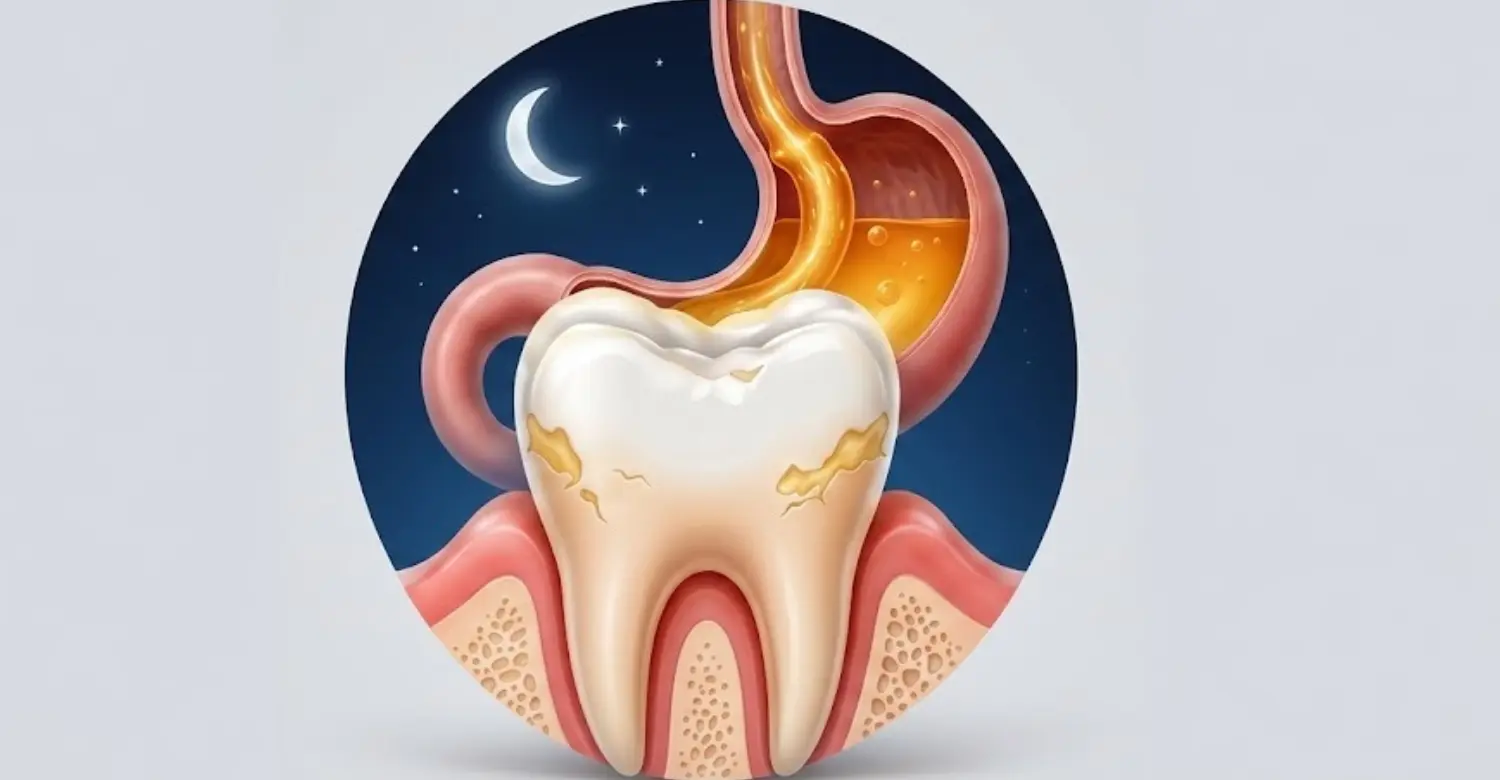
Acid reflux affects teeth when acidic stomach contents repeatedly contact oral tissues. Stomach acid has a very low pH, which can soften the mineral structure of enamel. Saliva normally helps neutralize acids and restore the oral environment. Frequent reflux episodes can overwhelm these natural protective mechanisms. Repeated exposure may gradually contribute to enamel loss, especially when reflux occurs during sleep. Signs of acid reflux on teeth can become more noticeable as acid exposure continues. Early changes may appear subtle and painless. Advanced erosion can produce sensitivity, altered tooth shape, or exposed dentin. Dentists evaluate the location and pattern of tooth wear during examination. They may also ask about reflux symptoms, diet, vomiting, medications, and oral hygiene habits. Early identification can help reduce additional enamel loss. Protecting remaining enamel is important because mature enamel cannot biologically regenerate after significant structural loss. Curious exactly how enamel breaks down at the chemical level? Read tooth enamel erosion.
What Is Acid Reflux and GERD?
Acid reflux occurs when stomach contents move backward toward the esophagus. Gastroesophageal reflux disease, commonly called GERD, describes persistent or troublesome reflux requiring medical attention. Reflux can sometimes reach the throat and mouth. When gastric acid contacts teeth repeatedly, it can contribute to chemical tooth erosion. Signs of acid reflux on teeth may therefore occur alongside heartburn, regurgitation, sour taste, or other reflux symptoms. However, dental findings alone cannot confirm GERD. The American Dental Association identifies intrinsic acids, including gastric acid, as potential contributors to dental erosion. Some people experience reflux without classic heartburn. Dental professionals may notice unexplained erosion during routine examinations. A dentist can document tooth wear and recommend medical assessment when reflux appears possible. A physician can then evaluate digestive symptoms and determine whether GERD treatment is appropriate. See the closely related throat-focused version of this condition in laryngopharyngeal reflux and teeth.
Can Acid Reflux Damage Your Teeth?
Yes, repeated acid exposure can contribute to irreversible tooth enamel loss. Enamel is highly mineralized, but strong acids can dissolve minerals from its surface. Signs of acid reflux on teeth may include smooth enamel, increased sensitivity, flattening, discoloration, and progressive tooth wear. The severity depends on exposure frequency, acid strength, saliva flow, and individual susceptibility. Nighttime reflux may be particularly concerning because saliva production generally decreases during sleep. Acid erosion can also make teeth more vulnerable to mechanical wear. Brushing softened enamel immediately after acid exposure may increase surface loss. A dentist may distinguish chemical erosion from abrasion, attrition, or other causes. Identifying the likely cause helps guide prevention and treatment. Protective measures can reduce additional damage. These measures include water rinsing, fluoride toothpaste, adequate hydration, and professional dental monitoring.
Why Stomach Acid Is Harmful to Tooth Enamel
Tooth enamel contains mineral crystals that can dissolve when exposed to sufficiently acidic conditions. Gastric acid is considerably more acidic than many foods and beverages consumed regularly. Signs of acid reflux on teeth develop when repeated exposure gradually removes minerals from enamel surfaces. Saliva provides an important defense by buffering acids and supplying minerals. The extent of damage depends on how often acid reaches the mouth. Duration of exposure and saliva characteristics also influence the process. Acid-softened enamel becomes more vulnerable to brushing and chewing forces. This combination can accelerate surface loss over time. Research has linked GERD with increased prevalence of dental erosion. However, dental erosion remains a multifactorial condition rather than a specific GERD diagnosis. For this reason, dentists consider dietary habits, gastrointestinal symptoms, medications, vomiting history, and oral hygiene practices.
Signs of Acid Reflux on Teeth
Several dental changes can develop when teeth experience repeated gastric acid exposure. Some changes appear gradually and may remain unnoticed until enamel loss becomes significant. Signs of acid reflux on teeth commonly involve enamel texture, tooth sensitivity, color, and shape. The affected surfaces can appear smoother, flatter, or more worn than expected. Dental erosion may occur without obvious pain. This makes routine dental examinations particularly useful for detecting early changes. Dentists assess tooth surfaces and compare wear patterns across different areas. They also consider whether the pattern matches possible intrinsic acid exposure. A systematic review found dental erosion was significantly associated with GERD. However, reflux is only one potential cause. Acidic beverages, citrus foods, eating patterns, vomiting, and other factors can produce similar findings. Already feeling discomfort when you eat or drink? Read why your teeth hurt when you eat.
Acid Reflux Teeth Erosion Symptoms
Acid reflux teeth erosion symptoms can develop gradually as enamel loses mineral structure. Sensitivity is one of the most commonly noticed symptoms, especially with cold foods or drinks. Signs of acid reflux on teeth may also include smoother tooth surfaces, slight translucency, yellowish appearance, and flattened edges. More advanced erosion can expose dentin and alter normal tooth anatomy. Some patients notice discomfort when consuming acidic, cold, hot, or sweet foods. Others notice cosmetic changes before experiencing sensitivity. The pattern of erosion can provide important clinical information. Dentists may examine palatal, occlusal, and biting surfaces for characteristic wear. Dental erosion differs from bacterial cavities because acid directly dissolves tooth minerals. Nevertheless, weakened surfaces can become more vulnerable to additional problems. Early evaluation can help identify contributing factors. Treatment focuses on protecting remaining tooth structure and addressing the source of ongoing acid exposure.
Early Signs of Acid Damage to Teeth
Early acid damage can be difficult to recognize because enamel loss may initially cause no pain. Changes may appear as subtle surface smoothness or reduced enamel thickness. Signs of acid reflux on teeth can become visible before patients realize that reflux is affecting their oral health. A dentist may detect these changes during routine examination. Early enamel damage can make teeth appear slightly more translucent. Incisal edges may also look thinner or more delicate. Some patients experience brief sensitivity when drinking cold beverages. Others notice roughness changing into unusually smooth surfaces. Acid exposure can also interact with tooth brushing and chewing. This combination may increase progressive surface wear. Recognizing early changes provides an opportunity to reduce exposure. Professional assessment can determine whether reflux or another acidic source is contributing.
Tooth Sensitivity
Tooth sensitivity can occur when enamel becomes thinner and underlying dentin becomes more exposed. Cold, hot, sweet, or acidic foods may trigger short-lasting discomfort. Signs of acid reflux on teeth can include sensitivity when enamel has been repeatedly softened by gastric acid. However, sensitivity alone does not prove that reflux is responsible. Other causes include gum recession, worn fillings, cracks, aggressive brushing, whitening products, and dental decay. A dentist can identify whether sensitivity corresponds with visible enamel loss. They can also check for cavities and other conditions producing similar symptoms. Using fluoride toothpaste may help strengthen remaining enamel and reduce sensitivity. Patients should also avoid aggressive brushing after reflux episodes. Persistent or severe sensitivity deserves professional evaluation. Identifying the cause early can prevent unnecessary progression.
Smooth or Thinned Tooth Enamel
Acid erosion can make enamel appear unusually smooth, glossy, or thinner. The surface may lose its natural texture as minerals dissolve. Signs of acid reflux on teeth may include smooth areas that differ noticeably from neighboring surfaces. Incisal edges can become thinner, while chewing surfaces may gradually flatten. Patients may not notice these changes because erosion often progresses slowly. Dentists can detect subtle differences using visual examination and clinical comparison. Acid-softened enamel can become more susceptible to mechanical forces. Brushing immediately after reflux may therefore increase surface loss. Enamel cannot regenerate once substantial structural tissue has disappeared. Preventing additional exposure becomes especially important after erosion begins. A dental professional can recommend protective strategies based on erosion severity. Fluoride, dietary adjustments, and restoration may be considered when clinically appropriate.
Tooth Discoloration
Tooth discoloration can occur when enamel becomes thinner and underlying dentin becomes more visible. Dentin naturally has a more yellow appearance than enamel. Signs of acid reflux on teeth may therefore include increasing yellow tones as erosion progresses. However, discoloration has many possible causes unrelated to reflux. Coffee, tea, tobacco, aging, plaque, medications, and intrinsic staining can change tooth color. Acid erosion should therefore be considered alongside other explanations. Erosion can also create uneven color across different tooth surfaces. The affected areas may appear more translucent or yellow than surrounding enamel. Professional examination can determine whether discoloration accompanies structural enamel loss. Whitening alone may not address the underlying problem when erosion is present. At Vitrin Clinic, dentists can assess both tooth structure and appearance before recommending cosmetic treatment. See the full picture on this specific type of staining in teeth discoloration treatment.
Changes in Tooth Shape
Progressive acid erosion can change the natural shape of teeth. Incisal edges may become thinner, while chewing surfaces can develop flattened or scooped areas. Signs of acid reflux on teeth may include altered contours that were not present previously. Advanced erosion can shorten teeth and change how opposing surfaces contact. These changes occur because mineralized tooth structure is gradually lost. Mechanical forces can accelerate wear after acid exposure softens enamel. Dentists evaluate tooth anatomy when determining the severity of erosion. Photographs and clinical records can help monitor progression over time. Restorative treatment may become appropriate when function, appearance, or comfort is significantly affected. Treatment depends on remaining tooth structure and the underlying cause. Preventing continuing acid exposure remains essential. Restoring teeth without controlling ongoing causes may allow additional damage to occur.
Signs of Acid Reflux Affecting Teeth
Several findings can suggest that acid exposure is contributing to dental damage. These findings become more meaningful when combined with reflux symptoms or relevant medical history. Signs of acid reflux on teeth can involve enamel wear, sensitivity, surface changes, and altered tooth anatomy. Dentists examine the overall pattern rather than relying on one symptom. Acid erosion often produces smooth, shallow, and polished-looking surfaces. Mechanical wear may produce different patterns and should be considered separately. The presence of erosion does not automatically mean that GERD is present. Acidic foods, drinks, vomiting, and other factors can produce similar changes. A complete assessment helps identify the most likely contributing factors. This approach prevents unnecessary treatment based on dental findings alone. Professional monitoring is valuable when erosion appears progressive. Early intervention can help preserve natural tooth structure for longer.
Enamel Wear
Enamel wear occurs when mineralized tooth structure gradually decreases. Acid can chemically soften the surface before mechanical forces remove additional material. Signs of acid reflux on teeth may include smooth enamel, flattened edges, and reduced surface thickness. These changes can develop gradually without obvious discomfort. Acid-related wear differs from normal aging because the pattern and severity may be disproportionate. Dentists consider age, diet, oral habits, and medical history during evaluation. Repeated reflux episodes can increase cumulative acid exposure. Reduced saliva can further decrease natural protection against acidic conditions. Fluoride may support enamel resistance and remineralization of early mineral changes. However, fluoride cannot rebuild enamel that has already been structurally lost. Patients with suspected erosion should receive individualized dental advice. The appropriate approach depends on severity and the likely source of acid exposure.
Increased Sensitivity
Sensitivity often develops when enamel becomes thinner and dentin becomes more exposed. Dentin contains microscopic tubules that can transmit temperature-related sensations toward the tooth nerve. Signs of acid reflux on teeth may include brief sensitivity after cold drinks or acidic foods. Symptoms can become more noticeable as erosion progresses. Sensitivity does not necessarily indicate severe structural damage. Some patients experience significant discomfort with relatively limited enamel loss. Dentists can examine the affected teeth and identify alternative causes. Gum recession, cracks, decay, and recent whitening are common possibilities. Reducing acid exposure can help prevent additional enamel loss. Fluoride products may also support enamel protection and sensitivity management. Patients should seek professional advice when sensitivity persists or interferes with eating. Persistent symptoms deserve evaluation rather than repeated self-treatment.
Dental Erosion
Dental erosion is the chemical loss of dental hard tissue caused by acids. Gastric acid represents one potential intrinsic source of this exposure. Signs of acid reflux on teeth can reflect this process when reflux repeatedly brings stomach contents into the mouth. Unlike bacterial cavities, erosion does not require bacterial acid production. Nevertheless, multiple processes can occur simultaneously in the same mouth. Dental erosion can gradually affect enamel thickness and tooth shape. Advanced cases may involve dentin exposure and functional changes. A dentist may document erosion using clinical photographs, wear assessments, and other examination methods. Medical history helps determine whether reflux could be contributing. Treatment focuses on stopping progression whenever possible. Restorative procedures may address structural loss after the underlying causes are controlled.
Higher Risk of Cavities
Acid exposure does not directly mean that every patient will develop cavities. However, enamel damage can create conditions that increase susceptibility to other dental problems. Signs of acid reflux on teeth may occur alongside increased sensitivity and structural weakening. Damaged surfaces can become more vulnerable to plaque-related demineralization. Oral hygiene remains important when erosion is present. Fluoride toothpaste can support remineralization and strengthen susceptible enamel surfaces. Frequent acidic exposure can also keep the mouth at a lower pH for longer periods. Saliva normally helps restore a healthier oral environment. Dentists may recommend preventive fluoride treatments for patients with significant erosion risk. Recommendations depend on individual risk factors and clinical findings. Regular examinations can identify both erosion and cavities early. This allows treatment to focus on preserving remaining natural tooth structure. Learn exactly how bacterial decay differs from acid erosion in the causes of tooth decay.
What We Notice Clinically
Clinically, acid-related tooth wear is assessed through patterns rather than one isolated symptom. Dentists examine enamel texture, thickness, contour, and distribution. Signs of acid reflux on teeth become more suggestive when characteristic wear appears alongside reflux symptoms. Nevertheless, clinical findings cannot independently diagnose GERD. Dentists may ask about heartburn, regurgitation, nighttime symptoms, vomiting, and acidic dietary habits. They may also review medications and oral hygiene routines. Research supports an association between GERD and dental erosion. However, the relationship does not establish reflux as the cause of every erosion case. At Vitrin Clinic, clinical assessment can help distinguish acid-related erosion from other forms of tooth wear. A careful diagnosis supports conservative treatment whenever possible. Preserving natural enamel and dentin remains an important long-term goal.
Common Patterns of Acid-Related Tooth Wear
Acid-related tooth wear often appears smooth rather than sharply fractured. Surfaces may look polished, flattened, or unusually shallow. Signs of acid reflux on teeth may involve several teeth rather than one isolated area. The distribution can provide clues about how acid contacts the mouth. Intrinsic acid exposure can affect surfaces exposed to gastric contents. Extrinsic acids often produce different patterns depending on drinking and eating habits. Advanced erosion may produce cupping on chewing surfaces. Incisal edges can also become thinner as tooth structure progressively decreases. Dentists compare the pattern with normal tooth anatomy and expected age-related wear. They also evaluate habits such as grinding and aggressive brushing. A detailed history improves interpretation of clinical findings. No single wear pattern should be treated as definitive proof of GERD.
How Dentists Identify Acid Erosion
Dentists identify acid erosion through clinical examination and patient history. They inspect enamel texture, thickness, contour, color, and tooth sensitivity. Signs of acid reflux on teeth may be evaluated alongside dietary and gastrointestinal information. This helps determine whether intrinsic acid exposure is plausible. Photographs can provide useful records for monitoring changes over time. Dentists may also compare affected surfaces with less affected areas. The examination should distinguish erosion from abrasion and attrition. These conditions can occur together and produce overlapping clinical findings. The ADA emphasizes evaluating potential dietary and intrinsic acid sources when assessing dental erosion. When reflux appears likely, dentists may recommend medical assessment. Collaboration between dental and medical professionals can help address both tooth damage and reflux.
Vitrin Clinic's Clinical Opinion
The clinical perspective at Vitrin Clinic emphasizes protecting remaining natural tooth structure before damage becomes advanced. Early assessment can help identify subtle changes that patients may overlook. Signs of acid reflux on teeth should be evaluated within the patient's complete medical and dental history. Sensitivity alone should not be used to diagnose reflux. When erosion is present, the first goal is identifying ongoing causes. Treatment should then focus on preventing additional structural loss. The team also emphasizes conservative planning when sufficient natural tooth structure remains. Restorations should support function while preserving healthy tissues whenever possible. At Vitrin Clinic, individualized assessment can help determine whether preventive care or restorative treatment is appropriate. Patients should also discuss persistent reflux symptoms with a qualified medical professional. Dental care and reflux management can work together to protect long-term oral health.
How Acid Reflux Damages Teeth
Repeated stomach acid exposure can gradually soften and remove minerals from tooth enamel. Signs of acid reflux on teeth become more noticeable when exposure continues without adequate protection. Saliva provides natural buffering, but frequent reflux can overwhelm these protective mechanisms. Acid-softened enamel is also more vulnerable to brushing and chewing forces. Research has associated GERD with greater prevalence of dental erosion than observed among people without GERD. The extent of damage depends on exposure frequency, acid strength, saliva flow, and individual susceptibility. Dentists evaluate these factors before recommending treatment. At Vitrin Clinic, assessment focuses on identifying structural changes while preserving healthy natural tooth tissue. Early prevention can reduce progression and help maintain tooth function.
Acid Reflux and Tooth Enamel Erosion
Tooth enamel is the hardest tissue in the human body, but acids can gradually dissolve its mineral structure. Signs of acid reflux on teeth often begin here, as the mineral loss quietly builds beneath the surface. Repeated gastric acid contact against enamel surfaces can cause early mineral loss with subtle surface changes and no pain. Continued exposure can create smoother surfaces, thinning, flattening, and increased translucency. Enamel does not regenerate after substantial structural loss. Saliva can help neutralize acids and support mineral recovery during early stages. Fluoride can also strengthen enamel against future acid challenges. Patients experiencing frequent reflux should discuss both digestive and dental concerns with appropriate professionals. Protecting remaining enamel becomes increasingly important when erosion has already started. Regular dental examinations can identify changes before major structural damage develops.
Acid Reflux Damage Progression
Acid reflux damages teeth through repeated contact between gastric contents and dental surfaces, and this can gradually develop after frequent exposure over months or years. Gastric acid can soften enamel before mechanical forces remove additional tooth structure. Chewing, brushing, and tooth-to-tooth contact can accelerate wear after enamel becomes softened. Nighttime reflux may increase exposure because saliva production typically decreases during sleep. Some patients may experience reflux without obvious heartburn symptoms. Dental findings can therefore provide an important reason to investigate possible reflux. However, erosion alone cannot confirm GERD. Other acids and mechanical factors can produce similar patterns. Vitrin Clinic recommends comprehensive evaluation when unexplained tooth wear appears during routine dental examinations.
How Stomach Acid Weakens Enamel
Stomach acid has a very low pH and can dissolve minerals within tooth enamel. Signs of acid reflux on teeth often trace back to this exact process. Enamel gradually loses mineral density as the initial surface becomes softened rather than immediately disappearing. Repeated exposure increases the opportunity for mineral loss and structural weakening. Saliva normally dilutes acids and helps restore oral pH. However, frequent reflux can challenge these natural protective processes. Brushing immediately after exposure may increase physical removal of softened enamel. Dentists often recommend rinsing with water after acid exposure. Fluoride toothpaste can provide additional protection during daily oral hygiene. Early protective measures may help preserve enamel before significant structural loss occurs.
Repeated Acid Exposure and Tooth Wear
Repeated acid exposure can create cumulative damage even when individual reflux episodes seem minor, and this can become apparent after frequent exposure over extended periods. Each episode can temporarily soften the enamel surface. Additional brushing or chewing can remove some of that weakened material. Frequent exposure allows less time for saliva to restore the oral environment. Patients with nighttime reflux may experience prolonged periods without adequate neutralization. The risk can also increase when reflux occurs alongside acidic beverages or foods. Dentists consider the overall acid burden rather than one isolated episode. Reducing exposure frequency is therefore an important preventive strategy. Medical management of reflux may also help reduce ongoing dental exposure.
The Protective Role of Saliva
Saliva provides several important defenses against acid-related dental damage, and this protection becomes more important when saliva production or protective capacity is reduced. Signs of acid reflux on teeth can become more pronounced whenever this natural defense is weakened. Saliva dilutes acids and helps neutralize changes in oral pH. It also supplies minerals that support remineralization of early enamel changes. Saliva production generally decreases during sleep, potentially reducing nighttime protection. Dehydration can also reduce salivary flow and contribute to oral dryness. Drinking water can support hydration and help clear acidic substances from the mouth. Sugar-free chewing gum may stimulate saliva in suitable patients. Persistent dry mouth should be discussed with a dental professional. Protecting salivary function can complement other strategies for reducing acid-related tooth damage. See the full dedicated guide to this exact condition in chronic dry mouth and dental health.
Acid Reflux and Dental Erosion
Dental erosion refers to chemical loss of tooth structure caused by acids, and this can reflect intrinsic erosion when gastric acid repeatedly reaches the mouth. Erosion differs from bacterial decay because acid directly affects mineralized tooth tissue. However, erosion and cavities can occur simultaneously. The clinical appearance often includes smooth surfaces, thinning, flattening, and increased translucency. Severe cases can expose dentin and alter normal tooth anatomy. Research indicates dental erosion occurs more frequently among people with GERD. Dentists still need to consider dietary acids and other possible causes. A complete history helps identify the most likely source. Treatment focuses on preventing progression before considering extensive restorative procedures.
Acid Erosion vs. Mechanical Tooth Wear
Acid erosion results from chemical dissolution, while mechanical wear involves physical forces acting on tooth surfaces, and the two can resemble each other when both processes occur together. Distinguishing signs of acid reflux on teeth from ordinary mechanical wear is part of a thorough clinical exam. Acid-softened enamel becomes more vulnerable to brushing and chewing. Attrition can develop from tooth-to-tooth contact, including grinding or clenching. Abrasion may result from aggressive brushing or abrasive products. Dentists examine surface characteristics and distribution to distinguish these processes. Acid erosion often produces smooth, shallow, and polished-looking surfaces. Mechanical wear can produce sharper or more localized patterns depending on the cause. Identifying combined causes is important for successful prevention. Vitrin Clinic evaluates tooth wear comprehensively before recommending restorative treatment.
Acid Reflux Causing Tooth Sensitivity
Tooth sensitivity can occur when acid exposure reduces enamel thickness and exposes underlying dentin, causing brief discomfort triggered by cold, hot, sweet, or acidic substances. Sensitivity does not automatically indicate reflux-related damage. Gum recession, cracks, cavities, whitening, and aggressive brushing can produce similar symptoms. Dentists evaluate sensitivity alongside visible tooth changes and medical history. Early treatment can prevent symptoms from becoming more disruptive. Fluoride products may help strengthen susceptible surfaces and reduce sensitivity. Patients should avoid aggressive brushing after reflux episodes. They should also maintain regular dental examinations when symptoms persist. At Vitrin Clinic, sensitivity assessment includes checking both tooth structure and alternative causes. Proper diagnosis helps avoid treating the wrong underlying problem.
Why Acid Reflux Can Cause Sensitive Teeth
Acid exposure can soften enamel and gradually reduce its protective thickness, causing sensitivity when external temperature or chemicals reach dentin. Dentin contains microscopic tubules that transmit fluid movement toward the dental pulp. This movement can produce a short, sharp sensation. Sensitivity may become more noticeable as enamel becomes thinner. Acidic foods can trigger discomfort when exposed dentin is present. Cold drinks may produce especially noticeable symptoms. However, sensitivity can occur without significant enamel erosion. Dentists therefore investigate other possible causes during examination. Protecting enamel and reducing acid exposure can help prevent progression. Persistent sensitivity should receive professional evaluation rather than prolonged self-treatment.
How Enamel Loss Exposes Dentin
Enamel normally covers and protects the dentin beneath it, and this protective layer can thin as erosion progresses. Signs of acid reflux on teeth frequently include this shift from enamel-covered surfaces to more exposed dentin. Dentin is softer than enamel and responds differently to environmental changes. Once exposed, dentin can appear more yellow because of its natural color. It can also become more sensitive to temperature and acidic foods. Progressive dentin exposure may increase structural vulnerability. The tooth may eventually experience changes in shape and function. Dentists assess how much enamel remains before recommending treatment. Fluoride can help protect remaining mineralized tissue but cannot replace lost enamel. Restorative procedures may be considered when structural loss becomes significant. Early prevention remains preferable to extensive reconstruction.
When Tooth Sensitivity May Indicate Acid Damage
Sensitivity becomes more suspicious for acid-related damage when it occurs alongside visible enamel changes such as smooth surfaces, thinning, or altered tooth contours. A history of frequent reflux can strengthen the clinical suspicion. However, sensitivity alone is not specific for GERD. Dentists may examine several teeth to identify consistent erosion patterns. They can also review diet, brushing habits, grinding, and previous dental treatments. Symptoms triggered by cold or acidic foods may suggest exposed dentin. The duration and intensity of discomfort can provide additional information. Professional evaluation helps distinguish acid erosion from decay or other causes. Early diagnosis can reduce unnecessary enamel loss and improve long-term comfort.
Clinical Note
Sensitivity is a symptom rather than a diagnosis and should be interpreted alongside clinical findings and medical history. Acid exposure can contribute to sensitivity, but several other dental conditions can produce identical symptoms. Dentists should therefore investigate the complete clinical picture before attributing discomfort to reflux. Patients should mention frequent heartburn, regurgitation, sour taste, vomiting, or nighttime reflux. This information can help connect dental findings with possible gastrointestinal exposure. Dental treatment alone may not prevent continuing damage if reflux remains uncontrolled. Medical evaluation may be appropriate when digestive symptoms persist. A coordinated approach can address both the underlying condition and its dental consequences. Vitrin Clinic emphasizes individualized assessment before recommending restorative procedures.
Why Sensitivity Is Not Always Caused by Acid Reflux
Tooth sensitivity has numerous possible causes unrelated to gastric acid exposure and should never be diagnosed from sensitivity alone. Gum recession can expose root surfaces and create significant temperature sensitivity. Tooth decay can also produce sensitivity, especially when damage approaches the dental pulp. Cracked teeth may cause sharp discomfort during biting or temperature changes. Whitening products can temporarily increase sensitivity in some patients. Aggressive brushing may contribute to enamel or root surface wear. Dentists can identify these causes through examination and appropriate diagnostic tests. Treating the correct cause is essential for lasting improvement. Patients should avoid assuming that every sensitive tooth indicates GERD. Professional assessment remains the safest approach.
Other Causes of Tooth Sensitivity
Several conditions can produce sensitivity that resembles acid-related symptoms, making diagnosis more complex when they coexist. Common causes include gum recession, cavities, enamel wear, cracked teeth, and recent whitening. Bruxism can also contribute to tooth wear and sensitivity. Abrasive toothpaste or excessive brushing may damage vulnerable surfaces. Some dental procedures can temporarily increase sensitivity. Acidic foods and beverages can cause sensitivity independently of gastric reflux. Dentists evaluate symptoms, tooth surfaces, gum tissues, and restoration conditions. The pattern of discomfort can provide useful diagnostic clues. Identifying all contributing factors supports more effective treatment. Patients should seek evaluation when sensitivity becomes persistent, severe, or progressively worse. Already dealing with tender or receding gums? Read sensitive gums treatment.
GERD Symptoms in Teeth: What Dentists May Notice
GERD can produce dental findings when gastric contents repeatedly reach the mouth, including erosion, sensitivity, enamel thinning, and changes in tooth shape. Dentists are often the first to notice signs of acid reflux on teeth before a patient recognizes any digestive symptoms. Dentists may notice patterns that suggest intrinsic acid exposure during routine examinations. These findings become more meaningful when patients report reflux symptoms. Research has demonstrated an association between GERD and increased dental erosion prevalence. However, dental erosion has multiple possible causes. Dentists should therefore consider dietary acids, vomiting, medications, and mechanical wear. A dental examination cannot independently diagnose GERD. Medical evaluation may be necessary when reflux symptoms are frequent or persistent. Vitrin Clinic can assess dental effects while encouraging appropriate medical follow-up.
Common Dental Signs Associated With GERD
Common dental findings associated with GERD include enamel thinning, smooth surfaces, sensitivity, and progressive tooth wear, along with yellowing caused by increased dentin visibility. Advanced erosion can change tooth shape and reduce functional tooth height. Some patients develop symptoms before recognizing visible structural changes. Dentists may notice erosion during routine examinations even when patients report no dental complaints. The location and distribution of wear can provide useful clinical information. GERD should remain one possible explanation rather than an automatic diagnosis. Dietary acids can create similar erosion patterns in some patients. Medical and dental histories help identify the most likely contributing factors. Early recognition can support preventive strategies before extensive restoration becomes necessary.
Tooth Wear Patterns Linked to Acid Exposure
Acid exposure can create smooth, shallow, and polished-looking areas across affected teeth, often appearing across multiple surfaces rather than one isolated tooth. Gastric acid can contact surfaces exposed during reflux episodes. Repeated exposure may cause flattening of biting surfaces and thinning of incisal edges. Cupping can develop on chewing surfaces as mineralized tissue gradually dissolves. Mechanical forces can accelerate changes after acid softens enamel. Dentists evaluate the distribution of wear to distinguish possible causes. They also consider dietary acids, grinding, brushing pressure, and previous dental treatments. Clinical photographs can help monitor progression over time. Identifying the pattern early can support more conservative management.
Changes in Enamel Appearance
Enamel affected by acid erosion may appear smoother, thinner, or more translucent, with increased yellow coloration when underlying dentin becomes more visible. The enamel surface may lose its normal texture and develop a polished appearance. Incisal edges can appear thinner as structural loss progresses. Chewing surfaces may develop shallow depressions or flattened contours. These changes may initially occur without pain or noticeable sensitivity. Dentists can detect subtle differences during clinical examination. Regular examinations are therefore useful for patients with frequent reflux. At Vitrin Clinic, tooth appearance is assessed alongside structural integrity. Cosmetic treatment should only follow evaluation of the underlying tooth condition.
Increased Risk of Dental Problems
Acid-related enamel loss can increase vulnerability to additional dental problems, occurring alongside sensitivity, structural weakness, and increased plaque retention in altered areas. Enamel erosion does not directly cause every cavity. However, compromised tooth surfaces can become more vulnerable to other damaging processes. Frequent acid exposure may also interfere with normal remineralization. Saliva plays an important role in restoring oral conditions after acid challenges. Fluoride can provide additional protection for susceptible enamel. Patients should maintain consistent oral hygiene and professional dental monitoring. Reducing reflux frequency remains important for preventing ongoing exposure. Combining preventive dental care with appropriate medical management provides a more complete strategy.
Stages of Tooth Damage From Acid Reflux
Acid-related dental damage can progress from subtle mineral changes to significant structural loss, and this varies according to exposure duration and severity. Signs of acid reflux on teeth typically move through recognizable stages as this progression unfolds. Early stages may involve surface softening without obvious symptoms. Moderate erosion can produce visible thinning, smoothness, and increased sensitivity. Advanced damage may expose dentin and alter normal tooth shape. Progression is not identical for every patient. Saliva, diet, reflux frequency, and oral habits influence individual outcomes. Dentists can monitor changes through regular examinations and photographs. Early intervention focuses on preventing additional mineral loss. Advanced cases may require restorative treatment to rebuild lost structure. Protecting natural tooth tissue remains a central treatment priority.
Early Acid Damage
Early acid damage may begin with microscopic mineral loss that patients cannot see, sometimes limited to subtle smoothness or mild sensitivity. The enamel can become softer before significant tissue is visibly removed. Saliva may repair some early mineral changes through remineralization. Continued acid exposure can overwhelm this natural process. Brushing immediately after reflux may increase mechanical removal of softened enamel. Patients may benefit from rinsing with water instead. Fluoride toothpaste can provide additional mineral protection. Dentists can identify early changes during routine examinations. Early detection creates an opportunity to reduce exposure before structural damage becomes advanced.
Moderate Enamel Erosion
Moderate erosion involves more noticeable loss of enamel structure, including visible thinning, increased translucency, sensitivity, and flattened surfaces. Tooth contours may begin changing as enamel continues to disappear. Dentin may approach the surface without being extensively exposed. Symptoms can become more frequent when consuming cold or acidic foods. Dentists may recommend stronger preventive measures at this stage. Fluoride treatment can support remaining enamel when clinically appropriate. Dietary changes may also reduce additional acid exposure. Reflux management becomes increasingly important when gastric acid is suspected. Restorative treatment depends on structural loss, symptoms, function, and future risk.
Advanced Tooth Erosion
Advanced erosion involves substantial loss of enamel and potentially underlying dentin, and can include pronounced sensitivity, altered tooth shape, shortening, and visible dentin. Teeth may become more vulnerable to fractures and functional problems. Biting surfaces can become significantly flattened or irregular. Cosmetic changes may also become noticeable during smiling or speaking. Treatment often requires careful restorative planning when structural loss is extensive. The underlying source of acid exposure should be addressed simultaneously. Otherwise, restorations may remain vulnerable to continuing acid-related damage. Dentists evaluate remaining tooth structure before selecting restorative materials. Individualized treatment can help restore function while preserving as much natural tissue as possible.
Dentin Exposure
Dentin exposure occurs when enamel becomes sufficiently thin or disappears from affected areas, often producing yellow coloration and pronounced sensitivity. Dentin is softer and more vulnerable than enamel. Its microscopic tubules can transmit stimuli toward the dental pulp. This can produce sharp sensitivity to cold, heat, sweet foods, or touch. Advanced dentin exposure can also compromise tooth strength. Dentists assess the extent of exposure before selecting preventive or restorative treatment. Fluoride may help protect exposed surfaces in appropriate cases. Bonding or other restorations may be considered when structural loss affects function. Addressing ongoing acid exposure remains essential for long-term protection.
Changes in Tooth Shape
Progressive erosion can gradually alter the natural contours of affected teeth, including flattened chewing surfaces, thinner edges, and shortened clinical crowns. These changes occur as mineralized tissue is gradually lost. Mechanical forces can accelerate the process after acid exposure weakens enamel. Advanced wear can affect bite relationships and chewing efficiency. Cosmetic changes may also become increasingly noticeable. Dentists evaluate tooth shape when determining the severity of erosion. Restorative procedures can sometimes rebuild lost contours when appropriate. Treatment should preserve healthy tooth structure whenever possible. Preventing additional acid exposure remains essential after restoration.
Increased Tooth Sensitivity
Sensitivity can increase as enamel becomes thinner and dentin becomes exposed, producing sharper responses to cold, hot, sweet, or acidic substances. Symptoms often occur briefly after the triggering stimulus. Persistent or spontaneous pain may suggest another dental condition requiring investigation. Dentists should distinguish sensitivity from pulp inflammation, decay, cracks, or other problems. Fluoride can support enamel protection and sensitivity management in suitable patients. Avoiding immediate brushing after reflux can reduce additional mechanical wear. Gentle brushing with appropriate toothpaste remains important for maintaining oral hygiene. Persistent symptoms deserve professional assessment rather than repeated home remedies.
When Should You See a Dentist for Acid Reflux Tooth Damage?
A dental visit is appropriate when unexplained sensitivity, enamel wear, or tooth shape changes develop, especially if symptoms persist or progressively worsen. Early erosion can be difficult for patients to recognize without professional examination. Dentists can identify structural changes before major damage becomes obvious. They can also investigate alternative causes of erosion and sensitivity. Patients with frequent GERD symptoms should mention these symptoms during dental appointments. Medical and dental professionals may need to coordinate care when reflux appears significant. At Vitrin Clinic, assessment can help determine the severity of tooth wear. Early intervention may reduce the need for extensive restorative procedures later.
Dental Warning Signs You Should Not Ignore
Persistent sensitivity should not be ignored, especially when several teeth become affected, along with visible thinning, yellowing, smooth surfaces, and altered tooth shape. Chipping or unexpected shortening may indicate significant structural weakening. Pain during chewing can suggest deeper damage or another dental problem. Increasing sensitivity may also indicate dentin exposure. Patients should seek evaluation when symptoms continue despite improved oral hygiene. Dentists can determine whether erosion, decay, cracks, or other conditions are responsible. Early assessment allows treatment to focus on preserving remaining tooth structure. Delaying care may allow preventable damage to progress. Professional monitoring is especially important when reflux episodes occur frequently.
When Tooth Erosion Requires Professional Evaluation
Professional evaluation becomes important when erosion is visible, progressive, or associated with sensitivity, which may indicate ongoing acid exposure requiring investigation. Dentists assess tooth surfaces, gum tissues, bite relationships, and possible mechanical factors. They also review dietary and medical history when determining likely causes. Significant erosion may require preventive fluoride treatment or restorative planning. Treatment should match the amount of remaining natural tooth structure. Patients should not rely on whitening products to address yellowing caused by enamel loss. Whitening cannot restore enamel that has already disappeared. A comprehensive assessment helps prevent inappropriate cosmetic treatment. Early professional care can protect function and appearance.
Why Early Diagnosis Matters
Early diagnosis can identify enamel changes before substantial structural loss develops, and these changes may be subtle during the earliest stages. Dentists can document baseline tooth appearance and monitor progression over time. Photographs can help identify gradual changes that patients might not notice. Preventive measures may reduce additional acid exposure and mechanical wear. Fluoride can support mineral protection where appropriate. Identifying reflux as a possible contributing factor can also prompt medical evaluation. Early management may reduce the complexity of future restorative treatment. Preserving natural enamel remains easier than reconstructing extensively damaged teeth. Regular examinations therefore provide important long-term value.
What We Notice Clinically
Dentists evaluate acid-related tooth wear by considering several findings together, which become more clinically meaningful when erosion patterns match reported reflux symptoms. Examination includes tooth surfaces, enamel thickness, sensitivity, and changes in tooth anatomy. The clinician may also assess plaque, cavities, gum recession, and grinding signs. Dietary history can reveal frequent exposure to acidic foods or beverages. Medical history can identify reflux, vomiting, medications, or digestive disorders. This comprehensive approach prevents premature conclusions. Research supports an association between GERD and dental erosion, but does not make erosion diagnostic of GERD. Vitrin Clinic emphasizes individualized assessment before recommending treatment.
Why Early Enamel Changes Can Be Difficult to Notice
Early enamel changes can develop gradually without producing obvious symptoms, and may initially be limited to subtle surface changes. Patients may not notice slight thinning or increased translucency. Mild sensitivity may also be dismissed as temporary discomfort. Dentists have the advantage of comparing tooth surfaces during routine examinations. Clinical photographs can make small changes easier to monitor. Early detection is particularly useful when reflux episodes occur frequently. Preventive strategies can be introduced before substantial enamel is lost. Patients should report unexplained sensitivity or noticeable changes in tooth appearance. Early attention can help preserve natural tooth structure.
How Dental Examination Helps Detect Erosion
A dental examination allows clinicians to inspect enamel surfaces under controlled conditions, evaluating them through visual assessment, clinical history, and tooth-wear patterns. Dentists examine surface smoothness, translucency, flattening, and changes in anatomy. They also look for dentin exposure and associated sensitivity. Photographic records can support future comparisons. Bite assessment can help identify mechanical forces contributing to tooth wear. Dietary and medical questions help distinguish intrinsic from extrinsic acid sources. This comprehensive approach provides more reliable information than symptoms alone. When reflux is suspected, medical evaluation may complement dental assessment. Together, these approaches support prevention and appropriate treatment.
Vitrin Clinic's Opinion on Early Intervention
The team at Vitrin Clinic emphasizes that early evaluation can help preserve healthy natural tooth structure, and this should be assessed before cosmetic or restorative treatment begins. Identifying the cause of erosion helps prevent continued damage after treatment. Conservative prevention may be appropriate when structural loss remains limited. Fluoride protection and behavior changes can support remaining enamel. Advanced erosion may require restorative procedures based on functional and aesthetic needs. The clinic also considers the patient's long-term risk before selecting treatment. At Vitrin Clinic, treatment planning focuses on individual tooth condition and overall oral health. Medical referral may be recommended when reflux symptoms require investigation.
How to Protect Teeth From Acid Reflux
Protecting teeth requires reducing acid exposure and supporting the mouth's natural defenses, which can decline when reflux continues without protective measures. Managing signs of acid reflux on teeth early makes prevention far more effective than treating advanced damage later. Rinsing with water after an episode can help clear acidic material. Patients should avoid brushing immediately after acid exposure because enamel may be temporarily softened. Fluoride toothpaste can provide additional protection during daily oral hygiene. Adequate hydration supports saliva production and oral clearance. Regular dental examinations can identify early changes before significant structural loss occurs. Medical treatment may also reduce the frequency of reflux episodes. Dietary habits can influence overall acid exposure. A personalized prevention strategy is often more effective than relying on one measure alone.
Rinse Your Mouth With Water After Reflux
Rinsing with water can help clear acidic material from the mouth after reflux, since progression can continue when acidic substances remain in contact with enamel. Water also helps dilute acids and supports restoration of a more neutral oral environment. Patients should avoid immediately brushing softened enamel after an episode. A simple water rinse is generally less abrasive than brushing. Some patients may benefit from additional dentist-recommended rinses. The goal is reducing acid contact without causing additional mechanical wear. Rinsing does not treat GERD itself. Medical management remains necessary when reflux is frequent or persistent. At Vitrin Clinic, patients can receive individualized preventive advice based on their dental condition.
Avoid Brushing Immediately After Acid Exposure
Brushing immediately after acid exposure may increase mechanical removal of softened enamel, and this can worsen when repeated acid exposure combines with aggressive brushing. Rinsing with water provides a gentler immediate response. Patients should wait before brushing after a reflux episode. When brushing, a soft toothbrush and fluoride toothpaste are generally appropriate. Gentle technique can reduce unnecessary abrasion. The goal is maintaining oral hygiene without adding mechanical stress to acid-softened surfaces. Patients with significant erosion may need personalized brushing recommendations. Dentists can also assess whether abrasive products are contributing to tooth wear. Protecting enamel requires both acid control and careful mechanical cleaning.
Use Fluoride Toothpaste
Fluoride toothpaste can strengthen enamel and support resistance against acid challenges, making it easier to manage remaining enamel when it receives consistent fluoride protection. Fluoride supports remineralization of early mineral changes and strengthens susceptible surfaces. Patients should use toothpaste appropriate for their age and dental risk. Dentists may recommend prescription-strength fluoride for patients with elevated erosion or cavity risk. Fluoride cannot rebuild enamel that has already been structurally lost. It works primarily as a preventive measure. Brushing should remain gentle, especially after reflux episodes. Patients should follow their dentist's recommendations regarding frequency and fluoride concentration. Still choosing between fluoride and fluoride-free? Compare your options in fluoridated vs. fluoride-free toothpaste.
Stay Hydrated
Adequate hydration supports normal saliva production and oral clearance, which can become harder to maintain when dry mouth reduces natural protection. Saliva helps dilute and neutralize acids inside the mouth. Water can also help clear acidic material after reflux episodes. Dehydration may reduce salivary flow and increase oral discomfort. Patients should drink water regularly throughout the day. Sugary or acidic beverages may increase dental risk when consumed frequently. Plain water is generally preferable for routine hydration. Persistent dry mouth should be discussed with a dentist or physician. Managing dry mouth can support broader oral health.
Maintain Good Oral Hygiene
Good oral hygiene remains important even when acid erosion is present, since it can coexist with cavities, plaque accumulation, and gum disease. Brushing twice daily with fluoride toothpaste supports overall dental health. Flossing or interdental cleaning helps remove plaque between teeth. Patients should use gentle techniques to avoid additional abrasion. Regular dental examinations allow early detection of erosion and other problems. Professional cleaning may be recommended based on individual needs. Oral hygiene does not stop reflux itself. However, it reduces additional bacterial and plaque-related risks. A balanced preventive routine supports stronger long-term oral health. Not flossing correctly yet? Learn how in how to use dental floss.
Foods and Habits That May Reduce Acid Exposure
Reducing frequent acidic foods and drinks can lower overall acid exposure, which can otherwise progress when dietary acids combine with gastric acid exposure. Common acidic sources include citrus products, carbonated beverages, and certain fruit drinks. Frequent sipping can prolong the time teeth remain exposed to acid. Keeping acidic drinks with meals may reduce repeated exposure opportunities. Water can be used afterward to help clear acidic residues. Patients with GERD should also follow medical dietary recommendations. Avoiding personal reflux triggers may reduce episodes reaching the mouth. Individual triggers vary considerably between patients. A dentist or physician can help identify practical changes. Wondering if sparkling water is a safer choice? See what the research says in sparkling water and teeth.
Why Regular Dental Checkups Matter
Regular dental examinations can detect enamel changes before patients recognize visible damage, since these changes may remain subtle during early stages. Dentists can document tooth wear and compare changes during future visits. Monitoring helps determine whether erosion is stable or progressing. Professional assessment can also identify cavities, gum recession, cracks, and mechanical wear. Patients with frequent reflux may benefit from closer monitoring based on individual risk. Preventive fluoride treatment may be recommended when appropriate. Early intervention can reduce the likelihood of extensive restorative treatment. Dental examinations also provide opportunities to discuss reflux symptoms. Vitrin Clinic can create individualized monitoring plans based on clinical findings. See what a proactive dental routine actually involves in preventive dentistry at Vitrin Clinic.
Tips for Patients
Patients can take several practical steps after experiencing reflux to minimize acid contact and avoid additional enamel stress. Rinse with water after reflux reaches the mouth. Avoid immediate brushing while enamel may remain softened. Continue gentle fluoride-based oral hygiene later. Stay hydrated to support normal salivary function. Avoid frequent acidic drinks and prolonged sipping habits. Mention recurring sensitivity or visible tooth changes during dental visits. Discuss persistent reflux symptoms with a qualified medical professional. Patients should not attempt to restore eroded enamel using cosmetic products alone. Professional evaluation provides safer long-term guidance.
What to Do After a Reflux Episode
Rinse your mouth with water after a reflux episode, since progression can continue when gastric acid remains on enamel surfaces. Avoid brushing immediately because softened enamel can be more vulnerable to abrasion. Drink water afterward to support clearance and hydration. Resume normal brushing later using fluoride toothpaste and gentle technique. Avoid acidic beverages immediately after the episode when possible. Record frequent episodes if reflux symptoms are recurring. This information can help your physician understand the pattern. Tell your dentist about frequent reflux during appointments. Coordinated care can reduce both medical and dental complications.
What to Avoid After Acid Exposure
Avoid immediate brushing after significant acid exposure, since softened enamel can worsen with aggressive mechanical cleaning. Avoid acidic drinks immediately afterward when possible. Do not use abrasive whitening products without professional advice. Avoid vigorous brushing or hard-bristled toothbrushes. Rinsing with water is a gentler immediate response. Patients should also avoid assuming that yellowing automatically requires whitening. Yellowing can reflect dentin exposure caused by enamel loss. Whitening may not correct structural discoloration and can increase sensitivity. Professional assessment should precede cosmetic treatment when erosion is suspected.
When to Ask About Fluoride Protection
Patients with frequent erosion or elevated cavity risk may benefit from additional fluoride protection, which may indicate a need for stronger preventive strategies. Dentists can assess enamel condition before recommending specific fluoride products. Prescription fluoride may be appropriate for selected high-risk patients. Overuse should be avoided unless professionally recommended. Fluoride supports enamel resistance but cannot rebuild substantial structural loss. Patients should continue regular brushing and interdental cleaning. Reflux management remains important because fluoride cannot eliminate continuing acid exposure. Vitrin Clinic can recommend preventive options based on individual clinical findings.
Treatment for Tooth Damage From Acid Reflux
Treatment depends on the amount of tooth structure lost and whether acid exposure continues, which helps dentists determine the extent and pattern of damage. Reviewing the signs of acid reflux on teeth closely guides whether prevention or restoration is the right next step. Early cases may require prevention rather than extensive restoration. Fluoride can support remaining enamel and reduce future mineral loss. More advanced erosion may require bonding, composite restorations, or crowns. Treatment should address both function and appearance. The underlying reflux should also receive appropriate medical management. Restoring teeth without controlling continuing acid exposure can allow further damage. Dentists therefore consider long-term risk before selecting restorative procedures. At Vitrin Clinic, treatment planning focuses on preserving natural structure whenever possible.
Can Acid-Eroded Teeth Be Repaired?
Lost enamel cannot biologically grow back after substantial structural destruction, though this helps identify when restorative treatment may be necessary. Early mineral changes may benefit from preventive measures and fluoride. Structural defects can sometimes be repaired with composite bonding or other restorations. More extensive damage may require crowns or comprehensive rehabilitation. Treatment depends on remaining tooth structure, function, symptoms, and aesthetic needs. Restorations can rebuild shape but cannot recreate natural enamel biologically. Controlling acid exposure remains essential after treatment. Otherwise, continuing exposure can threaten both natural teeth and restorations. Professional planning helps determine the least invasive appropriate solution. Explore your veneer options in detail with porcelain veneers.
Fluoride Treatments
Fluoride treatments can strengthen susceptible enamel and support remineralization of early mineral changes, prompting dentists to consider additional fluoride protection when needed. Professional fluoride applications can provide higher concentrations than standard toothpaste. The appropriate treatment depends on individual dental risk. Fluoride is particularly useful when erosion occurs alongside increased cavity susceptibility. It cannot restore enamel that has already been physically lost. Patients should continue daily fluoride toothpaste unless their dentist recommends otherwise. Preventive fluoride works best alongside acid-exposure reduction. Medical management of reflux remains important when gastric acid contributes to erosion. Regular monitoring helps determine whether prevention is controlling progression.
Dental Bonding and Composite Restorations
Composite bonding can restore small areas of lost tooth structure, sometimes treating minor contour changes conservatively. Composite materials can rebuild edges, surfaces, and small defects. Treatment may improve both function and appearance. Bonding is generally less invasive than extensive crown preparation. However, restorations can wear or require maintenance over time. Continuing acid exposure may affect surrounding tooth structure. Dentists therefore address the underlying cause before or alongside restoration. The appropriate material and technique depend on tooth condition and functional demands. At Vitrin Clinic, restorative planning can be tailored to the amount of remaining natural structure. Get the full breakdown of this conservative option in cosmetic bonding.
Crowns for Advanced Tooth Damage
Crowns may be considered when significant tooth structure has been lost, including severe flattening, structural weakening, or extensive dentin exposure. A crown covers and protects the remaining prepared tooth structure. However, crown treatment requires careful evaluation because natural tissue is permanently altered during preparation. Dentists should determine whether less invasive options can provide sufficient protection. The underlying acid exposure must also be controlled. Otherwise, continuing erosion can compromise surrounding tooth structure. Material selection depends on function, aesthetics, and individual clinical requirements. Vitrin Clinic can evaluate advanced tooth wear and develop a comprehensive restorative strategy. Compare your full range of restorative options in the types of dental crowns.
Managing Acid Reflux Tooth Sensitivity
Sensitivity management begins with identifying and reducing the underlying cause, often related to enamel thinning or dentin exposure. Because signs of acid reflux on teeth can overlap with other causes of discomfort, an accurate diagnosis matters before starting treatment. Fluoride toothpaste can help strengthen susceptible surfaces and reduce sensitivity. Patients should avoid aggressive brushing and immediate brushing after reflux. Acidic foods and drinks should also be limited when they trigger symptoms. Dentists may recommend additional desensitizing treatments when necessary. Persistent or severe pain requires evaluation for decay, cracks, or pulp problems. Medical treatment of reflux may reduce ongoing acid exposure. Dental treatment alone may not control symptoms if reflux continues. A coordinated approach provides better long-term protection.
Treating the Underlying Acid Reflux
Dental treatment cannot eliminate the gastrointestinal cause of acid exposure, so discussing reflux symptoms with a physician may be necessary. Medical professionals can assess GERD and recommend appropriate treatment. Lifestyle changes, medications, or further investigation may be considered depending on the diagnosis. Reducing reflux episodes can lower the frequency of acid reaching the mouth. Patients should follow their physician's treatment plan carefully. Dental professionals can simultaneously monitor tooth structure and manage sensitivity. Collaboration helps address both the source and consequences of acid exposure. Patients should not stop prescribed reflux medication without medical advice.
Clinical Note
Treatment should match the amount of structural loss and ongoing risk, helping guide preventive or restorative decisions. Early erosion often requires prevention and monitoring rather than aggressive reconstruction. Advanced erosion may require multiple restorative procedures. The underlying cause should be addressed before extensive cosmetic rehabilitation. This reduces the risk of continued damage after restoration. Dentists should also consider bite forces, grinding, saliva flow, and dietary habits. A comprehensive approach produces more predictable long-term outcomes. At Vitrin Clinic, treatment planning emphasizes preservation of natural tooth structure. Each treatment decision should reflect the patient's individual clinical needs.
Why Treatment Depends on Enamel Loss
Treatment depends heavily on how much enamel and dentin remain, indicating different levels of structural damage requiring different approaches. Early mineral changes may require prevention and fluoride. Moderate erosion may benefit from protective restorations or sensitivity management. Advanced structural loss may require crowns or broader rehabilitation. Dentists assess tooth thickness, shape, function, and symptoms before treatment. Preserving natural tissue remains preferable whenever clinically possible. Restorative treatment should not begin without understanding ongoing acid exposure. Otherwise, future damage may compromise new restorations. Individualized planning provides better protection and predictable functional outcomes.
Preventing Further Damage Before Restoration
Preventing additional acid exposure should occur before extensive restorative treatment whenever possible, since the damaging process may remain active. Restorations cannot prevent acid from affecting unprotected tooth surfaces. Patients should follow reflux-management recommendations from their medical professional. Dental prevention may include fluoride, gentle brushing, water rinsing, and dietary modifications. Dentists can monitor whether erosion remains stable before proceeding with complex treatment. Stabilizing the oral environment can improve restorative longevity. Patients should understand that restorations require ongoing maintenance. Long-term prevention remains essential after cosmetic or functional reconstruction.
Vitrin Clinic's Clinical Perspective
The clinical team at Vitrin Clinic emphasizes treating the cause and preserving natural tooth structure whenever possible. Assessment should guide treatment rather than automatically determine it. Early intervention may allow conservative preventive measures to protect remaining enamel. Advanced cases require careful evaluation of function, aesthetics, and structural integrity. Restorative treatment should be planned only after identifying ongoing risk factors. Long-term monitoring after treatment is also emphasized. At Vitrin Clinic, individualized treatment planning considers both current damage and future progression. Patients receive recommendations based on clinical findings rather than one standard treatment pathway.
Can Acid Reflux and Dental Erosion Be Reversed?
Early mineral changes may improve through remineralization when acid exposure decreases, though this becomes harder once actual tooth structure has been lost. Catching signs of acid reflux on teeth while damage is still minor gives remineralization the best chance to work. Enamel cannot regenerate after substantial structural destruction. Preventive treatment can nevertheless stop or slow further progression. Fluoride supports remineralization of early mineral changes. Restorative dentistry can rebuild lost tooth structure when necessary. Controlling reflux remains important for protecting natural teeth and restorations. Regular dental monitoring helps determine whether erosion is stable. Patients should understand the difference between reversing mineral loss and replacing lost structure. Vitrin Clinic can evaluate the condition and recommend an appropriate long-term strategy.
Can Tooth Enamel Grow Back?
Tooth enamel cannot naturally regrow after substantial structural loss, though appearance may improve after treatment even though lost enamel does not biologically regenerate. Early mineral changes can undergo remineralization when conditions become more favorable. Saliva and fluoride contribute to this protective process. Once enamel has been physically removed, restorative dentistry may be needed. Composite materials can replace small areas of lost structure. Crowns may be appropriate for extensively damaged teeth. Preventing additional acid exposure remains more important than relying on restoration alone. Patients should seek early evaluation when enamel changes are suspected. Early prevention can preserve the natural enamel that remains.
What Dental Treatments Can Repair Erosion?
Treatment options depend on the severity and location of erosion, helping dentists determine whether preventive care or restoration is appropriate. Fluoride can protect remaining enamel and support early remineralization. Composite bonding can restore smaller structural defects. Crowns may protect teeth with extensive loss. Comprehensive rehabilitation may be considered when multiple teeth are significantly affected. Treatment should preserve natural tissue whenever possible. Cosmetic procedures should not replace diagnosis of the underlying cause. Continuing acid exposure can threaten restored and natural surfaces. Dentists therefore combine restoration with preventive planning. Vitrin Clinic can develop treatment according to individual structural and aesthetic needs.
Why Preventing Further Acid Exposure Matters
Preventing ongoing exposure is essential because lost enamel cannot regenerate naturally, and this progression can continue when reflux remains frequent. Dental restorations can rebuild structure but cannot eliminate gastric acid exposure. Medical management can help reduce reflux episodes when GERD is diagnosed. Dental strategies can reduce contact and strengthen remaining tooth surfaces. Water rinsing and fluoride protection can support daily prevention. Patients should also avoid prolonged exposure to acidic foods and beverages. Regular examinations can identify progression early. Prevention is especially important after restorative treatment. Long-term protection requires cooperation between dental care and reflux management.
Long-Term Dental Monitoring
Long-term monitoring helps dentists determine whether erosion is stable or progressing, since these changes can be difficult to recognize at home. Regular examinations provide opportunities to compare tooth surfaces over time. Clinical photographs can help document changes in shape and enamel thickness. Dentists can adjust preventive strategies when risk factors change. Patients with ongoing GERD may need individualized monitoring intervals. Treatment can also be modified if sensitivity or structural damage progresses. Monitoring helps prevent unnecessary treatment while identifying genuine deterioration. Vitrin Clinic can support ongoing assessment after preventive or restorative care. Maintaining natural tooth structure remains the long-term objective.
When Acid Reflux and Teeth Problems Need Medical Attention
Dental erosion may sometimes be the first reason a patient considers possible reflux, prompting a conversation about persistent gastrointestinal symptoms with a physician. Noticing signs of acid reflux on teeth during a routine dental visit can be the first clue that something digestive deserves attention too. Heartburn, regurgitation, sour taste, chest discomfort, or nighttime symptoms may accompany GERD. However, dental erosion can occur without GERD. Physicians evaluate symptoms and medical history before establishing a diagnosis. Dentists can document oral findings and explain why reflux may be relevant. Coordinated care can address both acid exposure and dental consequences. Patients should seek appropriate medical evaluation when reflux symptoms become frequent or troublesome. Dental treatment should continue alongside necessary medical care. Vitrin Clinic can help patients understand the dental side of the condition.
Dental Symptoms That May Be Linked to GERD
Dental symptoms potentially linked with GERD include erosion, sensitivity, enamel thinning, and altered tooth contours, becoming more relevant when these findings occur alongside frequent reflux symptoms. Yellowing may appear as enamel becomes thinner and dentin becomes visible. Smooth surfaces can develop after repeated chemical exposure. Advanced erosion may cause shortening or flattening of teeth. These findings are not exclusive to GERD. Acidic diets, vomiting, and other causes can create similar changes. Dentists evaluate the entire clinical history before suggesting reflux as a contributor. Patients should mention digestive symptoms during dental appointments. Medical assessment may then be recommended when appropriate.
Reflux Symptoms to Discuss With a Doctor
Persistent heartburn and regurgitation should be discussed with a qualified medical professional, and dental findings can provide an additional reason to mention these symptoms. Patients should report frequent sour taste, nighttime reflux, swallowing difficulties, or persistent throat symptoms. Chest pain requires appropriate medical evaluation rather than assuming reflux is responsible. Doctors can determine whether symptoms fit GERD or another condition. They may recommend lifestyle measures, medications, or additional testing. Patients should follow professional advice regarding treatment. Dental findings cannot establish the gastrointestinal diagnosis independently. Communication between dental and medical professionals can improve overall management.
Why Dentists and Doctors May Work Together
Dentists and physicians address different aspects of acid-related dental problems, and dentists can alert patients to possible gastric acid exposure based on oral findings. Physicians can investigate whether GERD or another gastrointestinal condition is responsible. Dentists can monitor enamel loss and manage sensitivity or structural damage. Medical treatment can reduce the source of repeated gastric acid exposure. This coordinated approach addresses both cause and consequence. Patients benefit when relevant information is shared between professionals. Dental findings can also help physicians understand potential oral consequences. Long-term management works best when preventive dental care accompanies appropriate medical treatment. See a related example of medical and dental care working together in liver disease and oral health.
Why Choose Vitrin Clinic for Acid-Related Dental Damage?
Vitrin Clinic focuses on comprehensive dental assessment and individualized treatment planning, since multiple causes can produce similar erosion patterns requiring careful evaluation. The clinic takes signs of acid reflux on teeth seriously as part of a complete oral health picture. The dental team can assess enamel loss, sensitivity, tooth shape, and functional changes. Treatment recommendations should reflect the patient's specific condition and future risk. Preventive care may be sufficient for early erosion. Restorative dentistry can address more advanced structural loss when necessary. The clinic can also support long-term monitoring after treatment. Preserving natural tooth structure remains an important consideration. Patients with suspected GERD should also seek appropriate medical evaluation. Dental and medical management can work together to protect long-term oral health.
Comprehensive Dental Evaluation
A comprehensive evaluation examines tooth structure, enamel condition, sensitivity, bite, and surrounding oral tissues, interpreted alongside dietary and medical history. Dentists may ask about heartburn, regurgitation, vomiting, acidic foods, and oral hygiene habits. Mechanical wear from grinding or brushing is also assessed. This helps distinguish different causes of tooth surface loss. Photographs can provide useful records for future monitoring. Early findings may require preventive care rather than restoration. More advanced cases may need restorative planning. Vitrin Clinic can create an assessment based on individual clinical findings. A complete evaluation supports safer and more predictable treatment decisions. Curious how your treatment plan gets mapped out digitally? Explore Digital Smile Design.
Personalized Treatment Planning
Personalized planning considers tooth condition, erosion severity, symptoms, aesthetics, and future risk, which may vary significantly between patients. One patient may need fluoride and monitoring, while another requires restorative treatment. Dentists consider remaining enamel before recommending invasive procedures. The source of ongoing acid exposure must also be considered. Treatment may combine prevention, sensitivity management, and restoration. Patients should understand why each procedure is recommended. Long-term maintenance is also considered during planning. At Vitrin Clinic, treatment can be tailored to individual functional and aesthetic requirements. The goal is protecting natural structures while restoring oral health.
Preventive and Restorative Dental Care
Preventive care aims to stop further damage before extensive restoration becomes necessary, guiding decisions about fluoride, monitoring, and protective habits. Restorative care rebuilds tooth structure that has already been lost. Depending on severity, options may include composite bonding or crowns. Prevention remains important even after restoration. Continuing acid exposure can affect both natural teeth and restorations. Regular examinations help evaluate treatment stability. Patients can also receive guidance on brushing and dietary habits. Vitrin Clinic combines preventive assessment with restorative planning when clinically appropriate.
Advanced Solutions for Tooth Wear
Advanced tooth wear may require carefully planned restorative treatment, including extensive flattening, dentin exposure, and altered tooth contours. Treatment depends on remaining tooth structure and functional requirements. Composite restorations may address selected areas with moderate loss. Crowns may be considered for teeth with extensive structural compromise. Complex cases may require comprehensive rehabilitation involving multiple teeth. Dentists should prioritize preservation of healthy tissues during treatment. Ongoing acid exposure must also be controlled. Vitrin Clinic can evaluate advanced wear and develop a personalized restorative strategy. Long-term maintenance remains essential after treatment.
How Vitrin Clinic Helps Restore and Protect Damaged Teeth
Vitrin Clinic approaches acid-related dental damage through assessment, prevention, restoration, and monitoring, identifying areas requiring closer clinical attention. Treatment begins with understanding the extent of enamel and dentin loss. Preventive measures are introduced to reduce further damage. Restorative options are selected according to structural needs and aesthetic goals. Patients can receive guidance about oral hygiene and acid exposure. Long-term monitoring helps identify progression or restoration-related concerns. Medical evaluation may also be recommended when reflux symptoms are persistent. The objective is restoring function while protecting remaining natural structures. Each treatment plan should be adapted to the patient's clinical needs.
Evaluating the Extent of Tooth Erosion
Evaluation determines how much enamel and dentin remain on affected teeth, which can range from subtle surface changes to extensive structural loss. Dentists assess tooth shape, sensitivity, surface texture, and functional relationships. They may document affected teeth with clinical photographs. The pattern of erosion helps identify possible contributing factors. Dietary acids, reflux, vomiting, and mechanical wear should all be considered. Accurate assessment prevents unnecessary restorative treatment. It also helps determine whether preventive measures can stabilize the condition. Vitrin Clinic can monitor changes over time through structured dental examinations. Preservation of natural tooth structure remains a central objective.
Creating a Personalized Treatment Plan
A personalized plan reflects erosion severity, symptoms, aesthetics, and long-term risk, requiring different strategies depending on individual circumstances. Early cases may respond to preventive measures and monitoring. Moderate cases may require sensitivity management or conservative restorations. Advanced cases can require crowns or comprehensive rehabilitation. Dentists also consider bite forces and existing dental restorations. Patients should understand the purpose and expected maintenance of each procedure. Reflux management should accompany dental treatment when gastric acid is involved. Vitrin Clinic can coordinate preventive and restorative recommendations according to clinical needs.
Restoring Tooth Function and Appearance
Tooth erosion can affect both appearance and functional performance, including shortened edges, flattened surfaces, and visible discoloration. Restorative treatment can rebuild lost contours and improve chewing function. Composite bonding may be appropriate for selected areas. Crowns can provide protection when substantial structural loss exists. Treatment should consider natural tooth proportions and surrounding teeth. Cosmetic goals should never compromise healthy tooth preservation. The underlying acid exposure should also be addressed. Vitrin Clinic can combine functional restoration with aesthetic planning. Long-term maintenance remains important after treatment. Ready to see the ultimate version of a full smile transformation? Explore smile design.
Long-Term Preventive Care
Long-term prevention helps protect teeth after erosion has been identified or restored, since it can return or progress if acid exposure remains uncontrolled. Patients should maintain fluoride-based oral hygiene and regular dental examinations. Water rinsing can help clear acidic material after reflux episodes. Immediate brushing should be avoided after significant acid exposure. Dietary habits should also be reviewed when acidic foods contribute to erosion. Medical management remains important when GERD is diagnosed. Dentists can adjust preventive strategies as the patient's condition changes. Vitrin Clinic can support ongoing monitoring and maintenance. Consistent prevention protects both natural teeth and restorations.
Vitrin Clinic's Approach to Preserving Natural Tooth Structure
The team at Vitrin Clinic emphasizes conservative treatment whenever sufficient natural tooth structure remains, with careful diagnosis guiding any restorative intervention. Identifying the underlying cause can help prevent continued structural loss. Early erosion may require prevention rather than aggressive cosmetic treatment. Advanced damage may require carefully planned reconstruction. Treatment should balance function, aesthetics, durability, and tissue preservation. Long-term monitoring helps determine whether treatment remains stable. At Vitrin Clinic, preserving healthy natural tooth structure remains a key planning principle. Patients receive recommendations based on clinical findings and individual treatment needs.
Conclusion
Acid exposure from reflux can contribute to progressive dental erosion when gastric contents repeatedly reach the mouth. Signs of acid reflux on teeth can include sensitivity, smooth enamel, thinning, discoloration, and altered tooth shape. These findings do not independently diagnose GERD. Other acids, vomiting, dietary habits, and mechanical wear can produce similar changes. Dental examination can help identify erosion patterns and assess structural damage. Medical evaluation can determine whether reflux is contributing to the problem. Early prevention can reduce additional enamel loss. Fluoride, water rinsing, gentle brushing, hydration, and regular dental care can support protection. Vitrin Clinic can provide individualized assessment and restorative planning when necessary. Protecting natural tooth structure remains the most important long-term goal.
Reference
FAQs

Dr. Rifat Alsaman has more than 5 years of clinical experience in dentistry and currently serves as the Head of the Medical Team at Vitrin Clinic. He is dedicated to providing exceptional patient care, overseeing treatment planning, and ensuring the highest clinical standards across the team. His expertise, attention to detail, and commitment to continuous professional development have helped countless patients achieve healthier, more confident smiles.


.webp&w=3840&q=75)

